


Addiction therapy guide
Group Therapy: Definition, Techniques and Effectiveness in Addiction Treatment
Group therapy treats addiction in therapist-led peer groups. The five SAMHSA group models, outcomes versus individual therapy, and delivery in Norwood, NJ.
By Paul James Roeser·Reviewed by Noelle Mathew, LCSW, LCADC, CASAC-M·Last reviewed August 8, 2026·8 min read
Published ·Updated
Group therapy is a clinical treatment in which a trained therapist leads a small group of patients through structured sessions, using the group's interactions as the active mechanism of change. In addiction treatment, group therapy is the dominant delivery format: 93 percent of substance use disorder treatment facilities provide it, according to the Substance Abuse and Mental Health Services Administration's (SAMHSA) 2021 advisory "Group Therapy in Substance Use Treatment."
The format's standing rests on measured equivalence. SAMHSA's advisory states that group therapy is cost effective and produces client outcomes comparable to individual therapy in substance use disorder treatment acceptance, retention, reductions in frequency of use, abstinence rates, and psychological symptoms and distress. Lo Coco, Gianluca and colleagues' 2019 meta-analysis of 33 randomized controlled trials in the Journal of Substance Abuse Treatment found small significant effects of group therapy on abstinence compared with no treatment, individual therapy, and other treatments.
SAMHSA sets the working size of a therapy group at 6 to 12 members. Valley Spring Recovery Center in Norwood, New Jersey runs tighter: process groups, with no therapist carrying more than eight clients across its three outpatient levels of care.
What Is Group Therapy in Addiction Treatment?
Group therapy in addiction treatment is therapist-led clinical treatment delivered to a small group of patients, in which peer interaction — feedback, accountability, and shared experience — functions as the therapeutic mechanism. One or two credentialed therapists guide each session toward defined treatment goals, which separates group therapy from peer-run mutual-help meetings.
The distinction matters for anyone comparing options. A clinical process group is part of a licensed treatment plan: membership is assessed, size is controlled, content follows a curriculum, and progress feeds the patient's chart. A mutual-help meeting is free peer support without a clinician. Both serve recovery, and treatment programs sequence them rather than choosing between them. What a clinical group does in session depends on which of the five established group models it follows.
What Are the Types of Group Therapy for Addiction?
SAMHSA's Treatment Improvement Protocol (TIP) 41 names 5 group therapy models for substance use treatment: psychoeducational groups, skills development groups, cognitive-behavioral groups, support groups, and interpersonal process groups. Each model's focus, drawn from TIP 41:
| Group model | Focus | Example session content |
| Psychoeducational | Educating members about substance use disorders and recovery | How alcohol withdrawal affects sleep; what post-acute withdrawal is |
| Skills development | Building the skills needed to attain and sustain abstinence | Refusal skills rehearsal; anger management; craving management |
| Cognitive-behavioral | Altering the thoughts and actions that lead to substance use | Identifying trigger-thought-use chains; restructuring use-related beliefs |
| Support | Sustaining members and sharing pragmatic information about abstinent daily life | Managing a sober weekend; disclosing recovery at work |
| Interpersonal process | Working through the developmental and relational issues that feed addiction | Examining how in-group conflict mirrors outside relationships |
Model names describe the curriculum; the benefits patients report come from what the formats share.
What Are the Benefits of Group Therapy in Addiction Treatment?
The benefits of group therapy in addiction treatment are peer accountability, reduced isolation and shame, modeled recovery skills, and measured gains in engagement and abstinence when groups are added to individual care. SAMHSA's 2021 advisory reports that adding group therapy to individual treatment improves treatment engagement, abstinence rates, and perceived peer support.
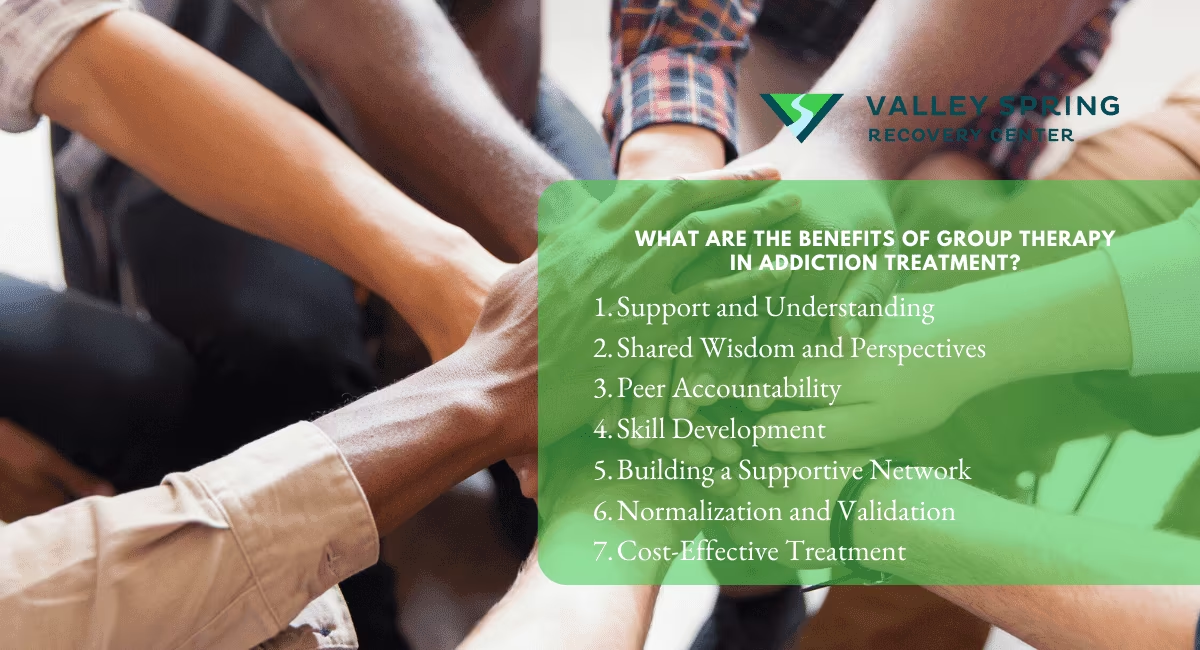
The mechanism is specific to the format. A person with a substance use disorder rehearsing a refusal script hears 8 peers report what happened when they tried it — feedback no individual session generates. Watching a peer 6 weeks further into recovery normalizes setbacks and makes progress concrete. Speaking about shame in front of people who nod with recognition dismantles it faster than speaking to one clinician. One therapist treats 6 to 12 people per session, which is why the advisory calls group therapy cost effective. Whether those benefits equal individual therapy's results is an empirical question with an answer.
How Effective Is Group Therapy Compared With Individual Therapy?
Group therapy produces outcomes comparable to individual therapy in substance use disorder treatment — across acceptance, retention, reductions in frequency of use, abstinence rates, and psychological symptoms and distress, per SAMHSA's 2021 advisory "Group Therapy in Substance Use Treatment."
The randomized-trial record points the same direction. Lo Coco and colleagues' 2019 systematic review and meta-analysis of 33 randomized controlled trials, published in the Journal of Substance Abuse Treatment, found small significant effects of group therapy on abstinence compared with no treatment, individual therapy, and other active treatments, plus moderate gains in mental state against no treatment. The authors flag the data's limits — heterogeneous studies, cautious interpretation warranted — and the equivalence claim, not superiority, is the defensible reading. Equivalence at lower cost is why groups carry the schedule in outpatient care, and why the techniques inside them deserve their own inventory.
What Techniques Do Therapists Use in Group Therapy?
Group therapists use 5 core techniques in addiction treatment: psychoeducation, structured go-around sharing, therapist-guided peer feedback, role-play rehearsal, and cognitive-behavioral exercises adapted to the group format.
- Psychoeducation: teaching the neuroscience of craving, tolerance, and post-acute withdrawal so members interpret their own symptoms accurately.
- Structured sharing: the go-around format gives every member equal speaking time and blocks dominant voices from absorbing the session.
- Guided peer feedback: the therapist shapes member-to-member responses so feedback stays specific, respectful, and tied to treatment goals.
- Role-play rehearsal: members practice refusal scripts, boundary conversations, and job disclosures inside the room before facing them outside — psychodrama and role plays are the core methods of experiential therapy in group sessions.
- Cognitive-behavioral exercises: trigger mapping and thought restructuring drawn from cognitive behavioral therapy, worked collectively so members learn from each other's chains.
Technique selection assumes the member is placed correctly — and placement is where group therapy has real exclusions.
When Is Group Therapy Not Recommended?
Group therapy is not recommended during acute psychosis, acute suicidal crisis, or severe cognitive impairment — 3 presentations that require individualized or higher-acuity care first. A person in active psychosis is unable to track group interaction; a person in suicidal crisis needs immediate individual intervention. Call or text 988, or chat at 988lifeline.org, to reach the 988 Suicide and Crisis Lifeline in any mental health crisis.
Placement is a clinical assessment, not a preference poll. Severe social anxiety, unresolved interpersonal trauma, and privacy constraints shape whether a client starts in individual sessions and steps into groups later — the standard sequence rather than a disqualification. Clinicians reassess placement as treatment progresses, because group readiness changes with stabilization. At the program level, that assessment happens inside a defined structure of levels of care.
How Does Group Therapy Work at Valley Spring Recovery Center?
Valley Spring Recovery Center delivers group therapy in process groups, with no therapist carrying more than eight clients, across all 3 of its outpatient levels of care — Restore (Partial Care, 9 AM to 3 PM Monday through Friday plus Saturday mornings), Activate (Intensive Outpatient, 6 to 9 PM weekday evenings), and Accelerate (Outpatient, 1 to 2 nights per week) in Norwood, New Jersey.
The cap under 10 sits at the tight end of SAMHSA's 6-to-12 recommendation, keeping speaking time per member high. Groups run alongside weekly individual sessions, so each member's group work feeds a personal treatment plan. The Group & Individual Therapy Program defines the schedule, curriculum, and enrollment steps, while the addiction therapy modalities include 11 additional clinical approaches. Admissions staff answer (201) 781-8812 at all hours to schedule a clinical assessment and verify insurance benefits.
What Are the Most Common Questions About Group Therapy?
Common questions about group therapy in addiction treatment: the definitions, evidence figures, and practical facts.
How Big Is a Group Therapy Group?
SAMHSA recommends 6 to 12 members per therapy group so every member participates. Valley Spring Recovery Center caps its process caseloads of eight clients per therapist so every member participates each session.
Is Group Therapy Available Virtually?
Group therapy runs virtually at Intensive Outpatient and at Outpatient, and it runs in person at all three levels. Partial Care is delivered in person only, so its process groups meet at 830 Broadway in Norwood. Delivery mode is an attribute of the level of care rather than a separate level.
What Is the Difference Between Group Therapy and a 12-Step Meeting?
Group therapy is clinician-led licensed treatment with assessed membership and a curriculum; a 12-step meeting is free, peer-run mutual help. Treatment programs sequence the two rather than substituting one for the other.
What Happens in a Process Group?
Members examine their in-the-room interactions — conflict, trust, feedback — as live samples of the relational patterns that feed addiction. The therapist guides the group so those patterns become visible and workable.
Is What I Say in Group Therapy Confidential?
Federal confidentiality rules bind the treatment program and its clinicians, and group agreements bind members to keep disclosures private. The therapist reviews confidentiality expectations and their limits before a new member joins.
Does Insurance Cover Group Therapy for Addiction?
Coverage depends on the specific plan. Group therapy delivered within a licensed addiction treatment program is a standard behavioral health benefit, and Valley Spring Recovery Center verifies each patient's benefits by phone at (201) 781-8812 before admission.
Sources & References3ShowHide
- SAMHSA Advisory — Group Therapy in Substance Use Treatment (based on TIP 41), PEP20-02-01-020, 2021 — Group therapy is cost effective and produces client outcomes comparable to individual therapy in SUD treatment acceptance, retention, reductions in frequency of use, abstinence rates, and psychological symptoms and distress; adding group therapy to individual treatment improves treatment engagement, abstinence rates, and perceived peer support; 93% of SUD treatment facilities provide group therapy; recommended group size 6 to 12 members with one or two group therapists.
- SAMHSA — TIP 41: Substance Abuse Treatment: Group Therapy (NCBI Bookshelf) — Names the five group therapy models used in substance use treatment: psychoeducational groups, skills development groups, cognitive-behavioral groups, support groups, and interpersonal process groups, with the focus of each.
- Lo Coco G, et al. Group treatment for substance use disorder in adults: A systematic review and meta-analysis of randomized-controlled trials. Journal of Substance Abuse Treatment, 2019 (PubMed) — 33 randomized controlled trials; significant small effects of group therapy on abstinence vs no treatment, individual therapy, and other treatments; moderate effects on mental state vs no treatment; authors advise cautious interpretation given data limitations.