


Drug Rehab and Addiction Treatment Center in Norwood, NJ
A licensed Bergen County drug rehab with compassionate, licensed clinical and medical staff treats addiction and co-occurring mental health conditions in adults 18 and over, and rebuilds the daily structure recovery depends on. Reviewing state licensure, CARF accreditation, and verified patient reviews is essential when selecting an addiction treatment provider.
8:1
Staff-to-Patient Ratio
19+
In-Network Payers
Same-day
Admissions
3
Licensed Levels of Care
About Valley Spring Recovery
Addiction Treatment at Valley Spring Recovery Center
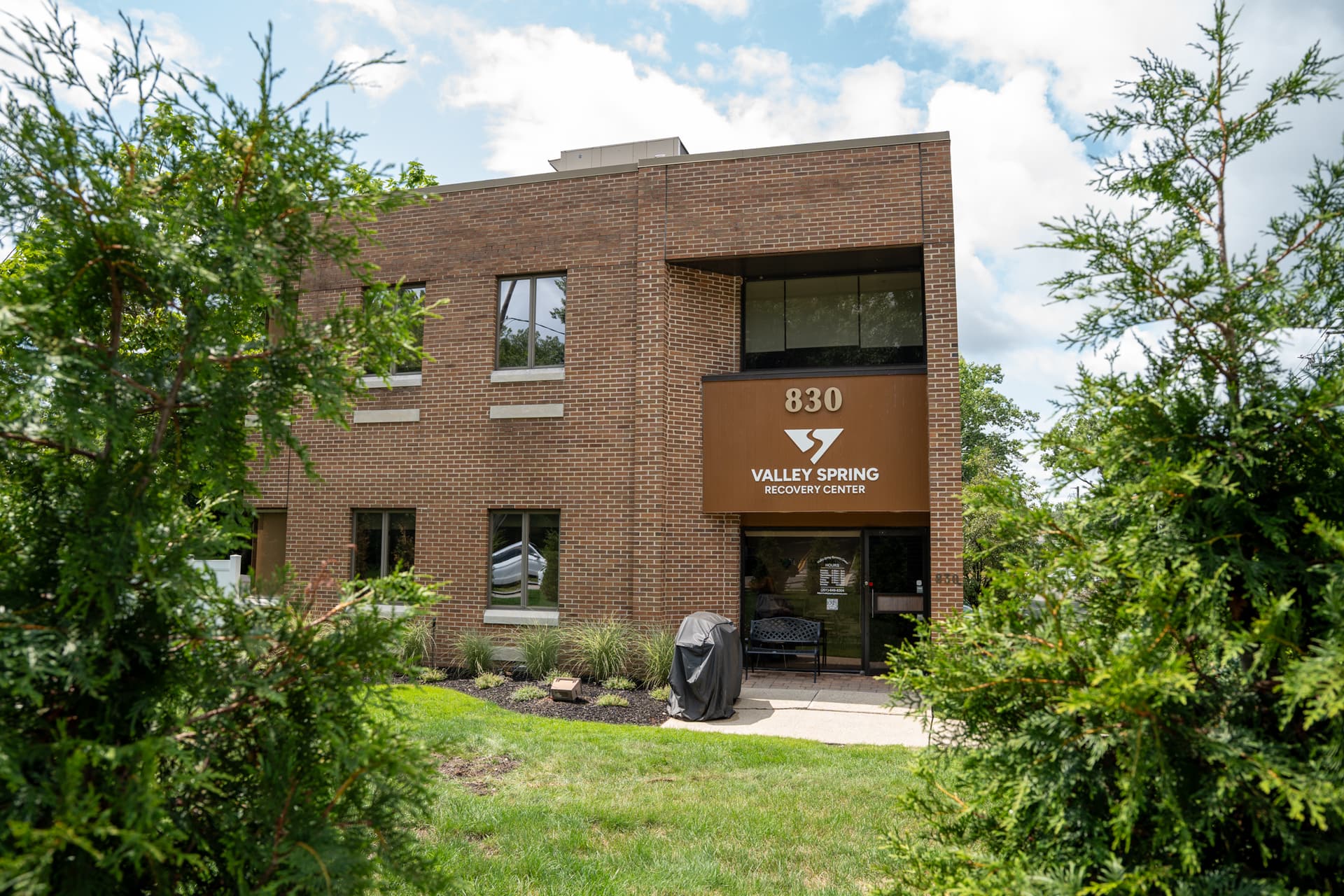
Valley Spring Recovery Center is a family-owned drug rehab and addiction treatment facility at 830 Broadway in Norwood, New Jersey. The facility serves adults 18 and older across Bergen County, the greater New Jersey area, and the bordering New York tri-state region. The admissions line runs 24/7, and same-day intake is available for weekday calls before 11 AM when clinical screening and insurance verification align.
Valley Spring delivers a complete outpatient continuum of care through three licensed levels: Partial Care (PC) at ASAM 2.5, Intensive Outpatient Program (IOP) at ASAM 2.1, and Outpatient (OP) at ASAM 1.5. Intensive Outpatient and Outpatient run in person at Norwood or over secure video, so virtual attendance is a delivery choice rather than a fourth level. Partial Care is delivered in person. All three levels operate under the Restore, Activate, Accelerate, Thrive (RAAT) treatment model, which moves clients from clinical stabilization to long-term recovery inside one program, no facility transfers between levels.
Valley Spring operates a maximum 8:1 staff-to-patient ratio, morning process groups, and a daily catered meal program. The staff includes a credentialed sleep specialist who works the sleep pillar with every patient.


Licenses, Accreditations and Memberships
Valley Spring Recovery Center holds CARF accreditation, a BBB A+ rating, New Jersey Department of Health licensure, LegitScript certification, and NAATP membership.


 Valley Spring Recovery Center holds LegitScript certification.
Levels of Care
Drug Rehab and Addiction Treatment Programs in New Jersey
A full outpatient drug rehab continuum under the RAAT model. Step up or step down — PC to IOP to OP — without changing facilities or rebuilding rapport with new providers.

Three levels of care. One facility. No transfers, ever.
Partial Care, Restore
9 AM – 3 PM Monday–Friday, 9 AM – 12 PM Saturday. For clients stepping down from inpatient or beginning intensive outpatient care. Morning process groups, individual therapy 1–2x/week, catered lunch, Health & Wellness program.
Intensive Outpatient, Activate
6–9 PM, Monday–Friday. 5 days per week for 6–8 weeks. Evening-only structure built for working professionals, parents, students, and first responders who cannot interrupt daytime responsibilities.
Outpatient, Accelerate
1–2 nights per week for 8–12 weeks, then ongoing as needed. Between 1 and 3 clinical hours a week, which is what places this level at ASAM 1.5 rather than a higher one. The client owns the relapse-prevention plan and the same therapist reviews it.


People Who Recovered
Norwood, NJ Addiction Treatment Center Reviews
“Valley Spring Recovery Center truly changed my little brother Jordan's life. From the moment he entered the program, he was treated with respect, care, and real compassion. The staff went above and beyond to support him, not just in his recovery, but in every aspect of his life.”
Deshaya Williams
“It cannot be more clear the profound impact that Sean has made in my recovery journey. Finding someone who can balance the weight of recovery with genuine humor is rare, and he embodies that perfectly.”
Daisy McCloud
“Valley Spring Recovery Center saved my son's life. The staff is amazing. I'm so grateful for the exceptional care he received. The support and encouragement by the staff and the rest of the Valley Spring Community is so meaningful.”
Lana Roeser
“Everyone treated me like family, I felt like I was born into this family. The welcoming I received was incredible. Valley Spring changed my life in ways I never thought possible.”
Tr3 Weee
“Valley Spring Recovery Center is absolutely exceptional. Brian and Mike have created a truly beautiful establishment, both in appearance and in spirit. The clinical setting is world class, blending professionalism with genuine compassion.”
Christopher Ferry
In Their Own Words
Recovery Stories From the People Who Lived Them
Patients, alumni, and family members on what treatment at Valley Spring actually felt like.
Patient testimonial
A Story of Hope
Patient testimonial
Finding Recovery
Family testimonial
A Mother's Story
Alumni testimonial
My Recovery
Client testimonial
Matt's Story: Why I Chose Valley Spring
Alumni testimonial
Regina's Full Story
Addiction Treatment by Substance
Substance Use Disorders Common in New Jersey
Valley Spring Recovery Center treats nine substance addictions — alcohol, heroin, opioids, fentanyl, cocaine, benzodiazepines, methamphetamine, marijuana, and prescription drugs — through CARF-accredited outpatient programs in Norwood, New Jersey. New Jersey recorded 85,266 treatment admissions for substance use disorder in 2022, and alcohol and heroin remain the state's most-misused substances (NJ Department of Human Services, DMHAS).
85,266
NJ treatment admissions for substance use disorder in 2022
1,312
Suspected NJ drug overdose deaths in 2025
27%
One-year decline in NJ overdose deaths, 2024 to 2025
Sources: NJ Department of Human Services (DMHAS); NJ Office of the Chief State Medical Examiner / NJ Cares, 2025.
In-Network & Out-of-Network Coverage
Insurance Coverage and Cost of Treatment
Valley Spring Recovery Center accepts in-network insurance from AmeriHealth, Fidelis Care, Northwell Direct, ComPsych, Oscar, VA Community Care, Lower Hudson Valley EAP, JRN Consulting, Tricare, Teamsters, Magellan Healthcare, Cigna, UnitedHealthcare (including its UMR and Oxford plans), the New York City Employees Plan, Workforce Assistance EAP, Iron Workers Members Assistance, and Humana, and also accepts Blue Cross Blue Shield, Aetna, Horizon, and Carelon Behavioral Health on an out-of-network or single-case-agreement basis. At Valley Spring Recovery Center, insurance coverage pays for some or all of the cost of treatment; the exact amount depends on the member's benefits and the level of care required. Most plans authorize Partial Care in 7–14 day increments with clinical reauthorization, and IOP per week or per three-day block.
Self-pay pricing is quoted transparently after a brief phone assessment, and the cost is determined by the services required and the appropriate level of care.
Valley Spring Recovery Center verifies insurance benefits 24 hours a day, 7 days a week — call to confirm what your specific plan covers.


HIPAA confidential · Free verification · No obligation
Our Mission
What Is Valley Spring Recovery Center’s Mission?
Valley Spring Recovery Center was founded by Brian Cellary, an Allendale native and former Northern Highlands quarterback with 15 years of sobriety, to change how addiction treatment works in the Tri-State area — replacing one-size-fits-all programming with personalized care built around each patient's actual life.
We are committed to empowering individuals who feel trapped in addiction, offering them and their families a pathway to lasting change. Through a safe, supportive environment, evidence-based therapy, and individualized care, we help our patients break free from substance use, reclaim their purpose, and become healthy, thriving members of society.

Clinical Framework
The RAAT Treatment Model
RAAT is Valley Spring’s four-stage progressive treatment model — the same clinical team and the same building cover every stage. Clients who need medical detox first enter through a coordinated referral partner, then begin at Partial Care or Intensive Outpatient.
Restore , Partial Care · ASAM 2.5 · 4–6 wks
Stabilization phase. Daily programming, family therapy, and Health & Wellness work to regulate the nervous system and daily routines.
Activate , Intensive Outpatient · ASAM 2.1 · 6–8 wks
Implementation phase where clients return to work and family while applying learned skills in real-world contexts.
Accelerate , Outpatient · ASAM 1.5 · ongoing
Lower-intensity phase focused on relapse prevention, virtual community, and ongoing wellness support.
Thrive , Alumni · lifelong community
Post-completion phase. Monthly meetings, speaker series, sober socials, and quarterly community outings.
Stepping up or skipping stages based on clinical appropriateness is a normal part of treatment, not a failure — the pathway adapts to the client.
Life Skills 5 Pillars Framework
Community
Building sober networks, alumni mentorship, and peer accountability.
Wellness
Medication management, sleep, nutrition, movement, and nervous system regulation.
Stability
Financial literacy, employment planning, time management, and independence.
Relationships
Boundaries, communication, family dynamics, conflict resolution.
Purpose
Relapse prevention planning, identity rebuilding, values and meaning work.
Family for Life
Thrive: The Alumni Program That Never Ends
Thrive is Valley Spring’s lifelong alumni community, Family for Life — monthly meetings at the Norwood facility, a speaker series, sober socials, and quarterly outings from professional sports games to escape rooms. Many alumni return to staff roles at Valley Spring.
Explore the Thrive Alumni ProgramProgram film
Inside the Alumni Program
Getting Started
Our Admissions Process
Fast, confidential, and supportive. Valley Spring admits patients the same day when clinical and insurance criteria are met.
Call Us
(201) 781-8812, available 24/7
Pre-Assessment
Clinical screening + insurance verification
Clinical Approval
Our clinical and medical team reviews and approves
Schedule Intake
Admissions calls back to set the start date
Begin Treatment
Same-day admission when appropriate
From Our Channel
Recovery, explained by the people who do it
Short, honest conversations about treatment, insurance, and what the first week actually looks like.

Inside Our Norwood, NJ Treatment Center — CEO, COO & Alumni Voices
Valley Spring Recovery Center

NBA Champion Kendrick Perkins Speaks at Valley Spring Recovery Center in Norwood, NJ #aftercare
Valley Spring Recovery Center

What Is a Health and Wellness Program in Addiction and Mental Health Recovery
Valley Spring Recovery Center
Our Clinical Team
Licensed Therapist & Doctor-Led Treatment For The Whole Person
Valley Spring's multidisciplinary team combines licensed therapists, psychiatric providers, case managers, and recovery support specialists, many with personal recovery experience.

Dr. Michael Olla
Psychiatrist & Medical Director

Noelle Mathew
Clinical Director

Caitlin Dow
Clinical Manager of SUD & Mental Health

Stephen LaTourette
Primary Therapist & Health and Wellness Leader

Charles Schiano
Primary Therapist

Zach Puzo
Therapist

Sherie Solomon
SUD Evening Virtual Therapist

Sara O'Neill
Evening Counselor

Alvin McCarthy
Group Facilitator

Patricia Osterhoudt
Family Service Coordinator
Meet Dr. Michael Olla
Meet our medical director
Dr. Michael Olla, Medical Director at Valley Spring Recovery Center
Our Location
Conveniently Located In Norwood, NJ In Bergen County And 5 Minutes From Rockland County, NY
Valley Spring Recovery Center is located at 830 Broadway, Norwood, NJ 07648, 20 minutes from the George Washington Bridge via the Palisades Parkway, and accessible from the Garden State Parkway and New York State Thruway. Free private parking on-site. From Norwood, the center serves clients across Bergen County and northern New Jersey and across the state line in Rockland, Westchester and New York City.
FAQ
Frequently Asked Questions About Drug Rehab and Addiction Treatment in Bergen County
How do I know if I need drug rehab or outpatient addiction treatment?+
Professional addiction treatment is appropriate if you have tried to cut back or stop using substances and were unable to, experienced withdrawal symptoms when stopping, continued using despite health, legal, financial, or relationship consequences, or built a tolerance requiring more of the substance to get the same effect. An addiction assessment evaluates early warning signs, screening results, diagnostic criteria, and the level of care required.
Will treatment interfere with my job?+
Valley Spring's IOP runs 6:00 PM–9:00 PM, Monday–Friday, and it runs virtually for working professionals who cannot reach Norwood on a weekday evening. Most patients attend treatment without missing significant work. For patients who need protected leave, the case management team handles FMLA paperwork, short-term disability filings, return-to-work documentation, presence-in-treatment letters, and union relations within the first 72 hours of admission.
What makes Valley Spring different from other treatment centers?+
Valley Spring is built around the four-stage RAAT model, an 8:1 maximum staff-to-patient ratio, and evening IOP for working professionals, with on-site psychiatric medication management and a neuroscience-informed Health & Wellness program. Valley Spring has a credentialed sleep specialist on staff, is dual NJ state licensed (SUD #200887 and MH #70420104), CARF accredited, BBB A+, and recognized as the #1 treatment center in Best of New Jersey.
Can my family participate in treatment?+
Family involvement is encouraged and built into Valley Spring's clinical model. Family therapy is available with client consent at weekly, bi-weekly, or monthly frequency. The Family Program Workshop is a free, six-month, six-session program open to the public and to families of all Valley Spring patients, covering the disease model of addiction, Narcan training, CRAFT-informed boundaries, codependency, relapse prevention, and family wellness planning.
How much does outpatient rehab cost?+
Cost varies based on insurance coverage. As an in-network provider with 19+ payers — with Blue Cross Blue Shield, Aetna, and Horizon accepted out-of-network or by single case agreement — most clients pay only their copay, coinsurance, or deductible. Valley Spring's admissions team verifies benefits during pre-admission.
What if I have a mental health condition alongside my addiction?+
More than half of adults in addiction treatment have a co-occurring mental health condition. Valley Spring is dual-licensed by New Jersey for both substance use disorder and mental health treatment, so both conditions are treated simultaneously by the same clinical team — not sequentially or in separate programs. Within the first 72 hours of PC intake, clients receive a full biopsychosocial assessment and psychiatric evaluation. CBT, DBT, EMDR, motivational interviewing, and trauma-informed care are integrated into treatment alongside MAT when clinically indicated.
Does Valley Spring treat mental health without an addiction diagnosis?+
Yes. Valley Spring provides standalone mental health treatment in New Jersey under NJ Mental Health License #70420104, so no substance use diagnosis is required for admission. Care is delivered at the Intensive Outpatient (IOP) and Outpatient (OP) levels, in person in Norwood or virtually.
What if I'm not ready to quit completely?+
Ambivalence is normal, you do not have to feel certain to begin treatment. Valley Spring uses Motivational Interviewing to support patients in pre-contemplative or contemplative stages of change. Treatment can begin wherever a patient is in the change process, with the clinical team building readiness and confidence over time rather than demanding certainty up front.
What should I bring to treatment at Valley Spring?+
Patients return home each day. Bring a valid photo ID, insurance card, a list of current medications (or the medications themselves in original bottles for review by the medical team), and comfortable clothing for therapy and Health & Wellness programming. Cellphones and laptops are permitted during Partial Care so patients can stay connected, work, and manage family responsibilities throughout treatment.
What happens on the first day of treatment at Valley Spring?+
On the first day, patients are greeted by Program Coordinators trained to engage clients as people first, before initiating any paperwork. The day includes a facility tour, orientation, consent forms, intake paperwork, a rights and responsibilities review, urine drug screening, and a one-hour biopsychosocial assessment with a therapist or case manager. By end of day, the level of care is determined and a start date is scheduled.
Do I need medical detox first?+
Valley Spring does not provide outpatient detox services. Patients with significant physical dependence on alcohol, benzodiazepines, or opioids requiring medically managed withdrawal are referred to an appropriate inpatient detox partner before beginning Valley Spring's Partial Care or Intensive Outpatient program. The admissions team assesses substance use history, last use, and withdrawal risk during the pre-admission screening.
What medications are used in addiction treatment?+
Valley Spring's Medication-Assisted Treatment (MAT) options include Suboxone, Vivitrol, Brixadi, Naltrexone, Topamax, and the full buprenorphine range including Subutex — for opioid and alcohol use disorder. For clients with co-occurring mental health conditions, the on-site psychiatry team also manages antidepressants, mood stabilizers, and other psychiatric medications within the same treatment plan. Methadone and outpatient detox services are not offered.
What if I relapse during or after treatment?+
Relapses are treated clinically, not as failure. Contact Valley Spring immediately so the treatment plan can be reassessed and the level of care adjusted as needed. The warning signs of relapse include emotional, mental, and behavioral changes that often appear before substance use resumes. Patients who have stepped down can be re-engaged at a higher intensity, and the Thrive alumni community remains available indefinitely as a recovery support network.
What if I'm on probation or parole?+
Valley Spring's case management team regularly coordinates with probation officers, parole officers, drug courts, and IDRCs across New Jersey. The team handles DUI documentation, court-ordered treatment paperwork, and progress reports throughout treatment. Legal involvement does not prevent admission, many Valley Spring patients attend as part of court-ordered treatment.
What are common signs of drug or alcohol addiction?+
Common signs include loss of control over substance use, failed attempts to quit, increasing tolerance, withdrawal symptoms, and continued use despite consequences. Behavioral indicators include mood swings, secrecy, financial problems, and difficulty functioning without substances. The signs of addiction span physical, psychological, and behavioral changes; multiple changes or impaired functioning warrant a professional assessment.
What happens after I complete treatment?+
Valley Spring's RAAT model is built for continuity: patients step down through PC, IOP and OP, and into the Thrive alumni program without changing facilities or providers. Thrive includes monthly alumni meetings at the Norwood facility, speaker series, sober socials, and quarterly community outings including professional sports games, bowling, go-kart racing, and escape rooms. Many alumni return to staff roles within Valley Spring.
How can I help a loved one struggling with addiction or mental illness in New Jersey?+
Approach your loved one with compassion, avoid enabling, and set clear healthy boundaries while remaining emotionally supportive. Learning how addiction affects families and relationships helps relatives distinguish support from behavior that unintentionally sustains substance use. Valley Spring's intervention services can help a loved one accept treatment, and the Family Program is open to families regardless of whether their loved one is currently in treatment.
What's the difference between PC, IOP, and outpatient?+
PC (ASAM 2.5) is the most intensive outpatient option — 33 hours/week, 9 AM to 3 PM Monday through Friday plus 9 AM to 12 PM Saturday. IOP (ASAM 2.1) is 15 hours/week, evenings only. Outpatient (ASAM 1.5) is 1–3 hours/week. Most clients enter at PC or IOP and step down to outpatient as recovery stabilizes.
How do I know which level of care I need?+
A licensed clinician conducts a free 60–90 minute assessment that maps your presentation to ASAM Criteria across six dimensions (intoxication/withdrawal, biomedical conditions, emotional/behavioral, treatment readiness, relapse potential, recovery environment). The clinical recommendation reflects all six, not just substance type or severity.
What are the ASAM levels of care?+
The ASAM Criteria is the framework insurance carriers and licensed providers use to match a client to the right level of care, evaluating six clinical dimensions rather than substance type alone. Levels run from 1.0, long-term remission monitoring, to 4.0, medically managed inpatient care. Valley Spring delivers ASAM 1.5 (Outpatient), 2.1 (Intensive Outpatient), and 2.5 (Partial Care); residential care and medical detox at levels 3.x–4.x are coordinated through referral partners, with clients re-engaging at PC or IOP after detox.
Start Your Recovery Today
Call Valley Spring Recovery Center 24/7. Same-day admissions available. HIPAA confidential, no obligation.
HIPAA compliant · Confidential · No obligation
Go Deeper
Libraries & Resources From Valley Spring
Addiction Library
What addiction is, substance by substance — definitions, withdrawal timelines, statistics, and the science.
Therapy Modalities
What CBT, DBT, EMDR, MAT, and the other evidence-based modalities actually do in treatment.
Local Treatment Resources
Overdose statistics, all 21 counties served, drive times, licensing, and crisis resources near you.
News & Updates
Announcements and recovery resources from Valley Spring Recovery Center in Norwood.