


Clinical guide
Adderall During Pregnancy: Risks, Safety and Alternatives
Adderall during pregnancy requires an individualized risk-benefit decision. Review FDA findings, monitoring, breastfeeding, and next steps.
By Paul James Roeser·Reviewed by Dr. Michael Olla, MD·6 min read
Published ·Updated
Adderall is used during pregnancy only when the prescribing clinician and obstetric clinician determine that the benefits of treating ADHD outweigh the maternal and fetal risks. A patient should not start, stop, or change amphetamine-dextroamphetamine without medical guidance, because untreated symptoms and abrupt medication changes carry their own risks.
Current FDA labeling states that available epidemiologic and postmarketing data have not identified a drug-associated risk of major birth defects or miscarriage. The same label records premature delivery and low birth weight among adverse pregnancy outcomes associated with amphetamine exposure and directs clinicians to monitor exposed newborns for withdrawal symptoms.
How Does Amphetamine-Dextroamphetamine Affect Pregnancy?
Amphetamine crosses into maternal circulation, constricts blood vessels, and can reduce placental perfusion. The FDA label also notes that amphetamines can stimulate uterine contractions, which connects exposure with premature delivery and lower birth weight.
Risk depends on prescribed dose, timing, maternal blood pressure, appetite and weight, other medications, tobacco or substance exposure, and the severity of untreated ADHD. Evidence from prescribed use must not be treated as interchangeable with high-dose nonmedical amphetamine use.
Does Adderall Increase Birth-Defect or Miscarriage Risk?
Available data have not identified an increased risk of major birth defects or miscarriage from prescribed amphetamine exposure. That finding does not mean zero risk; it means the available human data have not established a drug-associated increase above background risk.
Pregnancy outcomes should be separated by endpoint. In the Huybrechts cohort, first-trimester amphetamine exposure was associated with 45.4 congenital malformations per 1,000 pregnancies compared with 35.0 per 1,000 unexposed pregnancies, but adjustment for psychiatric illness and other confounders produced a relative risk of 1.05 for any malformation and 0.96 for cardiac malformations. Those amphetamine estimates did not show the cardiac signal observed with methylphenidate, so the two stimulant groups should not be combined when discussing risk.
Does Adderall During Pregnancy Affect a Child's Future Behavior or Learning?
Available observational evidence has not identified an increase in overall neurodevelopmental disorders after prescribed ADHD-medication exposure during pregnancy. The Danish cohort examined diagnoses and outcomes involving attention, autism, seizures, vision, hearing, and growth, but observational evidence remains limited and cannot establish zero risk. Long-term evidence belongs inside an individualized maternal-fetal assessment rather than a blanket instruction to continue or stop medication.
Is Adderall Safe During the First Trimester?
No universal safe-or-unsafe rule applies to first-trimester Adderall use. The first trimester is important for organ formation, but current prescription-amphetamine data have not identified a major-malformation signal. The decision still requires an individualized assessment of dose, symptom impairment, cardiovascular risk, appetite, weight, and alternatives.
What Pregnancy Category Is Adderall?
Adderall no longer has an FDA letter pregnancy category. The FDA replaced the A, B, C, D, and X system with narrative sections covering risk summary, clinical considerations, and available human and animal data. Pages calling Adderall “Category C” are using retired labeling.
How Is Prescribed Adderall Monitored During Pregnancy?
Monitoring connects maternal response with fetal growth and pregnancy progression. The care team reviews blood pressure, heart rate, appetite, maternal weight gain, dose, sleep, co-medications, and fetal growth. The lowest effective treatment plan is determined clinically rather than by a general web rule.
The National Pregnancy Registry for Psychostimulants collects outcomes after medication exposure. The current Adderall XR label gives clinicians and patients registry enrollment information.
What Are the Alternatives to Adderall During Pregnancy?
Alternatives include behavioral ADHD treatment, environmental supports, schedule changes, sleep treatment, and a clinician-directed medication adjustment. No medication is automatically pregnancy-safe, and switching drugs without a comparative assessment can exchange a known benefit for a different risk.
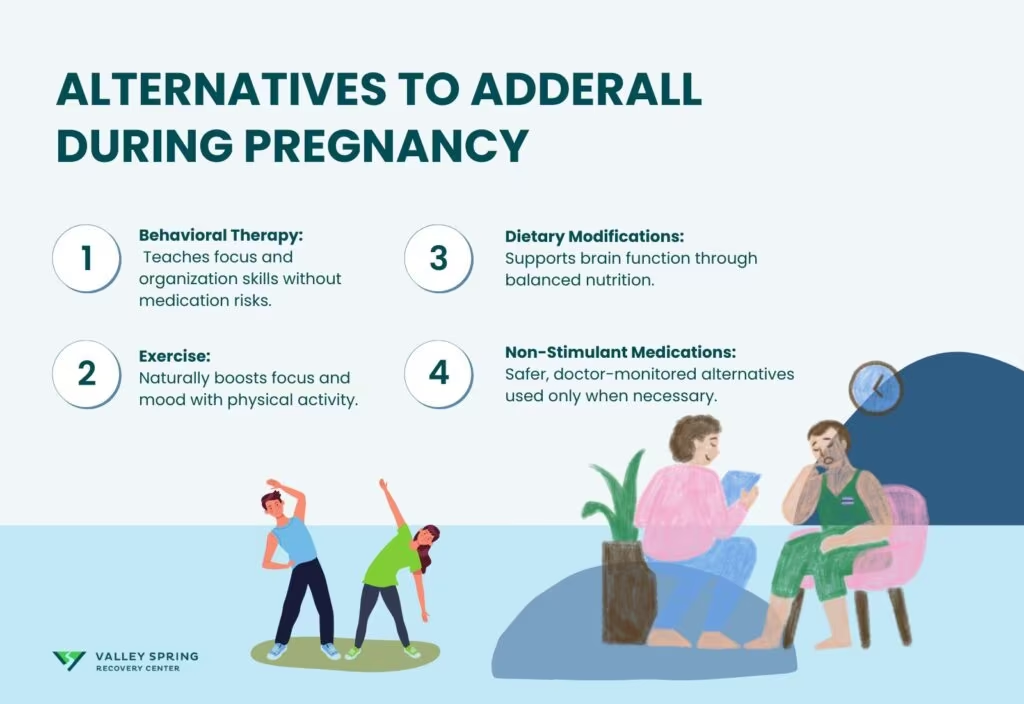
- Behavioral therapy: Skills for planning, task initiation, distraction management, and emotional regulation reduce functional impairment.
- External structure: Written routines, reminders, reduced task switching, and workplace accommodations reduce executive-load demands.
- Sleep and nutrition: Consistent sleep and adequate nutrition address symptoms that can intensify in pregnancy and during stimulant treatment.
- Medication review: The prescriber compares continuing, reducing, pausing, or changing treatment against the severity of untreated ADHD.
Can Adderall Be Stopped Suddenly During Pregnancy?
Medication changes belong with the prescribing clinician because abrupt discontinuation after prolonged use produces a defined withdrawal syndrome. Current labeling lists dysphoric mood or depression, fatigue, vivid unpleasant dreams, insomnia or hypersomnia, increased appetite, and psychomotor slowing or agitation. The return of disabling ADHD symptoms also affects driving, work, medication adherence, nutrition, and prenatal care. A clinician determines whether tapering, continued treatment, or another plan best protects maternal functioning and pregnancy safety.
Can You Take Adderall While Breastfeeding?
Breastfeeding is not recommended during treatment with Adderall XR under the current product label. Published case reports cited in labeling estimate a relative infant dose of 2% to 13.8% of the maternal weight-adjusted dose and a milk-to-plasma ratio of 1.9 to 7.5. Amphetamine can reduce milk production, especially before lactation is established, and the long-term neurodevelopmental effects of exposure through human milk are unknown.
The pediatric, obstetric, and prescribing clinicians should compare the parent's treatment need with feeding alternatives rather than rely on a fixed waiting period after each dose. Timing alone does not reliably eliminate infant exposure.
What If Adderall Use Has Become Difficult to Control?
Adderall is a Schedule II controlled stimulant, but prescribed use is not the same as stimulant use disorder. Taking the medication exactly as directed for ADHD is therapeutic exposure. Taking larger amounts, using another person's prescription, changing the route, seeking intoxication, repeatedly failing to cut down, or continuing despite harm indicates nonmedical use or possible stimulant use disorder. The same distinction between therapeutic exposure, misuse, physical dependence, and addiction applies across prescription and illicit amphetamines.
Pregnancy raises the urgency for coordinated obstetric, psychiatric, and substance-use care; it does not justify abrupt unsupervised withdrawal or shame.
A confidential assessment identifies prescribed use, nonmedical exposure, other substances, cardiovascular symptoms, mental health conditions, and fetal needs. Adderall addiction treatment uses behavioral care and recovery support. When ADHD or another psychiatric condition accompanies stimulant misuse, integrated treatment for co-occurring mental health and substance use disorders coordinates both parts of care.
Does Adderall Cause Neonatal Withdrawal?
The FDA label directs clinicians to monitor infants born to mothers taking amphetamines for feeding difficulty, irritability, agitation, and excessive drowsiness. An exposed newborn should be evaluated by the pediatric team.
Does Taking Adderall Mean a Pregnancy Is High Risk?
Not automatically. Medication exposure becomes one factor in the obstetric assessment. Maternal blood pressure, fetal growth, dose, co-exposures, and other medical conditions determine the monitoring plan.
Should Someone Hide Nonmedical Use From the Obstetrician?
No. Accurate dose, route, frequency, and co-exposure information allows the care team to protect the pregnant patient and fetus, anticipate withdrawal or toxicity, and connect the patient with treatment.
Sources & References5ShowHide
- DailyMed. Adderall XR prescribing information — Current FDA labeling for pregnancy risk, neonatal monitoring, Schedule II status, dependence and lactation recommendations.
- FDA. Medicine and Pregnancy — Federal patient guidance on reviewing medication benefits and risks during pregnancy and breastfeeding.
- National Library of Medicine. Dextroamphetamine-Amphetamine (MotherToBaby) — Evidence summary for prescribed exposure, miscarriage, birth defects, growth, preterm delivery, neonatal symptoms, and breastfeeding.
- Bang Madsen K, et al. In utero exposure to ADHD medication and long-term offspring outcomes. Molecular Psychiatry, 2023 — Danish registry cohort examining neurodevelopmental outcomes after prenatal ADHD-medication exposure.
- Huybrechts KF, et al. Association Between Methylphenidate and Amphetamine Use in Pregnancy and Risk of Congenital Malformations. JAMA Psychiatry, 2018 — International Pregnancy Safety Study Consortium cohort separating first-trimester amphetamine exposure from methylphenidate exposure.