


Clinical guide
How Long Does Crack Stay in Urine, Blood, Saliva and Hair?
Crack and powder cocaine produce the same metabolites. Learn why urine commonly detects benzoylecgonine for days and why test windows vary.
By Paul James Roeser·Reviewed by Dr. Michael Olla, MD·5 min read
Published ·Updated
Crack cocaine remains detectable in urine for about 2 to 4 days after a single exposure because laboratories test primarily for benzoylecgonine, a cocaine metabolite that lasts longer than the brief high. Chronic, high-exposure use has produced positive saliva and urine results for 5 to 10 days in clinical research. Specimen type, dose, repeated use, collection timing, assay cutoff, and confirmation method determine the result.
Crack and powder cocaine are different forms of the same drug. Smoking crack creates a faster onset and shorter subjective effect than snorting powder cocaine, but both forms produce benzoylecgonine. A routine positive result therefore identifies cocaine exposure rather than the route or form used.
What Is the Typical Crack Cocaine Detection Window?
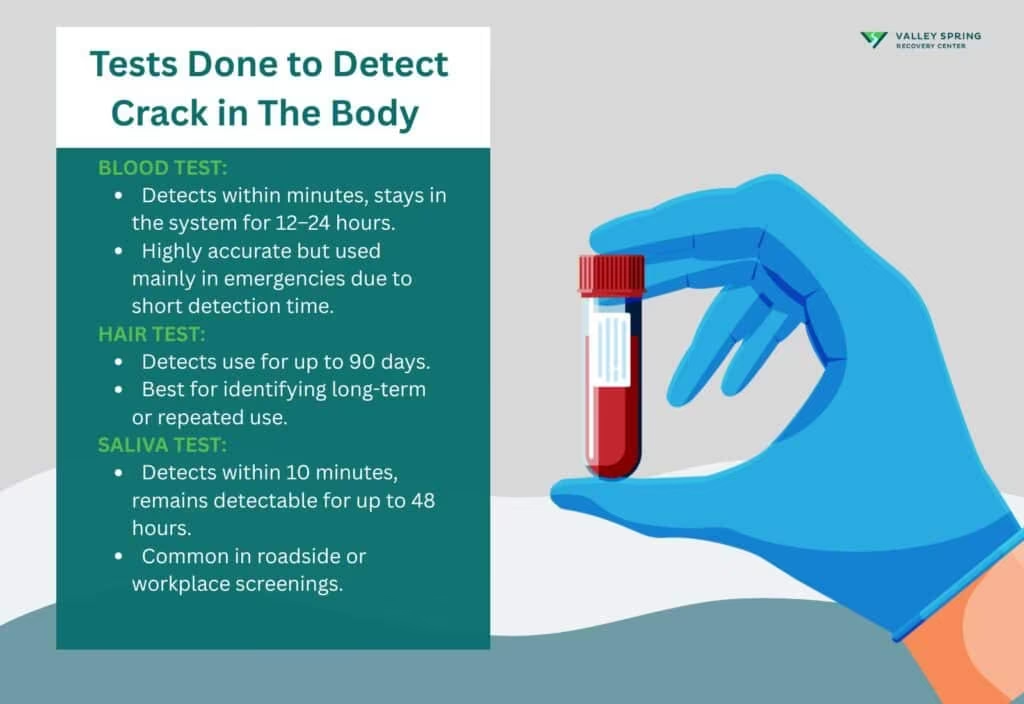
| Specimen | General window | What the result means |
|---|---|---|
| Urine | About 2–4 days after a single exposure; 5–10 days documented after chronic, high-exposure use | Past cocaine exposure above the assay cutoff, primarily through benzoylecgonine |
| Oral fluid | About 1–2 days in many testing settings | Relatively recent cocaine or metabolite presence |
| Blood | Usually several hours to roughly 1–2 days | Recent exposure; interpretation requires clinical context |
| Hair | Approximately a 90-day history for a standard scalp segment | Historical exposure, not present impairment or exact date |
These ranges synthesize published detection reviews and standard testing practice; they are estimates rather than promises. A test program's analyte, cutoff, specimen length, laboratory method, and chain of custody determine what it can report. Highly sensitive clinical assays can detect metabolites beyond the usual routine window.
Why Does Urine Detect Crack After the High Ends?
The crack high ends before urine detection because parent cocaine has a half-life near one hour, while benzoylecgonine has a longer half-life and remains available for renal excretion. Liver and plasma enzymes convert cocaine into metabolites, and the kidneys move those metabolites into urine. Laboratories therefore lead urine testing with benzoylecgonine instead of trying to capture only unchanged cocaine.
The result does not measure how high a person felt, how impaired the person was, or whether the person meets diagnostic criteria for cocaine use disorder. It records whether the target analyte exceeded the laboratory cutoff in that specimen.
Which Factors Extend Cocaine Detection?
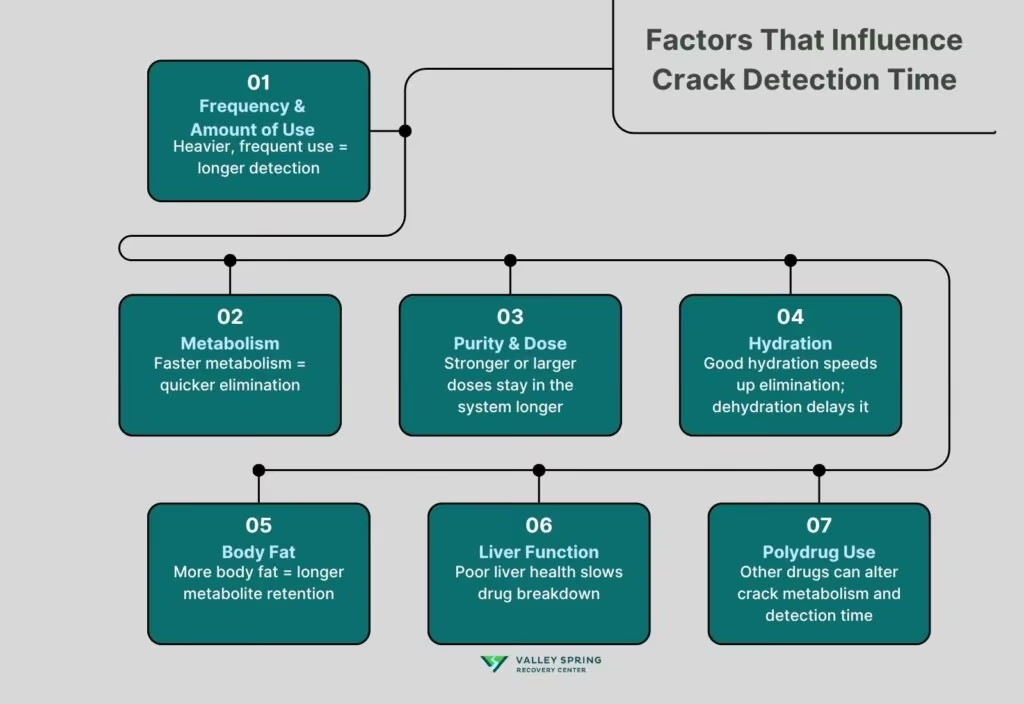
Repeated high-dose use extends detection because metabolites accumulate across exposures. Collection timing and laboratory sensitivity then determine whether the remaining concentration crosses the reporting threshold.
- Frequency: Repeated use creates more metabolite to eliminate than a single exposure.
- Dose: Larger exposure generally produces a larger metabolite burden.
- Specimen: Urine, oral fluid, blood, and hair represent different biological windows.
- Cutoff: A lower analytical cutoff detects smaller concentrations for longer.
- Metabolism and organ function: Individual physiology changes elimination, but it cannot predict an exact negative-test time.
How Do Screening and Confirmation Tests Differ?
An initial immunoassay screens for a cocaine metabolite class, while a confirmatory laboratory method identifies and quantifies the specific analyte. Regulated programs use defined collection, custody, cutoff, confirmation, and Medical Review Officer procedures.
Clinical testing and workplace testing answer different questions. A clinician uses toxicology alongside symptoms and history; a workplace program applies a defined policy and federal or employer rules. An at-home result lacks the safeguards and interpretive review of a certified laboratory process.
Can Crack Be Detected After One Week?
Detection after one week is possible after repeated or heavy exposure and through long-window specimens such as hair, but it is less typical for urine after a single use. No calculator can guarantee when an individual's result will fall below a particular cutoff.
Water, exercise, saunas, supplements, and commercial cleanses do not reliably accelerate cocaine metabolism. Excessive water can create a dilute specimen and can cause dangerous electrolyte imbalance.
How Do Single and Repeated Crack Use Compare?
A single exposure usually creates a shorter urine window than a binge or repeated heavy use. Repeated dosing adds cocaine before earlier metabolites have cleared, increasing the benzoylecgonine burden and extending the time needed to fall below the laboratory cutoff. This difference explains why a 2–4 day estimate fits many single exposures while a week or longer remains possible after sustained use.
Smoking also changes the behavioral pattern. Crack reaches the brain rapidly and produces an intense but brief effect, so another dose can follow quickly. That fast onset, short duration, and repeated redosing strengthen reinforcement even though routine toxicology cannot identify the smoked route.
Does a Drug Test Distinguish Crack From Powder Cocaine?
No. Standard toxicology generally detects cocaine or benzoylecgonine and does not determine whether exposure came from smoked crack or powdered cocaine. Route-specific conclusions require evidence beyond the routine laboratory result.
Does a Positive Cocaine Test Diagnose Addiction?
No. A positive test documents exposure above a cutoff; cocaine use disorder requires a clinical pattern of impaired control, risky use, functional harm, craving, tolerance, or withdrawal. A negative test also does not exclude a disorder when collection occurs outside the detection window.
What Should Someone Do About Repeated Crack Use?
The post-use crash commonly brings exhaustion, increased sleep, depressed mood, increased appetite, slowed activity, anhedonia, and intense craving. Sleep can later become fragmented, and craving or low mood can persist beyond the initial crash. Suicidal thoughts, psychosis, severe agitation, chest pain, seizure, or collapse requires immediate emergency evaluation; call or text 988 for a suicide crisis and call 911 for immediate danger or medical toxicity.
Repeated crack use, binge patterns, inability to stop, or continued use despite harm warrants a substance-use assessment. Cocaine addiction treatment relies on behavioral care because no medication is FDA-approved specifically for cocaine use disorder. Cognitive behavioral therapy for stimulant recovery identifies cues and rehearses coping responses. Contingency management reinforces verified abstinence and treatment participation through a different behavioral mechanism.
Does Crack Show Up as Cocaine on a Drug Test?
Yes. Crack is cocaine base, and its metabolites trigger the cocaine category on standard drug panels.
Can a Test Show the Exact Time Crack Was Used?
No. Concentration and specimen type provide a detection range, not an exact use time, dose, route, or level of impairment.
Is Crack Withdrawal Dangerous?
Crack withdrawal commonly produces fatigue, sleep disruption, depressed mood, anhedonia, increased appetite, psychomotor slowing or agitation, and intense craving. The syndrome is usually not defined by the seizure or delirium risk seen in alcohol withdrawal, but severe depression and suicide risk make clinical assessment essential. Suicidal thoughts, psychosis, chest pain, or severe agitation require immediate medical or emergency evaluation.
Sources & References6ShowHide
- SAMHSA. Mandatory Guidelines for Federal Workplace Drug Testing Programs Using Urine — Federal specimen, analyte, screening, confirmation, and cutoff framework for cocaine-metabolite testing.
- U.S. Department of Transportation. 49 CFR Part 40 drug testing procedures — Regulated testing procedures, confirmatory testing, specimen validity, and Medical Review Officer interpretation.
- National Institute on Drug Abuse. Cocaine DrugFacts — Cocaine forms, routes, short-lived effects, health risks, and cocaine use disorder treatment.
- Verstraete AG. Detection times of drugs of abuse in blood, urine, and oral fluid. Therapeutic Drug Monitoring, 2004 — Peer-reviewed comparison of specimen detection windows and the effects of dose, sensitivity, route, duration of use, and collection timing.
- Cone EJ, Weddington WW Jr. Prolonged occurrence of cocaine in human saliva and urine after chronic use. Journal of Analytical Toxicology, 1989 — Documented cocaine detection for 5 to 10 days during abstinence among people with chronic, high-exposure use.
- NHTSA. Cocaine: Drug and Human Performance Fact Sheet — Pharmacokinetic context for cocaine's short parent-drug half-life, benzoylecgonine persistence, acute effects, and withdrawal.