


Clinical guide
CBD Vs. THC: What Is The Difference?
CBD and THC are both cannabis compounds but differ sharply in effect, CBD offers non-intoxicating relief while THC produces marijuana's psychoactive high.
By Paul James Roeser·Reviewed by Noelle Mathew, LCSW, LCADC, CASAC-M·6 min read
Published ·Updated
The difference between CBD and THC lies in their chemical structure and interaction with the body’s endocannabinoid system, producing distinct effects on mood, pain, and cognition. CBD offers therapeutic benefits without intoxication.
THC, on the other hand, binds directly to CB1 receptors in the brain, triggering euphoria and altering perception.
The difference in effects of CBD and THC influences how each compound is used for pain, anxiety, and recovery support.
In New Jersey, roughly 1.2 million adults report using CBD products, while around 700,000 adults consume THC-containing cannabis for medical or recreational purposes, as reported by the New Jersey Department of Health, 2023.
Delivery methods for CBD and THC, such as smoking, vaping, tinctures, capsules, edibles, and topicals, not only affect onset and duration but also influence bioavailability, dosing precision, and risk of side effects.
CBD provides steady anti-inflammatory, neuroprotective, and anxiety-reducing effects without intoxication, while THC offers potent analgesia, appetite stimulation, and nausea relief when used responsibly under supervision.
What Is the Difference Between CBD and THC?
The core difference between CBD (cannabidiol) and THC (tetrahydrocannabinol) lies in how each compound interacts with the body’s endocannabinoid system and affects the brain. While both share a nearly identical molecular structure, their interaction with the body’s endocannabinoid system results in very different physiological and psychological effects.
The core difference between CBD and THC:
Psychoactive Effects
THC is psychoactive. It binds directly to CB1 receptors in the brain, producing euphoria, altered perception, and relaxation.
CBD is non-psychoactive. It indirectly modulates these receptors, promoting calm and balance without intoxication or cognitive impairment.
Legal Status
CBD derived from hemp (containing less than 0.3% THC) is federally legal under the 2018 Farm Bill in the United States.
THC remains federally restricted and is only legal in states with medical or recreational cannabis programs.
Source
Both cannabinoids come from the cannabis plant, but their primary sources differ. CBD is predominantly extracted from hemp, which contains minimal THC.
THC is extracted from marijuana, a cannabis variety cultivated for higher psychoactive potency.
Effects on the Brain
THC activates CB1 receptors directly, altering neurotransmitter release and perception. CBD modulates receptor activity indirectly, influencing serotonin and anandamide signaling to reduce anxiety and pain without producing a “high.”
Medical Use
CBD provides therapeutic relief for anxiety, inflammation, chronic pain, and epilepsy, supported by FDA-approved formulations like Epidiolex.
THC is prescribed for pain management, nausea, and appetite stimulation, especially in cancer and HIV patients, as verified in studies such as Pantoja-Ruiz et al. (2022).
Side Effects
THC may cause paranoia, anxiety, short-term memory impairment, and dependency risk, especially at higher doses or prolonged use.
CBD is well-tolerated, with mild side effects such as dry mouth, drowsiness, or digestive discomfort, and no known addictive potential.
Drug Testing
THC appears on standard drug tests, as metabolites remain detectable in urine and blood. CBD typically does not trigger positive drug test results unless contaminated with trace THC from poorly regulated sources.
Federal Legal Classification
Under U.S. law, hemp-derived CBD (≤0.3% THC) is federally legal for therapeutic and commercial use.
THC and marijuana-derived CBD remain Schedule I controlled substances, restricted to medical programs with state authorization.
What Is CBD and How Does It Work?
CBD, or cannabidiol, is a naturally occurring compound found in the Cannabis sativa plant. Unlike THC, it does not bind strongly to CB1 receptors in the brain, which are responsible for psychoactive effects.
CBD influences the body’s endocannabinoid system indirectly by helping maintain balance in functions such as mood, immune response, pain perception, and sleep cycles. WebMD (2024) notes that this indirect interaction allows CBD to regulate how the body’s own cannabinoids, called endocannabinoids, function without overstimulating the brain’s reward pathways.
The therapeutic potential of CBD lies in its ability to calm neural activity and reduce inflammation. This modulation provides a sense of stability without intoxication for people in recovery or managing anxiety. CBD’s ability to influence serotonin and TRPV1 receptors also supports emotional regulation, which is particularly valuable for individuals managing post-addiction mood fluctuations.
What Is THC and How Does It Affect the Brain?
THC, or delta-9-tetrahydrocannabinol, is the primary psychoactive compound in cannabis. It mimics anandamide, one of the body’s naturally occurring neurotransmitters, by directly binding to CB1 receptors in the brain.
The process of THC binding to CB1 alters communication between neurons and triggers dopamine release, creating the euphoric feeling associated with cannabis use. According to Medical News Today (2024), this same mechanism distorts memory, coordination, and time perception.
THC poses risks for people with substance use vulnerabilities. Its effect on the reward system reinforces patterns of compulsive use and emotional dependence. Even moderate consumption impairs short-term memory and increases anxiety in sensitive individuals.
Long-term exposure to THC is linked to tolerance, meaning users require higher doses for the same effect, which evolves into a psychological addiction. While THC does have valid medical uses, it must be approached cautiously within recovery settings to avoid triggering relapse or mood instability.
Which Compound Is Better for Pain Management, CBD or THC?
THC is more effective for acute and neuropathic pain due to its strong receptor binding, while CBD provides steady anti-inflammatory and neuromodulatory benefits for chronic pain. Medical News Today (2024) emphasizes that combining both in precise ratios yields optimal results, but for individuals recovering from addiction, CBD alone is safer. It allows pain management without activating reward circuits that reinforce dependency.
Can CBD or THC Cause Addiction?
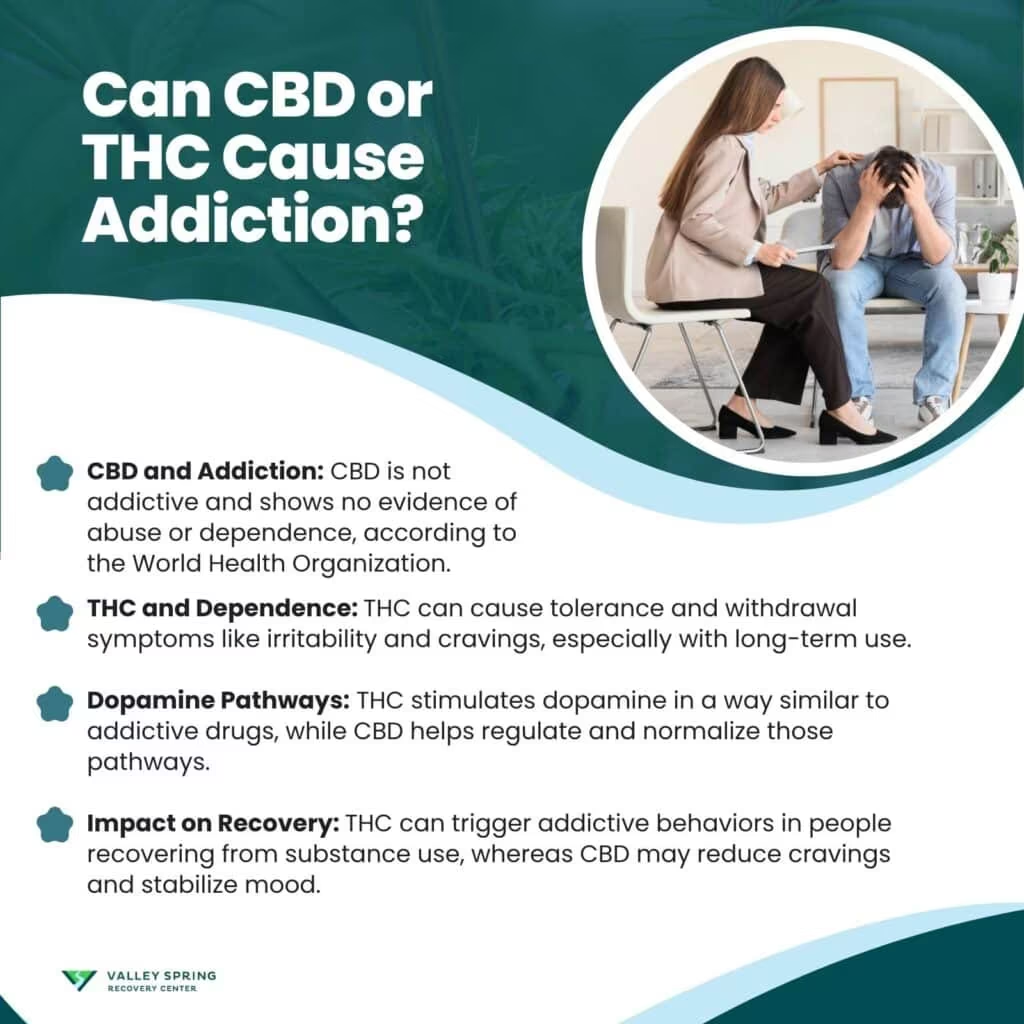
No, CBD does not appear to cause addiction. The World Health Organization confirms that CBD shows no evidence of dependence or abuse potential. THC leads to tolerance and withdrawal symptoms, including irritability, restlessness, and cravings, especially with chronic use, as reported by Verywell Mind.
THC activates dopamine pathways similar to other addictive substances, while CBD normalizes those same circuits. Using THC reignites the brain’s reward responses associated with substance use for individuals in recovery, while CBD helps dampen those triggers and stabilize mood regulation.
Can CBD and THC Work Together?
Yes, CBD and THC can complement each other in specific medical formulations, a concept known as the entourage effect. According to Healthline (2024), this synergy means that CBD enhances THC’s pain-relieving properties while reducing anxiety and cognitive impairment associated with THC alone.
Medical cannabis with a balanced 1:1 CBD-to-THC ratio is sometimes prescribed to patients who require potent pain relief but need to remain mentally stable. This combined approach is rarely recommended in addiction recovery because even trace intoxication triggers psychological cravings or relapse. Supervised use with medical guidance is essential when exploring combined cannabinoid therapy.
Can CBD Support Addiction Recovery?
Yes, emerging research suggests CBD supports addiction recovery by reducing cravings and managing stress responses. A study by Prud'homme M, Cata R, Jutras-Aswad D. et al. 2015 titled “Cannabidiol as an Intervention for Addictive Behaviors: A Systematic Review of the Evidence,” found that CBD’s effect on the limbic system, the brain region controlling motivation and emotion, decreases the intensity of drug-related cues and anxiety. This makes it a promising adjunct in relapse prevention.
CBD’s anti-inflammatory and neuroprotective properties help restore neural function damaged by prolonged substance use. Its ability to normalize dopamine levels and promote sleep further supports emotional regulation, making it valuable during detox and early recovery stages. When THC use itself has become the problem, structured marijuana addiction treatment addresses cravings, withdrawal, and relapse risk directly.
How does THC addiction impact mental and psychological health?
THC addiction disrupts brain chemistry and emotional regulation, leading to anxiety, depression, and mood instability. Prolonged THC use alters neurotransmitter pathways, reducing the brain’s natural ability to manage stress and pleasure. Understanding these psychological and mental health effects of addiction helps guide integrated treatment that addresses both the physiological and emotional aspects of recovery.