


Clinical guide
What Are Track Marks? Appearance, Causes & Healing
Track marks are needle scars from IV drug use. See what fresh vs. old marks look like, why veins blow or collapse, and whether track marks ever fade.
By Paul James Roeser·Reviewed by Noelle Mathew, LCSW, LCADC, CASAC-M·9 min read
Published ·Updated
Track marks are the punctures, bruises, discoloration, and scars left along a vein by repeated intravenous drug injection. A single needle stick heals quietly. Repeated injection into the same vein does not, because the tissue never gets time to recover.
Most track marks appear on the inner arm at the crook of the elbow. They also develop on the hands, forearms, legs, feet, and neck. Fresh marks look like red puncture dots with bruising. Old track marks look like darkened lines, raised scars, or hardened veins beneath the skin.
Key Takeaways
- Track marks are cumulative vein and skin damage from repeated needle injection, not a one-time injury.
- The estimated number of U.S. adults who inject drugs rose from roughly 774,000 in 2011 to nearly 3.7 million in 2018, according to CDC data.
- People who inject drugs accounted for 7 percent of the estimated 31,800 new U.S. HIV infections in 2022, per the CDC.
- Fresh punctures often heal within a week, but scar tissue and collapsed veins from long-term use are frequently permanent.
- Spreading redness, red streaking, pus, or fever at an injection site signals infection and needs same-day medical care.
What Are Track Marks?
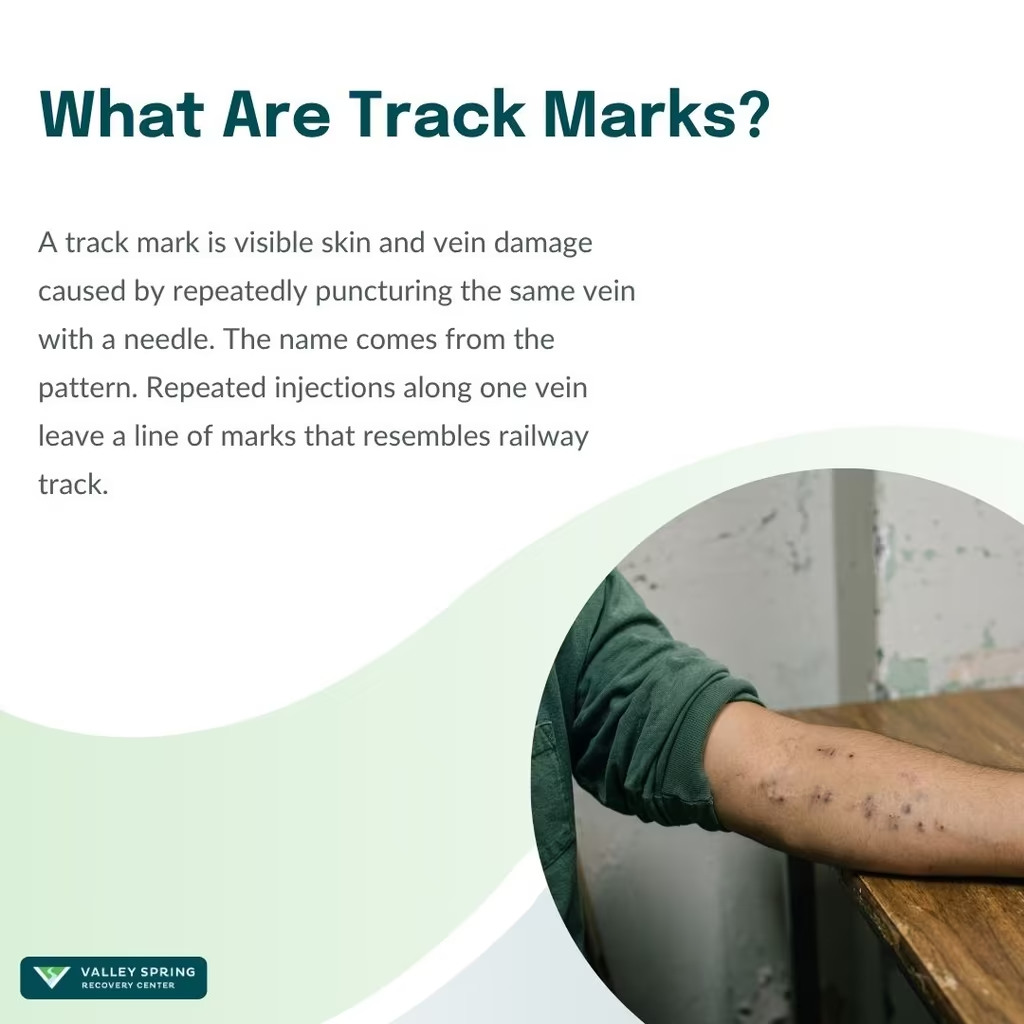
A track mark is visible skin and vein damage caused by repeatedly puncturing the same vein with a needle. The name comes from the pattern. Repeated injections along one vein leave a line of marks that resembles railway track.
Track marks differ from an ordinary needle mark in one way: repetition. A blood draw leaves a single dot that fades in days. Track marks form because injection happens again before the previous damage has healed, so injury accumulates faster than the body repairs it.
What Do Track Marks Look Like?
Track marks change appearance depending on how recently injection occurred and how long use has continued. Three stages help identify them. Someone injecting regularly usually shows fresh, healing, and old marks at the same time on the same limb.
Fresh Track Marks
Fresh track marks appear within hours of injection. They look like small red or dark puncture points, often with a surrounding bruise. The skin may be swollen, tender, or slightly raised. Some sites bleed, weep clear fluid, or scab over quickly.
Healing Track Marks
Healing track marks develop across several days to weeks. Scabs form over the punctures. Bruising shifts from purple to green and yellow as blood reabsorbs. The skin along the vein may feel thickened as early scar tissue builds underneath.
Old Track Marks
Old track marks reflect months or years of injection. The skin darkens into hyperpigmented lines that trace the vein. Raised or sunken scars develop. Damaged veins harden into cord-like ridges, or the area becomes indented where a vein has collapsed and no longer fills.
What Track Marks Mean in Slang?
In everyday slang, track marks means the visible trail of needle scars that follows a vein down the arm. The shortened form is simply "tracks." People also say needle marks, injection marks, or puncture marks to describe the same thing.
Related slang includes "shooting up" for injecting into a vein and "skin popping" for injecting under the skin rather than into it. Recognizing this vocabulary helps families interpret what they hear, though the physical signs are more reliable than the language.
The Medical Term for Track Marks
Clinically, track marks are documented as venipuncture marks, needle track scars, or injection-site scarring. Medical records may note them under the abbreviation IVDU, meaning intravenous drug use, or IVDA, meaning intravenous drug abuse. Some clinicians simply write "injection stigmata."
Dermatology literature describes classic track marks as linear, pigmented, atrophic scars running along the course of an injected vein. Skin popping produces a different pattern. Those lesions are rounder, pitted, and scattered rather than following a single vein line.
Where Track Marks Appear on the Body
Track marks form wherever veins sit close enough to the surface to be accessed. The inner elbow is almost always the first site. As those veins scar over or collapse, injection migrates to less convenient locations, so the pattern of sites often reveals how long use has continued.
- Inner arm: the antecubital fossa at the crook of the elbow, the most common starting point.
- Forearms and upper arms: marks trace visibly along the vein path.
- Hands and wrists: smaller, more fragile veins that bruise and scar readily.
- Legs and feet: often used once arm veins are exhausted, with slower healing due to poor circulation.
- Neck and groin: associated with advanced use and substantially higher medical risk.
Track Marks vs Bruises vs Other Skin Marks
The most common question families ask is whether a mark is a bruise or something else. Pattern and repetition give the clearest answer. A bruise appears alone and resolves. Track marks cluster, repeat, and follow a vein.
| Feature | Track marks | Ordinary bruises | Medical IV or blood draw marks |
| Cause | Repeated self-injection into veins | Blunt impact to soft tissue | Single clinical venipuncture |
| Pattern | Linear and clustered along one vein | Isolated, irregularly placed | One site, often with a bandage mark |
| Location | Accessible veins, arms first, then hands and legs | Anywhere impact occurs | Inner elbow or back of hand |
| Other signs | Scabs, hyperpigmentation, hardened or indented veins | Color change only | Small bruise, no scarring |
| Healing | Slow, frequently scars | Clears in one to two weeks | Clears in days |
What Causes Track Marks to Form?
Track marks are caused by an injury cycle that never completes. The needle punctures skin and pierces the vein wall. Before that damage closes, another injection reopens it. Inflammation builds, and the body responds by laying down scar tissue.
Several factors accelerate the damage. Reused or blunted needles tear tissue rather than piercing it cleanly. Drug additives and cutting agents irritate the vein lining. Missing the vein pushes the substance into surrounding tissue, causing deeper bruising and sometimes abscess formation.
Blown Veins and Collapsed Veins
A blown vein happens when the needle punctures through the vein wall and blood leaks into surrounding tissue. The site swells immediately and turns dark purple or black. It is painful and often mistaken for a simple bruise, but the mechanism is a ruptured vessel.
A collapsed vein is different and more lasting. Repeated trauma causes the vein walls to thicken with scar tissue until the vessel narrows and stops carrying blood. The area may look sunken, and the vein can no longer be felt or accessed.
Whether collapsed veins heal depends on severity. Temporary collapse from swelling can resolve once the vein is left alone and inflammation subsides. Veins permanently scarred by long-term injection generally do not reopen, and blood reroutes through smaller surrounding vessels instead.
Signs of Infection at an Injection Site
Injection bypasses the skin, which is the body's primary barrier against bacteria. That makes infection one of the most common and most urgent complications of injecting. Infected track marks can progress from a local problem to a systemic emergency within days.
Warning signs that require prompt medical attention include:
- Redness that expands outward from the site rather than fading.
- Red streaks running up the arm or leg away from the wound.
- Increasing pain, hardness, warmth, or visible swelling.
- Pus, foul odor, or an open sore that will not close.
- Fever, chills, sweating, or a rapid heartbeat.
Abscesses and cellulitis, common examples of broader substance-related skin lesions, are the most frequent infections. The CDC reports that hospitalizations for injection-related infections such as endocarditis and MRSA cost over $700 million in 2012 alone. Red streaking and fever together suggest infection has entered the bloodstream and warrant emergency care.
Health Risks Behind the Marks
Track marks are visible evidence of an invisible risk profile. Every injection carries the possibility of introducing bacteria or transmitting bloodborne viruses, and the consequences extend well beyond the skin.
Infection can travel to the heart. StatPearls notes that intravenous drug use "accounts for nearly 10% of" infectious endocarditis cases, a condition that damages heart valves and often requires surgery. Sharing injection equipment also transmits HIV and hepatitis C. The CDC reports that people who inject drugs made up 7 percent of new U.S. HIV infections in 2022, while HHS notes injecting drugs "is the most common way HCV is transmitted in the United States," with 66 percent of new 2020 hepatitis C cases reporting injection use.
The National Institute on Drug Abuse links chronic heroin injection to "scarred and/or collapsed veins, bacterial infections of the blood vessels and heart valves, abscesses (boils), and other soft-tissue infections."
Do Track Marks Ever Go Away?
Whether track marks go away depends on how deep the damage runs and how long injection continued. Recent, superficial marks often fade completely. Scars from years of injection frequently do not. Healing also slows with poor nutrition, smoking, and untreated infection.
| Type of mark | Typical timeline |
| Fresh puncture wounds | Close within several days to a week |
| Bruising and blown veins | Fade over one to three weeks |
| Scabs and open wounds | Resolve over several weeks to a few months |
| Hyperpigmentation | Lightens gradually over months to a year |
| Scar tissue from chronic use | Softens over months to years, often permanent |
| Collapsed veins | Usually permanent |
Why Hiding Track Marks Creates Risk
Concealing track marks with long sleeves, makeup, or tattoos is common, and the impulse behind it is understandable. Stigma is real. The practical problem is that concealment delays the moment someone notices an infection that is spreading.
Covering an active wound with cosmetics also introduces bacteria into broken skin. Tattooing over injection scars carries similar risk, and reputable artists decline to work on tissue that has not fully healed. The safer path is treating the wound and addressing the injection itself.
When Do Track Marks Indicate a Need for Addiction Treatment?

Track marks confirm repeated injection injury; they do not diagnose addiction, identify the injected substance, or establish physical dependence by themselves. Craving, loss of control, recurring withdrawal, hazardous use, and continued use despite harm establish the need for a substance-use assessment. Fever, spreading redness, chest pain, breathing difficulty, confusion, or loss of consciousness requires urgent medical care before an addiction assessment.
When repeated opioid injection occurs with craving, withdrawal, unsuccessful attempts to stop, or continued use despite infection and vein damage, an opioid addiction treatment assessment identifies the appropriate level of care, medication options, and wound-care coordination. Valley Spring Recovery Center provides outpatient substance-use treatment in Norwood, New Jersey, and coordinates medical detoxification or hospital care when a person needs a higher level of support.
References
1. Tanz, L. J., Gladden, R. M., Dinwiddie, A. T., Miller, K. D., Broz, D., Spector, E., & O'Donnell, J. (2024). Routes of drug use among drug overdose deaths, United States, 2020–2022. MMWR. Morbidity and Mortality Weekly Report, 73(6), 124–130. CDC
2. Centers for Disease Control and Prevention. (2024). Fast facts: HIV in the United States.
3. Centers for Disease Control and Prevention. Data summary: Vulnerable areas for infectious diseases in persons who inject drugs. https://www.cdc.gov/persons-who-inject-drugs/vulnerable/index.html
4. U.S. Department of Health and Human Services. (2023). Hepatitis C basic information. HHS
5. National Institute on Drug Abuse. What are the medical complications of chronic heroin use? NIH
6. Yallowitz, A. W., & Decker, L. C. Infective endocarditis. In StatPearls. National Library of Medicine.