


Clinical guide
What Is Zaza? Meaning, Drug Risks, and Legal Status
Zaza means exotic weed and a tianeptine pill sold at gas stations. Learn what zaza is, what Zaza Red contains, and why the FDA warns against it.
By Paul James Roeser·Reviewed by Noelle Mathew, LCSW, LCADC, CASAC-M·8 min read
Published ·Updated
In cannabis culture, zaza refers to exotic, high potency marijuana. In gas stations and smoke shops, Zaza is a brand name printed on pills that contain tianeptine, an unapproved drug that acts on opioid receptors.
One meaning describes premium flower. The other describes a product the FDA has never approved for any medical use in the United States. The gap between those two answers is why the question keeps getting asked. Poison control cases involving tianeptine rose from 4 in 2013 to roughly 350 in 2024, according to the FDA.
Key Takeaways
- Zaza is a street slang for exotic cannabis and a brand name for tianeptine capsules sold as supplements.
- FDA classifies it as an unsafe food additive and says it does not qualify as a dietary ingredient.
- Poison control cases went from 4 in 2013 to about 350 in 2024, a rise the FDA has tied directly to these retail products.
- The FDA has documented daily intakes between 1.3 and 250 times the dose approved in countries where tianeptine is a prescription antidepressant.
- Tianeptine remains uncontrolled under the Controlled Substances Act, though 20 states have scheduled it independently.
What Does Zaza Mean?
The meaning of zaza depends entirely on who is saying it and where. Among cannabis users, za and zaza describe top shelf marijuana with high THC content. The word signals quality rather than a specific strain.
In a convenience store, Zaza means something else. It is a label on small bottles of red or white capsules marketed as mood boosters, nootropics, or energy supplements, sold beside the register.
Context usually resolves the ambiguity. Someone smoking a zaza is smoking cannabis, because tianeptine capsules are swallowed rather than smoked. Someone buying zaza pills at a gas station is buying a drug product.
Zaza as Cannabis Slang
The term traces back to the word exotic. Users shortened exotic to za-tic, then to za, and eventually doubled it into zaza. That progression happened inside Atlanta rap culture in the late 2010s.
Rapper Ola Runt publicly claimed credit for popularizing the phrase in 2019. The slang spread nationally after 21 Savage referenced it on his 2019 single "a lot," with later mentions from Gucci Mane, Moneybagg Yo, and Lil Mosey.
Social media accelerated it further. Creators adopted za and zaza as workarounds for platform moderation, which pushed the slang well beyond its regional origin.
Zaza joins a long list of marijuana nicknames, including the widely used Mary Jane, that let users discuss the drug in code.
Zaza as a Drug: The Tianeptine Pills Sold in Gas Stations
Zaza and Zaza Red are retail brand names for products containing tianeptine. Related brands include Tianna, Neptune's Fix, Pegasus, and TD Red. All are sold outside the prescription system despite containing an active pharmaceutical compound.
Tianeptine is an atypical tricyclic antidepressant prescribed in roughly 65 countries under names like Coaxil and Stablon. It has never been approved in the United States for any indication.
The FDA states plainly that tianeptine is an unsafe food additive and does not meet the definition of a dietary ingredient. Selling it as a supplement is therefore illegal, regardless of how the bottle is labeled.
What Zaza Pills Look Like
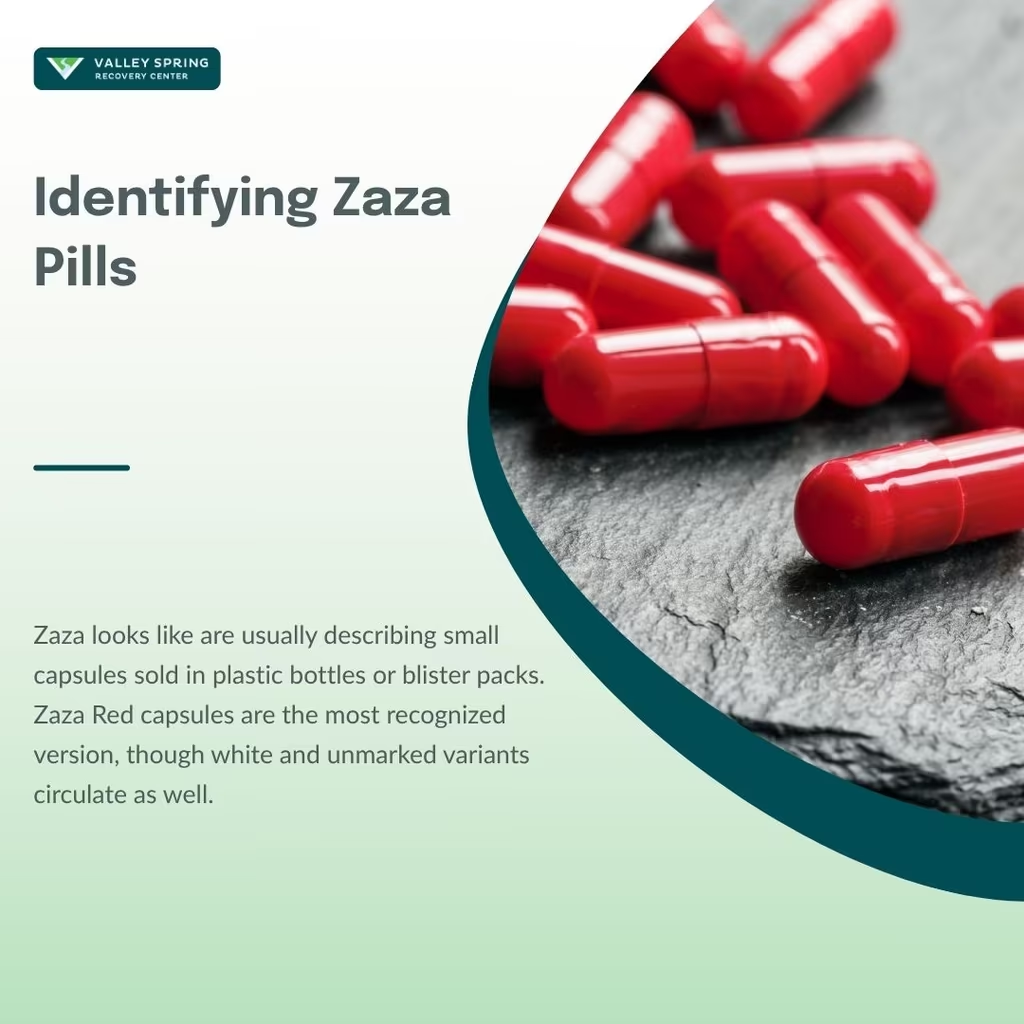
People searching for what zaza looks like are usually describing small capsules sold in plastic bottles or blister packs. Zaza Red capsules are the most recognized version, though white and unmarked variants circulate as well.
Packaging often mimics energy supplements rather than medication. Labels may list tianeptine directly, bury it in a proprietary blend, or omit it entirely.
Standard drug panels do not detect tianeptine. A routine workplace or clinical screen will not flag zaza use unless the lab specifically tests for that compound.
Why Zaza Is Called Gas Station Heroin?
At normal therapeutic doses, tianeptine works as an antidepressant. At the much higher doses people take recreationally, it behaves as a full mu opioid receptor agonist, producing euphoria, sedation, and eventually physical dependence.
The CDC has confirmed that tianeptine acts as an opioid receptor agonist, with some effects that mimic opioid toxicity. That pharmacology, combined with over the counter availability, produced the gas station heroin nickname.
A common question is whether tianeptine is stronger than morphine. That framing is misleading. Federal health reviewers have described its effects as similar to opioids such as morphine, but the real danger comes from unregulated dosing and inconsistent product content rather than proven greater potency.
Kratom raises similar concerns. It is another unregulated, plant-derived product sold through the same retail channels and marketed for opioid-like effects without FDA approval.
Zaza Slang vs Zaza Pills: A Side by Side Comparison
| Feature | Zaza (cannabis slang) | Zaza / Zaza Red (product) |
| What it is | Exotic, high THC marijuana flower | Capsules containing tianeptine |
| Slang | Za, loud, gas, exotic | Gas station heroin, Tianna, Neptune's Fix, Pegasus |
| How it is used | Smoked or vaporized | Swallowed as a pill or capsule |
| Where it is obtained | Dispensaries or illicit sellers | Gas stations, smoke shops, online retailers |
| Primary mechanism | THC acting on cannabinoid receptors | Mu opioid receptor agonism at high doses |
| Federal legal status | Schedule I, though legal in many states | Not federally scheduled, but illegal to sell as a supplement |
| Main risk | Impairment, anxiety, cannabis use disorder | Opioid style dependence, withdrawal, overdose, death |
Zaza Side Effects, Dependence, and Withdrawal
Reported side effects of tianeptine products include agitation, drowsiness, confusion, sweating, rapid heartbeat, high blood pressure, nausea, and vomiting. Severe outcomes include slowed or stopped breathing, coma, and death.
Dependence develops quickly at recreational doses. Because the drug clears the body fast, people often escalate to dosing many times per day just to avoid feeling sick between capsules.
Withdrawal closely resembles opioid withdrawal. Symptoms typically include anxiety, restlessness, muscle aches, sweating, gastrointestinal distress, insomnia, and intense cravings that make unassisted quitting difficult.
The clinical severity is measurable. A 2025 analysis in the Journal of Medical Toxicology found that 40.1 percent of single substance tianeptine exposures required hospital admission, including 22.9 percent admitted to critical care.
Zaza Overdose and Product Contamination Risks
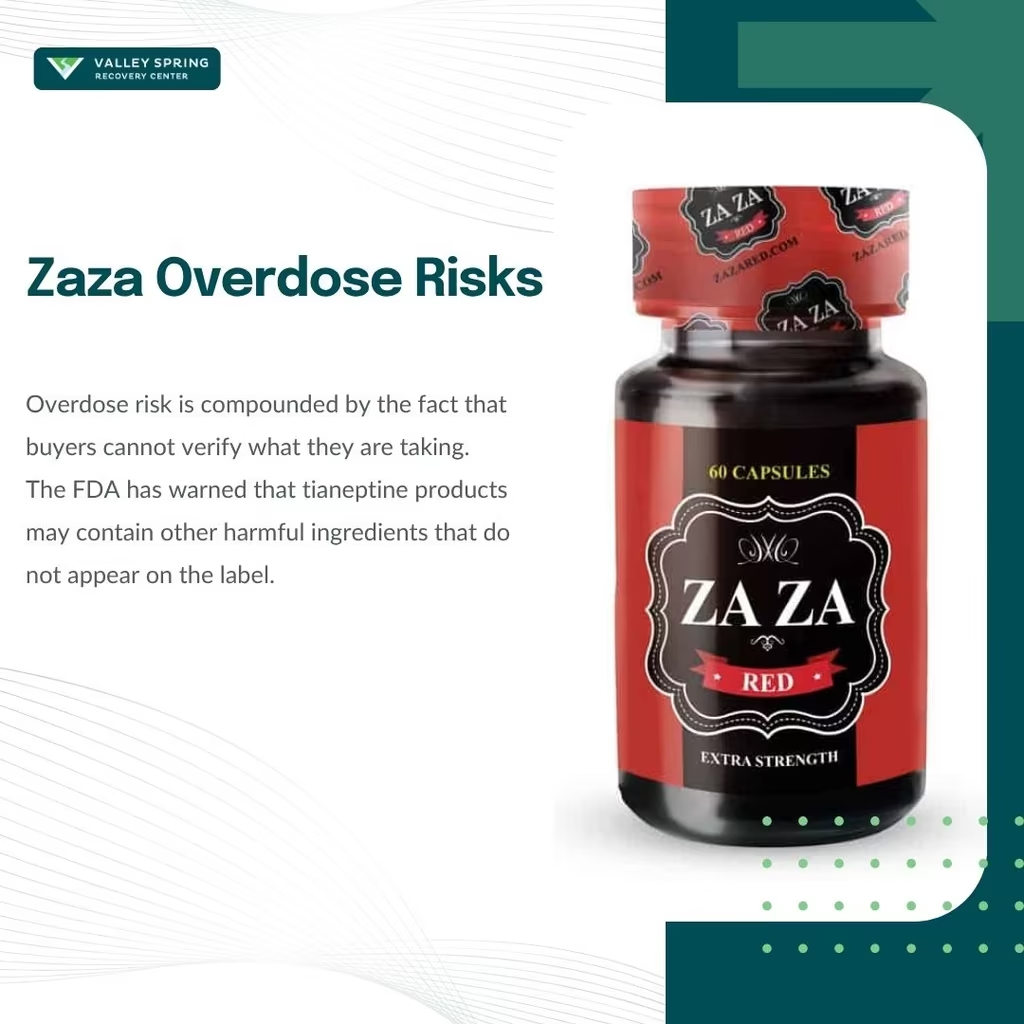
Overdose risk is compounded by the fact that buyers cannot verify what they are taking. The FDA has warned that tianeptine products may contain other harmful ingredients that do not appear on the label.
The clearest example is Neptune's Fix. After receiving reports of seizures, loss of consciousness, and death, the FDA urged retailers to stop selling the products, and the manufacturer agreed to a voluntary recall.
Naloxone can reverse a tianeptine overdose the same way it reverses heroin, which reflects how directly the drug engages opioid receptors. SAMHSA's Overdose Prevention and Response Toolkit states that everyone should keep an overdose reversal medication on hand, and especially anyone who uses drugs or has friends or family members who do.
Is Zaza Legal in the United States?
Tianeptine is not currently controlled under the federal Controlled Substances Act. That gap is precisely why the pills remain on shelves in much of the country.
State law is moving faster. As of December 2025, 20 states have scheduled tianeptine, with 14 listing it as Schedule I, five as Schedule II, and one as Schedule III. Maryland has banned retail sale separately.
Federal action is pending rather than settled. Health and Human Services has recommended Schedule I placement after finding the drug pharmacologically similar to morphine, but no final federal scheduling has taken effect.
Selling tianeptine as a dietary supplement is already unlawful under existing FDA rules. Enforcement, however, has not kept pace with how widely these products are distributed.
Getting Help for Tianeptine Dependence
Because tianeptine withdrawal follows an opioid pattern, it responds to the same evidence based approach used in opioid addiction treatment rather than a separate protocol. Case literature supports buprenorphine and naloxone for stabilizing withdrawal, sometimes with meaningful improvement within days.
Stopping abruptly after heavy use is rarely advisable. Medically supervised withdrawal comes first, followed by structured outpatient care that keeps people engaged once the acute phase passes.
At Valley Spring Recovery Center in Norwood, New Jersey, that continuum runs from partial care through intensive outpatient programming and into weekly outpatient support. On site medication-assisted treatment is available where clinically appropriate.
References
1. Centers for Disease Control and Prevention. (2018). Characteristics of tianeptine exposures reported to the National Poison Data System, United States, 2000–2017. Morbidity and Mortality Weekly Report, 67(30). CDC
2. Drug Enforcement Administration, Diversion Control Division. (2025). Tianeptine drug fact sheet.
3. National Institute on Drug Abuse. (2019). Cannabis potency data. NIH
4. U.S. Food and Drug Administration. (2024). FDA warns consumers not to purchase or use any tianeptine product due to serious risks.
5. U.S. Food and Drug Administration. (2025). Tianeptine products linked to serious harm, overdoses, death. FDA
6. Legislative Analysis and Public Policy Association. (2025). Tianeptine fact sheet.
7. Rubin-Smith, J., & Fine, J. (2025). Tianeptine exposures reported to United States poison centers. Journal of Medical Toxicology, 21(1).
8. Trowbridge, P., & Walley, A. Y. (2019). Use of buprenorphine-naloxone in the treatment of tianeptine use disorder. Journal of Addiction Medicine, 13(4).