


Mental health guide
ADHD and Addiction: What is the Correlation?
ADHD and addiction overlap: 23.1% of people in addiction treatment meet ADHD criteria. The shared dopamine mechanism, risks, and treatment evidence.
By Paul James Roeser·Reviewed by Dr. Michael Olla, MD·9 min read
Published ·Updated
Attention-deficit/hyperactivity disorder (ADHD) and addiction are interconnected through shared catecholamine signaling in the prefrontal cortex, impaired executive function, and impulsivity. The overlap is quantified: 23.1% of patients in substance use disorder treatment meet DSM criteria for ADHD, per van Emmerik-van Oortmerssen and colleagues' 2012 meta-analysis of 29 studies, against a 4.4% ADHD prevalence among U.S. adults overall, per Kessler and colleagues' 2006 National Comorbidity Survey Replication analysis.
The direction of risk is documented in longitudinal data. Adolescents and young adults whose ADHD persists into adulthood meet criteria for alcohol, marijuana, and nicotine dependence at significantly higher rates than peers, per Breyer and colleagues' 2014 study in Psychology of Addictive Behaviors. Untreated symptoms, emotional dysregulation, and academic failure each feed that pathway.
Integrated treatment addresses both conditions concurrently through cognitive behavioral therapy, medication management, and structured support, and the diagnosis of each condition changes how the other is treated. Adults with both conditions access that integrated model through outpatient ADHD treatment in Norwood, New Jersey.
Valley Spring Recovery Center's programs are open to adults 18 and older. The adolescent risk concerns a younger population, and adolescent care is a separate service that Valley Spring does not provide.
What Is the Connection Between ADHD and Addiction?
The connection between ADHD and addiction is a shared neurobiology: both conditions run on deficits in impulse control, reward processing, and emotional regulation, governed by catecholamine signaling in the prefrontal cortex, per Arnsten's 2009 review of ADHD neurobiology in the Journal of Pediatrics.
People with ADHD experience heightened restlessness and an increased need for stimulation, which makes psychoactive substances feel temporarily balancing. The same substances worsen impulsivity and impair cognitive control over time, which is how a coping strategy becomes a second disorder.

Clinical perspective
Undiagnosed ADHD shows up constantly in addiction treatment — people who've been self-medicating for years with cocaine, nicotine, or too much coffee, without anyone ever asking whether the real problem was an attention system that was never treated properly. Untreated ADHD is like going through the world a little unfocused, a little scattered, and reaching for anything that sharpens things up. Treating the ADHD itself — sometimes with a non-stimulant, sometimes carefully with a stimulant — can reduce the drive to self-medicate.
What Is the Prevalence of Addiction in People with ADHD?
23.1% of patients in substance use disorder treatment meet DSM criteria for comorbid ADHD, with a 95% confidence interval of 19.4% to 27.2%, per the 2012 meta-analysis in Drug and Alcohol Dependence, nearly one in four patients. The rate varies by substance: cocaine dependence carries a lower ADHD prevalence than alcohol, opioid, and other dependencies. Against the 4.4% adult baseline, substance use disorder populations carry roughly five times the ADHD rate of the general population.
Why Are People with ADHD More Likely to Develop Addiction?
People with ADHD are more vulnerable to addiction because of 3 documented mechanisms: dopamine-system differences that amplify drug reward, executive function deficits that weaken impulse control, and self-medication of untreated symptoms.
The Dopamine Connection
Dopamine signaling is central to both conditions. Optimal prefrontal cortex function depends on dopaminergic D1 and noradrenergic alpha-2A receptor stimulation, and ADHD is associated with genetic changes that weaken that catecholamine signaling, per Arnsten's 2009 review. Substances that spike dopamine transmission, nicotine, alcohol, cocaine, and amphetamines, produce temporary focus or calm in that under-stimulated system, and each repetition reinforces the circuit that demands the next dose.
Executive Function Impairment and Decision-Making
ADHD impairs the executive functions: working memory, response inhibition, and planning. These deficits make immediate rewards harder to resist and long-term consequences harder to weigh, which shows up in substance decisions as earlier initiation and riskier use patterns. Cognitive inflexibility compounds the problem: impulsive choices produce failures, and failures feed the distress that drives further use.
The Self-Medication Hypothesis
The self-medication hypothesis holds that people with untreated ADHD use substances to manage symptoms: stimulants for focus, alcohol or marijuana for restlessness. The relief is short-lived, tolerance builds, and the substance ends up worsening the attention and regulation problems it was recruited to fix. The pattern is strongest where ADHD was never diagnosed, which is common: the majority of adult ADHD cases are untreated for ADHD itself, per Kessler and colleagues' 2006 analysis.
How Does Untreated ADHD Raise Substance Use Risk?
Persistent, untreated ADHD predicts substance dependence directly: young adults whose childhood ADHD still met diagnostic criteria in adulthood were significantly more likely to meet DSM-IV criteria for alcohol, marijuana, and nicotine dependence at mean ages 18, 20, and 22, after controlling for age, sex, childhood stimulant medication, and childhood conduct problems, per Breyer and colleagues' 2014 longitudinal study.
The control variables matter: the elevated risk belongs to the persisting disorder itself, not to the medication used to treat it and not to co-occurring conduct problems. Without treatment, chronic frustration, rejection sensitivity, and academic or occupational failure accumulate, and substances become the escape from that accumulation. Which substances people with ADHD reach for follows a pattern.
What Substances Are Most Commonly Misused by People with ADHD?
The 5 substance categories most commonly misused by people with ADHD are stimulants, alcohol, marijuana, nicotine, and opioids. ADHD does not attach to a single substance; it heightens vulnerability across drugs that either sharpen focus or dampen hyperarousal.
Stimulants
Cocaine, methamphetamine, and non-prescribed ADHD medications appeal to people seeking focus or energy. These drugs mimic dopamine's effects at doses and speeds that deplete the system over time, and the contrast between the crash and the high accelerates compulsive use.
Alcohol
Alcohol delivers short-term relief from restlessness and social anxiety. Alcohol use disorder then impairs the impulse control that ADHD has already weakened, and alcohol dependence was one of the three dependencies elevated in the persistent-ADHD group in Breyer and colleagues' 2014 study.
Marijuana
Marijuana use concentrates among people attempting to regulate mood or sleep. Chronic use of marijuana worsens the cognitive deficits and motivation problems that ADHD produces on its own, and marijuana dependence was the second of the three elevated dependencies in the 2014 longitudinal data.
Nicotine
Nicotine stimulates attention networks and delivers immediate, temporary relief from boredom and low arousal, which makes it functionally attractive in ADHD. Nicotine dependence was the third dependence significantly elevated among young adults with persistent ADHD (Breyer et al., 2014).
Opioids and Prescription Drugs
Opioids are used to blunt emotional distress and physical pain. Combined with impulsivity and low risk perception, opioid use disorder progresses quickly, and opioid dependence carried one of the higher ADHD comorbidity rates in the 2012 meta-analysis's substance-by-substance comparison.
Can ADHD Medications Cause Addiction?
Misuse of stimulant ADHD medications produces addiction risk; supervised treatment at prescribed doses does not. Methylphenidate and amphetamine-based medications elevate dopamine in the brain's reward system and produce euphoria at high doses taken by non-oral routes, which is why the medications are misused. At prescribed oral doses under monitoring, with slow-release formulations where indicated, the addiction evidence points the other way.
That evidence is specific. Wilens and colleagues' 2003 meta-analysis in Pediatrics, covering 674 medicated and 360 unmedicated youths followed at least 4 years, found stimulant-treated youth carried a 1.9-fold LOWER risk of later substance use disorder. Humphreys, Eng, and Lee's larger 2013 meta-analysis in JAMA Psychiatry, 15 studies and 2,565 participants, moderated that conclusion: childhood stimulant treatment neither protects against nor increases later substance use and addiction across alcohol, cocaine, marijuana, and nicotine outcomes.
Does Treating ADHD Reduce the Risk of Developing Addiction?
Treating ADHD removes the persistence pathway, and persistence is what predicts dependence (Breyer et al., 2014). On medication specifically, the two meta-analyses bracket the answer: a 1.9-fold risk reduction in the 2003 Pediatrics analysis, and no effect in either direction in the 2013 JAMA Psychiatry analysis. Neither found harm, so untreated ADHD is the risk state, not treated ADHD.
What Types of Addiction Are Common in People with ADHD?
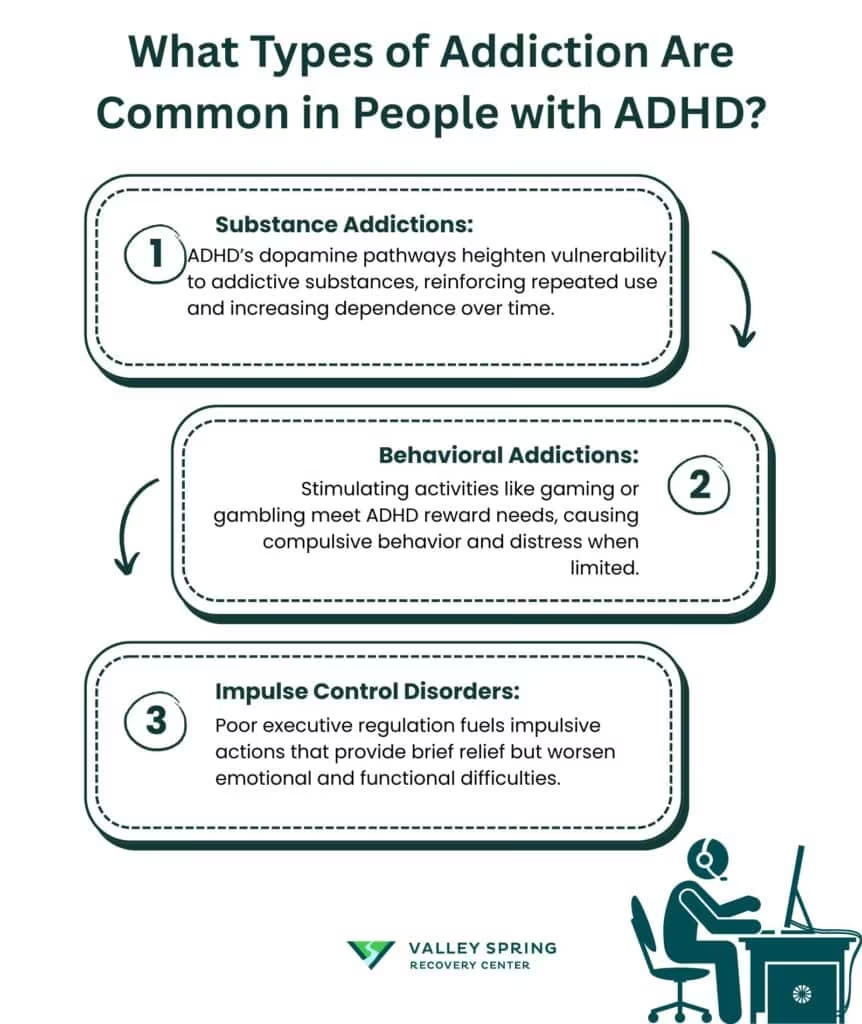
The 3 addiction types common in people with ADHD are substance addictions, behavioral addictions, and impulse-control problems. Heightened reward-seeking makes both chemical and behavioral dependencies more likely.
Substance addictions concentrate in those five categories. Behavioral addictions, gaming, gambling, shopping, and compulsive internet use, supply the fast stimulation and novelty the ADHD reward system seeks, and produce loss of control and distress when the behavior is restricted. Impulse-control problems, reckless driving, binge eating, overspending, arise from the same weak delay-of-gratification machinery and relieve tension briefly at rising functional cost. All three types respond to the same executive-function-focused treatment, which begins with getting the diagnosis right.
How Are Co-Occurring ADHD and Addiction Diagnosed?
Co-occurring ADHD and addiction are diagnosed through a combined psychiatric evaluation: ADHD symptom instruments and history-taking that reach back to childhood, alongside substance use assessment, clinical interviews, and collateral reports.
The diagnostic difficulty is mimicry. Stimulant intoxication and withdrawal both produce inattention, restlessness, and impulsivity, so a cross-sectional snapshot cannot separate primary ADHD from substance-induced symptoms. Childhood onset is the differentiator: ADHD requires symptoms before age 12, so school records, family reports, and developmental history carry diagnostic weight that a present-state exam cannot. With both diagnoses established, treatment targets them together.
How Are ADHD and Addiction Treated Together?
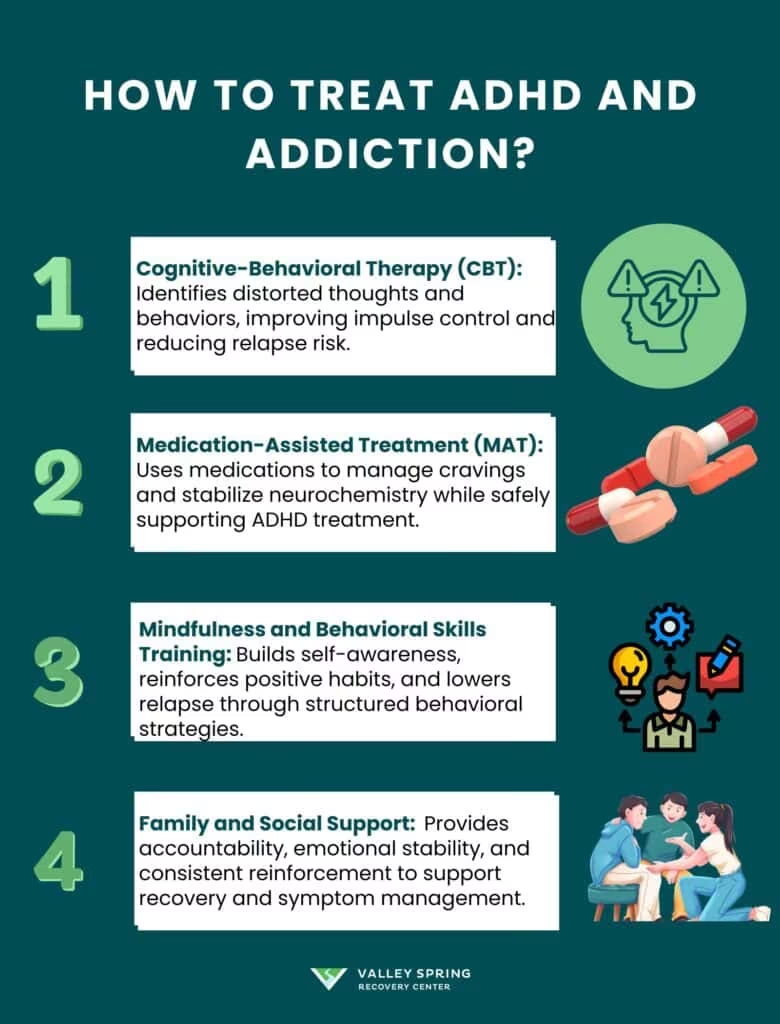
Co-occurring ADHD and addiction are treated with an integrated approach that targets both disorders concurrently, combining psychotherapy, medication management, and behavioral skills training. Treating one and ignoring the other leaves the untreated condition to undermine the treated one.
The 4 components professionals combine:
- Cognitive behavioral therapy (CBT): CBT trains identification of the thought patterns and triggers linked to substance use while building the planning, organization, and emotional regulation skills that ADHD undermines.
- Medication management: Addiction pharmacotherapy, such as buprenorphine or naltrexone for opioid and alcohol use disorders, runs alongside ADHD prescribing decisions made by a psychiatric provider, who weighs stimulant and non-stimulant options such as atomoxetine against the patient's substance use history and monitors accordingly.
- Mindfulness and behavioral skills training: Mindfulness builds awareness of craving cues, and contingency management reinforces target behaviors through structured rewards, a fit for the ADHD reward system.
- Family and social support: Family involvement strengthens adherence, and support groups add accountability that outlasts the treatment episode.
How Do ADHD and Addiction Affect Children and Adolescents?
ADHD and addiction affect children and adolescents by intensifying impulsivity, emotional dysregulation, and reward sensitivity during the years the prefrontal cortex is still maturing. Early substance exposure interferes with that maturation, and the persistent-ADHD trajectory documented by Breyer and colleagues begins in exactly this window.
Adolescents with both conditions show declining grades, poor concentration, and social isolation, and early intervention, behavioral therapy, parental education, and structured support, is what interrupts the trajectory. Valley Spring Recovery Center treats adults 18 and older; families seeking adolescent care need an adolescent-specific provider.
Why Are Teens with ADHD at Greater Risk of Substance Use?
Teens with ADHD carry a need for stimulation, emotional impulsivity, and peer-acceptance pressure in the same developmental window, which drives earlier experimentation. Persistence of ADHD symptoms into adulthood is the strongest documented predictor of later dependence (Breyer et al., 2014).
What Are the Best Strategies to Prevent Addiction in People with ADHD?
The 3 best documented strategies are early diagnosis, consistent treatment adherence, and psychoeducation. Treatment removes the untreated-symptom pathway to self-medication, and the meta-analytic evidence shows supervised stimulant treatment carries no addiction penalty (Humphreys et al., 2013).
Sources & References6ShowHide
- van Emmerik-van Oortmerssen K, van de Glind G, van den Brink W, et al. Prevalence of attention-deficit hyperactivity disorder in substance use disorder patients: a meta-analysis and meta-regression analysis. Drug and Alcohol Dependence, 2012 — 29 studies: 23.1% (CI 19.4-27.2%) of SUD patients met DSM criteria for comorbid ADHD; cocaine dependence carried lower ADHD prevalence than alcohol, opioid, and other dependencies.
- Kessler RC, Adler L, Barkley R, et al. The prevalence and correlates of adult ADHD in the United States: results from the National Comorbidity Survey Replication. American Journal of Psychiatry, 2006 (PMC) — Estimated current adult ADHD prevalence 4.4%; highly comorbid with other DSM-IV disorders; the majority of cases untreated for ADHD itself.
- Breyer JL, Lee S, Winters KC, August GJ, Realmuto GM. A longitudinal study of childhood ADHD and substance dependence disorders in early adulthood. Psychology of Addictive Behaviors, 2014 (PMC) — Persistent ADHD (childhood ADHD still meeting criteria in adulthood) predicted significantly higher rates of alcohol, marijuana, and nicotine dependence at mean ages 18, 20, and 22, controlling for age, sex, childhood stimulant use, and conduct problems.
- Wilens TE, Faraone SV, Biederman J, Gunawardene S. Does stimulant therapy of attention-deficit/hyperactivity disorder beget later substance abuse? A meta-analytic review of the literature. Pediatrics, 2003 — 6 studies, 674 medicated and 360 unmedicated youths followed at least 4 years: pooled OR indicated a 1.9-fold reduction in SUD risk for stimulant-treated youth (CI 1.1-3.6); protection larger in adolescent follow-up (OR 5.8) than adult follow-up (OR 1.4).
- Humphreys KL, Eng T, Lee SS. Stimulant medication and substance use outcomes: a meta-analysis. JAMA Psychiatry, 2013 (PMC) — 15 studies, 2,565 participants: childhood stimulant treatment neither protected against nor increased risk of later substance use or substance use disorders, across alcohol, cocaine, marijuana, nicotine, and nonspecific drugs.
- Arnsten AF. The Emerging Neurobiology of Attention Deficit Hyperactivity Disorder: The Key Role of the Prefrontal Association Cortex. Journal of Pediatrics, 2009 — ADHD is associated with weaker prefrontal cortex structure and function; optimal prefrontal function depends on noradrenergic alpha-2A and dopaminergic D1 receptor signaling, the catecholamine environment stimulant and non-stimulant medications act on.