


New Jersey law
New Jersey Drug Laws: Possession, Cannabis, Overdose Immunity, and Treatment
New Jersey controlled-substance, cannabis, overdose-protection, impaired-driving, and harm-reduction laws explained in practical terms.
By Paul James Roeser·Reviewed by Noelle Mathew, LCSW, LCADC, CASAC-M·Last reviewed August 22, 2026
Published ·Updated
What does New Jersey law prohibit for controlled substances?
Section 2C:35-10 prohibits knowing or purposeful possession, covers controlled dangerous substances and their analogs, and recognizes a valid prescription or other legal authorization. Possession, use, distribution, and obtaining a substance by fraud are separate legal questions, so a possession rule should not be used as a complete description of every drug charge.
New Jersey uses five controlled-substance schedules, but schedule is only one part of the analysis. The substance, amount, alleged conduct, location, authorization, and criminal history can change the charge or consequence; the difference between prohibition, reduced penalties, and regulated access is examined in the national definition of drug decriminalization.
How do schedules and substance-specific rules affect possession?
Unauthorized possession of a Schedule I, II, III, or IV substance is generally graded as a third-degree crime, unauthorized possession of a Schedule V substance is generally graded as a fourth-degree crime, and separately listed substances can follow different rules. Section 2C:35-10 separately addresses cannabis, hashish, and possession of one ounce or less of psilocybin, which means a schedule-only chart can produce the wrong answer.
A prescription can authorize possession of the prescribed medication; it does not authorize diversion, fraudulent acquisition, or possession of someone else's medication. An attorney should evaluate the actual statute, evidence, and available defenses in a specific case.
Is adult-use cannabis legal in New Jersey?
Adults age 21 or older may buy from a licensed dispensary, may possess up to six ounces, and may use cannabis on private property when the property owner permits it. Public smoking or vaping remains restricted, driving while impaired remains illegal, and unlicensed sales remain outside the regulated market.
Legal access does not establish medical safety or rule out cannabis use disorder. Tolerance, unsuccessful attempts to cut down, continued use despite harm, and impaired responsibilities can support a clinical assessment even when possession is lawful.

Are synthetic cannabinoids legal in New Jersey?
New Jersey immediately prohibits producing, selling, or distributing chemically synthesized cannabinoids, classifies specified high-THC hemp products as cannabis beginning April 13, 2026, and restricts their sale to licensed channels. The Cannabis Regulatory Commission also states that cannabinoids not naturally produced by the cannabis plant do not qualify as hemp under the 2026 framework.
K2 and Spice are separate synthetic-cannabinoid products, not regulated adult-use cannabis. Their ingredients vary, controlled-substance or analog law may apply, and a retail package does not establish composition, legality, or safety.
What does New Jersey's Overdose Prevention Act protect?
Section 2C:35-30 protects a qualifying person who seeks medical help in good faith, Section 2C:35-31 protects the person experiencing the overdose, and both sections limit specified consequences tied to the request for care. Covered conduct includes specified possession, use, prescription-drug, paraphernalia, and probation or parole consequences when the statutory conditions are met.
The protection is not immunity for every offense. It does not erase unrelated crimes, does not prevent investigation of people who do not qualify, and depends on a good-faith request for medical assistance and the source of the evidence.
How does naloxone access differ from overdose-call immunity?
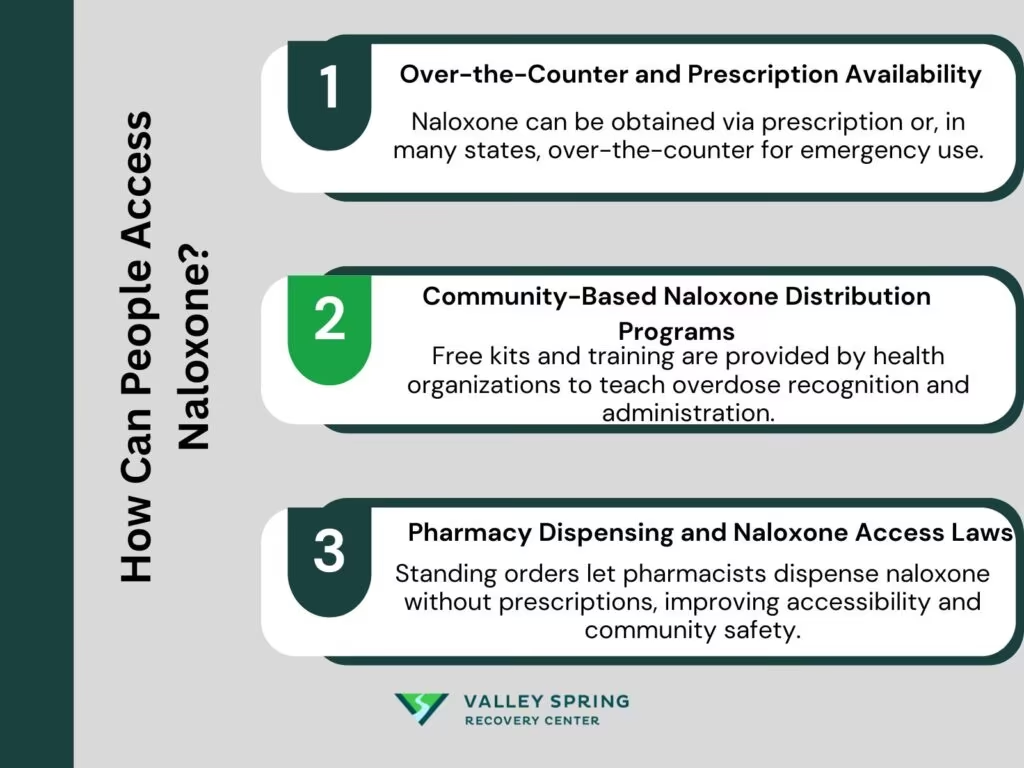
Naloxone can reverse opioid effects, calling 911 activates emergency medical response, and the Overdose Prevention Act addresses specified legal consequences of seeking help. These functions overlap during an emergency but are not substitutes for one another.
New Jersey makes naloxone available through pharmacies, community programs, and harm reduction centers. The medication's role, repeat-dose instructions, and need for continued observation are detailed in the naloxone overdose response.
Is drug-impaired driving illegal in New Jersey?
Section 39:4-50 prohibits operating while under the influence of a narcotic, hallucinogenic, or habit-producing drug; the rule applies to illegal drugs, misused prescriptions, and impairing substances; and a lawful prescription is not permission to drive while impaired.
A drug-related driving case can involve court consequences, license consequences, and an assessment or education requirement. The local process and the boundary between an IDRC evaluation and clinical care are explained on the New Jersey IDRC and DUI treatment page.
Are syringes and harm reduction supplies always illegal?
New Jersey repealed the syringe-possession offense in 2022, permits personal possession of hypodermic needles or syringes, and authorizes harm reduction centers to distribute sterile equipment and other approved supplies. Authorized centers also provide naloxone, overdose education, safer-use supplies, testing connections, and referrals to health care or substance-use treatment.
The repeal is specific to needles and syringes; it does not legalize every item classified as drug paraphernalia. Overdose-call immunity remains a separate protection with separate statutory conditions.
Can treatment or Recovery Court affect a New Jersey drug case?
Recovery Court requires legal screening, requires a clinical substance-use assessment, and requires the defendant to satisfy statutory and program criteria. It is not automatic, not available in every case, and not a treatment decision that a private provider can make for the court.
New Jersey Courts describes treatment providers as part of the Recovery Court team and identifies exclusions for certain violent charges or convictions. A defense attorney should address legal eligibility; a licensed clinician should determine diagnosis and level of care.
When does drug use indicate a treatment need?
A charge does not diagnose addiction, legal possession does not rule out addiction, and clinical assessment should focus on control, consequences, tolerance, withdrawal, and functioning. Overdose, repeated hazardous use, inability to cut down, and continued use despite medical, legal, work, or relationship harm can indicate a need for evaluation.
When opioid use includes overdose, withdrawal, or loss of control, evidence-based opioid addiction treatment can combine assessment, medication when clinically appropriate, therapy, and continuing recovery support after emergency stabilization.
Frequently asked questions
Is possession of a controlled substance always illegal in New Jersey?
No. New Jersey prohibits knowing or purposeful possession of a controlled dangerous substance or analog unless it was obtained through a valid prescription or another legal authorization. Cannabis, certain psilocybin possession, and other specifically addressed substances have separate rules.
Does New Jersey's Overdose Prevention Act protect the caller and the person who overdosed?
Sections 2C:35-30 and 2C:35-31 protect a qualifying good-faith caller and the person experiencing an overdose from specified possession, use, paraphernalia, and related consequences when the evidence results from seeking medical assistance. The protections are limited and do not cover every offense.
Is recreational cannabis legal in New Jersey?
Yes. Adults age 21 or older may buy cannabis from a state-licensed dispensary and may possess up to six ounces, but public use, unlicensed sales, impaired driving, and possession by a person under 21 remain subject to separate restrictions.
Are synthetic cannabinoids legal in New Jersey?
No retail loophole makes synthetic cannabinoids generally legal. New Jersey's 2026 intoxicating-hemp rules prohibit cannabinoids made through a laboratory chemical process and cannabinoids not naturally found in the plant; controlled-substance law can also apply to specific synthetic cannabinoid products.
Can a New Jersey drug charge lead to treatment instead of ordinary sentencing?
Some defendants may qualify for Recovery Court or another diversion path, but eligibility requires legal review, clinical assessment, and satisfaction of statutory criteria. A defense attorney and the court must determine whether a specific case qualifies.
Legal note: General educational information, not legal advice. New Jersey law changes, and a New Jersey attorney should evaluate how current law applies to a specific person or case. Clinical review does not constitute attorney review.
Sources & References11ShowHide
- New Jersey Statutes Section 2C:35-10, Possession, use, or being under the influence — Possession rules, prescription authorization, offense grading, and cannabis and psilocybin provisions.
- New Jersey Statutes Section 2C:35-30, protection for a person seeking overdose assistance — Good-faith medical-assistance protections and limits for a qualifying caller.
- New Jersey Statutes Section 2C:35-31, protection for a person experiencing an overdose — Good-faith medical-assistance protections and limits for the person receiving assistance.
- New Jersey Statutes Section 39:4-50, Driving while intoxicated — Drug- and alcohol-impaired driving prohibition and statutory consequences.
- New Jersey Cannabis Regulatory Commission, General Information: Legal Cannabis in New Jersey — Age, possession, licensed-purchase, and use boundaries for adult-use cannabis.
- New Jersey Cannabis Regulatory Commission, Intoxicating Hemp-Derived Products, 2026 — Current restrictions on synthetic cannabinoids, intoxicating hemp products, sales, and age verification.
- New Jersey Department of Human Services, Opioid Overdose Response and Prevention Information, 2024 — Naloxone access, overdose response, and the relationship between naloxone and overdose-call protection.
- New Jersey Department of Health, Harm Reduction Centers — Authorized syringe access, naloxone, drug-checking supplies, wound care, and treatment referrals.
- New Jersey Public Law 2021, Chapter 403 — Repeal of the syringe-possession offense and protection for personal possession of a hypodermic needle or syringe.
- New Jersey Department of Health, Harm Reduction Centers Biennial Report 2022-2024 — Syringe-law changes, authorized distribution, program expansion, and public-health services.
- New Jersey Courts, Recovery Courts Work — Legal screening, clinical assessment, eligibility limits, supervision, and treatment participation.