


Clinical guide
How Long Does Weed Stay in Your System?
THC stays in urine 3 to 30 days, blood 1 to 2 days, saliva 24 to 72 hours, and hair up to 90 days. See how frequency, body fat, and test cutoffs change it.
By Paul James Roeser·Reviewed by Noelle Mathew, LCSW, LCADC, CASAC-M·9 min read
Published ·Updated
THC metabolites stay detectable in urine for roughly 3 to 30 days, in blood for 1 to 2 days, in saliva for 24 to 72 hours, and in hair for up to 90 days.
The body does not clear THC at a steady rate. Tetrahydrocannabinol is fat soluble, so it stores inside fat cells and releases back into your bloodstream slowly. That storage effect explains why a daily smoker and a first-time smoker can consume the same amount and test positive for very different lengths of time.
Key Takeaways
- Urine is the most common drug test and holds the widest range. The NIH reports THC-COOH is detectable for about 3 days after a single use and up to 30 days in chronic users.
- Hair testing has the longest window, showing cannabis use for up to 90 days regardless of how recently you stopped.
- Cannabis potency has quadrupled. NIDA data shows average delta-9 THC in seized cannabis rose from 3.96% in 1995 to 16.14% in 2022, and dispensary concentrates can exceed 40%.
- Time is the only reliable way to clear THC. Detox drinks, cleanses, and dilution do not remove metabolites and are frequently flagged by lab validity testing.
- Roughly 3 in 10 people who use cannabis develop cannabis use disorder, according to the CDC.
How Long Does Weed Stay in Your System by Test Type?
Different tests look for different things. Blood and saliva tests detect active THC, which signals recent use. Urine and hair tests detect THC-COOH, an inactive metabolite that lingers long after the effects wear off.
| Test type | Detection window | What it measures | Common use |
| Urine | 3 to 30 days | THC-COOH metabolite | Employment, probation, court |
| Blood | 1 to 2 days, up to a week in heavy users | Active THC | DUI, accident investigation |
| Saliva (mouth swab) | 24 to 72 hours | Active THC | Roadside, workplace incident |
| Hair follicle | Up to 90 days | THC-COOH in the hair shaft | Pre-employment, long-term screening |
| Sweat patch | 7 to 14 days | THC metabolites | Court-ordered monitoring |
How Long Does THC Stay in Urine?
Urine testing accounts for most workplace screening. A single use typically clears in about 3 days. Moderate users test positive for 5 to 7 days, and daily users often remain positive for 10 to 15 days.
The longest weed can be detected in urine is around 30 days, which applies to chronic heavy users with substantial body fat. Detection beyond that point is uncommon and not the norm.
How Long Does Weed Stay in Your Blood?
Blood tests have the shortest practical window for occasional users. Active THC drops sharply within a few hours of smoking and usually falls below detection in 1 to 2 days.
Chronic users are the exception. Because stored THC re-enters circulation, blood levels can stay measurable for up to a week after the last use.
How Long Does THC Stay in Saliva?
Mouth swab drug tests target recent consumption. Saliva usually tests positive for 24 to 72 hours after smoking, and occasional users often clear the 24 to 30 hour mark.
Employers use oral fluid testing for reasonable-suspicion screening because it reflects impairment risk more closely than urine does.
How Long Does Weed Stay in Hair Follicles?
A hair follicle test covers roughly 90 days of history. Metabolites reach the hair shaft through the bloodstream, then stay locked in as the hair grows.
Hair testing cannot pinpoint when use occurred within that window, and it rarely detects a single isolated exposure.
How Does the Body Process THC?
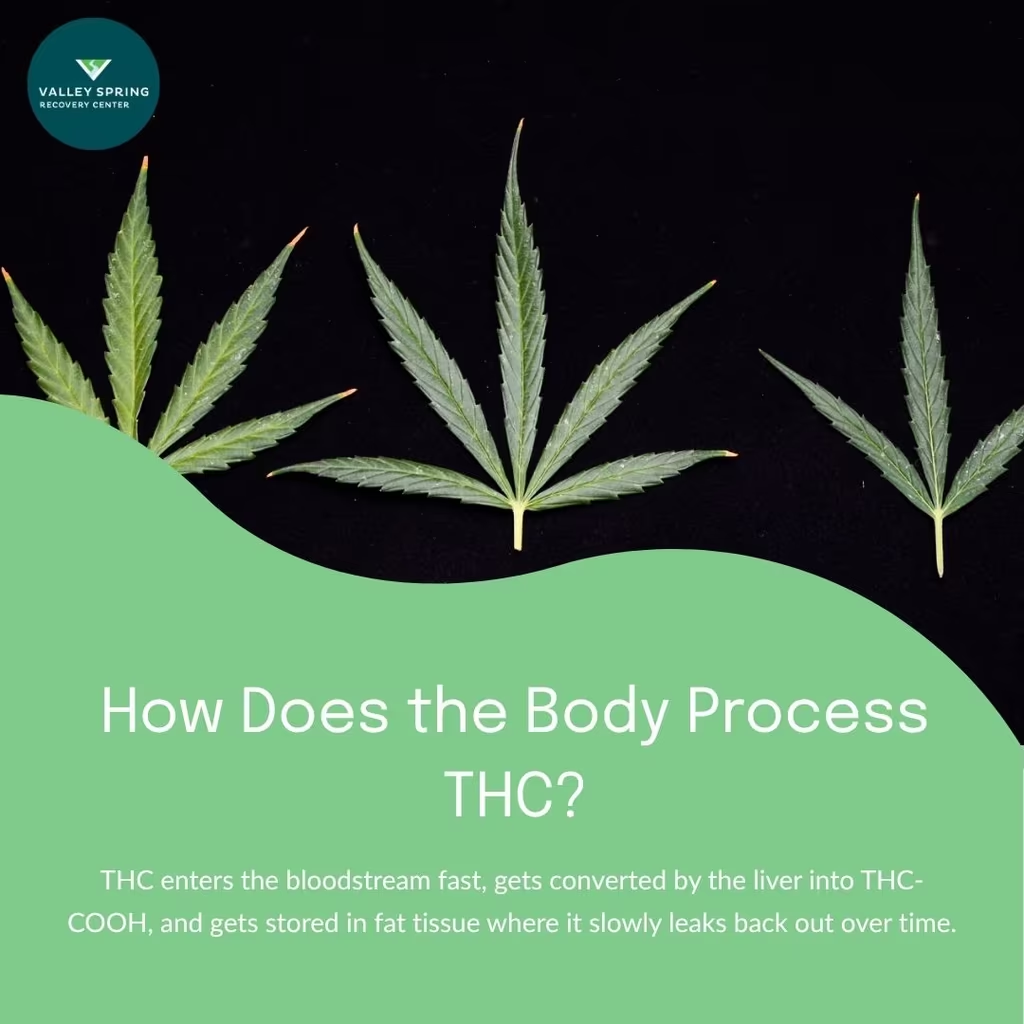
Once inhaled, THC enters the bloodstream and travels to the brain within minutes. The liver then converts it into 11-hydroxy-THC and finally into THC-COOH, the metabolite that drug tests look for.
THC is highly lipid soluble, so fat tissue absorbs it quickly. Stored THC then leaks back out over days or weeks, which is why clearance takes far longer than the high lasts. Huestis, Marilyn A.'s 2007 review "Human Cannabinoid Pharmacokinetics," published in Chemistry and Biodiversity, documents this redistribution from fat tissue as the mechanism behind long detection windows in heavy, regular users.
Research published in The Permanente Journal reports a plasma half-life of 1 to 3 days in occasional users and 5 to 13 days in chronic users. Full elimination requires several half-lives, not one.
Detection Windows Based on How Often You Use Marijuana
Frequency is the single strongest predictor of your urine detection window, and the ranges are the consensus reported across clinical sources.
| Usage pattern | Urine detection window |
| Single use or a couple of puffs | About 3 days |
| Occasional (1 to 2 times per week) | 3 to 7 days |
| Moderate (3 to 4 times per week) | 5 to 10 days |
| Daily use | 10 to 15 days |
| Chronic heavy use | 30 days or longer |
If you smoke once a week, you fall into the occasional category and will likely test positive for 3 to 7 days after your last use. Testing inside that window carries real risk of a positive result.
To pass a urine drug test, most occasional users need roughly one week of abstinence. Daily users generally need two weeks or more, and heavy long-term users should assume a month.
What Factors Change the Marijuana Detection Window?
Two people with identical habits can test differently. These variables move the timeline in both directions.
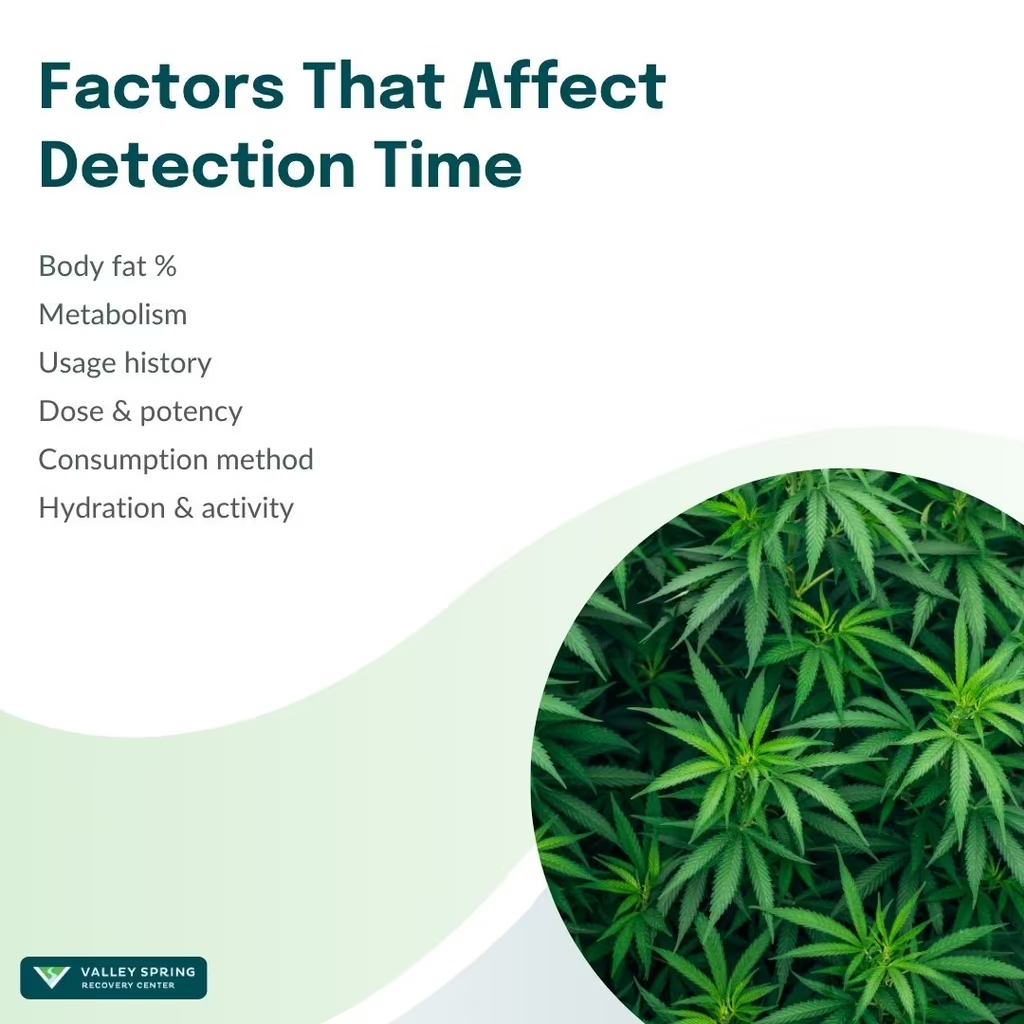
- Body fat percentage. THC stores in adipose tissue, so higher body fat generally extends detection.
- Metabolic rate. Faster metabolism processes and excretes metabolites more quickly.
- Frequency and duration of use. Long-term use builds a metabolite reservoir that takes weeks to deplete.
- Dose and potency. Higher-THC flower and concentrates deposit more metabolites per session.
- Method of consumption. Inhalation peaks and falls faster than oral ingestion.
- Hydration and activity. These shift urine concentration slightly but do not speed up actual elimination.
Edibles, Vapes, Dabs, and Concentrates
Edibles behave differently from smoking. The liver converts oral THC into 11-hydroxy-THC before it reaches your bloodstream, producing a slower onset and a longer active window.
For occasional users, gummies and other edibles typically stay detectable in urine for 3 to 5 days. Regular edible consumption pushes that toward the same 10 to 15 day range as daily smoking.
Dab pens, wax, and THC vape cartridges deliver far higher concentrations per inhale. A dab pen does not stay in your system longer by chemistry alone, but the elevated dose loads more metabolites, which extends clearance in practice.
Delta-8, THCA, and CBD on a Drug Test
Delta-8 THC is chemically similar to delta-9 and metabolizes into the same THC-COOH compound. Standard immunoassay panels cannot distinguish between them, so delta-8 will test positive for THC.
THCA is the raw acidic precursor found in unheated cannabis. Once heated through smoking or vaping, it converts to delta-9 THC and follows identical detection timelines.
Pure CBD does not trigger a positive result, but product labeling is unreliable. A 2022 JAMA Network Open analysis of 105 hemp-derived topical CBD products detected THC in 35% of them, including several labeled THC free. Regular use of a mislabeled product can accumulate enough THC to fail a screen. See our CBD vs. THC breakdown for how the two compounds differ.
Can You Get Weed Out of Your System Faster?
No product reliably accelerates THC elimination: no published clinical trial has shown that an over-the-counter product changes how fast THC metabolites clear the body. Detox drinks, THC cleanse kits, and dilution strategies work by temporarily thinning urine, not by removing stored metabolites from fat tissue.
Laboratories anticipate this. Specimen validity testing checks creatinine, specific gravity, pH, and oxidizing adulterants, so a diluted or adulterated sample is typically rejected or treated as a refusal.
Exercise, hydration, and a high-fiber diet may support normal metabolic function. Intense exercise immediately before a test can temporarily raise blood THC by mobilizing fat stores, so it can work against you.
To fully clean out your system, abstinence is the only dependable method. Plan for about 3 days after single use, one week for occasional use, two weeks for daily use, and 30 days or more for chronic heavy use.
Can Secondhand Smoke Cause a Positive Test?
Passive exposure rarely produces a positive result under normal conditions. Federal guidance does not accept passive inhalation as a valid explanation for a positive workplace screen.
Controlled research supports that position. In a 2015 study, nonsmokers exposed in an unventilated room tested positive at the 50 ng/mL cutoff in only one case, while no one in the ventilated room tested positive at all.
Real-world exposure almost never matches those extreme conditions, so secondhand cannabis smoke is not a realistic route to a failed test.
How Long Do Weed Effects Last?
Impairment and detectability are separate timelines. Smoked cannabis peaks within 30 minutes and effects generally fade in 2 to 4 hours.
Edibles take 30 to 90 minutes to take hold and can last 6 to 8 hours or longer. In both cases, the high ends days or weeks before drug tests stop registering metabolites.
Testing positive therefore says nothing about whether someone is currently impaired. It only confirms past exposure within the detection window.
Getting Help for Cannabis Use Disorder
Tracking your own detection window is often a signal worth noticing. SAMHSA's 2023 National Survey on Drug Use and Health found that 61.8 million people aged 12 or older, or 21.8% of that population, used cannabis in the past year.
The CDC estimates approximately 3 in 10 people who use cannabis develop cannabis use disorder. Warning signs include tolerance, failed attempts to cut back, and continued use despite problems with work, school, or relationships.
Valley Spring Recovery Center's marijuana addiction treatment program treats cannabis use disorder on an outpatient basis in Norwood, New Jersey. Clients who need daytime structure often begin in our intensive outpatient program, while those balancing work or school step into outpatient care with weekly groups and individual therapy.
References
1. Centers for Disease Control and Prevention. (2024). Cannabis use disorder. CDC
2. Huestis, M. A. (2007). Human cannabinoid pharmacokinetics. Chemistry & Biodiversity, 4(8), 1770-1804.
3. National Institute on Drug Abuse. (2024). Cannabis (marijuana). NIH
4. Patel, J., & Marwaha, R. (2024). Cannabis use disorder. StatPearls. National Center for Biotechnology Information. NCBI
5. Sharma, P., Murthy, P., & Bharath, M. M. S. (2021). Mechanisms of action and pharmacokinetics of cannabis. The Permanente Journal, 25, 19.200.
6. Spindle, T. R., Sholler, D. J., Cone, E. J., Murphy, T. P., ElSohly, M., Winecker, R. E., Flegel, R. R., Bonn-Miller, M. O., & Vandrey, R. (2022). Cannabinoid content and label accuracy of hemp-derived topical products available online and at national retail stores. JAMA Network Open, 5(7), e2223019.
7. Substance Abuse and Mental Health Services Administration. (2010). Medical review officer manual for federal agency workplace drug testing programs.