


Mental health guide
Binge Eating: Risk Factors, Health Impacts, Assessment, And Treatment
Binge Eating Disorder involves consuming large amounts of food with a loss of control, raising risks for obesity and diabetes, with treatment explained.
By Paul James Roeser·Reviewed by Dr. Michael Olla, MD·14 min read
Published ·Updated
Binge eating is a serious eating behavior marked by consuming unusually large amounts of food in a short time, often accompanied by a loss of control and followed by guilt or distress. Unlike bulimia, it is not followed by purging. Binge Eating Disorder (BED) is the most prevalent of the three major eating disorders in U.S. adults, with significantly higher odds in women than men, according to Udo T and Grilo CM's 2018 analysis of 36,306 adults in Biological Psychiatry.
The effects of binge eating go beyond weight gain. Physically, it raises the risk of obesity, type 2 diabetes, high blood pressure, and digestive issues. Psychologically, it’s linked to depression, anxiety, and low self-esteem, often impairing daily life and relationships.
Common signs include rapid eating, eating when not hungry, secrecy around food, and emotional distress after episodes. Physical and behavioral symptoms like weight changes, hoarding food, and frequent dieting are also typical. Treatment includes psychotherapy, nutritional counseling, and medication where indicated. Cognitive behavioral therapy (CBT) carries the strongest evidence, interpersonal psychotherapy (IPT) and dialectical behavior therapy (DBT) follow, and the medication options are lisdexamfetamine (Vyvanse), the one FDA-approved drug for the disorder, plus off-label SSRIs. Ongoing support and relapse prevention sustain recovery.
Anyone in medical crisis calls 911, and anyone in psychiatric crisis, including thoughts of suicide or self-harm, calls or texts 988, the Suicide and Crisis Lifeline, which answers 24 hours a day across the United States. New Jersey designates a psychiatric emergency screening service in every county, and those screening centers handle involuntary evaluation and inpatient placement. Crisis routing comes first, ahead of any question about which program fits.
Does Valley Spring Recovery Center Treat Binge Eating Disorder?
Valley Spring Recovery Center does not treat binge eating disorder or any other eating disorder, because a New Jersey outpatient mental health license, #70420104, does not authorize the medical monitoring and supervised refeeding that eating disorder care requires.
Valley Spring Recovery Center offers an adult with binge eating disorder three things: a clinical assessment, a referral to an eating disorder specialist program that provides medical monitoring, and co-occurring support where binge eating disorder sits alongside a condition Valley Spring Recovery Center does treat. Those conditions are anxiety, depression, PTSD, trauma, bipolar disorder, OCD, ADHD, borderline personality disorder, schizophrenia spectrum disorders, and substance use disorder. The specialist program holds the eating disorder; Valley Spring Recovery Center holds the co-occurring condition, and the two treatment teams coordinate. Dual Diagnosis Treatment sets out how that division of responsibility works.
Valley Spring Recovery Center treats mental health at two levels of care, Intensive Outpatient Program (IOP) and Outpatient, for adults 18 and older, and does not treat anyone under 18. Valley Spring Recovery Center does not operate detox, methadone, inpatient, residential, or partial hospitalization services, and refers those presentations out. Outpatient care serves people who are psychiatrically and medically stable. Dialectical Behavior Therapy is one of the modalities used for the emotional regulation and distress tolerance difficulties that accompany conditions such as borderline personality disorder.
What Is Binge Eating Disorder (BED)?
Binge Eating Disorder (BED) is classified as an eating disorder characterized by recurrent episodes of binge eating, where individuals consume large amounts of food in a discrete period, accompanied by feelings of loss of control.
According to the Diagnostic and Statistical Manual of Mental Disorders, Fifth Edition (DSM-5) (2013), Binge Eating Disorder (BED) is diagnosed when binge episodes occur at least once per week for three months.

Clinical perspective
Binge eating and substance use hit a lot of the same reward pathways, which is why they show up together more than people expect. It's rarely about willpower or appetite — it's usually a fast, reliable way to change an unbearable emotional state, the same function a substance serves for someone else. Treatment has to address the emotional regulation piece, not just the eating pattern.
The diagnosis also requires three or more of five behaviors: eating rapidly, eating until uncomfortably full, eating when not physically hungry, eating alone due to embarrassment, and feeling disgusted, depressed, or guilty after overeating.
How Common Is Binge Eating Disorder?
Binge eating disorder affects 0.85% of U.S. adults over a lifetime and 0.44% in any 12-month period under DSM-5 criteria, according to Udo T and Grilo CM's 2018 study "Prevalence and Correlates of DSM-5-Defined Eating Disorders in a Nationally Representative Sample of U.S. Adults" in Biological Psychiatry, which ran structured diagnostic interviews with 36,306 adults. That rate makes BED the most prevalent of the three major eating disorders, ahead of anorexia nervosa at 0.80% and bulimia nervosa at 0.28% lifetime.
Earlier estimates under the broader DSM-IV criteria ran higher: Hudson JI, Hiripi E, Pope HG Jr, and Kessler RC's 2007 National Comorbidity Survey Replication analysis found lifetime binge eating disorder in 3.5% of women and 2.0% of men, and linked lifetime BED to current severe obesity, a body-mass index of 40 or higher. The treatment gap is the constant across both eras of measurement: Kessler RC et al.'s 2013 study across 14 countries in the WHO World Mental Health Surveys found fewer than half of people with lifetime binge eating disorder ever receive treatment for it.
The main difference between binge eating and overeating is the lack of control and emotional distress associated with binge eating.
The differences between binge eating and overeating:
| Aspect | Binge Eating | Overeating |
| Frequency | Recurrent, at least once a week for 3 months | Occasional, linked to specific events |
| Control | Lack of control over eating during episodes | Some control stops when full or satisfied |
| Emotional State | Guilt, shame, and distress after eating | Generally, no strong negative emotions |
| Amount of Food | Excessive, much more than typical portions | Larger portions, but still within a reasonable range |
| Aftereffects | Feelings of disgust, depression, or guilt | Temporary discomfort or regret |
| Health Impact | Higher risk of obesity, diabetes, and mental health issues | Generally mild, leading to weight gain if frequent |
| Diagnosis | Diagnosed as an eating disorder (BED) in DSM-5 | It is not a clinical disorder; it is a common behavior |
What Are The Different Types Of Binge Eating?
The different types of binge eating behaviors are emotional binge eating, habitual binge eating, compulsive binge eating, night binge eating, and stress-related binge eating. These five patterns show how triggers like emotions, habits, and stress influence when and why you lose control of food.
The types of binge eating behaviors:
- Emotional Binge Eating: Triggered by feelings such as stress, anxiety, sadness, or loneliness, where food is used as a way to cope with emotions.
- Habitual Binge Eating: Occurs due to ingrained patterns or habits, where binge eating becomes a routine, regardless of emotional state.
- Compulsive Binge Eating: Compulsive binge eating involves a constant, overwhelming urge to consume large amounts of food without hunger and with an inability to stop.
- Night Binge Eating: Night binge eating is characterized by eating excessively during the night after waking up from sleep. It is associated with insomnia or disrupted sleep patterns.
- Stress-Related Binge Eating: Happens as a direct response to stressful situations, where food is consumed to alleviate the discomfort caused by stress.
What are the Signs and Symptoms of Binge Eating?
The signs and symptoms of binge eating include both behavioral and psychological patterns that reflect an individual’s struggle with controlling food intake.
The key signs and symptoms of binge eating disorder:
Behavioral Symptoms
- Eating large amounts of food quickly, even when not hungry.
- Eating in secret to hide the behavior from others due to embarrassment or shame.
- Inability to control portions or stop eating once started, leading to excessive food consumption.
- Consuming food at abnormal times, like late at night, or continuing to eat throughout the day without regular meals.
Psychological Symptoms
- Intense feelings of guilt, shame, or distress after overeating lead to further isolation or secrecy.
- Emotional numbness or detachment while eating, using food to avoid dealing with emotions.
- Anxiety or depression related to eating habits, body image, or weight gain.
- Persistent worry about food, meals, and eating leads to preoccupation with future binge episodes.
How Does Binge Eating Impact Your Health?
Binge eating impacts your health by leading to severe physical and mental health consequences over time. The continuous strain on the digestive system leads to gastrointestinal problems, including acid reflux, bloating, and stomach pain. Chronic illnesses follow: obesity, heart disease, and type 2 diabetes develop and worsen without intervention, and the Hudson 2007 national survey tied lifetime binge eating disorder specifically to severe obesity, a body-mass index of 40 or higher.
Mentally, binge eating disorder aggravates feelings of depression, anxiety, and low self-esteem, creating a cycle of emotional distress that drives further disordered eating behaviors. Individuals suffer from heightened depression, anxiety, and an increased risk of substance abuse.
The disorder also contributes to social withdrawal, as individuals feel ashamed of their behavior, leading to isolation and potentially worsening mental health.
In the long term, untreated binge eating significantly diminishes the quality of life, as the combined physical and psychological burden affects daily functioning and overall well-being.
What Causes Binge Eating Disorder?
The causes of binge eating include a combination of biological, psychological, and environmental factors, and the disorder typically starts where two or more of them intersect.

The causes of binge eating disorder:
- Biological Causes: Genetic factors and hormonal imbalances contribute to the development of binge eating disorder.
- Psychological Causes: Anxiety, depression, and trauma are common psychological causes of binge eating. Emotional distress, low self-esteem, and a history of trauma lead individuals to use food as a coping mechanism, reinforcing disordered eating patterns.
- Environmental Causes: Societal pressures, exposure to diet culture, and unrealistic body standards fuel disordered eating habits. Environmental factors such as family dynamics, peer influence, or weight-related stigma also play a significant role in the onset and continuation of binge eating behavior.
Can ADHD, OCD, Or Stress Cause Binge Eating?
Yes, ADHD, OCD, and stress can cause binge eating. It does this by contributing to impulsive behaviors, obsessive thoughts, and emotional distress, which lead to unhealthy eating patterns.
Individuals with ADHD struggle with impulse control, resulting in spontaneous binge eating episodes as a way to cope with overwhelming emotions or boredom.
Stress, whether from personal, academic, or work-related pressures, triggers binge eating as a coping mechanism to manage negative emotions.
What are the Risk Factors of Binge Eating Disorder?
The risk factors of binge eating are a family history of eating disorders, a history of dieting, trauma, low self-esteem, and emotional instability. These five risk factors show how genetics, past experiences, and emotional health shape your vulnerability to binge eating.
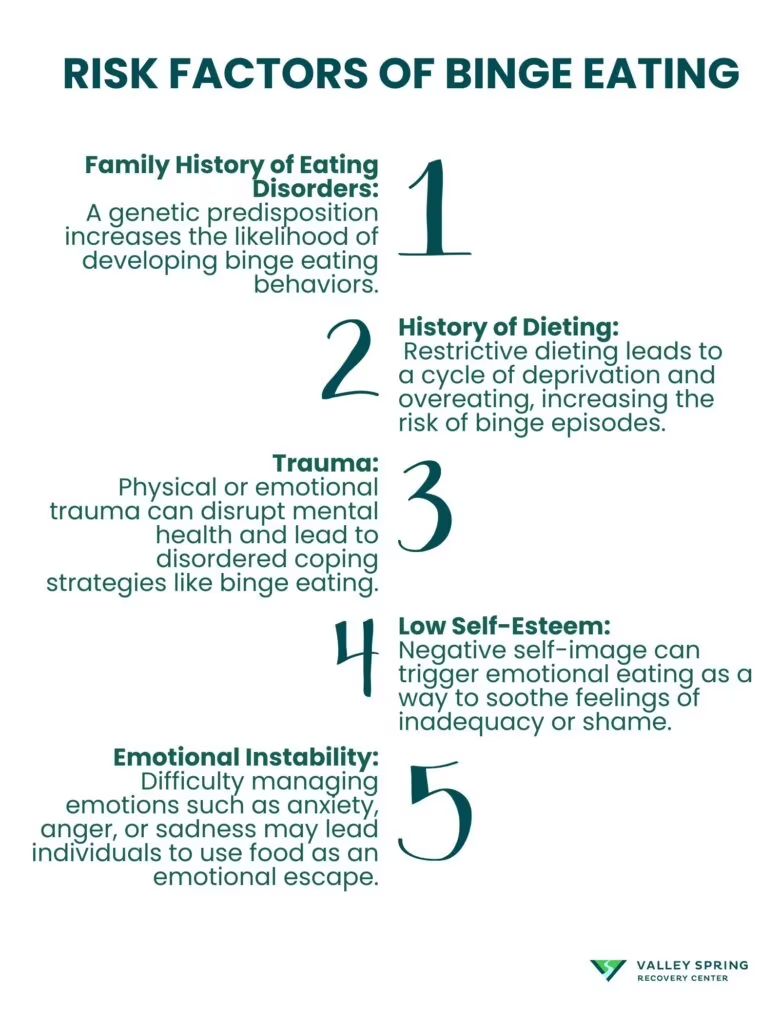
The risk factors of binge eating:
- Family history of eating disorders: A genetic predisposition plays a significant role in the development of binge eating disorder.
- History of dieting: Engaging in restrictive dieting creates a cycle of deprivation and subsequent overeating. This restriction leads to binge eating episodes, as individuals experience intense cravings and a sense of loss of control over food.
- Trauma: Experiencing trauma, such as physical or emotional abuse, deeply impacts mental health and coping strategies.
- Low self-esteem: Poor self-image and low self-esteem drive individuals to seek comfort in food. While binge eating temporarily relieves feelings of worthlessness, it also exacerbates negative self-perceptions, creating a harmful cycle.
- Emotional instability: Difficulty regulating emotions leads individuals to seek solace in food. Binge eating serves as a means of coping with anxiety, depression, or anger, further entrenching the behavior as a maladaptive strategy for managing overwhelming feelings.
How Is Binge Eating Disorder Diagnosed?
Binge eating disorder is diagnosed using clinical criteria outlined in the DSM-5. Healthcare professionals assess both the behavioural patterns and psychological impact of binge eating episodes to make an accurate diagnosis.
To meet the DSM-5 threshold, these episodes must occur at least once a week for the past three months. Clinicians also investigate whether the individual experiences emotional distress, such as guilt, shame, or depression, after the episodes.
Structured interviews and psychological assessments are essential in the diagnostic process. These tools help clinicians evaluate co-occurring mental conditions like anxiety or depression and gather a detailed history of eating behaviours and mental health challenges.
Measuring both behavioural frequency and emotional triggers lets clinicians distinguish binge eating disorder from other eating disorders and from medical conditions, and anchors the treatment plan to the pattern actually present.
How to Treat Binge Eating Disorder In New Jersey?
To treat binge eating disorder (BED), a multifaceted approach that addresses the psychological, emotional, and behavioral aspects of the disorder is essential.
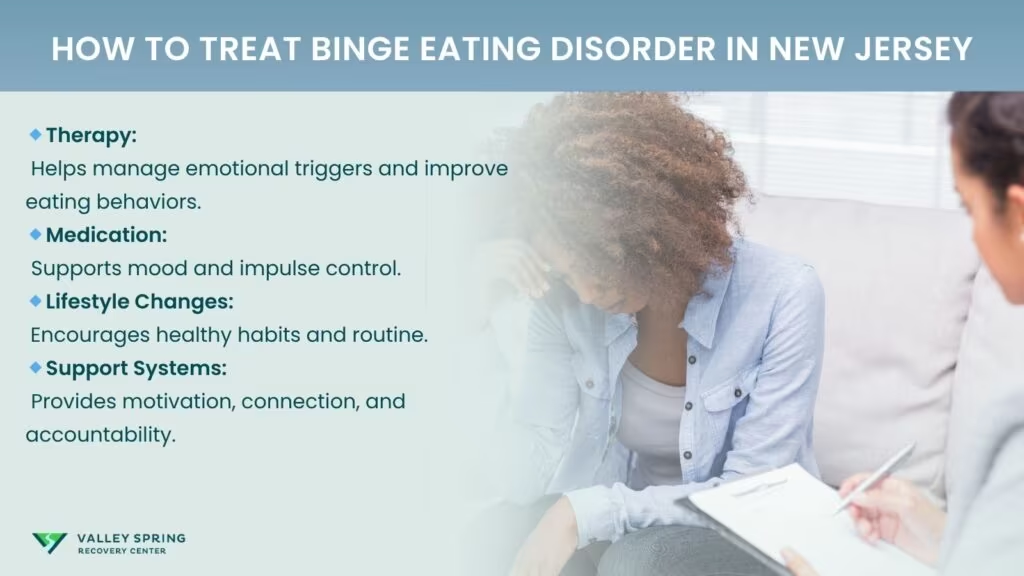
The most effective treatment options for BED include:
1. Therapy to Help Binge Eating
Psychotherapy is the first-line treatment for binge eating disorder, and cognitive behavioral therapy carries the largest measured effect. Hilbert A et al.'s 2019 meta-analysis "Meta-analysis of the efficacy of psychological and medical treatments for binge-eating disorder" in the Journal of Consulting and Clinical Psychology pooled 81 randomized controlled trials covering 7,515 individuals with BED and found psychotherapy, mostly CBT, produced large effects on reducing binge-eating episodes and on abstinence from binge eating, with structured self-help programs built on CBT close behind at medium-to-large effects. Therapy targets the mechanics of the disorder directly: identifying triggers, interrupting the restrict-binge cycle, and replacing food-based coping with workable alternatives.
2. Medication
One medication holds FDA approval for binge eating disorder: lisdexamfetamine dimesylate (Vyvanse), a stimulant prodrug, approved for moderate to severe BED in adults. In the pivotal trial, McElroy SL et al.'s 2015 randomized clinical trial in JAMA Psychiatry, 50.0% of adults on the 70 mg daily dose achieved four straight weeks without a binge episode, versus 21.3% on placebo, and participants on the 50 and 70 mg doses lost a mean 4.9 kg while the placebo group's weight held flat. SSRIs are prescribed off-label; across the trials in the Hilbert 2019 meta-analysis, pharmacotherapy overall produced small effects on binge-eating outcomes, which is why medication supplements therapy rather than replacing it.
3. Lifestyle Changes to Curb Binge Eating
Implementing lifestyle changes is an important aspect of managing Binge Eating Disorder (BED) and fostering long-term recovery. These changes focus on creating sustainable habits that promote a healthier relationship with food, enhance emotional well-being, and reduce the likelihood of binge episodes.
4. Support Systems to Overcome Binge Eating
Having a strong support system is important for overcoming Binge Eating Disorder (BED), as it provides emotional reinforcement, guidance, and accountability throughout the recovery process. These support systems play a critical role in preventing relapse and helping individuals maintain positive behavior changes.
Does Hypnosis Work For Binge Eating?
No, hypnosis is not an evidence-supported treatment for binge eating disorder. The Hilbert 2019 meta-analysis of 81 randomized controlled trials identified psychotherapy, structured self-help, and pharmacotherapy as the treatment categories with demonstrated efficacy; hypnotherapy is not among them. A person drawn to hypnosis for binge eating gets a better return from CBT or CBT-based guided self-help, the two approaches with large measured effects.
Can BED Be Cured Or Only Managed?
No, Binge Eating Disorder (BED) cannot be completely cured, but its symptoms are effectively managed. Although individuals achieve significant reductions in binge eating episodes and improvements in their relationship with food, BED requires ongoing psychological and behavioral management.
How to Cope With BED?
To cope with Binge Eating Disorder (BED), methods include practicing mindful eating, keeping a food journal, engaging in physical activity, seeking professional support, establishing a support network, challenging negative thoughts, and developing healthy routines. These coping strategies help you manage triggers, reduce binge episodes, and build long-term emotional balance.
What Other Eating Disorders Are Linked to Binge Eating?
Other eating disorders linked to binge eating are anorexia and food addiction. These disorders coexist with binge eating or transition into one another, complicating the individual’s experience with food and body image.
Eating disorders linked to binge eating:
- Food Addiction vs. Binge Eating: Food addiction is characterized by compulsive overeating and cravings for certain types of food, particularly those high in sugar or fat, leading to loss of control over eating.
- Anorexia Nervosa vs. Binge Eating Disorder: Anorexia nervosa is defined by an intense fear of gaining weight and a distorted body image, leading to severe food restriction.
When to Seek Help for Binge Eating?
It’s time to seek help for binge eating when the episodes become more frequent or severe. If binge eating occurs more than once a week or begins to escalate over time, it signals a worsening condition that should not be ignored.
Emotional distress is another warning sign. Increased feelings of guilt, shame, anxiety, or depression after binge episodes indicate that your mental health is being affected, and professional support is needed.
When binge eating starts to interfere with your daily life, it's time to act. Strained relationships, reduced work performance, or difficulty managing daily tasks are signs that the behaviour is no longer manageable alone. Physical symptoms, such as rapid weight gain or loss, digestive issues, or fatigue, also suggest the need for clinical intervention.
Early treatment makes recovery easier and more effective. Speaking with a healthcare provider, therapist, or nutritionist helps you understand the root causes, develop healthier habits, and regain control of your emotional and physical well-being.
Sources & References5ShowHide
- Udo T, Grilo CM (2018) Prevalence and Correlates of DSM-5-Defined Eating Disorders in a Nationally Representative Sample of U.S. Adults, Biological Psychiatry — 36,306 U.S. adults (NESARC-III); lifetime BED prevalence 0.85%, 12-month 0.44%; lifetime and 12-month odds significantly greater for women than men; BED highest of the three eating disorders measured.
- Hudson JI, Hiripi E, Pope HG Jr, Kessler RC (2007) The prevalence and correlates of eating disorders in the National Comorbidity Survey Replication, Biological Psychiatry — 9,282 respondents; lifetime DSM-IV BED prevalence 3.5% among women and 2.0% among men; lifetime BED associated with current severe obesity (BMI 40 or higher); only a minority of cases ever sought treatment.
- Kessler RC, Berglund PA, Chiu WT, et al. (2013) The prevalence and correlates of binge eating disorder in the World Health Organization World Mental Health Surveys, Biological Psychiatry — 24,124 respondents across 14 countries; median lifetime BED prevalence 1.4%, consistently higher than bulimia nervosa; fewer than half of lifetime BED cases receive treatment.
- McElroy SL, Hudson JI, Mitchell JE, et al. (2015) Efficacy and safety of lisdexamfetamine for treatment of adults with moderate to severe binge-eating disorder: a randomized clinical trial, JAMA Psychiatry — Randomized, double-blind, placebo-controlled trial in 255-259 adults; 4-week binge-eating cessation 50.0% at 70 mg/d and 42.2% at 50 mg/d versus 21.3% placebo; mean weight change -4.9 kg at 50 and 70 mg/d versus -0.1 kg placebo.
- Hilbert A, Petroff D, Herpertz S, et al. (2019) Meta-analysis of the efficacy of psychological and medical treatments for binge-eating disorder, Journal of Consulting and Clinical Psychology — 81 randomized controlled trials, 7,515 individuals with BED; psychotherapy, mostly CBT, showed large effects on reducing binge-eating episodes and abstinence; structured self-help medium-to-large; pharmacotherapy small effects.