


Mental health guide
Depression Symptoms, Types, Causes and Effects Explained
Depression affects 8.3% of U.S. adults yearly. DSM-5-TR symptoms, the clinical types, causes, New Jersey prevalence data, and treatment evidence.
By Paul James Roeser·Reviewed by Dr. Michael Olla, MD·9 min read
Published ·Updated
Depression, coded in the DSM-5-TR as major depressive disorder, is a mental health condition defined by persistent low mood or loss of interest lasting at least 2 weeks, together with changes in sleep, appetite, energy, concentration, and self-worth. Depression is a risk factor for suicidal thoughts and behaviors. Free, confidential support is available 24/7 from the 988 Suicide & Crisis Lifeline: call or text 988, or chat at 988lifeline.org.
Depression is one of the most common mental health conditions in the United States. According to the National Institute of Mental Health (NIMH), 21.0 million U.S. adults, 8.3% of the adult population, had at least one major depressive episode in 2021. The rate was 10.3% among women and 6.2% among men. In New Jersey, 15.6% of adults report having ever been diagnosed with depression, below the 18.5% national age-standardized figure, per the CDC's 2023 analysis of 2020 Behavioral Risk Factor Surveillance System data.
Depression is treatable. Psychotherapy, antidepressant medication that takes 4 to 8 weeks to work, and brain stimulation therapies for severe cases form the evidence-based treatment ladder, and 61.0% of adults with a major depressive episode received treatment in 2021.
What Is Depression?
Depression is a mood disorder diagnosed when a person has 5 or more of 9 defined symptoms during the same 2-week period, with at least one being depressed mood or loss of interest and pleasure, per the DSM-5-TR. The loss-of-interest symptom has a clinical name, anhedonia: the inability to feel pleasure from activities that used to provide it.
The 2-week duration and the most-of-the-day, nearly-every-day standard separate major depressive disorder from ordinary sadness. Grief after a loss, disappointment after a setback, and low mood after a hard week track their causes and lift with time. Occupational burnout remains tied to chronic workplace stress, while depression persists across settings and pulls functioning down with it.

Clinical perspective
Depression is rarely just depression. By the time it's diagnosed, there's usually a sleep problem, sometimes a substance being used to blunt it, sometimes years of it being mislabeled as laziness or a personality trait. Addressing depression means looking at the whole picture — biological, psychological, social — before deciding what depression actually means for this particular person.
Bereavement remains centered on a specific loss, while major depression extends low mood or anhedonia across contexts. When persistent yearning, preoccupation with the death, avoidance, or identity disruption impairs daily functioning, grief and loss treatment addresses the loss-related pattern without classifying ordinary bereavement as illness.
What Are the Symptoms of Depression?
The DSM-5-TR defines 9 diagnostic symptoms of depression: depressed mood, loss of interest or pleasure, appetite or weight change, sleep disturbance, psychomotor agitation or slowing, fatigue, worthlessness or excessive guilt, impaired concentration, and recurrent thoughts of death or suicide. Diagnosis requires 5 of the 9 during the same 2-week period.
The 9 diagnostic symptoms:
- Depressed mood: sadness, emptiness, or hopelessness most of the day, nearly every day.
- Anhedonia: markedly diminished interest or pleasure in all or almost all activities.
- Appetite or weight change: significant weight loss without dieting, weight gain, or a marked appetite shift in either direction.
- Sleep disturbance: difficulty falling or staying asleep, or sleeping far more than usual.
- Psychomotor change: restlessness or slowed movement and speech observable by others.
- Fatigue: loss of energy nearly every day, independent of exertion.
- Worthlessness or guilt: excessive or inappropriate self-blame beyond the facts of any situation.
- Impaired concentration: reduced ability to think, focus, or make decisions.
- Thoughts of death or suicide: recurrent thoughts of death, suicidal ideation, or a suicide attempt. This symptom is a medical emergency.
Depression-related appetite change occurs inside a broader mood episode; eating disorders organize persistent restriction, bingeing, purging, or food avoidance into distinct diagnostic patterns that require separate medical and psychological assessment.
Depression also disrupts sleep, but restless legs syndrome produces an urge to move the legs during rest that worsens at night and temporarily improves with movement, a symptom pattern that requires a separate sleep and medical evaluation.
What Should You Do During a Suicidal Crisis?
Contact the 988 Suicide & Crisis Lifeline immediately, by calling 988, texting 988, or chatting at 988lifeline.org, when depression brings thoughts of suicide or self-harm. All three channels are free, confidential, and staffed 24 hours a day. Spanish-speaking counselors answer when a caller presses 2 or texts the word AYUDA to 988. Deaf and hard-of-hearing users reach an American Sign Language counselor by dialing 988 from a videophone.
Call 911 when someone has harmed themselves or is in immediate danger. Two further steps protect a person through a crisis: stay with them until help is connected, and reduce access to lethal means in the home. Crisis support stabilizes the emergency; treatment addresses the depression underneath it, and the majority of people who complete sequenced treatment reach remission. Knowing which form of depression is present is the first step in that treatment, which is why the types matter.
What Are the Types of Depression?
NIMH describes two common types of depression, major depressive disorder and persistent depressive disorder, alongside other forms including perinatal depression, seasonal affective disorder, and depression with symptoms of psychosis. Each type has a time pattern and a distinguishing feature:
| Type | Time pattern | Distinguishing feature |
| Major depressive disorder | Episodes of 2 weeks or longer | 5 of 9 DSM-5-TR symptoms, including low mood or anhedonia |
| Persistent depressive disorder | 2 years or longer | Chronic, lower-grade symptoms that rarely fully lift |
| Perinatal depression | During pregnancy or after childbirth | Onset tied to the perinatal period, deeper and longer than transient "baby blues" |
| Seasonal affective disorder | Recurring in a specific season, winter in most reported cases | Remits when the season changes |
| Depression with psychosis | During severe episodes | Delusions or hallucinations alongside depressive symptoms |
One boundary case matters for diagnosis: depressive episodes inside bipolar disorder look identical to major depression, but the person also experiences manic or hypomanic episodes, and the two conditions take different medications. Distinguishing the types is diagnostic work; explaining why any of them develops is the question of causes.
What Causes Depression?
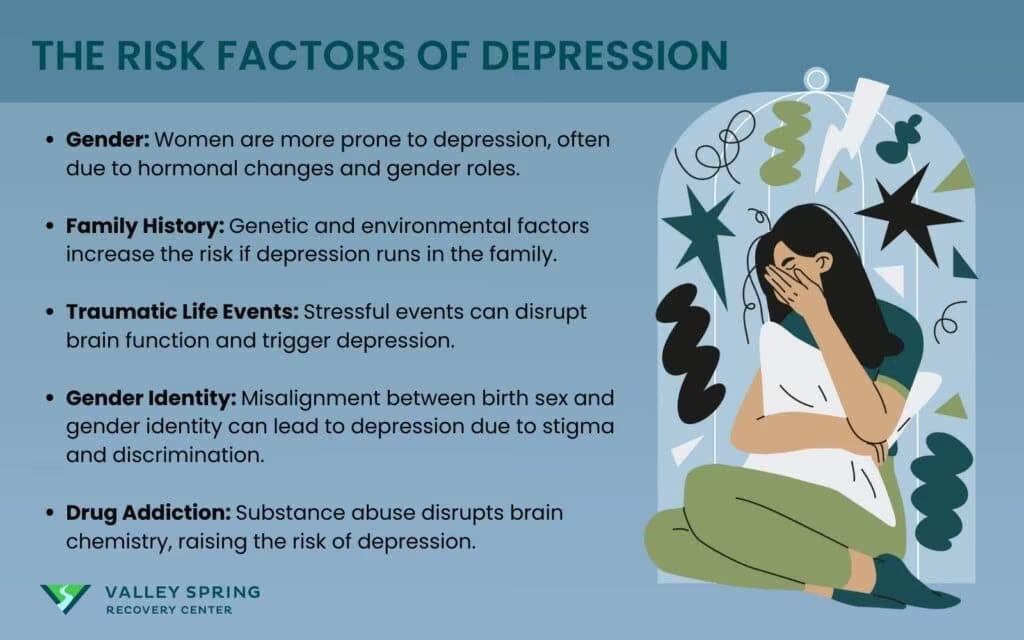
Depression develops from a combination of genetic, biological, environmental, and psychological factors, per NIMH, rather than from one identifiable cause. Family history raises risk, and depression is linked to co-occurring conditions including heart disease and diabetes.
Three contributing pathways are documented. First, inherited vulnerability: having a first-degree relative with depression raises a person's own risk. Second, life events and chronic adversity: trauma, loss, and sustained stress precede a substantial share of first episodes. Third, substances and medical conditions: alcohol changes brain chemistry in ways that produce and deepen depressive symptoms, and conditions such as thyroid disease produce depressive syndromes directly. Causes are distributed across the population unevenly, which is what the risk-group data shows.
Who Is Most Likely to Experience Depression?
Young adults aged 18 to 25 have the highest past-year rate of major depressive episode at 18.6%, women outpace men 10.3% to 6.2%, and 20.1% of adolescents aged 12 to 17 had an episode in 2021, per NIMH's major depression statistics from the National Survey on Drug Use and Health.
Severity data sharpens the picture: 14.5 million adults, 5.7% of the adult population, had an episode with severe impairment in 2021. Geography adds a local reference point. In the CDC's state-level analysis published in MMWR in 2023, 15.6% of New Jersey adults report a lifetime depression diagnosis, against a national age-standardized rate of 18.5% and a state range running from 12.7% in Hawaii to 27.5% in West Virginia. The New Jersey mental-health statistics page separates the state's symptom, county, and access measures from this national depression definition. Population rates identify who is likely to be affected; diagnosis determines whether a specific person is.
How Is Depression Diagnosed?
Depression is diagnosed through a clinical interview that maps a person's symptoms against the 9 DSM-5-TR criteria, supported by standardized instruments and a medical work-up to exclude physical causes. The most used screening instrument is the PHQ-9, a 9-item questionnaire that scores each DSM symptom from 0 to 3 and tracks severity across treatment.
The medical work-up exists because thyroid disorders, vitamin deficiencies, and medication effects produce depressive symptoms without a depressive disorder. A clinician who rules those out, confirms the 2-week duration, and counts 5 of 9 symptoms has a diagnosis, and a diagnosis is what unlocks the treatment evidence.
How Is Depression Treated?
Depression is treated with psychotherapy, antidepressant medication, or both, with brain stimulation therapies reserved for severe or treatment-resistant episodes. Antidepressants take 4 to 8 weeks to work, and sleep, appetite, and concentration improve before mood lifts, per NIMH.
The evidence gives this ladder real numbers. In the STAR*D trial, the largest sequenced treatment study of depression, 36.8% of patients reached remission on the first medication step, and the cumulative remission rate reached 67% across four steps, per Rush and colleagues' 2006 report in the American Journal of Psychiatry. The same study documents the balance: remission rates fell at the third and fourth steps, and relapse rates rose for patients who needed more steps. Persistence through sequenced treatment is what the 67% figure rewards.
Psychotherapy for depression includes cognitive behavioral therapy, which restructures the thought patterns that maintain low mood, and interpersonal therapy, which targets the relationship disruptions that trigger episodes. Sleep is a treatment lever in its own right: insomnia more than doubles the odds of developing depression, so treating disturbed sleep is part of treating the mood disorder. For severe depression that has not responded, electroconvulsive therapy (ECT) and repetitive transcranial magnetic stimulation (rTMS) are the most used brain stimulation therapies, and NIMH notes ECT is used earlier when severe depression becomes life-threatening. Treatment reaches only those who seek it: 61.0% of adults with an episode received treatment in 2021, which leaves 4 in 10 untreated. Structured outpatient depression treatment continues the same sequenced approach at the IOP and OP levels in Bergen County, New Jersey.
What Are the Most Common Questions About Depression?
Common questions: heredity, recurrence, disability status, and how depression differs from anxiety and PTSD.
Is Depression Genetic?
Genetics contribute without deciding the outcome. NIMH identifies genetic, biological, environmental, and psychological factors acting together, and a first-degree relative with depression raises risk. Family history is a reason for early screening, not a verdict.
Does Depression Come Back After Treatment?
Recurrence is a documented risk: in the STAR*D trial, patients who needed more treatment steps to reach remission relapsed at higher rates. Continued treatment after remission, called maintenance treatment, is how clinicians manage that risk.
Is Depression a Disability?
Yes, when it substantially limits major life activities. Major depressive disorder qualifies as a disability under the Americans with Disabilities Act, which obligates covered employers to provide reasonable accommodations.
What Is the Difference Between Depression and Anxiety?
Depression centers on low mood and loss of interest; anxiety centers on excessive fear and worry. The two co-occur at high rates, and each condition has its own DSM-5-TR criteria and treatment evidence.
What Is the Difference Between Depression and PTSD?
PTSD requires a traumatic event and features intrusive memories, avoidance, and hypervigilance. Depression requires no trauma and centers on mood. A depressive episode occurs inside PTSD, and clinicians diagnose both when both criteria sets are met.
Can Alcohol Cause Depression?
Yes. Alcohol is a central nervous system depressant, and sustained heavy drinking produces and deepens depressive symptoms. Alcohol-induced depressive disorder is a formal DSM-5-TR diagnosis, and mood frequently improves with sustained abstinence and treatment.
Sources & References6ShowHide
- NIMH — Major Depression Statistics (2021 National Survey on Drug Use and Health) — 21.0 million adults / 8.3% with a past-year major depressive episode; females 10.3%, males 6.2%; ages 18-25 at 18.6%; 14.5 million / 5.7% with severe impairment; 61.0% of adults and 40.6% of adolescents received treatment; adolescents 12-17 at 20.1%.
- Lee B, Wang Y, Carlson SA, et al. National, State-Level, and County-Level Prevalence Estimates of Adults Aged ≥18 Years Self-Reporting a Lifetime Diagnosis of Depression — United States, 2020. MMWR 2023;72:644-650 (PMC) — National age-standardized prevalence 18.5% (crude 18.4%); New Jersey 15.6% (95% CI 14.7-16.5); state range 12.7% (Hawaii) to 27.5% (West Virginia). Replaces the page's prior unsourced claim that 18% of NJ adults experienced depression symptoms.
- NIMH — Depression (publication) — Symptoms most of the day, nearly every day, for at least 2 weeks; two common types of depression plus other forms; antidepressants take 4-8 weeks to work; ECT and rTMS are the most used brain stimulation therapies, used earlier when severe depression is life-threatening; 988 call/text/chat wording.
- Rush AJ, Trivedi MH, Wisniewski SR, et al. Acute and longer-term outcomes in depressed outpatients requiring one or several treatment steps: a STAR*D report. Am J Psychiatry, 2006 (PubMed) — Remission rates by step: 36.8%, 30.6%, 13.7%, 13.0%; cumulative remission 67%; higher relapse rates for patients requiring more steps — carries the balanced-prognosis framing.
- Baglioni C, Battagliese G, Feige B, et al. Insomnia as a predictor of depression: a meta-analytic evaluation of longitudinal epidemiological studies. J Affect Disord, 2011 (PubMed) — 21 longitudinal studies; overall OR 2.60 (CI 1.98-3.42) for people with insomnia developing depression — supports the sleep-as-treatment-lever claim.
- American Psychiatric Association. Diagnostic and Statistical Manual of Mental Disorders, Fifth Edition, Text Revision (DSM-5-TR) — Print reference: 5-of-9 symptom criteria over the same 2-week period; alcohol-induced depressive disorder as a formal diagnosis.