


Mental health guide
Stress: Symptoms, Causes, Effects, and Treatment
Stress is the body's response to an external demand. The four types, the SAM and HPA response, chronic effects, and evidence-based management.
By Paul James Roeser·Reviewed by Dr. Michael Olla, MD·Last reviewed September 6, 2026·9 min read
Published ·Updated
Stress is the body's physical and mental response to an external demand, called a stressor, ranging from a deadline to an argument to a life-threatening event. The National Institute of Mental Health (NIMH) defines stress by its trigger: stress is a response to an external cause, and it resolves when the cause resolves. Stress is not a DSM-5-TR diagnosis. The manual instead codes trauma- and stressor-related disorders, including acute stress disorder and adjustment disorder, for the cases where a stressor produces clinically significant impairment.
Chronic stress carries measurable health consequences. Sustained activation of the stress response promotes atherosclerosis, suppresses immune function, and raises the risk of depression and anxiety disorders, per the StatPearls physiology review of the stress reaction. The American Psychological Association's 2023 Stress in America survey of more than 3,000 U.S. adults recorded the aftermath: among adults aged 35 to 44, reported chronic illness rose from 48% in 2019 to 58% in 2023, and reported mental illness diagnoses rose from 31% to 45% over the same period.
What Is Stress?
Stress is the body's physical or mental response to an external cause, while anxiety is an internal reaction that persists without an immediate threat, per NIMH's fact sheet on stress and anxiety. Stress is a response rather than a diagnosis; it requires clinical attention when symptoms persist, impair daily life, or indicate depression, an anxiety disorder, insomnia, trauma-related symptoms, or substance use.
Stress divides by duration. Acute stress follows a discrete event and settles within days. Chronic stress follows a sustained condition, including financial strain, caregiving, and unsafe environments, and keeps the stress response switched on for months. Traumatic stress follows exposure to death, serious injury, or violence. Symptoms lasting longer than one month warrant an assessment for PTSD, but duration alone does not establish the diagnosis; the assessment also considers qualifying trauma exposure, symptom clusters, functional impairment, and other possible causes. Duration is one axis of classification, and the full type list is short.

Clinical perspective
Stress and anxiety get used interchangeably, but they aren't treated the same way. Stress is usually a response to something identifiable — a job, a relationship, a deadline — and it resolves when the circumstance changes or someone builds better tools for it. When it doesn't resolve, when it becomes its own persistent state independent of the trigger, that's when it's worth asking whether something more clinical is underneath it.
Workplace stress becomes occupational burnout when exhaustion, detachment or cynicism, and reduced professional efficacy develop together after chronic job-related strain.
What Are the Types of Stress?
Clinicians commonly distinguish 4 types of stress by duration and trigger: acute stress, episodic acute stress, chronic stress, and traumatic stress, with eustress as the separate label for the positive, performance-sharpening form.
The 4 types of stress:
- Acute stress: the immediate response to a single demand, including a near-miss in traffic or a presentation. Acute stress resolves within hours to days once the demand passes.
- Episodic acute stress: repeated acute stress without recovery between episodes, the pattern of overloaded schedules and serial crises.
- Chronic stress: sustained activation lasting months, driven by ongoing conditions such as debt, job insecurity, or caregiving. Chronic stress is the type with documented disease consequences.
- Traumatic stress: the response to actual or threatened death, serious injury, or violence, assessed against acute stress disorder and PTSD criteria when symptoms persist.
Eustress names the beneficial form: the arousal before a competition or a wedding that sharpens focus without exceeding capacity. What all types share is the machinery underneath, and that machinery is specific.
What Happens in Your Body During the Stress Response?
The stress response runs on two connected systems: the sympathetic-adrenal-medullary (SAM) axis, which releases epinephrine and norepinephrine within seconds, and the hypothalamic-pituitary-adrenal (HPA) axis, which releases cortisol over minutes to hours, per the StatPearls physiology review. The two systems compared:
| System | Speed | Chemical messengers | Body effects |
|---|---|---|---|
| Sympathetic-adrenal-medullary (SAM) axis | Seconds | Epinephrine, norepinephrine from the adrenal medulla | Increased heart rate, stronger heart contractions, blood redirected to large muscles |
| Hypothalamic-pituitary-adrenal (HPA) axis | Minutes to hours | CRH from the hypothalamus, ACTH from the pituitary, cortisol from the adrenal cortex | Glucose mobilization, sustained alertness, immune modulation |
Both systems evolved for short bursts. The health problem begins when cortisol and epinephrine stay elevated for months, and the symptom list is where that elevation first shows.

What Are the Symptoms of Chronic Stress?
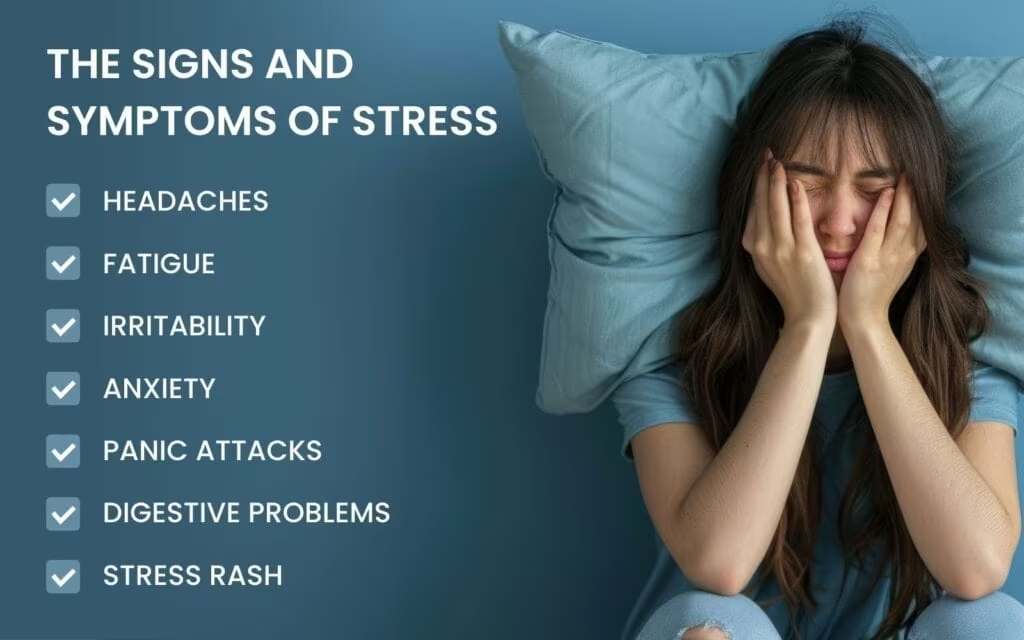
Chronic stress produces symptoms across 5 body systems: sleep, immune, digestive, cardiovascular, and reproductive, per NIMH's stress fact sheet, alongside the muscle tension, headaches, and irritability people notice first.
The 5 system-level symptom clusters:
- Sleep problems: difficulty falling asleep and staying asleep. Sleep disturbance that persists at least 3 nights a week for 3 months meets the criteria for insomnia, a disorder in its own right.
- Immune suppression: elevated cortisol inhibits pro-inflammatory cytokine production, leaving the body more open to infection (StatPearls).
- Digestive symptoms: stomach pain, appetite change, and disrupted bowel habits through the gut-brain axis.
- Cardiovascular strain: elevated heart rate and blood pressure that persist between stressors.
- Reproductive effects: disrupted cycles and reduced sexual function under sustained stress load.
Symptoms are the near-term cost. The long-term cost is disease, and the data on it is specific.
What Are the Long-Term Effects of Chronic Stress?
Chronic stress promotes atherosclerosis through oxidative stress, endothelial dysfunction, and inflammation, and it raises the risk of depression, anxiety, cognitive impairment, and heart disease, per the StatPearls review of stress physiology. NIMH's fact sheet adds the mental health arithmetic: long-term stress raises the risk of developing an anxiety disorder or depression.
Population data tracks the same trajectory. In the APA's 2023 Stress in America survey, conducted by The Harris Poll among more than 3,000 U.S. adults, adults aged 35 to 44 reported chronic illness rising from 48% in 2019 to 58% in 2023, and mental illness diagnoses in that age group rose from 31% to 45%. Adults aged 18 to 34 reported the highest 2023 mental illness rate of any age group at 50%.
Prolonged stress contributes to anxiety when threat anticipation and arousal persist after the stressor ends.
Chronic stress also raises the risk of depression, where low mood or loss of interest extends beyond the immediate pressure and impairs daily function.
How Does Stress Contribute to Substance Use?
Chronic stress increases vulnerability to developing a substance use disorder and to relapse, through dysregulation of the HPA axis, corticotropin-releasing factor pathways, and the prefrontal circuits that govern impulse control, per Sinha's 2008 review "Chronic stress, drug use, and vulnerability to addiction" in the Annals of the New York Academy of Sciences.
The mechanism is self-medication meeting neurobiology. A person under sustained stress who drinks for relief gets short-term dampening of the stress response and long-term sensitization of it, which raises both consumption and craving. Sinha's review identifies early-life adversity and accumulated stress load as predictors of addiction risk, and altered stress reactivity as a predictor of relapse. Repeated relief drinking progresses toward alcohol use disorder when impaired control and continued use despite harm replace occasional consumption. Recognizing stress load before it converts into disease or dependence is the point of measurement.
How Is Stress Measured?
Stress is measured with self-report instruments, led by the Perceived Stress Scale (PSS), a questionnaire developed by Cohen and colleagues in 1983 that scores how unpredictable, uncontrollable, and overloaded a person rates their life over the past month. No blood test or scan diagnoses stress.
Clinicians pair the score with a history: the active stressors, their duration, sleep, substance use, and mood symptoms. The purpose of measurement is triage, separating a stress load that lifestyle change will discharge from an emerging anxiety disorder, depressive episode, or stressor-related disorder that needs treatment. That triage leads directly to management.
How Do You Manage Stress?
Evidence-supported stress management combines 6 practices drawn from NIMH's coping guidance: regular exercise, a consistent sleep schedule, a relaxation practice, journaling, limits on caffeine, and active social support. Structured programs add mindfulness-based stress reduction (MBSR), an 8-week protocol of meditation and body-awareness training. Treatment settings combine the same mind-body practices with evidence-based therapy.
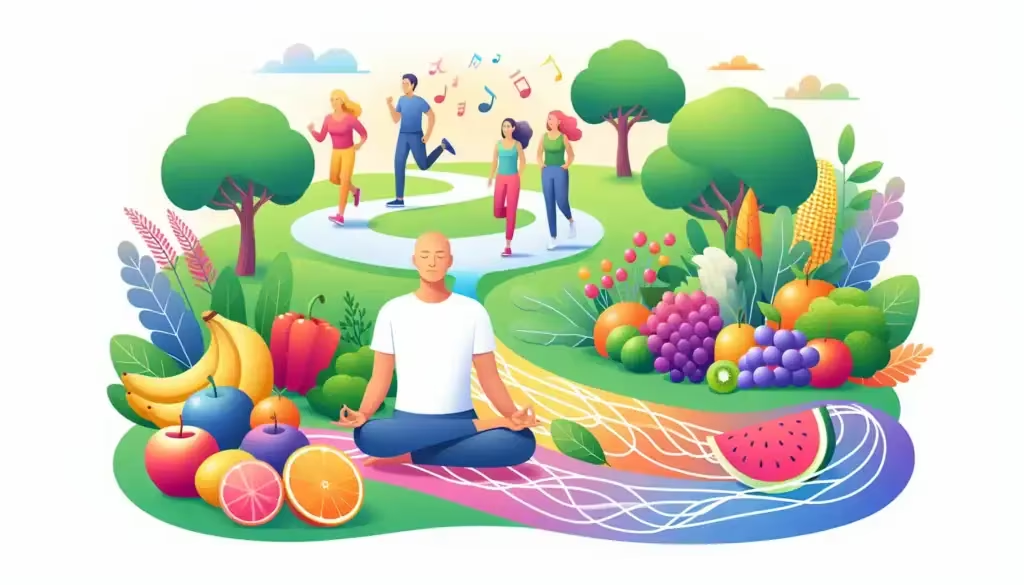
The 6 practices work on the stress machinery itself: exercise lowers circulating stress-hormone levels, sleep restores prefrontal regulation, and relaxation practices activate the parasympathetic counter-response. Talk to a professional when symptoms persist despite these practices, when stress disrupts work or relationships for weeks, or when it arrives with panic attacks or persistent low mood. Contact the 988 Suicide & Crisis Lifeline by call, text, or chat at 988lifeline.org when stress comes with thoughts of self-harm.
When low mood or loss of interest persists after the stressor changes, outpatient depression treatment addresses the depressive syndrome rather than treating it as ordinary stress.
When a specific job, health, relationship, financial, or family event produces clinically significant distress and impaired functioning, adjustment disorder treatment evaluates the stressor-linked response rather than treating stress alone as a diagnosis.
What Are the Most Common Questions About Stress?
Common questions: diagnosis status, blood pressure, duration, genetics, eustress, and the general adaptation syndrome.
Is Stress a Mental Illness?
No. Stress is a physiological response, not a DSM-5-TR diagnosis. The manual codes stressor-related conditions, including acute stress disorder and adjustment disorder, when a stressor produces symptoms that meet clinical thresholds.
Can Stress Cause High Blood Pressure?
Chronic stress contributes to cardiovascular disease: sustained cortisol and epinephrine elevation promotes oxidative stress, endothelial dysfunction, and inflammation, the mechanisms behind atherosclerosis, per StatPearls. Blood pressure elevation during stress episodes is part of that pathway.
How Long Does Stress Last?
Acute stress resolves within hours to days of the stressor passing. Chronic stress persists as long as its driver persists, months to years, and its health effects accumulate with duration.
Is Stress Genetic?
The stress response is universal; sensitivity to it varies. Genetic differences shape hormone regulation and temperament, and early-life adversity calibrates the HPA axis. Inherited vulnerability plus environment, not a single stress gene, sets a person's reactivity.
Is Eustress Good for You?
Yes, within limits. Eustress is the short-duration arousal that sharpens focus and performance before a challenge. It becomes harmful when episodes repeat without recovery, the pattern classified as episodic acute stress.
What Is the General Adaptation Syndrome?
The general adaptation syndrome is Hans Selye's three-stage model of the stress response: alarm, resistance, and exhaustion. The exhaustion stage corresponds to chronic stress, where the body's adaptive capacity is depleted and disease risk rises.
Sources & References5ShowHide
- NIMH — I'm So Stressed Out! Fact Sheet — Stress vs anxiety distinction (external cause vs internal reaction); long-term stress effects on sleep, immune, digestive, cardiovascular, and reproductive systems; raised risk of anxiety disorder or depression; coping practices; 988 guidance.
- Chu B, Marwaha K, Sanvictores T, Awosika AO, Ayers D. Physiology, Stress Reaction. StatPearls, NCBI Bookshelf — SAM axis (epinephrine/norepinephrine, heart rate, blood redirection) and HPA axis (CRH, ACTH, cortisol); chronic activation promotes oxidative stress, endothelial dysfunction, inflammation, and atherosclerosis; cortisol suppresses pro-inflammatory cytokine production; chronic consequences include depression, anxiety, cognitive impairment, and heart disease.
- American Psychological Association — Stress in America 2023: A nation recovering from collective trauma — Harris Poll survey of 3,000+ U.S. adults: chronic illness among ages 35-44 rose 48% (2019) to 58% (2023); mental illness diagnoses in that group rose 31% to 45%; ages 18-34 reported the highest 2023 mental illness rate at 50%. The page's prior copy misattributed the 48%-to-58% figure to stress prevalence; it measures chronic illness.
- Sinha R. Chronic stress, drug use, and vulnerability to addiction. Ann N Y Acad Sci, 2008 (PMC) — Chronic stress increases addiction vulnerability and relapse risk via HPA-axis dysregulation, CRF pathway alterations, prefrontal impairment, and mesolimbic dopamine disruption; early-life adversity and cumulative stress load as predictors.
- American Psychiatric Association. Diagnostic and Statistical Manual of Mental Disorders, Fifth Edition, Text Revision (DSM-5-TR) — Print reference: stress is not a coded diagnosis; trauma- and stressor-related disorders chapter includes acute stress disorder and adjustment disorder; PTSD criteria apply when traumatic-stress symptoms persist past one month.