


Clinical guide
Smartphone Addiction: Symptoms, Causes, Effects, Treatment
Smartphone addiction is compulsive device use that disrupts sleep, focus, and relationships through dopamine driven reward loops and its treatment.
By Paul James Roeser·Reviewed by Noelle Mathew, LCSW, LCADC, CASAC-M·13 min read
Published ·Updated
Smartphone addiction occurs when a mobile device shifts from being a helpful tool to a compulsive necessity that dominates attention, emotions, and behavior. It reflects a loss of control over smartphone use that disrupts sleep, focus, relationships, and emotional health.
Problematic smartphone use affects 37.1% of people worldwide, according to Lu X, An X, and Chen S's 2024 meta-analysis "Trends and Influencing Factors in Problematic Smartphone Use Prevalence (2012-2022)" in Cyberpsychology, Behavior and Social Networking, which pooled 109 studies covering 97,748 individuals. Smartphone addiction drives prolonged screen time through dopamine-mediated reward pathways: notifications, likes, and variable-ratio feedback reinforce habitual interaction the same way a slot machine reinforces the next pull.
Symptoms of smartphone addiction include constant checking, anxiety during disconnection, and loss of control. Causes involve dopamine-driven reward loops, emotional reliance, and persuasive app design. Effects reach brain structure, mood, relationships, and sleep. Treatment centers on cognitive behavioral therapy, mindfulness training, and structured digital detox.
What Is Smartphone Addiction?
Smartphone addiction is a behavioral dependency in which an individual develops an uncontrollable urge to use a smartphone excessively. Smartphone addiction interferes with normal functioning in work, social life, and emotional health.
Addiction to smartphones involves repetitive checking behaviors, compulsive engagement with apps, and psychological distress when the device is unavailable. The pattern is driven by dopamine-based reward mechanisms in the brain, the same mechanisms behind other behavioral addictions such as gambling or gaming.
How Many People Struggle With Smartphone Addiction Today?
37.1% of people worldwide show problematic smartphone use (95% confidence interval, 33.5% to 40.8%), according to the 2024 Lu, An, and Chen meta-analysis of 109 studies spanning 2012 to 2022.
The same analysis found the prevalence of problematic smartphone use rising over time across all age groups, with the fastest growth in older users. Women initially showed higher prevalence than men, but the male trend line climbed more steeply until it overtook the female rate. Prevalence varied widely between regions and measurement scales, and the upward trend held in every subgroup.
Is Smartphone Addiction Real?
Yes, smartphone addiction is real in the sense that measurable patterns of overuse, dependency, and functional impairment have been observed across multiple studies. While it does not yet appear formally in the DSM-5 as a standalone diagnosis, the phenomenon meets the core criteria of behavioral addiction: loss of control, tolerance, withdrawal-like symptoms, and persistence despite harm.
The withdrawal component has been tested experimentally. A study by Eide TA, et al. 2018, titled "Smartphone Restriction and Its Effect on Subjective Withdrawal Related Scores" in Frontiers in Psychology, randomized 127 adults to 72 hours of smartphone restriction or normal use and found significantly higher withdrawal and fear-of-missing-out scores in the restricted group, the response pattern traditionally associated with substance-related addictions.
Is Phone Addiction a Mental Illness?
No, phone addiction is not universally classified as a mental illness, but it shares characteristics with recognised conditions such as internet gaming disorder. The absence of formal classification does not negate its clinical relevance.
A study by Khan A, et al. 2023, titled "Excessive Smartphone Use is Associated with Depression, Anxiety, Stress, and Sleep Quality of Australian Adults" in the Journal of Medical Systems, analyzed 655 adults aged 18 to 59 and found that 24.4% had high-severe smartphone use. Compared with low-moderate users, the high-severe group scored 6.9 points higher on depression and 7.0 points higher on stress, and the burden rose dose-dependently: the more severe the smartphone use, the worse the depression, anxiety, stress, and sleep quality.
What Is Nomophobia?
Nomophobia (short for "no-mobile-phone phobia") refers to the fear of being without one's smartphone, losing signal, running out of battery or being unable to access mobile apps and social networks.
The term nomophobia captures one facet of smartphone addiction: anxiety triggered by separation or disconnection from the device. The Eide 2018 restriction experiment measured exactly this response, recording elevated fear-of-missing-out scores within 72 hours of separation from the device.
When Did Smartphone Addiction Begin to Gain Recognition?
Smartphone addiction began to gain recognition in the late 2000s with the rise of smartphones, mobile internet, and social media. As fully featured mobile devices replaced earlier phones, features such as infinite scrolling, push notifications, and on-demand connectivity intensified usage patterns.
The research record tracks that intensification. The Lu, An, and Chen 2024 meta-analysis, covering studies from 2012 to 2022, found problematic smartphone use prevalence increasing throughout the decade in every age group examined, with regional variation but no reversal of the trend anywhere.
Do Medical Authorities Recognize Smartphone Addiction?
No, major medical authorities currently do not list smartphone addiction as a standalone official diagnosis, but they acknowledge digital overuse as a behavioral concern. The World Health Organisation's ICD-11 classifies gaming disorder, and similar frameworks are examining patterns of technology overuse.
Clinical guidelines increasingly recommend screening for excessive smartphone use when it is associated with mood, sleep, or attention issues.
What Are the Symptoms of Smartphone Addiction?
The symptoms of smartphone addiction include persistent, compulsive patterns of smartphone use that interfere with mental health, relationships, and daily functioning. These symptoms appear across behavioral, emotional, and cognitive domains, the same domains affected by other behavioral addictions, and early recognition prevents escalation.
The 6 key symptoms of smartphone addiction are:
- Compulsive checking behavior: Individuals repeatedly check messages, notifications, or apps without conscious intent, during conversations, meals, or driving. Habitual checking rides on reward-loop activation in the brain's dopaminergic system, which reinforces the pattern each time a notification pays off.
- Preoccupation and craving: Users experience anxiety or discomfort when separated from their phone or when battery levels are low, reflecting psychological dependence.
- Failed attempts to cut back: Despite awareness of negative outcomes, such as poor academic performance, reduced productivity, or disrupted sleep, users fail to reduce their phone time. This loss of control aligns with the criteria seen in behavioral addictions like gambling disorder.
- Tolerance development: Over time, individuals spend increasing hours on their devices or seek more stimulating content to achieve the same level of satisfaction or connection, the escalation pattern common to reward-driven behaviors.
- Withdrawal-like reactions: When smartphone access is restricted, users show irritability, restlessness, or anxiety. The Eide 2018 randomized restriction study documented this profile directly: 72 hours without the device produced significantly elevated withdrawal and fear-of-missing-out scores compared with controls.
- Functional impairment: Excessive smartphone use leads to social isolation, strained relationships, concentration deficits, and emotional dysregulation. Wacks Y and Weinstein AM's 2021 review in Frontiers in Psychiatry records comorbidity with depression, anxiety, OCD, ADHD, and alcohol use disorder, alongside sleep problems, pain, and migraines.
How Many Hours of Phone Usage Is Considered Addiction?
No specific hour count defines smartphone addiction; impairment and loss of control define it. The DSM-5 sets no screen-time threshold, and validated instruments such as the Mobile Phone Problem Use Scale grade severity by consequences, craving, and failed cutbacks rather than by hours. The Khan 2023 study of 655 adults classified users as low-moderate, moderate-high, or high-severe on that scale, and mental health worsened with each severity step regardless of any fixed hour cutoff. Hours matter as a warning sign; interference with sleep, work, and relationships is the diagnostic signal.
What Are the Causes of Smartphone Addiction?
The causes of smartphone addiction include neurobiological, psychological, and environmental mechanisms that reinforce compulsive use. Smartphone addiction develops through the interaction of brain reward pathways, emotional regulation needs, and persuasive technology design.
The 5 main causes of smartphone addiction are:
- Neurological reward-circuit activation: Repeated smartphone use activates the mesolimbic dopamine system, reinforcing reward-seeking behavior through notifications, likes, and variable-ratio feedback. Neuroimaging evidence from Lin HM et al., 2022, titled "Structural and Functional Neural Correlates in Individuals with Excessive Smartphone Use: A Systematic Review and Meta-Analysis," confirms that excessive smartphone use is associated with structural and functional brain differences in regions tied to reward processing and impulse control.
- Emotional regulation difficulties: Individuals turn to their smartphones to alleviate negative moods such as anxiety, stress, or loneliness. Over time, this reliance conditions emotional dependence rather than adaptive coping.
- Personality and developmental vulnerability: Traits such as impulsivity, low self-control, and high neuroticism increase susceptibility. Adolescents and young adults, whose prefrontal cortexes are still maturing, are at particularly high risk.
- Environmental and social triggers: Continuous online accessibility, app design optimized for engagement, and social pressure to stay connected normalize excessive use. The phone is the access point for the broader pattern of internet addiction, so the two conditions share their environmental drivers.
- Behavioral conditioning by app design: Push notifications, reward algorithms, and infinite scrolling exploit cognitive biases, creating intermittent reinforcement that maintains compulsive checking behavior.
What Are the Effects of Smartphone Addiction?
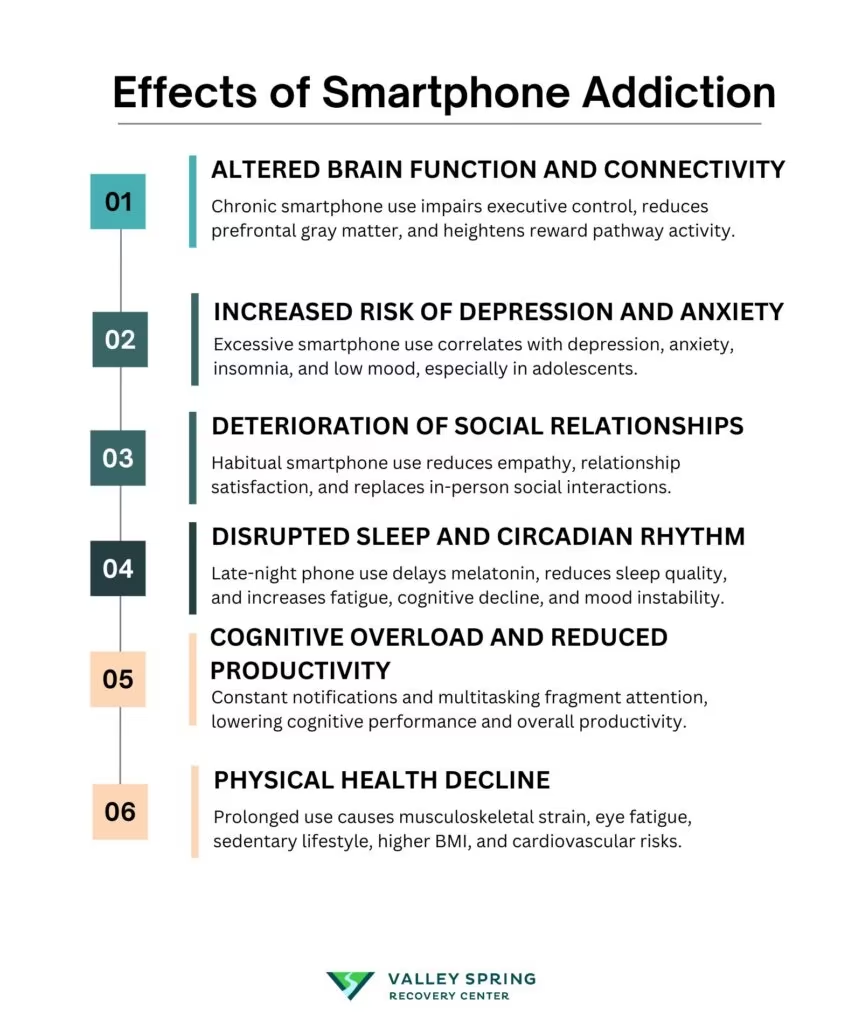
The effects of smartphone addiction include altered brain structure, increased risk of depression, and deterioration of social relationships. Evidence from imaging meta-analyses, prospective cohorts, and cross-sectional surveys converges on the same conclusion: persistent overuse harms brain, mood, and social well-being.
The 6 key effects of smartphone addiction are:
- Altered brain structure and function: The Lin 2022 meta-analysis of 11 MRI studies found excessive smartphone users had smaller brain volume than regular users (g = -0.55), especially in subcortical regions, with the reduction more pronounced in adolescents than adults. Impulsivity rose as volume fell, and activation differences appeared in the cerebellum, lingual gyrus, and middle frontal gyrus.
- Increased risk of depression and anxiety: A study by Nagata JM, et al. 2024, titled "Screen time and mental health: a prospective analysis of the Adolescent Brain Cognitive Development (ABCD) Study" in BMC Public Health, followed 9,538 adolescents for two years and found higher screen time prospectively associated with mental health symptoms, most strongly depressive symptoms. In adults, the Khan 2023 survey recorded depression scores 6.9 points higher among high-severe users than low-moderate users.
- Deterioration of social relationships: Smartphone addiction erodes interpersonal connections by substituting device-mediated communication for in-person interaction. Habitual smartphone checking behavior is linked to lower empathy and relationship satisfaction.
- Disrupted sleep quality and circadian rhythm: Late-night smartphone engagement interferes with sleep by delaying melatonin release and stimulating cognitive arousal. The Khan 2023 study found sleep quality worsened dose-dependently with smartphone use severity, and the Wacks and Weinstein 2021 review lists sleep problems among the most consistent medical findings. Prolonged sleep disruption impairs concentration and memory and destabilizes mood, which feeds the addiction cycle.
- Cognitive overload and reduced productivity: Constant notifications and multitasking demands from smartphone use fragment attention, lowering cognitive performance.
- Physical health decline: The Wacks and Weinstein 2021 review links excessive smartphone use to reduced physical fitness, unhealthy eating habits, pain, and migraines. Sedentary phone time also displaces physical activity, raising cardiovascular risk.
What Are the Treatment Options for Smartphone Addiction?
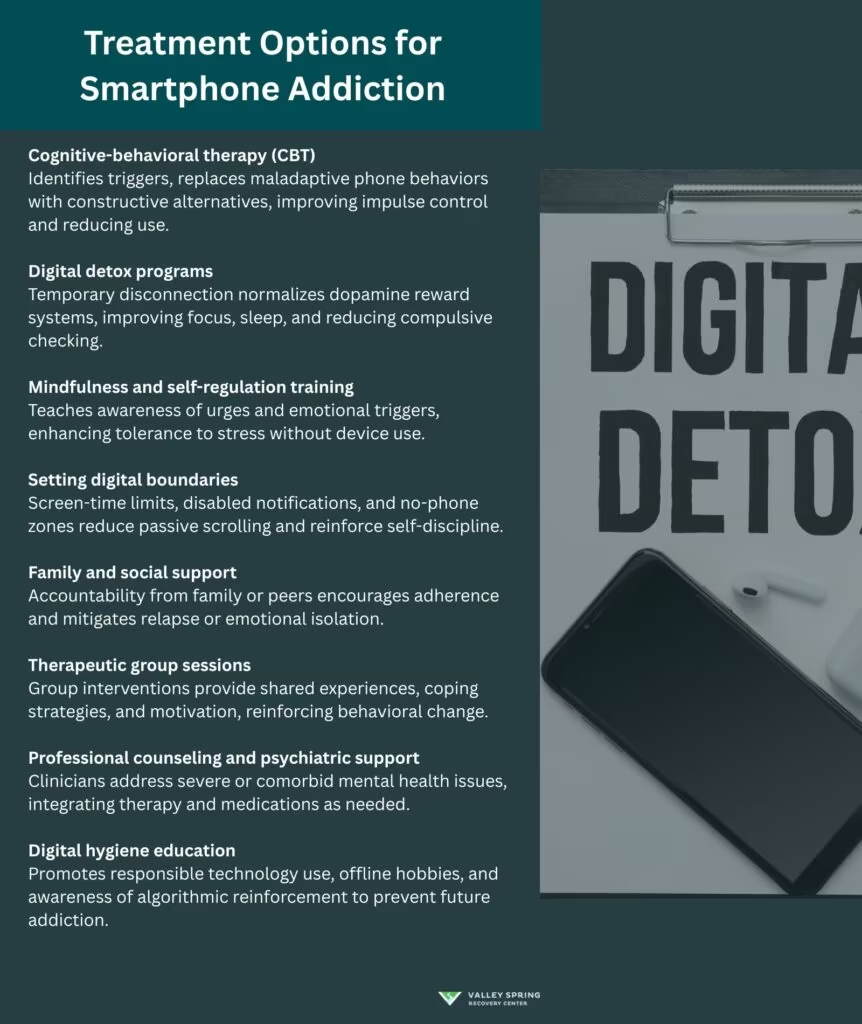
Treatment options for smartphone addiction include structured behavioral interventions, digital hygiene practices, and clinical therapies that target compulsive use patterns. The goal of these addiction treatment approaches is to reestablish healthy device boundaries, retrain attention systems, and strengthen emotional regulation.
The 8 key treatment options for smartphone addiction are:
- Cognitive-behavioral therapy (CBT): CBT helps individuals identify thought patterns and triggers driving excessive phone use, and replaces maladaptive behaviors, such as checking the device during stress, with constructive alternatives. A randomized study by Agbaria Q, 2022, titled "Cognitive behavioral intervention in dealing with Internet addiction among Arab teenagers in Israel," assigned 160 students in grades 7 through 9 to an 8-session CBT program or a weekly conversation group; the CBT group showed significantly higher self-control and lower addiction scores.
- Digital detox programs: A digital detox involves voluntarily disconnecting from digital devices for specific intervals to reset habitual loops. Structured detox programs last from 24 hours to several weeks. The Eide 2018 experiment shows the first 72 hours are the hardest: withdrawal and fear-of-missing-out scores spike before subsiding, so a detox plan works best when it anticipates that early discomfort.
- Mindfulness and self-regulation training: Mindfulness-based approaches teach awareness of urges and emotional triggers linked to phone use. Techniques such as guided meditation or mindful breathing enhance tolerance to boredom and stress without resorting to devices.
- Setting digital boundaries: Implementing screen-time limits, disabling notifications, and designating "no-phone zones" create environmental control over temptation cues. These practical steps reduce passive scrolling and reinforce self-discipline, especially before bedtime or during meals.
- Family and social support: Involving family or peers strengthens accountability. Support systems encourage adherence to device limits and foster shared offline engagement, mitigating relapse risk and emotional isolation.
- Therapeutic group sessions: Group-based interventions, modeled after addiction recovery programs, provide community reinforcement. Participants share experiences, discuss coping mechanisms, and track progress, enhancing motivation and self-efficacy.
- Professional counseling and psychiatric support: Severe or comorbid cases involving depression, anxiety, or attention disorders require psychiatric assessment and therapy integration. Clinicians tailor behavioral treatment with adjunct pharmacological care if underlying mental health issues maintain the addiction cycle.
- Digital hygiene education: Responsible technology use builds long-term prevention capacity. It includes awareness of algorithmic reinforcement, promoting offline hobbies, and developing balanced media consumption habits.
Are Evidence-Based Therapies Beneficial in Managing Smartphone Addiction?
Yes, evidence-based therapies are beneficial in managing smartphone addiction. They work because they change the thoughts and habits that drive compulsive use and retrain the brain's reward and control systems.
CBT breaks automatic checking loops and teaches alternative coping skills; the Agbaria 2022 randomized trial recorded significant gains in self-control after eight sessions. Mindfulness reduces reactivity to urges and increases tolerance of boredom or stress.
Motivational interviewing strengthens internal reasons to cut back and improves adherence.
Clinicians recommend integrating CBT, mindfulness, MI, and related interventions as core evidence-based therapies.
What Is a Digital Detox and Does It Help?
A digital detox involves a planned reduction or temporary cessation of smartphone use. It provides the brain and nervous system time to recalibrate and breaks habitual loops.
Users who engage in screen-free periods report improved mood, sleep, and attention. The practice is most effective when combined with structured reflection and ongoing behavioral change, because the Eide 2018 data show withdrawal discomfort peaks early and a plan for those first days determines whether the detox holds.
How Can Someone Prevent Smartphone Addiction?
Prevention of smartphone addiction hinges on awareness, habit structuring, and environmental support. Effective strategies include using screen-time monitors, setting app limits, creating device-free zones (especially at bedtime), practising mindfulness, and redesigning routines to shift rewards from the device to real-world experiences.
For children, the Muppalla SK et al. 2023 review "Effects of Excessive Screen Time on Child Development" in Cureus recommends three parental levers: setting explicit boundaries, using parental controls, and modeling good screen behavior, because excessive screen use in childhood is linked to worse executive functioning, sleep disorders, and higher risk of depression and anxiety.
What Role Do Social Media and Apps Play in Smartphone Addiction?
Apps and social media platforms employ persuasive design features, such as push notifications, infinite scroll, and reward feedback loops, that drive repeated engagement and reduce cognitive resistance.
Each feature exploits a known cognitive bias: push notifications capture attention involuntarily, infinite scroll removes natural stopping points, and variable-ratio rewards, the schedule that makes gambling and mobile video games compulsive, keep the checking loop alive. The result is a behavioral pattern in which the person responds reflexively to stimuli, reinforcing the connection to the device.
Sources & References8ShowHide
- Lu X, An X, Chen S (2024) Trends and Influencing Factors in Problematic Smartphone Use Prevalence (2012-2022): A Systematic Review and Meta-Analysis, Cyberpsychology, Behavior and Social Networking — 109 studies, 97,748 individuals; pooled global problematic smartphone use prevalence 37.1% (95% CI 33.5-40.8%); prevalence increasing over time across all age groups; male regression slope steeper than female.
- Khan A, McLeod G, Hidajat T, Edwards EJ (2023) Excessive Smartphone Use is Associated with Depression, Anxiety, Stress, and Sleep Quality of Australian Adults, Journal of Medical Systems — 655 adults aged 18-59; 24.4% reported high-severe smartphone use; depression score 6.91 points higher and stress score 7.02 points higher for high-severe versus low-moderate use, dose-dependent.
- Lin HM, Chang YT, Chen MH, et al. (2022) Structural and Functional Neural Correlates in Individuals with Excessive Smartphone Use: A Systematic Review and Meta-Analysis, International Journal of Environmental Research and Public Health — 11 MRI studies; excessive smartphone users showed smaller brain volume than controls (g = -0.55), especially subcortical regions; effect more pronounced in adolescents; impulsivity positively associated with volume reduction.
- Nagata JM, Al-Shoaibi AAA, Leong AW, et al. (2024) Screen time and mental health: a prospective analysis of the Adolescent Brain Cognitive Development (ABCD) Study, BMC Public Health — 9,538 adolescents followed two years; higher screen time prospectively associated with mental health symptoms, strongest for depressive symptoms; effect sizes small.
- Eide TA, Aarestad SH, Andreassen CS, Bilder RM, Pallesen S (2018) Smartphone Restriction and Its Effect on Subjective Withdrawal Related Scores, Frontiers in Psychology — 127 participants randomized to 72-hour smartphone restriction or control; restricted group scored significantly higher on the Smartphone Withdrawal Scale and Fear of Missing Out Scale.
- Wacks Y, Weinstein AM (2021) Excessive Smartphone Use Is Associated With Health Problems in Adolescents and Young Adults, Frontiers in Psychiatry — Review; excessive smartphone use comorbid with depression, anxiety, OCD, ADHD, and alcohol use disorder; medical problems include sleep problems, reduced physical fitness, unhealthy eating, pain and migraines, and gray-matter changes.
- Muppalla SK, Vuppalapati S, Reddy Pulliahgaru A, Sreenivasulu H (2023) Effects of Excessive Screen Time on Child Development: An Updated Review and Strategies for Management, Cureus — Excessive screen use in children linked to worse executive functioning and academic performance, sleep disorders, obesity risk, depression and anxiety; management includes boundaries, parental controls, and modeling good screen behavior.
- Agbaria Q (2022) Cognitive behavioral intervention in dealing with Internet addiction among Arab teenagers in Israel, International Journal of Mental Health and Addiction — 160 students in grades 7-9 randomized to an 8-session CBT program or weekly group conversation; CBT group showed higher self-control and reduced Internet addiction scores (p < .01).