


Clinical guide
What Does Adderall Do To A Normal Person
What Adderall does to someone without ADHD, including hyperfocus, appetite suppression, and the impulsivity risks of overstimulation.
By Paul James Roeser·Reviewed by Noelle Mathew, LCSW, LCADC, CASAC-M·7 min read
Published ·Updated
When a normal person takes Adderall, the brain receives a sharp, unnatural increase in stimulant levels. This results in hyperfocus, elevated confidence, reduced appetite, and temporary wakefulness.
Adderall helps regulate neurotransmitters such as dopamine and norepinephrine, thereby improving focus and behavioral control. But in someone without these conditions, Adderall does not correct a chemical imbalance. It amplifies activity beyond baseline.
While it feels like improved concentration, research shows that this overstimulation impairs task consistency, increases impulsivity, and disrupts natural sleep cycles. Emotional flatness, restlessness, and over-reliance are also common.
Does Adderall Make You Smarter Or Just Feel More Focused?
No, adderall does not make you smarter. It creates a temporary boost in perceived focus and motivation by stimulating dopamine release, which makes tasks feel easier.
For people without ADHD, this leads to overconfidence in performance, not actual improvement in memory or learning. Cognitive accuracy declines even as alertness increases.
How Does Adderall Affect The Brain Of Someone Without ADHD?
The ways Adderall affects the brain of someone without ADHD include a dopamine surge, prefrontal cortex overload, neurotransmitter imbalance, and attention dysregulation. Adderall overstimulates your brain by increasing dopamine and other neurotransmitters beyond normal levels in non-ADHD individuals.
Adderall affects the brain of someone without ADHD in several ways:
- Dopamine surge: You experience a sudden rise in dopamine that floods your reward pathways. This surge creates an artificial feeling of focus and energy but risks dependence and misuse.
- Prefrontal cortex overload: Adderall overstimulates your prefrontal cortex, impairing decision-making and long-term memory. Excess stimulation disrupts neural circuits that control emotion and planning.
- Neurotransmitter imbalance: You experience disrupted levels of norepinephrine and serotonin, affecting your mood and stress response. Imbalanced neurotransmitters reduce your ability to process information and regulate emotions.
- Attention dysregulation: Excessive stimulant effects cause uneven attention span. You feel hyper-focused on trivial tasks while neglecting important ones.
Can A Normal Person Get Addicted To Adderall?
Yes. A normal person can get addicted to Adderall. You experience cravings and loss of control when using doses not prescribed for you. Repeated use alters your brain’s reward system, making you chase the drug to feel normal.
According to a study by the New Jersey Department of Education (2021), 7% of high school students reported using prescription stimulants without a prescription.
If you misuse Adderall and cannot stop, you need Adderall rehab to break dependence. Seeking professional support in New Jersey helps you restore healthy brain function.
What Does Adderall Feel Like If You Do Not Have ADHD?
Adderall produces euphoria, talkativeness, suppressed appetite and a sense of sharpened focus in a person without ADHD, because the same dopamine and norepinephrine surge that normalizes an ADHD brain overshoots a brain already regulating those neurotransmitters adequately. The experience resembles stimulant intoxication rather than the settling effect described by people who take Adderall as prescribed.
The felt effect and the measured effect diverge sharply. Ilieva, Irena P. et al. published a meta-analysis of prescription stimulant effects in healthy adults in the Journal of Cognitive Neuroscience in 2015, pooling methylphenidate and amphetamine results across controlled trials. The analysis found a small effect on inhibitory control and short-term episodic memory, and a medium effect on delayed episodic memory. Measured cognitive gains in people without ADHD are modest and task-specific, while the perceived gain is large, a gap driven by amphetamine's effect on motivation, wakefulness and confidence rather than on reasoning itself.
That gap explains a pattern seen in students and working professionals. A person taking Adderall without a diagnosis reports studying longer and feeling more productive while producing work of unchanged quality, then attributes the unchanged result to an insufficient dose. Escalating the dose to close a gap that a higher dose cannot close is the mechanism by which non-prescribed use becomes stimulant use disorder.
The physical cost of that surge accumulates separately from the cognitive question.
What Are The Side Effects Of Adderall For People Without ADHD?
The side effects of adderall for people without ADHD include a dopamine surge, cortical overactivation, reduced sleep quality, and impaired risk assessment. These effects overload your brain’s normal function and disrupt cognition, emotion, and decision-making.
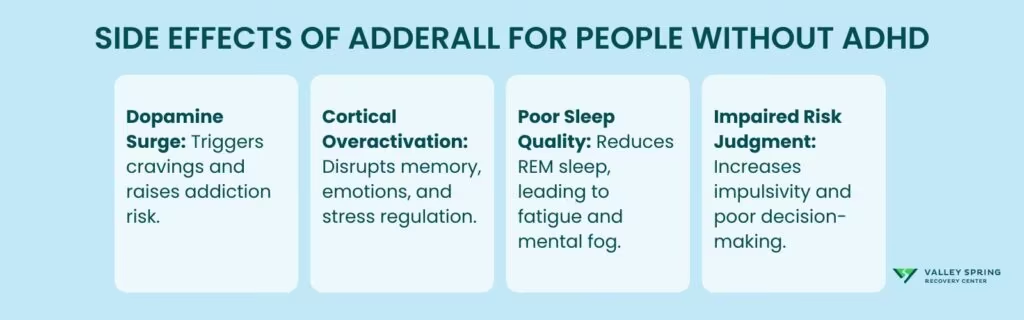
The side effects of adderall for people without ADHD are:
- Dopamine surge: You experience a sudden spike in dopamine levels that triggers reward pathways unnaturally. This overload creates cravings and increases your risk of dependence.
- Cortical overactivation: Adderall overstimulates your prefrontal cortex, impairing long-term memory and emotional balance. Excess activation prevents proper stress response and learning processes.
- Reduced sleep quality: Your sleep architecture becomes disrupted as Adderall decreases your REM cycles. Less REM sleep leaves you fatigued and hinders natural brain recovery.
- Impaired risk assessment: You begin making impulsive decisions and overestimate your abilities. Altered prefrontal function undermines your capacity to judge dangers accurately.
How Long Does Adderall Last In Someone Without ADHD?
For someone without ADHD, Adderall lasts for about 4 to 6 hours in your system. Peak stimulant effects on the brain and focus emerge around 2 hours after you take a prescription dose.
Dopamine-driven energy and attention are sustained during that window. Extended-release forms maintain effects up to 12 hours in non-ADHD users. As stimulant levels decline, you face a crash with a drop in dopamine and cognitive energy. Your tolerance, metabolism, and misuse history influence how long Adderall's effects endure.
Is It Safe For Non-ADHD People To Use Adderall For Studying Or Work?
No, adderall is not safe for non-ADHD people to use for studying or work. It increases the risks of abuse and legal issues. You face impaired sleep, elevated heart rate, and mood swings from stimulant misuse. Over time, tolerance forms and withdrawal symptoms emerge when you stop. Prescription-only status under Schedule II makes nonmedical use illegal in New Jersey.
What Are The Long-Term Effects Of Adderall Use In Healthy Individuals?
The long-term effects of Adderall use in healthy individuals include cardiovascular damage, mental health decline, cognitive impairments, and dependence/tolerance. These outcomes emerge over months of misuse and impact your body and brain function.
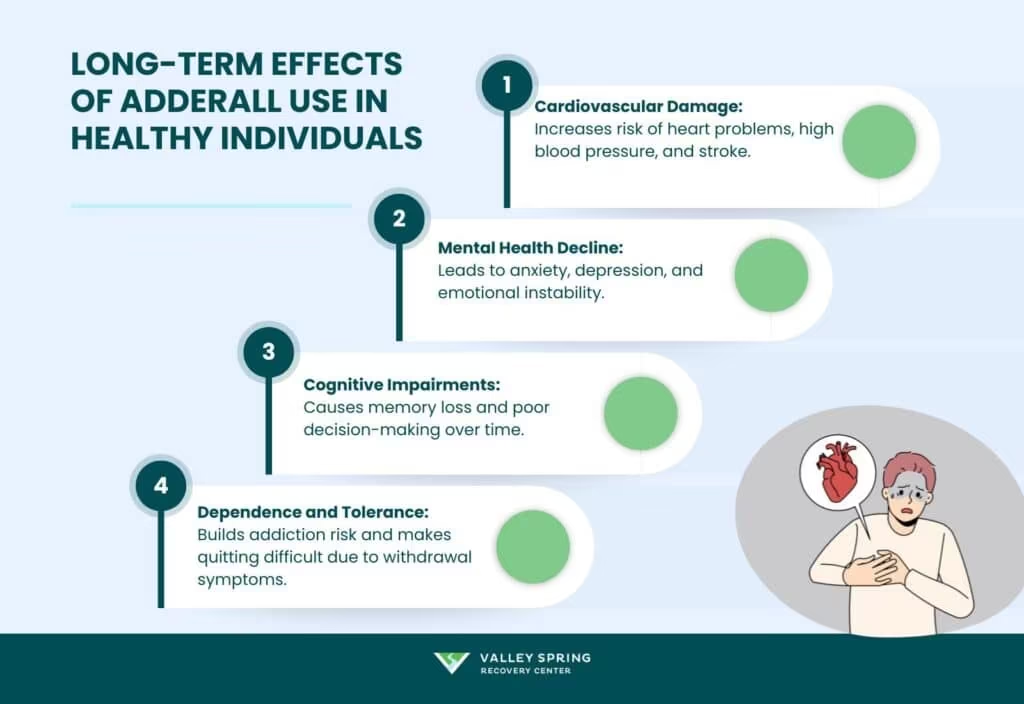
The long-term effects of Adderall use in healthy individuals are:
- Cardiovascular damage: You risk serious heart issues such as high blood pressure, arrhythmias, and increased stroke risk. Chronic stimulant use overworks your heart muscle and constricts blood vessels, leading to lasting vascular harm.
- Mental health decline: You face heightened anxiety, depression, and mood swings from prolonged Adderall exposure. Long-term misuse disrupts neurotransmitter balance and undermines emotional stability.
- Cognitive impairments: You experience memory loss and weakened executive function as dopamine receptors adapt to excess stimulation. Persistent overstimulation impairs neural pathways needed for planning, decision-making, and retaining new information.
- Dependence and tolerance: You develop a need for higher doses to achieve the same effects, raising addiction risk. When you stop, withdrawal symptoms such as exhaustion and irritability emerge, making cessation difficult.
Why Do People Without ADHD Use Adderall?
People without ADHD take Adderall because they seek heightened focus and energy for work or study. Many believe the stimulant boosts attention and productivity under pressure.
People misuse Adderall to meet deadlines or sustain long hours despite lacking a medical diagnosis. This misuse leads to tolerance, dependency, and a crash when the stimulant effect fades.
Where Can I Get Help For Adderall Addiction In New Jersey?
The places to get help for Adderall addiction in New Jersey include certified addiction treatment centers, hospital-based outpatient programs, and peer support groups. You choose a setting that fits your schedule and needs.
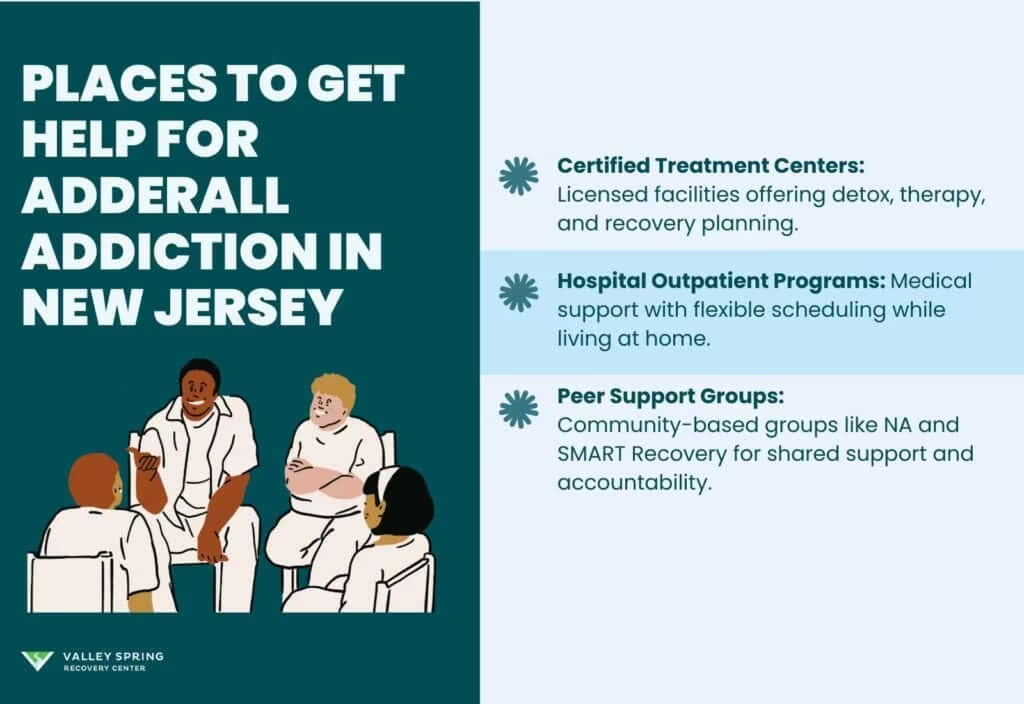
The places to get help for Adderall addiction in New Jersey are:
- Certified addiction treatment centers: You can find licensed facilities offering structured care, including medical monitoring and counselling. These centres provide a combination of medical detoxification, therapy sessions, and life skills coaching to support your recovery. Staff coordinate aftercare planning to minimize the risk of relapse.
- Hospital-based outpatient programs: You attend scheduled sessions at a medical facility while living at home. These programs offer regular check-ins with addiction specialists, pharmacy support for tapering schedules, and individual therapy. You maintain work and family obligations while receiving professional care.
- Peer support groups: You can join groups like Narcotics Anonymous or SMART Recovery, which meet throughout New Jersey. Group members share experiences, coping strategies, and hold each other accountable in a non-judgmental setting. You build a support network that reinforces your commitment to sobriety.
Additionally, consider a rehab program designed for working professionals to balance treatment with career demands.