
Mental Health · NJ MH License #70420104
Bipolar Disorder Treatment in New Jersey
Bipolar disorder treatment in Bergen County addresses manic episodes, hypomanic episodes, depressive episodes, and the sleep and activity disruption that precedes them in adults. Valley Spring Recovery Center delivers bipolar disorder care at two levels — Intensive Outpatient (IOP) and Outpatient (OP) — built around Interpersonal and Social Rhythm Therapy, family-focused work, bipolar-adapted CBT, and DBT skills, with psychiatric evaluation and medication management from the Medical Director (MD) and the psychiatric nurse practitioner (PMHNP-BC). Telehealth is a delivery mode for both levels rather than a separate program. Valley Spring holds CARF accreditation, New Jersey Mental Health License #70420104, and a BBB A+ rating, and treats adults from 830 Broadway in Norwood and across Bergen County.
- Intensive Outpatient (IOP) and Outpatient (OP) levels of care, with telehealth available as a delivery mode for both
- Psychiatric evaluation and medication management from the Medical Director (MD) and the psychiatric nurse practitioner (PMHNP-BC)
- PHQ-9 administered at intake and repeated during treatment so depressive symptom change is measured, not estimated
- Interpersonal and Social Rhythm Therapy stabilizing sleep, wake, meal, and activity timing as episode prevention
- Family-Focused Therapy delivering psychoeducation, communication training, and problem-solving with the people a client lives with
- Daily mood charting recording sleep hours, energy, goal-directed activity, and mood so prodromal shifts surface early
- Standalone mental health admission under NJ Mental Health License #70420104, with no substance use diagnosis required
- Evening IOP scheduling from 6:00 PM to 9:00 PM so employment, school, and caregiving continue during treatment
Free Insurance Verification
Get Answers Now
Same-day admissions available. Our team verifies your insurance and schedules your intake, typically the same day.
Programs Available
What Bipolar Disorder Treatment Programs Does Valley Spring Recovery Center Offer in New Jersey?
Valley Spring Recovery Center treats bipolar disorder at two levels of care: Intensive Outpatient (IOP), which runs evenings from 6:00 PM to 9:00 PM, and Outpatient (OP), which runs 1 to 2 evenings per week. Telehealth is a delivery mode for both levels, not a separate program. Both levels run Interpersonal and Social Rhythm Therapy, bipolar-adapted CBT, DBT skills, and family work in process groups under 10 people inside an 8:1 maximum therapist-to-patient ratio at 830 Broadway, Norwood, NJ.
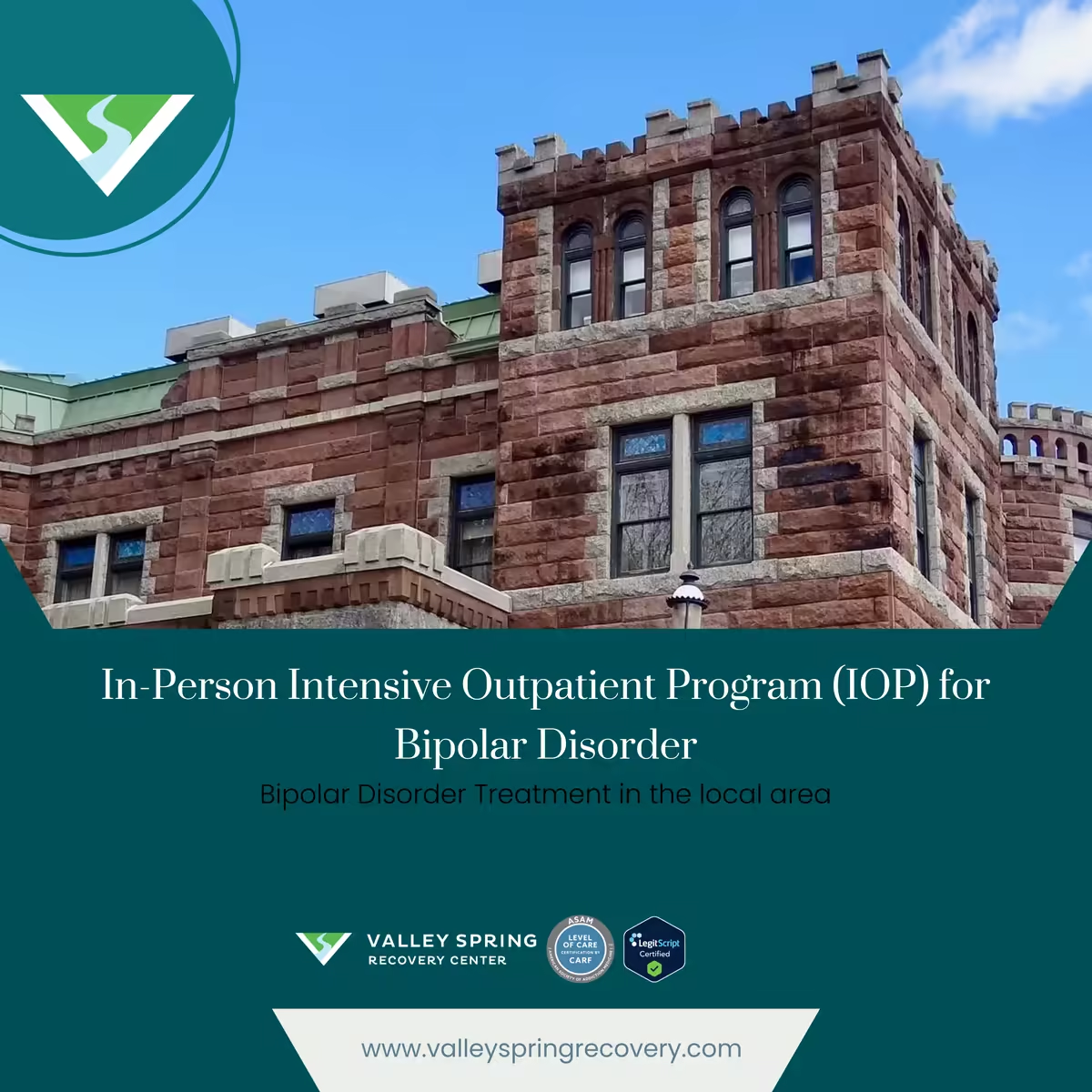
Valley Spring Recovery Center · Norwood, NJ



People Who Recovered
Norwood, NJ Bipolar Disorder Treatment Center Reviews
“It cannot be more clear the profound impact that Sean has made in my recovery journey. Finding someone who can balance the weight of recovery with genuine humor is rare, and he embodies that perfectly.”
Daisy McCloud
“Valley Spring Recovery Center truly changed my little brother Jordan's life. From the moment he entered the program, he was treated with respect, care, and real compassion. The staff went above and beyond to support him, not just in his recovery, but in every aspect of his life.”
Deshaya Williams
“Valley Spring Recovery Center saved my son's life. The staff is amazing. I'm so grateful for the exceptional care he received. The support and encouragement by the staff and the rest of the Valley Spring Community is so meaningful.”
Lana Roeser
“Valley Spring Recovery Center is absolutely exceptional. Brian and Mike have created a truly beautiful establishment, both in appearance and in spirit. The clinical setting is world class, blending professionalism with genuine compassion.”
Christopher Ferry
“Everyone treated me like family, I felt like I was born into this family. The welcoming I received was incredible. Valley Spring changed my life in ways I never thought possible.”
Tr3 Weee
Best in Bergen County
Where Can You Find Bipolar Disorder Treatment Near Bergen County, NJ?
Valley Spring Recovery Center delivers bipolar disorder treatment at 830 Broadway, Norwood, NJ 07648, in northeastern Bergen County, roughly 20 minutes from the George Washington Bridge and reachable from the Palisades Interstate Parkway, the Garden State Parkway, and the New York State Thruway. The Norwood facility is a standalone building with private parking, multiple treatment rooms, group spaces capped under 10 people, and dedicated offices for psychiatric consultation. Norwood sits on the New York border, which puts the program within a short drive of Rockland County and the lower Hudson Valley as well as the Bergen County towns immediately around it — Northvale, Old Tappan, Harrington Park, Closter, Demarest, Alpine, Cresskill, and Tenafly.
A substance use diagnosis is not required to be admitted for bipolar disorder treatment at Valley Spring Recovery Center. New Jersey Mental Health License #70420104 authorizes standalone mental health treatment, so an adult whose only diagnosis is bipolar I disorder, bipolar II disorder, or cyclothymic disorder is admitted on that basis alone. Valley Spring Recovery Center also holds NJ Substance Use Disorder License #200887, which is what lets one clinical team treat bipolar disorder and a co-occurring alcohol or drug problem under a single plan instead of splitting a client between two providers.
Clinical programming for bipolar disorder centers on Interpersonal and Social Rhythm Therapy, which stabilizes the daily timing of sleep, waking, meals, and social contact because rhythm disruption precedes mood episodes. Bipolar-adapted Cognitive Behavioral Therapy addresses depressive rumination and the goal-directed escalation that drives manic spending, travel, and work decisions. Dialectical Behavior Therapy skills target the impulsivity and emotional dysregulation of hypomanic and mixed presentations. The Medical Director (MD) and the psychiatric nurse practitioner (PMHNP-BC) review every client weekly regardless of medication status, tracking sleep duration, energy, appetite and weight, and mood stabilizer tolerability. Transportation assistance is available on a case-by-case basis.
8:1
Staff-to-Client Ratio
IOP + OP
Mental Health Levels of Care
16
In-Network Payer Contracts
NJ #70420104
MH License
Why Valley Spring
Why Choose Valley Spring Recovery Center for Bipolar Disorder Treatment?
CARF-accredited and NJ-licensed, Valley Spring Recovery Center maintains an 8:1 staff-to-client ratio, accepts 16 payers, including AmeriHealth, Fidelis Care, ComPsych, Oscar, Tricare, Magellan Healthcare, Cigna, and UnitedHealthcare (Blue Cross Blue Shield, Aetna, and Horizon accepted out-of-network or by single case agreement), and offers same-day admissions with groups capped at 10 people for Bipolar Disorder Treatment.
Valley Spring Recovery Center · Norwood, NJ
Treatment Timeline
How Does Bipolar Disorder Treatment at Valley Spring Recovery Work?
Bipolar Disorder Treatment at Valley Spring Recovery Center follows a staged clinical process beginning with assessment, progressing through active treatment, and continuing to aftercare planning. Timeline varies by severity and ASAM criteria, typically 30 to 90 days across program levels.
Intake produces a psychiatric evaluation and a PHQ-9 baseline
Intake produces a biopsychosocial assessment and a psychiatric evaluation conducted by the Medical Director (MD) or the psychiatric nurse practitioner (PMHNP-BC), regardless of current medication status. The evaluation reconstructs the episode timeline against DSM-5 criteria, separates bipolar I from bipolar II and cyclothymic disorder, records family psychiatric history, and reviews medical causes including thyroid disease that produce mood presentations resembling bipolar disorder. The PHQ-9 is administered at this visit and becomes the baseline every later score is compared against. Mood charting starts on day one, and a written safety plan naming 988, 911, emergency contacts, and personal warning signs is completed before programming begins.
Supporting Services: Biopsychosocial assessment, psychiatric evaluation, PHQ-9 baseline, DSM-5 differential, medical and thyroid review, mood chart setup, safety planning, and level of care determination.
Programming builds social rhythm, CBT, and DBT skills weekly
Programming runs Interpersonal and Social Rhythm Therapy to fix wake time, meal times, and evening wind-down; bipolar-adapted CBT to address depressive rumination and manic goal-directed escalation; and DBT skills for the impulsivity of hypomanic and mixed states. Individual therapy occurs 1 to 2 sessions per week and covers personal triggers, relationships damaged during past episodes, and the medication adherence problem specific to bipolar disorder, where insight into the need for treatment drops as mood rises. The Medical Director (MD) or psychiatric nurse practitioner (PMHNP-BC) reviews every client weekly. Family-Focused Therapy sessions begin with client consent.
Supporting Services: IPSRT group work, bipolar-adapted CBT and DBT programming, 1 to 2 individual therapy sessions per week, weekly psychiatric review, Family-Focused Therapy, health and wellness groups, and case management.
Clients test the plan against real work and family schedules
Clients apply mood charting, rhythm targets, and warning-sign responses to real schedules while still attending programming, which is where the plan gets tested against work shifts, travel, exam periods, and family conflict. Individual therapy shifts to generalization: workplace functioning, repairing relationships strained during a manic or depressive episode, and rebuilding financial stability after impulsive spending. The PHQ-9 is readministered and the score is reviewed with the client alongside the mood chart. Treatment team meetings every Wednesday assess readiness to step down to Outpatient care, judged by charting consistency, medication stability, and a warning-sign plan the client can state unprompted.
Supporting Services: Advanced IPSRT and CBT application, repeat PHQ-9 administration, psychiatric optimization, family session advancement, step-down planning, and external psychiatric care coordination.
Clients step down to Outpatient care with a prescriber summary
Discharge planning centers on psychiatric continuity, because bipolar disorder is managed across years rather than weeks. Clients step down from IOP to Outpatient care or transition to an outside prescriber with a written summary covering the medication regimen and its monitoring requirements, documented episode triggers, mood chart history, and the warning-sign action plan. Case management coordinates community mental health services and peer support referrals to the Depression and Bipolar Support Alliance and NAMI, both of which run New Jersey chapters. Alumni orientation connects clients to Thrive, which provides monthly meetings, quarterly outings, and peer mentorship for life.
Supporting Services: Step-down to Outpatient care, external psychiatric referrals, written prescriber summary, DBSA and NAMI referrals, Thrive alumni orientation, and community services coordination.
Our Facility
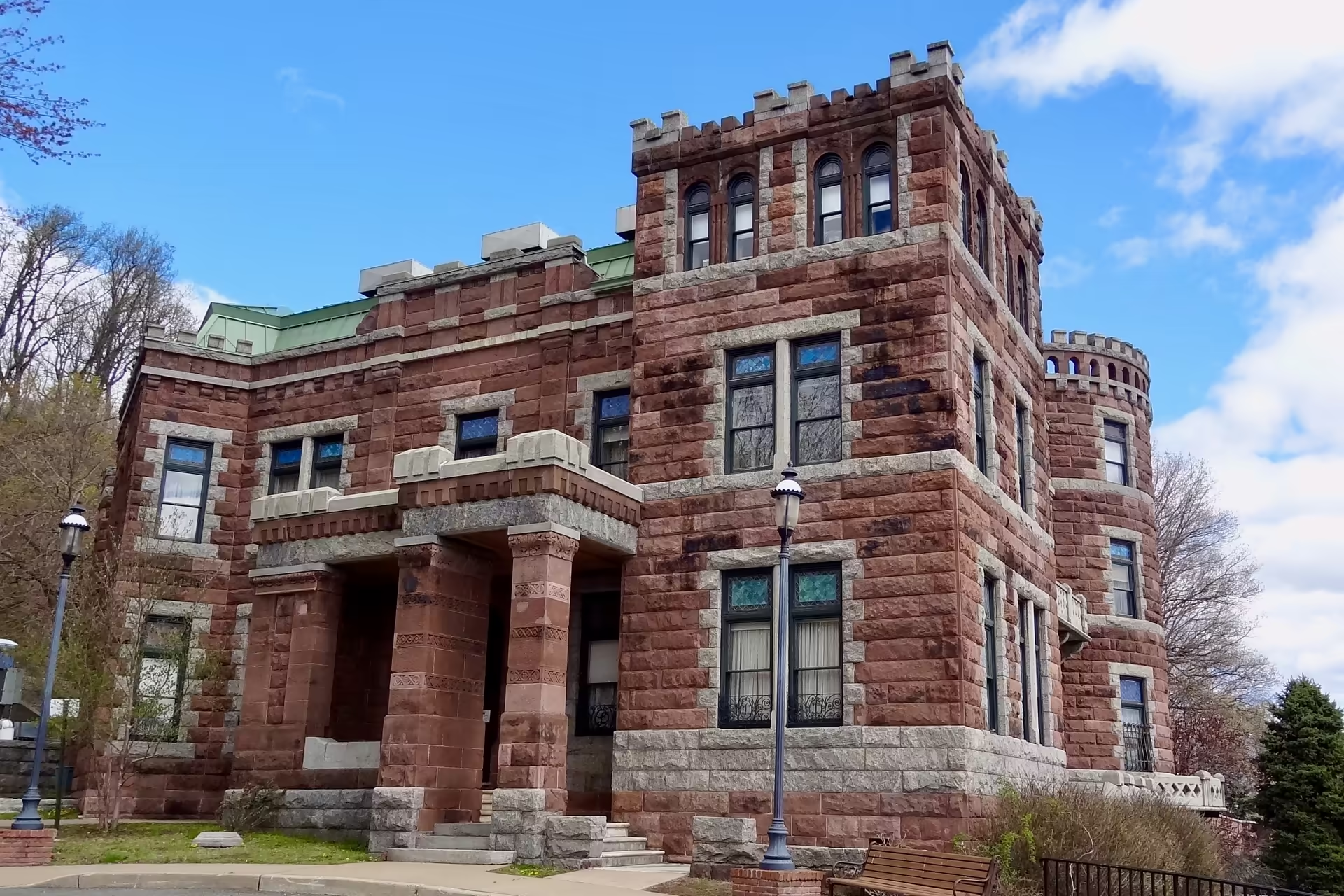
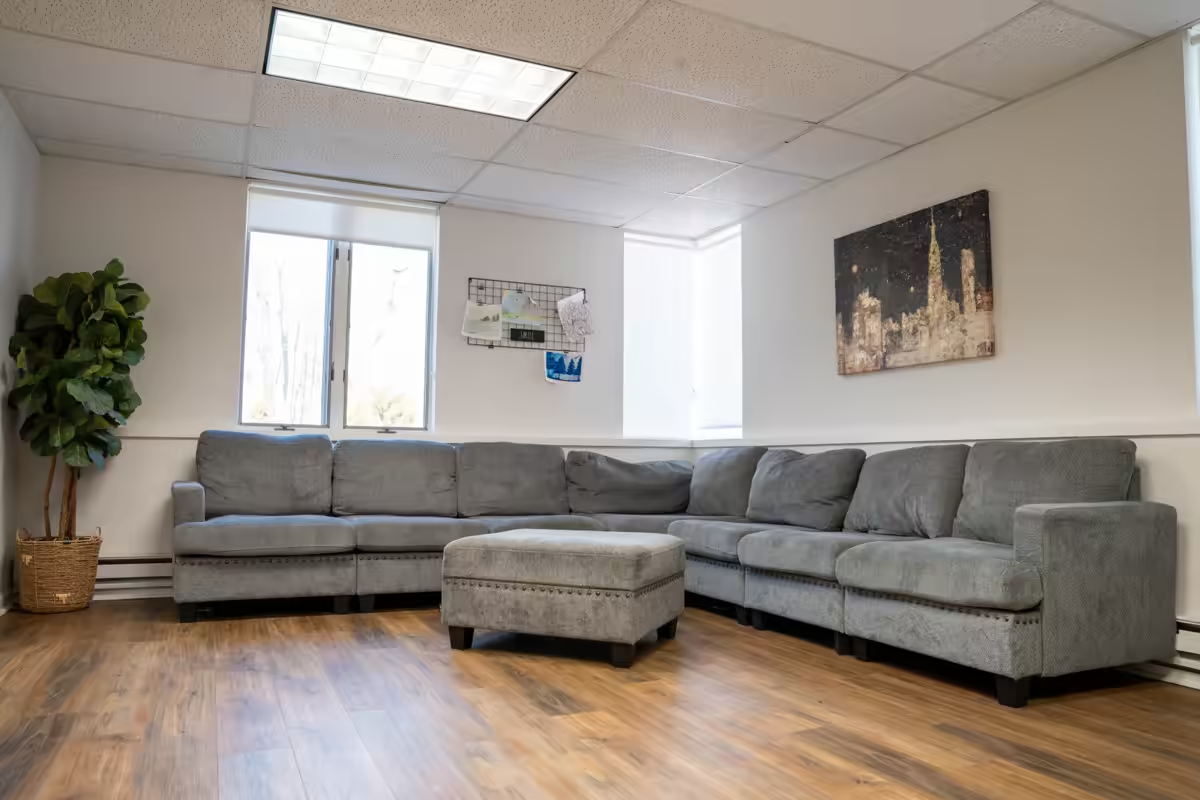
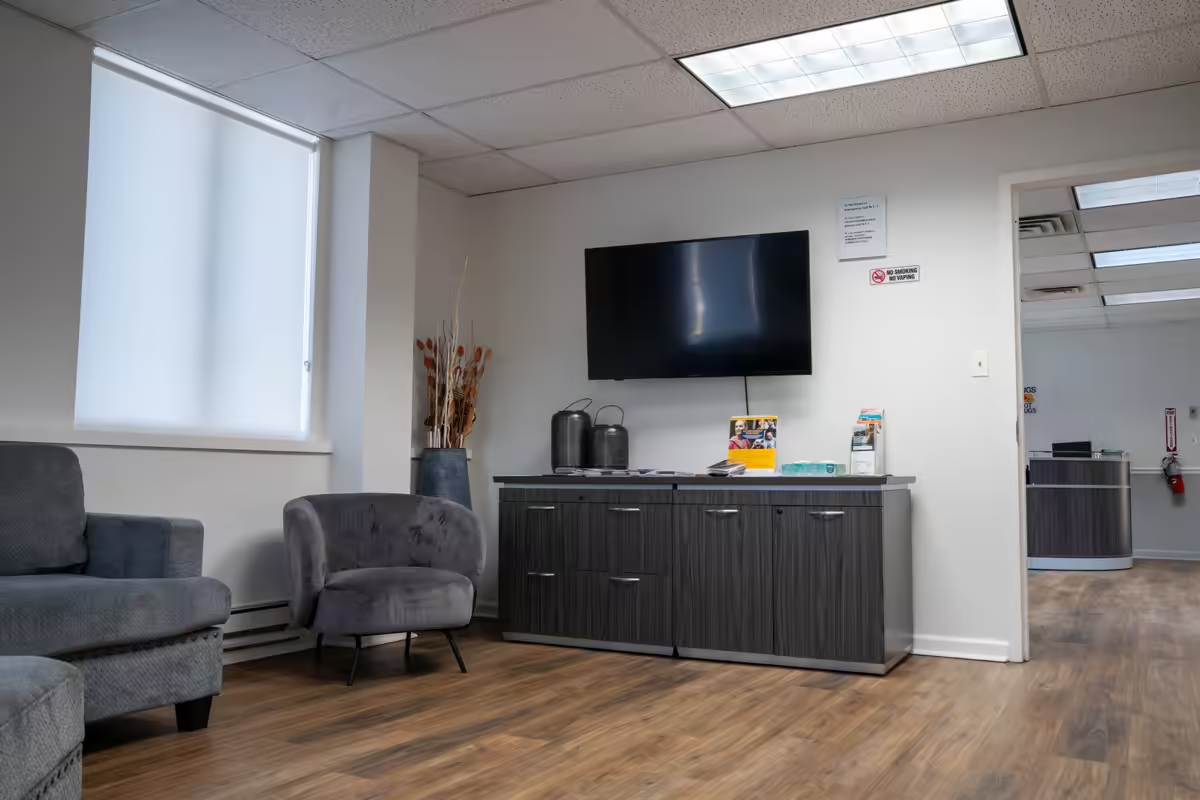
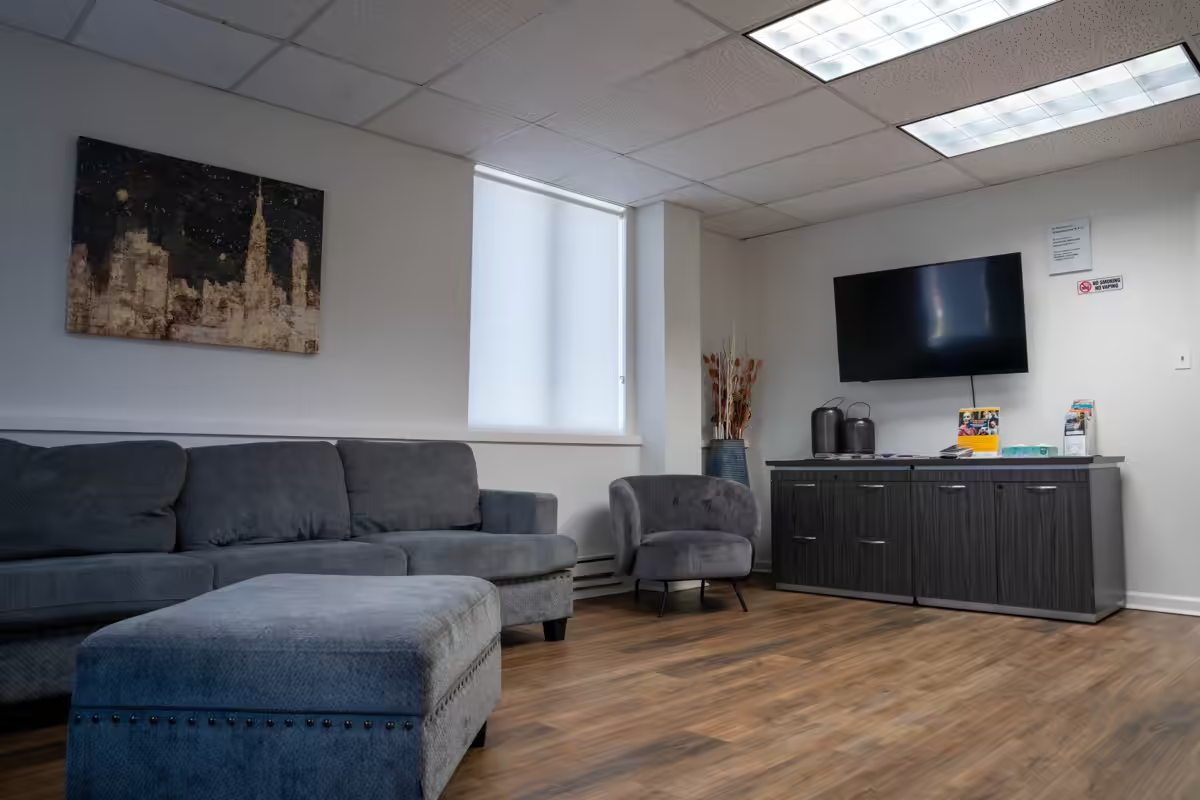
What Does Valley Spring Recovery Center's Norwood, NJ Facility Look Like?



Get Bipolar Disorder Treatment in Bergen County, NJ
Valley Spring Recovery Center treats bipolar disorder at two levels of care, Intensive Outpatient and Outpatient, with telehealth available for both, and with psychiatric evaluation and medication management from the Medical Director (MD) and the psychiatric nurse practitioner (PMHNP-BC). A substance use diagnosis is not required. Call (855) 924-5320 or verify insurance online; the admissions line runs 24/7. For a crisis, call 911, or call or text 988.
HIPAA compliant · Confidential · No obligation
Warning Signs
What Are the Signs of Bipolar Disorder That Require Professional Treatment?
Bipolar disorder presents as discrete mood episodes rather than a constant state, and the 8 signs below are the ones that most reliably bring adults into assessment. Each carries a severity level and the action it calls for. A person in immediate danger needs 911; a mental health crisis that is not an immediate emergency reaches trained counselors by calling or texting 988.
01.SEVEREManic Episodes+
A manic episode is a period of abnormally elevated, expansive, or irritable mood with increased energy or activity, lasting at least 7 days under DSM-5 criteria, or any duration when hospitalization becomes necessary. Mood registers as euphoric, invincible, or unusually confident, and that confidence attaches to activities with a high potential for painful consequences. Sleep need drops sharply, with 2 to 3 hours producing a sense of full rest. Speech accelerates and thoughts race. Spending, sexual risk-taking, resignations, and business decisions occur at speed, and each one looks reasonable while mood is elevated. Insight into the need for treatment falls as mood rises, which is why families notice a manic episode before the person having one does.
Warning Level: Call 911 when mania includes psychotic features such as delusions or hallucinations, or when a person is a danger to themselves or others. Call or text 988 to reach the Suicide & Crisis Lifeline for a mental health crisis that is not an immediate emergency. New Jersey designates a psychiatric emergency screening service in every county for evaluation and inpatient placement. Elevated mood with reduced sleep need and escalating risk-taking warrants psychiatric evaluation without delay.
02.SEVEREDepressive Episodes+
A major depressive episode within bipolar disorder lasts at least 2 weeks and produces profound sadness or loss of interest alongside significant functional impairment. Worthlessness, guilt, and concentration failure appear on tasks that were routine weeks earlier. Sleep breaks in either direction — insomnia or 12 or more hours daily without feeling rested — and appetite shifts far enough to change weight. Thoughts of death or suicide occur during these episodes. In bipolar II disorder the depressive episodes predominate and are frequently more disabling than the hypomania that defines the diagnosis, which is why bipolar II is first treated as unipolar depression in a large share of cases.
Warning Level: Call or text 988, the Suicide & Crisis Lifeline, when thoughts of suicide are present, and call 911 when there is a plan, a means, or immediate danger. Both are free, confidential, and available 24 hours a day. Once immediate safety is established, a psychiatric evaluation determines whether Intensive Outpatient or Outpatient care fits, or whether a higher level of care is required.
03.HIGHSleep Disturbances+
Sleep change tracks mood change in bipolar disorder more closely than any other symptom, and it usually moves first. During elevated mood, sleep need collapses to 2 or 3 hours while energy stays high. During depressive episodes, sleep extends past 12 hours daily without producing rest. A shortening sleep requirement over three consecutive nights is the earliest reliable prodromal signal of an emerging manic episode, which is why mood charts at Valley Spring Recovery Center record sleep hours nightly and why Interpersonal and Social Rhythm Therapy fixes wake time before it addresses anything else.
Warning Level: Seek psychiatric evaluation when sleep duration changes alongside energy and mood, particularly when the change follows travel, shift work, or a missed medication dose. Acting during the sleep change rather than after the episode is what prevents a full episode from developing.
04.HIGHRacing Thoughts+
Racing thoughts during manic and hypomanic episodes move faster than speech can carry them, so conversations fragment and listeners lose the thread. Projects stall because each new idea interrupts the previous one before completion. The internal experience is mental overstimulation — thought arriving faster than it can be processed or communicated. Bipolar-adapted CBT addresses racing thoughts as a prodromal marker rather than a nuisance, pairing the symptom with a rehearsed action such as contacting the treatment team and protecting sleep.
Warning Level: Seek psychiatric evaluation when thought speed interferes with work, conversation, or task completion, particularly alongside elevated mood or reduced sleep. Racing thoughts appearing with a shortened sleep requirement indicate an episode in progress rather than a stressful week.
05.HIGHImpulsive Behaviors+
Impulsive behavior during mood episodes takes recognizable forms: spending beyond means, sexual risk-taking, resigning from a job, ending a relationship, or relocating without planning. The decisions are made with conviction and revisited with embarrassment once mood stabilizes, and the financial and legal consequences outlast the episode by months or years. Case management at Valley Spring Recovery Center addresses the practical wreckage — union coordination, court and IDRC matters, and employment documentation — alongside the clinical work on impulse control.
Warning Level: Seek psychiatric evaluation when impulsive decisions create financial, legal, or relationship damage. Call 911 when impulsivity involves dangerous or self-destructive behavior, and call or text 988 for a mental health crisis that is not an immediate emergency.
06.MODERATEGrandiosity+
Grandiosity during manic episodes is inflated self-esteem or unrealistic belief about ability, talent, or importance — special powers, special connections, or a plan whose scale outruns any capacity to deliver it. Questioning the belief produces irritation rather than reconsideration. Grandiosity is a diagnostic feature of mania under DSM-5 criteria and, in its severe form, crosses into delusional thinking, which changes the level of care a person needs.
Warning Level: Seek psychiatric evaluation when grandiose thinking distorts judgment, damages relationships, or drives commitments that cannot be met. Call 911 when grandiosity becomes delusional or is accompanied by hallucinations, because psychotic features require emergency evaluation rather than outpatient scheduling.
07.MODERATEIrritability+
Irritability appears in both poles of bipolar disorder and is the presentation people are least likely to connect to a mood disorder. During elevated mood it surfaces as low frustration tolerance and anger when others fail to match the pace. During depressive episodes it surfaces as a short temper layered over exhaustion. Conflict with family, partners, and coworkers escalates across an episode and is frequently the damage that persists after mood recovers. Mixed presentations combine irritability with elevated energy and depressed mood at once, and they carry higher risk than either pole alone.
Warning Level: Seek psychiatric evaluation when irritability damages relationships, disrupts work, or escalates toward aggression. Irritability combined with high energy and low mood indicates a mixed presentation and warrants prompt evaluation.
08.MODERATEConcentration Difficulties+
Concentration fails in both directions in bipolar disorder, and the mechanism differs by pole. During manic and hypomanic episodes, attention is pulled apart by external stimuli and nothing holds focus. During depressive episodes, thinking and decision-making slow to the point that routine tasks stall. Work performance drops, academic deadlines slip, and the resulting job or school consequences frequently arrive before the mood disorder itself is diagnosed.
Warning Level: Seek psychiatric evaluation when concentration problems disrupt work, school, or daily responsibilities. Evaluation distinguishes bipolar mood episodes from ADHD and from unipolar depression, which are treated differently and respond to different medications.
Take the First Step Toward Bipolar Disorder Treatment Recovery Today
Our admissions team is available around the clock. Call (855) 924-5320 or verify your insurance online, no commitment required.
HIPAA compliant · Confidential · No obligation
Local Data
What Are the Types of Bipolar Disorder, and How Common Is Bipolar Disorder in Bergen County, NJ?
The American Psychiatric Association's DSM-5 defines three bipolar diagnoses — bipolar I disorder, bipolar II disorder, and cyclothymic disorder — and records mixed features and rapid cycling as specifiers on those diagnoses rather than as separate conditions. Bipolar I disorder requires at least one manic episode: 7 days or more of elevated, expansive, or irritable mood with increased energy, or any duration when hospitalization becomes necessary. Bipolar II disorder requires at least one hypomanic episode of 4 consecutive days or more plus at least one major depressive episode of 2 weeks or more, and no manic episode has ever occurred. Cyclothymic disorder requires 2 years or more in adults of hypomanic and depressive symptoms that never meet full episode criteria. The rapid cycling specifier applies when 4 or more mood episodes occur within 12 months. Mixed features apply when symptoms of the opposite pole are present during an episode, and mixed presentations carry higher risk than either pole alone.
The National Institute of Mental Health reports that bipolar disorder affects 2.8% of U.S. adults in a given year and 4.4% across the lifespan, and that 82.9% of adults with bipolar disorder experienced serious impairment — the highest share of serious impairment NIMH records for any mood disorder. Kessler and colleagues, reporting the National Comorbidity Survey Replication in Archives of General Psychiatry in 2005, placed the median age of onset for bipolar disorder at 25, which is the reason so many first episodes land during early careers, graduate programs, and new parenthood rather than in childhood.
Bergen County is New Jersey's most populous county, with 955,732 residents counted in the 2020 U.S. Census, and Valley Spring Recovery Center is one of the outpatient mental health providers serving it from Norwood. Substance use is the most common complication: Regier and colleagues, reporting the Epidemiologic Catchment Area study in JAMA in 1990, found a 60.7% lifetime rate of substance use disorder among people with bipolar I disorder, the highest recorded for any diagnosis in that study. That overlap is why New Jersey Mental Health License #70420104 and Substance Use Disorder License #200887 matter together — one clinical team treats both conditions under a single plan, and a client without any substance use diagnosis is admitted for bipolar disorder treatment on the mental health license alone.
In-Network Insurance Accepted





Also in-network with AmeriHealth, Northwell Direct, ComPsych, Oscar, VA Community Care, Lower Hudson Valley EAP, JRN Consulting, Teamsters, Workforce Assistance EAP, Iron Workers Members Assistance, Humana.
Blue Cross Blue Shield, Aetna, Horizon accepted out-of-network or by single case agreement · Call 24/7 to verify your specific benefits
Family Support
How Can Someone Get Bipolar Disorder Treatment at Valley Spring Recovery?
One call to (855) 924-5320 begins clinical screening
Call 911 for immediate danger, or call or text 988 to reach the Suicide & Crisis Lifeline for a mental health crisis. For treatment scheduling, call Valley Spring Recovery Center at (855) 924-5320, available 24/7. The admissions team gathers mood episode history, prior treatment, medication history, and scheduling needs to begin clinical screening. Same-day or next-day intake is arranged when clinically appropriate.
Admissions verifies insurance benefits before admission, at no cost
The admissions department verifies coverage during pre-admission, confirming benefits for intensive outpatient or outpatient mental health services and identifying authorization requirements. Valley Spring Recovery Center holds 16 in-network payer contracts and accepts Blue Cross Blue Shield, Aetna, and Horizon out-of-network or by single case agreement, where cost-sharing is usually higher. Verification is free and carries no commitment.
Intake establishes the bipolar subtype and the level of care
The clinical director reviews the screening and any available records before scheduling. Intake produces a biopsychosocial assessment and a psychiatric evaluation from the Medical Director (MD) or the psychiatric nurse practitioner (PMHNP-BC), establishing the bipolar subtype under DSM-5 criteria, medication needs, and the appropriate level of care. The PHQ-9 baseline is taken at this visit. Program coordinators greet clients as people before paperwork is completed.
Clients enter IOP or OP and start mood charting immediately
Clients enter Intensive Outpatient or Outpatient programming built on Interpersonal and Social Rhythm Therapy, bipolar-adapted CBT, DBT skills, individual therapy 1 to 2 times weekly, weekly psychiatric review, Family-Focused Therapy with consent, health and wellness programming, and case management. Daily mood charting starts immediately. Treatment teams meet every Wednesday to review progress and therapist-client matching.
What Happens When Bipolar Disorder Treatment Is Delayed?
Delayed treatment for bipolar disorder costs employment, relationships, and financial stability, because each untreated manic or depressive episode runs its full course and leaves consequences that outlast the mood change itself. Untreated mood episodes carry safety risk directly: suicide risk is elevated during depressive and mixed episodes, and manic episodes produce financial, legal, and occupational damage that takes years to unwind. Diagnosis is also frequently delayed by a specific error — a bipolar II depressive episode presents as unipolar depression, an antidepressant is prescribed without a mood stabilizer, and the hypomania that follows is the first clear evidence of the correct diagnosis. The International Society for Bipolar Disorders task force (Pacchiarotti et al., 2013, American Journal of Psychiatry) advises against antidepressant monotherapy in bipolar I disorder for that reason.
Call 911 when a person with bipolar disorder is in immediate danger, and call or text 988 to reach the Suicide & Crisis Lifeline for a mental health crisis that is not an immediate emergency. Both are free, confidential, and staffed 24 hours a day. When the danger is not immediate and the person is not yet ready for treatment, keep Valley Spring Recovery Center's number accessible at (855) 924-5320. The admissions line runs 24/7 for questions about levels of care, telehealth, and insurance, and intake is scheduled when the person is ready to begin.
Service Area
Which Bergen County Communities Does Valley Spring Serve for Bipolar Disorder Treatment?
Valley Spring Recovery Center serves adults with bipolar disorder across Bergen County, North Jersey, and the New York metro area from 830 Broadway, Norwood, NJ 07648, roughly 20 minutes from the George Washington Bridge via the Palisades Interstate Parkway, the Garden State Parkway, and the New York State Thruway. Clients travel from the Northern Valley towns nearest Norwood — Northvale, Old Tappan, Harrington Park, Closter, Demarest, Alpine, Cresskill, and Tenafly — and from the larger Bergen County centers of Englewood, Teaneck, Hackensack, Paramus, Fair Lawn, Ridgewood, and Fort Lee. Norwood sits on the state line, so the Norwood campus is a practical option for adults in Rockland County and the lower Hudson Valley as well.
Telehealth extends both levels of care beyond driving distance. Telehealth is a delivery mode for Intensive Outpatient and Outpatient programming rather than a separate level of care, and it carries the same group size limits, the same Interpersonal and Social Rhythm Therapy curriculum, and the same weekly psychiatric review with the Medical Director (MD) or the psychiatric nurse practitioner (PMHNP-BC). Eligibility is confirmed at intake against the state a client will be physically located in during sessions. Valley Spring Recovery Center holds New Jersey Mental Health License #70420104, which authorizes standalone mental health treatment statewide, and a substance use diagnosis is not required for admission. Transportation assistance is available on a case-by-case basis.
FAQ
Frequently Asked Questions About Bipolar Disorder Treatment at Valley Spring Recovery
What is the most successful approach to treating bipolar disorder?+
Combined treatment works best: a mood stabilizer managed by a prescriber, plus a bipolar-specific psychotherapy. Interpersonal and Social Rhythm Therapy and Family-Focused Therapy both carry randomized-trial support, from Frank et al. (2005) and Miklowitz et al. (2003) in Archives of General Psychiatry.
How do I know if I have bipolar disorder or just depression?+
The distinction rests on whether a manic or hypomanic episode has ever occurred, not on how the depression feels. Hypomania lasts 4 consecutive days or more and is frequently remembered as a good stretch rather than an illness, so evaluation asks family members as well as the client.
What happens in therapy for bipolar disorder?+
Sessions build a mood chart, identify the specific prodromal signs that preceded past episodes, set fixed sleep and meal timing through social rhythm work, and rehearse a written action plan. Bipolar-adapted CBT addresses depressive rumination and manic goal-directed escalation as two separate targets.
How is bipolar disorder diagnosed in New Jersey?+
Diagnosis comes from a psychiatric evaluation applying DSM-5 criteria. At Valley Spring Recovery Center the Medical Director (MD) or psychiatric nurse practitioner (PMHNP-BC) reconstructs the episode timeline, takes family psychiatric history, reviews medical causes including thyroid disease, gathers collateral information with consent, and starts mood charting.
Is outpatient treatment effective for bipolar disorder?+
Outpatient care is where bipolar disorder is managed long-term, since the condition requires years of medication monitoring and rhythm maintenance rather than a single admission. Intensive Outpatient suits acute episodes not requiring hospitalization; Outpatient carries the maintenance phase that follows.
How long does outpatient treatment for bipolar disorder typically last?+
Valley Spring Recovery Center sets length by clinical criteria rather than a published week count: consistent mood charting, a medication regimen stable long enough to judge, and a warning-sign action plan the client states unprompted. Bipolar disorder then continues under maintenance care indefinitely.
Can I work or attend school while in an outpatient program?+
Yes. Intensive Outpatient runs 6:00 PM to 9:00 PM specifically so employment, class schedules, and caregiving continue. Case management prepares FMLA paperwork, short-term disability documentation, return-to-work letters, and workplace accommodation requests framed around the episodic course of the diagnosis.
What happens if I experience a crisis during outpatient care?+
Call 911 for immediate danger, or call or text 988 to reach the Suicide & Crisis Lifeline. New Jersey designates a psychiatric emergency screening service in every county for evaluation and inpatient placement. Valley Spring Recovery Center then reassesses level of care and refers when clinical criteria require it.
Do I need to take medication for bipolar disorder long-term?+
Maintenance medication is the standard of care in bipolar I disorder because relapse risk rises sharply when a mood stabilizer is stopped. The Medical Director (MD) and psychiatric nurse practitioner (PMHNP-BC) review regimen, tolerability, and laboratory monitoring weekly and adjust with the client rather than around them.
Can bipolar disorder be managed without medication?+
Psychotherapy alone is not sufficient treatment for bipolar I disorder, and no clinical guideline supports it. Interpersonal and Social Rhythm Therapy, family work, sleep stabilization, and CBT reduce episode frequency alongside medication. Clients declining medication are still admitted and still receive weekly psychiatric review.
Can bipolar disorder be inherited or run in families?+
Yes. McGuffin and colleagues (2003), in Archives of General Psychiatry, estimated the heritability of mania at 85% from twin data, and first-degree relatives of a person with bipolar disorder carry elevated risk. Family history is recorded at evaluation because it sharpens the differential diagnosis.
What triggers bipolar episodes, and how can I minimize them?+
Sleep loss, shift work, overnight travel, alcohol and stimulant use, and stopped medication are the best-documented triggers. Social rhythm work fixes wake time, meal times, and evening wind-down, and daily mood charting catches a shortening sleep requirement before an episode consolidates.
Is telehealth available for bipolar medication management?+
Yes. Telehealth is a delivery mode for both Intensive Outpatient and Outpatient care, not a separate program, and it carries the same psychiatric review cadence. Eligibility is confirmed at intake against the state a client will be physically located in during sessions.
Does insurance cover bipolar therapy in NJ?+
Valley Spring Recovery Center holds 16 in-network payer contracts, including AmeriHealth, Fidelis Care, ComPsych, Oscar, Tricare, Magellan Healthcare, Cigna, and UnitedHealthcare. Blue Cross Blue Shield, Aetna, and Horizon are accepted out-of-network or by single case agreement, where cost-sharing is usually higher. Verification is free.
Do I need a substance use diagnosis to be admitted?+
No. New Jersey Mental Health License #70420104 authorizes standalone mental health treatment, so an adult whose only diagnosis is bipolar I disorder, bipolar II disorder, or cyclothymic disorder is admitted on that basis. Substance Use Disorder License #200887 covers co-occurring care when it applies.
What ages does Valley Spring treat for bipolar disorder?+
Valley Spring Recovery Center treats adults only. Adolescents and children with bipolar disorder are referred to providers licensed for that population. Adults across Bergen County, North Jersey, and the New York metro area attend in Norwood or by telehealth.
What Other Addiction Conditions Does Valley Spring Recovery Treat?
Sources & References12ShowHide
- National Institute of Mental Health — Bipolar Disorder statistics (2.8% past-year and 4.4% lifetime prevalence among U.S. adults; 82.9% with serious impairment)
- Kessler, R.C. et al. (2005) 'Lifetime Prevalence and Age-of-Onset Distributions of DSM-IV Disorders in the National Comorbidity Survey Replication', Archives of General Psychiatry — Median age of onset for bipolar disorder: 25.
- Regier, D.A. et al. (1990) 'Comorbidity of Mental Disorders With Alcohol and Other Drug Abuse: Results From the Epidemiologic Catchment Area (ECA) Study', JAMA — 60.7% lifetime substance use disorder rate among people with bipolar I disorder.
- Frank, E. et al. (2005) 'Two-Year Outcomes for Interpersonal and Social Rhythm Therapy in Individuals With Bipolar I Disorder', Archives of General Psychiatry — Evidence base for IPSRT.
- Miklowitz, D.J. et al. (2003) 'A Randomized Study of Family-Focused Psychoeducation and Pharmacotherapy in the Outpatient Management of Bipolar Disorder', Archives of General Psychiatry — Evidence base for Family-Focused Therapy.
- Pacchiarotti, I. et al. (2013) 'The International Society for Bipolar Disorders (ISBD) Task Force Report on Antidepressant Use in Bipolar Disorders', American Journal of Psychiatry — Guidance against antidepressant monotherapy in bipolar I disorder.
- McGuffin, P. et al. (2003) 'The Heritability of Bipolar Affective Disorder and the Genetic Relationship to Unipolar Depression', Archives of General Psychiatry — Heritability of mania estimated at 85%.
- Kroenke, K., Spitzer, R.L. and Williams, J.B.W. (2001) 'The PHQ-9: Validity of a Brief Depression Severity Measure', Journal of General Internal Medicine — Validation of the depression measure used at intake and during treatment.
- American Psychiatric Association (2013) Diagnostic and Statistical Manual of Mental Disorders, Fifth Edition — Bipolar and Related Disorders — Episode duration criteria, subtypes, and specifiers.
- U.S. Food and Drug Administration prescribing information — lithium carbonate, divalproex sodium, lamotrigine, quetiapine, olanzapine — Boxed warnings and laboratory monitoring requirements.
- U.S. Census Bureau, 2020 Decennial Census — Bergen County, New Jersey — County population of 955,732.
- 988 Suicide & Crisis Lifeline, Substance Abuse and Mental Health Services Administration — Crisis routing referenced throughout this page.