

Mental Health First · NJ MH License #70420104
Co-Occurring Disorder Treatment in New Jersey
Co-occurring disorder treatment at Valley Spring Recovery Center serves adults whose primary clinical concern is a mental health condition, anxiety, depression, PTSD, bipolar disorder, OCD, or unresolved trauma, and whose substance use emerged as a coping mechanism for those symptoms. Valley Spring Recovery Center holds NJ Substance Use Disorder License #200887 and NJ Mental Health License #70420104, which permits one clinical team to deliver mental health treatment and substance use care under a single integrated plan rather than two parallel referrals. Treatment runs at two levels of care, Intensive Outpatient (IOP) and Outpatient (OP), each delivered in person at 830 Broadway in Norwood or by telehealth across New Jersey. The clinical protocol is identical to the addiction-first version of the same program. Only the framing and entry point differ. Clients whose primary concern is addiction with mental health symptoms emerging during use are served through Valley Spring's addiction-first dual diagnosis track.
- Mental-health-first intake assessment, primary diagnosis identified before substance use is framed as the issue
- Standalone mental health admission under NJ Mental Health License #70420104, no substance use diagnosis required
- Psychiatric evaluation and medication management delivered by the Medical Director (MD) and the psychiatric nurse practitioner (PMHNP-BC)
- Two levels of care for co-occurring disorders, Intensive Outpatient (IOP) and Outpatient (OP), each delivered in person or by telehealth
- GAD-7, PHQ-9 and PCL-5 administered at intake and repeated through treatment, so symptom change is measured rather than assumed
- Evidence-based mental health protocols: CBT for depression, EMDR for trauma, DBT skills for emotional dysregulation
- Substance use addressed as a symptom and a coping mechanism, not as a separate identity
- 8:1 maximum therapist-to-client ratio, process groups capped under 10 people, no referral hand-off to a separate SUD team
Free Insurance Verification
Get Answers Now
Same-day admissions available. Our team verifies your insurance and schedules your intake, typically the same day.
Programs Available
What Levels of Care Treat Co-Occurring Disorders at Valley Spring?
Valley Spring Recovery Center delivers co-occurring disorder treatment at two mental health levels of care, Intensive Outpatient (IOP) at 6 – 9 PM, Monday–Friday and Outpatient (OP) at 1–2 nights per week. Telehealth is a delivery mode for both levels, never a separate level of care. Both levels run CBT, DBT skills, EMDR and psychiatric medication management in process groups capped under 10 people at an 8:1 maximum therapist-to-client ratio, at 830 Broadway, Norwood, NJ 07648.
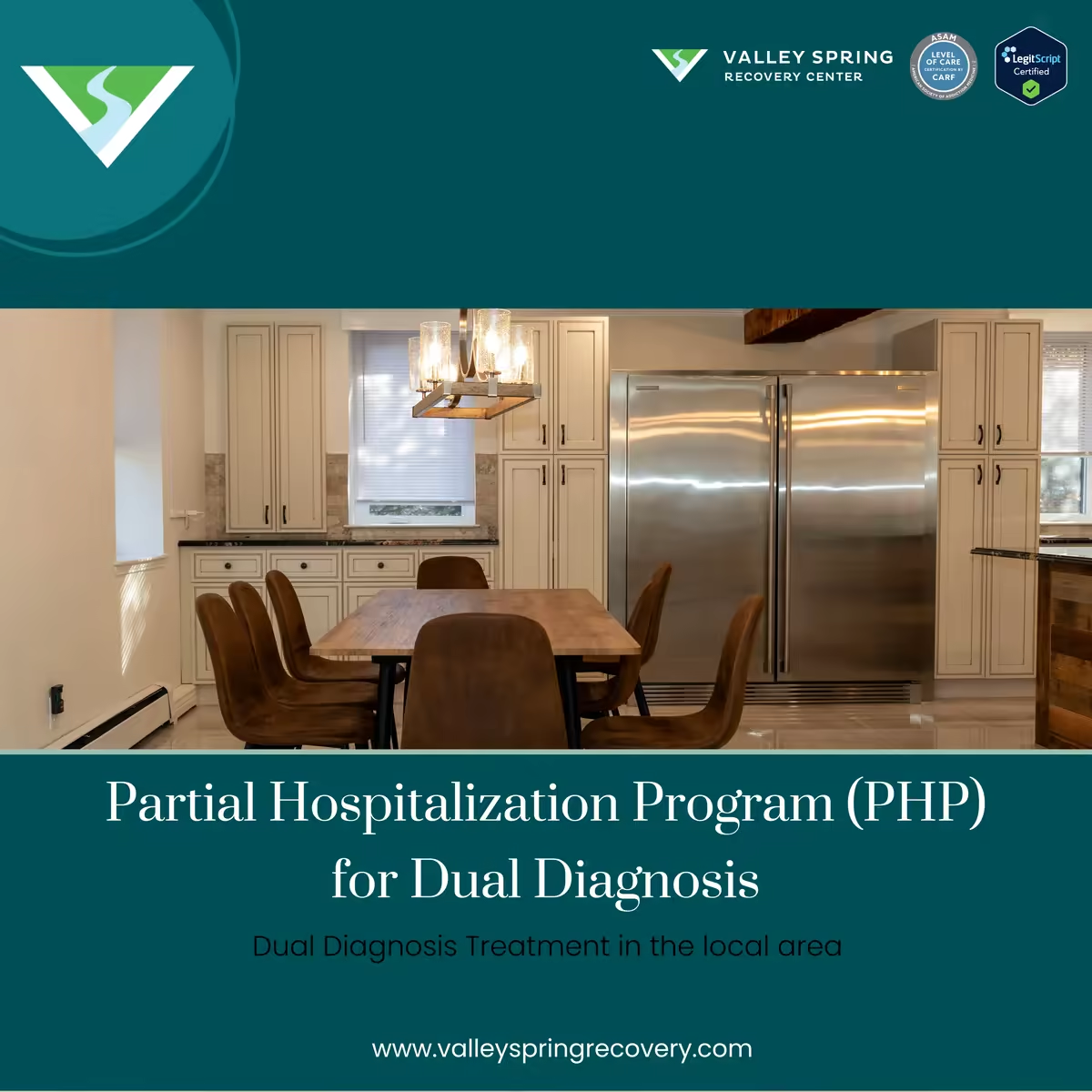
Valley Spring Recovery Center · Norwood, NJ



People Who Recovered
Norwood, NJ Co-Occurring Disorder Treatment Center Reviews
“It cannot be more clear the profound impact that Sean has made in my recovery journey. Finding someone who can balance the weight of recovery with genuine humor is rare, and he embodies that perfectly.”
Daisy McCloud
“Valley Spring Recovery Center truly changed my little brother Jordan's life. From the moment he entered the program, he was treated with respect, care, and real compassion. The staff went above and beyond to support him, not just in his recovery, but in every aspect of his life.”
Deshaya Williams
“Valley Spring Recovery Center saved my son's life. The staff is amazing. I'm so grateful for the exceptional care he received. The support and encouragement by the staff and the rest of the Valley Spring Community is so meaningful.”
Lana Roeser
“Valley Spring Recovery Center is absolutely exceptional. Brian and Mike have created a truly beautiful establishment, both in appearance and in spirit. The clinical setting is world class, blending professionalism with genuine compassion.”
Christopher Ferry
“Everyone treated me like family, I felt like I was born into this family. The welcoming I received was incredible. Valley Spring changed my life in ways I never thought possible.”
Tr3 Weee
Best in Bergen County
How Do You Find Co-Occurring Disorder Treatment in Bergen County, NJ?
Co-occurring disorder treatment in Bergen County is available at Valley Spring Recovery Center, 830 Broadway, Norwood, NJ 07648, an outpatient campus roughly 20 minutes from the George Washington Bridge and reachable from the Palisades Interstate Parkway, Route 9W and the Garden State Parkway. Norwood sits in the Northern Valley, two miles from the New York state line, which puts the campus closer to Rockland County than the Paramus and Route 17 corridor where most Bergen County outpatient programmes cluster. Private on-site parking removes the transit problem that keeps people out of hospital-campus programmes.
Bergen County clients travel to Norwood from Closter, Demarest, Cresskill, Tenafly, Northvale, Old Tappan, Harrington Park, Dumont, Bergenfield, Englewood, Fair Lawn, Hackensack, Paramus, Ridgewood, Rochelle Park and Ramsey. Cross-border clients come from Rockland County, New York, including Pearl River, Nyack, Orangeburg and Nanuet, and from Westchester County and northern Manhattan. Essex, Passaic, Hudson and Morris county clients commute in for the evening Intensive Outpatient schedule.
Bergen County is the most populous county in New Jersey, and its co-occurring disorder capacity is concentrated in hospital-affiliated programmes and large multi-site chains. Valley Spring Recovery Center is a single-site, independently operated outpatient centre licensed for both conditions, so a Bergen County client is assessed, diagnosed, prescribed for and treated by one team at one address rather than routed between a psychiatry office and a separate substance use programme.
8:1
Maximum Therapist-to-Client Ratio
24/7
Admissions Line Staffed
16
In-Network Payer Contracts
NJ #70420104
Mental Health License
Why Valley Spring
What Does Valley Spring Offer That a Mental-Health-Only Clinic Cannot?
CARF-accredited and NJ-licensed, Valley Spring Recovery Center maintains an 8:1 staff-to-client ratio, accepts 16 payers, including AmeriHealth, Fidelis Care, ComPsych, Oscar, Tricare, Magellan Healthcare, Cigna, and UnitedHealthcare (Blue Cross Blue Shield, Aetna, and Horizon accepted out-of-network or by single case agreement), and offers same-day admissions with groups capped at 10 people for Co-Occurring Disorder Treatment.
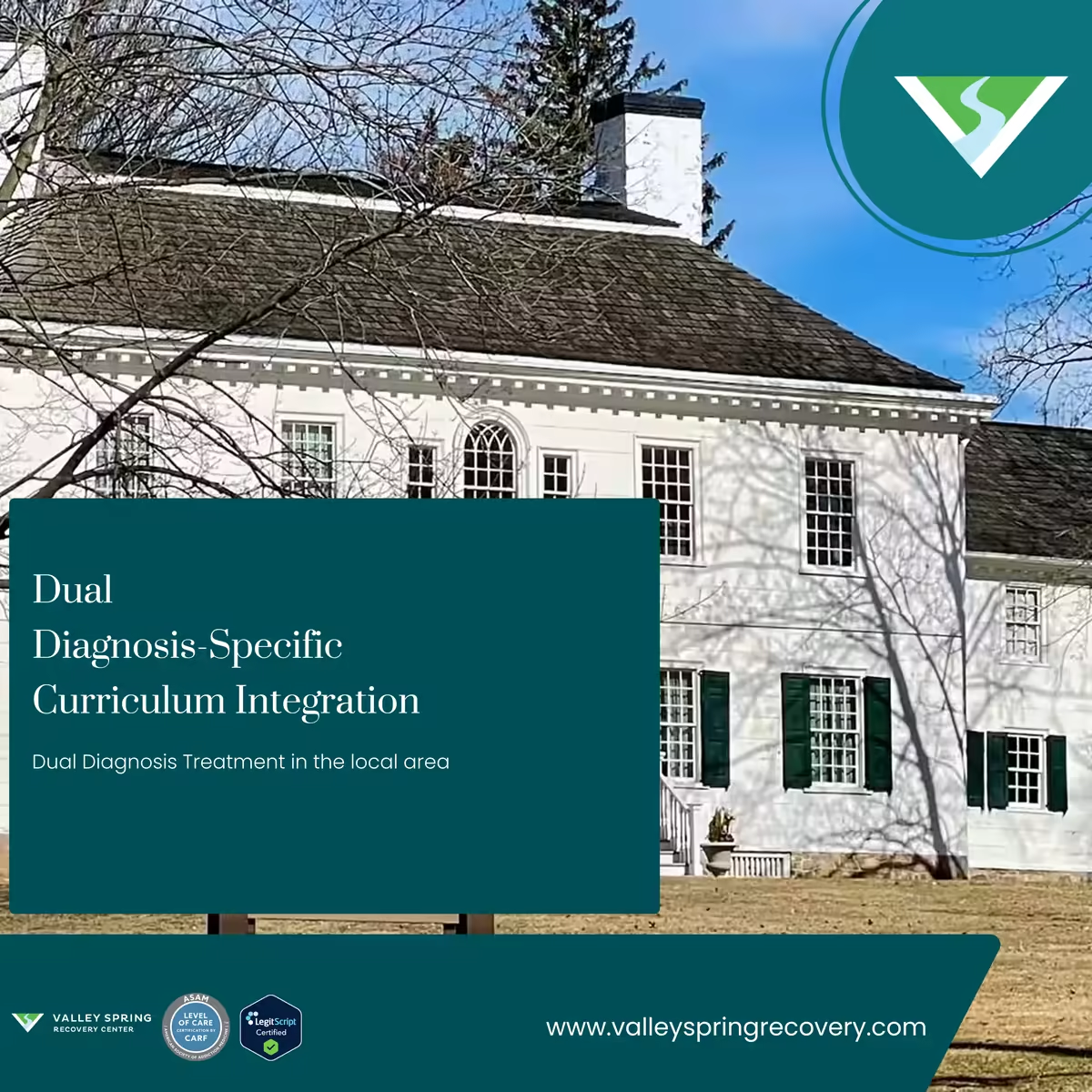
Valley Spring Recovery Center · Norwood, NJ
Treatment Timeline
How Does Valley Spring Approach Mental Health-First Addiction Treatment?
Co-Occurring Disorder Treatment at Valley Spring Recovery Center follows a staged clinical process beginning with assessment, progressing through active treatment, and continuing to aftercare planning. Timeline varies by severity and ASAM criteria, typically 30 to 90 days across program levels.
Intake diagnoses the mental health condition and builds a safety plan
Intake leads with a primary mental health diagnostic interview, screening for depression, anxiety disorders, PTSD, bipolar disorder, OCD, ADHD, and trauma history. Substance use history is taken in the same conversation and is not framed as the presenting problem unless the client describes it that way. Safety planning addresses suicide risk, mania-driven impulsivity, and substance-related overdose risk, with referral out when a client needs medically supervised withdrawal or 24-hour care that an outpatient centre cannot provide. The psychiatric evaluation is performed by the Medical Director (MD) or the psychiatric nurse practitioner (PMHNP-BC).
Supporting Services: Mental health diagnostic interview, substance use history, suicide and safety risk assessment, psychiatric evaluation by the Medical Director (MD) or psychiatric nurse practitioner (PMHNP-BC), baseline GAD-7, PHQ-9 and PCL-5 scores, treatment-team assignment.
Therapy builds mental health skills before it addresses the substance use
Group and individual therapy lead with mental health modalities. CBT for depression and anxiety. EMDR for trauma. DBT skills (mindfulness, distress tolerance, emotion regulation, interpersonal effectiveness) for clients whose substance use emerges from emotional dysregulation. The substance use curriculum is integrated as a 'replacement skills' track, what does the client do instead of drinking, instead of taking the extra benzodiazepine, instead of using cannabis to fall asleep.
Supporting Services: CBT individual and group, EMDR (when clinically indicated), DBT skills group, psychoeducation on the specific mental health diagnosis, family therapy, health and wellness, case management.
Clients apply the skills to situations that previously triggered substance use
Clients apply mental health skills to high-risk situations that previously triggered substance use, work stress, relationship conflict, anniversary trauma reactions, depressive episodes, hypomanic states. Psychiatric medications are titrated to optimize response, with the substance use track watching for any return-to-use patterns that would compromise medication efficacy. Relapse prevention planning addresses both mental health symptom recurrence and substance use return.
Supporting Services: Advanced relapse prevention (both mental health symptom and substance use), psychiatric medication optimization, repeat GAD-7, PHQ-9 and PCL-5 administration against the intake baseline, family reintegration, life skills programming, step-down planning, treatment team evaluation.
Discharge planning names the mental health condition as primary
Discharge planning specifies ongoing psychiatric medication management (in-house continuation or transition to an outside psychiatrist with a warm hand-off), continued individual therapy, alumni programming, and substance use relapse prevention. The discharge summary names the mental health condition as primary, with the co-occurring substance use disorder documented per ASAM and DSM-5-TR criteria.
Supporting Services: Discharge planning, outside psychiatric referral coordination, alumni program orientation, family aftercare planning, relapse prevention finalization, internal step-down coordination.
Our Facility
What Does Valley Spring Recovery Center's Norwood, NJ Facility Look Like?
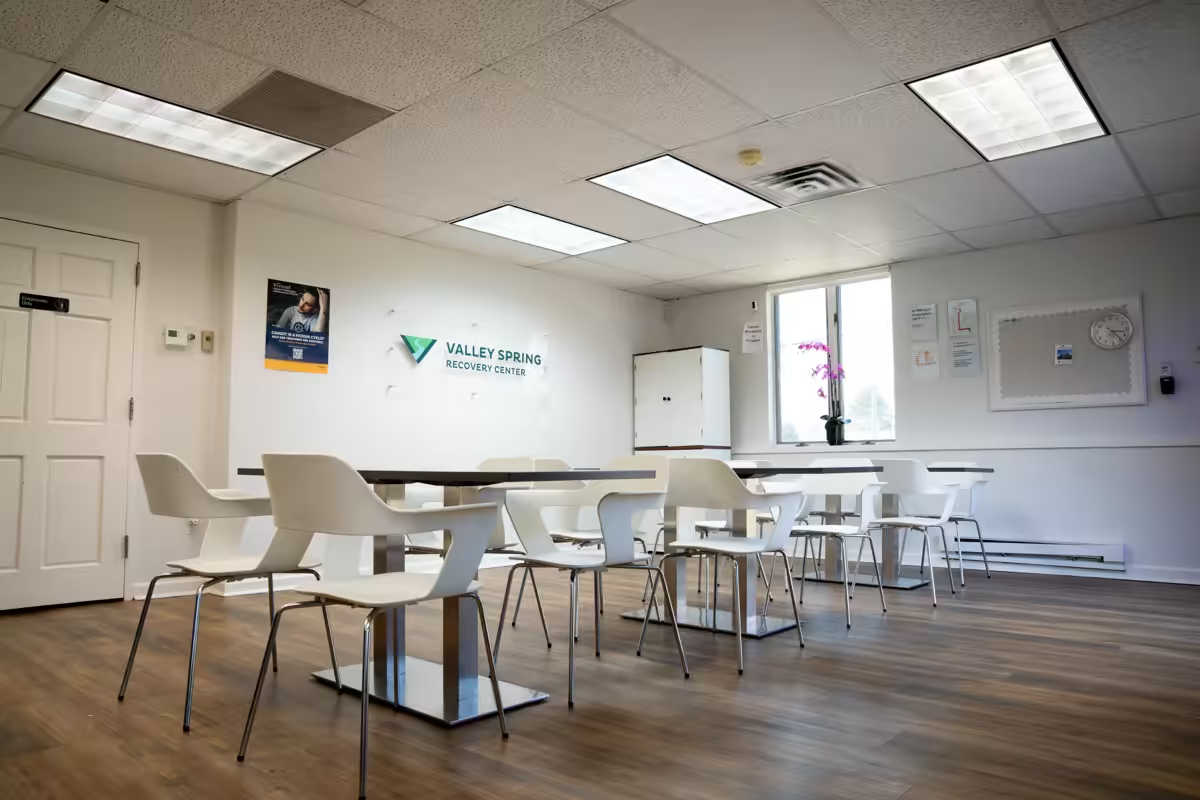
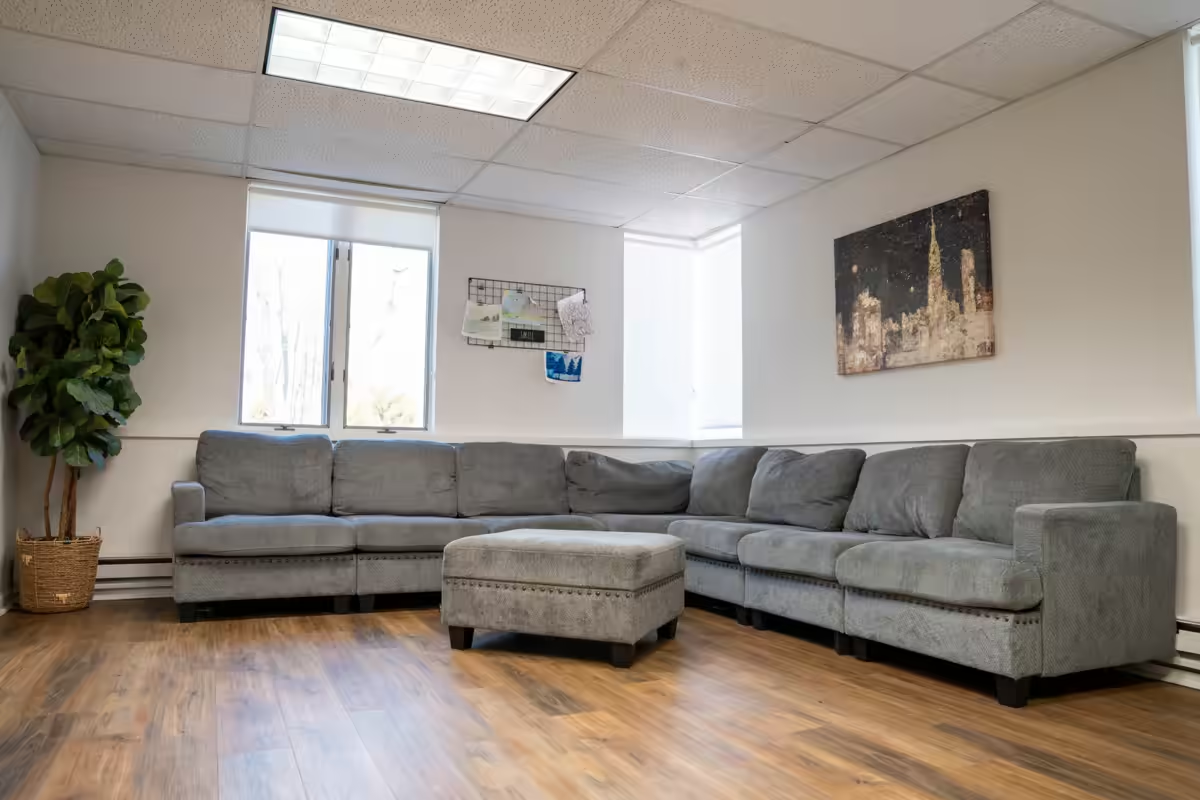
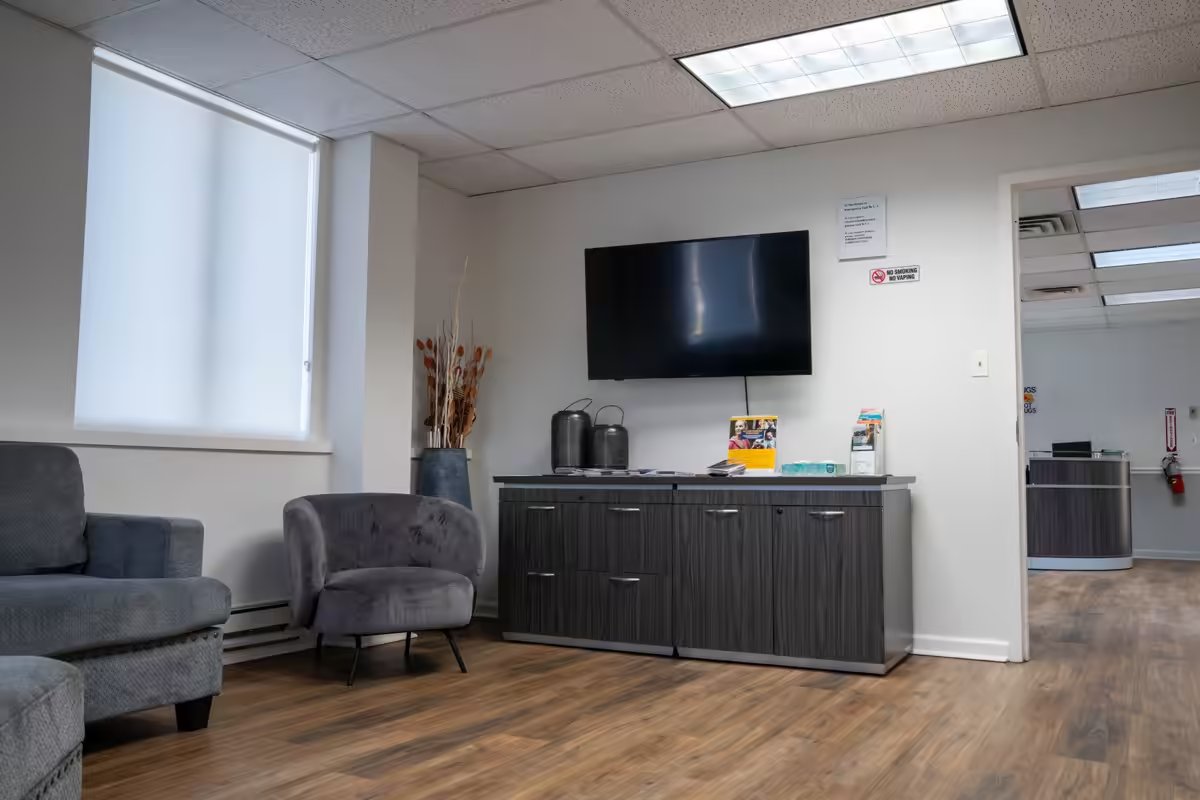
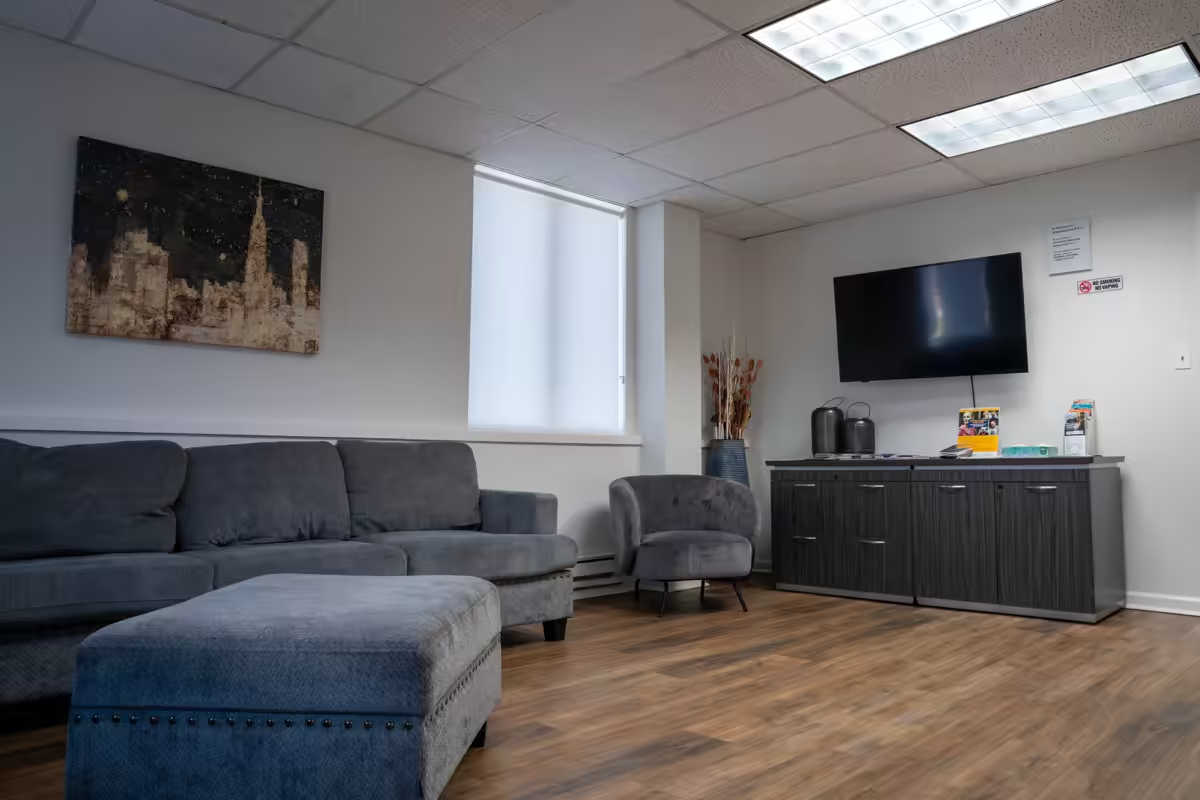
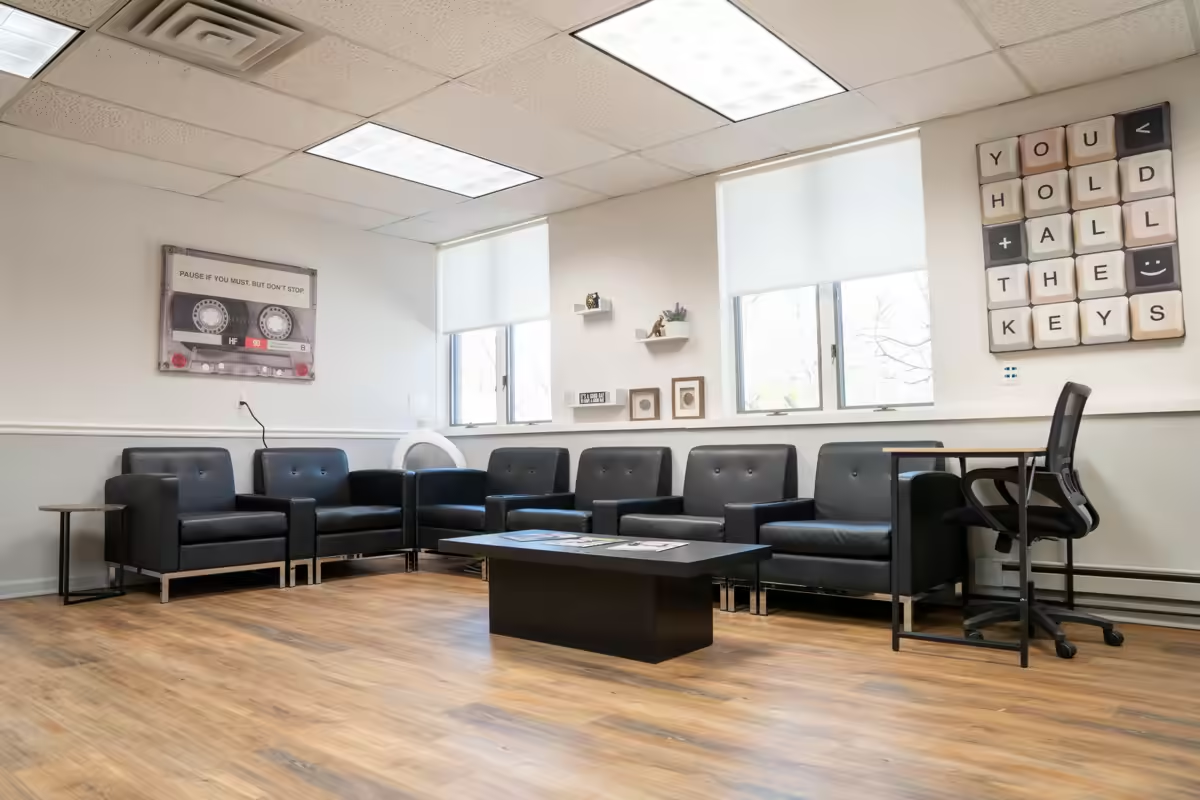
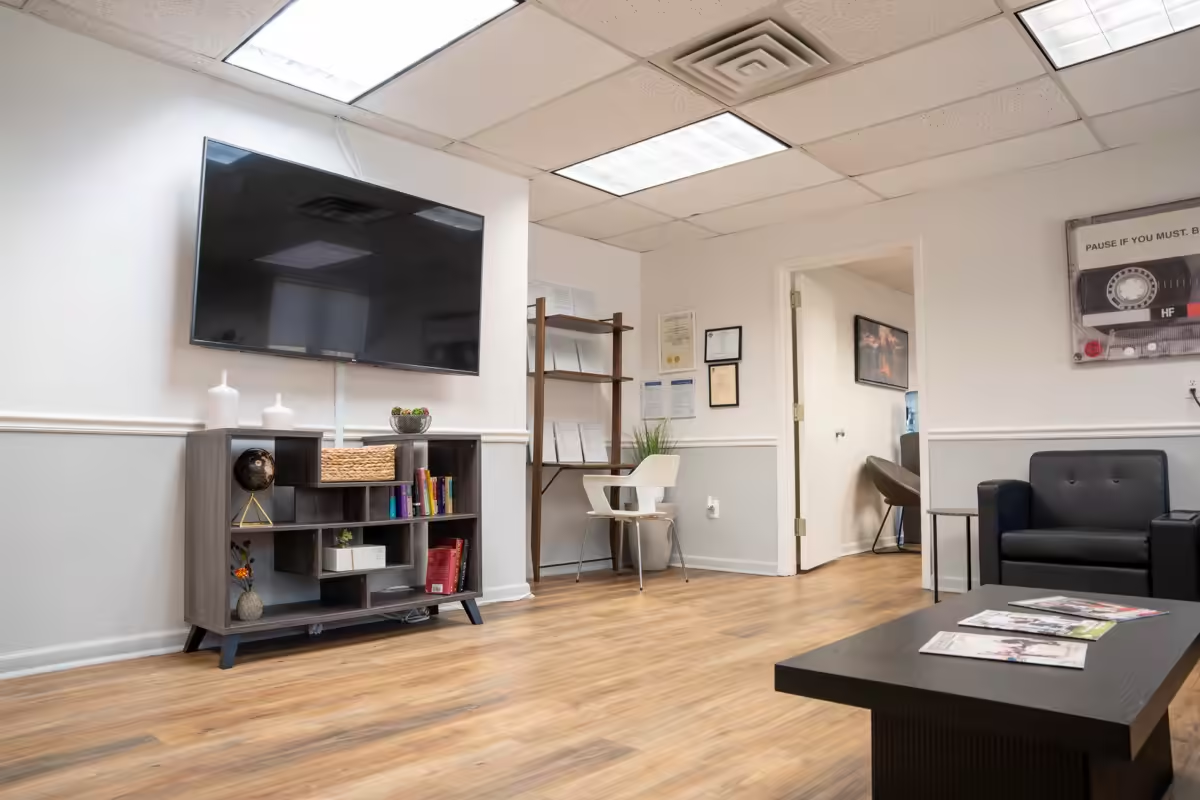
Start Mental Health Treatment With Co-Occurring Substance Use Care
Anyone in immediate danger should call or text 988 or call 911. For everything else, Valley Spring Recovery Center treats co-occurring disorders at Intensive Outpatient and Outpatient levels of care, in person in Norwood or by telehealth across New Jersey, with no substance use diagnosis required under NJ Mental Health License #70420104. Call (855) 924-5320 or submit the insurance verification form. The conversation is confidential under HIPAA from the first sentence.
HIPAA compliant · Confidential · No obligation
Warning Signs
What Signs Indicate Mental Health Treatment Alone Will Not Be Enough?
Most clients in this cohort have already tried therapy or psychiatric medication for the mental health condition. The signs below indicate that the substance use has crossed into a clinical concern that requires integrated care, not a separate addiction referral.
01.HIGHSelf-Medication With Alcohol or Cannabis+
Daily or near-daily alcohol or cannabis use that began as occasional and has become structurally embedded in the day, the glass of wine at 5 PM to take the edge off generalized anxiety; the joint at 10 PM to fall asleep because PTSD nightmares wake the client; the third drink at dinner because depression makes social interaction unbearable. The client recognizes the pattern but cannot stop it because the underlying mental health symptom returns immediately when the substance is withdrawn.
Warning Level: If self-medication patterns persist 30+ days, integrated evaluation is the next step. Crisis intervention is warranted if self-medication occurs during active suicidal ideation or with dangerous substance combinations.
02.HIGHFailed Single-Track Treatment Attempts+
Previous courses of psychotherapy or psychiatric medication produced limited or temporary results, and on reflection the client recognizes that substance use was active during the trial. Or, previous addiction treatment achieved sobriety briefly, but the unaddressed mental health symptoms (panic, depression, PTSD intrusions) returned with full force and drove return-to-use. The pattern of one-track failure is itself the diagnostic signal that integrated care is indicated.
Warning Level: After two or more single-track treatment failures, integrated evaluation is strongly recommended. Immediate consultation if failures resulted in increased suicidal ideation or dangerous substance escalation.
03.HIGHPrescribed Medications Being Used Outside the Prescription+
The client has a legitimate prescription for benzodiazepines, stimulants, or sleep medications, but has begun taking more than prescribed, taking earlier in the day than prescribed, splitting doses to make them last, or running out before the next refill. The pattern emerges in clients with anxiety, ADHD, or insomnia whose underlying condition is undertreated, and it occupies a space between full prescription adherence and meeting criteria for a substance use disorder.
Warning Level: Any pattern of prescribed-medication misuse warrants integrated review of the underlying mental health condition's treatment, the prescribing pattern, and any taper or substitution plan. Crisis intervention if benzodiazepine misuse is happening in the context of suicidal ideation.
04.HIGHSubstance Use Worsens After Psychiatric Medication Change+
An SSRI or mood stabilizer is started or adjusted, and within weeks the client's substance use intensifies (more drinking, more cannabis, more recreational stimulants). That pattern signals an inadequate dose, a medication mismatched to the diagnosis, or an activation reaction. Outpatient psychiatry alone misses the signal, because a client rarely discloses substance use to a prescriber seen for 15 minutes every 90 days.
Warning Level: Any substance use intensification following a psychiatric medication change requires immediate psychiatric review, not avoidance of medication, but reassessment of the diagnostic picture and the medication choice.
05.HIGHFunctional Decline Beyond What Either Condition Alone Predicts+
Work performance, relationships, sleep, exercise, and self-care decline at a steeper rate than either the mental health condition or the substance use alone would explain. Each amplifies the other. Clients describe this as not being able to tell any longer which condition is producing the feeling. Integrated care exists specifically because that confusion is clinically significant, the two are reinforcing each other and one-track treatment will not stop the spiral.
Warning Level: Functional decline across multiple life areas (work, sleep, relationships) lasting more than 30 days indicates integrated assessment is needed. Immediate intervention if decline includes housing loss or inability to maintain employment.
06.MODERATECravings That Track With Mental Health Symptom Spikes+
The client notices that substance cravings appear with specific mental health triggers, a panic attack drives the urge to drink; a depressive episode drives the urge to use stimulants for energy; a PTSD flashback drives the urge to use cannabis. The pattern is not random, it is precisely correlated with the mental health symptom. Standard SUD treatment teaches general craving management; integrated care teaches symptom-specific replacement skills.
Warning Level: Cravings tracking with symptoms across two weeks or leading to use indicate integrated treatment with symptom-specific replacement skills training.
07.MODERATEDifficulty Distinguishing Withdrawal From Mental Health Symptoms+
When the client reduces substance use, symptoms that feel identical to the underlying mental health condition emerge, generalized anxiety, depressed mood, sleep disturbance, intrusive thoughts. Whether these are withdrawal symptoms, the underlying condition reasserting itself, or some combination is the clinical question. Resolving it requires extended monitoring under integrated care, not a referral to detox followed by an outpatient psychiatry intake six weeks later.
Warning Level: Symptoms persisting beyond expected withdrawal timeframes warrant integrated diagnostic clarification.
08.MODERATEFamily Members Have Stopped Believing the Mental Health Diagnosis+
Spouse, parents, or adult children have come to view the substance use as the 'real' problem and the mental health diagnosis as an excuse or a self-diagnosis. The client increasingly hides both mental health symptoms and substance use to avoid the family conversation. Family therapy in an integrated program addresses this directly, naming the mental health condition explicitly and reframing the substance use as a downstream effect, not an identity.
Warning Level: Family disbelief or conflict over the mental health diagnosis is itself a barrier to recovery and warrants family-inclusive integrated treatment.
Take the First Step Toward Co-Occurring Disorder Treatment Recovery Today
Our admissions team is available around the clock. Call (855) 924-5320 or verify your insurance online, no commitment required.
HIPAA compliant · Confidential · No obligation
Local Data
How Common Are Co-Occurring Disorders Among Adults?
SAMHSA's 2023 National Survey on Drug Use and Health counted 9.7 million U.S. adults with a co-occurring substance use disorder, 16.4 percent of the 59.3 million adults who had any mental illness in the past year. The same survey counted 14.1 million adults with serious mental illness, of whom 2.2 million, or 15.6 percent, had a past-year substance use disorder. Co-occurrence is a routine clinical picture rather than an edge case, and it is the reason a mental health programme without a substance use license keeps referring people out.
New Jersey licenses mental health treatment and substance use treatment as separate authorities, which is how a person with both conditions ends up split across two providers who never share a treatment plan. Valley Spring Recovery Center holds both licenses, NJ Substance Use Disorder License #200887 and NJ Mental Health License #70420104, so one clinical record, one diagnostic formulation and one prescribing team cover the whole picture at 830 Broadway in Norwood.
Two clinical facts shape how Valley Spring Recovery Center sequences the work. Alcohol withdrawal produces anxiety that is indistinguishable from a primary anxiety disorder until a person has been abstinent long enough for the picture to separate, and stimulant or cannabis use reshapes sleep architecture in ways that mimic a mood episode. Diagnostic clarification therefore continues past intake instead of closing at it, and the GAD-7, PHQ-9 and PCL-5 scores collected through treatment are what make that clarification visible.
In-Network Insurance Accepted





Also in-network with AmeriHealth, Northwell Direct, ComPsych, Oscar, VA Community Care, Lower Hudson Valley EAP, JRN Consulting, Teamsters, Workforce Assistance EAP, Iron Workers Members Assistance, Humana.
Blue Cross Blue Shield, Aetna, Horizon accepted out-of-network or by single case agreement · Call 24/7 to verify your specific benefits
Family Support
How Do You Start Mental Health Treatment With Co-Occurring Substance Use?
Admissions starts with a 15 to 20 minute clinical screening call
Anyone in immediate danger should call or text 988 or call 911 first. For everything else, call Valley Spring at (855) 924-5320, staffed 24 hours, or submit the insurance verification form. Admissions begins with a 15 to 20 minute clinical screening focused on the mental health presentation, with substance use history taken in the same call.
Admissions verifies coverage for both components before any clinical commitment
Admissions verifies coverage for the integrated program, both the mental health and substance use components are billed appropriately under the dual licensure. Written out-of-pocket estimate is provided before any clinical commitment is required.
A licensed clinician completes the mental health diagnostic interview first
A licensed clinician completes a comprehensive mental health diagnostic interview, with substance use history integrated into the same assessment and baseline GAD-7, PHQ-9 and PCL-5 scores recorded. The Medical Director (MD) or the psychiatric nurse practitioner (PMHNP-BC) performs the psychiatric evaluation. The treatment plan names the mental health condition as primary.
Clients begin at the level of care the assessment indicates
Clients begin at the level of care the assessment indicates, Intensive Outpatient or Outpatient, in person or by telehealth, with same-day or next-day intake when clinically appropriate. The week combines individual therapy, group programming, medication management, family therapy under written consent, and case management for FMLA, short-term disability and EAP coordination.
Who Performs the Psychiatric Evaluation and Manages Medication?
The Medical Director (MD) and the psychiatric nurse practitioner (PMHNP-BC) perform the psychiatric evaluation at Valley Spring Recovery Center and manage every prescription written during treatment, including psychiatric medication and medication-assisted treatment for opioid or alcohol use disorder. The evaluation establishes which DSM-5-TR criteria are met, separates substance-induced presentations from independent mental health conditions, reviews every medication the client already takes, and produces the diagnosis the treatment plan is written against. Clients arrive with an SSRI from a primary care office, a benzodiazepine prescribed years ago, and a stimulant obtained outside a formal ADHD workup. One prescribing team reconciles that list instead of three offices adding to it.
Medication management continues on a recurring cadence for the length of the episode of care. Each contact checks therapeutic response, side effects, sleep, adherence, and interactions between psychiatric medication and any MAT prescription. Two categories are managed separately and deliberately: psychiatric medication treats the mental health condition (SSRIs and SNRIs for depression and anxiety, mood stabilizers and atypical antipsychotics for bipolar disorder, SSRIs for PTSD), while MAT treats the substance use disorder (naltrexone, Vivitrol, buprenorphine, Brixadi, Topamax). Valley Spring Recovery Center does not prescribe methadone and does not provide medically supervised withdrawal.
How Does Valley Spring Measure Progress in Co-Occurring Disorder Treatment?
Valley Spring Recovery Center measures progress with three validated symptom instruments, the GAD-7, the PHQ-9 and the PCL-5, administered at intake to set a baseline and repeated through treatment so that each client's scores are tracked as a trajectory rather than a single snapshot. The GAD-7 is a 7-item generalized anxiety scale published by Spitzer and colleagues in 2006 in Archives of Internal Medicine. The PHQ-9 is a 9-item depression severity measure published by Kroenke, Spitzer and Williams in 2001 in the Journal of General Internal Medicine. The PCL-5 is the 20-item PTSD Checklist for DSM-5, developed by Weathers and colleagues at the National Center for PTSD and keyed to the DSM-5 symptom criteria.
Repeat administration is what makes the instruments useful in co-occurring care. A depression score that stays flat while alcohol use stops points to an independent depressive disorder. A PTSD score that rises as cannabis use falls points to symptoms the substance had been suppressing. Scores are reviewed with the client, drive the medication conversation, and inform the step-down decision from Intensive Outpatient to Outpatient. Valley Spring Recovery Center publishes no success, completion or sobriety rate, and the instrument trajectory is the honest measurement it offers instead.
Do You Need a Substance Use Diagnosis to Get Mental Health Treatment?
No substance use diagnosis is required. Valley Spring Recovery Center holds New Jersey Mental Health License #70420104, which authorises standalone mental health treatment, so an adult with depression, anxiety, PTSD, bipolar disorder or OCD and no substance use at all is admitted on the mental health diagnosis alone. The separate NJ Substance Use Disorder License #200887 is what lets the same team treat substance use when it is present, which is why a client whose picture changes mid-treatment does not get transferred anywhere.
What If Treatment Is Delayed?
Anyone in immediate danger should call or text 988, the Suicide and Crisis Lifeline, or call 911. Valley Spring Recovery Center is an outpatient centre and does not provide emergency or overnight care.
When a mental health condition is untreated and substance use is filling the gap, the longest single risk is medication escalation, not the substance use itself. Clients increase alcohol intake, increase cannabis use, increase prescribed benzodiazepine doses, or begin obtaining stimulants outside of an official prescription, because the underlying anxiety, depression, PTSD, or attentional symptoms are not being addressed. Each of these escalation paths has independent medical risk (alcohol liver damage, benzodiazepine dependence and withdrawal seizure risk, stimulant-induced cardiac events) on top of the worsening mental health trajectory.
If treatment is not feasible immediately, the safest interim steps are (1) keep an outside psychiatrist or primary care prescriber actively involved so that medications are monitored, (2) avoid further escalation of any prescribed controlled substance dose, and (3) save the Valley Spring admissions line, (855) 924-5320, for when readiness arrives. The line is staffed 24 hours, and intake is scheduled same-day or next-day when it is clinically appropriate.
Service Area
Which Bergen County and North Jersey Communities Does Valley Spring Serve?
Valley Spring Recovery Center serves Bergen County, North Jersey and the lower Hudson Valley from 830 Broadway in Norwood, NJ 07648, a Northern Valley campus two miles from the New York state line and roughly 20 minutes from the George Washington Bridge. Access runs through the Palisades Interstate Parkway, Route 9W, Route 4, Route 17, the Garden State Parkway and the New York Thruway, with private on-site parking.
Bergen County towns inside a short drive include Norwood, Northvale, Closter, Demarest, Cresskill, Tenafly, Old Tappan, Harrington Park, Haworth, Dumont, Bergenfield, Englewood, Englewood Cliffs, Fort Lee, Hackensack, Paramus, Rochelle Park, Fair Lawn, Ridgewood, Mahwah and Ramsey. Rockland County, New York clients come from Pearl River, Orangeburg, Nyack, Nanuet and Tappan. Essex, Passaic, Hudson and Morris county clients drive in for the evening Intensive Outpatient schedule, and Westchester County and upper Manhattan clients cross at the Tappan Zee or the George Washington Bridge.
Telehealth delivery extends the same Intensive Outpatient and Outpatient programming to clients anywhere in New Jersey, which matters for people in Sussex, Warren and Monmouth counties who cannot make a nightly drive to Bergen County. Telehealth is the delivery choice clients make when anxiety includes agoraphobia or social anxiety, and when depression brings the behavioural inertia that turns a commute into the reason a session is missed.
FAQ
Frequently Asked Questions About Co-Occurring Disorder Treatment in New Jersey
How do I know if I have a co-occurring disorder?+
A co-occurring disorder exists when DSM-5-TR criteria are met for a mental health condition and a substance use disorder at the same time. The everyday signal is symptoms returning within days of stopping the substance, and cravings that rise with panic, low mood, or a trauma reminder.
What are examples of co-occurring disorders?+
The most common pairings are major depressive disorder with alcohol use disorder, panic disorder with benzodiazepine misuse, PTSD with cannabis or alcohol use, bipolar disorder with stimulant use, ADHD with prescription stimulant misuse, and borderline personality disorder with poly-substance use.
What is the difference between dual diagnosis, co-occurring disorders, and comorbidity?+
Co-occurring disorders is the current clinical term for one person carrying both a mental health condition and a substance use disorder. Dual diagnosis is the older synonym insurers and directories still use. Comorbidity is the epidemiological term for any two simultaneous conditions.
Which mental health conditions are treated alongside addiction in New Jersey?+
Valley Spring Recovery Center treats anxiety disorders, major depressive disorder, PTSD, bipolar disorder, ADHD, OCD, borderline personality disorder, schizophrenia spectrum disorders and eating disorders alongside substance use, under NJ Mental Health License #70420104 and NJ Substance Use Disorder License #200887.
How long does treatment for co-occurring disorders at a treatment center last?+
Valley Spring's Intensive Outpatient Program averages 6–8 weeks and the Outpatient step-down runs a structured 8–12 weeks, then ongoing as needed. Length is set by symptom response and ASAM criteria rather than a fixed calendar, and clients then enter the Thrive alumni community.
What qualifications should I look for in a center treating co-occurring disorders?+
Look for a state mental health license held separately from the substance use license, a prescriber on staff, national accreditation, and repeated symptom measurement. Valley Spring holds NJ licenses #70420104 and #200887, CARF accreditation, and an on-staff Medical Director (MD) and psychiatric nurse practitioner (PMHNP-BC).
Can I get medical care at a dual diagnosis treatment center in New Jersey?+
Valley Spring Recovery Center provides psychiatric evaluation, prescribing and medication monitoring on site through the Medical Director (MD) and the psychiatric nurse practitioner (PMHNP-BC). Valley Spring does not provide detox, methadone, inpatient or residential care, and refers out when a client needs them.
Do dual diagnosis rehab programs offer group therapy?+
Group therapy is the spine of Valley Spring's IOP and Outpatient schedule: process group, condition-specific psychoeducation, DBT skills training, and relapse prevention. Process groups stay under 10 people, and the therapist-to-client ratio does not exceed 8:1.
Can mental health symptoms appear for the first time during recovery?+
Mental health symptoms surface for the first time in early abstinence, because the substance suppressed them. Panic, depressed mood, intrusive memories and insomnia appearing weeks after the last drink are treated as a primary condition becoming visible, not as a treatment failure.
Will I need to take psychiatric medication for the rest of my life?+
Duration follows the diagnosis and the response, not a default. Bipolar disorder and schizophrenia spectrum disorders are managed with long-term medication. A single depressive episode is treated for a defined course, then reassessed by the prescribing team with the client.
I already see a psychiatrist and a therapist. Can I keep them?+
Outside providers stay involved under a written release of information naming what is shared, with whom, and for what purpose. Most clients consolidate prescribing at Valley Spring during active treatment, then transition back at discharge with a full clinical summary.
Will my family find out the specifics of my mental health diagnosis?+
No clinical information reaches a family member without a written, signed HIPAA release, including when a family member pays for treatment. Each release names exactly what is disclosed, to whom, for what purpose, and for how long it stays valid.
Can I use insurance to cover the cost of treatment for co-occurring disorders?+
Valley Spring Recovery Center holds 16 in-network payer contracts, including AmeriHealth, Fidelis Care, ComPsych, Oscar, Tricare, Magellan Healthcare, Cigna, UnitedHealthcare and Humana. Blue Cross Blue Shield, Aetna and Horizon are accepted out-of-network or by single case agreement, where cost-sharing runs higher. Verification is free.
How is this different from the addiction-first dual diagnosis track?+
The clinical protocol is identical. This entry point serves adults who name the mental health condition as primary and whose substance use began as coping. The addiction-first track serves adults who name the substance use disorder as primary and whose mental health symptoms surfaced in early abstinence.
How do I start?+
Call (855) 924-5320, staffed 24 hours. The screening call runs 15 to 20 minutes and establishes whether IOP or Outpatient fits, what the insurance picture looks like across both conditions, and when intake can be scheduled. The call is confidential under HIPAA.
What Other Addiction Conditions Does Valley Spring Recovery Treat?
Sources & References6ShowHide
- SAMHSA, 2023 National Survey on Drug Use and Health — Co-occurring mental illness and substance use disorder counts among U.S. adults aged 18 or older.
- Kroenke, Spitzer and Williams (2001), Journal of General Internal Medicine — Validation of the PHQ-9, the 9-item depression severity measure used at intake and through treatment.
- Spitzer and colleagues (2006), Archives of Internal Medicine — Validation of the GAD-7, the 7-item generalized anxiety disorder scale.
- National Center for PTSD, PTSD Checklist for DSM-5 (PCL-5) — The 20-item self-report measure keyed to DSM-5 PTSD criteria, developed by Weathers and colleagues.
- American Society of Addiction Medicine (ASAM) Criteria — Level-of-care definitions for ASAM 2.1 Intensive Outpatient and ASAM 1.0 Outpatient services.
- New Jersey Department of Children and Families licensure — Valley Spring Recovery Center: Mental Health License #70420104 and Substance Use Disorder License #200887.