

Trauma Treatment · IOP & Outpatient · NJ MH Licence #70420104
Trauma Treatment in Bergen County, NJ
Trauma treatment at Valley Spring Recovery Center serves adults 18 and older in Bergen County, New Jersey at two levels of care: an evening Intensive Outpatient Program and an Outpatient Program, both delivered in person at 830 Broadway in Norwood or by telehealth. The trauma track covers single-incident events such as assault, a motor vehicle accident, medical trauma or sudden loss; complex and developmental trauma from prolonged childhood adversity; secondary trauma from work in healthcare, emergency response and law enforcement; and sub-threshold symptoms that produce intrusion, avoidance and hypervigilance without meeting every DSM-5-TR criterion for PTSD. Trauma is the exposure and the response to it. PTSD is one diagnosis that follows for a minority of exposed adults. New Jersey Mental Health Licence #70420104 authorises Valley Spring Recovery Center to admit adults for trauma treatment with no substance use diagnosis required.
- Intensive Outpatient Program for trauma, 6:00 PM to 9:00 PM, three to five evenings per week, averaging 6 to 8 weeks
- Outpatient Program for trauma, 1 to 2 sessions per week for a structured 8 to 12 weeks, then as clinically indicated
- Telehealth delivery for both levels of care, running the same curriculum and the same clinical staffing
- EMDR, Cognitive Processing Therapy, Prolonged Exposure and trauma-focused CBT, matched to the trauma presentation at assessment
- Somatic Experiencing and nervous system regulation for the physiological symptoms cognitive work does not reach
- Psychiatric evaluation and medication management by the Medical Director (MD) and the psychiatric nurse practitioner (PMHNP-BC)
- PCL-5 symptom tracking at intake and repeatedly during treatment, with PHQ-9 and GAD-7 for co-occurring depression and anxiety
- No substance use diagnosis required for admission under New Jersey Mental Health Licence #70420104
Free Insurance Verification
Get Answers Now
Same-day admissions available. Our team verifies your insurance and schedules your intake, typically the same day.
Programs Available
What Levels of Care Does Valley Spring Recovery Center Offer for Trauma in New Jersey?
Valley Spring Recovery Center treats trauma at two levels of care in New Jersey: an Intensive Outpatient Program running 6:00 PM to 9:00 PM on weekday evenings, and an Outpatient Program running 1 to 2 sessions per week. New Jersey Mental Health Licence #70420104 authorises both. Valley Spring Recovery Center does not operate a partial hospitalization program, a residential unit, an inpatient unit, or a detoxification service, and refers to a higher level of care when a clinical assessment indicates one. Telehealth is a delivery mode for both levels rather than a separate program. All trauma programming runs at 830 Broadway, Norwood, NJ 07648, in process groups under 10 people at an 8:1 maximum staff-to-client ratio.
Valley Spring Recovery Center · Norwood, NJ




People Who Recovered
Norwood, NJ Trauma Treatment Center Reviews
“It cannot be more clear the profound impact that Sean has made in my recovery journey. Finding someone who can balance the weight of recovery with genuine humor is rare, and he embodies that perfectly.”
Daisy McCloud
“Valley Spring Recovery Center truly changed my little brother Jordan's life. From the moment he entered the program, he was treated with respect, care, and real compassion. The staff went above and beyond to support him, not just in his recovery, but in every aspect of his life.”
Deshaya Williams
“Valley Spring Recovery Center saved my son's life. The staff is amazing. I'm so grateful for the exceptional care he received. The support and encouragement by the staff and the rest of the Valley Spring Community is so meaningful.”
Lana Roeser
“Valley Spring Recovery Center is absolutely exceptional. Brian and Mike have created a truly beautiful establishment, both in appearance and in spirit. The clinical setting is world class, blending professionalism with genuine compassion.”
Christopher Ferry
“Everyone treated me like family, I felt like I was born into this family. The welcoming I received was incredible. Valley Spring changed my life in ways I never thought possible.”
Tr3 Weee
Best in Bergen County
Where Can You Find Trauma Treatment Near Bergen County, NJ?
Trauma treatment in Bergen County is available at Valley Spring Recovery Center, 830 Broadway, Norwood, NJ 07648, roughly 20 minutes from the George Washington Bridge and directly on the Route 9W corridor through the Northern Valley. Norwood sits among Closter, Demarest, Harrington Park, Old Tappan, Northvale, Rockleigh and Tenafly, which puts a 6:00 PM group within a 10 to 15 minute drive for most of the Northern Valley. Adults from Hackensack, Paramus, Ridgewood, Englewood, Teaneck and Fort Lee reach Norwood on the Palisades Interstate Parkway or Route 9W.
A substance use diagnosis is not required to be admitted for trauma treatment. New Jersey Mental Health Licence #70420104 authorises Valley Spring Recovery Center to deliver standalone mental health treatment, so an adult presenting with trauma alone is admitted to the trauma track without a co-occurring substance use disorder. Valley Spring Recovery Center also holds NJ DCF substance use licence #200887, which lets one clinical team treat trauma and a substance use disorder together when both are present, instead of moving a client between two providers who never speak.
Clinical work combines trauma-focused CBT, EMDR, Cognitive Processing Therapy and somatic regulation, delivered in process groups under 10 people at an 8:1 maximum staff-to-client ratio. The Medical Director (MD) and the psychiatric nurse practitioner (PMHNP-BC) complete the psychiatric evaluation. CARF accreditation and an A+ Better Business Bureau rating are the two independent marks a prospective client can verify before calling.
8:1
Staff-to-Client Ratio
24/7
Admissions Line
16
In-Network Payer Contracts
NJ #70420104
MH License
Why Valley Spring
Why Choose Valley Spring Recovery Center for Trauma Treatment?
CARF-accredited and NJ-licensed, Valley Spring Recovery Center maintains an 8:1 staff-to-client ratio, accepts 16 payers, including AmeriHealth, Fidelis Care, ComPsych, Oscar, Tricare, Magellan Healthcare, Cigna, and UnitedHealthcare (Blue Cross Blue Shield, Aetna, and Horizon accepted out-of-network or by single case agreement), and offers same-day admissions with groups capped at 10 people for Trauma Treatment.
Valley Spring Recovery Center · Norwood, NJ
Treatment Timeline
How Does Trauma Treatment at Valley Spring Recovery Work?
Trauma Treatment at Valley Spring Recovery Center follows a staged clinical process beginning with assessment, progressing through active treatment, and continuing to aftercare planning. Timeline varies by severity and ASAM criteria, typically 30 to 90 days across program levels.
Stage 1: Assessment sets the baseline and stabilization starts
Valley Spring Recovery Center completes a biopsychosocial assessment, a trauma history review, and a PCL-5 baseline within the first week, then determines the level of care from that evidence. The assessment documents trauma-related functional impairment across work, sleep, relationships and daily living. Stabilization starts in the same week through safety planning, grounding instruction and nervous system regulation skills. The Medical Director (MD) or the psychiatric nurse practitioner (PMHNP-BC) completes the psychiatric evaluation during week one. Memory processing does not begin at this stage, because processing before regulation skills hold destabilises rather than helps.
Supporting Services: Biopsychosocial assessment, PCL-5 baseline, PHQ-9 and GAD-7 screening, safety planning, grounding instruction, psychiatric evaluation, level-of-care determination.
Stage 2: Clients work the curriculum and build regulation skills
Clients work the trauma-focused CBT curriculum: restructuring trauma-related beliefs, building emotional regulation skills, and using behavioural activation against avoidance. Psychoeducational groups cover trauma neurobiology, the four DSM-5-TR symptom clusters, and what recovery actually looks like week to week. EMDR or Cognitive Processing Therapy begins at this stage for clients whose stabilization skills hold, processing memories inside a supported framework. Individual therapy runs 1 to 2 sessions per week on trauma narrative work. The PCL-5 is re-administered during this stage, so cluster-level change is visible rather than assumed.
Supporting Services: Trauma-focused CBT groups, EMDR or Cognitive Processing Therapy, individual therapy 1-2 sessions per week, family therapy, health and wellness programming, psychiatric sessions, repeat PCL-5.
Stage 3: Clients apply the skills in live conditions
Clients apply regulation skills in live conditions: managing a triggered state at work, sleeping through a night, re-entering a situation avoidance had closed off. Individual therapy shifts toward integration, building a coherent account of what happened while emotional stability holds. Group programming carries peer support, which reduces the isolation and shame that keep trauma symptoms in place. EMDR processing continues on residual memories while positive resources are installed. Complex and developmental trauma spends longer here, because relational repair is a treatment target in itself rather than a side effect.
Supporting Services: Continued IOP or Outpatient programming, EMDR processing, family relationship repair, medication review, relapse prevention planning, repeat PCL-5.
Stage 4: The aftercare roadmap carries the client into step-down
Valley Spring Recovery Center builds an individualised aftercare roadmap under the Lifeline Guarantee, covering continued treatment, community resources and the support system a client returns to. Discharge planning includes referrals to a community trauma therapist, to trauma support groups, and to a prescriber where medication continues. Clients step down from trauma IOP into the Outpatient Program, then into Thrive, the lifetime alumni community of monthly meetings, quarterly outings and peer mentorship. A final PCL-5 administration gives the client a documented symptom picture to hand to the next provider.
Supporting Services: Discharge planning, referral coordination, step-down to Outpatient, Thrive alumni connection, case management, family involvement in aftercare planning.
Our Facility
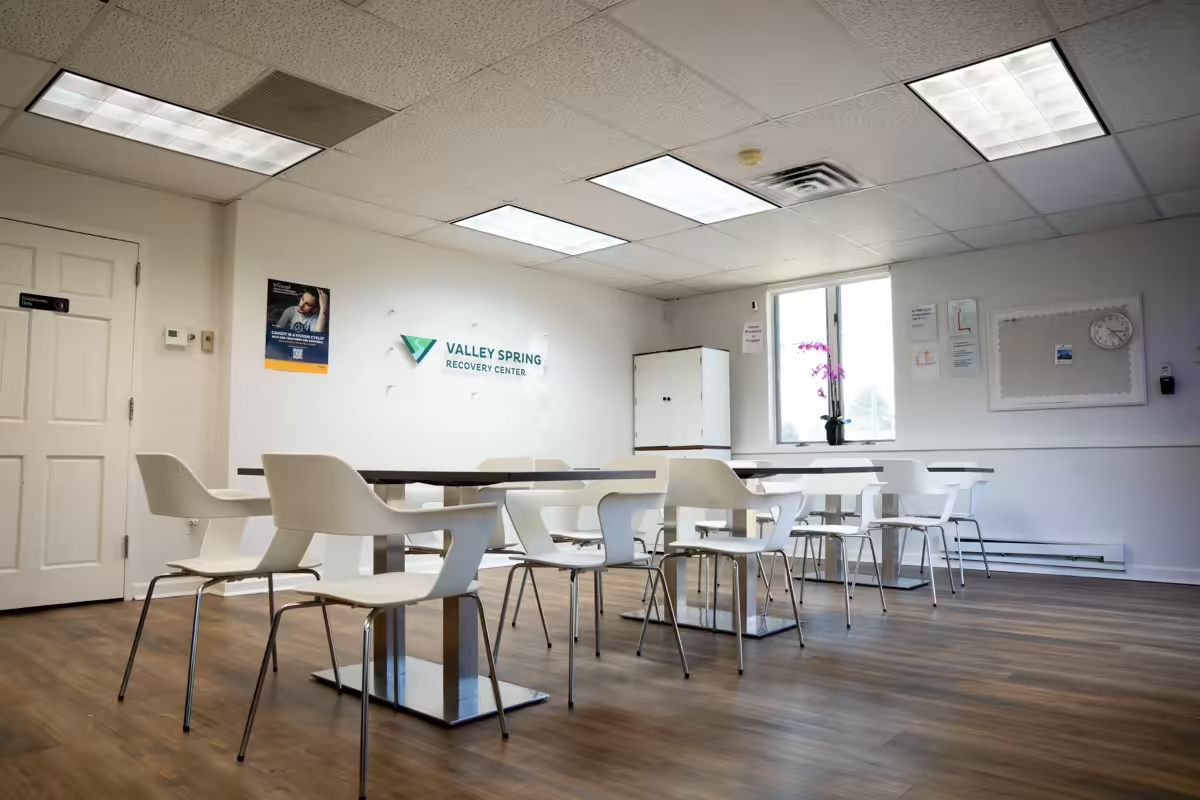
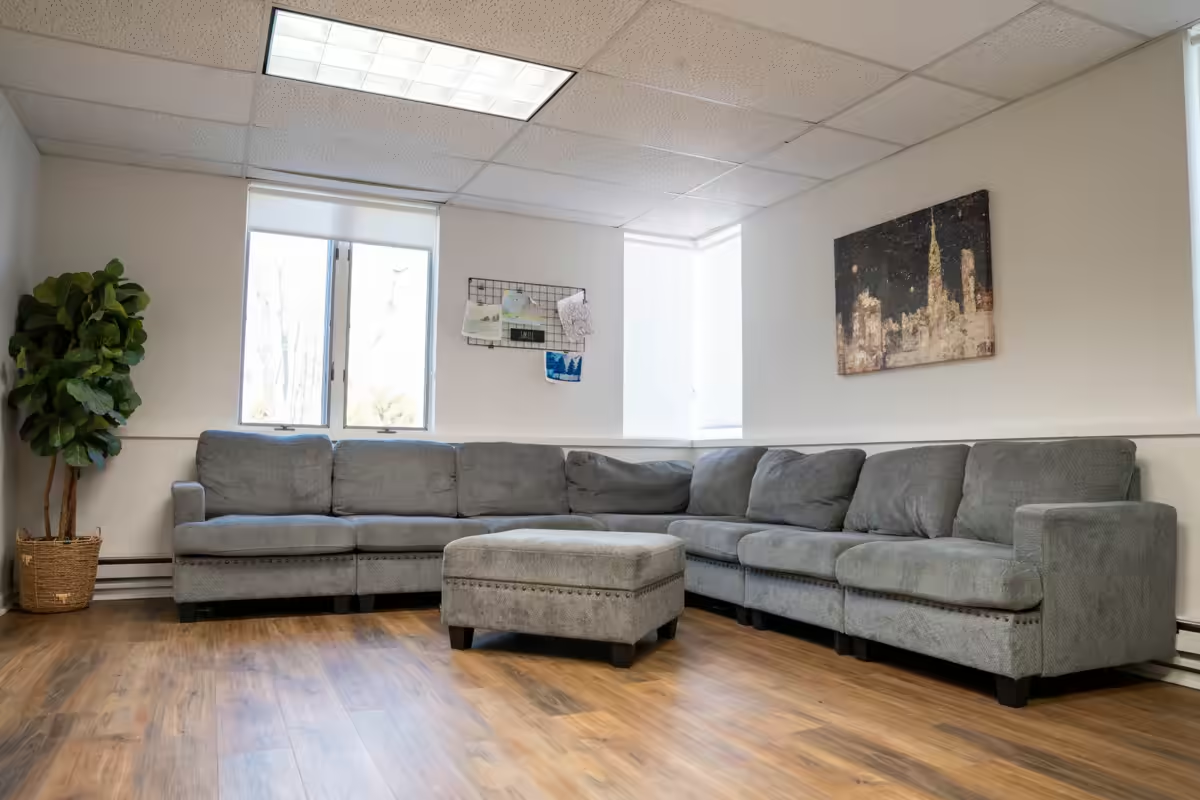
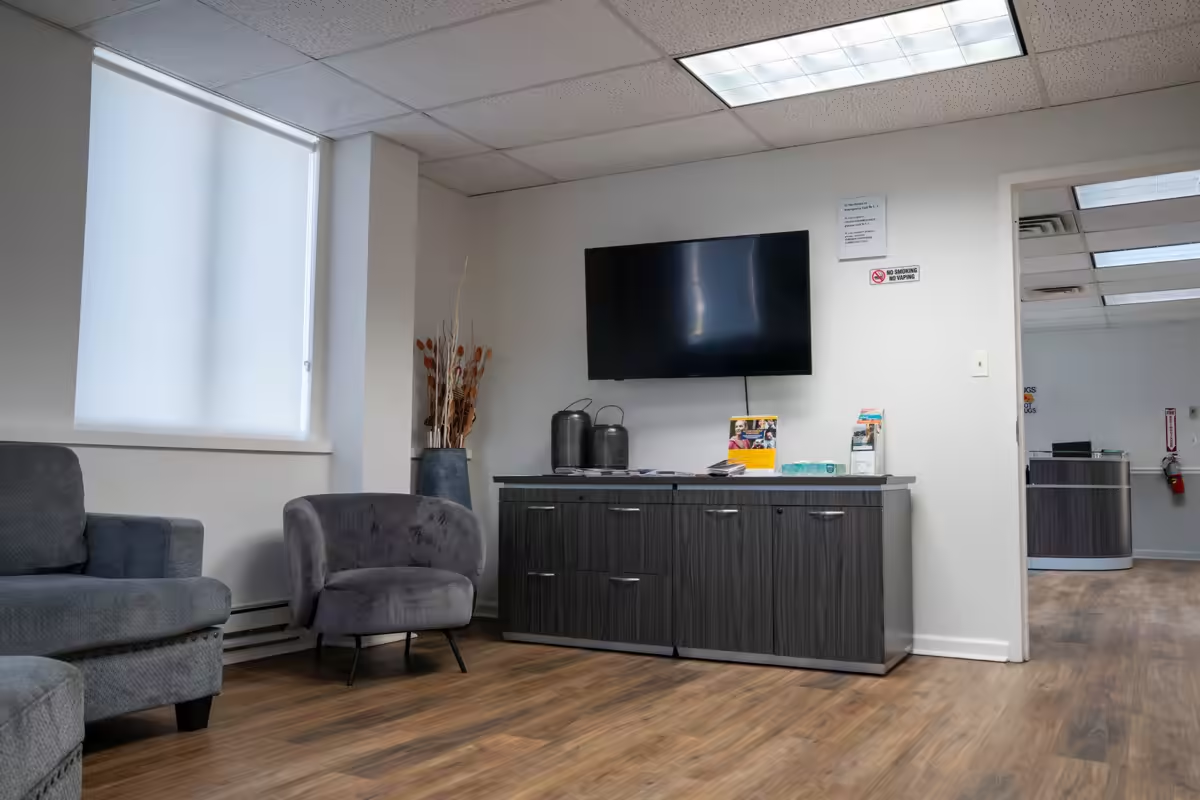
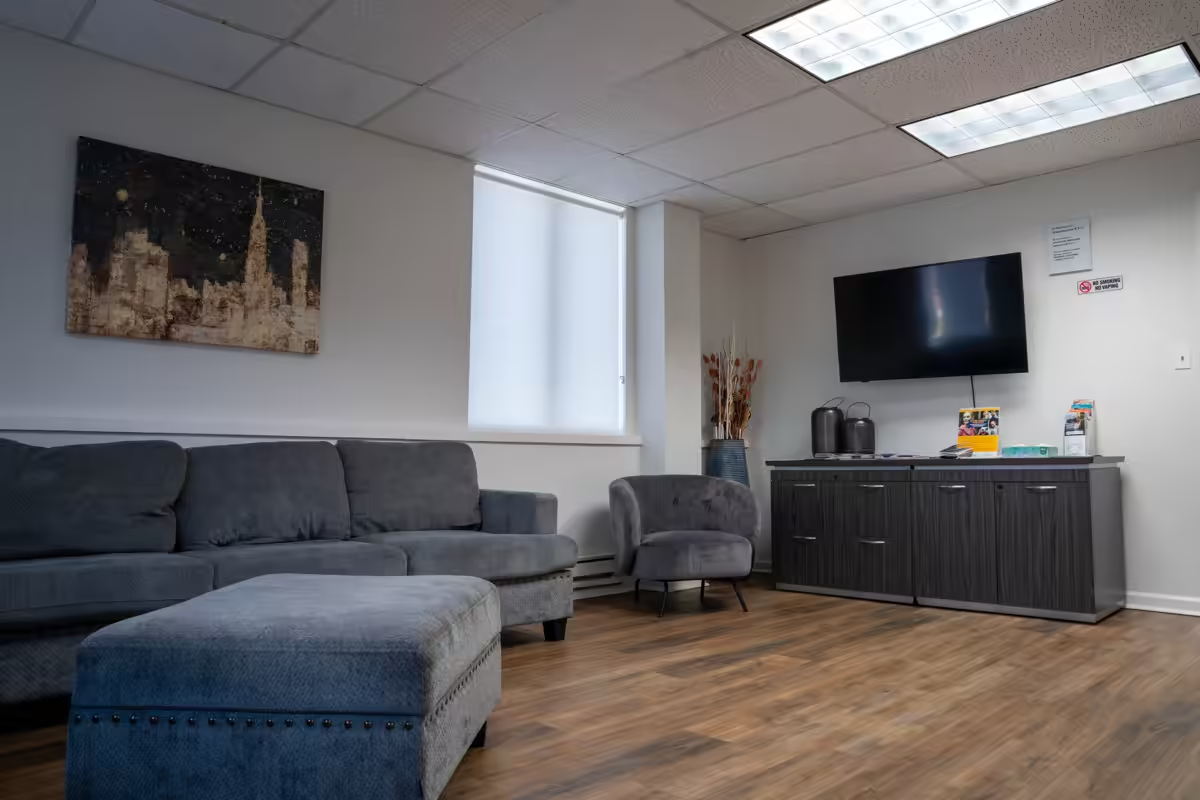
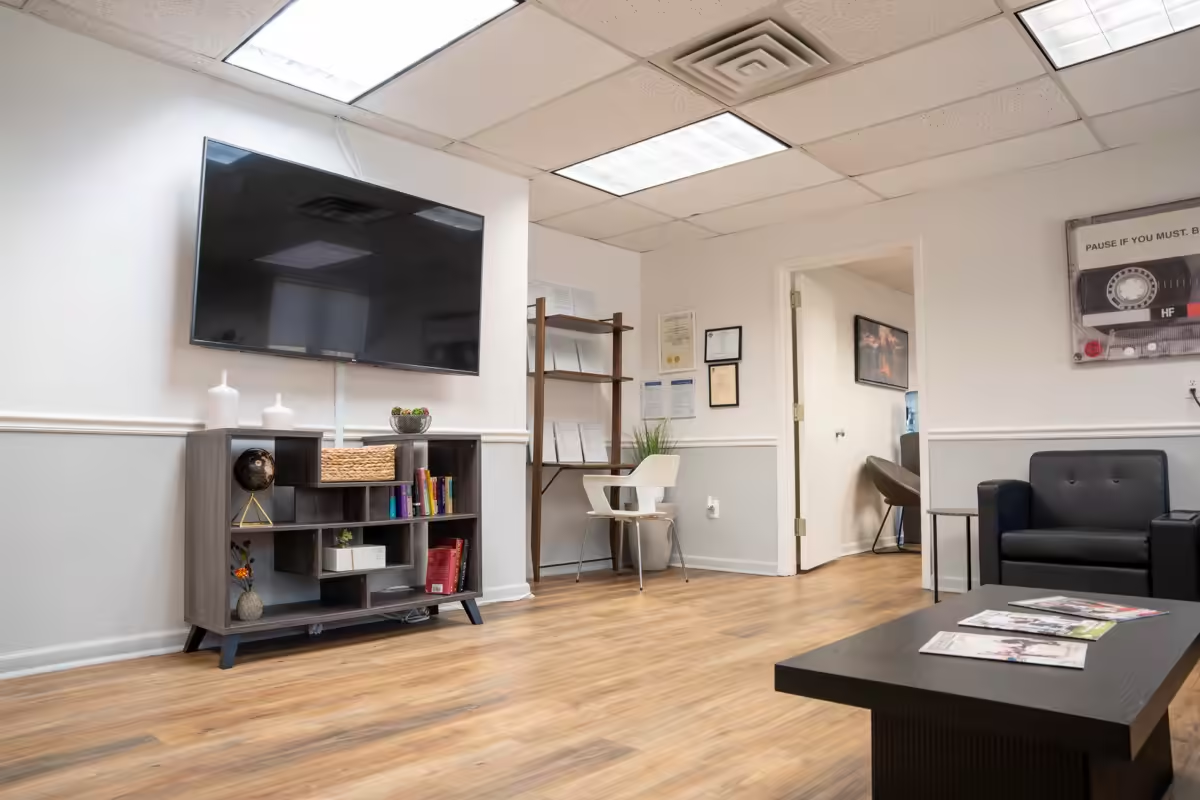
What Does Valley Spring Recovery Center's Norwood, NJ Facility Look Like?

Get Trauma Treatment in Bergen County, NJ
Anyone in immediate danger should call or text 988, the Suicide and Crisis Lifeline, or call 911. The Valley Spring Recovery Center admissions line answers 24 hours a day at (855) 924-5320, and intake is scheduled the same day or the next day when clinically appropriate at 830 Broadway, Norwood, NJ 07648.
HIPAA compliant · Confidential · No obligation
Warning Signs
What Are the Signs of Trauma That Require Professional Treatment?
DSM-5-TR sorts post-traumatic symptoms into four clusters: intrusion, avoidance, negative alterations in cognition and mood, and alterations in arousal and reactivity, with symptoms persisting more than one month. The eight signs below map onto those clusters and onto the three additional features that define complex PTSD in the World Health Organization's ICD-11: affect dysregulation, a persistently negative self-concept, and difficulty sustaining relationships. Trauma treatment at the intensive outpatient level is indicated when these signs disrupt work, sleep and relationships. Anyone in immediate danger should call or text 988, the Suicide and Crisis Lifeline, or call 911.
01.HIGHIntrusive Memories+
Clients experience unwanted memories or flashbacks of traumatic experiences that interfere with daily functioning and create significant distress. Clients find themselves reliving traumatic events through vivid mental images, sounds, or physical sensations that feel as real as the original experience. Clients struggle to control when these memories occur, often being triggered by seemingly unrelated situations, people, or environments.
Warning: Call or text 988, the Suicide and Crisis Lifeline, or call 911 if intrusive memories bring thoughts of suicide. Seek trauma treatment when intrusive memories occur daily or interfere with work and relationships.
02.HIGHEmotional Dysregulation+
Clients experience intense emotional reactions that seem disproportionate to current situations, often related to past traumatic experiences affecting their daily relationships and functioning. Clients find themselves unable to manage emotions effectively, swinging between emotional numbness and overwhelming feelings of anger, sadness, or fear. Clients use unhealthy coping mechanisms to manage emotional overwhelm, including substance use, self-harm, or compulsive behaviors.
Warning: Call or text 988 or call 911 if emotional dysregulation includes self-harm. Seek trauma treatment when dysregulation drives substance use or makes work and relationships impossible to maintain.
03.HIGHAvoidance Behaviors+
Clients actively avoid thoughts, feelings, places, or people that remind clients of traumatic experiences, significantly limiting their life activities and social connections. Clients find themselves changing daily routines, avoiding specific locations, or ending relationships to prevent trauma-related distress or reminders. Clients experience anxiety or panic when confronted with trauma reminders, leading to increased isolation and functional impairment in work, relationships, or daily activities.
Warning: Seek trauma treatment if avoidance behaviors prevent clients from working, maintaining relationships, or completing basic daily activities for more than one month.
04.MODERATEHyperarousal+
Clients remain constantly on alert for potential threats, feeling unable to relax or feel safe even in objectively safe environments. Clients experience an exaggerated startle response to normal sounds, movements, or unexpected events. Clients have difficulty sleeping due to hypervigilance, often staying awake to monitor their environment or experiencing frequent awakening due to perceived threats. Clients feel exhausted from constant alertness but cannot turn off this heightened state of awareness.
Warning: Seek trauma treatment if hyperarousal symptoms persist for more than two weeks and interfere with sleep, work performance, or relationships.
05.MODERATENegative Self-Perception+
Clients experience persistent shame, guilt, or feelings of being permanently damaged or worthless as a direct result of traumatic experiences. Clients blame themselves for traumatic events that occurred, regardless of actual responsibility or control over the circumstances. Clients believe that they are fundamentally different from others in negative ways, feeling broken or irreparably damaged by trauma. Clients struggle with self-compassion and engage in self-critical thinking patterns that reinforce feelings of worthlessness.
Warning: Call or text 988, the Suicide and Crisis Lifeline, or call 911 if negative self-perception brings thoughts of suicide. Seek trauma treatment when shame or worthlessness persists beyond two weeks.
06.MODERATERelationship Difficulties+
Clients struggle to trust others or maintain healthy relationships due to trauma-related fears of betrayal, abandonment, or harm from people close to them. Clients find themselves either becoming overly dependent on others for safety or maintaining excessive emotional distance to protect themselves from potential hurt. Clients experience difficulty with intimacy, either avoiding close relationships entirely or engaging in relationships that recreate traumatic dynamics from their past.
Warning: Seek trauma treatment if relationship difficulties result in complete social isolation or repeated relationship patterns that cause significant distress.
07.HIGHDissociative Symptoms+
Clients experience feeling detached from themselves, their surroundings, or reality, often described as watching themselves from outside their body or feeling like things are not real. Clients have memory gaps for significant periods of time, especially during stressful situations or when confronted with trauma reminders. Clients find themselves spacing out or losing time during conversations, work tasks, or daily activities without explanation or awareness.
Warning: Seek immediate trauma treatment if dissociative symptoms include complete memory loss, inability to function safely, or feeling detached from reality for extended periods.
08.MODERATESleep Disturbances+
Clients experience frequent nightmares related to traumatic experiences or general themes of danger, threat, or helplessness that disrupt their sleep quality. Clients have difficulty falling asleep due to hypervigilance, racing thoughts about trauma, or fear of experiencing nightmares while sleeping. Clients wake frequently during the night feeling anxious, panicked, or disoriented, often unable to return to sleep due to trauma-related thoughts or feelings.
Warning: Seek trauma treatment if sleep disturbances persist for more than two weeks and significantly impact their daily functioning, work performance, or physical health.
Take the First Step Toward Trauma Treatment Recovery Today
Our admissions team is available around the clock. Call (855) 924-5320 or verify your insurance online, no commitment required.
HIPAA compliant · Confidential · No obligation
Local Data
How Common Is Trauma Exposure Among Adults in Bergen County, NJ?
70.4% of adults across 24 countries reported at least one lifetime traumatic event in Benjet and colleagues' 2016 analysis for the World Mental Health Survey Consortium, published in Psychological Medicine. Exposure is close to universal. The disorder that sometimes follows it is not. The U.S. Department of Veterans Affairs National Center for PTSD reports that about 6 of every 100 people in the United States develop post-traumatic stress disorder at some point in life, and about 5 of every 100 adults have it in a given year. Most adults who live through a traumatic event never meet full diagnostic criteria, which is why Valley Spring Recovery Center treats trauma as a presentation in its own right instead of admitting only diagnosed PTSD.
Bergen County is New Jersey's most populous county, with 955,732 residents recorded in the 2020 Census by the U.S. Census Bureau. Norwood sits in the Northern Valley section of the county, on the Route 9W corridor between Northvale and Closter. Valley Spring Recovery Center publishes no Bergen County trauma prevalence estimate, because no county-level trauma survey exists to support one, and a derived figure would be a guess wearing a decimal point.
In-Network Insurance Accepted





Also in-network with AmeriHealth, Northwell Direct, ComPsych, Oscar, VA Community Care, Lower Hudson Valley EAP, JRN Consulting, Teamsters, Workforce Assistance EAP, Iron Workers Members Assistance, Humana.
Blue Cross Blue Shield, Aetna, Horizon accepted out-of-network or by single case agreement · Call 24/7 to verify your specific benefits
Family Support
How Can Someone Get Trauma Treatment at Valley Spring Recovery?
Admissions answers the line 24 hours a day
Call Valley Spring Recovery Center at (855) 924-5320, answered 24 hours a day. Anyone in immediate danger should call or text 988, the Suicide and Crisis Lifeline, or call 911 first. The admissions team runs an initial screening and answers questions about trauma treatment in Bergen County.
Admissions verifies coverage during pre-assessment
Admissions verifies coverage during pre-assessment, confirming mental health benefits for trauma treatment and any authorisation requirement. Valley Spring Recovery Center holds 16 in-network payer contracts, including AmeriHealth, Fidelis Care, ComPsych, Oscar, Tricare, Magellan Healthcare, Cigna and UnitedHealthcare. Blue Cross Blue Shield, Aetna and Horizon are accepted out-of-network or by single case agreement, where cost-sharing is usually higher.
A licensed clinician assesses trauma history and sets the level of care
A licensed clinician completes a biopsychosocial assessment covering trauma history, current symptom clusters and functional impairment, plus a PCL-5 baseline. Clinical and medical approval typically follows within an hour of pre-assessment. The assessment decides between trauma IOP and the Outpatient Program, and refers out when a higher level of care is indicated.
Intake is scheduled the same day or the next day
Intake is scheduled the same day or the next day when clinically appropriate, and admissions calls back within 24 hours to confirm the start date. A program coordinator orients the client to the Norwood facility, introduces the trauma treatment team, and starts programming with stabilization and grounding work before any memory processing begins.
What Happens When Trauma Goes Untreated?
Untreated post-traumatic symptoms persist and widen: avoidance expands until it narrows the activities, relationships and places a person still has access to, and hyperarousal compounds across months into chronic exhaustion and impaired concentration. Sleep is usually the first system to fail and the last to recover. Adverse Childhood Experiences research by Felitti and colleagues, published in the American Journal of Preventive Medicine in 1998, documented a graded relationship between childhood adversity and adult health risk, including alcohol and drug use. Self-medication is a predictable route out of intrusion and dysregulation, which is why untreated trauma and substance use disorder appear together so often.
Valley Spring Recovery Center holds both New Jersey Mental Health Licence #70420104 and NJ DCF substance use licence #200887, so one clinical team treats trauma and a substance use disorder in the same plan when both are present. Treating one and deferring the other is what produces the familiar cycle: symptoms return, substance use returns with them. Call the admissions line at (855) 924-5320, answered 24 hours a day, or call or text 988 if the situation is a crisis right now.
What Is Complex PTSD, and How Is Complex Trauma Treated Differently?
Complex PTSD is the diagnosis the World Health Organization added in ICD-11 for trauma that was prolonged, repeated and difficult to escape, and it adds three features to the core post-traumatic symptoms: affect dysregulation, a persistently negative self-concept, and difficulty sustaining relationships. DSM-5-TR carries no separate complex PTSD diagnosis, so an adult can hold a PTSD diagnosis, a different trauma-related diagnosis, or no diagnosis at all and still present with the complex pattern. Childhood abuse and neglect, domestic violence, trafficking and prolonged captivity are the exposures most associated with it.
Complex trauma changes the sequence of treatment more than it changes the modalities. Stabilization runs longer, because affect dysregulation makes memory processing unsafe until regulation skills hold. Processing is titrated into smaller pieces. Somatic work carries more weight, since a physiological pattern laid down across years does not resolve when the narrative does. Relational repair becomes an explicit target rather than a downstream benefit. Valley Spring Recovery Center treats complex trauma at the intensive outpatient level with the same named protocols and a longer stabilization phase, then steps the client into the Outpatient Program for integration.
Service Area
Which Bergen County Communities Does Valley Spring Serve for Trauma Treatment?
Valley Spring Recovery Center delivers trauma treatment from 830 Broadway, Norwood, NJ 07648, serving the Northern Valley of Bergen County first and the wider NJ/NY metro area second. Residents of Norwood, Northvale, Closter, Demarest, Harrington Park, Old Tappan, Rockleigh, Haworth and Tenafly reach the facility in under 15 minutes along Route 9W and County Route 505. Residents of Hackensack, Paramus, Ridgewood, Englewood, Teaneck, Fort Lee, Bergenfield, Dumont, River Vale and Westwood use the Palisades Interstate Parkway or Route 4 to Route 9W.
Norwood sits roughly 20 minutes from the George Washington Bridge, which puts trauma programming within reach of adults commuting home from Manhattan and Rockland County in time for a 6:00 PM group. Telehealth delivery extends the same trauma IOP and Outpatient Program to adults anywhere in New Jersey over a secure, HIPAA-compliant platform. New Jersey Mental Health Licence #70420104 and CARF accreditation apply to in-person and telehealth attendance alike.
FAQ
Frequently Asked Questions About Trauma Treatment at Valley Spring Recovery
How long does trauma therapy take?+
Trauma IOP at Valley Spring Recovery Center averages 6 to 8 weeks of evening programming. The Outpatient Program that follows runs a structured 8 to 12 weeks, then continues as clinically indicated. Complex trauma lengthens the stabilization phase before memory processing begins.
When should I seek treatment for trauma?+
Seek trauma treatment once intrusion, avoidance or hyperarousal has lasted more than one month and is disrupting work, sleep or relationships. Call or text 988, the Suicide and Crisis Lifeline, or call 911 first if there is any thought of suicide.
How do I know if I need trauma therapy?+
A PCL-5 screening answers it with a number instead of a guess. The 20-item instrument rates each DSM-5 post-traumatic symptom from 0 to 4 across a 0 to 80 range. Valley Spring Recovery Center administers it during the clinical assessment.
What is the difference between trauma-focused therapy and regular therapy?+
Trauma-focused therapy works directly on the traumatic memory and the beliefs it created, using named protocols such as EMDR, Cognitive Processing Therapy and Prolonged Exposure. General therapy addresses current problems without a memory-processing protocol and without a stabilization-then-processing sequence.
What Is EMDR Therapy?+
EMDR, Eye Movement Desensitization and Reprocessing, is an eight-phase protocol pairing brief recall of a traumatic memory with bilateral stimulation until the memory loses its emotional charge. The 2023 VA/DoD Clinical Practice Guideline lists EMDR as a first-line PTSD treatment.
Can PTSD come back after treatment?+
Post-traumatic symptoms return for some adults after a new stressor, an anniversary date or a direct reminder of the original event. A return of symptoms is not a failed course of treatment. Outpatient step-down and the Thrive alumni community exist for it.
What happens after completing treatment at a trauma treatment center?+
Clients step down from trauma IOP into the Outpatient Program, then into Thrive, the lifetime alumni community of monthly meetings, quarterly outings and peer mentorship. Every completer leaves with a personalised aftercare roadmap and referrals under the Lifeline Guarantee.
How do I know if I need PHP or IOP?+
A clinical assessment decides it on symptom severity, safety and daily functioning. New Jersey Mental Health Licence #70420104 covers intensive outpatient and outpatient care only, so adults needing a higher level of care are referred to a partial hospitalization or inpatient provider.
Are there specific treatments for treatment-resistant PTSD?+
Treatment-resistant PTSD is addressed by switching trauma-focused protocol rather than repeating one that stalled, EMDR after Cognitive Processing Therapy for example, and by reassessing sleep, substance use and untreated depression with the Medical Director (MD) or the psychiatric nurse practitioner (PMHNP-BC).
Can children undergo trauma-focused therapy?+
Children receive trauma-focused therapy from child and adolescent specialists. Valley Spring Recovery Center treats adults 18 and older only and admits no one under 18. Families seeking care for a minor should contact a licensed child and adolescent trauma provider in Bergen County.
Who can I reach out to for PTSD support in New Jersey?+
Call or text 988, the Suicide and Crisis Lifeline, for immediate support anywhere in New Jersey. For scheduled outpatient trauma care in Bergen County, Valley Spring Recovery Center answers admissions 24 hours a day at (855) 924-5320 from 830 Broadway, Norwood.
Is therapy covered by insurance?+
Trauma treatment bills under mental health benefits. Valley Spring Recovery Center holds 16 in-network payer contracts, and accepts Blue Cross Blue Shield, Aetna and Horizon out-of-network or by single case agreement, where cost-sharing is usually higher. Verification is free.
How much does therapy cost?+
Cost depends on the plan, the level of care and deductible status, so Valley Spring Recovery Center quotes no figure before verifying benefits. Admissions confirms the out-of-pocket structure and discusses private-pay arrangements at no charge on the first call.
What Other Addiction Conditions Does Valley Spring Recovery Treat?
Sources & References10ShowHide
- Benjet, C. et al. (2016). 'The epidemiology of traumatic event exposure worldwide: results from the World Mental Health Survey Consortium.' Psychological Medicine — 70.4% of respondents across 24 countries reported at least one lifetime traumatic event.
- U.S. Department of Veterans Affairs, National Center for PTSD — About 6 of every 100 people in the United States develop PTSD in their lifetime; about 5 of every 100 adults have PTSD in a given year.
- U.S. Department of Veterans Affairs and U.S. Department of Defense (2023). VA/DoD Clinical Practice Guideline for the Management of Posttraumatic Stress Disorder and Acute Stress Disorder — Individual trauma-focused psychotherapy, including EMDR, Cognitive Processing Therapy and Prolonged Exposure, is recommended as first-line treatment over pharmacotherapy.
- American Psychiatric Association (2022). Diagnostic and Statistical Manual of Mental Disorders, Fifth Edition, Text Revision (DSM-5-TR) — The four post-traumatic symptom clusters and the one-month duration criterion.
- World Health Organization. International Classification of Diseases, 11th Revision (ICD-11) — Complex PTSD and its three disturbances in self-organisation: affect dysregulation, negative self-concept, and disturbed relationships.
- Weathers, F. W. et al. (2013). PTSD Checklist for DSM-5 (PCL-5), National Center for PTSD — 20-item self-report instrument, each item rated 0 to 4, total score range 0 to 80.
- Felitti, V. J. et al. (1998). 'Relationship of Childhood Abuse and Household Dysfunction to Many of the Leading Causes of Death in Adults.' American Journal of Preventive Medicine — The Adverse Childhood Experiences study, conducted by Kaiser Permanente and the Centers for Disease Control and Prevention.
- U.S. Food and Drug Administration — Sertraline and paroxetine are the only medications approved for post-traumatic stress disorder.
- Substance Abuse and Mental Health Services Administration (2014). SAMHSA's Concept of Trauma and Guidance for a Trauma-Informed Approach — The six principles of a trauma-informed approach.
- U.S. Census Bureau, 2020 Census — Bergen County, New Jersey population 955,732, the most populous county in the state.