
Mental Health · Bergen County, NJ · MH License #70420104
ADHD Treatment in New Jersey
Attention-Deficit/Hyperactivity Disorder (ADHD) is a neurodevelopmental disorder of attention regulation, impulse control, and executive function that begins in childhood and persists into adult life, and Valley Spring Recovery Center treats it in adults at two licensed mental health levels of care: Intensive Outpatient (IOP) and Outpatient (OP), delivered from 830 Broadway in Norwood, Bergen County, New Jersey. The DSM-5-TR names three presentations — predominantly inattentive, predominantly hyperactive-impulsive, and combined. Admission runs on the attention-deficit diagnosis by itself: New Jersey Mental Health License #70420104 is a standalone mental health license, and nothing about a substance use history is required to use it. Attend in the Norwood building or attend from home — telehealth carries both levels of care to anyone living in New Jersey. Valley Spring Recovery Center is CARF accredited, BBB A+ rated, and treats adults 18 and older.
- Intensive Outpatient and Outpatient levels of care for adults with ADHD
- Attend from home anywhere in New Jersey, at either level of care, so a broken commute stops costing you a whole evening
- An in-house prescriber rather than a referral list — the Medical Director (MD) and the psychiatric nurse practitioner (PMHNP-BC) see you inside the program
- Executive-function skills work covering planning, task initiation, working memory, and time estimation
- Cognitive Behavioral Therapy (CBT) adapted for adult ADHD avoidance and demoralization
- Dialectical Behavior Therapy (DBT) skills for emotional dysregulation and impulsivity
- Integrated treatment when ADHD co-occurs with a substance use disorder, under both NJ licenses
- Case management for workplace and academic accommodation documentation
Free Insurance Verification
Get Answers Now
Same-day admissions available. Our team verifies your insurance and schedules your intake, typically the same day.
Programs Available
What ADHD Treatment Programs Does Valley Spring Recovery Center Offer in New Jersey?
Two licensed levels of care carry adult ADHD treatment here, and both start after the workday: Intensive Outpatient (IOP) meets Monday through Friday, 6:00 PM to 9:00 PM, and Outpatient (OP) meets 1 to 2 evenings a week. Show up at 830 Broadway in Norwood or log in from anywhere in New Jersey — the prescriber, the curriculum and the clinical team come with either choice. Hospital-level services sit outside this license entirely. Valley Spring Recovery Center runs no partial hospitalization, no partial care, no residential, inpatient or detox program for any diagnosis, and sends those presentations to providers who do.
Valley Spring Recovery Center · Norwood, NJ



People Who Recovered
Norwood, NJ ADHD Treatment Center Reviews
“It cannot be more clear the profound impact that Sean has made in my recovery journey. Finding someone who can balance the weight of recovery with genuine humor is rare, and he embodies that perfectly.”
Daisy McCloud
“Valley Spring Recovery Center truly changed my little brother Jordan's life. From the moment he entered the program, he was treated with respect, care, and real compassion. The staff went above and beyond to support him, not just in his recovery, but in every aspect of his life.”
Deshaya Williams
“Valley Spring Recovery Center saved my son's life. The staff is amazing. I'm so grateful for the exceptional care he received. The support and encouragement by the staff and the rest of the Valley Spring Community is so meaningful.”
Lana Roeser
“Valley Spring Recovery Center is absolutely exceptional. Brian and Mike have created a truly beautiful establishment, both in appearance and in spirit. The clinical setting is world class, blending professionalism with genuine compassion.”
Christopher Ferry
“Everyone treated me like family, I felt like I was born into this family. The welcoming I received was incredible. Valley Spring changed my life in ways I never thought possible.”
Tr3 Weee
Best in Bergen County
Where Can I Find Adult ADHD Treatment Near Me in Bergen County, NJ?
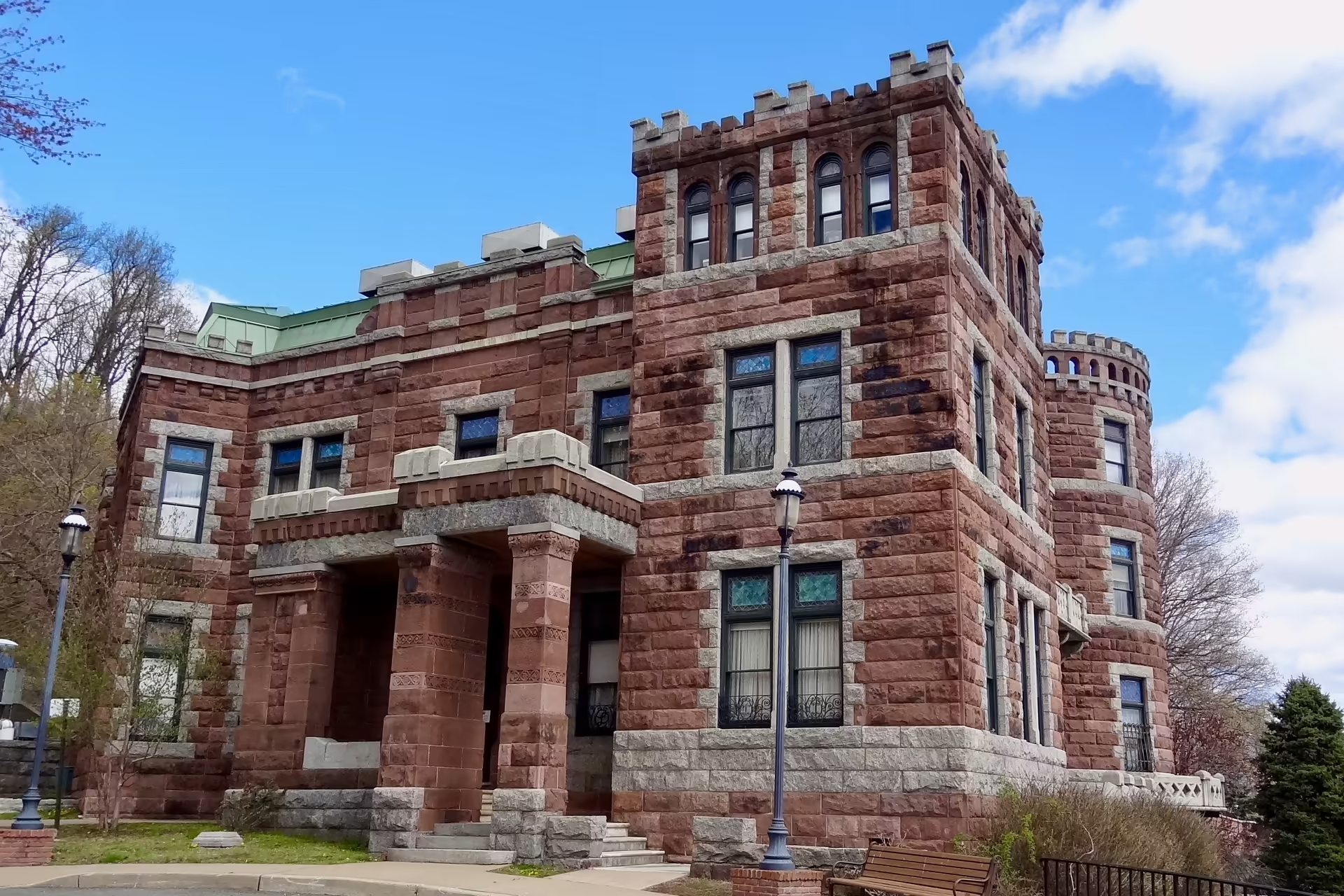
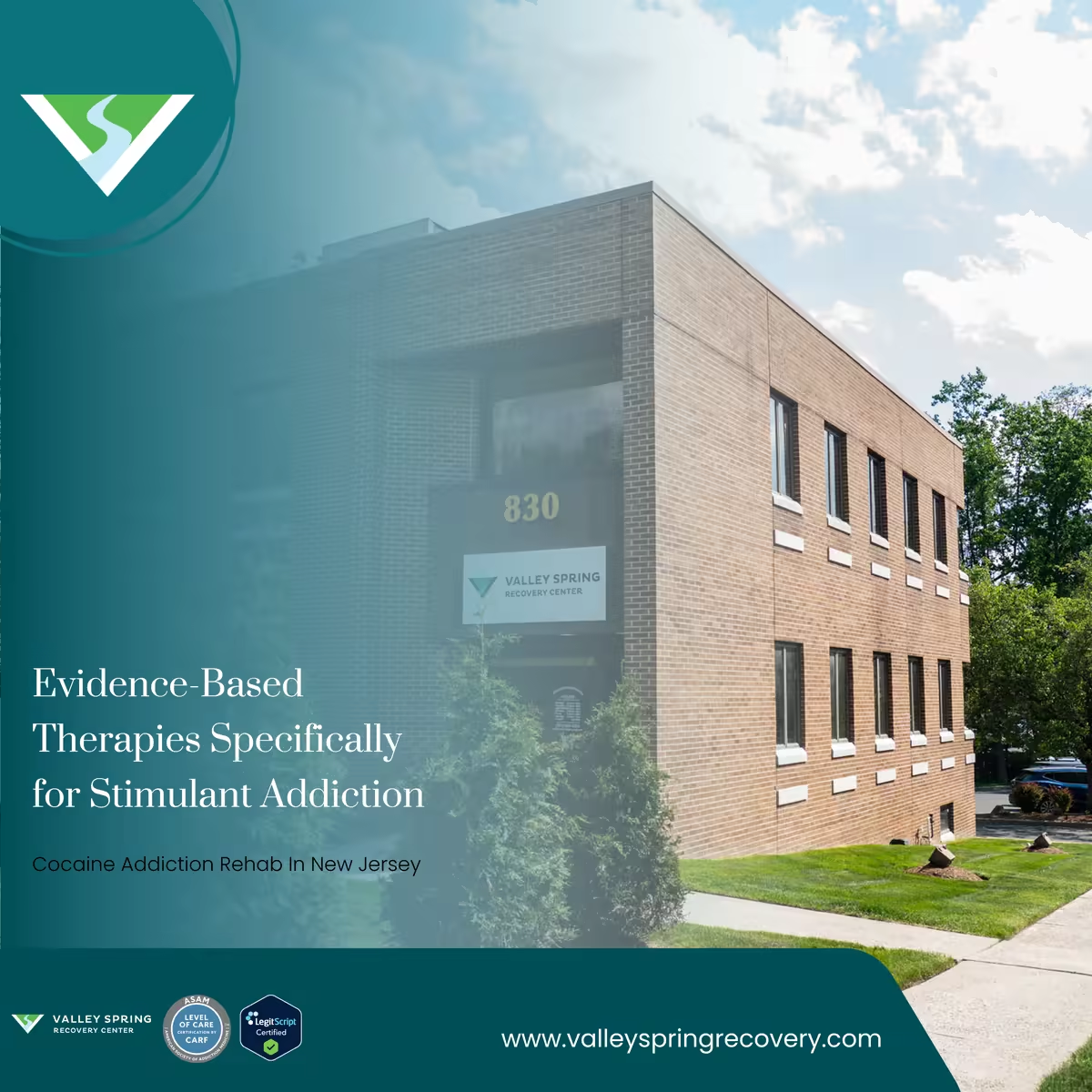
Bergen County adults find this program at 830 Broadway in Norwood, NJ 07648 — one stand-alone building, its own parking lot, about 20 minutes north of the George Washington Bridge and a few turns off the Palisades Interstate Parkway. Park, walk in, done.
Predictability is the point of that address. When your relationship with time is the symptom, a route you have driven once and a lot you never have to circle are worth more than a nicer waiting room. Northvale, Old Tappan, Harrington Park, Closter, Demarest, Cresskill, Tenafly, Haworth, Dumont, Emerson and River Vale all sit inside a short hop of the Northern Valley. Coming north from Paramus, Hackensack, Ridgewood, Fair Lawn, Teaneck, Englewood, Fort Lee or Rutherford, Route 9W and the Palisades Interstate Parkway do the work. And the 6:00 PM start is not a scheduling convenience. Commuting into New York City is simply what a weekday looks like around here, and adults whose careers have already absorbed the cost of untreated ADHD — the missed deadlines, the review that went sideways, the job that ended the way the last one did — cannot pay for treatment in lost workdays on top of it. Evenings protect the paycheck. For anyone the drive defeats outright, the same program arrives by video anywhere in the state.
The clinical team uses Cognitive Behavioral Therapy (CBT) to attack the avoidance and demoralization that a long history of missed deadlines produces, and Dialectical Behavior Therapy skills for the emotional dysregulation and impulsivity that adults with ADHD name first as the symptom that has cost them relationships. Executive-function work is the spine of the curriculum: one capture system instead of five, time made visible rather than estimated, projects broken down to the size at which starting is actually possible. Groups stay under 10 people against a maximum 8:1 staff-to-client ratio, because rehearsing a skill in a room of thirty is a lecture, not rehearsal. Before any intake gets scheduled, admissions runs a confidential pre-assessment and checks your benefits.
8:1
Maximum Staff-to-Client Ratio
IOP + OP
Mental Health Levels of Care
16
In-Network Payer Contracts
NJ #70420104
Mental Health License
Why Valley Spring
Why Choose Valley Spring Recovery Center for Adult ADHD Treatment?
CARF-accredited and NJ-licensed, Valley Spring Recovery Center maintains an 8:1 staff-to-client ratio, accepts 16 payers, including AmeriHealth, Fidelis Care, ComPsych, Oscar, Tricare, Magellan Healthcare, Cigna, and UnitedHealthcare (Blue Cross Blue Shield, Aetna, and Horizon accepted out-of-network or by single case agreement), and offers same-day admissions with groups capped at 10 people for ADHD Treatment.
Valley Spring Recovery Center · Norwood, NJ
Treatment Timeline
How Does Adult ADHD Treatment at Valley Spring Recovery Work?
ADHD Treatment at Valley Spring Recovery Center follows a staged clinical process beginning with assessment, progressing through active treatment, and continuing to aftercare planning. Timeline varies by severity and ASAM criteria, typically 30 to 90 days across program levels.
Assessment establishes the diagnosis and the safety plan
Clients complete a biopsychosocial assessment with licensed clinical staff at admission, reconstructing the developmental history the DSM-5-TR requires: symptoms present before age 12, evidence across two or more settings, and current functional impairment at work, in school, and at home. The Medical Director (MD) or the psychiatric nurse practitioner (PMHNP-BC) completes the psychiatric evaluation and separates ADHD from sleep deprivation, thyroid disease, depression, anxiety, and substance-related cognitive effects. The PHQ-9, GAD-7, and PCL-5 are administered here as baselines. Safety planning names 988, 911, the county psychiatric emergency screening service, and personal warning signs before programming begins.
Supporting Services: Biopsychosocial assessment, developmental history, psychiatric evaluation, PHQ-9 and GAD-7 and PCL-5 baselines, and safety planning.
Clients build the external systems ADHD treatment depends on
Clients build one capture system for every commitment, make time visible with clocks and timers rather than estimating it, and learn to break projects to the size at which task initiation is actually possible. Individual therapy runs 1 to 2 sessions per week on personal patterns: which tasks get abandoned, which hour of the day holds attention, which environments defeat it. Group programming teaches the executive-function skill set and the Dialectical Behavior Therapy skills that cover emotional regulation, distress tolerance, and the pause between impulse and action. Psychoeducation covers what ADHD is neurologically, which removes the character explanation most adults arrive with.
Supporting Services: Executive-function skills groups, CBT and DBT groups, individual therapy 1 to 2 sessions per week, psychiatric monitoring, and family sessions.
Clients run those systems against real work and school demands
Clients run the systems against live demands — an actual inbox, an actual deadline, an actual semester — and bring the failure points back to group rather than abandoning the system. Clinical staff track completed assignments, appointments kept, and the specific conditions under which a system collapses, because a system that works only on a quiet Tuesday has not been tested. Individual therapy addresses the avoidance and demoralization that resurface at the first missed step. Case management assembles the workplace or academic accommodation file during this phase, while the clinical record is current.
Supporting Services: Skills application, individual therapy, medication management, accommodation documentation, and family sessions.
Step-down moves clients to Outpatient with the same team
Hours drop to 1 or 2 evenings a week and the faces stay the same, which is the difference between a step down and a goodbye. Your clinicians write up what held and what buckled — the capture system, the visible-time habit, the weekly review — along with where your co-occurring symptom scores landed, then hand medication follow-up to whoever picks it up next with the reasoning attached rather than a bare prescription list. Maintenance planning names your personal early warnings, the ones that show up two weeks before structure collapses, and confirms crisis routing through 988, 911 and the county screening service. Outside referrals point to therapists experienced with attention-deficit work and to NAMI Bergen County.
Supporting Services: Discharge planning, alumni program orientation, external referral coordination, and maintenance planning.
Our Facility
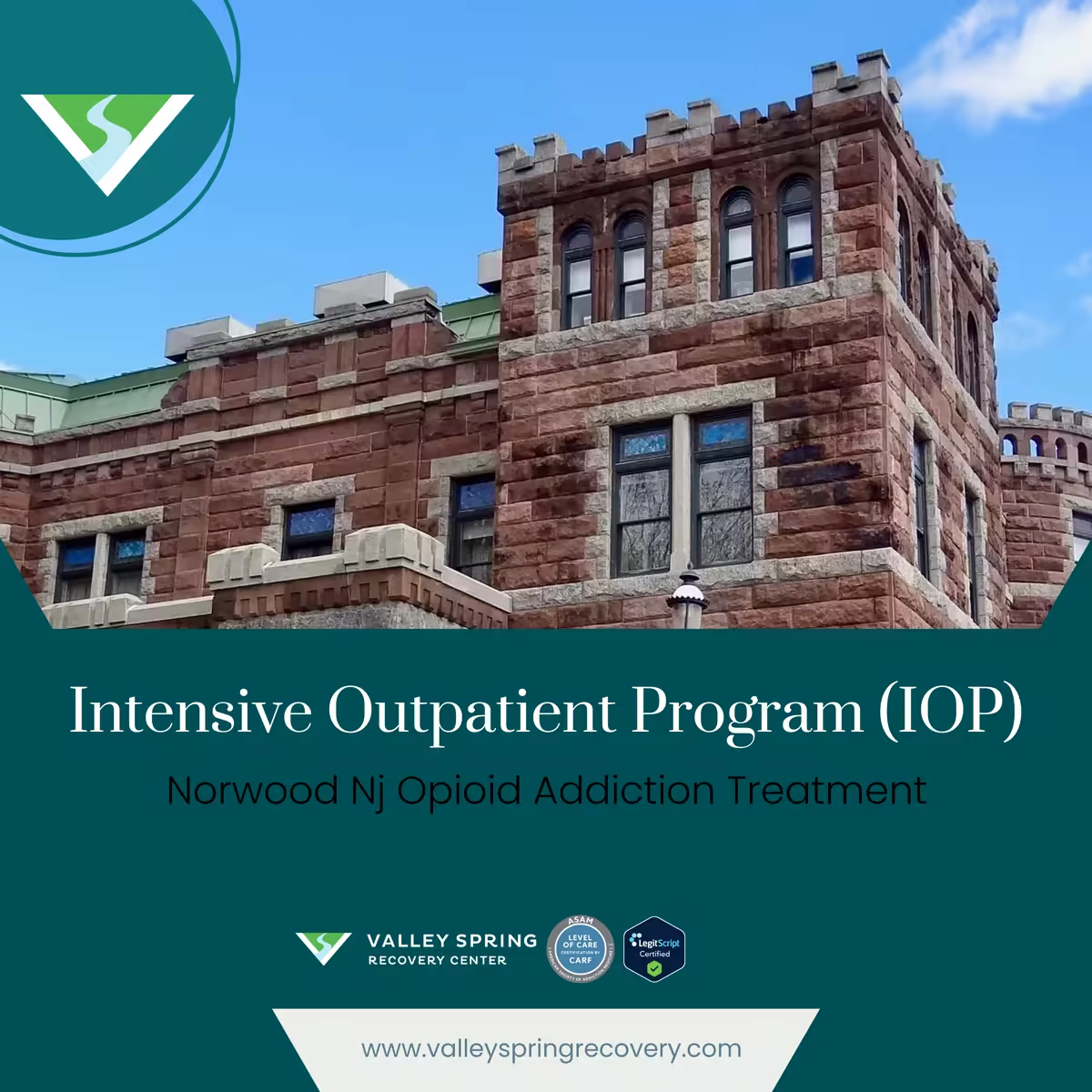
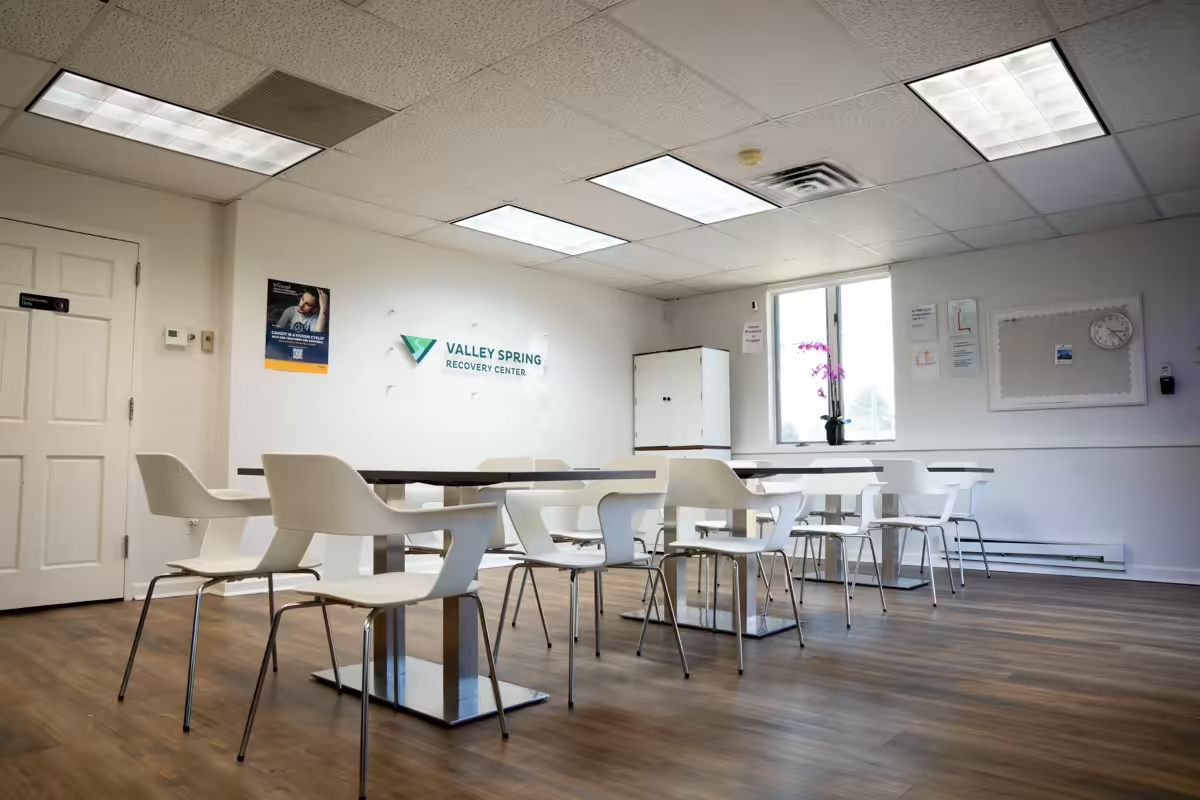
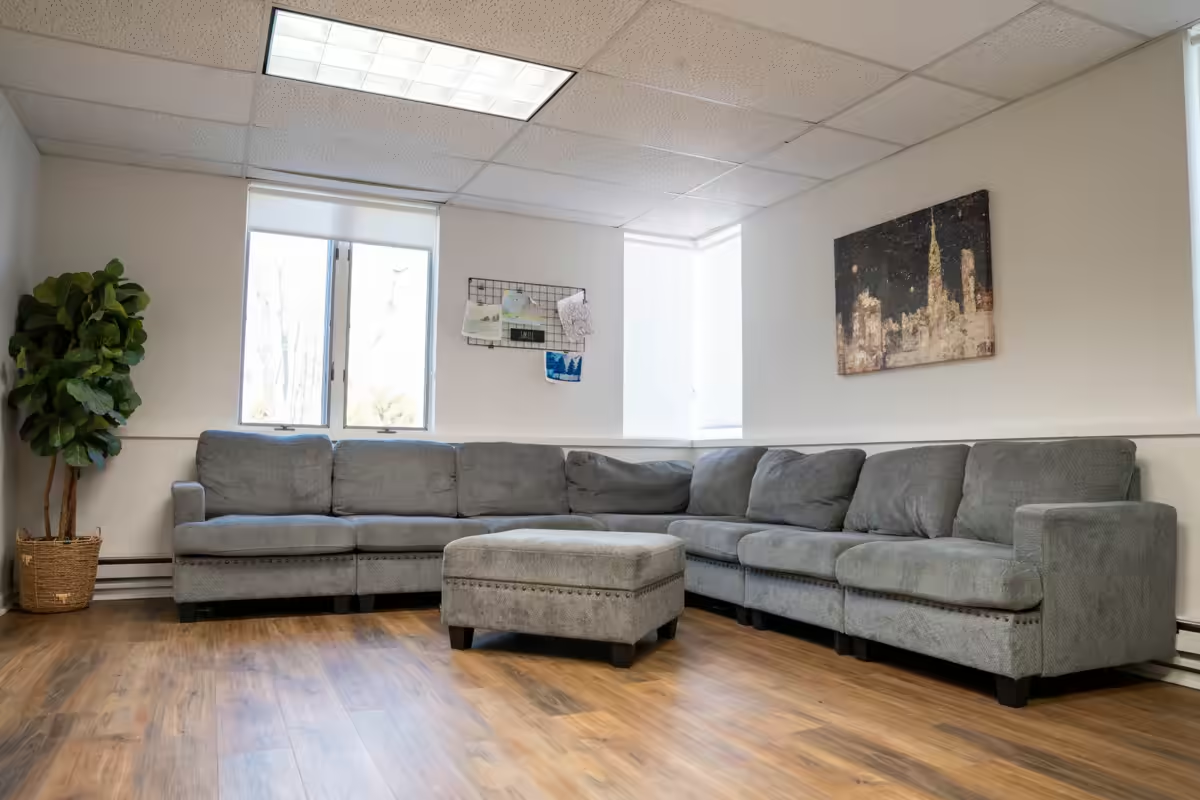
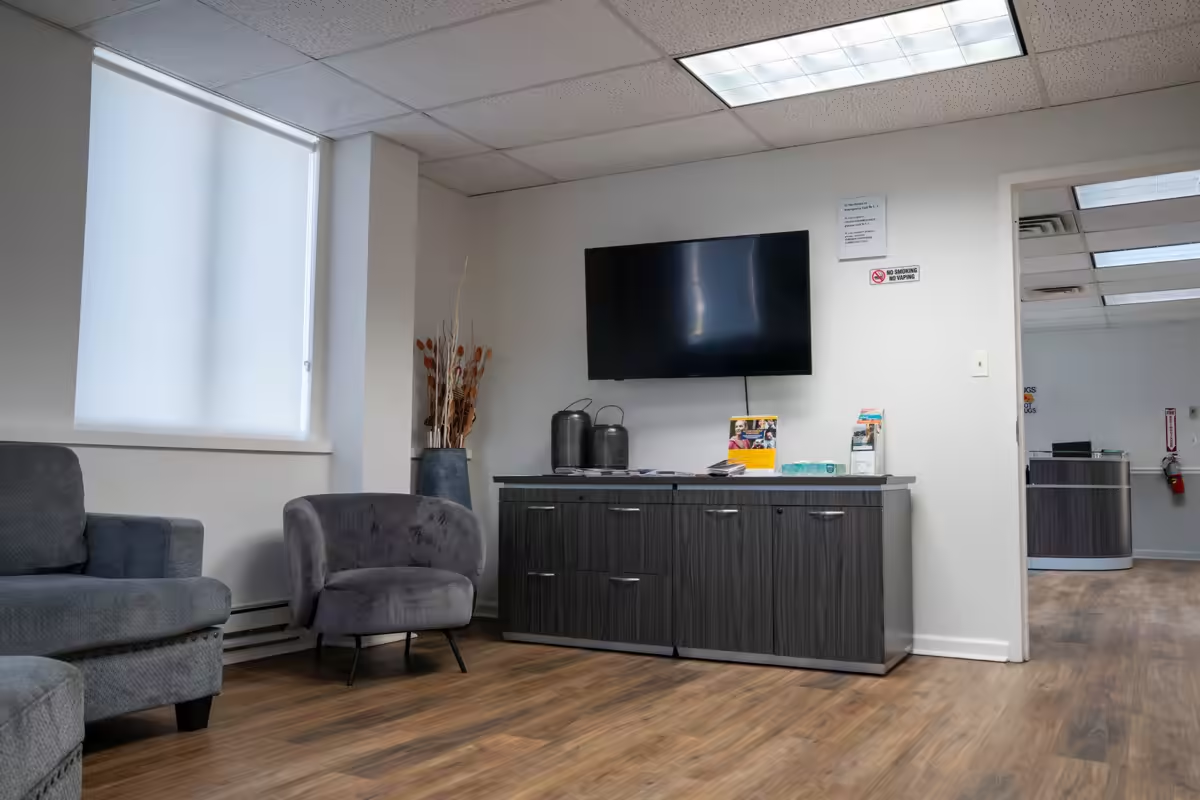
What Does Valley Spring Recovery Center's Norwood, NJ Facility Look Like?
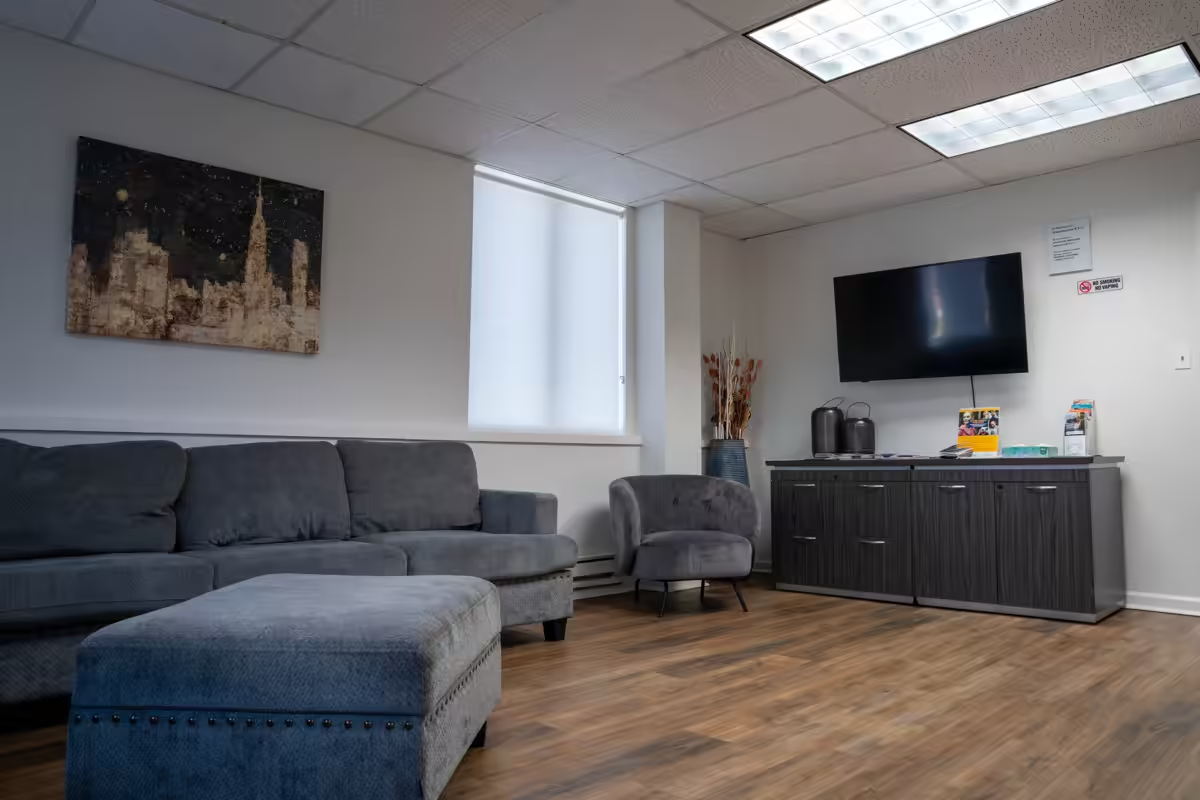
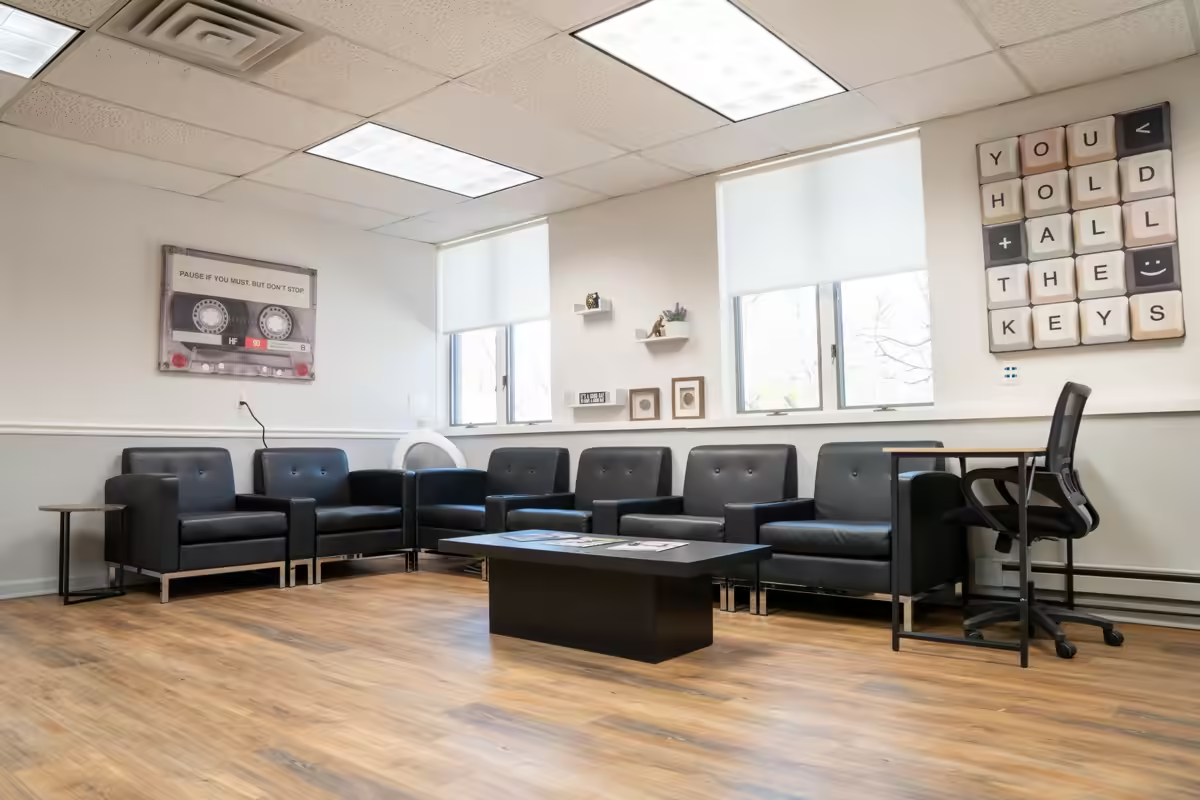
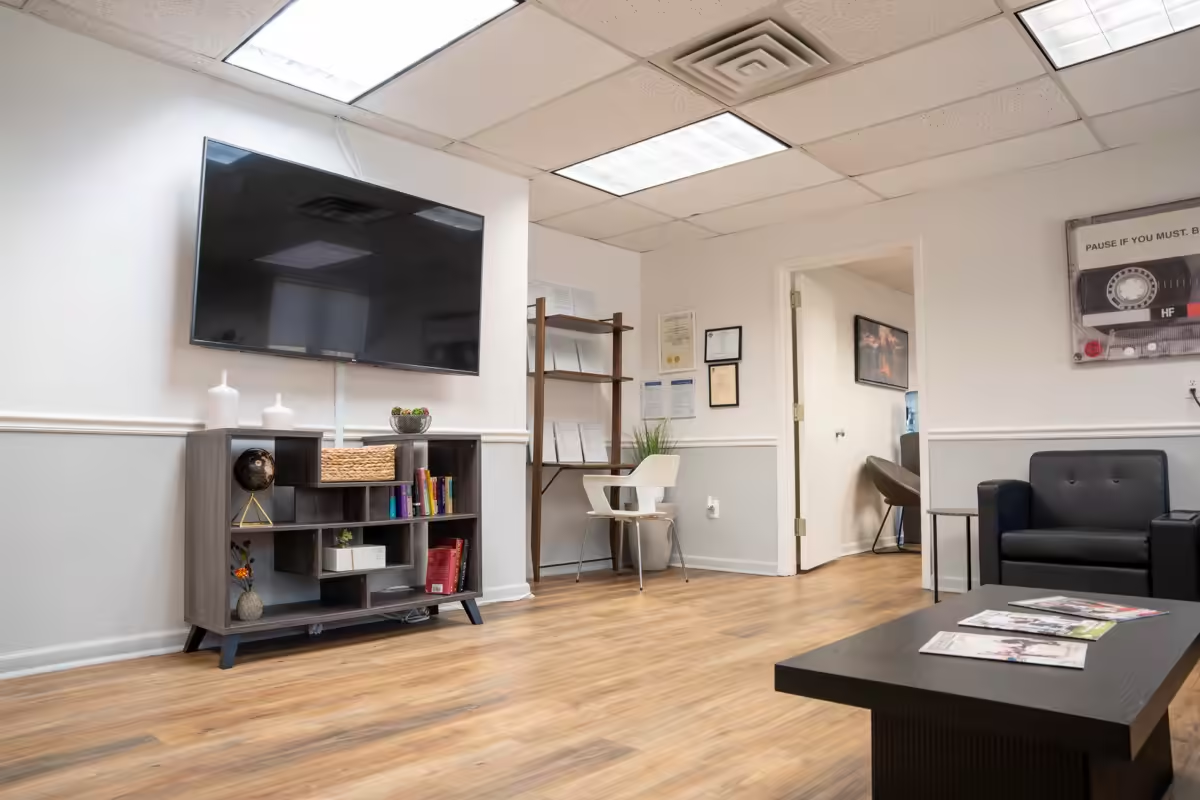
Get Adult ADHD Treatment in Bergen County, NJ
Immediate danger means 911; a crisis short of that means 988, by call or text. Everything else starts with one conversation. Adult ADHD treatment here runs at two licensed levels, Intensive Outpatient and Outpatient, in the Norwood building or over video anywhere in New Jersey, with the Medical Director (MD) and the psychiatric nurse practitioner (PMHNP-BC) handling evaluation and medication follow-up inside both. The assessment is confidential and commits you to nothing. Dial (855) 924-5320 — someone answers at any hour, including this one.
HIPAA compliant · Confidential · No obligation
Warning Signs
What Are the Signs of Adult ADHD That Require Professional Evaluation?
The following 8 signs indicate that adult ADHD warrants professional evaluation. Each is listed with its severity level and the recommended response. Call 911 for immediate danger, or call or text 988, the Suicide and Crisis Lifeline, for a mental health crisis that is not an immediate emergency; New Jersey designates a psychiatric emergency screening service in every county for evaluation and inpatient placement.
01.MODERATEChronic Task Incompletion+
Clients start projects with genuine intent and abandon them near completion, accumulating unfinished work across employment, home maintenance, and personal goals. Clients describe a specific pattern rather than general laziness: the interesting phase of a task holds attention, and the final administrative 10 percent does not. Clients often carry a history of strong performance in crisis-driven or deadline-compressed work alongside failure at routine, self-paced work.
Warning Level: Seek professional ADHD evaluation when unfinished tasks begin producing employment consequences, financial penalties, or relationship conflict. Adult evaluation reconstructs childhood history, so bring school records and a family informant when possible.
02.MODERATETime Blindness and Chronic Lateness+
Clients consistently underestimate how long tasks take and arrive late despite intending to be early. Clients lose track of elapsed time inside an absorbing activity and report that an hour and ten minutes feel identical. Clients build increasingly elaborate reminder systems that fail because the systems require the same executive function the symptom impairs.
Warning Level: Chronic lateness that has survived multiple correction attempts and now threatens employment or a professional license warrants evaluation. Time estimation is a measurable executive-function deficit rather than a character trait, and it responds to externalized structure.
03.HIGHEmotional Dysregulation+
Clients experience emotional responses that arrive fast, peak high, and resolve faster than the situation seems to warrant, particularly frustration and irritability. Clients describe feeling emotionally raw after minor setbacks and recovering within minutes while the people around them are still upset. Clients report that emotional reactivity, not inattention, is the symptom that has cost them relationships and jobs.
Warning Level: Emotional dysregulation producing verbal outbursts, damaged relationships, or workplace incidents warrants prompt evaluation. Call 911 if anger escalates to any threat of harm toward self or others, and call or text 988 for a mental health crisis that is not an immediate emergency.
04.HIGHImpulsive Decisions With Lasting Consequences+
Clients make consequential decisions — resigning a position, making a large purchase, ending a relationship — inside a window too short for consideration. Clients recognize the pattern retrospectively and cannot interrupt it prospectively. Clients accumulate financial damage, legal exposure, or relationship losses that do not match their stated intentions or their intelligence.
Warning Level: Impulsivity producing financial, legal, or safety consequences requires professional evaluation without delay. Impulsive driving, unprotected risk-taking, and substance use as an impulse outlet each raise the urgency of assessment.
05.MODERATEDisorganization That Systems Have Not Fixed+
Clients lose essential items repeatedly, miss appointments recorded in a calendar they did not check, and maintain three or four competing organizational systems rather than one. Clients describe buying planners, applications, and labeling equipment that work for two weeks and then stop. Clients experience the accumulation of unopened mail, unfiled paperwork, and deferred administrative tasks as a permanent background pressure.
Warning Level: Disorganization that has produced missed tax filings, lapsed insurance, unpaid bills despite available funds, or missed medical appointments warrants evaluation for executive-function impairment.
06.MODERATERestlessness and Internal Motor Activity+
Clients experience persistent internal restlessness that no longer looks like childhood hyperactivity, described as an inability to relax or a sense of being driven. Clients find sedentary meetings, long films, and unstructured evenings physically uncomfortable. Clients report needing constant background stimulation and difficulty tolerating stillness without a device.
Warning Level: Restlessness that prevents rest, disrupts sleep onset, or drives compulsive activity warrants evaluation. Hyperactive-impulsive presentation in adults frequently appears as internal restlessness rather than visible motor activity, which is one reason it is missed.
07.HIGHSubstance Use That Started as Self-Management+
Clients use alcohol, cannabis, or stimulants to produce focus, quiet internal restlessness, or force sleep, and describe the use as functional rather than recreational. Clients notice that the substance stopped working at the original dose and that use has expanded to earlier hours or higher quantities. Clients face a diagnostic problem as well as a clinical one, because heavy substance use produces attention and memory impairment indistinguishable from ADHD on a symptom checklist.
Warning Level: Substance use that began as symptom management requires integrated assessment of both conditions. Valley Spring Recovery Center holds NJ Mental Health License #70420104 and NJ Substance Use Disorder License #200887 and treats both under one plan. Call 911 for overdose or medical emergency.
08.HIGHDemoralization and Persistent Low Mood+
Clients carry a long record of underperformance relative to their own ability and have concluded the problem is character rather than condition. Clients describe shame that predates the low mood and a belief that effort produces nothing. Clients frequently present for depression treatment first, and the ADHD underneath it is identified only when the depression treatment does not resolve the functional impairment.
Warning Level: Call or text 988, the Suicide and Crisis Lifeline, when thoughts of suicide are present, and call 911 when there is a plan, a means, or immediate danger. Once immediate safety is established, evaluation determines whether depression, ADHD, or both are driving the picture.
Take the First Step Toward ADHD Treatment Recovery Today
Our admissions team is available around the clock. Call (855) 924-5320 or verify your insurance online, no commitment required.
HIPAA compliant · Confidential · No obligation
Local Data
How Common Is ADHD Among U.S. Adults, and How Often Is It Missed?
An estimated 15.5 million U.S. adults — 6.0% of the adult population — had a current ADHD diagnosis in 2023, and approximately half of them received that diagnosis at age 18 or older, according to the Centers for Disease Control and Prevention's Morbidity and Mortality Weekly Report of October 10, 2024.
Adult diagnosis is missed for structural reasons rather than accidental ones. Kessler, Ronald C. and colleagues reported current adult ADHD prevalence of 4.4% in the 2006 American Journal of Psychiatry paper “The Prevalence and Correlates of Adult ADHD in the United States: Results From the National Comorbidity Survey Replication,” with prevalence of 5.4% among men and 3.2% among women — a gap that reflects referral and recognition patterns as much as biology, because the predominantly inattentive presentation produces no classroom disruption and therefore no referral. The DSM-5-TR requires that several symptoms be present before age 12, which puts the burden of proof on a memory 20 or 30 years old. Adults who compensated successfully through school, through structured early jobs, or through high ability often present only when a promotion, a new baby, or a remote-work arrangement removes the external structure that was doing the work.
The substance use relationship is the other reason ADHD goes unnamed. Van Emmerik-van Oortmerssen, Katelijne and colleagues found in a 2012 meta-analysis in Drug and Alcohol Dependence, “Prevalence of attention-deficit hyperactivity disorder in substance use disorder patients,” that 23.1% of treatment-seeking patients with a substance use disorder also met criteria for ADHD — roughly one in four. The correlation runs in both directions and is covered in depth in ADHD and Addiction: What is the Correlation?, and the education library covers the specific pharmacology question in Adderall for ADHD. When both conditions are present, they are treated together at Valley Spring Recovery Center under Dual Diagnosis Treatment and alongside Co-Occurring Disorder Treatment, rather than sequentially by two providers.
In-Network Insurance Accepted





Also in-network with AmeriHealth, Northwell Direct, ComPsych, Oscar, VA Community Care, Lower Hudson Valley EAP, JRN Consulting, Teamsters, Workforce Assistance EAP, Iron Workers Members Assistance, Humana.
Blue Cross Blue Shield, Aetna, Horizon accepted out-of-network or by single case agreement · Call 24/7 to verify your specific benefits
Family Support
How Do I Schedule an Adult ADHD Assessment at Valley Spring Recovery Center?
Crisis routing comes first, through 988, 911, or county screening
Immediate danger means 911. A mental health crisis short of that means 988, the Suicide and Crisis Lifeline, by call or text, answered around the clock nationwide. Every New Jersey county designates a psychiatric emergency screening service, and that service handles involuntary evaluation and inpatient placement. The steps below assume none of that applies right now.
Admissions answers the phone 24 hours a day
Dial (855) 924-5320 whenever the impulse to deal with this actually arrives — 11 PM counts, someone picks up — or fill in the insurance verification form instead if a phone call is the harder task tonight. The intake questions are short and concrete: what you are dealing with now, what has been tried before, who currently prescribes for you, where substances fit, and which evenings your week can hold.
Admissions verifies coverage before intake is scheduled
Admissions verifies coverage and confirms mental health benefits before intake is scheduled, so cost is known before commitment. Valley Spring Recovery Center holds 16 in-network payer contracts, and accepts Blue Cross Blue Shield, Aetna, and Horizon out-of-network or by single case agreement, where cost-sharing is usually higher.
Bring the developmental history the diagnosis requires
Adult ADHD assessment reconstructs childhood, so bring what documents it: report cards and teacher comments, prior psychological or educational testing, and a parent, sibling, or long-term partner who can describe patterns before age 12. A licensed clinician completes the biopsychosocial assessment, and the Medical Director (MD) or the psychiatric nurse practitioner (PMHNP-BC) completes the psychiatric evaluation.
Treatment opens with the systems, then the skills, then the transfer
Your individual therapist is matched to how your presentation actually runs — predominantly inattentive, predominantly hyperactive-impulsive or combined, with or without something co-occurring underneath it. The sequence is deliberate: first an explanation of what your brain is doing and the external structures that compensate for it, then the executive-function and emotional-regulation skills that make those structures stick, then fewer evenings with the same clinicians.
What If Someone With ADHD Refuses Treatment?
Call 911 if the person is in immediate danger, and call or text 988, the Suicide & Crisis Lifeline, for a mental health crisis that is not an immediate emergency. 988 answers 24 hours a day across the United States. Crisis routing comes first, before any conversation about a treatment program.
Refusal in adult ADHD usually reflects a diagnosis the person does not believe applies to them. An adult who was never disruptive in a classroom, who finished a degree, or who holds a demanding job frequently concludes that ADHD describes someone else. A second and more common refusal is exhaustion: an adult who has tried planners, applications, accountability partners, and sheer effort reads a treatment program as one more system that will fail in three weeks. Neither objection is answered by persuasion. Both are answered by evidence — a specific list of what the last twelve months cost, written down, without commentary.
Lower the cost of saying yes with specifics. The 6:00 PM Intensive Outpatient start at Valley Spring Recovery Center does not require quitting a job, and telehealth delivery removes the commute. A confidential assessment commits no one to admission. Case Management handles the accommodation paperwork most adults with ADHD have been deferring for years, which is often the concrete benefit that makes an intake call happen. Family members have their own path through the six-session Together We Heal workshop. Valley Spring Recovery Center treats adults 18 and older, and refers anyone under 18 to child and adolescent providers.
Service Area
Which New Jersey Communities Does Valley Spring Serve for ADHD Treatment?
Adults from every corner of Bergen County attend this program at one address: 830 Broadway, Norwood, NJ 07648. The building stands alone with its own lot, the sign tells passers-by nothing about why you are there, and the George Washington Bridge is about 20 minutes south.
Shortest drives belong to the Northern Valley. Westwood, Montvale, Park Ridge and River Vale come down from the northwest; Northvale, Old Tappan, Harrington Park and Closter sit practically next door; Alpine, Demarest, Cresskill, Tenafly and Haworth are a few minutes south; Dumont, Bergenfield, Oradell, Emerson and Norwood itself fill in the rest. Plenty of clients drive up from the middle and bottom of the county too — including Paramus Addiction Treatment catchment towns along Route 17 — together with Hackensack, Ridgewood, Fair Lawn, Glen Rock, Teaneck, Englewood, Fort Lee, Edgewater, Rutherford, Lodi and Saddle Brook, riding Route 9W and the Palisades Interstate Parkway north. The full statewide picture is mapped at New Jersey Addiction Treatment.
Live in Cherry Hill, Toms River or anywhere else in New Jersey and both levels of care still reach you, over video, on the same evening schedule with the same curriculum and the same clinicians. Distance is one reason people choose that route. A commute that would swallow the hour before group is another, and so is a week that refuses to hold five fixed trips. The license underneath all of it, New Jersey Mental Health License #70420104, authorizes adult Intensive Outpatient and Outpatient mental health care statewide. What sits outside it is worth stating plainly, since a wrong assumption costs a client days: this is an outpatient provider, with no detox, no methadone services, no inpatient beds, no residential program and no partial hospitalization, and anyone needing those is referred rather than admitted. Care is for adults 18 and older.
FAQ
Frequently Asked Questions About Adult ADHD Treatment at Valley Spring Recovery
What are the three presentations of ADHD in adults?+
The DSM-5-TR names three: predominantly inattentive, predominantly hyperactive-impulsive, and combined. Adults most often present as predominantly inattentive or combined, and adult hyperactivity usually appears as internal restlessness rather than the visible motor activity seen in children.
Why is ADHD missed in adults so often?+
The predominantly inattentive presentation produces no classroom disruption and therefore no childhood referral. High ability, structured schooling, and structured early jobs mask the deficit until a promotion, a new baby, or remote work removes the external structure that was compensating.
Can I be diagnosed with ADHD as an adult if nobody caught it in childhood?+
Yes. The DSM-5-TR requires that several symptoms were present before age 12, not that a diagnosis was made then. Adult assessment reconstructs that history from report cards, prior testing, and a parent, sibling, or long-term partner who can describe the early pattern.
What does the ADHD evaluation at Valley Spring involve?+
A licensed clinician completes a biopsychosocial assessment covering developmental history, symptoms across settings, and current functional impairment. The Medical Director (MD) or the psychiatric nurse practitioner (PMHNP-BC) completes the psychiatric evaluation and rules out sleep deprivation, thyroid disease, depression, anxiety, and substance-related cognitive effects.
Does the program include psychiatric services and medication management?+
Yes, and they belong to the program rather than to a practice down the road. The Medical Director (MD) and the psychiatric nurse practitioner (PMHNP-BC) run evaluation and ongoing follow-up at both levels of care. That means one intake, one chart, and no second waiting list between you and a prescriber who knows your case.
What is executive-function skills work?+
Executive function covers planning, working memory, task initiation, sustained attention, time estimation, organization, and emotional regulation. Skills work builds external systems that carry those processes: one capture system for commitments, visible time, projects broken to initiation-sized steps, and weekly review.
Who is a candidate for an ADHD IOP?+
Adults 18 and older who are psychiatrically stable, not in active psychosis, and not at imminent risk of self-harm, and whose ADHD exceeds what weekly outpatient therapy contains. Valley Spring Recovery Center treats no one under 18 and refers hospital-level presentations to 988, 911, or county screening.
What levels of care does Valley Spring offer for ADHD?+
Two: Intensive Outpatient, Monday through Friday from 6:00 PM to 9:00 PM, and Outpatient, 1 to 2 evenings per week. Valley Spring Recovery Center provides no partial hospitalization, partial care, residential, inpatient, or detox services and refers those presentations out.
How does ADHD relate to substance use?+
Van Emmerik-van Oortmerssen and colleagues reported in Drug and Alcohol Dependence in 2012 that 23.1% of treatment-seeking patients with a substance use disorder also met ADHD criteria. Valley Spring Recovery Center holds both New Jersey licenses and treats the two conditions under one plan.
Do I need a substance use diagnosis to be admitted?+
No. New Jersey Mental Health License #70420104 stands alone, so an attention-deficit diagnosis with no substance use history behind it is enough to open a chart here. Substance Use Disorder License #200887 exists separately and comes into play only when both conditions are actually present.
Can I keep working or attending school during treatment?+
Yes — that is what the 6:00 PM to 9:00 PM Monday-through-Friday schedule is for. Group starts after a Bergen County workday finishes, so nothing here asks you to burn vacation days or explain a midday absence. Case management also handles accommodation requests, FMLA paperwork, return-to-work letters and academic documentation, released only with your written consent.
Can Valley Spring help with workplace or academic accommodations?+
Case managers prepare accommodation requests, FMLA forms, disability filings, return-to-work letters, union coordination, and academic accommodation letters. The ADA Amendments Act of 2008 names concentrating and thinking as major life activities at 42 U.S.C. section 12102, which is the footing such requests stand on.
Is telehealth ADHD treatment available in New Jersey?+
Yes, statewide, at both levels of care. You join the same evening group, the same curriculum and the same clinicians over a HIPAA-compliant video platform — a way of attending, not a watered-down tier. Attendance is exactly where ADHD care tends to break down, so cutting the drive out of the equation removes a real failure point. Moving between the room and the screen mid-episode is routine.
How is progress tracked, and what is the success rate?+
Progress is tracked against named function — bills paid, projects finished, appointments kept — plus the PHQ-9, GAD-7, and PCL-5 for co-occurring symptoms. Valley Spring Recovery Center publishes no success, completion, or recovery rate, because it holds no outcome dataset that would make one honest.
Does insurance cover an ADHD IOP in New Jersey?+
Most New Jersey plans cover medically necessary mental health treatment at parity with medical benefits under the Mental Health Parity and Addiction Equity Act. Valley Spring Recovery Center holds 16 in-network payer contracts, and accepts Blue Cross Blue Shield, Aetna, and Horizon out-of-network or by single case agreement, where cost-sharing is usually higher.
How do I schedule an assessment?+
One phone call to (855) 924-5320, picked up at any hour, or the insurance verification form if typing beats talking tonight. From there it is a pre-assessment, a benefits check and a clinical review, with intake booked same-day or next-day where that is clinically appropriate. In a crisis, 911 or 988 comes first.
What Other Addiction Conditions Does Valley Spring Recovery Treat?
Sources & References8ShowHide
- Centers for Disease Control and Prevention (2024). “Attention-Deficit/Hyperactivity Disorder Diagnosis, Treatment, and Telehealth Use in Adults — National Center for Health Statistics Rapid Surveys System, United States, October–November 2023.” Morbidity and Mortality Weekly Report, 73(40), 890–895. — Source for the estimate that 15.5 million U.S. adults (6.0%) had a current ADHD diagnosis in 2023, and that approximately half received the diagnosis at age 18 or older.
- Kessler, Ronald C., Adler, Lenard, Barkley, Russell, et al. (2006). “The Prevalence and Correlates of Adult ADHD in the United States: Results From the National Comorbidity Survey Replication.” American Journal of Psychiatry, 163(4), 716–723. — Source for current adult ADHD prevalence of 4.4%, with 5.4% among men and 3.2% among women. Published under the National Institute of Mental Health-supported National Comorbidity Survey Replication.
- van Emmerik-van Oortmerssen, Katelijne, van de Glind, Geurt, van den Brink, Wim, et al. (2012). “Prevalence of attention-deficit hyperactivity disorder in substance use disorder patients: a meta-analysis and meta-regression analysis.” Drug and Alcohol Dependence, 122(1–2), 11–19. — Source for the finding that 23.1% of treatment-seeking patients with a substance use disorder also meet criteria for ADHD.
- American Psychiatric Association, Diagnostic and Statistical Manual of Mental Disorders, Fifth Edition, Text Revision (DSM-5-TR) — Attention-Deficit/Hyperactivity Disorder criteria — Source for the three presentations (predominantly inattentive, predominantly hyperactive-impulsive, combined) and the adult criteria: 5 or more symptoms for ages 17 and older, several symptoms present before age 12, symptoms in 2 or more settings, and functional impairment.
- Kessler, Ronald C., Adler, Lenard, Ames, Minnie, et al. (2005). “The World Health Organization Adult ADHD Self-Report Scale (ASRS): a short screening scale for use in the general population.” Psychological Medicine, 35(2), 245–256. — Source instrument for adult ADHD symptom screening: an 18-item symptom checklist mapped to DSM criteria plus a 6-item screener.
- ADA Amendments Act of 2008, Public Law 110-325; definition of disability codified at 42 U.S.C. § 12102 — Statutory basis cited for workplace and academic accommodation: concentrating and thinking are named among the major life activities in the federal definition of disability.
- 988 Suicide & Crisis Lifeline, Substance Abuse and Mental Health Services Administration; New Jersey Division of Mental Health and Addiction Services designated psychiatric emergency screening services — Crisis routing cited on this page: 911 for immediate danger, 988 for a mental health crisis that is not an immediate emergency, and a designated county screening service for involuntary evaluation and inpatient placement.
- New Jersey Mental Health License #70420104; NJ DCF Substance Use License #200887 — Cited on this page for two claims: that adult Intensive Outpatient and Outpatient mental health care is authorized at 830 Broadway, Norwood, NJ 07648, and that the mental health license stands alone — an attention-deficit diagnosis admits a client without any substance use finding. The second license covers co-occurring work.