

Mental Health · Bergen County, NJ · MH License #70420104
Borderline Personality Disorder Treatment in New Jersey
Call or text 988, the Suicide and Crisis Lifeline, or dial 911, if borderline personality disorder has escalated to imminent risk of suicide or self-harm; New Jersey designates a psychiatric emergency screening service in every county for emergency psychiatric evaluation and inpatient placement, and that service is the entry point for acute risk. Borderline personality disorder treatment at Valley Spring Recovery Center is adult Intensive Outpatient (IOP) and Outpatient (OP) care led by Dialectical Behavior Therapy, delivered from 830 Broadway in Norwood, Bergen County, New Jersey, to adults who are psychiatrically stable. Valley Spring holds New Jersey Mental Health License #70420104, a standalone mental health license, so a substance use diagnosis is not required for admission. Both levels of care run in person or by telehealth for New Jersey residents. Valley Spring Recovery Center is CARF accredited and BBB A+ rated, and treats adults 18 and older.
- Dialectical Behavior Therapy leading the treatment plan for every client with borderline personality disorder
- DBT skills groups covering mindfulness, distress tolerance, emotion regulation, and interpersonal effectiveness
- Intensive Outpatient and Outpatient levels of care for psychiatrically stable adults, with telehealth delivery for both
- Individual therapy 1 to 2 sessions per week, with diary card review and behavioral chain analysis
- Psychiatric evaluation and medication management from the Medical Director (MD) and the psychiatric nurse practitioner (PMHNP-BC)
- A written safety plan completed at intake, naming 988, 911, and the county psychiatric emergency screening service
- PHQ-9, GAD-7, and PCL-5 recorded at intake and repeated through treatment, with no success rate published
- Evening IOP programming 6:00 PM to 9:00 PM, Monday through Friday, in process groups under 10 people
Free Insurance Verification
Get Answers Now
Same-day admissions available. Our team verifies your insurance and schedules your intake, typically the same day.
Programs Available
What Borderline Personality Disorder Treatment Programs Does Valley Spring Recovery Center Offer in New Jersey?
Valley Spring Recovery Center treats borderline personality disorder at two licensed mental health levels of care: Intensive Outpatient (IOP), Monday through Friday from 6:00 PM to 9:00 PM, and Outpatient (OP), 1 to 2 evenings per week. Dialectical Behavior Therapy leads both. Both run in person at 830 Broadway, Norwood, NJ or by telehealth for New Jersey residents, and both include psychiatric evaluation and medication management. Outpatient care serves adults who are psychiatrically stable; anyone at imminent risk of suicide or self-harm goes to 988, 911, or a county psychiatric emergency screening service first. Valley Spring Recovery Center does not operate partial hospitalization, residential, inpatient, detox, or methadone services, provides no 24-hour supervision, and refers those presentations out.
Valley Spring Recovery Center · Norwood, NJ




People Who Recovered
Norwood, NJ Borderline Personality Disorder Treatment Center Reviews
“It cannot be more clear the profound impact that Sean has made in my recovery journey. Finding someone who can balance the weight of recovery with genuine humor is rare, and he embodies that perfectly.”
Daisy McCloud
“Valley Spring Recovery Center truly changed my little brother Jordan's life. From the moment he entered the program, he was treated with respect, care, and real compassion. The staff went above and beyond to support him, not just in his recovery, but in every aspect of his life.”
Deshaya Williams
“Valley Spring Recovery Center saved my son's life. The staff is amazing. I'm so grateful for the exceptional care he received. The support and encouragement by the staff and the rest of the Valley Spring Community is so meaningful.”
Lana Roeser
“Valley Spring Recovery Center is absolutely exceptional. Brian and Mike have created a truly beautiful establishment, both in appearance and in spirit. The clinical setting is world class, blending professionalism with genuine compassion.”
Christopher Ferry
“Everyone treated me like family, I felt like I was born into this family. The welcoming I received was incredible. Valley Spring changed my life in ways I never thought possible.”
Tr3 Weee
Best in Bergen County
Where Can I Find DBT and Borderline Personality Disorder Treatment Near Me in Bergen County, NJ?
Borderline personality disorder treatment near Bergen County residents runs at 830 Broadway, Norwood, NJ 07648 — a stand-alone building with private parking in the Northern Valley, roughly 20 minutes from the George Washington Bridge and minutes off the Palisades Interstate Parkway.
Norwood sits at the top of Bergen County, so the drive is short from Northvale, Old Tappan, Harrington Park, Closter, Demarest, Cresskill, Tenafly, Haworth, Dumont, Emerson, and River Vale. Adults commuting home from Paramus, Hackensack, Ridgewood, Fair Lawn, Teaneck, Englewood, Fort Lee, and Rutherford reach Norwood on Route 9W and the Palisades Interstate Parkway. The New Jersey Addiction Treatment hub maps the wider service area, and the Hackensack Addiction Treatment page covers the drive from the county seat. Telehealth delivery covers the rest of New Jersey for adults who cannot make that drive at all.
A substance use diagnosis is not required for admission. New Jersey Mental Health License #70420104 is a standalone mental health license, so an adult whose only diagnosis is borderline personality disorder is admitted on that basis. Valley Spring Recovery Center also holds NJ Substance Use Disorder License #200887, which is what lets one clinical team deliver Dual Diagnosis Treatment under a single plan when borderline personality disorder and a substance use disorder occur together. Valley Spring Recovery Center holds a maximum 8:1 staff-to-client ratio and caps process groups under 10 people, which is the group size DBT skills training needs to stay individualized. Admissions completes a confidential pre-assessment and insurance verification before intake is scheduled.
8:1
Maximum Staff-to-Client Ratio
IOP + OP
Mental Health Levels of Care
16
In-Network Payer Contracts
NJ #70420104
Mental Health License
Why Valley Spring
Why Choose Valley Spring Recovery Center for Borderline Personality Disorder Treatment?
CARF-accredited and NJ-licensed, Valley Spring Recovery Center maintains an 8:1 staff-to-client ratio, accepts 16 payers, including AmeriHealth, Fidelis Care, ComPsych, Oscar, Tricare, Magellan Healthcare, Cigna, and UnitedHealthcare (Blue Cross Blue Shield, Aetna, and Horizon accepted out-of-network or by single case agreement), and offers same-day admissions with groups capped at 10 people for Borderline Personality Disorder Treatment.
Valley Spring Recovery Center · Norwood, NJ
Treatment Timeline
How Does Borderline Personality Disorder Treatment at Valley Spring Recovery Work?
Borderline Personality Disorder Treatment at Valley Spring Recovery Center follows a staged clinical process beginning with assessment, progressing through active treatment, and continuing to aftercare planning. Timeline varies by severity and ASAM criteria, typically 30 to 90 days across program levels.
Assessment sets the baseline and completes the safety plan
Clients complete a biopsychosocial assessment with licensed clinical staff at admission, and the Medical Director (MD) or the psychiatric nurse practitioner (PMHNP-BC) completes the psychiatric evaluation against DSM-5 criteria. The PHQ-9, GAD-7, and PCL-5 are administered here and become the baseline every later score is read against. Safety planning is completed before programming begins and names personal warning signs, the people to contact, and the crisis routing that applies: 988 by call or text, 911 for immediate danger, and the county psychiatric emergency screening service New Jersey designates for emergency evaluation and inpatient placement. Clinical review confirms that outpatient care fits, and refers out when acuity exceeds it.
Supporting Services: Biopsychosocial assessment, psychiatric evaluation, PHQ-9, GAD-7, and PCL-5 baselines, written safety plan, level of care determination, and treatment plan development.
Clients acquire the DBT skills before they are asked to apply them
Clients enter DBT skills groups and work through the four modules, with mindfulness repeating between distress tolerance, emotion regulation, and interpersonal effectiveness. Individual therapy runs 1 to 2 sessions per week, introduces the diary card, and begins behavioral chain analysis on the behaviors the client has named as targets. Health and wellness programming addresses the vulnerability factors emotion regulation depends on, covering sleep, movement, nutrition, and nervous system regulation through breath awareness and grounding. Psychiatric review continues regardless of medication status. Family sessions begin with the written consent of the client.
Supporting Services: DBT skills groups across four modules, individual therapy 1 to 2 sessions per week, diary card tracking, psychiatric review, health and wellness programming, and family sessions with consent.
Clients apply the skills to the relationships that provoke them
Clients apply distress tolerance and interpersonal effectiveness skills to the situations that actually provoke dysregulation: a conflict with a partner, a message left unanswered, a performance review, a family gathering. Behavioral chain analysis moves from reconstructing past incidents to planning the next one, placing a named skill at the link where the chain has previously broken. Clinical staff track skills use recorded on the diary card, urge intensity, and function restored at work and at home. Group programming shifts toward maintaining gains, and the PHQ-9, GAD-7, and PCL-5 are readministered and reviewed with the client rather than about them.
Supporting Services: Advanced DBT skills application, behavioral chain analysis, repeat PHQ-9, GAD-7, and PCL-5 administration, EMDR when indicated, family sessions, and case management.
Step-down moves clients to Outpatient care with the same team
Step-down from Intensive Outpatient runs to the Outpatient level of care at 1 to 2 evenings per week with the same treatment team, which is what keeps a transition from functioning as a discharge. Clinical staff document the skills that have held, the behavioral targets still open, the diary card history, and the written safety plan, then coordinate medication handoff with the outside prescriber. External referrals connect clients with DBT-trained outpatient therapists, an ongoing psychiatric provider, and NAMI Bergen County. Alumni orientation connects clients to the Thrive community, which provides monthly meetings, quarterly outings, and peer mentorship for life.
Supporting Services: Step-down to Outpatient care, written clinical summary, prescriber handoff, DBT-trained therapist referrals, NAMI Bergen County referral, and Thrive alumni orientation.
Our Facility
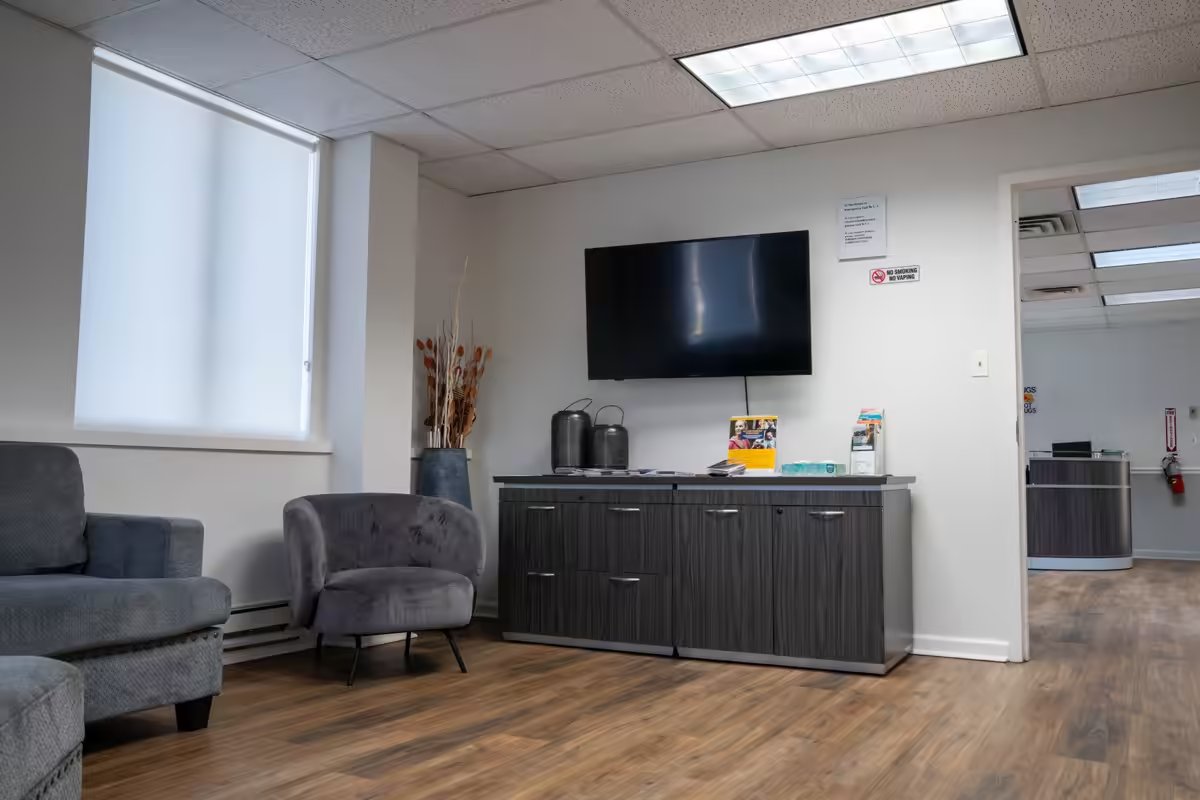
What Does Valley Spring Recovery Center's Norwood, NJ Facility Look Like?





Get Borderline Personality Disorder Treatment in Bergen County, NJ
Call or text 988, or dial 911, first, if this is a crisis; New Jersey designates a psychiatric emergency screening service in every county. For everything else: Valley Spring Recovery Center treats adult borderline personality disorder at two licensed levels of care, Intensive Outpatient and Outpatient, led by Dialectical Behavior Therapy, in person in Norwood or by telehealth across New Jersey. Assessment is confidential. Call (855) 924-5320, answered 24 hours a day.
HIPAA compliant · Confidential · No obligation
Warning Signs
What Are the Signs of Borderline Personality Disorder That Require Professional Treatment?
The American Psychiatric Association lists 9 diagnostic criteria for borderline personality disorder in the DSM-5, and a diagnosis requires 5 or more of them present since early adulthood and across contexts. Each of the 9 appears below with its severity level and the response it calls for. Call or text 988, the Suicide and Crisis Lifeline, or dial 911, if there is imminent risk of suicide or self-harm; New Jersey designates a psychiatric emergency screening service in every county for emergency psychiatric evaluation and inpatient placement.
01.HIGHFear of Abandonment+
Clients make frantic efforts to avoid real or imagined abandonment, and the trigger is frequently ordinary: a delayed reply, a changed plan, a partner working late. The fear is not proportional to the evidence and it is not reassured away by a single answer, so reassurance-seeking repeats. Clients describe monitoring a relationship continuously for signs of withdrawal, and the monitoring itself strains the relationship it is trying to protect. Interpersonal effectiveness skills address this criterion directly, replacing the frantic effort with a request that can be heard.
Warning Level: Seek professional evaluation when fear of abandonment drives daily behavior, damages relationships, or produces a pattern of preemptive breakups. Call or text 988 when abandonment fear escalates to thoughts of suicide or self-harm.
02.HIGHUnstable and Intense Relationships+
Clients experience relationships that alternate between idealization and devaluation, and the swing is often fast enough to occur within a single week. A person is experienced as wholly good, then as wholly untrustworthy after a disappointment, with no stable middle. The pattern repeats across partners, friendships, family members, and clinicians, which is why treatment for borderline personality disorder plans for it rather than being surprised by it. Interpersonal effectiveness and mindfulness skills build the capacity to hold two things at once: disappointment in a person and continued attachment to them.
Warning Level: Seek professional evaluation when relationships repeatedly collapse in the same pattern, when a support network has narrowed, or when the same conflict recurs with each new person.
03.MODERATEIdentity Disturbance+
Clients experience a markedly and persistently unstable self-image, with sudden shifts in goals, values, career direction, and stated opinions. The instability is described from the inside as not knowing who they are when alone, and it drives an adoption of the identity of whoever is closest. Career changes, relocations, and reversals of long-held positions follow. Mindfulness skills build a stable observing position from which a preference can be noticed and kept, which is the foundation identity work depends on.
Warning Level: Seek professional evaluation when identity instability produces repeated abrupt life changes, when self-description shifts with each relationship, or when chronic uncertainty about direction interferes with work or school.
04.HIGHImpulsivity in Self-Damaging Areas+
Clients act impulsively in at least two areas that are potentially self-damaging, including spending, substance use, reckless driving, binge eating, and sexual risk-taking. The impulse follows an emotional spike rather than a plan, and the behavior lowers distress in the moment while adding financial, legal, and health consequences that outlast it. Distress tolerance skills target exactly this window, supplying something to do with an urge during the hour it is at its peak.
Warning Level: Seek professional evaluation when impulsive behavior creates financial, legal, occupational, or medical damage. Dial 911 when impulsive behavior creates immediate danger to the person or to anyone else.
05.SEVERERecurrent Suicidal Behavior or Self-Harm+
Recurrent suicidal behavior, suicidal threats, and self-harm are diagnostic criteria for borderline personality disorder rather than complications of it, which is why safety planning at Valley Spring Recovery Center happens at intake and not later. Chronic suicidal ideation is a feature many people with this diagnosis live with over long periods, and it is distinct from an acute escalation in risk, though both are treated seriously and neither is treated as attention-seeking. Dialectical Behavior Therapy was built for this criterion specifically, and the trials Linehan and colleagues published in Archives of General Psychiatry in 1991 and 2006 measured suicidal behavior as a primary outcome.
Warning Level: Call or text 988, the Suicide and Crisis Lifeline, for any thoughts of suicide or self-harm, and dial 911 when there is immediate danger. 988 answers 24 hours a day across the United States. New Jersey designates a psychiatric emergency screening service in every county for emergency psychiatric evaluation and inpatient placement, and that service, not an outpatient program, is the entry point for acute risk.
06.HIGHAffective Instability+
Clients experience marked mood reactivity, with episodes of intense dysphoria, irritability, or anxiety that typically last a few hours and rarely more than a few days. The shift is usually triggered by an interpersonal event, which is the feature that separates it from the sustained episodes of bipolar disorder lasting days to weeks. Emotion regulation skills address this criterion by teaching accurate naming of the emotion, reduction of vulnerability through sleep and routine, and opposite action when the urge does not fit the facts.
Warning Level: Seek professional evaluation when mood shifts multiple times within a day in response to interpersonal events, when the shifts disrupt work or caregiving, or when they are followed by impulsive behavior.
07.MODERATEChronic Feelings of Emptiness+
Clients describe a persistent internal emptiness, frequently reported as numbness or as a sense that something central is missing rather than as sadness. The emptiness drives a continuous search for external stimulation and validation, and it does not resolve with achievement or with company. It is one of the most consistently reported experiences in borderline personality disorder and one of the least visible from the outside, which is why it is missed in brief assessments.
Warning Level: Seek professional evaluation when chronic emptiness persists across months, drives impulsive behavior aimed at feeling something, or coexists with depressive symptoms. Call or text 988 when emptiness escalates to thoughts of suicide.
08.HIGHInappropriate Intense Anger+
Clients experience intense anger disproportionate to the situation, with difficulty controlling it, including recurrent temper outbursts, sustained bitterness, and physical fights. The anger is frequently followed by shame, which then feeds the next episode. Family members and coworkers usually describe the outbursts long before the person reports them. Distress tolerance and emotion regulation skills target the interval between the emotional spike and the action taken on it, which is where the outcome is actually decided.
Warning Level: Seek professional evaluation when anger damages relationships or employment or produces recurrent conflict. Dial 911 when anger escalates toward violence or immediate danger to anyone.
09.HIGHStress-Related Paranoid Ideation or Dissociation+
Clients experience transient, stress-related paranoid ideation or severe dissociative symptoms, typically during periods of intense interpersonal stress and typically resolving when the stress subsides. Dissociation is described as detachment from the body, from surroundings, or from time, and it interrupts memory for the period it covers. The transient, stress-linked character of these symptoms is what distinguishes them from a psychotic disorder, and the distinction is made by psychiatric evaluation rather than by self-report.
Warning Level: Seek psychiatric evaluation when paranoid ideation or dissociation occurs, because the differential between borderline personality disorder and a psychotic disorder changes the treatment. Dial 911 for active psychosis or immediate danger, and use the county psychiatric emergency screening service for emergency evaluation.
Take the First Step Toward Borderline Personality Disorder Treatment Recovery Today
Our admissions team is available around the clock. Call (855) 924-5320 or verify your insurance online, no commitment required.
HIPAA compliant · Confidential · No obligation
Local Data
How Common Is Borderline Personality Disorder Among U.S. Adults?
Borderline personality disorder affects 1.4% of U.S. adults, according to the National Institute of Mental Health reporting diagnostic interview data from the National Comorbidity Survey Replication.
Lifetime prevalence runs higher. Grant and colleagues, reporting Wave 2 of the National Epidemiologic Survey on Alcohol and Related Conditions in the Journal of Clinical Psychiatry in 2008, found lifetime prevalence of DSM-IV borderline personality disorder of 5.9% across face-to-face interviews with 34,653 U.S. adults, with no significant difference between men at 5.6% and women at 6.2%. The gap between the two figures reflects method rather than contradiction: a past-year diagnostic interview and a lifetime structured assessment count different things. The American Psychiatric Association requires 5 or more of 9 DSM-5 criteria for the diagnosis, present since early adulthood and across contexts.
Bergen County is New Jersey's most populous county, with 955,732 residents counted in the 2020 U.S. Census, and Valley Spring Recovery Center serves it from Norwood. Prevalence is not the problem Bergen County families describe on the phone. The problem is access to Dialectical Behavior Therapy on a schedule that survives a job, and a program honest about where its boundary sits. Borderline personality disorder also co-occurs frequently with substance use disorders, depression, post-traumatic stress disorder, and eating disorders, which is why Co-Occurring Disorder Treatment and one clinical team under two licenses matter more here than a longer list of services.
In-Network Insurance Accepted





Also in-network with AmeriHealth, Northwell Direct, ComPsych, Oscar, VA Community Care, Lower Hudson Valley EAP, JRN Consulting, Teamsters, Workforce Assistance EAP, Iron Workers Members Assistance, Humana.
Blue Cross Blue Shield, Aetna, Horizon accepted out-of-network or by single case agreement · Call 24/7 to verify your specific benefits
Family Support
How Do I Schedule a Borderline Personality Disorder Assessment at Valley Spring Recovery Center?
Crisis routing comes first, through 988, 911, or county screening
Call or text 988, the Suicide and Crisis Lifeline, or dial 911, if there is imminent risk of suicide or self-harm or any medical emergency. 988 answers 24 hours a day across the United States and connects to trained crisis counselors. New Jersey designates a psychiatric emergency screening service in every county for emergency psychiatric evaluation and inpatient placement. Everything below is for non-emergency intake.
Admissions answers the phone 24 hours a day
Reach the Valley Spring Recovery Center admissions team at (855) 924-5320, answered 24 hours a day, or submit the insurance verification form. Admissions asks a short set of qualifying questions covering current symptoms, prior treatment, medication, safety, and schedule constraints. Valley Spring Recovery Center treats adults 18 and older, and refers adolescents to providers licensed for that population.
Admissions verifies coverage before intake is scheduled
Admissions verifies coverage and confirms mental health benefits before intake is scheduled, so cost is known before commitment. Valley Spring Recovery Center holds 16 in-network payer contracts, and accepts Blue Cross Blue Shield, Aetna, and Horizon out-of-network or by single case agreement, where cost-sharing is usually higher. Verification is free and carries no obligation.
A licensed clinician completes the assessment and the safety plan
A licensed clinician conducts a biopsychosocial assessment and administers the PHQ-9, GAD-7, and PCL-5. The Medical Director (MD) or the psychiatric nurse practitioner (PMHNP-BC) completes the psychiatric evaluation against DSM-5 criteria, and a written safety plan is completed before programming begins. Clinical review confirms whether Intensive Outpatient or Outpatient is the right level of care, and refers out when acuity exceeds what outpatient care can hold.
Treatment opens with DBT skills and a matched individual therapist
Clients are matched to an individual therapist trained in Dialectical Behavior Therapy and enter skills groups covering mindfulness, distress tolerance, emotion regulation, and interpersonal effectiveness. Treatment opens with skills acquisition, moves to applying those skills to the relationships that provoke dysregulation, and steps down to the Outpatient level of care with the same team.
What If Someone With Borderline Personality Disorder Refuses Treatment?
Call or text 988, the Suicide and Crisis Lifeline, or dial 911, if the person is at imminent risk of suicide or self-harm or is in medical danger. 988 answers 24 hours a day across the United States, and New Jersey designates a psychiatric emergency screening service in every county for emergency psychiatric evaluation and involuntary evaluation where the law provides for it. Crisis routing comes first, before any conversation about a treatment program.
Refusal is frequently a response to how the offer was made. Adults with borderline personality disorder have usually met clinicians who described them as difficult, and an invitation that carries any hint of that reads as one more rejection. Validation changes the odds: name the emotion accurately, agree with what is accurate in the person's account before adding anything, and drop the argument about whether the feeling is warranted. Ultimatums and threats to withdraw contact activate the exact abandonment fear that drives the crisis they are meant to prevent.
Lower the cost of saying yes with specifics. The 6:00 PM Intensive Outpatient start at Valley Spring Recovery Center does not require quitting a job. Telehealth delivery removes the drive. A confidential assessment commits no one to admission. Name Dialectical Behavior Therapy by name, because a person who has failed in generic therapy is being offered something different rather than the same thing again. Family members have their own path through the six-session Together We Heal workshop, which teaches validation, limits held without hostility, and the shared safety plan that tells everyone in a household what 988, 911, and county emergency screening are for.
Service Area
Which Bergen County Communities Does Valley Spring Serve for Borderline Personality Disorder Treatment?
Valley Spring Recovery Center serves adults with borderline personality disorder across Bergen County from 830 Broadway, Norwood, NJ 07648 — a discreet stand-alone building with private parking, roughly 20 minutes from the George Washington Bridge.
Northern Valley towns are the closest drive: Norwood, Northvale, Old Tappan, Harrington Park, Closter, Demarest, Cresskill, Tenafly, Alpine, Haworth, Dumont, Bergenfield, Emerson, Oradell, River Vale, Park Ridge, Montvale, and Westwood. Adults travel in from central and southern Bergen County as well — Paramus, Hackensack, Ridgewood, Fair Lawn, Glen Rock, Teaneck, Englewood, Englewood Cliffs, Fort Lee, Edgewater, Rutherford, Lodi, and Saddle Brook — using Route 9W and the Palisades Interstate Parkway. Rockland County, New York sits directly across the county line.
Telehealth delivery extends both the Intensive Outpatient and the Outpatient level of care to New Jersey residents anywhere in the state. Telehealth is a delivery mode, not a lesser program and not a separate level of care: the schedule, DBT curriculum, group size limits, and clinical team are the same. Valley Spring Recovery Center holds New Jersey Mental Health License #70420104, which authorizes Intensive Outpatient and Outpatient mental health treatment for adults throughout New Jersey, and NJ Substance Use Disorder License #200887 for co-occurring care. Valley Spring Recovery Center does not treat anyone under 18, does not operate detox, methadone, inpatient, residential, or partial hospitalization services, and refers those presentations out.
FAQ
Frequently Asked Questions About Borderline Personality Disorder Treatment at Valley Spring Recovery
What is the first-line treatment for borderline personality disorder?+
Dialectical Behavior Therapy is the first-line evidence-based treatment for borderline personality disorder. Marsha M. Linehan developed it for this diagnosis and published randomized controlled trials in Archives of General Psychiatry in 1991 and 2006. Psychotherapy carries the treatment; medication supports named symptoms.
What are the four DBT skills modules?+
The four DBT skills modules are mindfulness, distress tolerance, emotion regulation, and interpersonal effectiveness. Mindfulness repeats between the other three because observing an emotion without acting on it is the precondition for every other skill. Valley Spring Recovery Center teaches all four.
What should I do if someone with BPD is in immediate danger?+
Dial 911 for immediate danger, or call or text 988 to reach the Suicide and Crisis Lifeline, which answers 24 hours a day. New Jersey designates a psychiatric emergency screening service in every county for emergency psychiatric evaluation and inpatient placement. Outpatient programs are not the entry point for acute risk.
Can outpatient treatment handle borderline personality disorder?+
Outpatient care serves adults who are psychiatrically stable, and it is where borderline personality disorder is managed long-term, because skills are built over months. Anyone in acute crisis, active psychosis, or at imminent risk of self-harm needs emergency screening or inpatient care first, then steps into outpatient treatment.
Does Valley Spring provide 24-hour supervision or crisis containment?+
No. Valley Spring Recovery Center is an outpatient provider licensed for Intensive Outpatient and Outpatient mental health care, with no 24-hour supervision, no residential beds, and no emergency psychiatric services. Crisis routing goes to 988, 911, and the county psychiatric emergency screening service.
Is there a medication for borderline personality disorder?+
The U.S. Food and Drug Administration has approved no medication for borderline personality disorder itself. Prescribing at Valley Spring Recovery Center targets named co-occurring conditions and specific symptoms including depression, anxiety, and sleep disruption, and each prescription is reviewed against whether it still earns its place.
How is borderline personality disorder different from bipolar disorder?+
Mood shifts in borderline personality disorder last hours and follow interpersonal events. Mood episodes in bipolar disorder last days to weeks and carry sustained changes in sleep need, energy, and activity. The psychiatric evaluation separates the two, because the treatments differ.
Who is a candidate for the borderline personality disorder IOP?+
Adults 18 and older who are medically and psychiatrically stable, not in active psychosis, and not at imminent risk of self-harm, and whose symptoms exceed what weekly outpatient therapy contains. Valley Spring Recovery Center treats no one under 18 and refers hospital-level presentations to emergency and inpatient care.
How long does treatment last?+
Length of stay at Valley Spring Recovery Center is set by clinical review rather than a fixed calendar. Readiness to step down is judged on skills used under pressure, behavioral targets closed, and function restored at work and at home. Valley Spring publishes no average length of stay.
How is progress tracked?+
The PHQ-9, GAD-7, and PCL-5 are administered at intake and repeated through treatment, alongside the DBT diary card recording urges, emotions, and skills used each day. Scores are reviewed with the client. Valley Spring Recovery Center publishes no success, completion, or recovery rate.
Does insurance cover DBT and IOP in New Jersey?+
Most New Jersey plans cover medically necessary mental health treatment at parity with medical benefits under the Mental Health Parity and Addiction Equity Act. Valley Spring Recovery Center holds 16 in-network payer contracts, and accepts Blue Cross Blue Shield, Aetna, and Horizon out-of-network or by single case agreement, where cost-sharing is usually higher.
Do I need a substance use diagnosis to be admitted?+
No. Valley Spring Recovery Center holds New Jersey Mental Health License #70420104, a standalone mental health license, so an adult whose only diagnosis is borderline personality disorder is admitted on that diagnosis alone. NJ SUD License #200887 covers co-occurring substance use care when it applies.
Is telehealth available for DBT skills groups?+
Telehealth delivers the same Intensive Outpatient and Outpatient programming to New Jersey residents on the same evening schedule over a HIPAA-compliant platform. Telehealth is a delivery mode, not a separate level of care, and clients move between in-person and virtual attendance inside a single episode.
How can family members help?+
Validate the emotion before problem-solving it, hold limits without hostility, and learn the safety plan so everyone knows what 988, 911, and county emergency screening are for. The six-session Together We Heal workshop covers education, communication, family roles, and family self-care.
What happens after the intensive outpatient program?+
Step-down runs to the Outpatient level of care at 1 to 2 evenings per week with the same treatment team. Clients leave with the diary card history, the skills that have held, the open behavioral targets, the written safety plan, and referrals to a DBT-trained therapist and an ongoing prescriber.
How do I schedule an assessment?+
Call (855) 924-5320, answered 24 hours a day, or submit the insurance verification form. Admissions completes a pre-assessment and a benefits check, clinical review follows, and intake is scheduled the same day or the next day when clinically appropriate. For a crisis, call or text 988 first.
What Other Addiction Conditions Does Valley Spring Recovery Treat?
Sources & References11ShowHide
- Linehan, Marsha M., Armstrong, Hubert E., Suarez, Alejandra, Allmon, Douglas, and Heard, Heidi L. (1991). “Cognitive-Behavioral Treatment of Chronically Parasuicidal Borderline Patients.” Archives of General Psychiatry, 48(12), 1060–1064. — First randomized controlled trial of Dialectical Behavior Therapy against treatment as usual over one year.
- Linehan, Marsha M. et al. (2006). “Two-Year Randomized Controlled Trial and Follow-Up of Dialectical Behavior Therapy vs Therapy by Experts for Suicidal Behaviors and Borderline Personality Disorder.” Archives of General Psychiatry, 63(7), 757–766. — Two-year randomized controlled trial of DBT against community treatment by experts.
- Linehan, Marsha M. (2015). DBT Skills Training Manual, Second Edition. Guilford Press. — Source for the four skills modules: mindfulness, distress tolerance, emotion regulation, and interpersonal effectiveness.
- National Institute of Mental Health — Personality Disorders statistics, based on diagnostic interview data from the National Comorbidity Survey Replication — Prevalence of borderline personality disorder at 1.4% among U.S. adults.
- Grant, Bridget F. et al. (2008). “Prevalence, Correlates, Disability, and Comorbidity of DSM-IV Borderline Personality Disorder: Results From the Wave 2 National Epidemiologic Survey on Alcohol and Related Conditions.” Journal of Clinical Psychiatry, 69(4), 533–545. — Lifetime prevalence of 5.9% across 34,653 U.S. adults; 5.6% among men and 6.2% among women.
- American Psychiatric Association (2013). Diagnostic and Statistical Manual of Mental Disorders, Fifth Edition — Borderline Personality Disorder. — The 9 diagnostic criteria and the requirement of 5 or more for diagnosis.
- U.S. Food and Drug Administration — approved drug labeling — No medication carries an FDA-approved indication for borderline personality disorder.
- New Jersey Division of Mental Health and Addiction Services — designated screening services under N.J.S.A. 30:4-27.1 et seq. — Every New Jersey county has a designated psychiatric emergency screening service for emergency evaluation and inpatient placement.
- 988 Suicide and Crisis Lifeline, Substance Abuse and Mental Health Services Administration — Crisis routing referenced throughout this page; answers by call or text, 24 hours a day.
- U.S. Census Bureau, 2020 Decennial Census — Bergen County, New Jersey — County population of 955,732.
- New Jersey Mental Health License #70420104; NJ DCF Substance Use License #200887 — Licensure authorizing Intensive Outpatient and Outpatient mental health treatment for adults at 830 Broadway, Norwood, NJ 07648.
Clinical Explainer
Understanding Borderline Personality Disorder
Borderline personality disorder is a personality disorder defined by pervasive instability in emotion, self-image, relationships, and behavior, beginning by early adulthood and appearing across contexts. The American Psychiatric Association classifies it in the DSM-5 among the Cluster B personality disorders, the group characterized by dramatic, emotional, or erratic presentations. Diagnosis requires 5 or more of 9 criteria. Dialectical Behavior Therapy is the first-line treatment.
What is borderline personality disorder?
Borderline personality disorder is a mental health condition marked by persistent instability in mood, behavior, self-image, and functioning. Episodes of intense anger, depression, and anxiety last from a few hours to a few days, and they are usually set off by an interpersonal event rather than arriving unprompted. The DSM-5 defines the disorder as a pervasive pattern of unstable interpersonal relationships, unstable self-image, and marked impulsivity, beginning by early adulthood and present across a variety of contexts, identified by 5 or more of 9 criteria: frantic efforts to avoid real or imagined abandonment, a pattern of unstable and intense relationships, identity disturbance, impulsivity in at least two potentially self-damaging areas, recurrent suicidal behavior or self-harm, affective instability, chronic feelings of emptiness, inappropriate intense anger, and transient stress-related paranoid ideation or severe dissociative symptoms. The National Institute of Mental Health describes borderline personality disorder as a serious condition marked by ongoing instability in mood and functioning that leads to impulsive action and unstable relationships, and reports prevalence of 1.4% among U.S. adults from National Comorbidity Survey Replication interview data.
What are the described subtypes of borderline personality disorder?
The DSM-5 recognizes one borderline personality disorder diagnosis and no formal subtypes. The four presentations named below come from the psychologist Theodore Millon, and clinicians use them descriptively rather than diagnostically: impulsive, discouraged, self-destructive, and petulant. They describe how the same 9 criteria cluster differently across people, which is why two adults with the identical diagnosis present so differently in a first session.
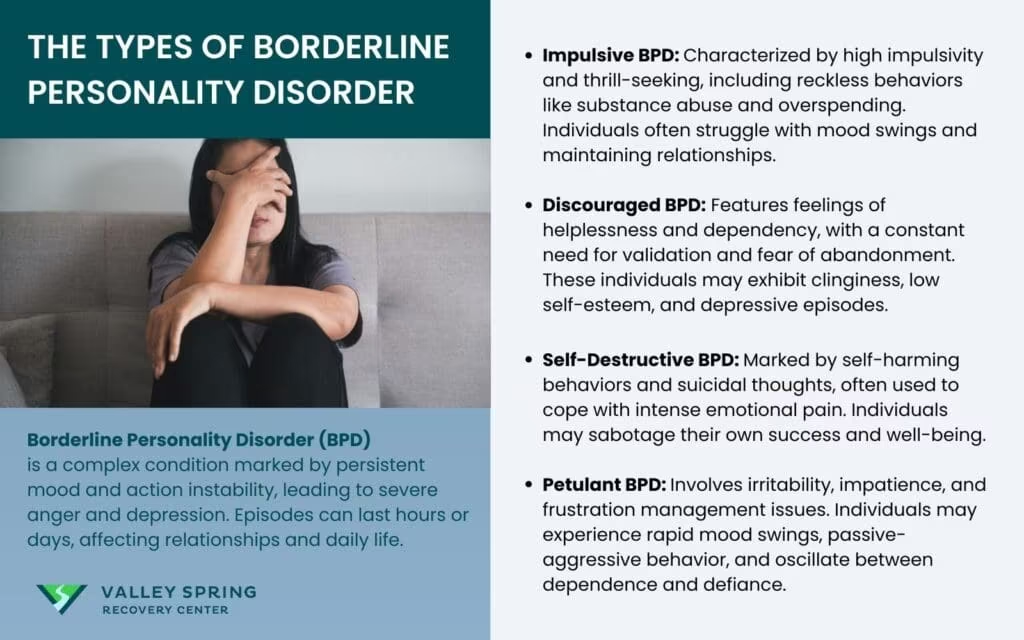
- Impulsive presentation. High impulsivity and thrill-seeking dominate, with reckless activity, substance use, and overspending. Boredom is reported as intolerable, novelty is pursued for relief, and relationships strain under unpredictability.
- Discouraged presentation. Dependent traits dominate. Helplessness, submissiveness, and continuous seeking of validation sit alongside an acute fear of abandonment and an unstable sense of identity. Depressive symptoms and low self-worth are common.
- Self-destructive presentation. Self-harm and suicidal behavior dominate, used to regulate intense internal pain and chronic emptiness rather than to influence anyone. This presentation carries the highest acute risk, and it routes to 988 or 911 and to county psychiatric emergency screening whenever risk becomes imminent.
- Petulant presentation. Irritability, impatience, and low frustration tolerance dominate, with rapid mood shifts and passive-aggressive behavior. The person alternates between dependence on others and defiance of them, and describes feeling chronically misunderstood.
What are the symptoms of borderline personality disorder?
The symptoms of borderline personality disorder are fear of abandonment, unstable relationships, unstable self-image, impulsivity, emotional instability, chronic emptiness, intense anger, and transient stress-related paranoid ideation or dissociation. Each maps to a DSM-5 criterion, and each has a DBT skills target.
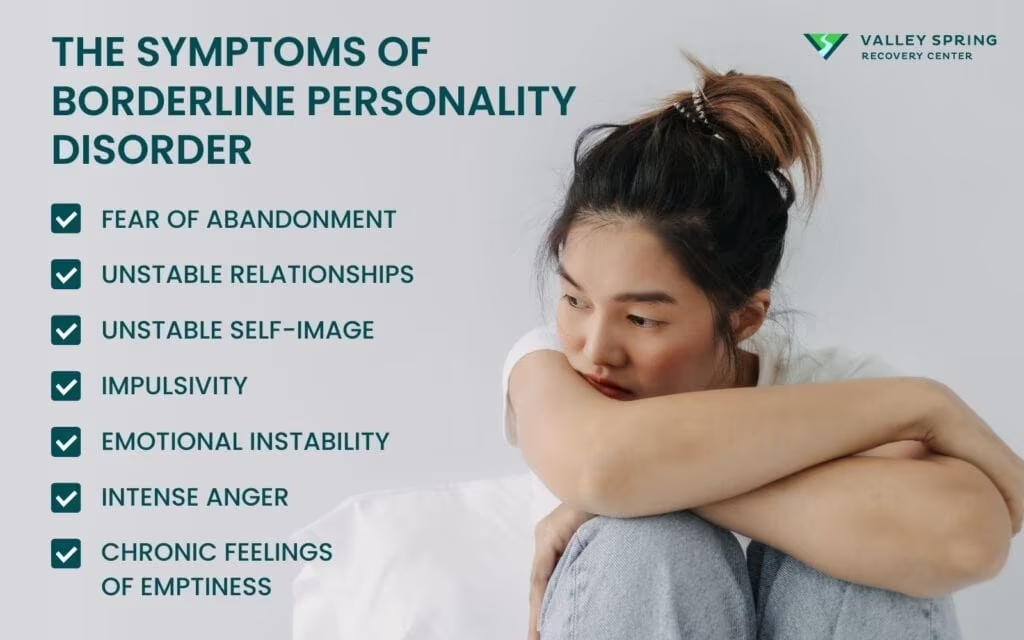
- Fear of abandonment. Frantic efforts to avoid real or imagined abandonment, including repeated contact, monitoring for signs of withdrawal, and distress at small changes of plan.
- Unstable relationships. Relationships alternate between idealization and devaluation, frequently within a single week, and the cycle of rupture and reconciliation repeats across partners, friends, and family.
- Unstable self-image. Goals, values, opinions, and career direction shift abruptly. People describe not knowing who they are when alone, and adopting the identity of whoever is nearest.
- Impulsivity. Impulsive behavior in at least two potentially self-damaging areas, including spending, substance use, reckless driving, binge eating, and sexual risk-taking.
- Emotional instability. Marked mood reactivity, with intense dysphoria, irritability, or anxiety lasting hours rather than days, triggered by interpersonal events.
- Chronic emptiness. A persistent internal emptiness reported as numbness or absence rather than sadness, driving continuous searching for stimulation and validation.
- Intense anger. Anger disproportionate to the situation and difficult to control, with recurrent outbursts followed by shame.
- Suicidal behavior and self-harm. Recurrent suicidal behavior, threats, and self-harm are diagnostic criteria of the disorder. Call or text 988, or dial 911 for immediate danger.
- Stress-related paranoid ideation or dissociation. Transient paranoid thinking or severe dissociation during intense interpersonal stress, resolving as the stress subsides.
What causes borderline personality disorder?
The causes of borderline personality disorder are genetic, environmental, neurobiological, psychological, and social factors acting together. No single cause accounts for the disorder, and the widely used developmental model describes an interaction between a biologically based emotional vulnerability and an invalidating environment.
- Genetic factors. Borderline personality disorder aggregates in families, and family history of the disorder or of other psychiatric conditions raises risk.
- Environmental factors. Childhood trauma, abuse, and neglect are documented frequently in the histories of adults with the diagnosis, and early adversity disrupts the development of emotion regulation.
- Neurobiological factors. Differences in the brain systems supporting emotion regulation, impulse control, and interpersonal processing are reported in research on borderline personality disorder.
- Psychological factors. Heightened sensitivity to emotional stimuli, faster emotional escalation, and slower return to baseline together describe the emotional vulnerability at the center of the developmental model.
- Social factors. Unstable relationships, chronic conflict, and absent support maintain the pattern once it forms, which is why family programming is part of treatment rather than an add-on to it.
What are the risk factors for developing borderline personality disorder?
The risk factors for borderline personality disorder are family history of psychiatric disorders, childhood trauma and abuse, early parental loss or separation, early emotional dysregulation, high impulsivity and emotional sensitivity, and sociocultural stressors. Risk factors raise probability; none of them determines the outcome.
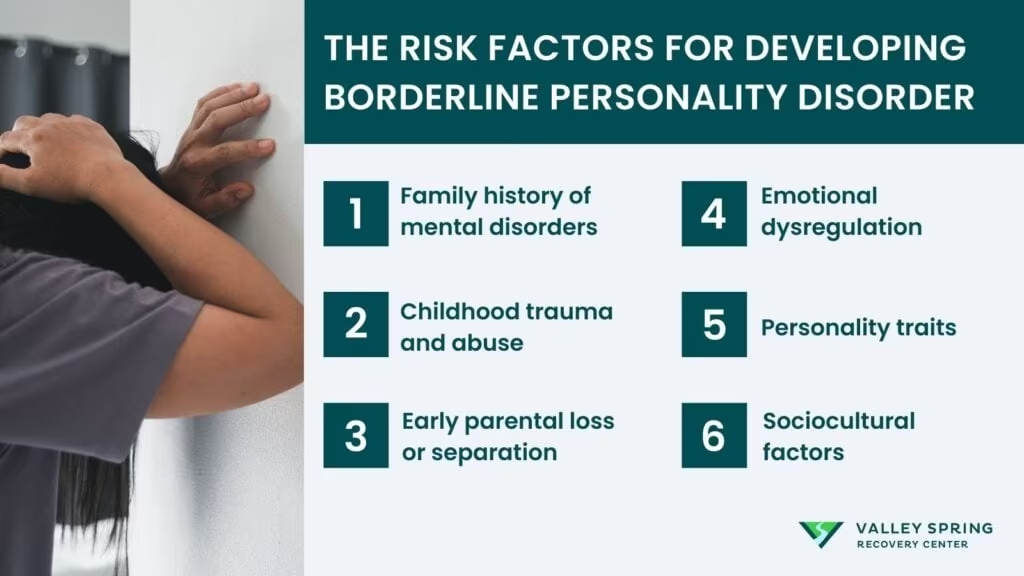
Family history of mood disorders, substance use disorders, or personality disorders raises risk through shared genetic and environmental pathways. Physical, emotional, and sexual abuse and childhood neglect disrupt emotional development and the formation of stable attachment. Early parental loss or prolonged separation produces attachment difficulty and fear of abandonment that persist into adult relationships. Emotional dysregulation visible in childhood, high impulsivity, and heightened emotional sensitivity are the temperamental traits most consistently linked to later diagnosis. Sociocultural context shapes how emotion is expressed, how stress is managed, and whether help is available, which is why socioeconomic instability belongs on the list alongside the developmental factors.
How is borderline personality disorder diagnosed?
Borderline personality disorder is diagnosed by a mental health professional through a clinical assessment covering long-term patterns of emotion, behavior, and interpersonal functioning, supported by structured interview and collateral history. The DSM-5 requires 5 or more of the 9 criteria, present since early adulthood and across contexts rather than confined to one relationship or one bad year. The assessment separates borderline personality disorder from bipolar disorder, post-traumatic stress disorder, attention-deficit hyperactivity disorder, and substance-induced presentations, because all of them share features with it and none is treated the same way. A single episode of emotional instability does not establish the diagnosis, and neither does a self-administered questionnaire.
What are the treatment options for borderline personality disorder?
The treatment options for borderline personality disorder are Dialectical Behavior Therapy, Cognitive Behavioral Therapy, psychodynamic psychotherapy, schema therapy, and symptom-targeted medication. Psychotherapy is the treatment; medication supports it.
- Dialectical Behavior Therapy is the first-line treatment. Marsha M. Linehan built it for borderline personality disorder, pairing weekly individual therapy with a skills group covering mindfulness, distress tolerance, emotion regulation, and interpersonal effectiveness. The randomized trials Linehan and colleagues published in Archives of General Psychiatry in 1991 and 2006 ran the treatment across one year and two years respectively.
- Cognitive Behavioral Therapy identifies and changes the thought patterns and behaviors that drive emotional and interpersonal difficulty. CBT is well established for co-occurring depression and anxiety, and it works inside a DBT-led plan rather than replacing it for this diagnosis.
- Psychodynamic psychotherapy works on the interpersonal patterns and unresolved conflicts underlying emotional difficulty. Mentalization-based treatment and transference-focused psychotherapy are the two psychodynamic approaches developed specifically for borderline personality disorder.
- Schema therapy combines cognitive-behavioral, experiential, and psychodynamic methods to address the maladaptive schemas formed early in life. It is a long-course treatment.
- Medication carries no FDA-approved indication for borderline personality disorder itself. Prescribers target named co-occurring conditions and specific symptoms including depression, anxiety, sleep disruption, and transient perceptual disturbance, and review each prescription against whether it still earns its place.
Can borderline personality disorder be prevented?
Borderline personality disorder cannot be reliably prevented, because genetic, environmental, and psychological factors combine to produce it and no single lever controls the outcome. Early intervention reduces severity. A stable, validating environment in childhood, taught emotion regulation skills, and accessible mental health care each lower the weight of the modifiable risk factors, and adolescents showing early emotional dysregulation benefit from assessment rather than from waiting for the pattern to consolidate. Valley Spring Recovery Center treats adults 18 and older and refers adolescents to providers licensed for that population.
How does borderline personality disorder differ from bipolar disorder, schizophrenia, ADHD, and depression?
Borderline personality disorder overlaps with several conditions at the level of individual symptoms and separates from all of them at the level of pattern, duration, and trigger. The distinctions below are made at psychiatric evaluation, because each one changes the treatment.
- Versus bipolar disorder. Mood shifts in borderline personality disorder last hours and follow interpersonal events. Mood episodes in bipolar disorder last days to weeks and carry sustained change in sleep need, energy, and goal-directed activity.
- Versus schizophrenia. Paranoid thinking and dissociation in borderline personality disorder are transient and stress-linked. Schizophrenia involves sustained psychotic symptoms and impaired reality testing that persist outside interpersonal stress.
- Versus ADHD. Both include impulsivity and attentional difficulty. Attention-deficit hyperactivity disorder does not include fear of abandonment, identity disturbance, or the relationship instability that defines borderline personality disorder.
- Versus depression. Depression produces sustained low mood and loss of interest across weeks. Borderline personality disorder produces rapid mood reactivity around interpersonal events, and the two frequently occur together.
What triggers borderline personality disorder symptoms, and what happens without treatment?
Interpersonal stressors trigger borderline personality disorder symptoms: rejection, perceived abandonment, criticism, and conflict. The trigger is usually small in objective terms and large in emotional consequence, which is the mismatch DBT skills are built to close. Untreated, symptoms persist and compound — relationships fracture, employment destabilizes, co-occurring depression and substance use build, and suicide and self-harm risk stays elevated. Treatment changes that trajectory, and Dialectical Behavior Therapy is the treatment with the strongest randomized evidence behind it. Signs presenting in women include intense emotional reactions, unstable relationships, fear of abandonment, and identity disturbance, and the diagnosis is identified in men and women at similar rates in the Grant 2008 national survey data. Call or text 988, the Suicide and Crisis Lifeline, or dial 911, if risk becomes imminent, and use the psychiatric emergency screening service New Jersey designates in every county for emergency psychiatric evaluation.