


Clinical guide
SBIRT: Screening, Brief Intervention, and Referral to Treatment
Learn how SBIRT combines screening, brief intervention, and referral to treatment across public-health and healthcare settings.
By Paul James Roeser·Reviewed by Noelle Mathew, LCSW, LCADC, CASAC-M·Last reviewed August 25, 2026·5 min read
Published ·Updated
Screening, Brief Intervention, and Referral to Treatment (SBIRT) is a public-health workflow that connects early risk identification with a proportionate response. It is not one addiction test, not a diagnosis, and not an automatic referral to residential or outpatient treatment.
SBIRT can be delivered where people already receive health or community services. The workflow works only when the setting can protect privacy, provide an understandable response, and maintain a realistic referral pathway.
Individual instruments answer narrower questions; SBIRT organizes screening, conversation, and referral around the result.
What is SBIRT?
SBIRT means Screening, Brief Intervention, and Referral to Treatment, a three-part approach for identifying risky substance use and connecting people to the right next step. It is designed for early identification and practical response across healthcare and community programs.
SBIRT does not replace a diagnostic interview. A clinician evaluates symptoms, timing, impairment, medical and psychiatric concerns, and safety when a diagnosis or treatment placement is needed.
Valley Spring Recovery Center admits adults 18 and older only, so a positive screen in a patient under 18 falls outside its scope. Adolescent care is a separate service.
What are the three parts of SBIRT?
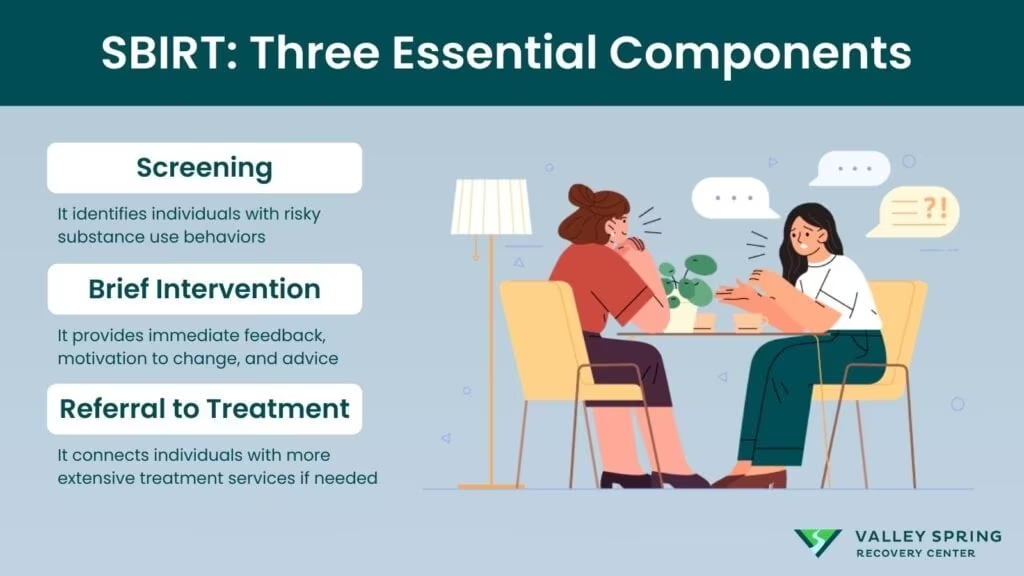
The three parts are screening, brief intervention, and referral to treatment. Each part has a distinct job, and the process can stop after brief intervention when specialty treatment is not indicated.
- Screening asks structured questions that estimate substance-use risk and identify whether more conversation is needed.
- Brief intervention gives clear feedback, explores readiness, discusses safer choices or change, and agrees on a practical next step.
- Referral to treatment connects a person with diagnostic assessment, specialty counseling, medication care, withdrawal management, or another service when the risk and need exceed the setting's scope.
Where is SBIRT delivered?
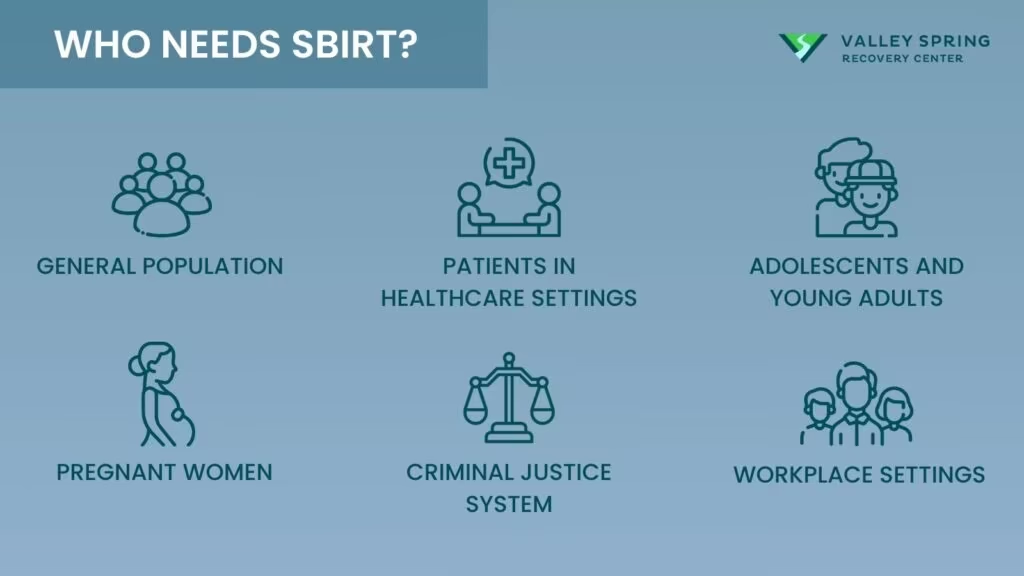
SBIRT is delivered in settings such as primary care, emergency departments, hospitals, community health centers, behavioral-health programs, schools, and public-health services. The setting changes the population, privacy process, staff training, and referral options.
| Setting | Typical opportunity | Required follow-up |
|---|---|---|
| Primary care | Routine health visit or chronic-condition care | Brief counseling and a referral pathway for specialty assessment |
| Emergency care | Substance-related injury, intoxication, or recurrent acute visit | Safety assessment, stabilization, and timely follow-up |
| Community health | Accessible prevention and early intervention | Privacy, culturally responsive communication, and local services |
| School or youth service | Age-appropriate risk identification | Adolescent confidentiality rules and qualified youth services |
Which screening tools can SBIRT use?
SBIRT can use different validated screens because the workflow is broader than the instrument. The responsible professional selects a tool that fits the person's age, substances, setting, language, time, and the action available after the result.
| Instrument | Fit inside SBIRT |
|---|---|
| AUDIT | Alcohol-focused screening for hazardous or harmful drinking patterns |
| ASSIST | Multi-substance screening with substance-specific risk information |
| DAST-10 | Drug-focused screening that excludes alcohol from its core questions |
| CRAFFT | Adolescent and young-adult screening in an age-appropriate service |
AUDIT provides alcohol-focused screening for hazardous or harmful drinking patterns.
ASSIST provides multi-substance screening with substance-specific risk information.
DAST-10 provides drug-focused screening that excludes alcohol from its core questions.
CRAFFT provides adolescent and young-adult screening in an age-appropriate service.
What happens after an SBIRT screen?
A lower-risk result may lead to feedback and a brief intervention, while a higher-risk result may lead to referral for diagnostic assessment or specialty treatment. The response should reflect the result and the person's safety rather than a pass-or-fail label.
Referral is successful only when the receiving service can address the person's needs, eligibility, urgency, transportation, cost, privacy, and language. A referral is a connection to care, not proof that a diagnosis has already been made.
Interactive guide
How is SBIRT different from a screening test?
A screening test is one measurement inside SBIRT; SBIRT is the workflow that interprets the concern, speaks with the person, and connects the next step. Treating SBIRT as a questionnaire loses the intervention and referral functions that give the model its meaning.
A breathalyzer test estimates alcohol concentration from a breath sample, whereas SBIRT evaluates substance-use risk and organizes a clinical response. Current alcohol exposure and the longer pattern of use are separate measurements.
How is SBIRT different from a diagnostic assessment?
SBIRT identifies risk and organizes an early response, while diagnostic assessment determines whether clinical criteria are met and what care is appropriate. A positive SBIRT screen supports further evaluation; it does not establish a substance use disorder by itself.
Can SBIRT include mental-health concerns?
SBIRT can identify a need to discuss mental-health symptoms that affect substance use, safety, or readiness for change. An integrated program may pair its substance-use screen with validated mental-health screening tests, but each result remains a referral signal rather than a diagnosis.
Is SBIRT confidential?
SBIRT uses the privacy rules that apply to the setting and service, including HIPAA and, where applicable, federal substance-use-disorder record protections. Staff should explain what is confidential, what requires consent, and what safety exceptions apply before collecting sensitive information.
What are the limits of SBIRT?
SBIRT cannot replace emergency care, withdrawal management, a full diagnostic assessment, or treatment that the referring setting cannot provide. Its impact also depends on staff training, privacy, patient engagement, culturally responsive communication, and access to an accepting service.
Who should consider an SBIRT program?
Organizations should consider SBIRT when they serve a defined population, can train staff to use a validated screen, and can deliver brief intervention and timely referral. A program should define its age range, substances, documentation, consent process, crisis response, and receiving services before implementation.
Sources & References5ShowHide
- Substance Abuse and Mental Health Services Administration. Screening, Brief Intervention, and Referral to Treatment — Federal overview of SBIRT's three components and its use in healthcare and community settings.
- U.S. Preventive Services Task Force. Unhealthy Alcohol Use in Adolescents and Adults: Screening and Behavioral Counseling Interventions, 2018 — Describes screening followed by brief behavioral counseling for adults and adolescents in primary care.
- National Institute on Drug Abuse. Screening and Assessment Tools Chart — Lists current validated screening instruments and their target populations.
- World Health Organization. ASSIST: The Alcohol, Smoking and Substance Involvement Screening Test — Primary WHO source for a multi-substance screening instrument that may be used within a broader care workflow.
- 42 CFR Part 2. Confidentiality of Substance Use Disorder Patient Records — Federal confidentiality requirements relevant to federally assisted substance-use-disorder records.