


Mental health guide
Bipolar Disorder Symptoms, Types, Causes and Effects Explained
Bipolar disorder is a mood disorder defined by manic and depressive episodes. Crisis steps, DSM-5-TR types, episode symptoms, causes, and treatment.
By Paul James Roeser·Reviewed by Dr. Michael Olla, MD·9 min read
Published ·Updated
Bipolar disorder, called manic depression in older literature, is a mental health condition defined by episodes of mania or hypomania alternating with episodes of depression, separated by periods of stable mood. The DSM-5-TR classifies it among the bipolar and related disorders, between the schizophrenia spectrum and the depressive disorders. Bipolar disorder carries a documented suicide risk. Free, confidential support is available 24/7 from the 988 Suicide & Crisis Lifeline: call or text 988, or chat at 988lifeline.org.
According to the National Institute of Mental Health (NIMH), 2.8% of U.S. adults had bipolar disorder in the past year and 4.4% experience it at some point in their lives. The impairment data set it apart from other mood disorders: 82.9% of adults with past-year bipolar disorder had serious impairment and the remaining 17.1% had moderate impairment, with no mild cases recorded, per NIMH's National Comorbidity Survey Replication figures.
Bipolar disorder is treatable. Mood-stabilizing medication, psychotherapy, and, for severe episodes, electroconvulsive therapy form the evidence-based treatment set, and more than 70% of people show clinical characteristics of the condition before age 25, which makes early recognition the highest-leverage step.
What Should You Do During a Suicidal Crisis?
Contact the 988 Suicide & Crisis Lifeline immediately, by calling 988, texting 988, or chatting at 988lifeline.org, when bipolar disorder brings thoughts of suicide or self-harm. All three channels are free, confidential, and staffed 24 hours a day. Spanish-speaking counselors answer when a caller presses 2 or texts the word AYUDA to 988. Deaf and hard-of-hearing users connect in American Sign Language by dialing 988 from a videophone.
Call 911 when someone has harmed themselves or is in immediate danger. Two further steps protect a person through a crisis: stay with them until help is connected, and reduce access to lethal means in the home. The risk is documented and specific: the suicide rate among people with bipolar disorder runs 20 to 30 times the general population rate, per the StatPearls bipolar disorder review. Crisis support stabilizes the emergency. Treating the disorder itself is what lowers the risk over time, and treatment starts from the diagnostic definition.
What Is Bipolar Disorder?
Bipolar disorder is a mood disorder diagnosed from defined episodes: a manic episode lasting at least 7 consecutive days or requiring hospitalization, a hypomanic episode lasting at least 4 consecutive days, and a major depressive episode lasting at least 2 weeks, per the DSM-5-TR criteria summarized in the StatPearls bipolar disorder review.
The episode structure is the diagnostic core. Mood in bipolar disorder does not drift; it shifts into a sustained state with its own energy level, sleep pattern, and judgment profile, then returns. That structure separates the condition from ordinary mood variation and from the hour-to-hour instability of personality disorders. Which episodes a person has, and in what combination, determines the type.

Clinical perspective
The hardest part of treating bipolar disorder usually isn't the depressive episodes — those get recognized, and people often seek help for them. It's the hypomania, because it can feel like finally having energy, finally being productive, and nobody wants to give that up. Recognizing that pattern before it escalates, not after, is the harder and more useful skill to build.
What Are the Types of Bipolar Disorder?
The DSM-5-TR's bipolar and related disorders chapter names bipolar I disorder, bipolar II disorder, cyclothymic disorder, and the other specified and unspecified categories, alongside substance- or medication-induced and medical-condition presentations. Each of the 4 clinically diagnosed types has a defining episode pattern, with lifetime prevalence where the StatPearls review reports one:
| Type | Defining episode pattern | Lifetime prevalence |
| Bipolar I disorder | At least 1 manic episode lasting 7 or more days or requiring hospitalization; depressive episodes are common but not required | 0.6% |
| Bipolar II disorder | At least 1 hypomanic episode lasting 4 or more days plus at least 1 major depressive episode; no full manic episode | 0.4% |
| Cyclothymic disorder | 2 or more years of hypomanic and depressive symptoms that never meet full episode criteria (1 year in people 18 or younger) | 0.4% to 1% |
| Other specified or unspecified | Bipolar features that do not fit the other 3 patterns, including short-duration hypomania | 1.4% (subthreshold bipolar) |
Every type is defined by its episodes, so recognizing the two episode poles, mania and depression, is the practical skill. The manic pole comes first.
What Are the Symptoms of a Manic Episode?
A manic episode is a period of elevated, expansive, or irritable mood with increased energy lasting at least 7 days, plus 3 or more of 7 defined symptoms, or 4 or more when the mood is only irritable, per the DSM-5-TR.
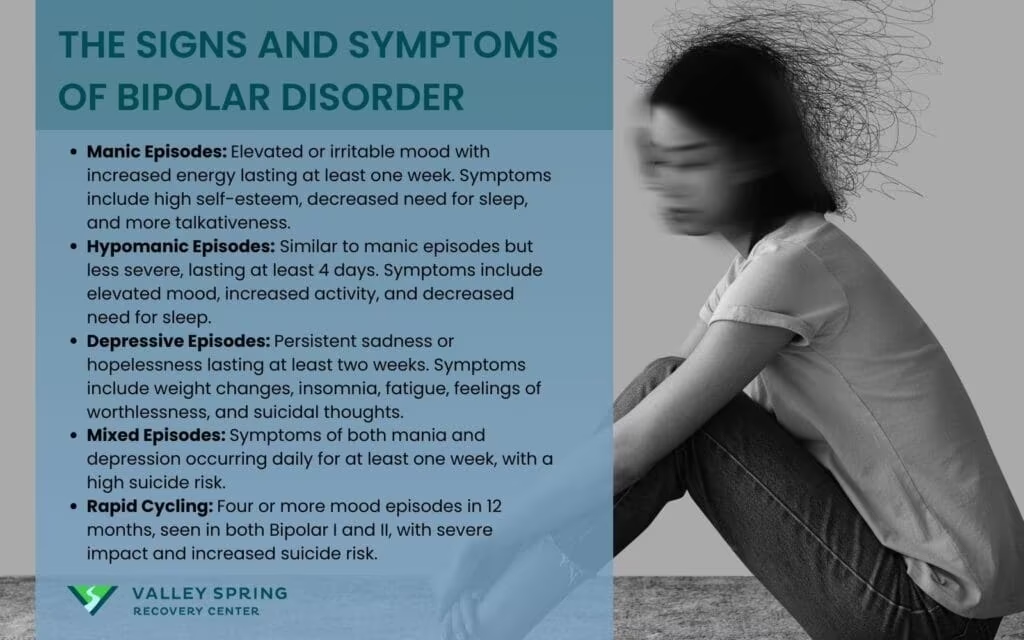
The 7 defined manic symptoms:
- Inflated self-esteem: grandiosity out of proportion to circumstances.
- Decreased need for sleep: feeling rested after 3 hours or less.
- Increased talkativeness: pressured speech that is hard to interrupt.
- Racing thoughts: flight of ideas that jump between topics.
- Distractibility: attention pulled to irrelevant stimuli.
- Increased goal-directed activity: bursts of projects, plans, or physical restlessness.
- Excessive involvement in high-risk activities: spending sprees, reckless driving, or impulsive decisions with painful consequences.
A hypomanic episode carries the same symptom list at lower intensity for at least 4 days, without marked impairment, hospitalization, or psychosis. Full mania escalates the seventh symptom into sustained risk-taking behavior whose financial and legal consequences outlast the episode. Severe manic episodes reach psychosis in some people, producing delusions or hallucinations that require urgent psychiatric care. The opposite pole looks entirely different.
What Are the Symptoms of a Depressive Episode?
A depressive episode in bipolar disorder is 5 or more of 9 depressive symptoms during the same 2-week period, with at least one being depressed mood or loss of interest and pleasure, the same DSM-5-TR criteria set that defines a major depressive episode.
The symptom list runs from low mood, anhedonia, and fatigue through sleep and appetite change, impaired concentration, worthlessness, and recurrent thoughts of death. Bipolar depressive episodes are symptom-identical to major depression, which is why depressive-first presentations are misdiagnosed until a manic or hypomanic episode appears, and why the two conditions take different medications. The DSM-5-TR also defines a mixed-features specifier, in which manic and depressive symptoms occur together; mixed states combine despair with energy and concentrate suicide risk. What produces that vulnerability is a combination of inheritance and environmental stress.
What Causes Bipolar Disorder?
Bipolar disorder develops from combined genetic and environmental contributions rather than a single cause: heritability is well established, with at least 30 genes implicated in increased risk, per the StatPearls review, and stressful life events precipitate episodes in people who carry the vulnerability.
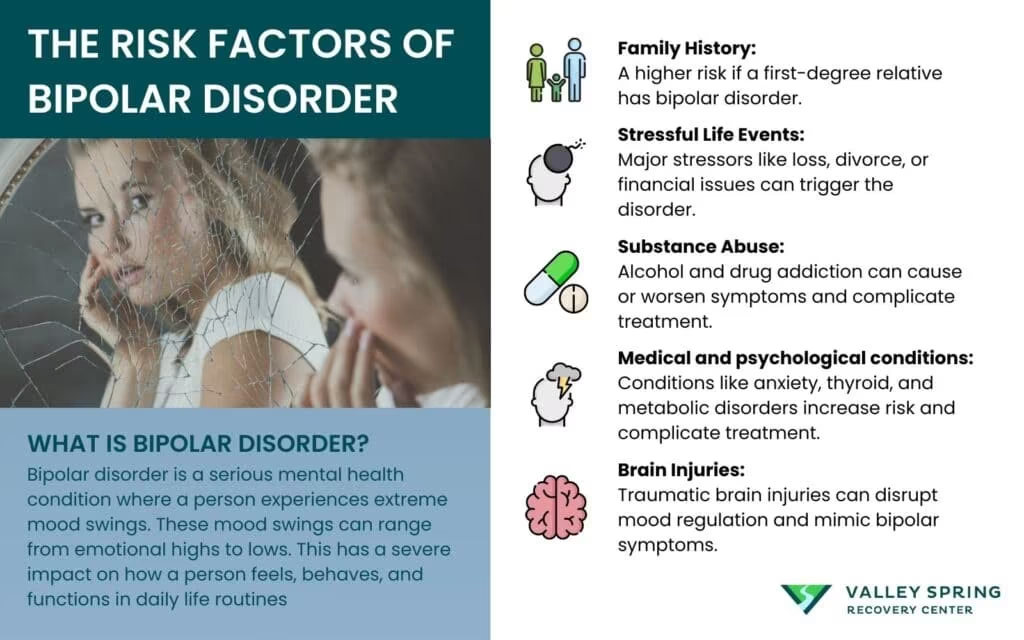
Three risk pathways are documented. First, family history: a first-degree relative with bipolar disorder raises a person's own risk, the pattern behind the heritability estimates. Second, life stress and disrupted routines: major losses, conflict, and sleep disruption precede episode onset in people with the underlying condition. Third, substance use: stimulants and other drugs precipitate mood episodes, interfere with mood-stabilizing medication, and co-occur with bipolar disorder at high rates, a two-way relationship covered in full on the drug addiction page. Causes explain vulnerability; diagnosis establishes whether the condition is present.
How Is Bipolar Disorder Diagnosed?
Bipolar disorder is diagnosed through a clinical interview that maps a person's episode history against DSM-5-TR criteria, a medical work-up to exclude thyroid disease and substance effects, and mood tracking over time.
Two specifiers sharpen the diagnosis. Rapid cycling means 4 or more distinct mood episodes within 12 months and occurs in both bipolar I and bipolar II. Mixed features mean manic and depressive symptoms in the same episode. The onset data drives screening priorities: clinical characteristics appear before age 25 in more than 70% of people who develop the condition, per the StatPearls review, with onset peaks at ages 15 to 24 and 45 to 54. NIMH's bipolar disorder statistics extend the picture into adolescence: 2.9% of U.S. adolescents have had bipolar disorder at some point in their lives, per the National Comorbidity Survey Adolescent Supplement, so screening reaches into the teen years. An accurate diagnosis, including the type and specifiers, is what determines the treatment plan.
Psychiatry distinguishes bipolar disorder from unipolar depression, substance-induced mood symptoms, ADHD, and medical causes by evaluating episode duration, sleep and energy changes, medication exposure, substance use, and longitudinal history.
How Is Bipolar Disorder Treated?
Bipolar disorder is treated with mood-stabilizing medication as the foundation, psychotherapy alongside it, and electroconvulsive therapy (ECT) for severe or treatment-resistant mania and as a first-line option in bipolar depression with psychotic features or high suicide risk, per the StatPearls review.
The medication evidence names specific agents: lithium and valproate are the established mood stabilizers, and the atypical antipsychotics aripiprazole, quetiapine, risperidone, and olanzapine are first-line options for acute episodes, per the StatPearls review. Antidepressants are prescribed together with a mood stabilizer rather than alone in bipolar depression. Psychotherapy adds relapse protection: cognitive behavioral therapy targets the thought patterns that deepen episodes, psychoeducation teaches early-warning-sign recognition, and family-focused approaches reduce the interpersonal stress that precedes relapse. Regular sleep, consistent routines, and abstinence from destabilizing substances support every medication plan. Valley Spring Recovery Center delivers outpatient treatment for bipolar disorder in Norwood, New Jersey, through weeknight IOP and outpatient scheduling. Because treatment differs sharply between bipolar disorder and the conditions it resembles, the distinctions matter clinically, not just academically.
How Is Bipolar Disorder Different From Related Conditions?
Bipolar disorder is distinguished by its episode structure: mood states arrive as defined episodes lasting days to weeks, which separates it from the hour-to-hour shifts of borderline personality disorder, the persistent psychosis of schizophrenia, and depression without mania.
Three boundaries cover most diagnostic confusion. Borderline personality disorder produces rapid emotional shifts within hours, tied to interpersonal triggers, while bipolar episodes are sustained and self-contained. Schizophrenia involves persistent psychotic symptoms independent of mood state; when full mood episodes and persistent psychosis co-occur, clinicians assess for schizoaffective disorder. Unipolar major depression matches the bipolar depressive pole exactly but never includes mania or hypomania, and antidepressant treatment without a mood stabilizer is the misdiagnosis cost.
What Are the Most Common Questions About Bipolar Disorder?
Common questions: genetics, episode length, cure, substances, disability status, and rapid cycling.
Is Bipolar Disorder Genetic?
Genetics carry substantial weight: heritability is well established, at least 30 genes are implicated, and a first-degree relative with the condition raises risk, per the StatPearls review. Family history warrants early screening, not a predetermined outcome.
How Long Do Bipolar Episodes Last?
The DSM-5-TR duration floors are 7 days for a manic episode, 4 days for a hypomanic episode, and 2 weeks for a depressive episode. Untreated episodes run longer, and treatment shortens them.
Can Bipolar Disorder Be Cured?
No cure exists. Bipolar disorder is a long-term condition managed the way other chronic illnesses are managed: mood-stabilizing medication, psychotherapy, and routine protection produce sustained periods of stable mood for people who continue treatment.
Do Drugs or Alcohol Trigger Manic Episodes?
Yes. Stimulants and other substances precipitate mood episodes and interfere with mood stabilizers. Substance use disorders co-occur with bipolar disorder at high rates, and integrated treatment addresses both conditions together rather than in sequence.
Is Bipolar Disorder a Disability?
Yes, when it substantially limits major life activities. Bipolar disorder qualifies under the Americans with Disabilities Act, which obligates covered employers to provide reasonable accommodations, and 82.9% of past-year cases involve serious impairment per NIMH.
What Is Rapid Cycling?
Rapid cycling is a DSM-5-TR specifier meaning 4 or more distinct mood episodes within 12 months. It occurs in both bipolar I and bipolar II disorder and signals the need for a medication review.
Sources & References3ShowHide
- NIMH — Bipolar Disorder Statistics — Past-year prevalence 2.8% of U.S. adults; lifetime 4.4%; serious impairment 82.9%, moderate 17.1%, no mild cases; lifetime adolescent prevalence 2.9%. National Comorbidity Survey Replication and Adolescent Supplement.
- Jain A, Mitra P. Bipolar Disorder. StatPearls, NCBI Bookshelf (updated February 20, 2023) — Lifetime spectrum prevalence 2.4% (BD-I 0.6%, BD-II 0.4%, cyclothymia 0.4-1%); manic episode 7+ days, hypomanic 4+ days, depressive 2 weeks, cyclothymia 2 years, rapid cycling 4+ episodes/12 months; onset before 25 in >70%; suicide rate 20 to 30 times the general population; first-line lithium, valproate, and atypical antipsychotics.
- American Psychiatric Association. Diagnostic and Statistical Manual of Mental Disorders, Fifth Edition, Text Revision (DSM-5-TR). Washington, DC: American Psychiatric Publishing, 2022 — Episode duration criteria, mixed-features and rapid-cycling specifiers, and the 5-of-9 major depressive episode standard. Print reference.