


Mental health guide
Borderline Personality Disorder: Criteria, Causes, Treatment
Borderline personality disorder affects 1.4% of U.S. adults yearly. The nine DSM-5-TR criteria, causes, diagnosis, bipolar distinction, treatment evidence.
By Paul James Roeser·Reviewed by Dr. Michael Olla, MD·10 min read
Published ·Updated
Borderline personality disorder is a mental health condition defined by pervasive instability in emotion, self-image, and relationships, together with marked impulsivity. The DSM-5-TR places it among the Cluster B personality disorders and requires 5 or more of 9 criteria for diagnosis.
Prevalence figures depend on where the counting happens. An estimated 1.4% of U.S. adults had borderline personality disorder in the past year, per the National Institute of Mental Health's National Comorbidity Survey Replication data, and Chapman, Jamil, Fleisher, and Torrico's StatPearls review records 0.7% to 2.7% in the general population, 6% in primary care, 11% to 12% in outpatient psychiatric clinics, and 22% among psychiatric inpatients.
Borderline personality disorder responds to treatment, and the outcome data is specific: the same review records mean remission rates of 60% across 5- to 15-year follow-up. Suicide risk is elevated in this population.
Where Does Someone in a Borderline Personality Disorder Crisis Get Help First?
Contact the 988 Suicide & Crisis Lifeline the moment thoughts of suicide or self-harm arrive, by calling 988, texting 988, or chatting at 988lifeline.org, and call 911 when a person faces immediate physical danger. All three 988 channels are free, confidential, and staffed 24 hours a day.
Spanish-speaking counselors answer when a caller presses 2 or texts AYUDA to 988, and deaf and hard-of-hearing users connect in American Sign Language by dialing 988 from a videophone. Chat is the channel that works when speaking aloud is unsafe or impossible, which is why all three routes belong in a written safety plan rather than one.
The risk figures and the recovery figures both belong in the same paragraph. People with borderline personality disorder have a significantly higher rate of self-harm and suicidal thoughts and behavior than the general population, and anyone thinking of harming themselves needs help right away, per NIMH's borderline personality disorder publication. The suicide rate among people with the diagnosis is 5.9%, against a 1.4% suicide rate among people with other personality disorders, and one study found more than 75% of people with borderline personality disorder had a suicide attempt, per StatPearls. Against that, mean remission rates reach 60% over 5- to 15-year follow-up, and untreated symptoms are themselves a documented risk factor, which makes early treatment the intervention that changes both numbers. What treatment addresses is a defined criteria set.
What Is Borderline Personality Disorder?
Borderline personality disorder is a Cluster B personality disorder diagnosed when 5 or more of 9 DSM-5-TR criteria are present, spanning emotional instability, unstable self-image, unstable relationships, impulsivity, and recurrent self-harm or suicidal behavior, per the StatPearls borderline personality disorder review.
Three features distinguish the clinical picture. Affective instability is reactive and brief: mood fluctuates through the day in response to circumstances and interactions, with episodes of intense dysphoria, anxiety, or irritability measured in hours. Chronic emptiness is described by patients as hopelessness, loneliness, and isolation rather than as sadness. Splitting, the shift between viewing another person as entirely good and entirely bad, drives the relationship instability that brings people to treatment. Features start emerging in adolescence, and impulsive and dangerous behaviors increase through early adulthood, which is why diagnosis rests on longitudinal observation rather than one appointment. The 9 criteria set the threshold.

Clinical perspective
Borderline personality disorder has one of the worst reputations of any diagnosis in psychiatry, and very little of that reputation is earned. What's actually happening is someone feeling emotion faster and harder than most people, with a nervous system that was never taught how to bring it back down — and that responds remarkably well to the right combination of skills-based therapy and, sometimes, medication for the symptoms underneath it.
What Are the 9 Criteria for Borderline Personality Disorder?
The DSM-5-TR lists 9 criteria for borderline personality disorder, and 5 or more must be present. The criteria cover abandonment fear, relationship instability, identity disturbance, impulsivity, self-harm and suicidal behavior, affective instability, emptiness, anger, and transient dissociation or paranoid ideation.
The 9 DSM-5-TR criteria:
- Frantic efforts to avoid real or imagined abandonment.
- Unstable, intense relationships alternating between idealization and devaluation.
- Identity disturbance, meaning a markedly unstable self-image or sense of self.
- Impulsivity in 2 or more areas that are self-damaging.
- Recurrent suicidal behavior, gestures, or threats, or self-harming behavior.
- Affective instability with intense episodic dysphoria, anxiety, or irritability lasting hours to days.
- Chronic feelings of emptiness.
- Inappropriate, intense anger or difficulty controlling anger.
- Transient, stress-related paranoid ideation or severe dissociative symptoms.
Nonsuicidal self-harm and suicidal behavior are interrelated, and self-harming behavior is itself a risk factor for future suicide, per StatPearls, which is why criterion 5 changes the urgency of an assessment rather than adding one more box to it. The share of people who meet that threshold depends on where the counting happens.
How Common Is Borderline Personality Disorder?
An estimated 1.4% of U.S. adults had borderline personality disorder in the past year, and prevalence rises from 0.7% to 2.7% in the general population to 22% among psychiatric inpatients, per NIMH's personality disorder statistics and the StatPearls review. The figures by setting:
| Population or setting | Prevalence of borderline personality disorder | Source |
| U.S. adults, past year | 1.4% | NIMH (Lenzenweger et al., 2007; NCS-R 2001-2003) |
| General population | 0.7% to 2.7% | StatPearls |
| Primary care | 6% | StatPearls |
| Outpatient psychiatric clinics | 11% to 12% | StatPearls |
| Psychiatric inpatients | 22% | StatPearls |
Any personality disorder reaches 9.1% past-year prevalence among U.S. adults, per NIMH, so borderline personality disorder accounts for about 15% of the personality-disorder total NIMH reports. Rates by sex are close in the general population, at 3% in women against 2.4% in men, and the clinical presentation differs: men with borderline personality disorder are more impaired, impulsive, and aggressive than women with the diagnosis, and carry higher risk of dying by suicide, per StatPearls. What produces the disorder is a combination of inheritance, environment, and stress biology.
What Causes Borderline Personality Disorder?
Borderline personality disorder develops from 3 documented contributors: a heritable vulnerability estimated at approximately 40%, childhood and family adversity, and a stress-response biology in which cortical control over the amygdala is impaired, per the StatPearls review. No single gene or variant has been identified as causative.
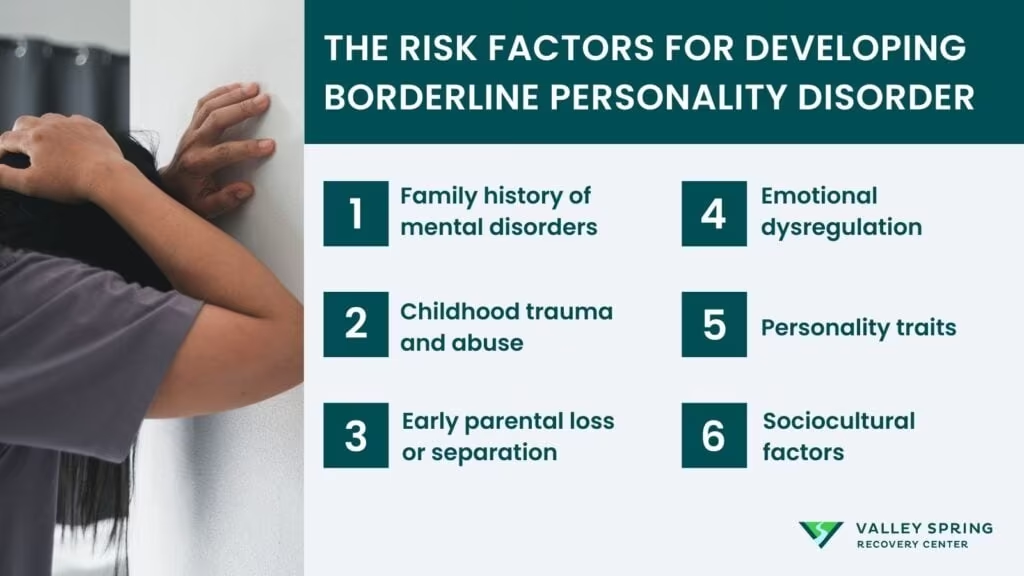
The 3 contributors:
- Heritable vulnerability: heritability is estimated at approximately 40%, and Swedish twin research found familial association highest in monozygotic twins, then dizygotic twins, then full siblings, then half-siblings. Twin designs overestimate genetic effect where twins share one family environment, which is the stated limit on that figure.
- Childhood and family adversity: low socioeconomic status, family adversity, maternal psychopathology, parental substance use, low warmth combined with harsh punishment, child abuse, and neglect each raise risk. None of these factors is specific to borderline personality disorder, so adversity alone predicts nothing on its own.
- Stress-response and emotion-regulation biology: disruption of the hypothalamic-pituitary-adrenal axis with chronic cortisol elevation affects emotional regulation and impulse control. Neuroimaging identifies differences in the amygdala, hippocampus, and medial temporal lobes, cortical moderation of limbic activity is impaired so behavior runs bottom-up, and patients misattribute negative emotions to neutral facial expressions more than control groups do.
Cause is multifactorial and probabilistic. Diagnosis is a defined procedure with a differential attached.
How Is Borderline Personality Disorder Diagnosed?
Borderline personality disorder is diagnosed through longitudinal clinical observation confirming 5 or more of the 9 DSM-5-TR criteria, supported by the 10-item McLean Screening Instrument, where scores of 7 or greater show good sensitivity and specificity, per the StatPearls review.
Timing and sequence carry weight in this diagnosis. Personality disorders are assessed when other psychiatric conditions are quiescent, because an active mood episode distorts the picture the criteria are meant to capture. The Zanarini rating scale is a second common screening tool, and the Minnesota Multiphasic Personality Inventory-2 and the Rorschach Perceptual Thinking Index verify the presence of a personality disorder without being necessary where sufficient history exists. The medical differential is broad: head trauma, cerebrovascular accident, central nervous system neoplasms, epilepsy, neurosyphilis, multiple sclerosis, endocrine disorders, heavy metal poisoning, and HIV-associated neurocognitive disorders all produce personality change. Persistent substance use produces symptoms that mimic borderline personality disorder, which is why a substance history and a period of stability precede the diagnosis in anyone with alcohol use disorder. One psychiatric boundary accounts for most misdiagnosis.
How Does Borderline Personality Disorder Differ From Bipolar Disorder?
Borderline personality disorder mood shifts are reactive and brief, measured in hours, while bipolar disorder mood episodes are sustained across days to weeks and shift with less dependence on interpersonal events, per the StatPearls review.
Three further boundaries complete the differential. Bipolar disorder is separated on episode duration and on the presence of the neurovegetative changes that define mania and depression. Dissociative identity disorder involves 2 or more distinct personality states with enduring patterns of behavior, while identity disturbance in borderline personality disorder is transient and fluctuating. Separation anxiety disorder shares the fear of abandonment, and a borderline personality disorder diagnosis additionally requires problems with impulsivity, identity, and interpersonal functioning. Narcissistic personality disorder sits in the same Cluster B group, and StatPearls records a strong association between borderline personality disorder and all other personality disorders, so co-occurrence is the expectation rather than the exception. PTSD belongs on the same list of frequently co-occurring conditions. A confirmed diagnosis routes into a treatment framework where the evidence is unusually lopsided.
How Is Borderline Personality Disorder Treated?
Borderline personality disorder is treated with psychotherapy as the first-line intervention, with documented efficacy for dialectical behavior therapy, mentalization-based treatment, transference-focused psychotherapy, and schema therapy, and no evidence supports pharmacotherapy for the core symptoms, per the StatPearls review.
Dialectical behavior therapy was developed specifically for people with borderline personality disorder, and cognitive behavioral therapy addresses the inaccurate perceptions that drive the interpersonal cycle, per NIMH. Across the four evidence-supported psychotherapies, clinical trials show improved psychosocial functioning and reduced borderline personality disorder symptom severity, and StatPearls records that psychotherapy may reduce self-harm and depression. The medication picture is the sharpest finding in the literature: no evidence establishes pharmacotherapy as efficacious for core symptoms, and up to 96% of people with the diagnosis receive at least 1 psychotropic medication, so prescribing targets specific symptoms and co-occurring conditions rather than the disorder itself. NIMH names major depression, bipolar disorder, ADHD, PTSD, anxiety disorders, substance use disorders, and eating disorders among those co-occurring conditions. NIMH also notes that therapy for caregivers and family members is often helpful, because relatives unintentionally act in ways that worsen symptoms. Mean remission rates of 60% over 5- to 15-year follow-up are the reason treatment is worth starting early rather than waiting for a crisis. Borderline personality disorder treatment at the IOP and outpatient levels applies these psychotherapies in Norwood, New Jersey.
What Are the Most Common Questions About Borderline Personality Disorder?
Common questions: triggers, subtypes, remission, heredity, medication, and untreated illness.
What Triggers Borderline Personality Disorder Symptoms?
Real or imagined abandonment, rejection, and interpersonal conflict are the documented triggers. Mood shifts in response are measured in hours, per StatPearls, which distinguishes them from the sustained course of bipolar mood episodes.
Are There Four Types of Borderline Personality Disorder?
No. The DSM-5-TR recognizes no subtypes of borderline personality disorder. Diagnosis rests on which 5 or more of the 9 criteria a person meets, and popular four-type schemes come from theoretical models outside the DSM.
Does Borderline Personality Disorder Go Away?
Remission is the documented pattern with treatment: mean remission rates reach 60% across 5- to 15-year follow-up, per StatPearls. Features emerge in adolescence, and impulsive behaviors peak through early adulthood before declining.
Is Borderline Personality Disorder Hereditary?
Heritability is estimated at approximately 40%, with familial association highest among identical twins, per StatPearls. No causative gene or single-nucleotide variant has been identified, and childhood adversity and stress biology carry the remainder.
Do Medications Treat Borderline Personality Disorder?
No evidence establishes pharmacotherapy as efficacious for core symptoms, and up to 96% of patients receive at least 1 psychotropic, per StatPearls. NIMH states medication is not a first-line treatment for this diagnosis.
What Happens if Borderline Personality Disorder Goes Untreated?
Untreated and severe symptoms, poor functioning, and comorbid major depressive disorder are the recorded suicide risk factors, per StatPearls. Psychotherapy reduces symptom severity and self-harm. Route suicidal thoughts to 988 by call, text, or chat.
Sources & References4ShowHide
- NIMH — Personality Disorders Statistics — Past-year prevalence: any personality disorder 9.1% of U.S. adults, borderline personality disorder 1.4%. Source: Lenzenweger MF, Lane MC, Loranger AW, Kessler RC. DSM-IV personality disorders in the National Comorbidity Survey Replication. Biol Psychiatry. 2007;62(6):553-64. Survey conducted February 2001 to April 2003, adults 18 and older.
- Chapman J, Jamil RT, Fleisher C, Torrico TJ. Borderline Personality Disorder. StatPearls, NCBI Bookshelf (updated April 20, 2024) — Prevalence 0.7% to 2.7% general population, 6% primary care, 11% to 12% psychiatric outpatients, 22% psychiatric inpatients; women 3% versus men 2.4%. Nine DSM-5-TR criteria with 5 or more required. Suicide rate 5.9% versus 1.4% for other personality disorders; in one study more than 75% of patients had suicide attempts; nonsuicidal self-harm is a risk factor for future suicide; men with BPD are more impaired, impulsive and aggressive and carry higher suicide risk. Mean remission rates of 60% over 5- to 15-year follow-up. Heritability approximately 40%, familial association highest in monozygotic twins then dizygotic then full siblings then half-siblings, no causative gene identified; environmental risks include low socioeconomic status, family adversity, maternal psychopathology, parental substance use, low warmth with harsh punishment, child abuse and neglect, none disorder-specific. HPA-axis disruption with chronic cortisol elevation; amygdala, hippocampus and medial temporal lobe differences; impaired top-down cortical moderation of limbic activity; misattribution of negative emotion to neutral faces. Affective instability lasts hours and rarely more than a few days, distinguishing it from bipolar episodes. McLean Screening Instrument 10 items, cutoff 7 or greater; Zanarini rating scale; MMPI-2 and Rorschach Perceptual Thinking Index not generally necessary. Differential includes dissociative identity disorder, separation anxiety disorder, medical causes of personality change, and persistent substance use. Efficacy documented for MBT, DBT, TFP and schema therapy; no evidence pharmacotherapy is efficacious for core symptoms while up to 96% receive at least 1 psychotropic.
- NIMH — Borderline Personality Disorder — People with borderline personality disorder have a significantly higher rate of self-harm and suicidal thoughts and behavior than the general population, and anyone thinking of harming themselves needs help right away; crisis guidance is to call or text 988 or chat at 988lifeline.org. Dialectical behavior therapy was developed specifically for borderline personality disorder; cognitive behavioral therapy named; therapy for caregivers and family members described as often helpful, with more research needed; medication is not a first-line treatment. Co-occurring conditions named: depression, bipolar disorder, conduct problems, ADHD, PTSD, anxiety disorders, substance use disorders, eating disorders, diabetes and obesity.
- American Psychiatric Association. Diagnostic and Statistical Manual of Mental Disorders, Fifth Edition, Text Revision (DSM-5-TR). Washington, DC: American Psychiatric Publishing, 2022 — The nine borderline personality disorder criteria and the 5-of-9 threshold; Cluster B classification; the absence of any recognized borderline personality disorder subtypes. Print reference.