


Mental health guide
OCD Symptoms, Types, Root Causes and Effects Explained
OCD pairs intrusive obsessions with time-consuming compulsive rituals. Crisis steps, symptom dimensions, causes, Y-BOCS diagnosis, ERP and SSRI evidence.
By Paul James Roeser·Reviewed by Dr. Michael Olla, MD·8 min read
Published ·Updated
Obsessive-compulsive disorder (OCD) is a mental health condition defined by obsessions, intrusive unwanted thoughts, images, or urges that cause marked distress, and compulsions, repetitive behaviors or mental acts performed to neutralize that distress. The DSM-5-TR requires that the symptoms consume more than 1 hour a day or cause clinically significant distress or impairment. OCD carries a documented association with suicidal thoughts and behaviors. Free, confidential support is available 24/7 from the 988 Suicide & Crisis Lifeline: call or text 988, or chat at 988lifeline.org.
According to the National Institute of Mental Health (NIMH), 1.2% of U.S. adults had OCD in the past year, women at 1.8% and men at 0.5%, and lifetime prevalence is 2.3%. The impairment profile is heavy: 50.6% of adults with past-year OCD had serious impairment and a further 34.8% had moderate impairment.
OCD is treatable. Exposure and response prevention, a specialized form of cognitive behavioral therapy, and SSRI medication at OCD-specific doses form the evidence-based first line, and the boundary between everyday intrusive thoughts and the disorder is defined, not vague.
What Should You Do During a Suicidal Crisis?
Contact the 988 Suicide & Crisis Lifeline immediately, by calling 988, texting 988, or chatting at 988lifeline.org, when OCD brings thoughts of suicide or self-harm. All three channels are free, confidential, and staffed 24 hours a day. Spanish-speaking counselors answer when a caller presses 2 or texts the word AYUDA to 988. Deaf and hard-of-hearing users connect in American Sign Language by dialing 988 from a videophone.
Call 911 when someone has harmed themselves or is in immediate danger. Two further steps protect a person through a crisis: stay with them until help is connected, and reduce access to lethal means in the home. The risk is documented in its own right: the association between OCD and suicidal thoughts and behaviors remains significant even after accounting for depressive symptoms, per the StatPearls OCD review. Crisis support stabilizes the emergency. Treating the disorder lowers the risk over time, and treatment starts from what the diagnosis requires.
What Is OCD?
OCD is a disorder of obsessions and compulsions that consume more than 1 hour a day or cause clinically significant distress or impairment, per the DSM-5-TR, which classifies it in its own chapter, the obsessive-compulsive and related disorders, after moving it out of the anxiety disorders in 2013.
The boundary matters because intrusive experiences are common while the disorder is not: 28.2% of U.S. adults report obsessions or compulsions at some point in their lives, yet 2.3% meet lifetime criteria for OCD, per Ruscio and colleagues' analysis of the National Comorbidity Survey Replication. The difference is time, distress, and loss of control, and it starts with the obsession side of the loop.

Clinical perspective
'OCD' gets used casually to describe being tidy, and it undersells what the condition actually does to someone's day. The compulsions aren't a preference — they're the only thing that turns the volume down on an intrusive thought that won't stop. Effective treatment respects how exhausting that cycle is, and it usually combines medication with a specific kind of exposure-based therapy, not willpower.
What Are Obsessions?
Obsessions are recurrent, intrusive thoughts, images, or urges that a person experiences as unwanted and tries to suppress or neutralize, per the DSM-5-TR. Among adults with 12-month OCD, obsessions occupy an average of 5.9 hours per day, per Ruscio and colleagues.
Four symptom dimensions are documented: contamination, harmful thoughts and doubt, forbidden thoughts (sexual, religious, or aggressive), and symmetry and exactness, per the StatPearls review. The defining feature across every dimension is that the thought conflicts with the person's values, which is why obsessions generate guilt and shame rather than intent. The thought alone is only half the disorder; the response to it completes the loop.
What Are Compulsions?
Compulsions are repetitive behaviors or mental acts performed in response to an obsession, aimed at reducing distress or preventing a feared event, without a realistic connection to the outcome, per the DSM-5-TR. Among adults with 12-month OCD, compulsions consume an average of 4.6 hours per day, per Ruscio and colleagues.
Each symptom dimension pairs with a documented compulsion pattern, because the two sides travel together:
| Symptom dimension | Paired compulsion |
| Contamination | Washing and cleaning rituals |
| Harm and doubt | Checking locks, appliances, and completed tasks; among people with OCD, 79.3% report checking, the most common symptom (Ruscio et al.) |
| Symmetry and exactness | Ordering, arranging, and repeating until it feels right |
| Taboo thoughts (sexual, religious, aggressive) | Mental rituals: silent counting, praying, reviewing, and reassurance seeking |
| Fear of discarding (now hoarding disorder) | Hoarding behaviors, reported by 62.3% of people with OCD; persistent hoarding is now the separate DSM-5-TR diagnosis of hoarding disorder |
The compulsion buys minutes of relief and reinforces the obsession, which is the mechanism the whole disorder runs on. The same loop, at its heaviest, carries a measurable suicide risk.
What Causes OCD?
OCD develops from combined genetic, neurobiological, and environmental contributions: the disorder runs in families, neuroimaging research documents altered activity in circuits linking the orbitofrontal cortex and the basal ganglia, and the serotonin system is implicated by the specific effectiveness of serotonergic medication. The StatPearls review records that the serotonin model has faced scrutiny, because other serotonin-modulating agents proved ineffective.
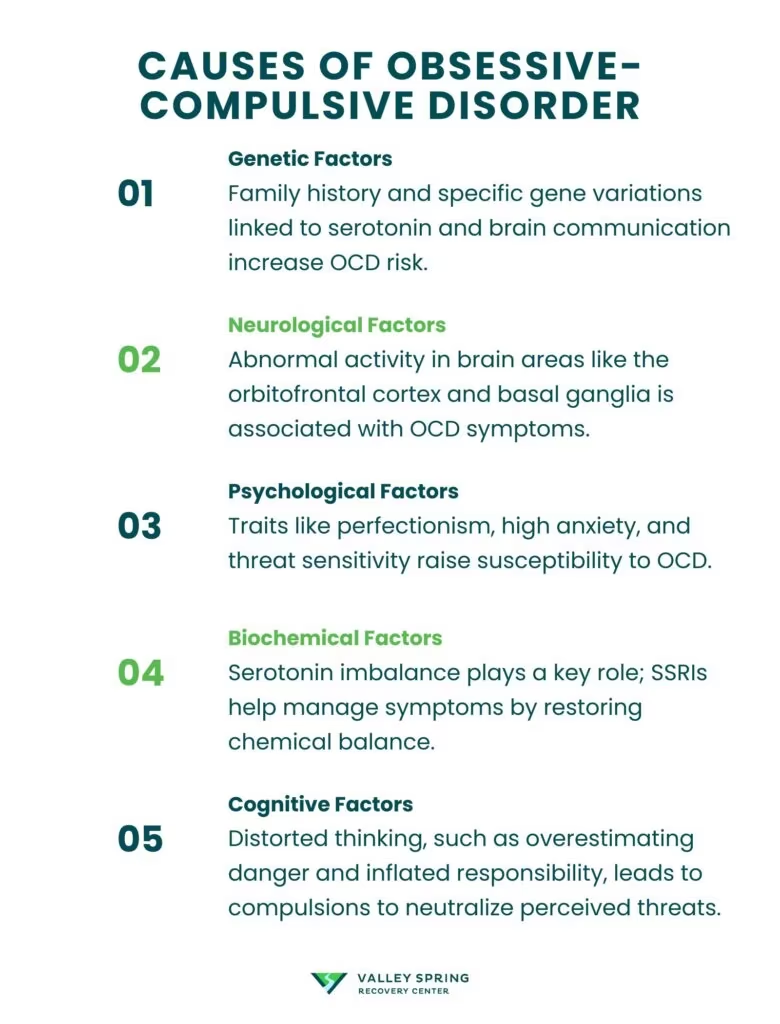
The onset data is precise. Mean age of onset is 19.5 years, per Ruscio and colleagues' NCS-R analysis, with a documented sex split: nearly a quarter of males show onset before age 10, while female cases accumulate fastest during adolescence. Women are about 1.6 times as likely as men to be affected overall, per the StatPearls review. Comorbidity is the rule rather than the exception, 90% of people with lifetime OCD meet criteria for at least one other lifetime disorder, which is one reason careful diagnosis matters.
How Is OCD Diagnosed?
OCD is diagnosed through a clinical interview that confirms the DSM-5-TR criteria and grades severity with the Yale-Brown Obsessive Compulsive Scale (Y-BOCS), a clinician-rated instrument scored 0 to 40, with 40 indicating the most severe symptoms, per the StatPearls review.
Two differentials do most of the work. A specific phobia centers on an external object or situation and settles when it is avoided; OCD's fear arises from the person's own thoughts, and rituals follow the person everywhere. Obsessive-compulsive personality disorder is a lifelong style of perfectionism and control without true obsessions or compulsions, and the person experiences it as correct rather than intrusive. With the diagnosis and a Y-BOCS baseline in place, treatment has a defined target.
How Is OCD Treated?
OCD is treated with exposure and response prevention (ERP), a specialized form of cognitive behavioral therapy, and with SSRI medication prescribed at higher doses and longer trials than depression treatment requires, 8 to 12 weeks per trial, per the StatPearls OCD review.
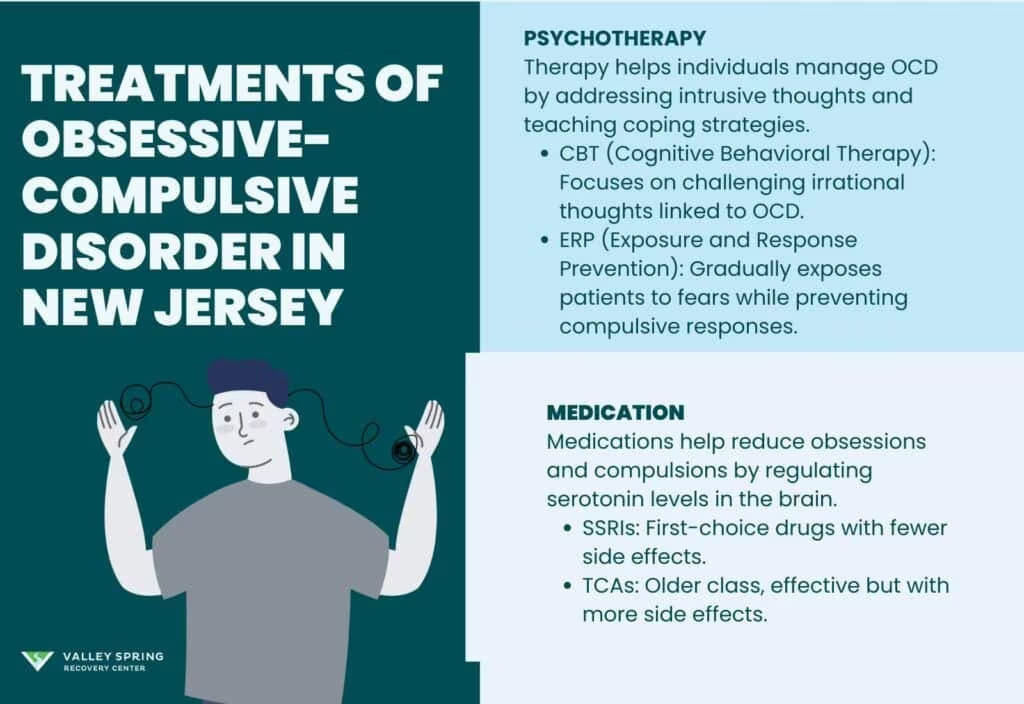
ERP works by breaking the loop at the compulsion: the person approaches the feared thought or trigger in graded steps and holds off the ritual, and the anxiety subsides on its own instead of through the compulsion. The evidence also sets honest expectations: between 25% and 40% of patients do not experience symptom relief from CBT-based therapy or SSRIs alone, and about half do not respond fully to first-line treatment, per the StatPearls review, so non-response leads to augmentation strategies and specialist referral rather than the end of options. Valley Spring Recovery Center provides ERP-based OCD treatment on an evening IOP schedule in Norwood, New Jersey. Treatment planning also has to account for the conditions that travel with OCD.
What Conditions Are Related to OCD?
90% of people with lifetime OCD meet criteria for at least one other lifetime disorder, led by anxiety disorders at 75.8% and mood disorders at 63.3%, per Ruscio and colleagues' NCS-R analysis.
Two relationships stand out clinically. Major depressive disorder follows the grind of untreated OCD in a substantial share of cases and is assessed at every evaluation. The DSM-5-TR's obsessive-compulsive and related disorders chapter also contains the body-focused conditions, including trichotillomania, compulsive hair pulling that shares the tension-and-relief loop, and hoarding disorder, split from OCD as its own diagnosis in 2013.
What Are the Most Common Questions About OCD?
Common questions: intrusive thoughts, genetics, classification, episode length, perfectionism, and cure.
Do Intrusive Thoughts Mean a Person Will Act on Them?
No. Obsessions conflict with the person's values, which is exactly why they cause distress. The thoughts are ego-dystonic, unwanted and alien, and acting on them is not a documented feature of OCD.
Is OCD Genetic?
Genetics contribute without deciding the outcome. Twin studies put heritability at approximately 48%, per the StatPearls review, and OCD runs in families. Family history is a reason for early screening, not a predetermined diagnosis.
Is OCD an Anxiety Disorder?
Not in current classification. The DSM-5 moved OCD into its own chapter, obsessive-compulsive and related disorders, in 2013. Anxiety remains central to the symptom loop, and anxiety disorders co-occur in 75.8% of lifetime cases.
How Much Time Does OCD Consume?
DSM-5-TR requires that symptoms be time-consuming, with more than an hour a day as its example, or that they cause clinically significant distress or impairment. Ruscio and colleagues record obsessions averaging 5.9 hours daily and compulsions 4.6.
What Is the Difference Between OCD and Perfectionism?
Perfectionism, including obsessive-compulsive personality disorder, feels correct to the person and lacks true obsessions. OCD is intrusive and unwanted: the person recognizes the rituals as excessive and performs them to escape distress, not to meet a standard.
Can OCD Be Cured?
Full remission occurs in a minority of cases, per the StatPearls review. ERP and SSRI treatment reduce symptoms to a manageable level for most people who complete them, and treatment gains persist with maintenance practice.
Sources & References4ShowHide
- NIMH — Obsessive-Compulsive Disorder (OCD) Statistics — Past-year prevalence 1.2% of U.S. adults (women 1.8%, men 0.5%); lifetime 2.3%; serious impairment 50.6%, moderate 34.8%. National Comorbidity Survey Replication, 2001-2003.
- Ruscio AM, Stein DJ, Chiu WT, Kessler RC. The epidemiology of obsessive-compulsive disorder in the National Comorbidity Survey Replication. Molecular Psychiatry, 2010 (PMC) — 28.2% report lifetime obsessions or compulsions; mean onset 19.5 years; checking 79.3% and hoarding 62.3% most common among cases; 5.9 h/day obsessions, 4.6 h/day compulsions; 90% lifetime comorbidity (anxiety 75.8%, mood 63.3%).
- Brock H, Rizvi A, Hany M. Obsessive-Compulsive Disorder. StatPearls, NCBI Bookshelf (updated February 24, 2024) — Global prevalence 1% to 3%; women about 1.6 times as likely as men; twin-study heritability approximately 48%; Y-BOCS scored 0 to 40; 8- to 12-week SSRI trials at higher doses; 25% to 40% non-response to CBT or SSRIs and about half fail first-line treatment; OCD-suicidality association independent of depression.
- American Psychiatric Association. Diagnostic and Statistical Manual of Mental Disorders, Fifth Edition, Text Revision (DSM-5-TR). Washington, DC: American Psychiatric Publishing, 2022 — Obsession and compulsion definitions, the time-consuming criterion illustrated by more than 1 hour per day alongside the distress-or-impairment route, the obsessive-compulsive and related disorders chapter, and hoarding disorder as a separate diagnosis. Print reference.