


Clinical Approach · CARF Accredited · NJ SUD #200887 · NJ MH #70420104
Evidence-Based Addiction Therapy Modalities at Valley Spring
Valley Spring Recovery Center publishes 14 therapy modality references covering the work done across Partial Care (PC), Intensive Outpatient (IOP) and Outpatient (OP). Intensive Outpatient and Outpatient also run virtually, and Partial Care is delivered in person. Every modality used in the clinical core meets peer-reviewed efficacy standards from the APA, ASAM, SAMHSA, and the World Health Organization. Clinicians match each client with an individualized treatment plan combining cognitive, behavioral, trauma-focused, medical, and holistic approaches — selected by diagnosis, severity, and personal goals rather than a one-size-fits-all protocol.
Clinically reviewed by Noelle Mathew, LCSW, LCADC, CASAC-M
Why It Matters
Evidence-Based, Not Eminence-Based
The addiction-treatment field has historically tolerated wide variation in care quality. Many programs still deliver modalities chosen by clinician preference rather than research evidence. Valley Spring takes the opposite stance: every modality used in the core PC and IOP curriculum has demonstrated efficacy in peer-reviewed clinical trials, and the facility's CARF Aspire to Excellence accreditation requires documented adherence to current best practices.
This standard matters because clinical outcomes — abstinence rates, retention in treatment, reduction in psychiatric symptoms — track directly with the evidence base of the modalities delivered. Eminence-based care ("this worked for me in 1995") cannot be audited; evidence-based care can.
Sources Valley Spring Treats as Authoritative
- APA Division 12 — psychological treatments empirically supported list.
- ASAM National Practice Guideline — pharmacological + level-of-care decisions.
- SAMHSA Treatment Improvement Protocols (TIPs) — operational standards for SUD care.
- NIDA Principles of Effective Treatment — 13 core principles updated regularly.
- Cochrane systematic reviews — meta-analytic evidence by intervention.
- World Health Organization (WHO) — international guidelines, particularly EMDR.
- VA-DoD Clinical Practice Guidelines — for PTSD and SUD with trauma comorbidity.
Clinical decisions reference current versions of each source; programming reviews against updated guidelines occur on an annual cadence under the supervision of Medical Director Dr. Michael Olla.
Modality Categories
6 Categories of Therapy, 15 Modalities Grouped by Clinical Function
Valley Spring's clinical team groups therapy modalities into six categories. Each category serves a different clinical function — cognitive change, trauma processing, pharmacological support, social healing, body-based integration, and life-functioning skills. Clients typically receive modalities from three or four categories simultaneously, sequenced by clinical priority.
Cognitive & Behavioral
Evidence base: APA Division 12, SAMHSA-listedSkills-based, present-focused approaches that target the thoughts, beliefs, and behavior patterns driving substance use and co-occurring mental-health conditions. These modalities form the structural core of Valley Spring's PC and IOP curriculum.
Cognitive Behavioral Therapy (CBT)
First-line for SUD, depression, anxiety, OCD per APA practice guidelines.
Read more →Dialectical Behavior Therapy (DBT)
Originated by Marsha Linehan for borderline personality; now standard for emotional dysregulation and SUD with self-harm risk.
Read more →Motivational Interviewing (MI)
Client-centered conversational method that resolves ambivalence about change — used throughout intake and weekly individual sessions.
Read more →Contingency Management
Operant-conditioning protocol with the strongest evidence base for stimulant use disorder (cocaine, methamphetamine).
Read more →Trauma-Focused
Evidence base: ISTSS / VA-DoD trauma guidelinesModalities specifically designed for trauma processing and PTSD. Valley Spring integrates trauma-focused care across SUD treatment because 50–80% of clients in addiction treatment report a history of trauma per SAMHSA TIP 57.
Medical & Pharmacological
Evidence base: ASAM National Practice GuidelineMedications used alongside psychosocial treatment to reduce cravings, prevent overdose, and treat co-occurring psychiatric conditions. Delivered on-site by Valley Spring's medical team led by Medical Director Dr. Michael Olla.
Group & Family Systems
Evidence base: SAMHSA TIP 41 / TIP 39Modalities that work with social systems — peer groups, families, and recovery communities — because addiction recovery is consistently more durable when relational repair happens alongside individual change.
Group Therapy
Process groups, psychoeducational groups, skills groups; the central format for PC and IOP.
Read more →Family Integration Therapy
Weekly family sessions with client consent; addresses enabling patterns and communication.
Read more →12-Step Facilitation
Manualized approach (Project MATCH evidence) for engaging clients with AA/NA mutual-aid communities.
Read more →Acceptance and Commitment Therapy (ACT)
Psychological flexibility, values clarification and acceptance-based coping; 39 randomized trials, and rated possibly efficacious for substance use by Ost's stricter 2014 review.
Read more →Experiential & Holistic
Evidence base: Adjunctive — quality varies by modalityBody-based and creative modalities used alongside evidence-based primary therapy. These are integrated into Valley Spring's Health and Wellness pillar — never replacing CBT/DBT/MAT as the clinical core.
Holistic Therapy Approaches
Umbrella for yoga, meditation, breathwork, mindfulness integrated into daily programming.
Read more →Experiential Therapy
Adventure-based, art-based, and somatic experiences that surface emotions difficult to access through talk therapy alone.
Read more →Music Therapy
Board-certified Music Therapist (MT-BC) certification required for clinical music therapy delivery.
Read more →Skills & Life-Domain
Evidence base: SAMHSA TIP 45 / TIP 50Practical training that addresses the functional impairments addiction creates — money management, employment, relationships, time management. Valley Spring's Life Skills curriculum is integrated into the Activate (IOP) and Accelerate (OP) stages of the RAAT model.
Full Library
All Therapy Modality Pages
Each modality has a dedicated page with definition, mechanism of action, evidence base, indications, contraindications, and how it's delivered at Valley Spring. Use the cards below to navigate the complete library.

Life Skills Training for Addiction Recovery: Core Skills, Applications, and Outcomes
Life skills training in addiction recovery: the WHO core skills, Valley Spring's five life-skills pillars, and how case management builds real stability.
Learn more →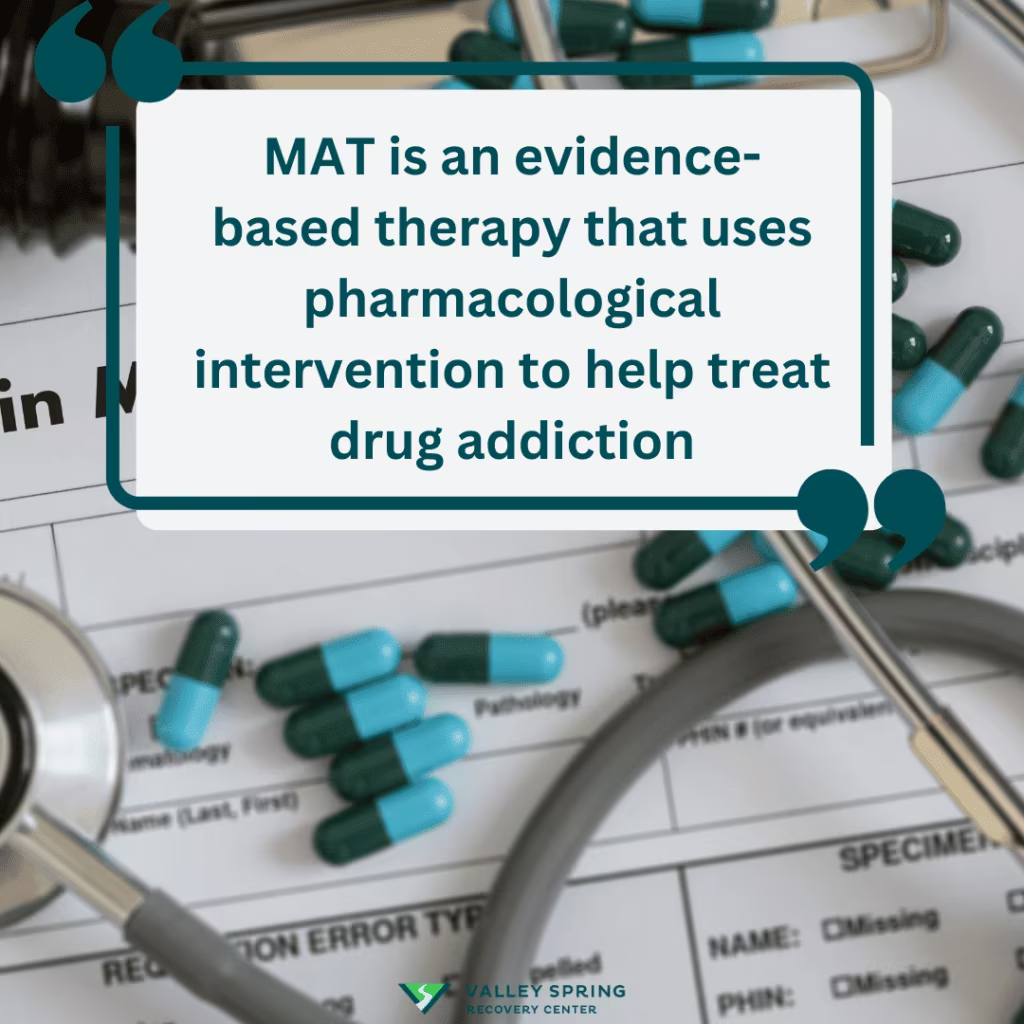
Medication-Assisted Treatment (MAT) in Norwood, NJ
Medication-Assisted Treatment (MAT) provides a structured, evidence-based approach to treating substance use disorders. It combines FDA-approved medications with counseling and behavioral therapies. M
Learn more →
Family Therapy: Definition, Applications In Addiction and Mental Health Treatment
Family therapy treats the family system alongside the person in recovery. SAMHSA TIP 39 evidence, 10 modalities, and Together We Heal, the Family Program.
Learn more →
EMDR Therapy: Definition, Effectiveness and Application In Addiction Treatment
EMDR therapy reprocesses traumatic memories through eight structured phases and bilateral stimulation. Its evidence in PTSD and addiction treatment in NJ.
Learn more →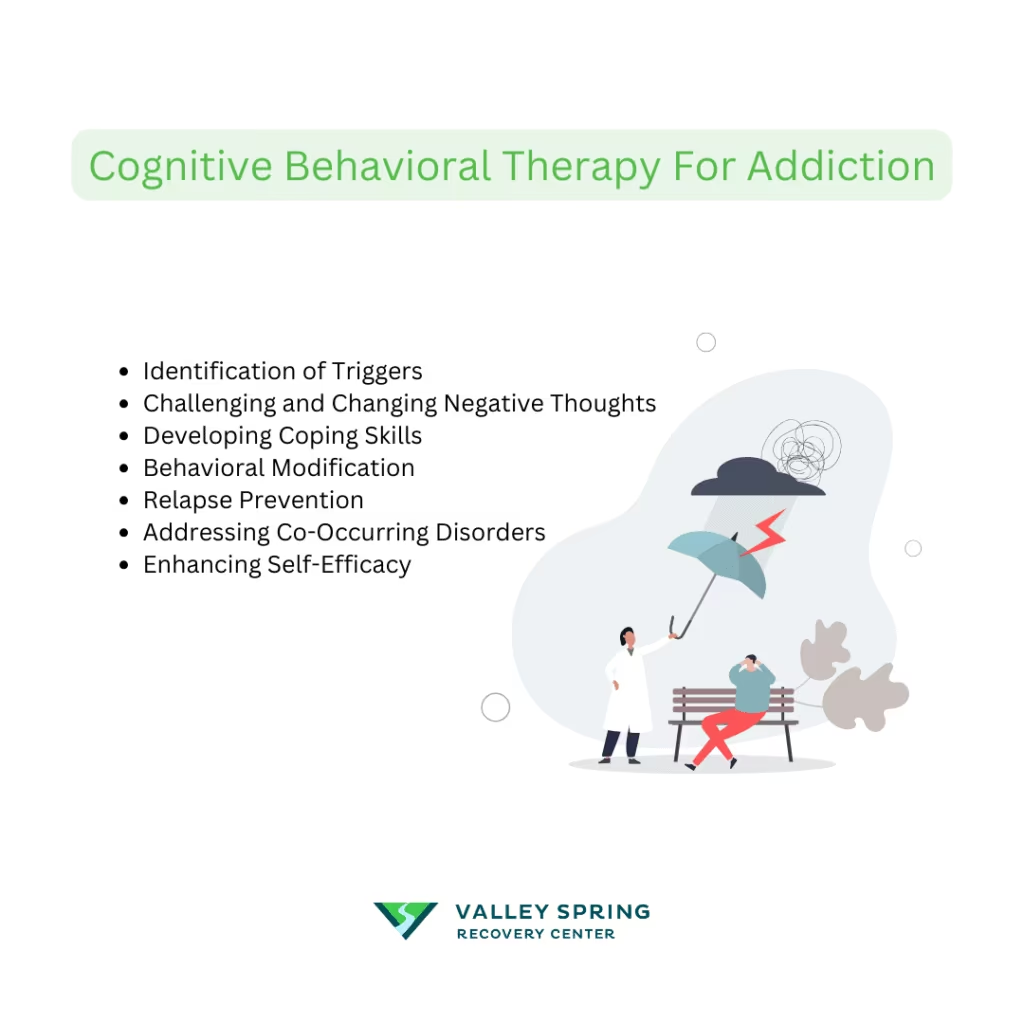
Cognitive Behavioral Therapy (CBT): Definition, Effectiveness and Applications In Addiction Treatment
Cognitive behavioral therapy treats addiction by retraining the thoughts and behaviors behind substance use. Techniques, effect sizes, and NJ delivery.
Learn more →
Dialectical Behavior Therapy: Definition, Effectiveness and Application In Addiction Treatment
Dialectical behavior therapy (DBT) builds emotion regulation, distress tolerance, and mindfulness skills. Four modules, the evidence base, and NJ delivery.
Learn more →
Contingency Management: Definition, Effectiveness and Application In Addiction Treatment
Contingency management (CM) reinforces verified abstinence with escalating incentives. Reward formats, effect sizes, and how NIDA and the VA adopted CM.
Learn more →
Evidence-Based Therapy: Definition, Types, Benefits And Effectiveness For Addiction Treatment
Evidence-based addiction therapy means randomized trials, replication, and agency manuals. Standards, NIDA's 13 principles, and effects by modality.
Learn more →
Group Therapy: Definition, Techniques and Effectiveness in Addiction Treatment
Group therapy treats addiction in therapist-led peer groups. The five SAMHSA group models, outcomes versus individual therapy, and delivery in Norwood, NJ.
Learn more →
Holistic Therapy: Definition, Types And Effectiveness In Addiction Treatment
Holistic therapy in addiction treatment: which practices carry trial evidence, which do not, and how Valley Spring's five wellness pillars deliver care.
Learn more →
Experiential Therapy: Definition, Types, Effectiveness and Application In Addiction Treatment
Experiential therapy treats addiction through action: psychodrama, art, music, and adventure formats, with survey adoption figures and Cochrane evidence.
Learn more →
Music Therapy: Definition, Application, Types, Benefits For Addiction Treatment
Music therapy in addiction treatment: the Cochrane evidence on craving and motivation, the four intervention formats, limits, and where it fits in care.
Learn more →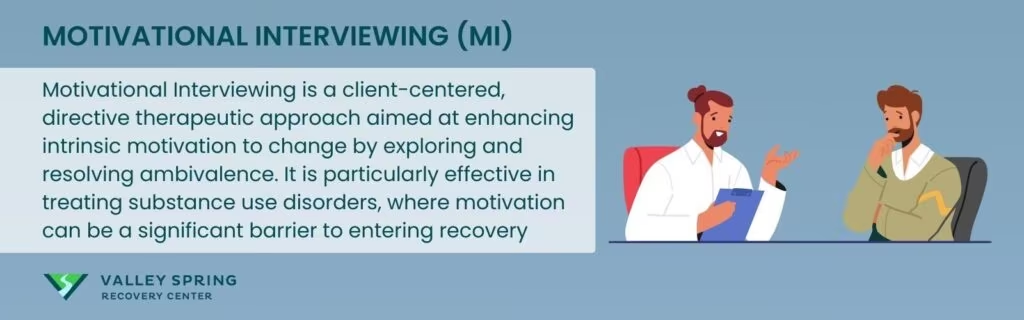
Motivational Interviewing: Definition, types, effectiveness and application in addiction treatment
Motivational interviewing (MI) resolves ambivalence about change through OARS skills and four guided processes. Evidence, effect sizes, and NJ delivery.
Learn more →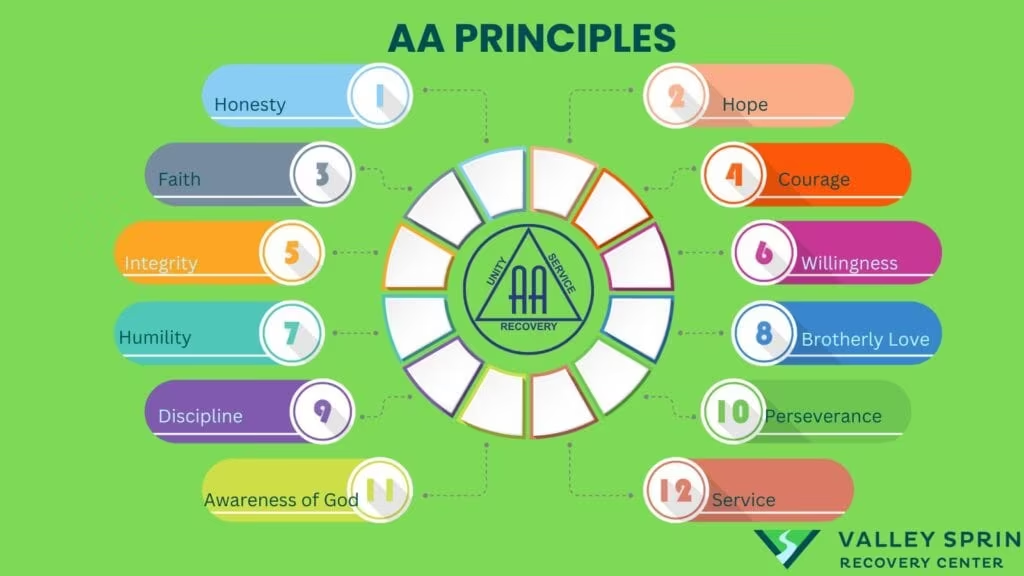
12 step programs: Definition, Types, how it works, Effectiveness
12-step programs support recovery through peer meetings, sponsorship, and sequenced steps. Fellowship types, the Cochrane evidence, and NJ meeting access.
Learn more →
Acceptance and Commitment Therapy (ACT): Core Processes and Addiction Evidence
Acceptance and commitment therapy (ACT) builds psychological flexibility through six hexaflex processes. Meta-analytic effects and addiction applications.
Learn more →Modality × Level of Care
Which Modalities Run at Which Level of Care
Modality availability varies by level of care (LOC). Higher-intensity programs deliver more daily group programming and more frequent individual therapy; outpatient programs maintain individual therapy and psychiatric oversight at lower intensity for relapse prevention and step-down support.
Partial Care (PC) — ASAM 2.5
9 AM – 3 PM Monday–Friday, 9 AM – 12 PM Saturday · 4–6 weeks
- •Daily process group (CBT/DBT-informed)
- •Individual therapy 1–2×/week
- •Health & Wellness pillar (mindfulness, yoga, nutrition)
- •Weekly psychiatric medication management
- •Family therapy with consent
- •Trauma-informed care across all modalities
Intensive Outpatient (IOP) — ASAM 2.1
6 PM–9 PM, Mon–Fri · 6–8 weeks
- •Evening process group (CBT/DBT skills)
- •Individual therapy 1–2×/week
- •Life Skills curriculum (employment, finance, stress)
- •Weekly psychiatric provider sessions
- •Group EMDR-informed psychoeducation (formal EMDR in individual)
- •Family workshop access (Family Program)
Outpatient (OP) — ASAM 1.5
1–2 evenings/week · Ongoing
- •Individual therapy (CBT, MI)
- •Relapse-prevention group (CBT/MI)
- •Monthly psychiatric medication management
- •12-step facilitation referrals
- •Alumni community integration
Virtual IOP/OP — ASAM 1.5–2.1
3–5 evenings/week · 6–8 weeks
- •Live video group therapy (CBT/DBT)
- •Telehealth individual sessions
- •Telepsychiatry medication management
- •Asynchronous skills modules between sessions
- •Family teletherapy with consent
FAQ
Common Questions About Addiction Therapy
What does "evidence-based therapy" actually mean?+
Evidence-based therapies are treatment approaches that have demonstrated efficacy in peer-reviewed clinical trials and are recommended by professional guidelines such as the American Psychological Association (APA) Division 12, the American Society of Addiction Medicine (ASAM), and SAMHSA Treatment Improvement Protocols. Examples include CBT, DBT, EMDR, motivational interviewing, contingency management, and medication-assisted treatment. At Valley Spring Recovery Center, every modality used in the core PC and IOP curriculum meets this standard.
Which therapy modality is best for a client with addiction?+
No single modality is universally best — clinically appropriate treatment matches the client's primary diagnosis, severity, co-occurring conditions, and history. CBT is the most broadly applicable for substance use disorder. DBT is recommended for clients with emotional dysregulation, self-harm history, or borderline personality features. EMDR is appropriate for clients with trauma histories. MAT is indicated for opioid use disorder and alcohol use disorder regardless of other modalities. Valley Spring's clinical team conducts a comprehensive biopsychosocial assessment during intake to determine the appropriate combination.
How is therapy delivered — individual, group, or both?+
Valley Spring uses both formats throughout every level of care. Individual therapy occurs 1–2 times per week and focuses on personal history, trauma processing, and individualized skill-building. Group therapy provides peer feedback, psychoeducation, and skills practice in a social context. Process groups, psychoeducational groups, and skills-specific groups (DBT, relapse prevention, mindfulness) run daily in PC and 3–5 evenings per week in IOP.
Is medication-assisted treatment (MAT) required?+
MAT is recommended for clients with opioid use disorder and alcohol use disorder per ASAM National Practice Guidelines, but it is not required. Some clients pursue abstinence-based recovery without MAT, particularly for substances where FDA-approved medications do not exist (cocaine, methamphetamine, cannabis). The decision is made collaboratively between the client and Valley Spring's psychiatric medical team based on diagnosis, prior treatment history, medical contraindications, and personal preference.
How long does each modality typically last?+
Modalities run for the duration of a client's level of care. Partial Care averages 4–6 weeks. Intensive Outpatient averages 6–8 weeks. Outpatient runs ongoing at lower intensity. EMDR processing usually takes 8–12 individual sessions once the client is stabilized. CBT skill acquisition typically takes 12–16 sessions for measurable symptom change. Long-term recovery support continues through the Thrive alumni program indefinitely.
Are holistic and experiential therapies a substitute for evidence-based care?+
No. Holistic modalities (yoga, mindfulness, meditation, art, music) are integrated into Valley Spring's Health and Wellness curriculum as adjunctive support, not as a substitute for CBT, DBT, MAT, or other evidence-based primary treatment. The clinical core of every level of care is built on modalities with proven efficacy in peer-reviewed research. Holistic approaches improve engagement, reduce stress, and support nervous-system regulation alongside primary therapy.
What therapy modalities does Valley Spring use for dual diagnosis?+
For clients with co-occurring mental-health and substance use disorders, Valley Spring uses integrated treatment delivered by clinicians cross-trained in both addiction and mental-health care. CBT, DBT, and trauma-focused modalities address mental-health symptoms while the same clinical team coordinates MAT, psychiatric medication, and SUD-focused interventions. Clients receive both diagnoses worked simultaneously, not sequentially, per SAMHSA dual diagnosis best practice guidelines.
Does Valley Spring offer family therapy?+
Yes. Family therapy is available with client consent at weekly, bi-weekly, or monthly intervals. Valley Spring also delivers the Family Program, a six-month, six-session program open to the public and to families of all Valley Spring clients, covering the disease model of addiction, Narcan training, CRAFT-informed communication, codependency, relapse prevention, and family wellness planning.
Is therapy delivered virtually as well as in person?+
Yes. Valley Spring's Virtual IOP and Virtual Outpatient programs deliver the same evidence-based modalities (CBT, DBT, motivational interviewing, group therapy, individual therapy, psychiatric medication management) through a dedicated telehealth team. Virtual care is appropriate for clients in geographically distant areas, clients with caregiver responsibilities, and clients who prefer remote delivery. EMDR can be delivered virtually using validated remote protocols.
Levels of Care
How Modalities Map to Programs
Therapy modalities are delivered within four ASAM-defined programs. Choose the program that matches clinical need and life circumstances.
- Partial Care (PC) — daytime, highest intensity
- Intensive Outpatient (IOP) — evening, for working professionals
- Outpatient (OP) — step-down maintenance
- Virtual Rehab (Telehealth) — remote, statewide
- Medication-Assisted Treatment — MAT as a clinical track
- Dual Diagnosis Treatment — concurrent MH + SUD
- Group & Individual Therapy Programs — how modalities are scheduled inside PC/IOP/OP
Conditions Treated
Modality Selection by Diagnosis
Treatment planning at Valley Spring starts from the clinical diagnosis. Each condition page details which modalities are clinically indicated.
Start Evidence-Based Treatment Today
Same-day admissions when clinical and insurance criteria align. CARF accredited, NJ state licensed, in-network with 19+ major plans. Free insurance verification, no obligation.
HIPAA compliant · Confidential · No obligation