Why Alcohol Causes Bloating and How to Reverse the Swelling

Alcohol bloat is characterized by systemic inflammation and fluid retention following the ingestion of ethanol. When you consume alcohol, your body treats it as a toxin, causing the tissues in the gastrointestinal tract to become inflamed and the kidneys to alter how they manage water balance. This results in the characteristic “puffy” face and a distended, “hard” midsection that feels heavy.
Highlights
- Alcohol is an inflammatory toxin that triggers water retention and irritates the gastrointestinal lining.
- Ethanol-induced irritation leads to acute gastritis, resulting in trapped gas and significant abdominal pressure.
- While “holiday bloat” does vanish in 48 hours, chronic alcohol-related swelling takes weeks of sobriety to resolve.
- Flushing the system with water and balancing electrolytes is the fastest way to signal the body to release stored fluids.
- Persistent “beer belly” or facial puffiness sometimes masks serious medical issues like ascites or early-stage liver disease.
- In a study of IBS patients, ~25–30% of women with IBS‑diarrhea reported that alcohol clearly worsened abdominal symptoms, in addition to bloating and pain, especially after binge‑type drinking, as observed by Reding et al. 2013 in “Relationship between Patterns of Alcohol Consumption and Gastrointestinal Symptoms among Patients with Irritable Bowel Syndrome.”
Did you know most health insurance plans cover substance use disorder treatment? Check your coverage online now.
What Is Alcohol Bloat?
Alcohol bloat is the visible and physical result of the body’s inflammatory response to ethanol. Beyond simple water retention, it is fueled by the high sugar and calorie content of many beverages. When the body struggles to process these elements alongside alcohol’s toxins, the digestive system slows down, leading to gas accumulation and a visibly swollen appearance in both the face and the midsection.
This metabolic “bottleneck” causes the body to prioritize alcohol metabolism over other functions, leading to fermentation in the gut. This process physically pushes the abdominal wall outward, creating a bulge that is uncomfortable and resistant to traditional weight-loss methods until the inflammation is addressed.
In a U.S. functional‑gut‑disorder cohort, alcohol use ≥140-210 g/week (roughly ≥10–14 standard drinks/week) was associated with significantly higher odds of bloating compared with non‑drinkers. In that sample, ~35-45% of heavy drinkers reported frequent bloating, versus ~20–25% of non‑drinkers, according to Ryu et al. 2016 in “Clinical Dimensions of Bloating in Functional Gastrointestinal Disorders.”
What Causes Alcohol Bloating?
The causes of alcohol bloating are primarily rooted in how ethanol interacts with your internal organs. Key drivers include:
- Gastric Irritation: Alcohol erodes the mucus lining of the stomach, leading to gastritis.
- Diuretic Rebound: As a diuretic, alcohol causes dehydration; the body responds by hoarding water in the skin and abdomen.
- Carbonation: Beer and sparkling mixers introduce carbon dioxide into the digestive tract.
- Bacterial Imbalance: Alcohol disrupts the gut microbiome, leading to excess gas production.
- Liver Strain: Chronic use causes the liver to struggle with fluid regulation, leading to a buildup in the abdominal cavity.
These factors create a cycle where the stomach produces more acid to combat the alcohol, further irritating the lining. In chronic cases, the bloating is a sign that the liver is no longer producing enough proteins to keep fluid within the blood vessels, allowing it to leak into surrounding tissues.
What Are the Symptoms of Alcohol bloat?
The symptoms of alcohol bloat are most visible in the face and abdomen, but affect the entire body. Common signs include:
- Abdominal Distension: A stomach that feels hard, tight, or “stretched” to the touch.
- Facial Edema: Puffiness around the eyes and jawline, often most severe in the morning.
- Digestive Pressure: Frequent belching, flatulence, and a sensation of being “full” quickly.
- Water Retention: Deep indentations left by socks or jewelry, feeling uncomfortably tight on fingers.
- Skin Redness: Dilation of capillaries in the face, contributing to a “flushed” appearance.
Internally, these physical symptoms are accompanied by chronic acid reflux or a “sour” stomach. Because the swelling involves systemic fluid retention, many individuals also experience a rapid, temporary increase on the scale that is not related to fat gain, but rather to the weight of the stored water.
Contact us today to schedule an initial assessment or to learn more about our services. Whether you are seeking intensive outpatient care or simply need guidance on your drug addiction journey, we are here to help.
How to Get Rid of Alcohol Bloat Fast?
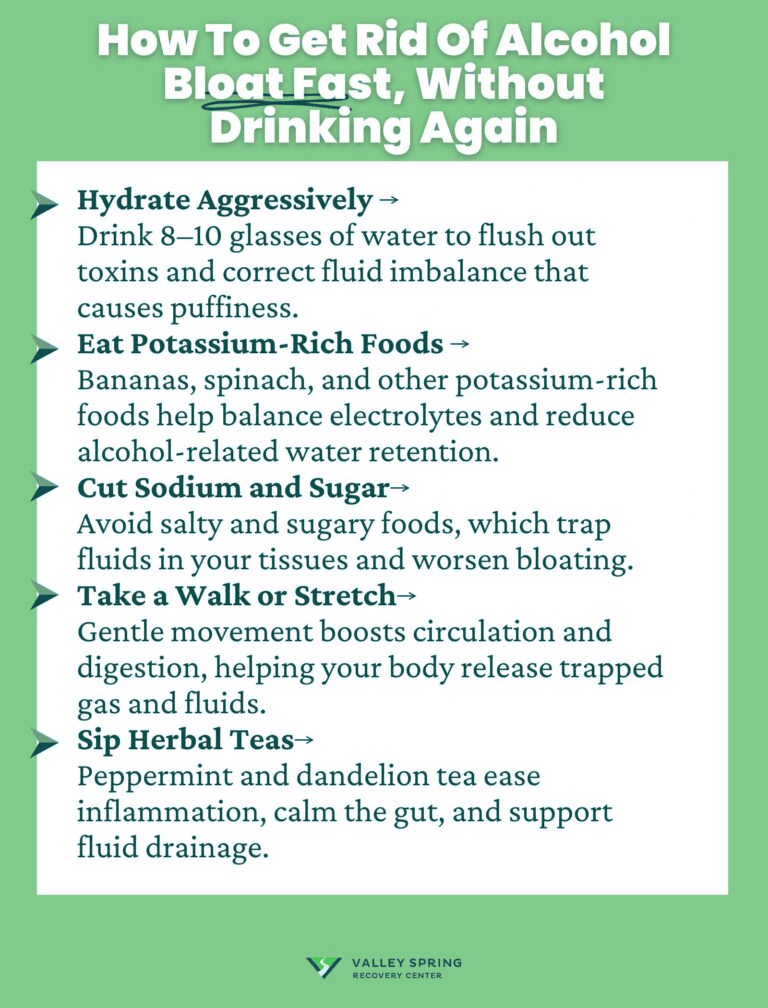
To get rid of alcohol bloat fast, you must aggressively reverse the dehydration and inflammation cycle. Effective methods comprise:
- Increased Water Intake: Drink 8 to 10 glasses of water to signal the kidneys to release stored fluids.
- Potassium Loading: Consume bananas, avocados, or spinach to balance sodium-driven swelling.
- Light Exercise: A 20-minute walk stimulates the digestive tract to move trapped gas.
- Lemon Water: Use lemon as a natural, mild diuretic to assist in flushing the lymphatic system.
- Anti-Inflammatory Foods: Focus on ginger or peppermint tea to soothe the stomach lining.
Dietary adjustments are crucial for immediate relief. Avoid high-sodium foods, which cause the body to retain even more fluid, and steer clear of further carbonated drinks. You prompt the kidneys to end the “water hoarding” phase and allow the inflammation in the gastric lining to subside by flooding the system with water (H2O) and moving the body.
How Long Does Alcohol Bloat Last?
The duration of alcohol bloat depends on the frequency of drinking and baseline health. For an occasional drinker, the puffiness and stomach pressure usually peak the morning after and subside within 24 to 48 hours as the body rehydrates and the stomach lining heals.
For those who drink daily or heavily, the timeline is significantly extended. In cases of chronic use, the gut and liver remain in a constant state of inflammation. It often takes two to four weeks of total abstinence for the gut microbiome to stabilize and for the liver to process excess fluid, finally allowing the face and midsection to return to their natural shape.
What Are the Best Foods to Fight Bloat During Detox?
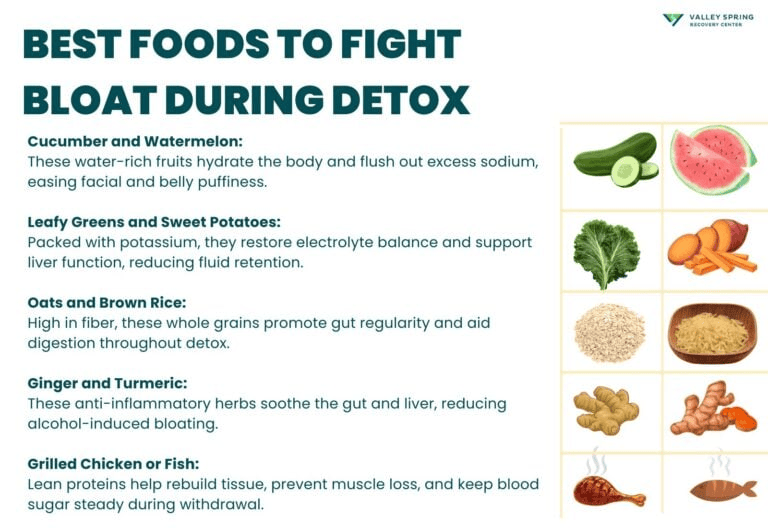
The best foods to fight bloat during detox are hydrating fruits, potassium-rich vegetables, high-fiber grains, anti-inflammatory herbs, and lean proteins. These foods support liver function, reduce digestive inflammation, and help your body release retained fluid. The best foods to fight bloat during detox are:
- Cucumber and watermelon: These water-dense fruits hydrate your body and help flush excess sodium. Their natural diuretic properties reduce puffiness in the face and abdominal area.
- Leafy greens and sweet potatoes: Both are rich in potassium, which helps rebalance electrolytes and counteract fluid retention caused by alcohol. They also support liver detox pathways.
- Oats and brown rice: These whole grains restore gut regularity. Their fiber supports healthy digestion and helps relieve constipation-related bloating during detox.
- Ginger and turmeric: These anti-inflammatory herbs calm irritation in the gut and liver. They reduce gas and swelling triggered by alcohol-related digestive stress.
- Grilled chicken or fish: Lean protein supports tissue repair and prevents muscle loss. It also stabilizes blood sugar, which helps reduce bloating and fatigue during alcohol withdrawal.
Rediscover Life at Valley Spring Recovery Center
Get the compassionate support you deserve. We're here to help you reclaim joy, wellness, and a brighter future.
Verify Benefits
Can Alcohol Withdrawal Cause Bloating After Quitting Drinking?
Yes, alcohol withdrawal can cause bloating after you stop drinking. Many people notice temporary abdominal swelling or discomfort because the body is recalibrating after alcohol’s effects on digestion, fluid balance, and liver function. Alcohol disrupts gut motility, irritates the stomach lining, and alters how the body manages sodium and water. During alcohol withdrawal, the liver and digestive system begin repairing and re-regulating these processes, which briefly provokes gas and fluid retention. As healing progresses, bloating fades over several days to a few weeks.
Should I Take the CAGE Questionnaire If I Frequently Experience Alcohol Bloat?
Yes. Persistent alcohol bloat may be more than a cosmetic issue, pointing to ongoing alcohol misuse or liver damage. Taking the CAGE Questionnaire aids you in assessing your relationship with alcohol and determining whether professional help or medical evaluation is necessary for your physical and mental health.
Conclusion
Alcohol bloat is a clear physical indicator that the body is struggling to process ethanol and manage the resulting inflammation. While quick fixes like hydration and potassium can mitigate the morning-after puffiness, they do not address the underlying damage to the gastric lining or liver health. Lasting relief from alcohol-related swelling requires a commitment to reducing intake and allowing the body’s natural inflammatory response to reset through sustained sobriety.
Are you covered for treatment?


Valley Spring Recovery Center is an approved provider for Blue Cross Blue Shield and Cigna, while also accepting many other major insurance carriers.
Check Coverage Now!References
American Society of Addiction Medicine. (2025). Definition of addiction. https://www.asam.org/quality-care/definition-of-addiction
Bienia, A., Białkowska, J., Szmitkowski, M., & Chyczewski, L. (2002). The effect of chronic alcohol abuse on gastric and duodenal mucosa. Journal of Physiology and Pharmacology, 53(3), 375–381.
National Institute on Alcohol Abuse and Alcoholism. (2024). Alcohol’s effects on the body. U.S. Department of Health and Human Services, National Institutes of Health. https://www.niaaa.nih.gov/alcohols-effects-health/alcohols-effects-body
Reding, K. W., Cain, K. C., Jarrett, M. E., Iturrino, J. G., & Heitkemper, M. M. (2013). Relationship between patterns of alcohol consumption and gastrointestinal symptoms among patients with irritable bowel syndrome. American Journal of Gastroenterology, 108(2), 270–276. https://doi.org/10.1038/ajg.2012.414
Ryu, H. S., Choi, S. C., Lee, S. J., Gunasekaran, T. S., & Park, S. Y. (2016). Clinical dimensions of bloating in functional gastrointestinal disorders. Journal of Neurogastroenterology and Motility, 22(3), 509–516. https://doi.org/10.5056/jnm15174
Substance Abuse and Mental Health Services Administration. (2024). Key substance use and mental health indicators in the United States: Results from the 2023 National Survey on Drug Use and Health. U.S. Department of Health and Human Services. https://www.samhsa.gov/data/report/2023-nsduh-annual-national-report
World Health Organization. (2023). Alcohol and the digestive system: Risks and consequences.
Share This Post

Valley Spring Editorial Team
All author posts
Our Therapuetic Recovery Programs
Are you covered for treatment?







Valley Spring Recovery Center is an approved provider for Blue Shield of California and Cigna, while also accepting many other major insurance carriers.
Check Coverage Now!