Alcohol Addiction Medication: Definition, Types, Benefits, Side Effects, Alternatives
Alcohol addiction is a serious and underestimated condition, impacting individuals, families, and communities across the country. In New Jersey alone, alcohol was the primary substance reported in 31% of all substance abuse treatment admissions in 2022, according to the state’s Division of Mental Health and Addiction Services.
While traditional recovery approaches rely on therapy or abstinence alone, medical science has expanded the toolkit with FDA-approved medications that target both the physical and psychological aspects of alcohol use disorder (AUD).
What Is Alcohol Addiction Medication?
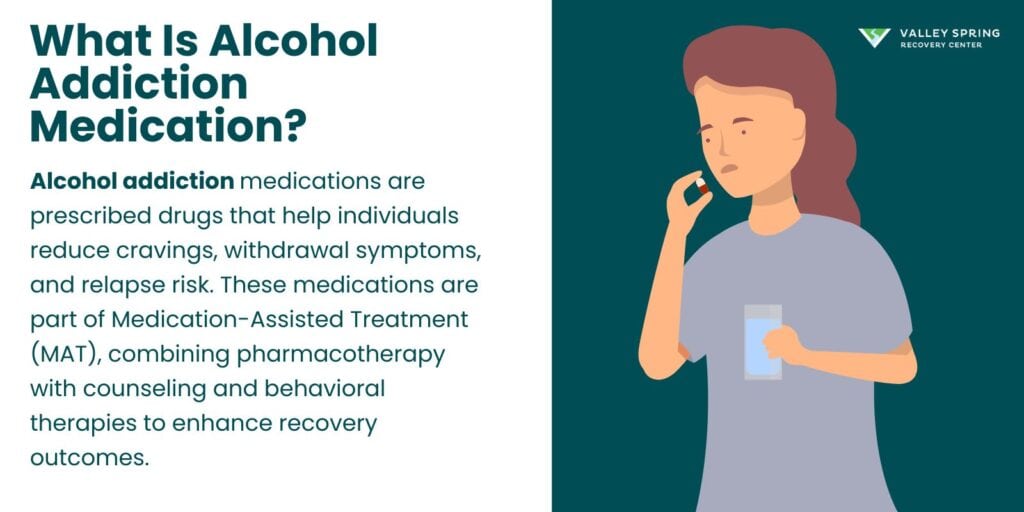
Alcohol addiction medication is a class of prescription drugs designed to help individuals reduce or quit alcohol consumption by targeting the biological and psychological mechanisms that sustain dependence. These medications are used as part of a comprehensive treatment plan that includes counseling, behavioral therapies, and support systems.
Alcohol addiction medications are FDA-approved pharmacological treatments that help reduce cravings, prevent relapse, and support long-term recovery in individuals with Alcohol Use Disorder (AUD). These medications work by targeting neurochemical pathways in the brain affected by chronic alcohol exposure.
There are three main types of alcohol addiction medications, each with distinct mechanisms of action:
- Disulfiram (Antabuse): Disulfiram creates an aversive reaction to alcohol by inhibiting aldehyde dehydrogenase, an enzyme involved in alcohol metabolism. When alcohol is consumed, toxic acetaldehyde builds up, causing nausea, vomiting, flushing, and palpitations. Its primary use is deterrence, making drinking physically unpleasant.
- Naltrexone: Naltrexone is an opioid receptor antagonist that reduces the rewarding effects of alcohol. It helps decrease cravings and reduce heavy drinking days. It is available in oral form and as a monthly injectable.
- Acamprosate (Campral): Acamprosate restores the balance between excitatory and inhibitory neurotransmission disrupted by prolonged alcohol use. It is particularly effective in maintaining abstinence after detoxification by reducing protracted withdrawal symptoms like insomnia and anxiety. It does not prevent withdrawal or deter drinking but works best as part of a long-term sobriety plan.
The New Jersey Department of Human Services, Division of Mental Health and Addiction Services (DMHAS) found that in 2022 alone, alcohol was the primary substance in 31% of all substance abuse treatment admissions, amounting to over 21,000 individuals seeking help for alcohol-related issues.
Did you know most health insurance plans cover substance use disorder treatment? Check your coverage online now.
How Do Medications Help Treat Alcohol Use Disorder (AUD)?
Medications help treat alcohol use disorder by working directly on your brain’s chemistry to reduce cravings, ease withdrawal symptoms, and support long-term recovery.
Alcohol affects the brain’s reward system by increasing dopamine, a chemical that makes you feel good. Over time, your brain becomes wired to crave that reward. Medication helps interrupt this cycle.
Some drugs block the pleasurable effects of alcohol, so even if you drink, you don’t feel the same “buzz.” Others help reduce anxiety or restlessness that might trigger your desire to drink again.
What Are the FDA-Approved Medications for Alcohol Addiction?
The FDA-approved medications for alcohol addiction are naltrexone, acamprosate, and disulfiram. Each of these works differently, but they are all effective in maintaining sobriety.
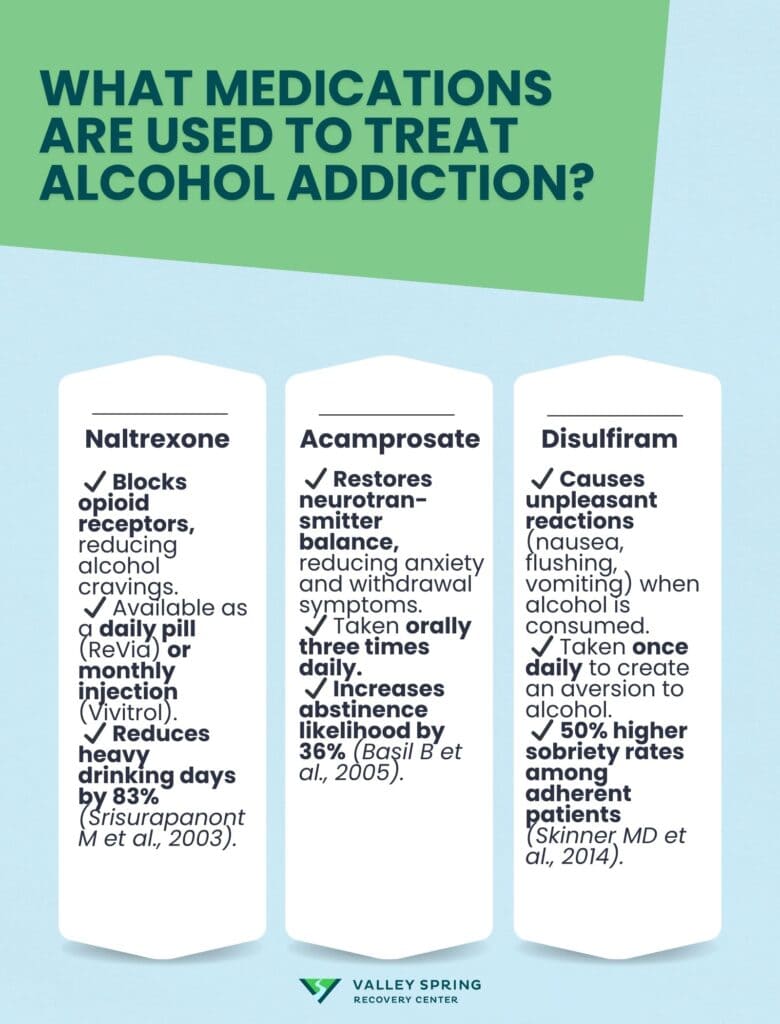
The FDA-approved medications for alcohol addiction are as follows:
Naltrexone
Naltrexone blocks opioid receptors in the brain, which reduces the rewarding effects of alcohol. This means that even if you drink, you won’t feel the same pleasure or euphoria, making it easier to stop. It’s especially helpful for people who want to reduce heavy drinking or prevent relapse.
Contact us today to schedule an initial assessment or to learn more about our services. Whether you are seeking intensive outpatient care or simply need guidance on your drug addiction journey, we are here to help.
Acamprosate
Acamprosate helps restore balance to the brain’s neurotransmitters that are disrupted by long-term alcohol use. It works best after you’ve already stopped drinking and want to stay sober. While it doesn’t reduce cravings directly, it helps ease symptoms like restlessness, anxiety, and insomnia.
Disulfiram
Disulfiram causes an intense physical reaction, like nausea, vomiting, and flushing, if you consume alcohol. This creates a strong psychological deterrent, since drinking leads to immediate and unpleasant consequences. It’s most effective for people who are highly motivated to avoid alcohol altogether.
What Are the Benefits of Alcohol Addiction Medication?
The benefits of alcohol addiction medication are reducing cravings, preventing relapse, improving mental health, and supporting long-term sobriety. These medications, when combined with therapy, significantly increase recovery success rates by stabilizing brain chemistry and reducing withdrawal-related distress.
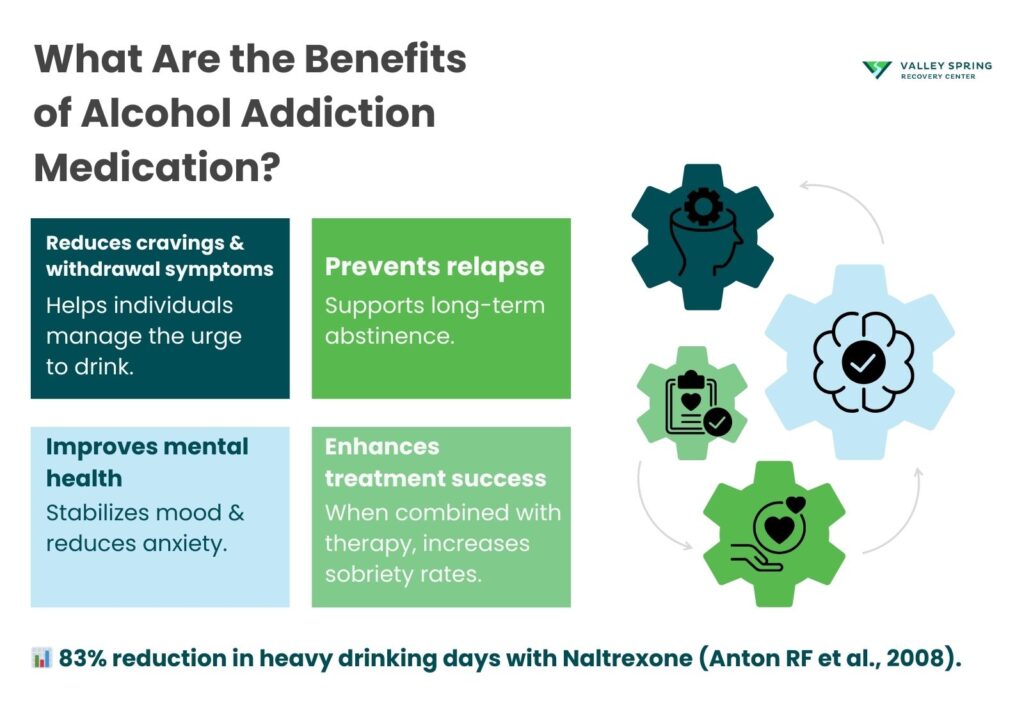
The benefits of alcohol addiction medication are explained below:
- Reduced cravings: These medications lower the intensity and frequency of alcohol cravings, making it easier to resist the urge to drink. This gives you more control over your behavior and reduces the emotional pressure that leads to relapse.
- Lower risk of relapse: By either blocking the pleasurable effects of alcohol or causing negative reactions, medications reduce the likelihood of returning to old habits. This is especially helpful during high-risk situations or early recovery stages.
- Improved treatment outcomes: When used alongside therapy and counseling, these medications significantly increase your chances of long-term sobriety. Combining medication with behavioral support is more effective than either approach alone.
Rediscover Life at Valley Spring Recovery Center
Get the compassionate support you deserve. We're here to help you reclaim joy, wellness, and a brighter future.
Verify Benefits
Are There Any Side Effects of Alcohol Addiction Medications?
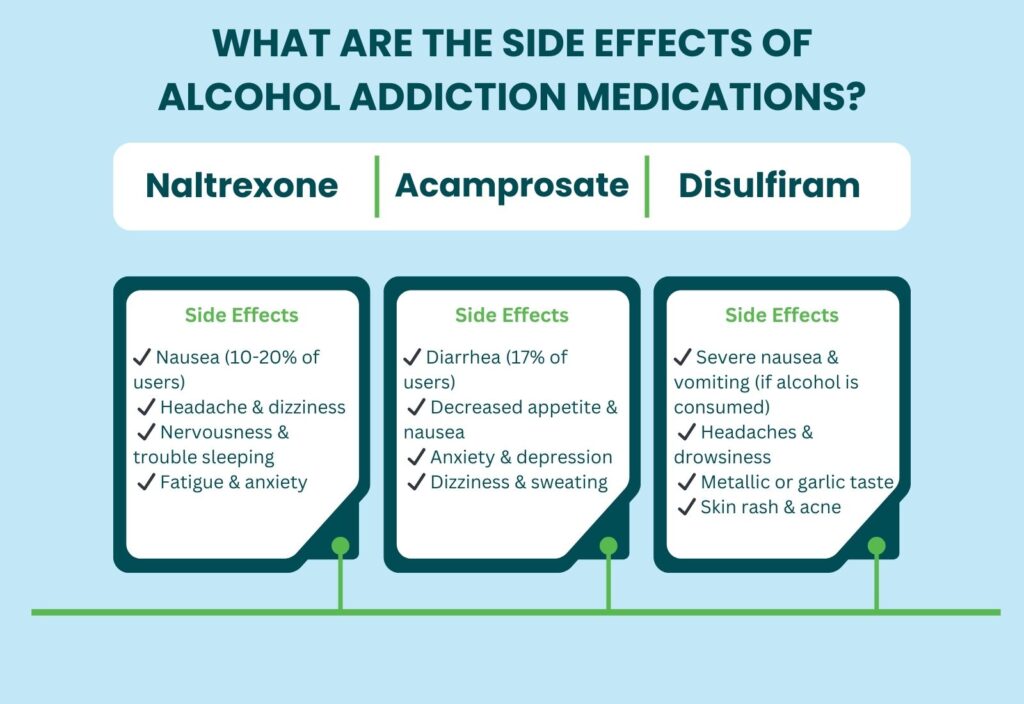
The side effects of alcohol addiction medications are nausea, fatigue, digestive issues, and, in some cases, mood changes. These effects occur because the medications interact with your brain and body’s chemical systems, which are already sensitive due to alcohol use and withdrawal.
For example, naltrexone causes nausea or headaches as your body adjusts to the way it blocks opioid receptors. Acamprosate leads to digestive discomfort like diarrhea or gas because it influences neurotransmitters that also affect gut function. Disulfiram, which creates an aversive reaction to alcohol, occasionally leads to drowsiness or irritability even when alcohol isn’t consumed.
While these side effects are uncomfortable, they are usually temporary and manageable under a doctor’s supervision. Most people find that the benefits outweigh the risks, especially when the medication is part of a broader treatment plan.
Who Can Prescribe Medication for Alcohol Use Disorder in New Jersey?
Medication for alcohol use disorder can be prescribed by licensed healthcare providers, including primary care physicians, psychiatrists, addiction specialists, and nurse practitioners. These professionals assess your medical history, current alcohol use, and treatment goals before recommending a specific medication.
In many states, including New Jersey, telehealth providers and certified addiction treatment programs also prescribe these medications as part of outpatient services. It’s important to work with a provider who understands both the physical and psychological aspects of alcohol addiction to ensure you receive the right medication and follow-up care.
Can You Take Alcohol Addiction Medication While Still Drinking?
Yes, some alcohol addiction medications, like naltrexone, can be taken while you’re still drinking. These medications are designed to reduce the pleasure you get from alcohol, manage withdrawal, which helps you gradually cut back and transition into sobriety.
However, others, like disulfiram, should never be taken while drinking, as they cause severe physical reactions such as nausea, chest pain, or difficulty breathing. That’s why it’s crucial to follow a healthcare provider’s guidance on when and how to begin medication safely.
Are you covered for treatment?


Valley Spring Recovery Center is an approved provider for Blue Cross Blue Shield and Cigna, while also accepting many other major insurance carriers.
Check Coverage Now!What Are Natural Alternatives to Alcohol Addiction Medication?
Natural or non-prescription alternatives to medication include nutritional therapy, exercise, mindfulness practices, and support groups like Alcoholics Anonymous (AA). While these approaches don’t alter brain chemistry the way medications do, they strengthen coping skills, reduce stress, and support long-term recovery when used consistently.
The alternatives to alcohol addiction medication are:
- Nutritional therapy: A healthy diet helps repair the physical damage caused by alcohol and rebalance brain chemicals like serotonin and dopamine. Foods rich in omega-3s, B vitamins, and magnesium support brain health and reduce mood swings during recovery.
- Exercise: Physical activity releases endorphins, which naturally boost mood and reduce anxiety, two common triggers for alcohol use. Activities like walking, swimming, or yoga also improve sleep and energy levels over time.
- Mindfulness and meditation: Practices like deep breathing, guided meditation, or progressive muscle relaxation help calm the nervous system. These techniques reduce stress and increase awareness of cravings, giving you better control over impulses.
- Support groups: Groups such as Alcoholics Anonymous (AA), SMART Recovery, or Refuge Recovery offer peer support, accountability, and community. Sharing experiences with others who understand your struggle reduces isolation and reinforces motivation.
- Herbal supplements (with caution): Some people explore herbal options like kudzu root or milk thistle, though scientific evidence is limited. Always consult a healthcare provider before using supplements, as they interact with medications or have side effects.
Which Treatment Works Best for Alcohol Addiction- Medication, Therapy, or Both?
Both medication and therapy work best for alcohol addiction when used together, offering a more complete and personalized approach to recovery. Medication helps manage the biological aspects of addiction, such as cravings and withdrawal, while therapy addresses the psychological patterns, trauma, and behaviors that contribute to alcohol use.
Combining behavioral therapy with medication doubles the likelihood of sustained abstinence compared to using either approach alone. Alcohol addiction treatment options include cognitive behavioral therapy (CBT), motivational interviewing, or family-based interventions, all of which help you build healthier coping skills and prevent relapse over the long term.
Is It Safe to Combine Alcohol Addiction Medications With Other Drugs?
Yes, it is often safe to combine alcohol addiction medications with other prescribed drugs, but only under medical supervision. Your doctor will evaluate potential interactions and adjust dosages to ensure safety, especially if you’re taking antidepressants, anti-anxiety medication, or drugs for chronic conditions.
You should not combine these medications with alcohol or recreational drugs without consulting a healthcare provider. Mixing substances leads to dangerous side effects, reduced effectiveness, or serious health risks, depending on the combination.
Did you know most health insurance plans cover substance use disorder treatment? Check your coverage online now.
Where Can You Get Alcohol Addiction Medication in New Jersey?
In New Jersey, you can get alcohol addiction medications through primary care clinics, mental health centers, addiction treatment programs, and telehealth services. Many of these facilities offer comprehensive care, including evaluation, prescription, and counseling services, all in one place.
Some trusted alcohol addiction medication resources in New Jersey include:
- ReachNJ: A 24/7 addiction helpline that connects residents with nearby treatment providers who offer medication-assisted treatment (MAT).
- New Jersey Addiction Treatment Centers (NJATC): Statewide clinics providing naltrexone, acamprosate, and disulfiram as part of outpatient care.
- Valley Spring Recovery Center offers medication management that provides the proper prescriptions for each individual’s alcohol addiction severity.
Is Medication for Alcohol Addiction Covered by Insurance in New Jersey?
Yes, most health insurance plans in New Jersey cover FDA-approved medications for alcohol addiction, such as naltrexone, acamprosate, and disulfiram. Coverage typically depends on the specifics of your plan, including prior authorization requirements and pharmacy benefit structures. Patients are encouraged to verify benefits directly with their insurance provider or ask the treatment center for assistance in confirming coverage.
Can Outpatient Programs in New Jersey prescribe alcohol addiction medication?
Yes, many outpatient programs in New Jersey are licensed to prescribe FDA-approved medications for alcohol addiction, such as naltrexone, acamprosate, or disulfiram. These prescriptions are typically managed by medical professionals like addiction medicine physicians or psychiatric nurse practitioners as part of a comprehensive treatment plan that may also include therapy and behavioral support.
Contact us today to schedule an initial assessment or to learn more about our services. Whether you are seeking intensive outpatient care or simply need guidance on your drug addiction journey, we are here to help.
Do telehealth providers prescribe medication for alcohol addiction?
Yes, qualified telehealth providers can prescribe medications for alcohol addiction if they are licensed in the state where the patient resides and follow proper evaluation protocols. Telehealth platforms may offer virtual assessments, ongoing monitoring, and e-prescriptions to local pharmacies, allowing patients to access care without visiting a clinic in person. However, some medications may require in-person visits or additional monitoring depending on the specific treatment plan.
Share This Post

Valley Spring Editorial Team
All author posts
Our Therapuetic Recovery Programs
Are you covered for treatment?


Valley Spring Recovery Center is an approved provider for Blue Shield of California and Cigna, while also accepting many other major insurance carriers.
Check Coverage Now!