Alcohol Addiction Treatment: Definition, Types, Alternative Treatments, Relapse Prevention

Alcohol addiction treatment offers a path to recovery through medical care, therapy, and long-term support. In 2021, over 31,000 New Jersey residents were admitted to treatment for alcohol use, making it the second leading cause of rehab admissions after heroin, as reported by the New Jersey Department of Human Services, Division of Mental Health and Addiction Services.
The main types include inpatient rehab, where patients stay at a facility; outpatient programs, which allow flexible treatment while living at home; detox programs, to manage withdrawal symptoms; and medication-assisted treatment (MAT) using drugs like naltrexone or acamprosate.
Alternative treatments are holistic approaches such as acupuncture, yoga, or nutritional therapy, combined with therapy.
Relapse prevention focuses on identifying triggers, using coping strategies, attending support groups like AA, and sometimes continuing medication or therapy to maintain recovery
What Is Alcohol Addiction Treatment?
Alcohol addiction treatment is a structured approach designed to help individuals overcome alcohol dependence and achieve long-term recovery. It combines medical detox, therapy, and medication to manage withdrawal, reduce cravings, and change drinking behavior. Treatment is tailored to each person’s needs and includes support groups and relapse prevention to maintain sobriety and rebuild life stability.
Did you know most health insurance plans cover substance use disorder treatment? Check your coverage online now.
What Are the Different Types of Alcohol Addiction Treatment?
The different types of alcohol addiction treatment are medical detox, behavioral therapies, medications, and support groups, each playing an integral role in recovery. These methods help individuals manage withdrawal symptoms, change unhealthy behaviors, reduce cravings, and build a strong support system.

The different types of alcohol addiction treatment are as follows:
1. Medical Detox
Medical detox is the first step in treatment and helps individuals safely stop drinking under medical supervision. It manages withdrawal symptoms using medication and monitors vital signs to prevent complications like seizures or delirium tremens. Research by Mirijello A. et al. 2015, titled “Identification and management of alcohol withdrawal syndrome,” states that up to 50% of people with alcohol use disorder (AUD) develop withdrawal symptoms, with severe cases progressing to delirium tremens (DTs), a dangerous condition.
2. Behavioral Therapies
Behavioral therapies address the psychological and emotional aspects of alcohol addiction by modifying thought patterns and promoting healthier coping mechanisms. The key behavioral therapies to treat alcohol addiction include cognitive behavioral therapy (CBT), Dialectical Behavioral Therapy (DBT), Motivational Interviewing (MI), and Contingency Management (CM).
The key behavioral therapies used in alcohol addiction treatment include:
- Cognitive Behavioral Therapy (CBT): CBT focuses on identifying negative thought patterns and replacing them with healthier ones to reduce alcohol use. A study by Miller CB et al. in 2020 found that combining CBT with other therapies led to a 60% drop in relapse rates.
- Dialectical Behavioral Therapy (DBT): DBT teaches emotion regulation and stress management without turning to alcohol. Maffei C et al. in 2018 found that 73.2% of individuals who completed DBT skills training remained abstinent by the program’s end.
- Motivational Interviewing (MI): MI builds motivation to quit alcohol by helping individuals clarify personal reasons for change. A study by Foxcroft DR et al. in 2016 showed that MI reduced alcohol use and peak blood alcohol concentration in young adults aged 15 to 24.
- Contingency Management (CM): CM offers rewards for staying sober and encourages consistent treatment participation. Higgins ST, Petry NM. et al. 1999 demonstrated that CM improves sobriety rates, treatment attendance, and progress toward personal goals like employment.
Contact us today to schedule an initial assessment or to learn more about our services. Whether you are seeking intensive outpatient care or simply need guidance on your drug addiction journey, we are here to help.
3. Medications
Medications play an integral role in alcohol addiction treatment by helping manage cravings and withdrawal symptoms. Research published in JAMA Psychiatry confirms that FDA-approved alcohol addiction medication significantly reduces alcohol consumption and increases abstinence rates.
The following alcohol addiction medications are used to treat alcohol addiction:
- Naltrexone: Naltrexone blocks alcohol’s pleasurable effects and reduces cravings. A study by Anton RF. et al. 2008 shows that individuals who use naltrexone with therapy are 25% more likely to stay sober.
- Acamprosate: Acamprosate stabilizes brain activity affected by long-term alcohol use and helps manage cravings and withdrawal symptoms.
- Disulfiram: Disulfiram causes unpleasant symptoms when alcohol is consumed, making it an effective deterrent for individuals committed to staying sober.
4. Support Groups
Support groups provide peer support, accountability, and a sense of community, all of which are important for long-term recovery. Individuals who participate in support groups have a higher likelihood of maintaining sobriety than those who do not.
The following support groups help treat alcohol addiction:
- Alcoholics Anonymous (AA): AA is a 12-step program that promotes spiritual growth and mutual support. Friedman R. 2014 found that involvement in AA increases the chances of long-term sobriety by up to 66%.
- SMART Recovery: SMART Recovery offers a science-based approach using behavioral techniques to manage addiction without a spiritual framework.
- Family-Based Support Groups: Groups like Al-Anon support families of individuals with alcohol addiction, improving the recovery environment at home.
What Are the Different Levels of Care for Alcohol Addiction Treatment Available?
Different levels of care for alcohol addiction treatment are available: inpatient treatment, outpatient treatment, sober living, and aftercare. These levels are designed to provide varying degrees of support based on the severity of the addiction and individual needs.
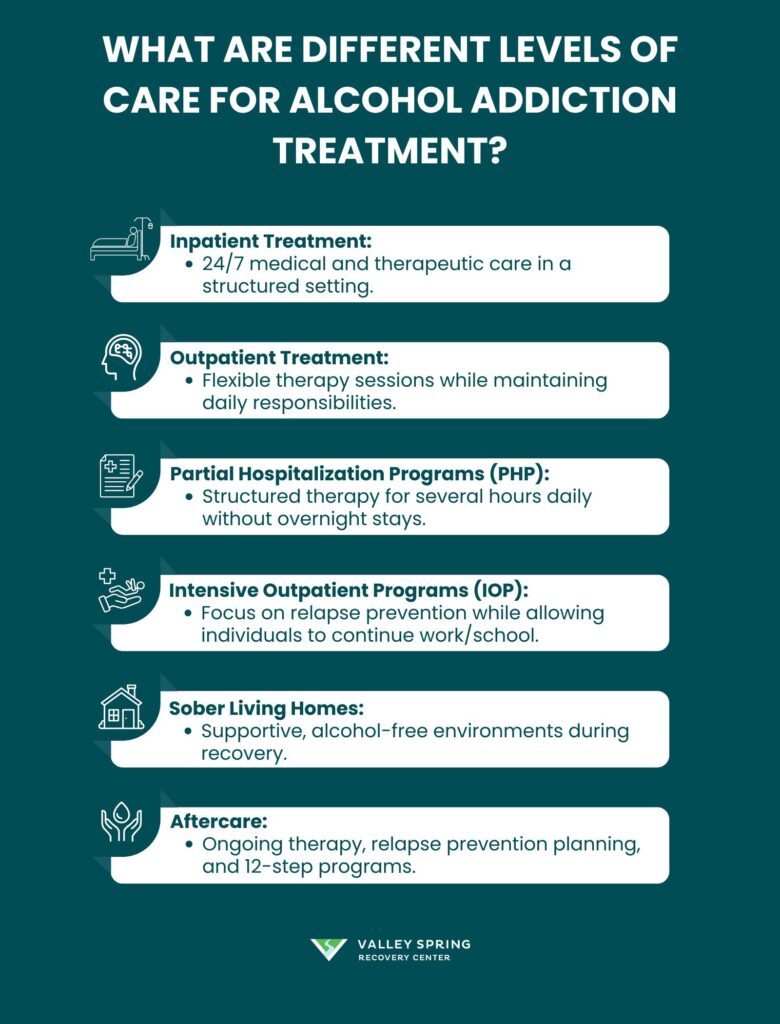
Different levels of care for alcohol addiction treatment are as follows:
- Inpatient Treatment: Inpatient treatment, or residential rehab, provides 24/7 medical and therapeutic support in a structured environment. It includes medically supervised detox, individual and group therapy, and holistic treatments to address the physical, emotional, and psychological aspects of addiction. According to a study by Skorkovsky T. et al. 2023, titled “Evaluation of the success rate of various inpatient alcohol addiction treatment programs in the Czech Republic and their comparison,” medium-term inpatient treatment of alcohol addiction leads to one year of abstinence in 34% to 76 % of patients.
- Outpatient Treatment: Outpatient programs allow individuals to receive treatment while maintaining their daily responsibilities. Patients attend scheduled therapy sessions, counseling, and medical check-ins, making it an ideal option for those with mild to moderate alcohol use disorder who have strong support systems at home.
- Partial Hospitalization Programs (PHP): PHPs offer a higher level of care than outpatient programs but do not require overnight stays. Patients participate in structured treatment sessions for several hours a day, multiple days a week, including medical monitoring, behavioral therapy, and skill-building exercises to support recovery.
- Intensive Outpatient Programs (IOP): IOPs provide a step down from PHPs, offering a structured yet flexible treatment plan that includes multiple weekly therapy sessions. These programs focus on relapse prevention, coping strategies, and addressing co-occurring mental health disorders while allowing patients to continue work or school.
- Sober Living: Sober living homes provide a supportive, alcohol-free environment for individuals transitioning from intensive treatment to independent living. Residents follow house rules, attend support meetings, and work towards reintegration into daily life while maintaining sobriety, as studied by Polcin DL., et al., 2010, titled “What did we learn from our study on sober living houses and where do we go from here?” At ORS, abstinence increased from 11% at baseline to 68% at 6 and 12 months, dropping slightly to 46% at 18 months. At CSLT, abstinence rose from 20% at baseline to 40% at 6 months, 45% at 12 months, and 42% at 18 months.
- Aftercare: Aftercare includes long-term support strategies such as continued therapy, 12-step programs, relapse prevention planning, and sober mentorship. It sustains recovery, reduces relapse risks, and helps individuals build a fulfilling, sober lifestyle.
Rediscover Life at Valley Spring Recovery Center
Get the compassionate support you deserve. We're here to help you reclaim joy, wellness, and a brighter future.
Verify Benefits
What Are Alternative Treatments for Alcohol Addiction?
Alternative treatments for alcohol addiction are holistic therapies, nutrition-based interventions, and mindfulness practices. They complement standard treatment for alcohol addiction by promoting overall well-being and long-term recovery.
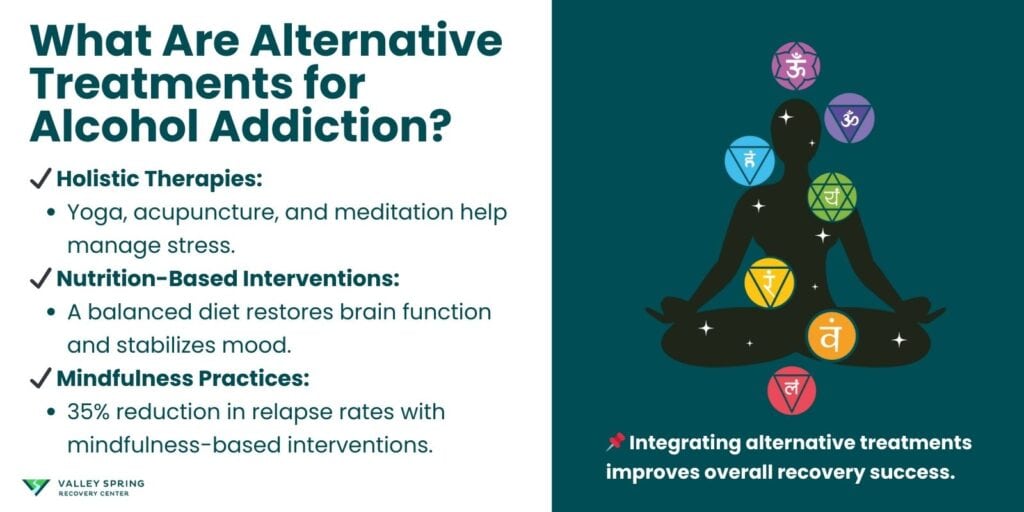
Alternative treatments for alcohol addiction are as follows:
- Holistic Therapies: Holistic approaches such as acupuncture, yoga, and meditation help regulate stress, balance emotions, and strengthen mental focus during recovery. A study by Kuppili PP., et al. 2018, titled “Role of Yoga in Management of Substance-use Disorders: A Narrative Review,” found that yoga is an effective complementary treatment for alcohol use disorder, improving emotional regulation and reducing cravings in randomized control trials.
- Nutrition-Based Interventions: A balanced diet helps in recovery by replenishing nutrients lost due to alcohol abuse. Proper nutrition helps restore brain function, stabilize mood, and reduce cravings, improving overall physical and mental health during recovery.
- Mindfulness Practices: Mindfulness techniques like meditation and deep breathing improve impulse control, reduce stress-related triggers, and lower the risk of relapse. A 2021 study in the Journal of Substance Abuse Treatment showed that mindfulness-based interventions reduced relapse rates by 35%, with Mindfulness-Based Relapse Prevention (MBRP) blending these techniques with cognitive strategies to support long-term sobriety.
What Are the Most Common Triggers for Alcohol Relapse?
The most common triggers for alcohol relapse are stress, peer pressure, negative emotions, and exposure to alcohol-related environments. These factors significantly increase the risk of returning to drinking, especially without proper coping strategies and support systems.
The most common triggers for alcohol relapse are as follows:
- Stress: High levels of stress, whether from work, relationships, or financial struggles, are a leading cause of relapse in individuals with Alcohol Use Disorder (AUD). A study by Yazıcı AB, Bardakçı MR. et al. 2023, titled “Factors Associated with Relapses in Alcohol and Substance Use Disorder,” reveals that more than 60% of relapse cases in individuals with AUD are linked to stress-related triggers.
- Peer Pressure: Social situations where alcohol is present make it difficult for individuals in recovery to resist temptation. Being around friends or family who drink, especially without a strong support system, increases the likelihood of relapse.
- Negative Emotions: Feelings of loneliness, anxiety, depression, and anger drive individuals to seek alcohol as a coping mechanism. Without healthier emotional regulation strategies, these emotions become powerful relapse triggers.
- Environmental Cues: Places, people, or events associated with past drinking experiences reignite cravings. Walking into a familiar bar or hearing certain songs that are linked to drinking habits triggers a relapse.
- Overconfidence in Recovery: Some individuals feel they have complete control over their drinking urges and test themselves by having “just one drink.” This quickly spirals into full relapse, highlighting the importance of continued commitment to sobriety.
Is Relapse Common After Alcohol Addiction Treatment?
Yes, relapse is common after alcohol addiction treatment. Research indicates that relapse rates for substance use disorders, including alcohol addiction, range between 40% and 60%, similar to other chronic conditions like hypertension and diabetes, according to a study by McLellan AT et al., 2000, “Drug dependence, a chronic medical illness: implications for treatment, insurance, and outcomes evaluation.”
Can Alcohol Addiction Treatment Cure Alcoholism?
No, alcohol addiction treatment cannot cure alcoholism, but it helps individuals manage the condition effectively. According to the National Institute on Drug Abuse (NIDA), combining therapies such as behavioral counseling, medications, and support groups significantly improves long-term sobriety outcomes.
What Is the Success Rate of Alcohol Addiction Treatment?
The success rate of alcohol addiction treatment is around 50% to 60%, as surveyed by the National Institute on Alcohol Abuse and Alcoholism (NIAAA). The success rate varies based on the type of treatment and individual commitment. Success increases with continued aftercare, such as counseling, medication-assisted treatment (MAT), and peer support groups.
Is Combining Two Treatments for Alcohol Addiction More Effective?
Yes, combining treatments like medication-assisted treatment (MAT) and behavioral therapy improves recovery outcomes, according to research by Anton RF et al., 2006, titled “Combined pharmacotherapies and behavioral interventions for alcohol dependence.” MAT, using medications like naltrexone and acamprosate, reduces cravings and prevents relapse, while behavioral therapies like Cognitive Behavioral Therapy (CBT) address thought patterns and triggers of alcohol addiction.
How to Choose the Right Alcohol Addiction Treatment?
To choose the proper alcohol addiction treatment, individuals should assess their specific needs, treatment goals, and the quality of available rehab facilities. Evaluating evidence-based approaches and licensed professionals helps in making an informed decision.
To choose the proper alcohol addiction treatment, the following things must be considered:
- Accreditation and Licensing: Ensure the rehab facility is accredited by recognized organizations such as the Joint Commission or CARF. Licensed professionals, including therapists and medical staff, indicate a legitimate and high-quality treatment program.
- Evidence-Based Treatment Approaches: Programs should include scientifically supported therapies like Cognitive Behavioral Therapy (CBT), Medication-Assisted Treatment (MAT), and motivational interviewing. Facilities that follow evidence-based treatment methods improve the chances of long-term recovery.
- Types of Treatment Programs: Different programs, such as inpatient, outpatient, and partial hospitalization, cater to varying levels of addiction severity. Selecting a program that aligns with individual needs enhances treatment effectiveness.
- Location and Environment: The rehab’s location influences recovery. Some individuals benefit from a local facility with family support, while others prefer a distant rehab for a fresh start and fewer triggers.
- Personalized Treatment Plans: An effective rehab should tailor treatment plans to individual needs, addressing co-occurring disorders, mental health conditions, and lifestyle factors. Personalized care improves long-term success rates.
Does Alcohol Addiction Treatment Differ for Men and Women?
Yes, alcohol addiction treatment differs for men and women due to biological, psychological, and social differences. Women experience a faster progression of alcohol dependence and require treatment that addresses co-occurring mental health disorders, trauma, and hormonal influences. Men, on the other hand, benefit from therapy focusing on behavioral patterns, social expectations, and peer support.
How Long Does Alcohol Addiction Treatment Take?
Alcohol addiction treatment takes anywhere from 30 days to several months, depending on the severity of the addiction and the chosen treatment approach. Short-term programs, such as 30-day inpatient rehab, provide intensive care, while long-term options like 60- to 90-day rehab or outpatient treatment offer ongoing support.
Share This Post

Valley Spring Editorial Team
All author posts
Our Therapuetic Recovery Programs
Are you covered for treatment?




Valley Spring Recovery Center is an approved provider for Blue Shield of California and Cigna, while also accepting many other major insurance carriers.
Check Coverage Now!