Smartphone Addiction: Symptoms, Causes, Effects, Treatment
Smartphone addiction occurs when a mobile device shifts from being a helpful tool to a compulsive necessity that dominates attention, emotions, and behavior. It reflects a loss of control over smartphone use that disrupts sleep, focus, relationships, and emotional health.
A global meta-analysis in BioMed Central reported that 46.16% of adults experience problematic smartphone use. Smartphone addiction drives prolonged screen time through dopamine-mediated reward pathways. Digital platforms exploit neurobiological reward systems to reinforce habitual interaction, increasing dependency and impacting cognitive and social functioning.
Smartphone addiction develops when excessive use becomes compulsive and disrupts normal life. Symptoms include constant checking, anxiety during disconnection, and loss of control. It affects brain function, mood, relationships, and sleep. Causes of smartphone addiction involve dopamine-driven reward loops, emotional reliance, and persuasive app design. Smartphone addiction is effectively treated using CBT, mindfulness, and digital detox to restore healthy use.
What Is Smartphone Addiction?
Smartphone addiction is a behavioral dependency in which an individual develops an uncontrollable urge to use a smartphone excessively. Smartphone addiction interferes with normal functioning in work, social life, and emotional health.
Addiction to smartphones involves repetitive checking behaviors, compulsive engagement with apps, and psychological distress when the device is unavailable. The condition reflects a maladaptive pattern of technology use driven by dopamine-based reward mechanisms in the brain, similar to other behavioral addictions such as gambling or gaming.
Did you know most health insurance plans cover substance use disorder treatment? Check your coverage online now.
How Many People Struggle With Smartphone Addiction Today?
Adults worldwide exhibit smartphone addiction at a rate of 46.16%, according to a BioMed Central meta-analysis. Smartphone users report problematic mobile use in 61.4% of cases, based on a systematic review published in PMC.
Among these users, males experience higher rates of problematic use at 68.4%, while females report 53.4%. Behavioral dependence on smartphones arises from dopamine-driven reward mechanisms, which reinforce habitual engagement. Digital design features further promote constant interaction, increasing the likelihood of compulsive usage patterns.
In the United States, surveys by DemandSage indicate that 57% of adults believe they are addicted to their phones. These findings show that nearly one in two adults globally struggles with excessive smartphone use.
Younger populations, particularly those aged 18–35, represent the highest-risk group of smartphone addiction due to greater digital engagement, social media dependency, and continuous connectivity that reinforces compulsive checking behavior.
Is Smartphone Addiction Real?
Yes, smartphone addiction is real in the sense that measurable patterns of overuse, dependency, and functional impairment have been observed across multiple studies. While it does not yet appear formally in the DSM-5 as a standalone diagnosis, the phenomenon meets many criteria of behavioural addiction: loss of control, tolerance, withdrawal-like symptoms, and persistence despite harm.
Is Phone Addiction a Mental Illness?
No, phone addiction is not universally classified as a mental illness, but it shares characteristics with recognised conditions such as internet gaming disorder. The absence of formal classification does not negate its clinical relevance.
A study by Khan A, et al. 2023, titled “Excessive Smartphone Use is Associated with Depression, Anxiety, Stress, and Sleep Quality of Australian Adults,” analyzed 655 adults (mean age = 24.6 years; 65.6% female) and found that 24.4% had high-severe smartphone use, which was linked to higher depression scores (12.1 → 14.2 → 17.8) and poorer sleep quality (6.7 → 7.5 → 8.5) as smartphone use increased.
Contact us today to schedule an initial assessment or to learn more about our services. Whether you are seeking intensive outpatient care or simply need guidance on your drug addiction journey, we are here to help.
What Is Nomophobia?
Nomophobia (short for “no-mobile-phone phobia”) refers to the fear of being without one’s smartphone, losing signal, running out of battery or being unable to access mobile apps and social networks.
The term nomophobia captures one facet of smartphone addiction, and that is anxiety triggered by separation or disconnection from the device. A study by Muppalla SK et al. 2023, titled “Effects of Excessive Screen Time on Child Development: An Updated Review and Strategies for Management,” found that too much screen time leads to sleep issues (28%) and anxiety (20%).
When Did Smartphone Addiction Begin to Gain Recognition?
Smartphone addiction began to gain recognition in the late 2000s with the rise of smartphones, mobile internet, and social media. As fully featured mobile devices replaced earlier phones, features such as infinite scrolling, push notifications, and on-demand connectivity intensified usage patterns.
A 2021 meta-analysis by Olson JA et al., analyzing 83 samples from 24 countries and 33,831 participants aged 15–35, found that problematic smartphone use has increased significantly worldwide, with China, Saudi Arabia, and Malaysia showing the highest rates and Germany and France the lowest.
Do Medical Authorities recognize Smartphone Addiction?
No, major medical authorities currently do not list smartphone addiction as a standalone official diagnosis, but they acknowledge digital overuse as a behavioural concern. The World Health Organisation’s ICD-11 classifies gaming disorder, and similar frameworks are examining patterns of technology overuse.
Clinical guidelines increasingly recommend screening for excessive smartphone use when it is associated with mood, sleep, or attention issues.
Rediscover Life at Valley Spring Recovery Center
Get the compassionate support you deserve. We're here to help you reclaim joy, wellness, and a brighter future.
Verify Benefits
What Are the Symptoms of Smartphone Addiction?

The symptoms of smartphone addiction include persistent, compulsive patterns of smartphone use that interfere with mental health, relationships, and daily functioning. These symptoms appear across behavioral, emotional, and cognitive domains, similar to other behavioral addictions, and early recognition helps prevent escalation.
Key symptoms of smartphone addiction include:
- Compulsive checking behavior: Individuals repeatedly check messages, notifications, or apps without conscious intent, during conversations, meals, or driving. Research in Frontiers in Psychology links this habitual checking to reward-loop activation in the brain’s dopaminergic system, reinforcing compulsive use patterns.
- Preoccupation and craving: Many users experience anxiety or discomfort when separated from their phone or when battery levels are low, reflecting psychological dependence.
- Failed attempts to cut back: Despite awareness of negative outcomes, such as poor academic performance, reduced productivity, or disrupted sleep, users fail to reduce their phone time. This loss of control aligns with the criteria seen in behavioral addictions like gambling disorder.
- Tolerance development: Over time, individuals spend increasing hours on their devices or seek more stimulating content to achieve the same level of satisfaction or connection. Evidence from a study by Nagata, J.M., et al. 2024, titled “Screen time and mental health: a prospective analysis of the Adolescent Brain Cognitive Development (ABCD) Study,” suggests this pattern results from neural adaptation in the brain’s reward circuitry.
- Withdrawal-like reactions: When smartphone access is restricted, users show irritability, restlessness, or anxiety. This withdrawal profile has been documented in multiple cross-sectional studies, like one by Eide TA., et al. 2018, titled “Smartphone Restriction and Its Effect on Subjective Withdrawal Related Scores,” demonstrating physiological arousal similar to other forms of behavioral withdrawal.
- Functional impairment: Excessive smartphone use leads to social isolation, strained relationships, concentration deficits, and emotional dysregulation. A 2022 review in Computers in Human Behavior confirms that chronic smartphone overuse correlates strongly with poor sleep quality, depressive symptoms, and attention problems.
How Many Hours of Phone Usage Is Considered Addiction?
Spending five to six hours or more per day on a smartphone for non-work purposes is associated with smartphone addiction. While no universal threshold exists, research by Wacks Y., et al. 2021 titled “Excessive Smartphone Use Is Associated With Health Problems in Adolescents and Young Adults,” found that individuals averaging about 5.75 ± 3.44 hours daily were significantly more likely to meet criteria for problematic use.
What Are the Causes of Smartphone Addiction?
The causes of smartphone addiction include neurobiological, psychological, and environmental mechanisms that reinforce compulsive use. Smartphone addiction develops through the interaction of brain reward pathways, emotional regulation needs, and persuasive technology design.
The main causes of smartphone addiction are as follows:
- Neurological reward-circuit activation: Repeated smartphone use activates the mesolimbic dopamine system, reinforcing reward-seeking behavior through notifications, likes, and variable-ratio feedback. Neuroimaging evidence from Lin HM et al., 2022, titled “Structural and Functional Neural Correlates in Individuals with Excessive Smartphone Use: A Systematic Review and Meta-Analysis,” confirms that excessive smartphone use alters brain regions associated with reward processing, impulse control, and emotional regulation.
- Emotional regulation difficulties: Many individuals turn to their smartphones to alleviate negative moods such as anxiety, stress, or loneliness. Over time, this reliance conditions emotional dependence rather than adaptive coping.
- Personality and developmental vulnerability: Traits such as impulsivity, low self-control, and high neuroticism increase susceptibility. Adolescents and young adults, whose prefrontal cortexes are still maturing, are at particularly high risk.
- Environmental and social triggers: Continuous online accessibility, app design optimized for engagement, and social pressure to stay connected normalize excessive use.
- Behavioral conditioning by app design: Push notifications, reward algorithms, and infinite scrolling exploit cognitive biases, creating intermittent reinforcement that maintains compulsive checking behavior.
Are you covered for treatment?


Valley Spring Recovery Center is an approved provider for Blue Cross Blue Shield and Cigna, while also accepting many other major insurance carriers.
Check Coverage Now!What Are the Effects of Smartphone Addiction?
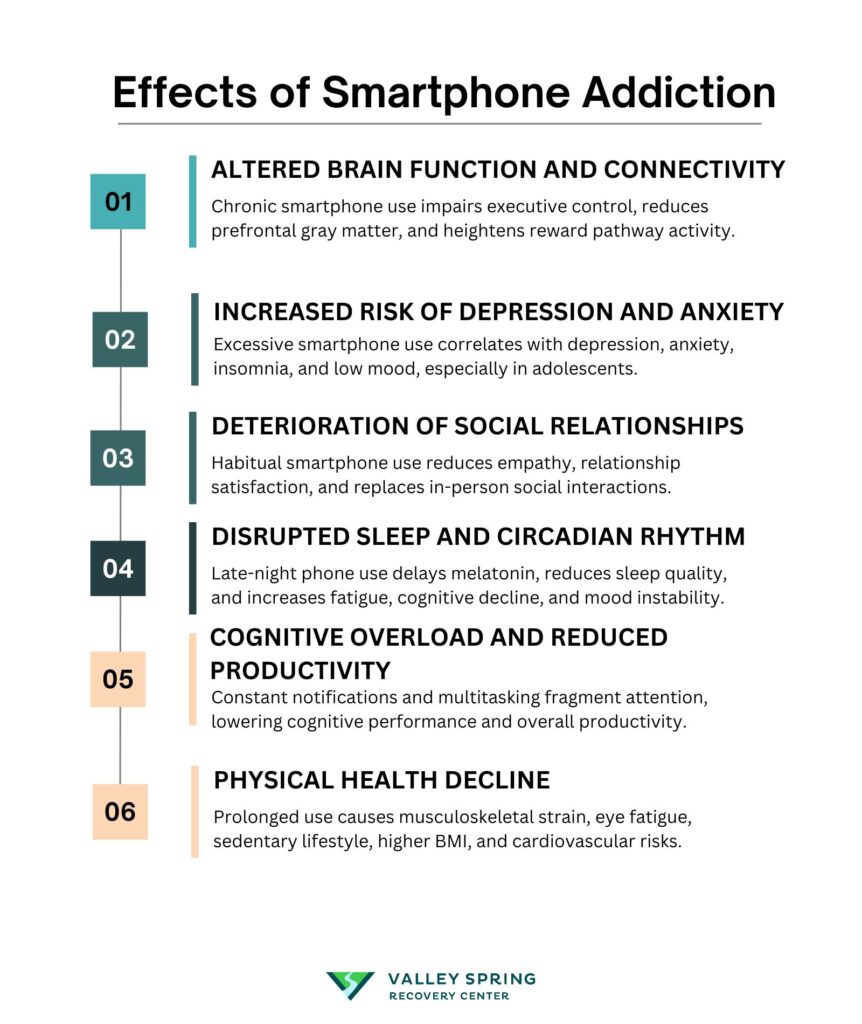
The effects of smartphone addiction include altered brain function, increased risk of depression, and deterioration of social relationships. Evidence from global studies demonstrates that persistent overuse alters brain function, emotional stability, and social well-being, requiring structured therapeutic intervention.
The key effects of smartphone addiction are as follows:
- Altered brain function and neural connectivity: Chronic smartphone use disrupts the brain’s executive control systems. Neuroimaging studies reveal reduced gray matter volume in the prefrontal cortex and heightened activation in the ventral striatum, the same reward pathways implicated in substance use disorders. Individuals with high dependence show impaired impulse regulation and attention control. A study in Epidemiology and Psychiatric Sciences reported an odds ratio of 3.3 for psychological distress among smartphone-dependent individuals, indicating significantly higher vulnerability to mental strain.
- Increased risk of depression and anxiety: Excessive smartphone use correlates strongly with depressive and anxiety symptoms. A Journal of Affective Disorders analysis found that adolescents who spend more than 6 hours per day on smartphones were nearly twice as likely to report clinical depression. Similarly, a Guardian-reported survey showed 1 in 5 adolescents with problematic use experienced insomnia, anxiety, or low mood.
- Deterioration of social relationships: Smartphone addiction erodes interpersonal connections by substituting device-mediated communication for in-person interaction. Habitual smartphone checking behavior is linked to lower empathy and relationship satisfaction.
- Disrupted sleep quality and circadian rhythm: Late-night smartphone engagement interferes with sleep by delaying melatonin release and stimulating cognitive arousal. A PMC study found that 81.4% of respondents reported that their phones kept them awake past midnight, leading to poorer sleep efficiency and next-day fatigue. Prolonged sleep disruption is associated with impaired concentration, memory decline, and a higher risk of mood instability, further perpetuating the addiction cycle.
- Cognitive overload and reduced productivity: Constant notifications and multitasking demands from smartphone use fragment attention, lowering cognitive performance.
- Physical health decline: Prolonged smartphone use contributes to musculoskeletal strain, eye fatigue, and sedentary lifestyle risks. A study by Devi KA, Singh SK. et al. 2023, titled “The hazards of excessive screen time: Impacts on physical health, mental health, and overall well-being,” found 70% of participants with high screen exposure reported neck or shoulder pain, while over 50% experienced digital eye strain or headaches. Reduced physical activity from excessive phone time also correlates with higher BMI and cardiovascular risk factors.
What Are the Treatment Options for Smartphone Addiction?

Treatment options for smartphone addiction include structured behavioral interventions, digital hygiene practices, and clinical therapies that target compulsive use patterns. The goal of these addiction treatment approaches is to reestablish healthy device boundaries, retrain attention systems, and strengthen emotional regulation.
Key treatment options for smartphone addiction are as follows:
- Cognitive-behavioral therapy (CBT): CBT helps individuals identify thought patterns and triggers driving excessive phone use. It replaces maladaptive behaviors, such as checking the device during stress, with constructive alternatives like journaling or breathing exercises. According to a study by Agbaria Q. et al. 2022, titled “Cognitive behavioral intervention in dealing with Internet addiction among Arab teenagers in Israel,” CBT reduces daily phone time by up to 40% and improves impulse control.
- Digital detox programs: A digital detox involves voluntarily disconnecting from digital devices for specific intervals to reset neural reward systems. Structured detox programs, lasting from 24 hours to several weeks, allow dopamine regulation to normalize and reduce compulsive checking. Participants report better sleep and improved focus within 7–10 days of reduced use.
- Mindfulness and self-regulation training: Mindfulness-based approaches teach awareness of urges and emotional triggers linked to phone use. Techniques such as guided meditation or mindful breathing enhance tolerance to boredom and stress without resorting to devices.
- Setting digital boundaries: Implementing screen-time limits, disabling notifications, and designating “no-phone zones” create environmental control over temptation cues. These practical steps reduce passive scrolling and reinforce self-discipline, especially before bedtime or during meals.
- Family and social support: Involving family or peers strengthens accountability. Support systems encourage adherence to device limits and foster shared offline engagement, mitigating relapse risk and emotional isolation.
- Therapeutic group sessions: Group-based interventions, modeled after addiction recovery programs, provide community reinforcement. Participants share experiences, discuss coping mechanisms, and track progress, enhancing motivation and self-efficacy.
- Professional counseling and psychiatric support: Severe or comorbid cases involving depression, anxiety, or attention disorders require psychiatric assessment and therapy integration. Clinicians tailor behavioral treatment with adjunct pharmacological care if underlying mental health issues maintain the addiction cycle.
- Digital hygiene education: Responsible technology use builds long-term prevention capacity. It includes awareness of algorithmic reinforcement, promoting offline hobbies, and developing balanced media consumption habits.
Are Evidence-Based Therapies Beneficial in Managing Smartphone Addiction?
Yes, evidence-based therapies are beneficial in managing smartphone addiction. They work because they change the thoughts and habits that drive compulsive use and retrain the brain’s reward and control systems.
CBT breaks automatic checking loops and teaches alternative coping skills. Mindfulness reduces reactivity to urges and increases tolerance of boredom or stress.
Motivational interviewing strengthens internal reasons to cut back and improves adherence.
Clinicians recommend integrating CBT, mindfulness, MI, and related interventions as core evidence-based therapies.
Did you know most health insurance plans cover substance use disorder treatment? Check your coverage online now.
What Is a Digital Detox and Does It Help?
A digital detox involves a planned reduction or temporary cessation of smartphone use. It provides the brain and nervous system time to recalibrate and breaks habitual loops.
Evidence indicates that users who engaged in screen-free periods reported improved mood, sleep, and attention. The practice is most effective when combined with structured reflection and ongoing behavioural change.
How Can Someone Prevent Smartphone Addiction?
Prevention of smartphone addiction hinges on awareness, habit structuring, and environmental support. Effective strategies include using screen-time monitors, setting app limits, creating device-free zones (especially at bedtime), practising mindfulness, and redesigning routines to shift rewards from the device to real-world experiences.
Emerging digital wellness tools that monitor usage and trigger prompts have shown reductions in daily time on device by 7-10% in experimental settings.
What Role Do Social Media and Apps Play in Smartphone Addiction?
Apps and social media platforms employ persuasive design features, such as push notifications, infinite scroll, and reward feedback loops, that drive repeated engagement and reduce cognitive resistance.
Research by Chen X., et al. 2023 titled “Do persuasive designs make smartphones more addictive? – A mixed-methods study on Chinese university students,” shows that 25% of study participants with problematic smartphone use attributed their condition to these persuasive designs. The result is a behavioural pattern in which the user responds reflexively to stimuli, reinforcing the connection to the device.
Share This Post

Valley Spring Editorial Team
All author posts
Our Therapuetic Recovery Programs
Are you covered for treatment?








Valley Spring Recovery Center is an approved provider for Blue Shield of California and Cigna, while also accepting many other major insurance carriers.
Check Coverage Now!