Mary Jane: The Evolution of Marijuana Slang and Modern Clinical Risks
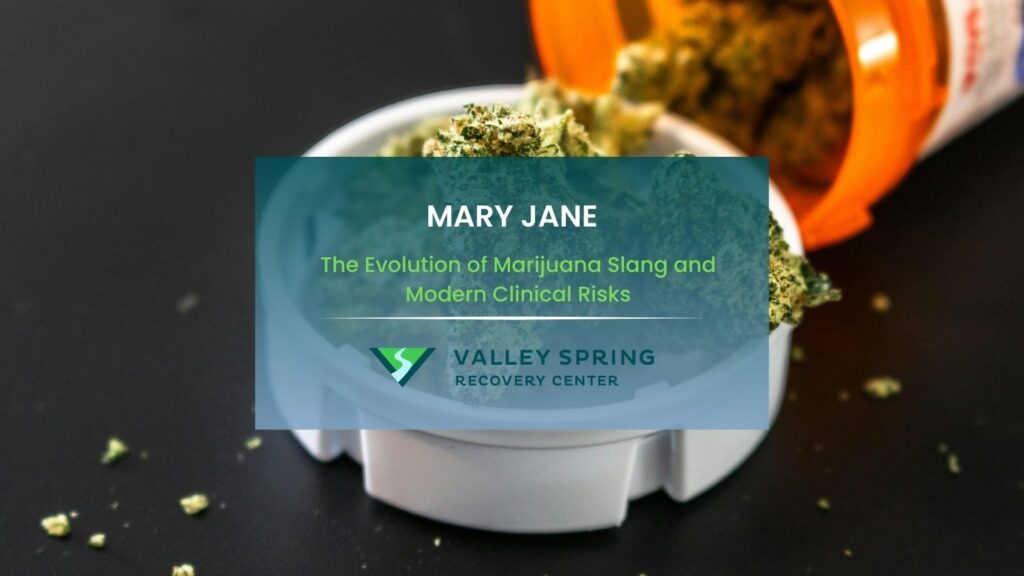
The term “Mary Jane” has evolved from a 1930s prohibition-era code word to a global cultural icon. However, in the 2026 clinical landscape, the “Mary Jane” of the past bears little resemblance to the high-potency cannabis products of today. As legalization expands, so does the prevalence of severe physiological complications, including Cannabinoid Hyperemesis Syndrome (CHS) and permanent cognitive adaptations in heavy users (Gowin et al., 2025).
Highlights
- The Slang Origins: “Mary Jane” is a phonetic translation of the Spanish word marihuana, popularized in American pop culture through 1970s funk and 90s hip-hop.
- Mental Health Correlation: Systematic reviews in 2025 confirm a direct dose-response relationship between high-concentration THC and an elevated risk of psychosis and suicidal ideation (ScienceDaily, 2025).
- The 2025 CHS Epidemic: New 2025 data reveals that 17.8% of daily cannabis users experience symptoms of Cannabinoid Hyperemesis Syndrome, a condition now recognized by the WHO with a specific diagnostic code (WHO, 2025).
- Concentrate Potency: Modern “Mary Jane” concentrates (shatter, dabs) contain up to 80% THC, a 400% increase from 1990s levels, significantly increasing the risk of psychosis (ScienceDaily, 2025).
- Neural Adaptation: The largest brain-imaging study to date found that 63% of heavy lifetime users exhibit reduced activity in the prefrontal cortex, impacting working memory and decision-making (JAMA Network Open, 2025).
- Dependency Statistics: In 2026, Cannabis Use Disorder (CUD) became the second most common condition treated in rehabilitation settings, trailing only alcohol (APA, 2025).
Did you know most health insurance plans cover substance use disorder treatment? Check your coverage online now.
What Is Mary Jane?
“Mary Jane” is a common slang term for marijuana (cannabis that refers to the dried flowers and leaves of the cannabis plant that contain THC, the psychoactive compound that produces a “high.” People use it for recreational effects (relaxation, altered perception, euphoria) and sometimes for medical purposes such as pain relief or nausea control, depending on local laws.
The History of “Mary Jane” Slang
The name “Mary Jane” originated as a literal translation of the Spanish María Juana. During the early 20th century, as the U.S. government began criminalizing the plant, users adopted “Mary Jane” as a female personification to discuss the drug in public without alerting law enforcement.
By the late 1970s, the term moved from underground “jazz culture” to mainstream media, immortalized by Rick James’s 1978 hit “Mary Jane.” Today, while the term feels nostalgic, it serves as an umbrella for a wide array of high-potency products that carry modern clinical risks.
What Is Cannabinoid Hyperemesis Syndrome (CHS)? The 2025 Crisis
Cannabinoid Hyperemesis Syndrome (CHS) is a severe and paradoxical condition in which long-term, heavy cannabis use triggers repeated cycles of uncontrollable nausea, vomiting, and abdominal pain instead of relieving them.
One of the most critical gaps in previous marijuana literature is the discussion of Cannabinoid Hyperemesis Syndrome (CHS). In October 2025, the World Health Organization (WHO) officially established a diagnostic code for CHS in the International Classification of Diseases (ICD), acknowledging it as a distinct medical crisis (WHO, 2025).
CHS is characterized by:
- The Prodromal Phase: Months or years of early morning nausea and abdominal discomfort.
- The Hyperemetic Phase: Severe, intractable vomiting and the hallmark behavior of “compulsive hot showering” to alleviate pain (Sorensen et al., 2025).
- The Recovery Phase: Total cessation of cannabis is the only known cure.
A 2025 nationally representative survey found that over 7.2 million U.S. adults are currently experiencing CHS-like symptoms, yet only 11.5% have received an accurate diagnosis (Hicks & Ilgen, 2026).
Contact us today to schedule an initial assessment or to learn more about our services. Whether you are seeking intensive outpatient care or simply need guidance on your drug addiction journey, we are here to help.
What Is the Effect of High-Potency THC on the Brain?
The effect of high-potency THC on the brain is a dramatic overload of the brain’s dopamine and glutamate systems, which disrupts normal emotional regulation, memory, and reality testing.
The “Mary Jane” smoked in the 1970s contained 3-5% THC. Today’s market is dominated by concentrates (dabs, wax, shatter) that exceed 80% THC. This “high-octane” cannabis is linked to a threefold increase in mortality rates and a tenfold surge in suicide risk among those with Cannabis Use Disorder (ScienceDaily, 2025).
Long-Term Neurobiological Impact
A 2025 study published in JAMA Network Open utilized brain imaging on over 1,000 young adults. The findings were definitive:
- Memory Impairment: 63% of heavy users showed substantially reduced brain activity during working memory tasks.
- Structural Changes: Chronic use exacerbates the thinning of the prefrontal cortex, the area responsible for emotional regulation and impulse control (Gowin et al., 2025).
- Psychosis Link: High-concentration THC is now causally associated with an earlier onset of schizophrenia and acute psychosis (ScienceDaily, 2025).
Common Slang and Street Names (2026 Table)
The common slang and street names for Mary Jane are listed below:
| Category | Common Slang Terms | Context/Meaning |
| Personification | Mary Jane, Aunt Mary, Jane | Classic personified code words. |
| High Potency | Zaza, Gas, Pressure, Loud | Refers to a strong smell or high THC content. |
| Physical Form | Bud, Flower, Nug, Grass, Herb | Refers to the dried plant material. |
| Concentrates | Dabs, Shatter, Wax, Honey Oil | Highly potent extracts (up to 80% THC). |
| Mixed Use | Cocoa Puff, Atom Bomb, Amp Joint | Marijuana laced with cocaine, heroin, or PCP. |
Rediscover Life at Valley Spring Recovery Center
Get the compassionate support you deserve. We're here to help you reclaim joy, wellness, and a brighter future.
Verify Benefits
How Is Marijuana Addiction Treated?
Marijuana addiction is treated with a combination of behavioral therapies, primarily cognitive behavioral therapy (CBT) and motivational enhancement therapy (MET). Treatment includes contingency management that rewards sobriety and works best when combined with multiple approaches. No FDA-approved medications exist for marijuana addiction, but rehab programs, outpatient therapy, and support groups provide structured recovery.
Conclusion
While “Mary Jane” remains a culturally beloved nickname, the clinical reality of 2026 demands a shift in perception. The combination of rising THC potency and the emergence of conditions like CHS means that cannabis use is no longer a “risk-free” endeavor. For those struggling with dependency or the physical toll of high-potency use, professional intervention remains the only path to neurobiological recovery.
References
American Psychological Association (APA). (2025, June). The changing marijuana landscape: What you need to know. https://www.apa.org/monitor/2025/06/marijuana-potency-policy-risk
Gowin, J., et al. (2025). Largest study ever done on cannabis and brain function finds impact on working memory. JAMA Network Open. https://news.cuanschutz.edu/news-stories/largest-study-ever-done-on-cannabis-and-brain-function-finds-impact-on-working-memory
Hicks, B. M., & Ilgen, M. A. (2026). Prevalence and correlates of symptoms of cannabinoid hyperemesis syndrome in the United States. medRxiv. https://doi.org/10.64898/2026.01.25.26344780
ScienceDaily. (2025, September 2). Stronger weed, higher risk? Potent THC linked to psychosis and addiction. Source: American College of Physicians. https://www.sciencedaily.com/releases/2025/09/250901104647.htm
Sorensen, S., et al. (2025, February 13). Cannabinoid hyperemesis syndrome: A rising complication. PMC – NIH. https://pmc.ncbi.nlm.nih.gov/articles/PMC11910202/
World Health Organization (WHO). (2025). International statistical classification of diseases and related health problems (11th ed.). [Diagnostic code for CHS established October 2025].
Share This Post

Kristie Ashe
All author posts
Our Therapuetic Recovery Programs
Are you covered for treatment?


Valley Spring Recovery Center is an approved provider for Blue Shield of California and Cigna, while also accepting many other major insurance carriers.
Check Coverage Now!