Psilocybin Mushroom Dependency: Risks of High-Potency Strains and Psychological Addiction
Psilocybin mushrooms, frequently referred to as “magic mushrooms,” are fungi containing psychoactive compounds that alter perception, mood, and cognitive function. While repeatedly perceived as “natural” and non-addictive, the consumption of potent strains, such as Penis Envy or Tidal Wave, aggravates substantial psychological dependency and a loss of control over one’s behavioral choices.
Highlights
- The body converts psilocybin into psilocin, which binds to serotonin receptors to produce hallucinogenic effects.
- High-potency variants like Albino Penis Envy significantly increase the risk of severe psychological distress and “bad trips.”
- Unlike opioids, mushrooms do not cause physical withdrawal, but users develop a compulsive need to recreate the altered state.
- Psilocybin disrupts the Default Mode Network (DMN), temporarily dissolving the ego but potentially triggering latent psychosis in vulnerable individuals.
- Recovery focuses on behavioral therapies and counseling to address the underlying reasons for habitual escapism.
Did you know most health insurance plans cover substance use disorder treatment? Check your coverage online now.
What Are Hallucinogenic and Psychedelic Mushrooms?
Hallucinogenic and psychedelic mushrooms are specific species of fungi that contain the prodrug psilocybin.
Upon ingestion, the body metabolizes psilocybin into psilocin, which shares a structural similarity with the neurotransmitter serotonin. This chemical mimicry allows the compound to bind to 5-HT2A receptors in the brain, resulting in profound changes in sensory perception, time distortion, and emotional intensity.
While indigenous cultures have used these substances for centuries in spiritual contexts, modern recreational use centers on seeking euphoria or “ego death.” However, the lack of regulation in recreational markets means users encounter highly concentrated strains with unpredictable effects. Recognizing that these mushrooms are powerful psychoactive agents—not mere “natural supplements”—is critical for being aware of their potential for misuse and mental health complications.
What Are the Signs and Symptoms of Psychoactive Mushroom Use?
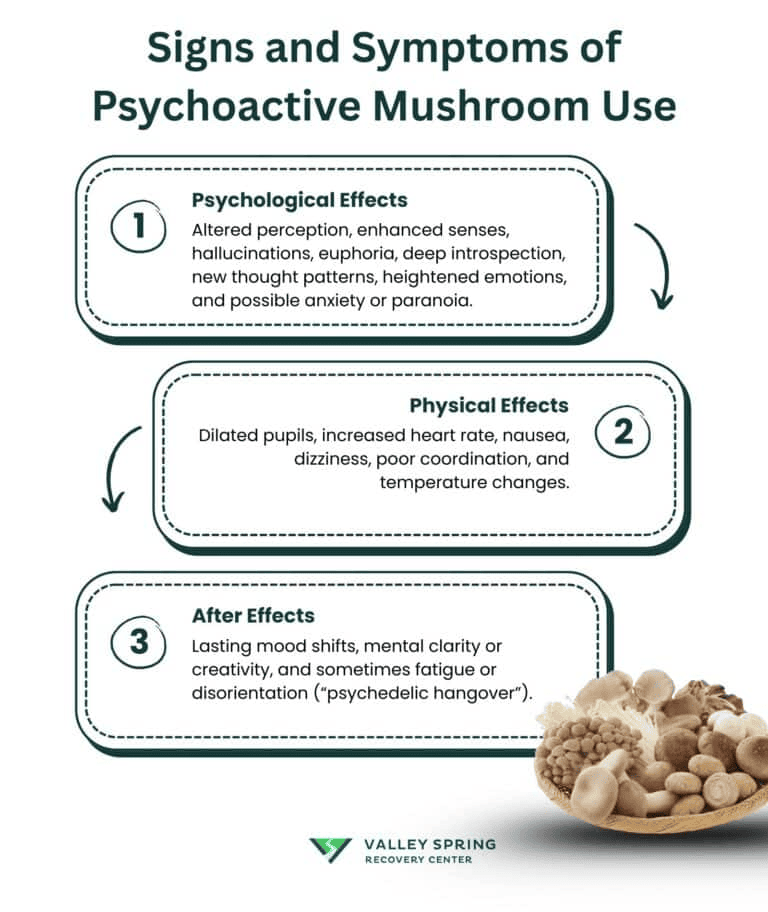
The signs of psychoactive mushroom use are immediately apparent through physical and behavioral shifts. Common indicators include:
- Pupil Dilation: Noticeably widened pupils that remain unresponsive to light changes.
- Facial Numbness: A tingling or “pins and needles” sensation, particularly around the mouth.
- Uncoordinated Movements: Difficulty with balance and fine motor skills.
- Fluctuating Body Temperature: Episodes of profuse sweating followed by shivering or chills.
- Nausea and Vomiting: Significant gastrointestinal distress during the “onset” phase.
Behaviorally, an individual under the influence exhibits erratic mood swings, ranging from intense laughter to paralyzing paranoia. They speak of “seeing sounds” or “feeling colors” (synesthesia) and lose track of time entirely, perceiving minutes as hours. These symptoms last between three to six hours, though the psychological “afterglow” or lingering anxiety persists for several days following a high-dose experience.
What Are the Negative Effects of Taking Psilocybin Mushrooms?
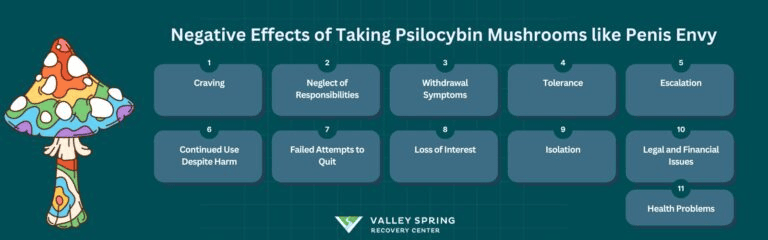
The negative effects of psilocybin mushrooms are primarily psychological and are devastating for those with a predisposition to mental health issues. A “bad trip” manifests as intense panic, terrifying hallucinations, and a complete loss of identity, sometimes leading to self-harm or accidental injury due to impaired judgment. Furthermore, some users experience Hallucinogen Persisting Perception Disorder (HPPD), where flashbacks of the trip occur months or years after the drug has left their system.
Chronic use of potent strains like Penis Envy or Tidal Wave leads to:
- Neglect of Responsibilities: Prioritizing the “journey” over work, school, or family obligations.
- Increased Tolerance: Requiring higher doses to achieve the same level of sensory distortion.
- Psychological Cravings: Intense urges to use the substance to cope with stress or emotional numbness.
- Social Isolation: Withdrawing from non-using social circles to focus on hallucinogenic experiences.
- Worsening of Underlying Conditions: Triggering or exacerbating anxiety, depression, or latent schizophrenia.
Contact us today to schedule an initial assessment or to learn more about our services. Whether you are seeking intensive outpatient care or simply need guidance on your drug addiction journey, we are here to help.
How Do Psilocybin Mushrooms Affect the Brain?
Psilocybin mushrooms affect the brain by fundamentally altering the communication pathways between different regions. Specifically, psilocin suppresses the Default Mode Network (DMN), the part of the brain responsible for our sense of “self” and self-reflection. When the DMN is quieted, other brain regions that normally do not communicate begin to sync up, which explains the vivid hallucinations and profound sense of “oneness” reported by users.
While some clinical research suggests this “reset” assists in breaking addictive patterns in controlled, therapeutic settings, unsupervised use is chaotic. The brain’s serotonin system is sensitive; flooding it with psilocin precipitates a temporary chemical imbalance once the drug wears off, resulting in irritability, emotional instability, and a “crash” that drives the user toward habitual re-dosing to regain a sense of mental clarity.
How Is Mushroom Addiction Treated?
Mushroom addiction is treated through structured psychological and behavioral care rather than medical detox, since psilocybin does not produce dangerous physical withdrawal. Treatment for mushroom addiction does not standardly necessitate a medical detox for physical symptoms, as the “withdrawal” is primarily mental.
Instead, the focus is on clinical interventions like Cognitive Behavioral Therapy (CBT) and Dialectical Behavior Therapy (DBT). These therapies help the individual identify the root causes of their need for escapism and provide them with healthy coping mechanisms to manage stress without the use of psychoactive substances.
In addition to individual counseling, group therapy, and 12-step style support groups provide a community of accountability. Since many individuals use hallucinogens to “self-medicate” for depression or trauma, a dual-diagnosis approach is essential.
Behavioral health providers enable patients to achieve a stable, long-term recovery and reintegrate into a reality that no longer requires a chemical filter by treating the co-occurring mental health issues alongside the behavioral addiction.
Conclusion
Psilocybin mushrooms are complex substances that can lead to a powerful psychological dependency despite their “natural” origin. While clinical research into their therapeutic potential is ongoing, recreational misuse—especially of potent strains—poses serious risks to mental stability and social functioning. Recognizing the signs of habitual use and seeking professional behavioral treatment is the most effective way to break the cycle of dependency and protect long-term cognitive health.
Share This Post

Valley Spring Editorial Team
All author posts
Our Therapuetic Recovery Programs
Are you covered for treatment?






Valley Spring Recovery Center is an approved provider for Blue Shield of California and Cigna, while also accepting many other major insurance carriers.
Check Coverage Now!