RPM in Addiction Recovery: Remote Monitoring and Progress Measurement
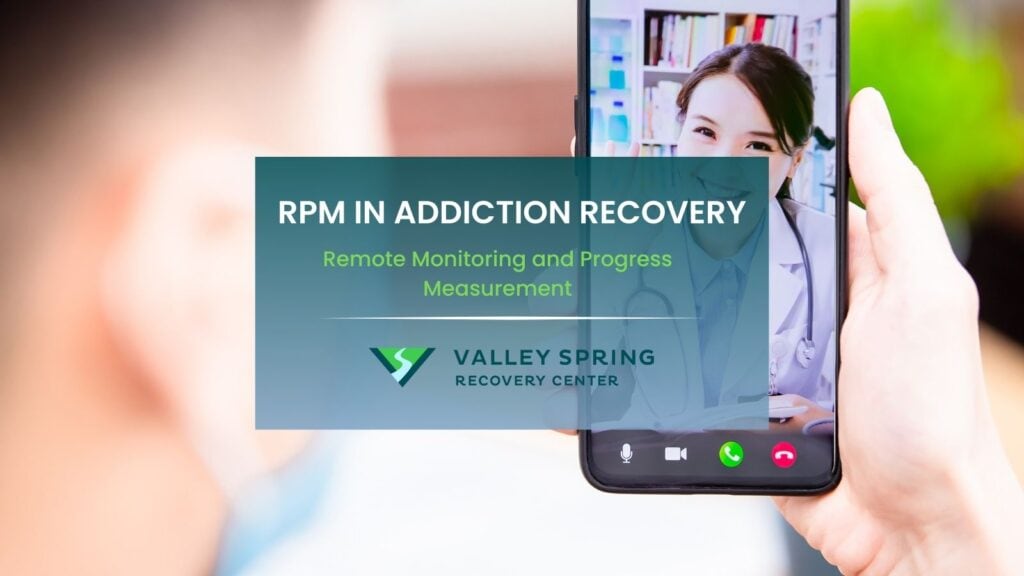
In the landscape of modern behavioral health, RPM refers to two pillars of evidence-based care: Remote Patient Monitoring (the technology used to track vitals and behavior) and the Recovery Progression Measure (the clinical tool used to quantify success). Together, these systems bridge the “accountability gap” that occurs between treatment sessions, providing a data-driven safety net for individuals in early sobriety.
Highlights
- Real-Time Intervention: Remote Patient Monitoring (RPM) allows clinicians to detect physiological signs of stress or relapse—such as elevated heart rate or disrupted sleep—before a lapse occurs.
- Evidence-Based Metrics: The Recovery Progression Measure (RPM) is a validated 36-item tool (or a 6-item “Rapid RPM”) that tracks biopsychosocial functioning.
- Geofencing Safety: Modern RPM apps use GPS technology to alert care teams if a patient enters a high-risk “trigger zone,” such as a former point of purchase.
- Biometric Accountability: Wearable integration tracks Heart Rate Variability (HRV), a key clinical indicator of emotional regulation and craving intensity.
- Improved Outcomes: Statistics show that integrating RPM into outpatient programs lessens emergency department utilization by up to 34%, according to Pardes et al. 2022 in their research article “Technology-enabled Behavioral Health Integration Decreases EmergencyDepartment Utilization.”
Did you know most health insurance plans cover substance use disorder treatment? Check your coverage online now.
What Is Remote Patient Monitoring (RPM) for Addiction?
Remote Patient Monitoring is a telehealth sub-specialty that utilizes digital technologies to collect medical and other forms of health data from individuals in one location and electronically transmit that information securely to healthcare providers in a different location. In the context of addiction, RPM transforms recovery from a “weekly check-in” model to a 24/7 support system.
Unlike traditional rehab, which relies heavily on self-reported data (which can be biased or inaccurate), RPM provides objective clinical data. Care teams identify “rising risk” patients by monitoring sleep patterns, activity levels, and even voice-based mental health screenings. This allows for immediate outreach, potentially precluding a full-blown relapse by intervening during the high-anxiety “pre-relapse” phase.
A systematic review on care transitions found that RPM-supported discharge reduced 30-day hospital readmissions by approximately 15–20% and shortened the time to clinical intervention by several days after device-detected events, as reported by Tan et al. 2024 in “A systematic review of the impacts of remote patient monitoring (RPM) interventions on safety, adherence, quality-of-life and cost-related outcomes,” published in Nature’s npj Digital Medicine.
What is the Recovery Progression Measure (RPM) Tool?
The Recovery Progression Measure is a psychometric assessment designed specifically to measure “recovery capital” and treatment progression. Developed by researchers like Elison et al., the tool moves beyond simply asking “Did you use today?” and instead evaluates six critical domains of human functioning:
- Difficult Situations: Exposure to risky environments or social pressure.
- Negative Thoughts: Levels of self-stigma, hopelessness, or catastrophizing.
- Emotions: Management of anxiety, depression, and “on-edge” feelings.
- Physical Sensations: Monitoring of withdrawal symptoms and physical cravings.
- Unhelpful Behaviors: Identification of old habits and avoidance patterns.
- Lifestyle: Assessment of vocational stability, financial health, and social support.
Clinicians generate a Substance Involvement (SI) profile by scoring these domains on a Likert scale (0-10). This allows the patient to see their progress in black and white, turning the abstract concept of “recovery” into a measurable, achievable goal.
How Does RPM Technology Prevent Relapse?
RPM technology prevents relapse by continuously monitoring behavioral and physiological patterns that signal risk before a crisis occurs. Addiction is a disease of isolation; RPM technology breaks that isolation through passive and active sensing. The “secret sauce” of RPM in addiction treatment lies in its ability to detect subtle deviations from a person’s normal routine—changes in sleep, movement, heart rate, location, or engagement that precede substance use. RPM does:
- Passive Sensing: The app monitors screen time, social withdrawal (decreased outgoing calls/texts), and movement patterns. A sudden drop in activity precedes a depressive episode or a relapse.
- Digital Contingency Management: Patients receive “rewards” or positive reinforcement for attending therapy, completing CBT exercises in the app, or maintaining stable vitals.
- Medication Adherence: For those in MAT (Medication-Assisted Treatment), RPM tools track when doses are taken, ensuring the patient remains stabilized on their recovery medication.
These tools are not meant to replace human connection but to enhance it. When a care coach sees a “red flag” on their dashboard, they don’t just send an automated alert—they pick up the phone. This combination of “High-Tech” and “High-Touch” is the hallmark of modern, effective rehabilitation.
Contact us today to schedule an initial assessment or to learn more about our services. Whether you are seeking intensive outpatient care or simply need guidance on your drug addiction journey, we are here to help.
What Are the Benefits for Families and Patients?
The benefits for families and patients are rooted in trust, safety, and continuity of care. For the family of a person in recovery, the “unknown” is the most terrifying part. RPM grants a level of transparency that rebuilds trust. Knowing that a loved one is being monitored by a clinical team, and that their vitals are stable reduces the “policing” role that many family members feel forced to play. These are:
- Anonymity and Comfort: Patients participate in high-level monitoring from the comfort of home, reducing the stigma associated with frequent clinic visits.
- Early Detection: Problems are caught in the “yellow zone” before they turn into “red zone” crises.
- Cost Efficiency: RPM-integrated care is more sustainable long-term, hindering re-hospitalization and emergency room visits.
How Do I Find an RPM-integrated Rehab Center?
To find an RPM-integrated rehab center, start by confirming whether a facility actively uses Remote Patient Monitoring as part of its clinical model rather than as an add-on. Not all facilities utilize these advanced tools. When searching for a provider, it is critical to ask if they utilize Remote Patient Monitoring or Recovery Capital assessments. Look for programs that emphasize:
- HIPAA-Compliant Platforms: Ensuring your biometric and location data is encrypted and secure.
- Integrated Care Teams: The data should be monitored by actual clinicians, not just an automated bot.
- Dual-Diagnosis Capability: The RPM tool track both substance use and mental health markers like anxiety and depression.
Conclusion
The integration of RPM, both as a technology and a measurement tool, is the “Gold Standard” of 2026 addiction care. We remove the guesswork and moral judgment from the equation by turning recovery into a data-driven process. Whether it’s through a wearable that tracks your heart rate or a psychometric test that tracks your mindset, RPM ensures that no one has to walk the path to sobriety alone or unmonitored.
Rediscover Life at Valley Spring Recovery Center
Get the compassionate support you deserve. We're here to help you reclaim joy, wellness, and a brighter future.
Verify Benefits
References
American Health Association. (2025). 4 RPM innovative practices for behavioral health patients. Market Scan. https://www.aha.org/aha-center-health-innovation-market-scan/2025-08-12-4-rpm-innovative-practices-behavioral-health-patients
Elison, S., Davies, G., & Ward, J. (2016). Initial development and psychometric properties of a new measure of substance use disorder “recovery progression”: The Recovery Progression Measure (RPM). Substance Use & Misuse, 51(9), 1195–1206. https://doi.org/10.3109/10826084.2016.1161052
Guo, P. (2023, July 24). How remote patient monitoring is improving substance abuse care? Smartfuture. https://www.oursmartfuture.com/how-remote-patient-monitoring-is-improving-substance-abuse-care/
Share This Post

Valley Spring Editorial Team
All author posts
Our Therapuetic Recovery Programs
Are you covered for treatment?




Valley Spring Recovery Center is an approved provider for Blue Shield of California and Cigna, while also accepting many other major insurance carriers.
Check Coverage Now!