New Jersey Drug And Alcohol Abuse Statistics 2025
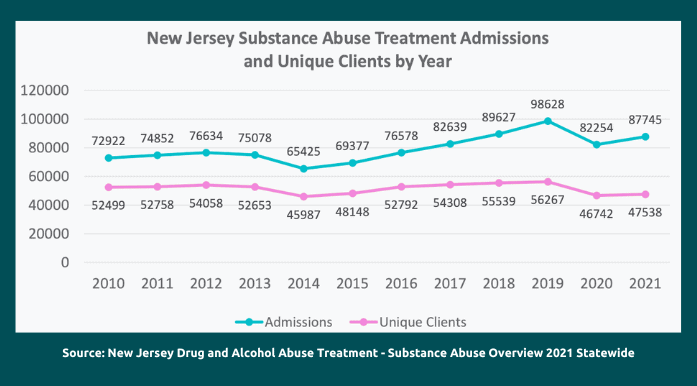
Drug addiction in New Jersey is a critical issue, with 2,914 suspected drug-related deaths in 2019, according to the NJ Chief Medical Examiner’s Office. Addiction in New Jersey presents a measurable and deeply embedded public health crisis. In 2019, 85,266 individuals entered substance abuse treatment, while over 38,000 were actively receiving care on a single day in March. Data from the Substance Abuse and Mental Health Services Administration (SAMHSA) indicates that approximately 464,000 New Jersey residents aged 12 and older—6.1% of the state’s population experienced a substance use disorder (SUD) in the past year.
This article has been enhanced with input from the Medical Director and Addiction Psychiatrist at Valley Spring Recovery Center, Dr. Michael Olla.
Check the end of each section for extra information from him.
What Are The New Jersey Addiction Statistics?
In 2022, New Jersey faced a severe public health crisis, with addiction statistics revealing 2,914 confirmed overdoses, primarily from fentanyl and heroin. The state also reported a significant incidence of alcohol abuse which resulted in the highest rate of treatment episodes. Additionally, there are notable geographical disparities in substance abuse treatment admissions, underscoring the complex and varied landscape of addiction challenges across New Jersey.
- Statewide Crisis: There are a total of 2,914 confirmed overdoses in New Jersey, indicating a significant public health crisis in 2022.
- Substance Predominance: Fentanyl is overwhelmingly the most common substance involved in overdoses, with 2,266 confirmed cases. This is followed by Heroin with 1,082 confirmed cases.
- Geographical Disparities: Essex County has the highest number of total overdoses (414), while Hunterdon has the lowest (11). This suggests that urban areas might be more affected, but it would require further investigation.
- Fentanyl and Heroin: These substances are the most prevalent in almost all counties, often accounting for the majority of overdoses.
- Other Substances: Cocaine, Methamphetamine, and Benzodiazepine are also present but generally in fewer numbers.
- Alcohol: Ethanol (alcohol) is also a significant contributor, especially in counties like Essex and Atlantic, suggesting that alcohol should not be overlooked in interventions.
- There were 98,479 hospital admissions for substance abuse treatment in New Jersey during 2019. (NJ-SAMS)
- 68% of all patients admitted to drug rehab centers in New Jersey were male, and 32% were female.
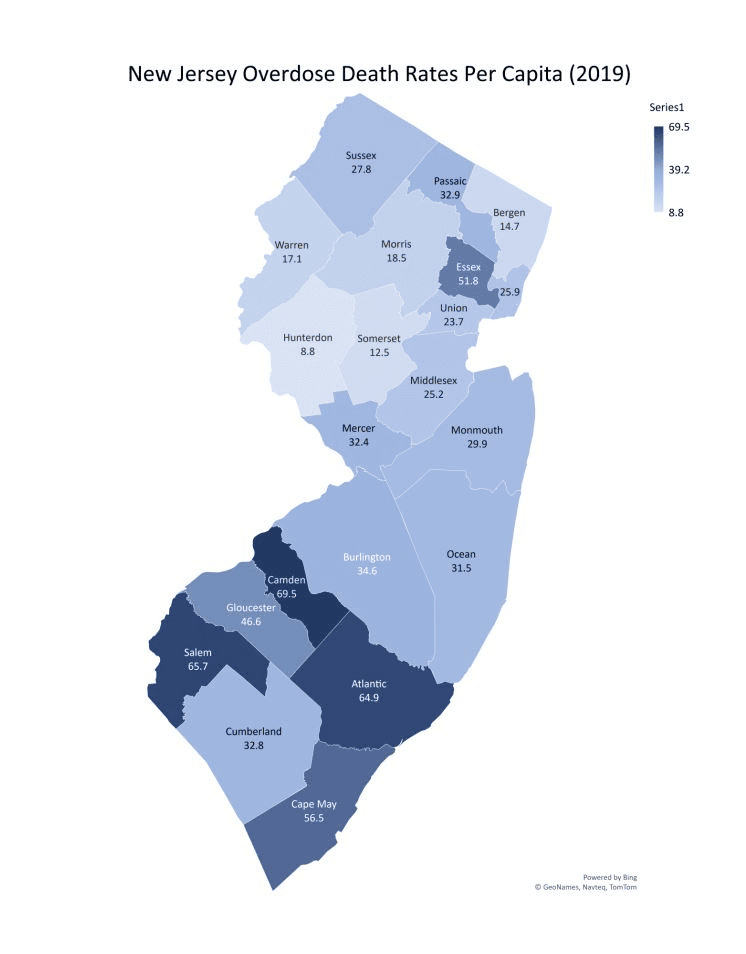
- Camden, Ocean, and Essex counties had the highest rates of admissions.
Did you know most health insurance plans cover substance use disorder treatment? Check your coverage online now.
1. Alcohol Abuse Statistics
While much attention is given to illicit drugs, alcohol remains a significant concern in New Jersey with the second highest rate of admission to treatment for alcohol behind heroin. Its legal status and social acceptance often mask the profound impact it has on individuals, families, and communities:
- In 2021, alcohol accounted for a significant portion of treatment admissions in New Jersey, with 31,469 accounting for 36% of all substance use disorder admissions in New Jersey according to the New Jersey Department of Human Services Statewide Substance Abuse overview.
- In 2018, 15.2% of adults in New Jersey reported an episode of binge drinking in the past month, which is below the national average of 18.2% according to New Jersey State Health Assessment Data.
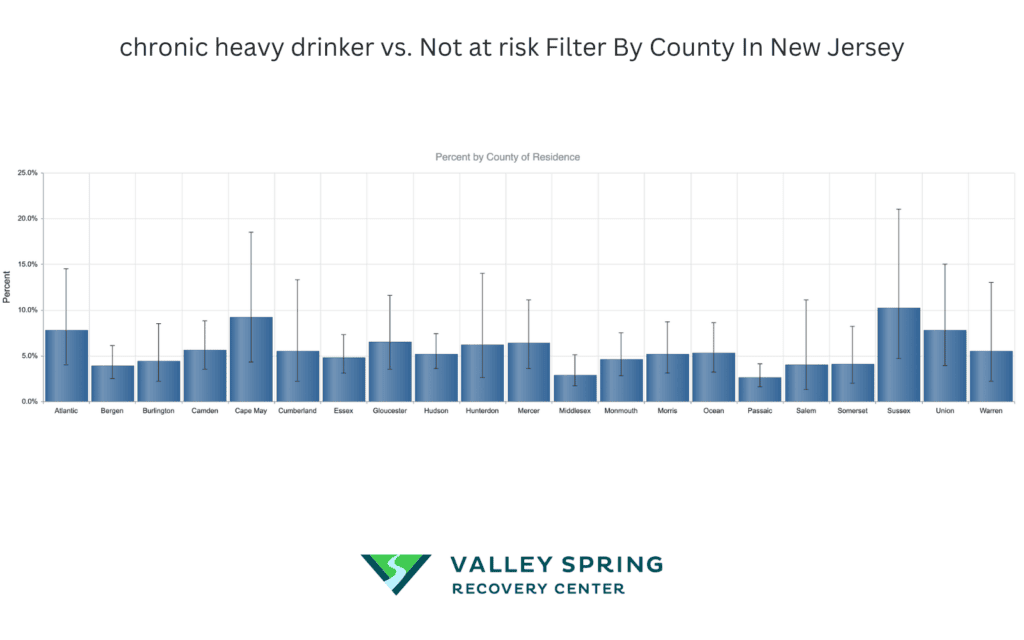
- New Jersey has a chronic heavy drinking rate of 5.1%, with a confidence interval ranging from 4.4% to 5.8% based on a substantial sample size of 6,981, reflecting a moderate level of chronic heavy drinking across the state.
- There are significant variations between counties. For instance, Sussex and Cape May have notably higher rates of chronic heavy drinking at 10.2% and 9.2%, respectively, each with relatively wide confidence intervals indicating greater uncertainty in these estimates. These counties also have among the highest margins of error and relative standard errors, suggesting that while heavy drinking is a concern, the estimates are less precise due to smaller sample sizes or greater variability among respondents.
| County of Residence | Percent of Chronic Heavy Drinkers | Sample Size |
|---|---|---|
| Overall | 5.1% | 6,981 |
| Atlantic | 7.8% | 200 |
| Bergen | 3.9% | 589 |
| Burlington | 4.4% | 310 |
| Camden | 5.6% | 392 |
| Cape May | 9.2% | 104 |
| Cumberland | 5.5% | 103 |
| Essex | 4.8% | 652 |
| Gloucester | 6.5% | 192 |
| Hudson | 5.2% | 740 |
| Hunterdon | 6.2% | 97 |
| Mercer | 6.4% | 317 |
| Middlesex | 2.9% | 535 |
| Monmouth | 4.6% | 402 |
| Morris | 5.2% | 349 |
| Ocean | 5.3% | 440 |
| Passaic | 2.6% | 567 |
| Salem | 4.0% | 54 |
| Somerset | 4.1% | 229 |
| Sussex | 10.2% | 116 |
| Union | 7.8% | 495 |
| Warren | 5.5% | 98 |
2. Opioid Abuse Statistics
In 2018, nearly 90% of drug overdoses in New Jersey involved opioids, resulting in 2,583 deaths, while opioid prescription rates were lower than the national average, and heroin and other opioids accounted for a significant portion of substance abuse treatment admissions.
- Almost 90% of drug overdoses in 2018 involved opioids, totaling 2,583 fatalities.
- New Jersey providers wrote 38.9 opioid prescriptions for every 100 persons in 2018, compared to the average U.S. rate of 51.4 prescriptions.
- There were 33,587 Substance Abuse Treatment Admissions for Heroin in 2021 accounting for 38% of all NJ rehab admissions and 6,293 for other opioids.
- 13,423 people in New Jersey used Methadone to overcome addiction to meth or heroin in 2018.
- Drug-related fatalities involving fentanyl increased from 34% to approximately 80% between 2016 and 2020 according to the Bergen County Overdose Review Team.
3. Stimulant Abuse Statistics
In New Jersey, the stimulant problem, particularly concerning methamphetamines, presents a significant public health concern, though it is less prevalent compared to other substances. According to the latest data on Substance Abuse Treatment Admissions in the State of New Jersey, methamphetamine users accounted for approximately 1,244 admissions, representing about 1% of the total cases. This contrasts with more prevalent substances like heroin and alcohol, which accounted for 38% and 36% of admissions respectively. Cocaine, another stimulant, accounted for 4,494 admissions or 5% of the total. These statistics highlight the broader scope of substance abuse issues in New Jersey, with stimulants like methamphetamines and cocaine contributing to the complex challenge of addressing addiction within the state.
According to the New Jersey Substance Abuse Monitoring System (NJ-SAMS), there were 98,479 hospital admissions for substance abuse treatment during 2019. About 68% of all patients were male, and 32% were female. Camden, Ocean, and Essex counties had the highest rates of admissions.
Contact us today to schedule an initial assessment or to learn more about our services. Whether you are seeking intensive outpatient care or simply need guidance on your drug addiction journey, we are here to help.
What Are The New Jersey Drug Overdose Rates And Statistics?
Essex and Camden counties reported the highest overdose deaths in New Jersey in 2022, with a statewide trend showing a general decrease in overdose deaths, though some counties experienced increases or stability in numbers according to The New Jersey Department of Human Services Statewide Substance Abuse overview.
- Essex County: This county not only has the highest total but also the highest Heroin overdoses (182) and very high Cocaine numbers (190).
- Both counties continue to report high overdose deaths, the highest in the state of NJ.
- Essex County had 450 overdose deaths in 2022 which was the most in the state.
- Camden County had 354 overdose deaths in 2022.
- Camden County: This county stands out for its high Fentanyl overdoses (285) and Cocaine numbers (149).
- Atlantic County: Shows a significant number of suspected deaths (255), which is higher than its confirmed overdose substances (171). This could indicate underreporting or delayed confirmations in the confirmed data.
- Bergen County: While not the highest, Bergen has a balanced spread of substance abuse, from Heroin (57) and Fentanyl (110) to Cocaine (36) and Benzodiazepine (41).
- Hunterdon County: This county has the least number of overdoses, indicating either a lower prevalence of drug abuse or perhaps less data reporting.
- Ocean and Monmouth Counties: These counties have high numbers of Oxycodone and Methadone overdoses compared to others, indicating a possible issue with prescription drug abuse.
| County | Overdose Deaths 2022 | Overdose Deaths 2023 | Trend |
|---|---|---|---|
| Atlantic | 255 | 179 | Decrease |
| Bergen | 186 | 130 | Decrease |
| Burlington | 151 | 128 | Decrease |
| Camden | 354 | 326 | Decrease |
| Cape May | 44 | 33 | Decrease |
| Cumberland | 76 | 76 | Stable |
| Essex | 450 | 447 | Decrease |
| Gloucester | 86 | 82 | Decrease |
| Hudson | 167 | 186 | Increase |
| Hunterdon | 18 | 11 | Decrease |
| Mercer | 108 | 108 | Stable |
| Middlesex | 209 | 145 | Decrease |
| Monmouth | 151 | 135 | Decrease |
| Morris | 64 | 69 | Increase |
| Ocean | 186 | 168 | Decrease |
| Passaic | 143 | 134 | Decrease |
| Salem | 22 | 28 | Increase |
| Somerset | 50 | 31 | Decrease |
| Sussex | 28 | 23 | Decrease |
| Union | 114 | 95 | Decrease |
| Warren | 30 | 27 | Decrease |
| Total | 2892 | 2561 | Decrease |
What Are The New Jersey Overdose Deaths By Drug Type?
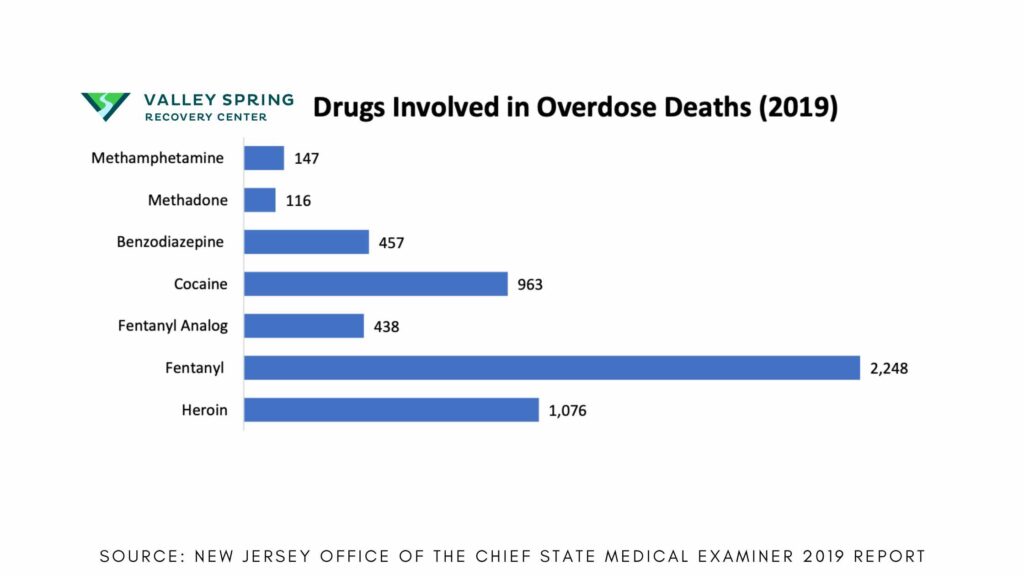
New Jersey State and County Medical Examiners certified 2,914 deaths as being drug and/or alcohol related in 2019. The breakdown of specific drugs involved in overdoses are listed below:
How Many Drug Rehab Center Admissions Are There In New Jersey?
The total drug and alcohol treatment admissions in New Jersey across all counties amount to 82,977 cases according to the Substance Abuse 2021 Overview Department of Human Services Division of Mental Health and Addiction Services Office of Planning.
- Primary Drugs: The most common primary drugs leading to rehab admissions are Heroin (32,779 cases), followed by Alcohol (28,607 cases). Other significant categories include Marijuana/Hashish (6,575 cases), Other Opiates (5,844 cases), Cocaine/Crack (4,320 cases), Unknown & Other Drugs (3,729 cases), and Methamphetamines (1,123 cases).
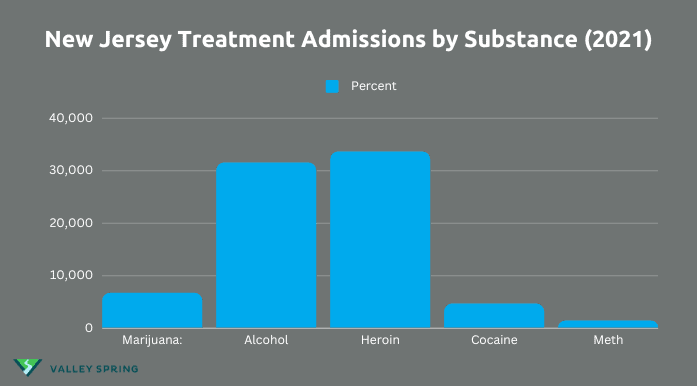
- Alcohol: Leading the list, alcohol accounted for 31,469 (or 36%) of the total admissions, highlighting its pervasive presence in the lives of many New Jersey residents.
- Heroin: A close second, heroin-related admissions stood at 33,587 (or 38%), reflecting the opioid crisis’s grip on the state.
- Marijuana, Cocaine, and Others: Other substances, including marijuana (6,569 or 7%), cocaine (4,494 or 5%), and methamphetamines (1,244 or 1%), also contributed significantly to the overall admissions.
- County-wide Breakdown:
- Atlantic County reported 7,434 admissions, with Heroin being the predominant drug (3,597 cases).
- Bergen County had a total of 3,400 admissions, with the majority being for Alcohol (1,437 cases).
- Camden County showed a high number of admissions at 7,586, with a significant number for Heroin (3,005 cases).
- Essex County reported the highest admissions among all counties with 8,593 cases, primarily for Heroin (3,717 cases) and Alcohol (2,412 cases).
- Ocean County also had a high count with 6,915 admissions, with a notable number for Heroin (2,976 cases).
- Trends Across Counties: Heroin and Alcohol are the two most common substances leading to rehab admissions across most counties. However, the proportion varies, with some counties like Bergen and Morris having a higher proportion of alcohol-related admissions, while counties like Atlantic, Camden, and Ocean see a higher prevalence of heroin-related cases.
- Less Common Substances: Methamphetamines, while less common overall, show notable admissions in counties like Atlantic and Cape May. The category of Unknown & Other Drugs also contributes to a significant number of admissions, particularly in Essex and Hudson counties.
- Counties with Lower Admissions: Hunterdon, Salem, Sussex, and Warren counties report lower numbers of rehab admissions compared to others, with the primary substances varying between Alcohol, Heroin, and Other Opiates.
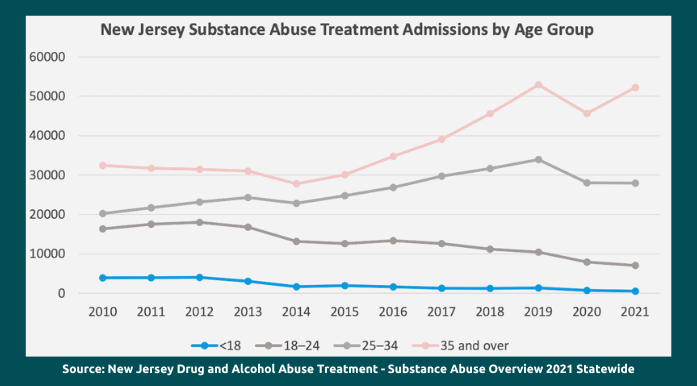
- Demographics of Those Seeking Treatment: Substance abuse does not discriminate. In 2021, males accounted for 60% of the admissions, while females represented 31%. The age groups most affected were those between 25-44 years, emphasizing the impact on New Jersey’s younger population.
- Referral Sources: The journey to recovery often begins with a helping hand. Over half (53%) of those admitted for treatment in 2021 were self-referred, showcasing the resilience and determination of many to seek help. Other significant referral sources included corrections-related programs (18%) and addiction services programs (10%).
| County of Residence | Primary Drug Total | Alcohol | Cocaine/Crack | Heroin | Other Opiates | Marijuana/Hashish | Methamphetamines | Unknown & Other Drugs |
|---|---|---|---|---|---|---|---|---|
| Atlantic | 7434 | 2076 | 324 | 3597 | 505 | 472 | 134 | 326 |
| Bergen | 3400 | 1437 | 190 | 1069 | 236 | 322 | 29 | 117 |
| Burlington | 4069 | 1360 | 188 | 1580 | 406 | 267 | 106 | 162 |
| Camden | 7586 | 2384 | 403 | 3005 | 732 | 544 | 105 | 413 |
| Cape May | 2269 | 779 | 112 | 809 | 160 | 148 | 129 | 132 |
| Cumberland | 2550 | 871 | 151 | 985 | 217 | 180 | 61 | 85 |
| Essex | 8593 | 2412 | 464 | 3717 | 541 | 1021 | 39 | 399 |
| Gloucester | 4199 | 1246 | 239 | 1833 | 435 | 155 | 118 | 173 |
| Hudson | 4378 | 1257 | 237 | 1691 | 200 | 649 | 40 | 304 |
| Hunterdon | 672 | 253 | 21 | 270 | 40 | 37 | 24 | 27 |
| Mercer | 3771 | 1281 | 304 | 1364 | 327 | 336 | 21 | 138 |
| Middlesex | 5803 | 2309 | 297 | 2069 | 392 | 479 | 39 | 218 |
| Monmouth | 5949 | 2515 | 299 | 2198 | 354 | 286 | 36 | 261 |
| Morris | 2501 | 1152 | 138 | 822 | 141 | 124 | 27 | 97 |
| Ocean | 6915 | 2552 | 306 | 2976 | 420 | 260 | 79 | 322 |
| Passaic | 4498 | 1388 | 304 | 1799 | 229 | 542 | 16 | 220 |
| Salem | 931 | 284 | 43 | 373 | 92 | 66 | 18 | 55 |
| Somerset | 1566 | 738 | 63 | 449 | 104 | 137 | 18 | 57 |
| Sussex | 1177 | 504 | 42 | 467 | 61 | 69 | 5 | 29 |
| Union | 3608 | 1381 | 153 | 1301 | 179 | 423 | 20 | 151 |
| Warren | 1108 | 428 | 42 | 405 | 73 | 58 | 59 | 43 |
| Total | 82977 | 28607 | 4320 | 32779 | 5844 | 6575 | 1123 | 3729 |
The numbers paint a vivid picture, but they also underscore the resilience of New Jersey’s communities. Behind each statistic is a testament to the human spirit’s ability to overcome, the dedication of healthcare professionals, and the unwavering support of families and loved ones.
- Highest Admissions: Essex County has the highest overall admissions with 10% of the total, primarily driven by heroin and other opiates.
- Lowest Admissions: Hunterdon County has the lowest overall admissions, making up just 1% of the total.
- Heroin Prevalence: Heroin is a significant issue in many counties, especially in Essex, Atlantic, and Camden.
- Alcohol Admissions: Ocean and Monmouth counties have higher admissions due to alcohol, making up 9% of the total alcohol-related admissions.
- Other Opiates: Camden County has a notably high percentage (13%) of admissions due to other opiates.
- Methamphetamines: Atlantic County has the highest percentage of admissions due to methamphetamines at 12%.
- Unknown & Other Drugs: Essex and Camden counties have higher percentages (11%) of admissions due to unknown and other drugs.
- Variability: Different counties have different primary drugs leading to admissions, indicating that substance abuse issues are not uniform across the state.
Rediscover Life at Valley Spring Recovery Center
Get the compassionate support you deserve. We're here to help you reclaim joy, wellness, and a brighter future.
Verify Benefits
What Are The Major Drug Threats in New Jersey?
Major drug threats in New Jersey include heroin, fentanyl, cocaine, alcohol, methamphetamine, and prescription opioids—with heroin and cocaine use exceeding national sentencing averages and fentanyl driving a sharp rise in overdose fatalities.
- According to NJSAMS and the National Drug Intelligence Center, “40% of treatment admissions are for alcohol use, but over 77% of federal drug sentences involve heroin or cocaine,” and “heroin accounts for 38% of all federal cases in NJ—five times the national rate.”
- New Jersey’s heroin and cocaine problem has been elevated since the late 1990s, with a fentanyl surge intensifying after 2015, correlating with synthetic opioid infiltration into street drugs.
- Heroin And Cocaine Use Above The national Average: The number of federal drug offenders sentenced in New Jersey is consistent with the national average; however, the percentage of heroin- and cocaine-related sentences is much higher in New Jersey than nationwide. Drug offenses composed over 35 percent of all federal sentencing cases in the state in 1999, compared with the national sentencing average of 41 percent. (National Drug Intelligence Center)
- Over 77 percent of all drug sentences in the state were cocaine- or heroin-related, a 20 percent higher ratio than the national average. More significantly, heroin sentences represent 38 percent of all federal sentencing cases, compared with 8 percent nationally. (National Drug Intelligence Center)
Primary threat categories include: Alcohol Dependence (40% of treatment), Heroin & Fentanyl Overdose Risk, Cocaine/Crack Gang Distribution, Prescription Opioid Misuse, Methamphetamine Activity (in central/southern counties), and Marijuana Legalization Policy Debates.
What Are The Drug-Related Crime Rates in New Jersey?
Drug-related crime rates in New Jersey are driven by powerful Colombian Drug Trafficking Organizations (DTOs), street gangs like the Bloods, Latin Kings, Ñetas, and Five Percenters, and the state’s status as a major transshipment corridor—with hotspots in cities such as Newark, Camden, and Jersey City.
According to New Jersey crime statistics and the National Drug Intelligence Center, “in 2019, over 20% of all arrests in the state were drug-related, with nearly 80% involving drug-only charges,” and the state spent approximately $5.1 billion on drug-related police arrests from 2010 to 2019.
This combination of organized trafficking and law enforcement response reflects a cycle of violence, territorial conflict, and long-term social disruption—fueled further by racial inequity, with Black individuals 3.3 times more likely to be arrested than white individuals for drug offenses.
A complementary framework is spatialized drug policing, which analyzes how geography, race, and economic factors shape both crime risk and enforcement intensity in specific zones.
These dynamics are monitored and acted upon by law enforcement agencies, social scientists, criminal justice reform advocates, and public health professionals—collectively known as drug crime mitigation stakeholders.
New Jersey’s role as a drug transit state, due to its ports (e.g., Port Newark), airports (Newark & Atlantic City), and highways (I-95, NJ Turnpike), became more prominent in post-2000s cartel expansion, with urban gang involvement escalating in tandem.
What Are The Alcohol Abuse Statistics in New Jersey?
While much attention is given to illicit drugs, alcohol remains a significant concern in New Jersey. Its legal status and social acceptance often mask the profound impact it has on individuals, families, and communities:
- Prevalence: In 2021, alcohol accounted for a significant portion of treatment admissions in New Jersey, with 31,469 individuals seeking help. This figure underscores the pervasive nature of alcohol misuse in the state.
- Health Implications: Chronic alcohol abuse can lead to a host of health issues, including liver disease, cardiovascular problems, and cognitive impairments. Additionally, alcohol plays a role in many accidents, from traffic collisions to workplace injuries.
- Social and Economic Impact: Beyond the individual, alcohol abuse affects families and communities. Domestic violence, child neglect, and financial hardships are often linked to excessive alcohol consumption. The economic toll, from lost productivity to healthcare costs, further emphasizes the need for intervention.
- Youth and Alcohol: Underage drinking remains a concern in New Jersey. Early exposure to alcohol can lead to addiction in later life and has been associated with poor academic performance, risky behaviors, and mental health challenges.
- State Initiatives: Recognizing the challenges posed by alcohol abuse, New Jersey has implemented various initiatives to curb its impact. From awareness campaigns targeting youth to stricter regulations on sales and consumption, the state is actively working to reduce the harm caused by excessive alcohol use.

Alcohol abuse in New Jersey led to over 31,000 treatment admissions in 2021, contributes to chronic health conditions and social harm, and is countered by state-led education and regulation initiatives.
This pattern, shaped by legal access and cultural normalization, highlights what officials call “a silent epidemic” affecting individuals, families, and the economy.
Are you covered for treatment?


Valley Spring Recovery Center is an approved provider for Blue Cross Blue Shield and Cigna, while also accepting many other major insurance carriers.
Check Coverage Now!What Impacts Do New Jersey’s Population and Geography Have on Substance Use Disorder Rates and Drug Distribution?
The impact of New Jersey’s population and demographics on substance use disorder (SUD) rates is shaped by its high population density, diverse urban centers, transit infrastructure, and economic disparities—creating both vulnerabilities and opportunities for intervention.
According to the National Drug Intelligence Center and NJ Department of Human Services, “New Jersey’s strategic location and dense population make it a leading drug transshipment point and one of the states with the highest urban overdose concentrations,” especially in cities like Newark, Camden, and Paterson.
This reality underscores the need for hyper-local responses, culturally responsive care, and robust public health infrastructure in both urban and economically strained areas.
A closely tied concept is geodemographic risk mapping, which combines geographic, demographic, and economic data to predict substance use patterns and prioritize resources accordingly.
These strategies are employed by epidemiologists, public health planners, and municipal health officials—referred to as community health risk analysts—to develop targeted prevention and recovery models.
New Jersey has demographic-driven substance abuse risk shaped by regional port access and urban development patterns since the late 1990s, but evolved significantly post-2010 with increased surveillance and treatment access initiatives.
What Efforts Are Being Taken to Combat Drug and Alcohol Abuse in New Jersey?
New Jersey’s efforts to combat drug and alcohol abuse prioritize prevention, treatment, recovery, and enforcement through coordinated efforts by the Department of Health, treatment facilities, law enforcement, legislators, and local communities.
According to the National Institute on Drug Abuse, New Jersey saw a 10% decrease in opioid overdose deaths between 2022 and 2024, attributed to expanded access to naloxone, MAT, and public awareness campaigns—“a sign of progress amid the national opioid crisis.”
This integrated approach enables tailored community solutions, equitable access to treatment, and a scalable public health response.
A complementary concept is public health–criminal justice collaboration, blending rehabilitation with enforcement to address both substance misuse and community safety.
These strategies are carried out by health officials, addiction counselors, policy makers, and law enforcement—referred to collectively as substance use response stakeholders.
The modern phase of New Jersey’s anti-abuse initiatives began around 2017, coinciding with the declaration of an opioid crisis emergency and the launch of Opioid Response Teams and Good Samaritan law expansions.
What Are The Bergen County NJ Addiction Rates?
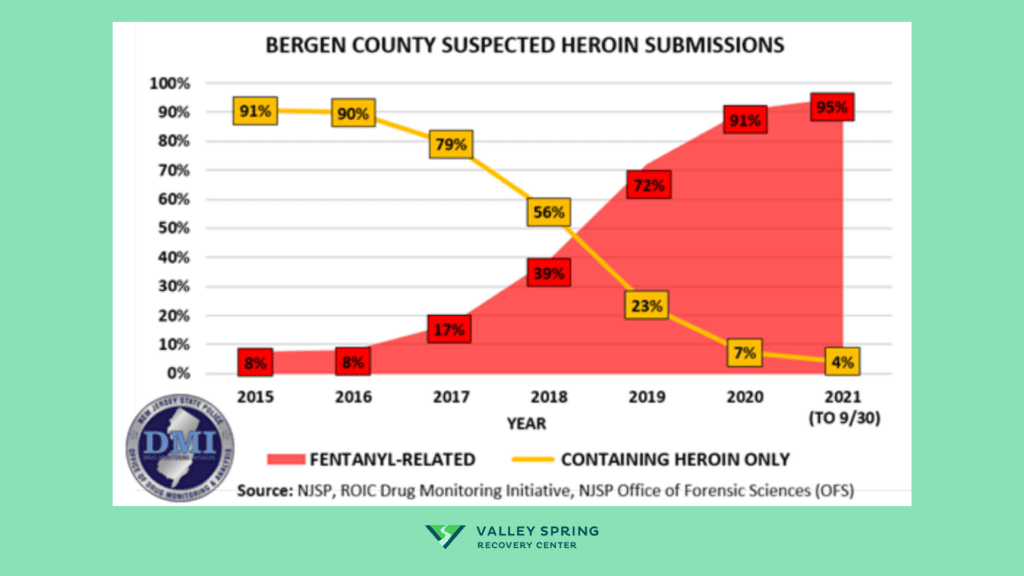
- Increasing Fatalities Due To Fentanyl: Drug-related fatalities involving fentanyl increased from 34% to approximately 80% between 2016 and 2020. (Bergen County Overdose Review Team)
- Decrease in pure heroin: During the same time period, the suspected heroin samples
containing only heroin decreased from 90% to 7%. (Bergen County Overdose Review Team) - Heroin containing fentanyl: From 2016 to 2020, the number of suspected heroin samples
submitted for lab testing that contained fentanyl increased from 8% to 91%. (Bergen County Overdose Review Team) - More than 50% of both treatment admissions and law enforcement suspected overdose incidents involved individuals between the ages of 25 and 44. (Bergen County Overdose Review Team)
- Sports-Related Injuries: In 2 of the 7 cases, reviewed by the OFRT were of individuals suffered a youth sports-related injury and were prescribed opioids. (Bergen County Overdose Review Team)
- Age Group: More than 50% of both treatment admissions and law enforcement suspected overdose incidents involved individuals between the ages of 25 and 44. (Bergen County Overdose Review Team)
- Benzodiazepines Are A High Contributor To Overdose: Benzodiazepines were listed as contributing to the cause of death in nearly a quarter (24%) of Bergen County drug-related deaths. (Bergen County Overdose Review Team)
| Year | Overdoses | LE Narcan Deployments | LE Narcan Saves | Drug Related Fatalities |
|---|---|---|---|---|
| 2022* | 690 | 376 | 257 | 125 |
| 2021* | 730 | 368 | 255 | 176 |
| 2020* | 664 | 325 | 233 | 147 |
| 2019 | 657 | 388 | 274 | 138 |
| 2018 | 583 | 352 | 255 | 142 |
| 2017 | 504 | 325 | 245 | 129 |
| 2016 | 320 | 208 | 180 | 99 |
| 2015 | 288 | 187 | 170 | 87 |
These trends underscore the need for comprehensive addiction treatment in Bergen County, NJ, including inpatient and outpatient programs, medication-assisted treatment, behavioral therapy, and support groups, to effectively address this escalating crisis and support recovery.
Did you know most health insurance plans cover substance use disorder treatment? Check your coverage online now.
What factors contribute to the high rates of drug addiction in New Jersey?
The high rates of drug addiction in New Jersey are influenced by a variety of factors, including socioeconomic issues, the availability of drugs through major transportation hubs, and a growing opioid epidemic that mirrors national trends.
How has New Jersey’s overdose rate changed in recent years?
In recent years, New Jersey has seen a fluctuation in overdose rates, largely due to the opioid crisis. Efforts to combat this issue, including the availability of naloxone and addiction treatment programs, have impacted these statistics.
What are New Jersey’s drug policies and how do they address addiction?
New Jersey’s drug policies focus on a combination of law enforcement and harm reduction strategies. These include measures like drug courts, which offer treatment options for offenders, and policies aimed at reducing the availability of prescription opioids.
Contact us today to schedule an initial assessment or to learn more about our services. Whether you are seeking intensive outpatient care or simply need guidance on your drug addiction journey, we are here to help.
How do harm reduction strategies in New Jersey combat drug addiction?
Harm reduction strategies in New Jersey, such as needle exchange programs and the distribution of naloxone to reverse opioid overdoses, aim to minimize the health and societal impacts of drug use by providing safer alternatives and access to treatment.
What is the legal status of marijuana in New Jersey?
Marijuana was legalized for adult recreational use in New Jersey following a 2020 referendum and the Biden administration recently changed the marijuana laws. The state has established regulations for the sale and possession of marijuana, reflecting a significant shift in drug policy.
How accessible are AA meetings for residents struggling with addiction in New Jersey?
AA meetings are widely accessible throughout New Jersey, offering numerous options for individuals seeking support for alcohol addiction. These meetings provide a community-based approach to recovery across various locations in the state.
Rediscover Life at Valley Spring Recovery Center
Get the compassionate support you deserve. We're here to help you reclaim joy, wellness, and a brighter future.
Verify BenefitsWhat impact have New Jersey’s drug policies had on addiction statistics?
The impact of New Jersey’s drug policies on addiction statistics is multifaceted, showing promising results in areas like overdose prevention. However, the state continues to adapt its strategies to address the evolving nature of drug abuse and addiction.
Can residents of New Jersey access treatment for addiction without insurance?
Yes, New Jersey provides options for residents to access addiction treatment without insurance, including state-funded programs and free rehab programs in New Jersey and facilities that offer services based on a sliding scale or for free to those who qualify.
How does New Jersey’s approach to drug addiction compare to other states?
New Jersey’s approach to drug addiction compared to surrounding states demonstrates a relatively balanced and progressive model—offering robust access to Medication-Assisted Treatment (MAT), funding harm reduction centers, and emphasizing recovery infrastructure—while nearby states like New York and Pennsylvania adopt slightly different strategies shaped by political climate, funding models, and urban-rural demographics.
According to the Substance Abuse and Mental Health Services Administration (SAMHSA) 2024 report, “New Jersey offers one of the most accessible MAT systems in the Mid-Atlantic region, while New York leads in overdose prevention programs and Pennsylvania lags in statewide syringe access policies.”
This comparison highlights how regional policies impact outcomes—New York’s dense urban zones allow widespread naloxone training and Overdose Prevention Centers, whereas Pennsylvania’s rural opioid burden challenges the uniformity of service delivery.
A key complementary concept is federalism in drug policy, which allows states to implement varied responses even under national guidelines like the CDC’s opioid prescribing standards.
Policy makers, addiction treatment providers, and state health departments—often referred to as regional behavioral health authorities—leverage these differences to create tailored interventions and pilot cross-border initiatives.
New Jersey’s policy transformation began around 2017, but New York expanded its harm reduction model post-2015 with the introduction of supervised injection sites in NYC, while Pennsylvania’s key reforms accelerated post-2020 following a surge in fentanyl-related deaths.
Each state’s response includes specific sub-parts:
Pennsylvania: recovery housing, emergency response teams, prescription drug monitoring
New Jersey: MAT, drug courts, harm reduction centers
New York: supervised injection sites, naloxone distribution, Medicaid expansion
FAQs
What are the primary substances leading to treatment admissions in New Jersey?
In 2021, the leading substances that resulted in treatment admissions in New Jersey were alcohol (36%), heroin (38%), marijuana (7%), cocaine (5%), and methamphetamines (1%).
How has New Jersey's geographical location influenced its drug distribution landscape?
New Jersey’s strategic position between major cities like New York and Philadelphia, combined with its extensive transportation infrastructure, including seaports, airports, and highways, has made it a significant hub for drug transportation and distribution.
Are there specific age groups more affected by substance abuse in New Jersey?
Yes, the age groups most affected by substance abuse, leading to treatment admissions in 2021, were those between 25-44 years. This emphasizes the impact on New Jersey’s younger population.
What role do Drug Trafficking Organizations (DTOs) and street gangs play in New Jersey's drug landscape?
DTOs, particularly Colombian DTOs, and street gangs like the Bloods and Latin Kings, play a significant role in the transportation, distribution, and sale of illicit substances in New Jersey. Their organized networks and operations contribute to the state’s drug challenges.
How is New Jersey addressing the challenges of drug and alcohol abuse?
New Jersey is taking a comprehensive approach to combat substance abuse. This includes state-led initiatives, awareness campaigns, collaboration with law enforcement, community engagement, and legislative measures. Treatment centers like Valley Spring Recovery also play a pivotal role in providing specialized care and support for individuals on their recovery journey.
Share This Post

Dr. Michael Olla
All author posts
Our Therapuetic Recovery Programs
Are you covered for treatment?




Valley Spring Recovery Center is an approved provider for Blue Shield of California and Cigna, while also accepting many other major insurance carriers.
Check Coverage Now!