New York Drug and Alcohol Addiction Statistics
According to the 2022 DEA drug threat assessment, New York is considered to be the largest heroin market in the United States dominated by Colombian and Dominican DTOs and criminal groups who distribute heroin and cocaine at wholesale prices, particularly in New York City. Every 3 hours, one person dies due to an overdose in New York City according to NYC Health with 709 overdose deaths confirmed during the third quarter of 2021
We compiled data from OASIS, DEA, the Department of Justice and many related sources to create this comprehensive dataset. Please email [email protected] if you have questions. This data can be sourced by citing Valley Spring Recovery Center with link attribution.
How Many People are Addicted To Drugs In new York State?
The drug addiction statistics in New York State, as reported in the September 2023 Addiction Data Bulletin by the New York State Office of Addiction Services and Supports (OASAS), provide a comprehensive overview of the challenges and demographics associated with substance use disorders (SUDs) in the region.
- Substance Use Disorders (SUDs) Prevalence: Approximately 2.8 million individuals aged 12 and older in New York State were affected by SUDs last year.
- Fatalities Due to Drug Overdose: There were 6,358 drug overdose deaths, with opioids, particularly synthetic opioids like fentanyl, identified as the primary or contributing factor in a significant majority of these cases (84.3% of all drug overdose deaths).
- Alcohol-Related Deaths: There were 2,003 deaths attributed to alcohol-related causes.
- Treatment Admissions:
- Outpatient Treatment: The most common form of SUD treatment was outpatient services, accounting for 39.5% of admissions.
- Opioid Treatment Programs (OTPs): Represented 40.7% of individuals receiving SUD treatment, with medications such as methadone, buprenorphine, or naltrexone administered.
- Gender and Age: 72.0% of those admitted to SUD treatment were male, and the largest age group was individuals aged 25-44 years, comprising 52.4% of admissions.
- Demographic Distribution of Treatment Admissions:
- Regional: The highest number of SUD treatment admissions was in Upstate New York (47.2%), followed by New York City (38.7%) and Long Island (14.1%).
- Ethnicity and Substance Preferences: Whites predominantly sought treatment for heroin and other opioids, while Blacks and Hispanics were more likely to be admitted for alcohol and heroin, respectively.
- Shifts in Substance Use Trends: From 2017 to 2022, there was a notable increase in admissions for alcohol use (up 21.8%) and a decrease in heroin use admissions (down 24.4%).
Did you know most health insurance plans cover substance use disorder treatment? Check your coverage online now.
How Many New Yorkers Suffer From Alcoholism?
Alcohol use statistics in New York State for 2022, based on the Behavioral Risk Factor Surveillance System (BRFSS) developed by the Centers for Disease Control and administered by the New York State Department of Health, reveal significant insights into the prevalence of excessive drinking behaviors:
- Excessive Alcohol Use: Approximately 18.4% of adults in New York State reported excessive alcohol use, which encompasses both binge and heavy drinking.
- Binge Drinking: About 16.6% of adults reported binge drinking. This represents a notable increase from 14.9% in 2021. Binge drinkers reported an average of 4.3 binge drinking occasions per month, with an average of 7.1 drinks per episode.
- Heavy Drinking: Around 6.1% of adults engaged in heavy drinking.
- Demographic Variations:
- Gender and Age: Binge drinking was more prevalent among males and adults under 35 years of age.
- Income: Adults with an annual household income of $75,000 or more reported higher rates of binge drinking.
- Race and Ethnicity: White, non-Hispanic adults reported higher rates of binge (18.9%) and heavy drinking (7.9%) compared to other racial and ethnic groups.
- Associated Risk Factors:
- Mental Distress: Adults reporting frequent mental distress had higher prevalence rates of binge (23.0%) and heavy drinking (10.3%).
- Smoking and Cannabis Use: The prevalence of binge and heavy drinking was significantly higher among smokers and cannabis users, with binge drinking nearly double among smokers compared to non-smokers (27.4% vs. 15.3%) and almost three times higher among cannabis users compared to non-users.
These statistics highlight the continued challenge of addressing excessive alcohol consumption in New York State, impacting various demographic groups and associated with several risk factors like mental health distress, smoking, and cannabis use.
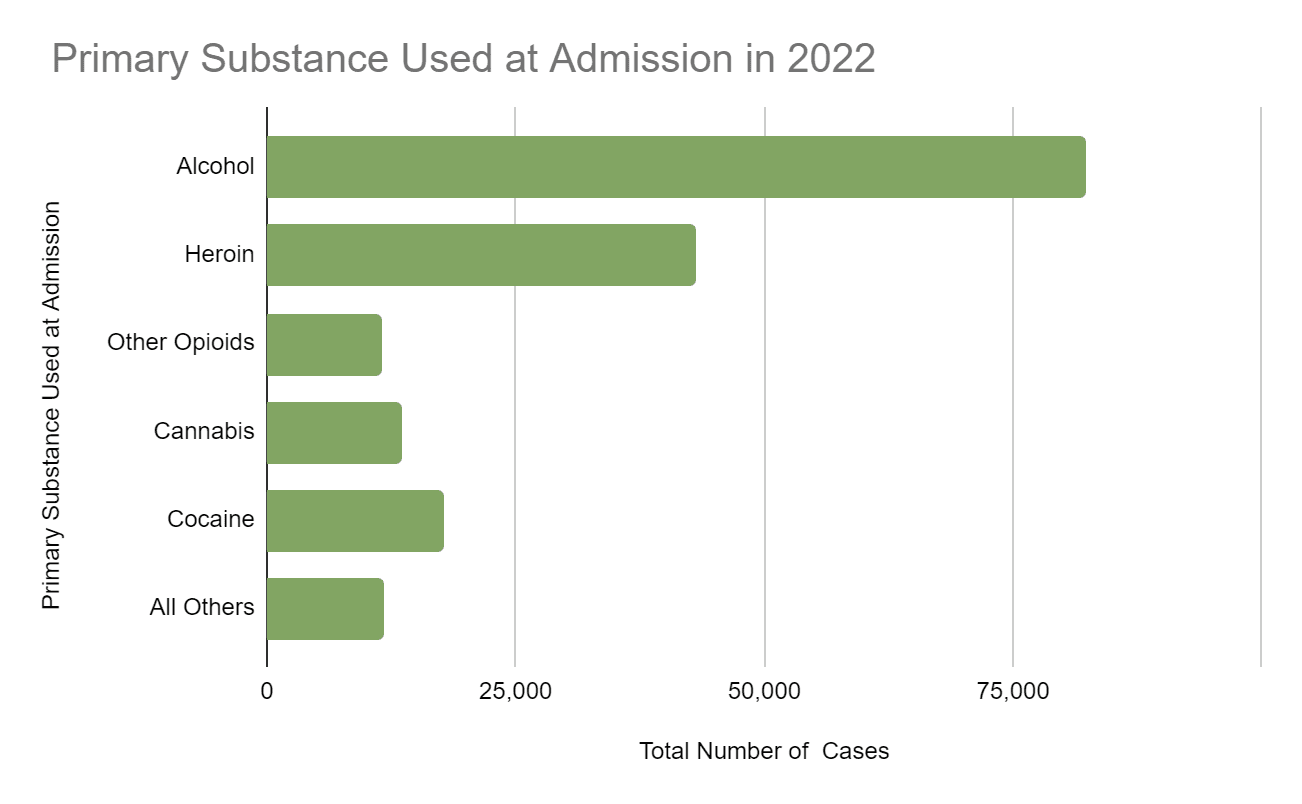
The chart below summarizes the number of cases of each drug reported at the time of admission for treatment in the year 2022.

Get Help Today!
Our team is standing by ready to help. We have a same-day admissions process. Sometimes one phone call can change everything.
What Are The Most Common Drugs Used in New York?
In New York City, heroin, cocaine, and marijuana are the most commonly used drugs.
- Heroin: Leading cause of drug treatment admissions; in 2011, one-third of primary drug treatment admissions were for heroin use.
- Cocaine: From 2000 to 2013, cocaine caused more overdose deaths than heroin, with 48% of accidental overdose deaths in Manhattan in 2013.
- Marijuana: Widely used, with half of arrested men testing positive and many seeking treatment.
Prescription Drugs: Abuse is significant, with opioid overdose deaths rising 65% in 2016. Benzodiazepine overdoses increased by 182%, and prescription opioid overdoses rose by 130% from 2000 to 2013.
Other Drugs: PCP and Ketamine are among the top 10 drugs identified by forensic labs, though methamphetamine indicators remain low.
How Many People Overdose From Drugs In New York State?
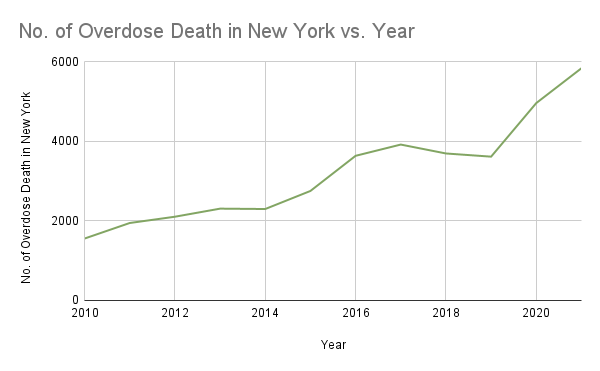
Every 3 hours, one person dies due to an overdose in New York City. Compared to 2010, there was a 300% jump in the total deaths in 2020 according to a study from 2024 Study from NYC Health. More New Yorkers die of drug overdoses than homicides, suicides, and motor vehicle crashes combined. Fentanyl, a highly potent opioid, is involved in more than 81% of all overdose deaths. Opioids are involved in more than 88% of all overdose deaths. there were a total of 712 deaths just in the first quarter of 2023, while there were a total of 3026 deaths in the year 2022.
In 2022, NYC had 3,026 overdose deaths – a record since tracking began in 2000. That’s a 12% rise from 2021. Fentanyl was involved in 81% of NYC’s overdose fatalities. The report found that Black and Latino New Yorkers had the highest rates of overdose death and the largest increases in rate from 2021 to 2022.
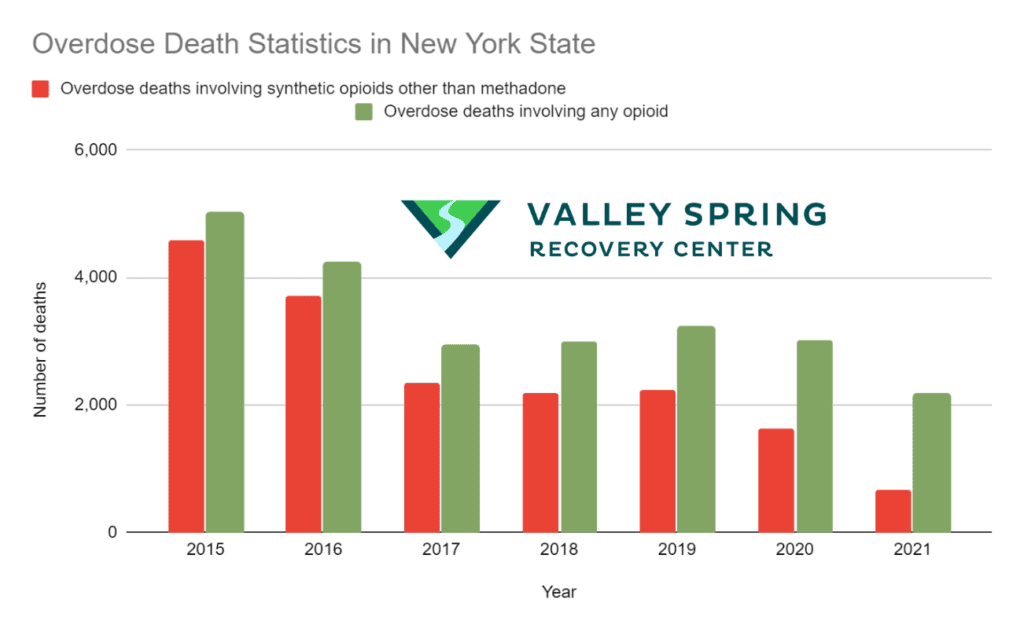
- From 2020 to 2021, opioid overdose deaths increased by 44% in New York, contributing to a nationwide increase of 38%.
- In 2020 and 2021, opioids caused 85% of drug overdose deaths in New York. This is a big rise from 69% in 2010.
- New York’s opioid overdose death rates were higher than national averages in 2020 and 2021. In 2021, 25 out of every 100,000 New Yorkers died from opioid overdoses. In 2010, it was just 5 out of 100,000
- Across different racial and ethnic groups, more people died from overdoses. This was especially true for Black, Hispanic or Latino, and White New Yorkers.
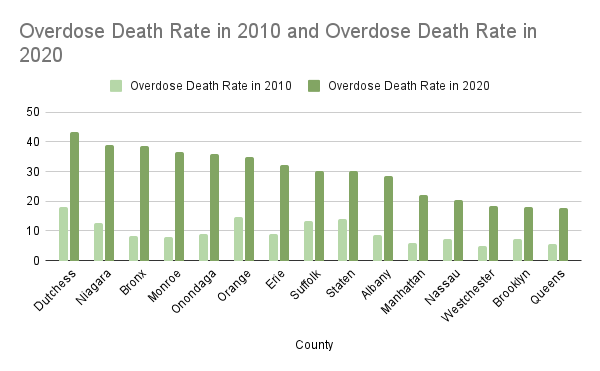
- Dutchess County had the highest rate of drug overdose deaths. Over 43 out of every 100,000 people there died from overdoses.
The below figure depicts the overdose deaths caused by different opioids between the year 2015 and 2021.
The total number of male deaths was about 3 to 4 times the number of female deaths, which clearly demarcates the gender disparity in drug addiction and overdose.
These overdose death variations are not restricted to gender but are also clearly evident in race and ethnicity. The NYC Health Epi Data Brief from 2022 concluded that most cases of overdose occurred in Black adults whose ages were between 55 and 84.
Coming to alcohol-related deaths per capita, New York stands in the third-last position. However, despite this low ranking, there are a total of 6701 annual deaths that are attributed to excess alcohol abuse.
These death numbers are even larger than the deaths caused by overdose of drugs such as opioids. As in the case of drug overdose deaths, about 67.2% of the people who die due to excessive alcohol consumption are male, while 86.4% of the people are aged 35 and above.
Over the past ten years, drug overdose deaths have increased greatly in the U.S. and New York. The increase was 83% across the U.S. and 152% in New York between 2010 and 2017—most deaths were caused by opioids like prescription painkillers and heroin. By 2017, opioids caused 82% of overdose deaths in New York. After a brief drop in 2017, opioid deaths rose again during the pandemic. In 2020, opioid deaths increased by 44% in New York.
Synthetic opioids like fentanyl, often mixed with other drugs, caused many of these deaths. In 2021, they caused 85% of drug overdose deaths in New York. The COVID-19 pandemic made existing problems worse. It led to a 17% rise in overdose deaths in New York in 2021.
Here’s the graph showing the number of overdose deaths that occurred between 2010 – 2020.
Contact us today to schedule an initial assessment or to learn more about our services. Whether you are seeking intensive outpatient care or simply need guidance on your drug addiction journey, we are here to help.
What Are The Drug Overdose Deaths by County in NY?
Overdose Deaths (2010-2020):
Other Counties: Staten Island, Manhattan, Nassau, Westchester, Brooklyn, and Queens also saw increases.
Dutchess County: Increased from 18.2% to 43.3%
Niagara County: Increased from 12.8% to 39.1%
The Bronx: Increased from 8.3% to 38.7%
Monroe County: Increased from 7.9% to 36.7%
Onondaga County: Increased from 9.0% to 35.9%
Erie County: Increased from 8.9% to 32.1%
Suffolk County: Increased from 13.2% to 30.3%
Albany County: Increased from 8.6% to 28.6%
What Are The Drug Overdose Deaths by Race and Ethnicity In New York State?
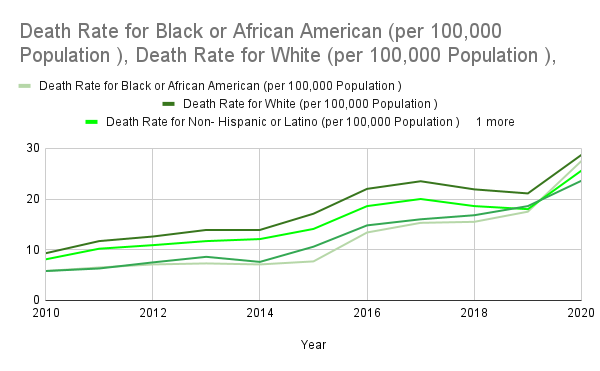
The drug overdose epidemic affected New Yorkers differently based on their race and ethnicity, as per CDC data from 2010 to 2020. Black or African American fatalities and death rates increased five times. White deaths and death rates tripled. In 2020, Whites had the highest death rate of 28.7% per 100,000 people.
During this period, Hispanic or Latino New Yorkers experienced a fourfold rise in fatalities and death rates. In contrast, deaths and death rates among Not Hispanics or Latinos roughly tripled over the same decade. Provisional counts and age-adjusted rates were significantly higher for both groups in 2021 compared to previous years.
Here is a line graph showing the death rate for Black or African American, White, Hispanic or Latino, and Non-Hispanic or Latino per 100,000 population from 2010-2020.
What Is The Impact of Substance Use On The State Of New York?
Excessive substance use in New York, affecting 15% of the population, leads to severe health and social consequences, including a significant reduction in life expectancy, mental health issues, and increased crime rates. Binge drinking, especially among high-income males, contributes to 3.2% of cancer deaths and significant health complications. Substance abuse costs the state $16.3 billion annually due to healthcare, criminal justice expenses, and lost productivity. Fentanyl smuggling also contributes to the crisis, with 10% of seized Fentanyl originating from New York. These issues highlight the urgent need for comprehensive addiction treatment programs to mitigate these impacts.
Rediscover Life at Valley Spring Recovery Center
Get the compassionate support you deserve. We're here to help you reclaim joy, wellness, and a brighter future.
Verify Benefits
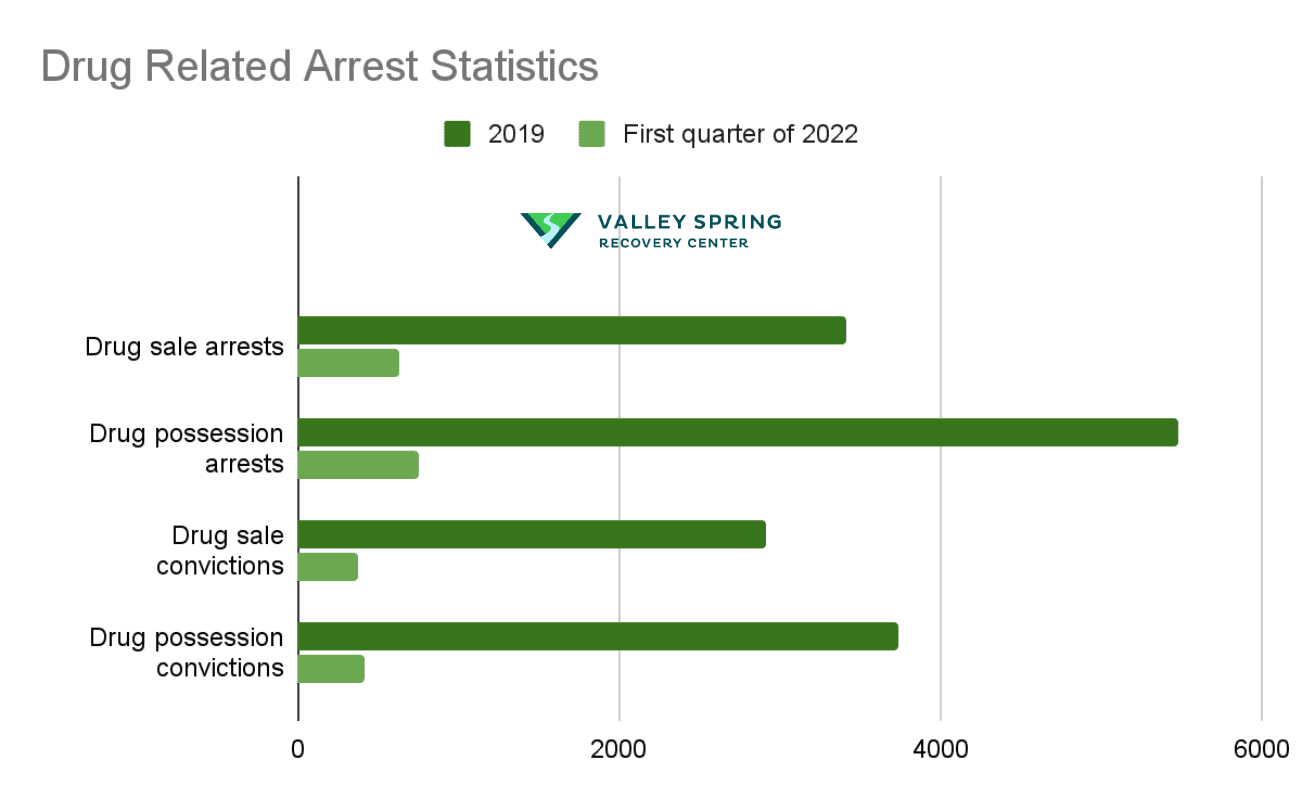
How Many People Are Arrested In New York For Drug Related Crimes?
From 2019 to 2021, Manhattan saw about 706 drug-related arrests each year, with 57 out of 100 accusations leading to convictions in 2021 compared to 78 in 2019. Serious drug possession charges dropped by 48% from 2019, resulting in 2,849 incarcerations in 2021.
How Many People Are Arrested In New York For DUI and DWI (Driving While Intoxicated)?
Driving While Intoxicated (DWI) and Driving Under the Influence (DUI) Statistics:
- Prevalence: DWIs occur as frequently as DUIs in New York, with many offenders having histories of tragic accidents.
- Youth Offenses: In 2021, nearly 5,000 individuals under 21 were charged with DWI, indicating underage drinking and driving.
- Drug Influence: A recent NHTSA poll found 16% of weekend nighttime drivers tested positive for illicit drugs. An NY study showed 80% of accused DWI drivers tested positive for drugs. In December 2022, drugs were involved in 8 auto accidents, with prescription medications contributing to 1 crash.
- Substance-Specific Data: Drivers under the influence of cocaine or amphetamines had higher accident rates. Cannabis is the second most common intoxicant after alcohol.
- Alcohol Impact: Over 30% of fatal collisions in New York State are caused by alcohol, with an alcohol-related injury occurring every two minutes. In 2021, 37 fatalities accounted for 3% of national drunk driving deaths.
In New York, the prevalence of DUI and DWI incidents, particularly among youth and involving multiple substances, underscores the urgent need for comprehensive treatment programs to address the root causes of impaired driving.
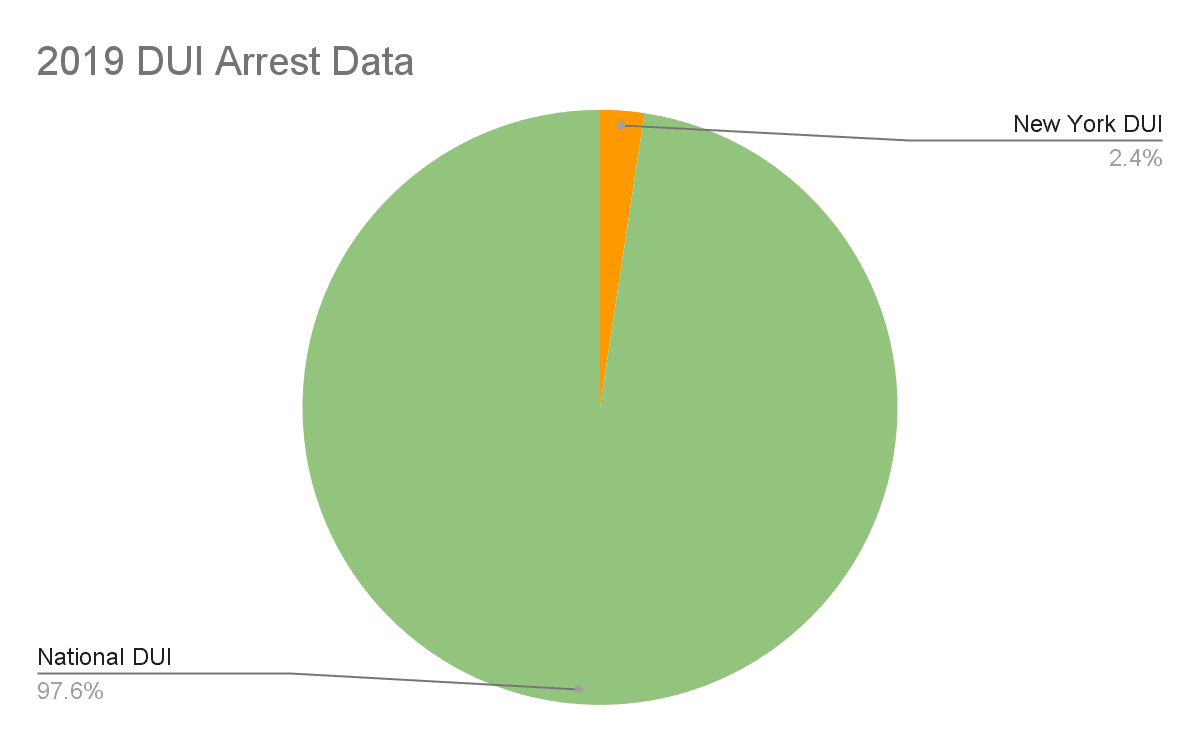
Comparison of National DUI Arrest With New York DUI Arrest
What Are The Drug-induced Sexual and Violent Crime Statistics In New York State?
Among other crimes, using drugs or alcohol can be a major factor in the conduct of violent and sexual crimes.
An assessment of drug usage conducted in emergency departments in New York City indicates that crack cocaine is the drug most commonly associated with violent crime. On the other hand, OPC caused a 7.8% decrease in violent crime complaint reports in New York. There’s evidence of a 19.7% decline in simple assaults but a corresponding increase in severe assaults of 30.4%.
There is limited study on sexual violence among young adult opioid users in the context of drug use, even though drug and alcohol use has been linked to an elevated risk for sexual assault.
Surprisingly, 41% of girls and 11% of males reported having intercourse against their will while using drugs, according to the study’s findings. The study also discovered that drug usage and sex were expected to come with a trade-off. During the structured interviews, 75% of the participants said that they had experienced circumstances when they believed that someone was expecting them to have sex because they were doing drugs together. 73% of women and 49% of men said this had happened to them at least once.
Overall, approximately 5% of the women had sexual attacks without their consent; however, the majority of these incidents happened after the women had freely drank alcohol, and a small number happened after they had been given drugs without their consent.
The most recent Annual Security and Fire Safety Report from Binghamton University showed data that in 2022, there were 12 recorded rape occurrences, as opposed to 21 in 2021.
Between 2021 and 2022, there were fewer documented drug and alcohol behavior referral cases—from 339 to 159 and from 159 to 0. While reported incidents of stalking rose from 47 to 69, cases of dating violence were relatively unchanged.
Are you covered for treatment?


Valley Spring Recovery Center is an approved provider for Blue Cross Blue Shield and Cigna, while also accepting many other major insurance carriers.
Check Coverage Now!What Are The New York Drug Trafficking Statistics?
Drug traffickers never stop coming up with new ideas and expanding the variety of drugs they sell. Between consumers and manufacturers alike, this has led to insecurity and assault.
10% of the fentanyl detected in the United States in 2022 was discovered in New York City. It was projected that 500 kg of fentanyl powder and 4 million fake fentanyl tablets would be found in 2023.
According to the National Survey on Drug Use and Health (NSDUH), the most often used illicit CPDs that are also linked to overdose incidents are economic painkillers. In New York, NDTS Respondents reported a high percentage of Controlled Prescription Drugs availability in 2013 (71%) compared to 2007 (32%).
What is the most common reason for substance use disorder treatment admissions in New York State?
Alcohol is the most common substance cited at the time of admission for substance use disorder treatment in New York State, accounting for approximately 45.9% of all admissions in 2022.
How has the trend in heroin use changed in terms of treatment admissions over recent years in New York State?
There has been a notable decrease in heroin addiction rehab admissions over recent years. From 2017 to 2022, admissions for heroin as a primary substance have decreased by 24.4%, reflecting a shift in the patterns of drug use and possibly the impact of public health interventions and policy changes.
Did you know most health insurance plans cover substance use disorder treatment? Check your coverage online now.
What percentage of drug overdose deaths in New York State involved opioids in 2022?
In 2022, opioids were a primary or contributing factor in 84.3% of all drug overdose deaths in New York State, with synthetic opioids like fentanyl being particularly prevalent.
Which age group is most commonly admitted for substance use disorder treatment in New York State?
Adults aged 25-44 years represent the largest group admitted for substance use disorder treatment, comprising over half of all admissions. This demographic is critical for targeted preventive measures and interventions.
What Treatment Is Available In New York State To Address Addiction and overdose Rates?
Treatment Services available in New York are listed below:
- Detoxification Services: Medical supervision to manage withdrawal symptoms.
- Inpatient Rehabilitation: Intensive care with 24-hour support.
- Outpatient Programs: Flexible treatment while living at home.
- Medication-Assisted Treatment (MAT): Combining medications like methadone or buprenorphine with counseling.
- Residential Programs: Long-term treatment in a structured environment.
- Counseling and Behavioral Therapies: Individual and group sessions to address psychological issues.
- Support Groups: Peer support through groups like Alcoholics Anonymous (AA) and Narcotics Anonymous (NA).
- Family Therapy: Involving family in the treatment process.
- Aftercare Services: Ongoing support to prevent relapse.
- Specialized Programs: Tailored services for specific populations like adolescents, pregnant women, and veterans.
Overdose deaths are preventable with naloxone, an antidote to opioid overdose. Naloxone can be obtained over-the-counter as of September 2023. Opioid Overdose Prevention Programs (OOPPs) provide training on detecting overdose signs and administering naloxone, available both in-person and online.
According to the New York State Opioid Annual Report 2022, naloxone administrations increased by 9.6% from 2020 to 2021. In 2022, 179,036 people sought SUD treatment, with the highest percentage aged 25-34 and 35-44. New York’s system of care supports over 680,000 individuals annually through approximately 1,700 programs.
Funding and Resources: The Office of Addiction Services and Supports (OASAS) oversees the allocation of significant financial resources for SUD treatment. In the Fiscal Year 2022-23, OASAS allocated $1.1 billion for these services, with $985.4 million for local governments and non-profits, $117.5 million for operating costs, and $20.1 million for capital construction.
Contact us today to schedule an initial assessment or to learn more about our services. Whether you are seeking intensive outpatient care or simply need guidance on your drug addiction journey, we are here to help.
How does the drug addiction rate in New York compare with New Jersey?
Both New York and New Jersey face serious challenges with drug addiction and overdose death, especially opioids. New Jersey’s estimated rate of substance use disorders / illicit drug use is quite similar to New York’s.
Share This Post

Dr. Michael Olla
All author posts
Our Therapuetic Recovery Programs
Are you covered for treatment?





Valley Spring Recovery Center is an approved provider for Blue Shield of California and Cigna, while also accepting many other major insurance carriers.
Check Coverage Now!