Drug Withdrawal: Definition, Causes, Effects, Signs & Symptoms, Treatment
Drug withdrawal happens when someone’s body and mind react after they stop or cut down on a drug they’ve been using regularly.
The causes of drug withdrawal include physiological dependence (the body adapting to a drug), psychological dependence (the mind relying on a drug), genetics, duration/intensity of use, and substance type.
The effects of drug withdrawal include dysregulated neurotransmitters, body systems upheaval, mood swings, cravings, elevated heart rate, and tremors. The signs and symptoms of drug withdrawal include insomnia, sweating, nausea, vomiting, anxiety, agitation, muscle aches, and diarrhea.
The treatment of drug withdrawal includes medically supervised detoxification, medication-assisted therapy, counselling/psychotherapy, and holistic support to restore homeostasis.
What is Drug Withdrawal?
Drug withdrawal refers to the set of physical and psychological symptoms that occur when an individual reduces or stops using a substance to which their body has adapted.
The condition arises because the brain and body must readjust to functioning without the drug. The severity and duration of withdrawal depend on factors such as drug type, dosage, and usage duration.
According to a systematic review by James Davies et al. (2018), more than half (56%) of individuals who discontinue antidepressant drugs experience withdrawal effects. It highlights the prevalence and impact of drug withdrawal as the body readjusts to the absence of an adapted substance.
Drug withdrawal represents the body’s adaptive response to the absence of a substance that previously altered its normal balance.
Did you know most health insurance plans cover substance use disorder treatment? Check your coverage online now.
How Long Does Drug Withdrawal Take?
Drug withdrawal takes 7 to 10 days, while some psychological symptoms last for weeks and even months. Acute withdrawal takes different lengths of time depending on the substance used, duration of use, and individual health.
The withdrawal process starts when drug levels in the body drop significantly and ends when the brain’s chemistry stabilizes. Withdrawal takes longer for substances like benzodiazepines and opioids than for stimulants or alcohol.
What Is the Process of Drug Withdrawal?
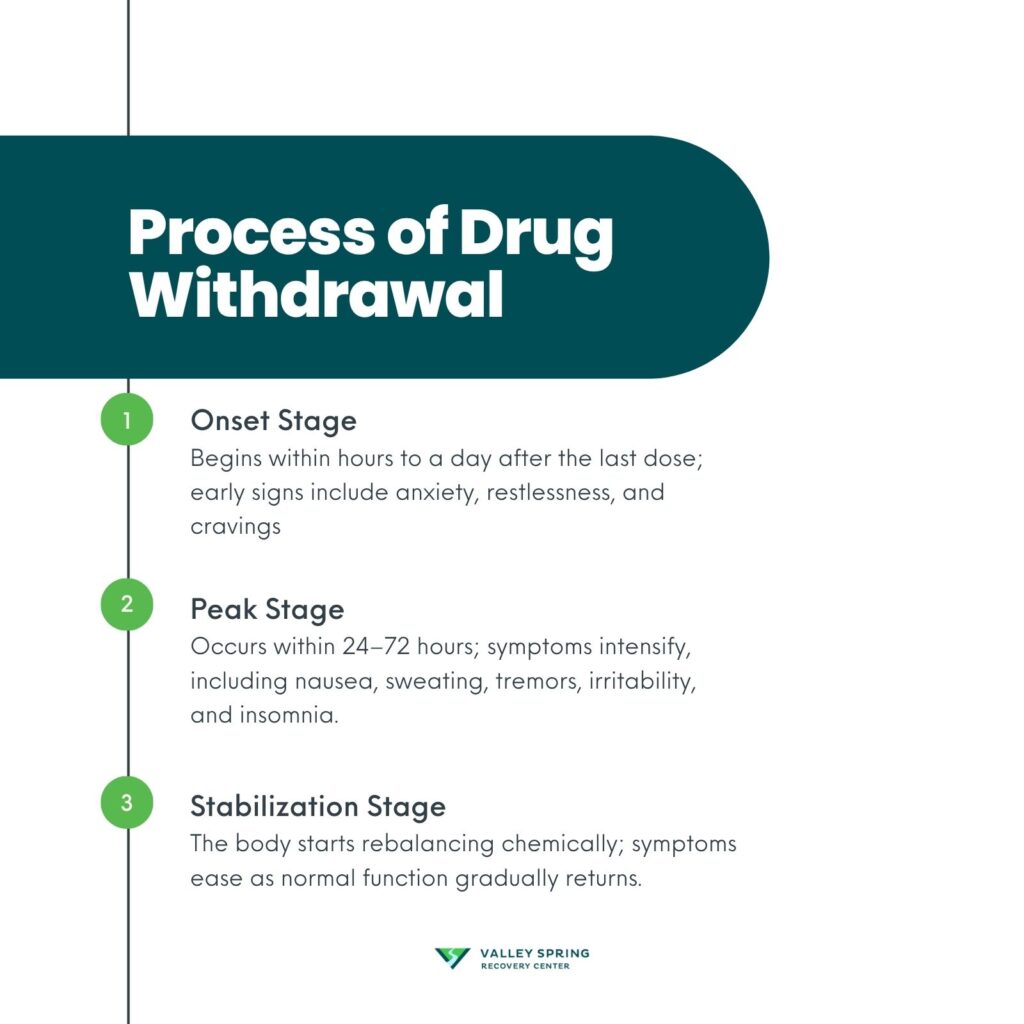
The process of drug withdrawal includes three key stages that describe how the body and mind react and recover after stopping drug use. It starts with the body detecting the absence of the substance, peaks in symptoms, and ends when balance is gradually restored. Each stage involves specific physical and psychological changes that define the withdrawal timeline.
Here is the process of drug withdrawal;
- Onset Stage: It begins within hours to a day after the last dose is administered. The body starts to react to the missing substance, leading to early symptoms like anxiety, restlessness, and cravings.
- Peak Stage: This occurs when withdrawal symptoms reach their highest intensity, usually within 24–72 hours. This stage is characterized by symptoms such as nausea, tremors, sweating, irritability, and insomnia.
- Stabilization Stage: The body and brain begin to rebalance neurotransmitters and hormones. Symptoms gradually decrease as the person adapts to functioning without the drug.
What are the Causes of Drug Withdrawal?
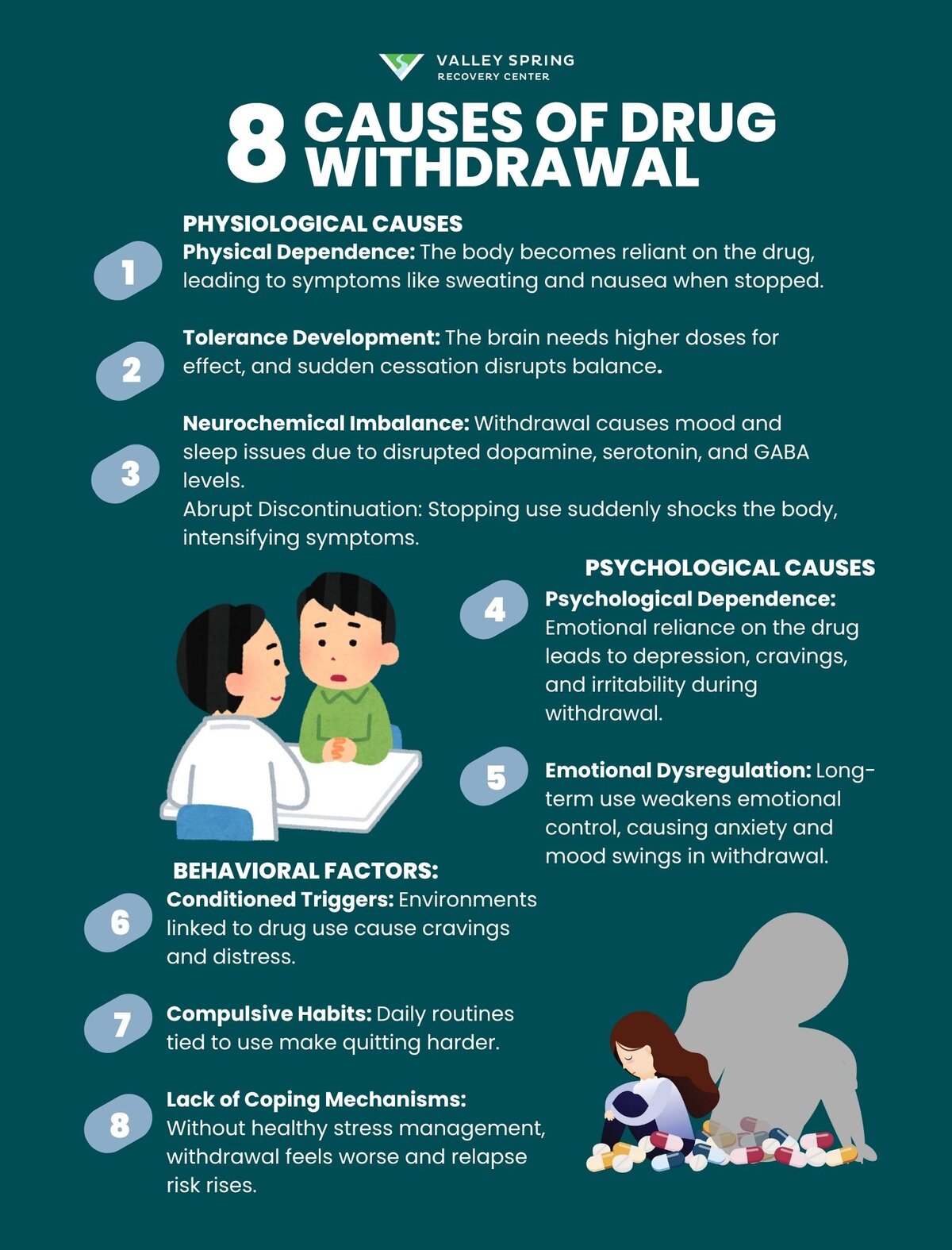
The common causes of drug withdrawal include a combination of physiological, psychological, and behavioral factors that develop during prolonged substance use. These causes explain why the intensity and duration of withdrawal vary by drug type, dosage, and individual health.
Common causes of drug withdrawal include:
Contact us today to schedule an initial assessment or to learn more about our services. Whether you are seeking intensive outpatient care or simply need guidance on your drug addiction journey, we are here to help.
Physiological Causes of Drug Withdrawal
Physiological causes are related to the body’s biological and chemical dependence on the substance.
- Physical Dependence: Continuous drug use changes how organs and systems function, making the body rely on the substance for balance. Once the drug is stopped, the body struggles to regulate itself, leading to symptoms like sweating, nausea, and tremors.
- Tolerance Development: The brain adapts to repeated exposure by reducing its response to the drug. Higher doses are required to achieve the same effect as tolerance develops, and discontinuing use suddenly disrupts the body’s new equilibrium.
- Neurochemical Imbalance: Drugs interfere with neurotransmitters like dopamine, serotonin, and GABA. When use stops, these chemical levels fluctuate, causing anxiety, depression, and sleep disturbances.
- Abrupt Discontinuation: Quitting suddenly without tapering prevents the body from adapting gradually, causing a sudden shock and intensifying withdrawal symptoms.
Psychological Causes of Drug Withdrawal:
Psychological causes stem from the mental and emotional reliance on the drug. The brain becomes accustomed to using the substance as a coping tool for stress, pleasure, or stability.
- Psychological Dependence: The user feels emotionally dependent on the drug to function or feel normal. When the substance is removed, it leads to irritability, depression, and strong cravings as the mind adjusts.
- Emotional Dysregulation: Prolonged drug use reduces the brain’s ability to manage emotions naturally. During withdrawal, this results in heightened anxiety, sadness, or mood swings.
Behavioral Factors in Drug Withdrawal:
Behavioral factors refer to habits, routines, and environmental cues developed around drug use. These patterns reinforce dependency and make withdrawal more difficult to manage.
- Conditioned Behavioral Triggers: Situations, people, or places associated with drug use trigger cravings and psychological discomfort during withdrawal.
- Compulsive Habits: Daily routines built around substance use make it harder for individuals to adjust to life without it.
- Lack of Coping Mechanisms: Many users rely on drugs to deal with stress or negative emotions. Without healthier coping strategies, withdrawal symptoms feel more severe, and relapse risk increases.
Rediscover Life at Valley Spring Recovery Center
Get the compassionate support you deserve. We're here to help you reclaim joy, wellness, and a brighter future.
Verify Benefits
What are the Effects of Drug Withdrawal?
The key effects of drug withdrawal include a wide range of physical, psychological, and emotional reactions that occur as the body and brain adjust to life without the substance.
These effects appear within hours to days after the last dose and vary depending on the type of drug, duration of use, and individual health. Drug withdrawal affects multiple systems of the body, disrupting normal sleep, mood, and energy levels.
The common effects of drug withdrawal include:
Physical Effects of Drug Withdrawal
Physical effects occur because the body has become biologically dependent on the substance. When the drug is removed, normal body functions are disrupted, leading to visible or measurable symptoms.
- Fatigue and Weakness: The body expends energy rebalancing hormones and neurotransmitters, causing tiredness and low stamina.
- Muscle Pain and Cramps: Changes in circulation and nerve function result in soreness or stiffness.
- Nausea, Vomiting, and Sweating: The digestive and autonomic systems react strongly to detoxification.
- Sleep Disturbances: Withdrawal causes insomnia, vivid dreams, or irregular sleep patterns.
- Appetite Changes: Loss or increase in appetite is common as metabolism resets.
Psychological Effects of Drug Withdrawal
Psychological effects arise from changes in brain chemistry and cognitive function caused by prolonged substance use. The absence of the drug leads to mental distress as the brain relearns normal regulation.
- Anxiety and Panic: Reduced neurotransmitters like GABA and serotonin heighten nervous system activity.
- Depression: A sudden drop in dopamine and endorphin levels causes low mood or hopelessness.
- Irritability and Agitation: Frustration builds as cravings intensify and focus diminishes.
- Cognitive Fog: Memory lapses, confusion, and difficulty concentrating are common during the early stages of withdrawal.
Are you covered for treatment?


Valley Spring Recovery Center is an approved provider for Blue Cross Blue Shield and Cigna, while also accepting many other major insurance carriers.
Check Coverage Now!Emotional Effects of Drug Withdrawal
Emotional effects reflect how feelings, motivation, and self-control are impacted during recovery. These persist longer than physical symptoms.
- Mood Swings: Rapid emotional shifts occur as brain chemicals stabilize.
- Guilt or Shame: Individuals experience emotional distress tied to substance use or relapse fears.
- Emptiness or Apathy: Emotional numbness follows prolonged dopamine suppression.
- Cravings and Emotional Triggers: Certain situations or thoughts reignite the desire to use.
Can Drug Withdrawal Lead to Post-Acute Withdrawal Syndrome?
Yes, drug withdrawal can lead to Post-Acute Withdrawal Syndrome (PAWS). PAWS is a condition that occurs when withdrawal symptoms persist or reappear weeks or months after the acute phase ends.
PAWS develops because the brain and nervous system take time to restore full chemical balance after long-term substance use. It manifests through ongoing symptoms such as anxiety, depression, fatigue, sleep disturbances, and cognitive difficulties. The syndrome results from disrupted neurotransmitter function and affects emotional stability, stress response, and overall recovery progress. In many cases, PAWS prolongs the healing process and increases the risk of relapse if not properly managed through therapy, medication, and continued support.
Can Drug Withdrawal Kill?
No, drug withdrawal cannot kill in most cases, but it leads to serious complications that become life-threatening without proper care. Severe withdrawal from substances like alcohol or benzodiazepines causes seizures, dehydration, or heart failure, which are fatal if untreated. Medical supervision helps control these risks and ensures the withdrawal process is managed safely.
Did you know most health insurance plans cover substance use disorder treatment? Check your coverage online now.
What are the Signs and Symptoms of Drug Withdrawal?

The common signs and symptoms of drug withdrawal include a combination of physical, psychological, and behavioral changes that appear when the body adjusts to the absence of a substance.
These reactions vary depending on the type of drug, level of dependence, and duration of use. Recognizing these symptoms early is vital for ensuring safe detox and timely medical support.
Common signs and symptoms of drug withdrawal include:
- Anxiety and Irritability: The brain’s chemical imbalance during withdrawal causes restlessness, tension, and mood swings as it struggles to stabilize.
- Sweating and Shaking: The body releases excess energy and toxins through sweat, while trembling indicates nervous system hyperactivity.
- Nausea and Vomiting: The digestive system reacts strongly to chemical imbalances, leading to stomach upset and loss of appetite.
- Muscle Pain and Fatigue: As the body readjusts, muscle aches, cramps, and weakness are common due to disrupted nerve signaling.
- Insomnia or Sleep Disturbance: Irregular sleep patterns occur because the brain’s neurotransmitters controlling rest are destabilized.
- Depression and Cravings: Emotional lows and strong urges to reuse the drug appear as the brain seeks to regain its former chemical balance.
What are the Treatments of Drug Withdrawal?
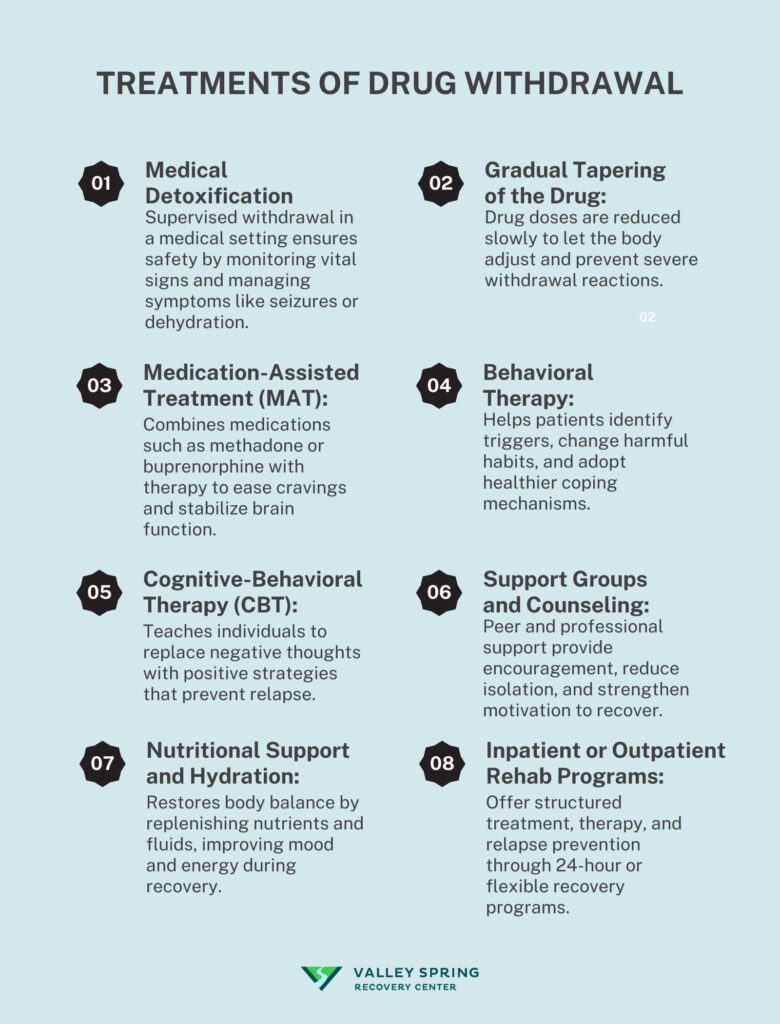
The common treatments of drug withdrawal include medical, psychological, and supportive methods that help manage symptoms, prevent complications, and promote long-term recovery.
Effective treatment depends on the type of drug, the severity of dependence, and the overall health of the person. A structured withdrawal plan ensures safety, reduces discomfort, and lowers the risk of relapse during the detox process.
Major treatment methods for drug withdrawal include:
Medical Detoxification
Medical detoxification involves supervised withdrawal in a clinical setting where doctors monitor vital signs and manage symptoms. It ensures safety by preventing complications such as seizures, dehydration, or cardiac distress during the detox process.
Contact us today to schedule an initial assessment or to learn more about our services. Whether you are seeking intensive outpatient care or simply need guidance on your drug addiction journey, we are here to help.
Gradual Tapering of the Drug
Gradual tapering reduces drug dosage slowly over time to minimize withdrawal severity. This method helps the body adjust to lower drug levels, preventing sudden chemical imbalances that trigger extreme symptoms.
Medication-Assisted Treatment (MAT)
MAT combines FDA-approved medications with therapy to reduce cravings and withdrawal discomfort. Drugs like methadone, buprenorphine, or naltrexone help stabilize brain chemistry and support long-term recovery.
Behavioral Therapy
Behavioral therapy focuses on identifying and changing destructive habits related to substance use. It helps patients develop coping skills, avoid triggers, and build healthier lifestyle patterns.
Rediscover Life at Valley Spring Recovery Center
Get the compassionate support you deserve. We're here to help you reclaim joy, wellness, and a brighter future.
Verify BenefitsCognitive-Behavioral Therapy (CBT)
CBT is a structured, goal-oriented therapy that addresses the link between thoughts, emotions, and behaviors. It teaches individuals to challenge negative thinking and replace it with strategies that reduce the risk of relapse.
Support Groups and Counseling
Support groups like Narcotics Anonymous (NA) or individual counseling provide emotional support and accountability. Sharing experiences with peers and professionals helps reduce isolation and promotes motivation during recovery.
Nutritional Support and Hydration
Proper nutrition and hydration restore the body’s strength and balance, disrupted by substance abuse. Replenishing vitamins, minerals, and fluids helps accelerate physical recovery and enhance mood and energy levels.
Are you covered for treatment?
Valley Spring Recovery Center is an approved provider for Blue Cross Blue Shield and Cigna, while also accepting many other major insurance carriers.
Check Coverage Now!Inpatient or Outpatient Rehab Programs:
Rehabilitation programs provide structured environments for recovery, offering either 24-hour inpatient care or flexible outpatient rehabilitation programs. Both options offer therapy, medical support, and relapse prevention education tailored to the individual’s needs.
What is the Difference Between Drug Withdrawal and Alcohol Withdrawal?
The main difference between drug withdrawal and alcohol withdrawal lies in the type of substance, the symptoms experienced, and the medical risks involved. Both occur when the body becomes dependent on a substance and reacts to its absence, but they affect different systems and require various treatments. Drug withdrawal involves opioids, stimulants, or sedatives, while alcohol withdrawal is specific to long-term alcohol dependence and is medically dangerous.
Here are the differences between drug withdrawal and alcohol withdrawal:
- Substance Type: Drug withdrawal covers a wide range of substances like opioids, benzodiazepines, or stimulants, whereas alcohol withdrawal is limited to alcohol dependence.
- Symptoms: Drug withdrawal symptoms vary by drug, ranging from fatigue and anxiety to pain and cravings, while alcohol withdrawal causes tremors, sweating, confusion, and in severe cases, seizures or delirium tremens.
- Medical Risk: Alcohol withdrawal is life-threatening without treatment, whereas most drug withdrawals are rarely fatal but still cause severe discomfort.
- Treatment Approach: Alcohol withdrawal requires intensive medical detox with medications like benzodiazepines, while drug withdrawal treatment depends on the specific substance and includes tapering, MAT, or behavioral therapy.
Can Drug Tolerance Increase the Severity of Withdrawal Symptoms?
Yes, drug tolerance can increase the severity of withdrawal symptoms because the body becomes highly dependent on the substance to function normally.
The brain and nervous system adapt to higher drug levels as tolerance builds, altering chemical balance and receptor sensitivity. When the drug is reduced or stopped, these systems struggle to readjust, leading to stronger and longer-lasting withdrawal effects.
Higher drug tolerance results in more intense cravings, mood disturbances, and physical discomfort during the detox phase.
Did you know most health insurance plans cover substance use disorder treatment? Check your coverage online now.
How are Drug Withdrawal and Addiction Connected?
Drug withdrawal and addiction are connected because both involve the body’s dependence on a substance and its reaction to changes in drug use. Addiction develops when repeated drug use alters brain chemistry, creating both physical and psychological dependence.
When drug use stops, withdrawal occurs as the body tries to rebalance without the substance it has adapted to. This connection means that withdrawal is a direct consequence of addiction, and managing withdrawal safely is a vital first step toward breaking the cycle of substance dependence and achieving recovery.
Share This Post

Valley Spring Editorial Team
All author posts
Our Therapuetic Recovery Programs
Are you covered for treatment?







Valley Spring Recovery Center is an approved provider for Blue Shield of California and Cigna, while also accepting many other major insurance carriers.
Check Coverage Now!