Effects Of Addiction On Friends Of The User: + Mitigation Strategies
Addiction can have a profound impact on the lives of those closest to the individual struggling with addiction, including friends. The effects of addiction on friends can be severe, ranging from emotional distress to physical health problems. Understanding the symptoms, causes, and effects of addiction on friends is crucial for providing effective support and developing strategies for mitigation.
Addiction is a complex condition characterized by compulsive and excessive use of substances or behaviors, despite negative consequences. The definition of addiction encompasses a range of behaviors, including substance use disorders and behavioral addictions.
According to the National Institute on Drug Abuse, approximately 20.4 million Americans aged 12 or older had a substance use disorder in 2019 and many of those users have friends who have been deeply affected by their addiction.
The effects of addiction on friends can be severe and long-lasting, impacting not only their mental health but also their physical health and overall well-being. Friends may experience emotional distress, including anxiety, depression, and feelings of guilt and shame. They may also struggle with relationship problems, financial difficulties, and other issues related to the individual’s addiction.
What Are the Effects of Addiction on Friends of The User?
Addiction not only impacts the individual struggling with it but also significantly affects their friends and social circles. According to Branstetter, Steven A. et al.’s 2011 study, adolescents who have drug-using friends are more likely to use drugs themselves, as friends provide immediate access to substances, model drug-using behavior, and shape beliefs and attitudes toward drug use. Additionally, friends’ substance use can influence perceptions of how normative substance use is among peers, leading adolescents to believe that substance use is common within their social circles.
Furthermore, Shadur, Julia, and Hussong, Andrea’s 2014 study suggests that adolescents who experience more negative emotions and have less intimate friendships may be more likely to turn to drugs or alcohol.
The following table outlines the various effects of addiction on friends, highlighting the emotional, relational, and mental health challenges they may encounter.
| Effect on Friends | Description of Impact | Effect Category | How It Occurs | Why It Occurs | Strategy for Mitigation |
|---|---|---|---|---|---|
| Emotional Distress | Friends may feel sadness, frustration, or helplessness as they witness their friend’s struggles. | Emotional Impact | Friends experience emotional turmoil as they see the negative effects of addiction. | The emotional burden of seeing a friend suffer can lead to anxiety and depression. | Encourage open communication about feelings, and seek support from counseling or support groups. |
| Strained Relationships | Addiction can create distance and tension in friendships, leading to feelings of neglect. | Relational Impact | Friends may feel pushed away as the user prioritizes their addiction over social connections. | The user’s behavior changes, leading to a breakdown in communication and connection. | Facilitate honest discussions about the impact of addiction on the friendship and set healthy boundaries. |
| Increased Responsibility | Friends may take on additional responsibilities, such as providing support or care, leading to overwhelm. | Relational Impact | Friends may feel obligated to help, which can lead to feelings of resentment. | The need to support the user can create an imbalance in the friendship. | Encourage friends to seek their own support and practice self-care to manage their responsibilities. |
| Social Isolation | Friends may withdraw from social activities or feel isolated due to stigma associated with addiction. | Emotional Impact | Friends might distance themselves to avoid enabling the user’s behavior. | Stigma and fear of judgment can lead to social withdrawal. | Promote engagement in supportive communities and activities that foster connection without enabling. |
| Impact on Mental Health | The stress of dealing with a friend’s addiction can lead to anxiety, depression, or burnout. | Emotional Impact | Friends may experience mental health challenges as they cope with the situation. | The ongoing stress and worry about the user’s well-being can take a toll on mental health. | Encourage friends to seek professional help and engage in self-care practices to protect their mental health. |
| Fear of Loss | Friends may fear losing the user to their addiction, leading to grief and anxiety about the future of the friendship. | Emotional Impact | Friends experience anxiety about the potential consequences of addiction, such as overdose or estrangement. | The unpredictability of addiction creates a constant fear of loss. | Engage in open conversations about fears, seek support from counseling, and focus on positive interventions for the user. |
Did you know most health insurance plans cover substance use disorder treatment? Check your coverage online now.
How Can You Support a Friend With An Addiction?
You can support a friend with addiction by providing emotional support, helping them choose a healthy lifestyle, encouraging them to seek professional help and more.
The 9 ways to support a friend with addiction are listed below:
You can support a friend with addiction by providing emotional support, helping them choose a healthy lifestyle, encouraging them to seek professional help and more.
The 9 ways to support a friend with addiction are listed below:
1. Emotional Support
Offer a non-judgmental space for your friend to express their feelings. Active listening, empathy, and understanding can foster trust and openness, making them feel less isolated in their struggles. Emotional support can significantly impact their willingness to seek help and stay committed to recovery.
2. Encourage Professional Help
Motivate your friend to seek professional treatment options. Assist in researching options, scheduling appointments, or attending sessions together. Recognize that professional guidance is often essential for effective recovery. Encouraging professional help can lead to more effective strategies for overcoming addiction than what friends alone can provide.
Contact us today to schedule an initial assessment or to learn more about our services. Whether you are seeking intensive outpatient care or simply need guidance on your drug addiction journey, we are here to help.
3. Stay Informed
Educate yourself about addiction, including its symptoms and recovery challenges. This knowledge equips you to provide informed support and recognize signs of potential relapse. Being informed lets you understand your friend’s experience better and respond appropriately to their needs.
4. Set Boundaries
Establish clear boundaries to avoid enabling behaviors. This may involve refusing to lend money or cover for their absences, ensuring you protect your well-being while still offering support. Setting boundaries helps maintain a healthy relationship and encourages your friend to take responsibility for their actions.
5. Be Consistent and Reliable
Maintain a steady presence in your friend’s life. Recovery is a journey filled with ups and downs; your consistent support can provide stability during challenging times. Being a reliable friend can instill a sense of security, making it easier for them to navigate their recovery journey.
Rediscover Life at Valley Spring Recovery Center
Get the compassionate support you deserve. We're here to help you reclaim joy, wellness, and a brighter future.
Verify Benefits
6. Promote Healthy Lifestyle Changes
Encourage participation in positive activities together, such as exercising, cooking nutritious meals, or exploring new hobbies. These can help divert attention from substance use and foster a healthier lifestyle. Supporting healthy changes can enhance their overall well-being and reduce the likelihood of relapse.
7. Recognize Progress
Celebrate even small milestones in your friend’s recovery. Acknowledging their efforts can boost motivation and reinforce their commitment to change. Recognizing progress can empower your friends, reminding them that recovery is a journey worth pursuing.
8. Prioritize Your Mental Health
Supporting someone with addiction can be draining. Ensure you set emotional boundaries, seek your support, and engage in self-care to maintain your well-being. Taking care of your mental health enables you to be a more effective support system for your friend.
Are you covered for treatment?


Valley Spring Recovery Center is an approved provider for Blue Cross Blue Shield and Cigna, while also accepting many other major insurance carriers.
Check Coverage Now!9. Provide Long-Term Support
Recovery is ongoing. Continue to check in and offer encouragement well after initial treatment, reinforcing your commitment to their journey and helping them stay accountable. Long-term support can be crucial in preventing relapse and fostering lasting change in your friend’s life.
What Role Can Friends Play in Preventing Relapse?
Friends can play a significant role in preventing relapse by offering ongoing support, helping the individual avoid triggers, encouraging continued treatment and healthy habits, and being vigilant for signs of relapse. It’s important for friends to educate themselves about the recovery process and relapse prevention strategies.
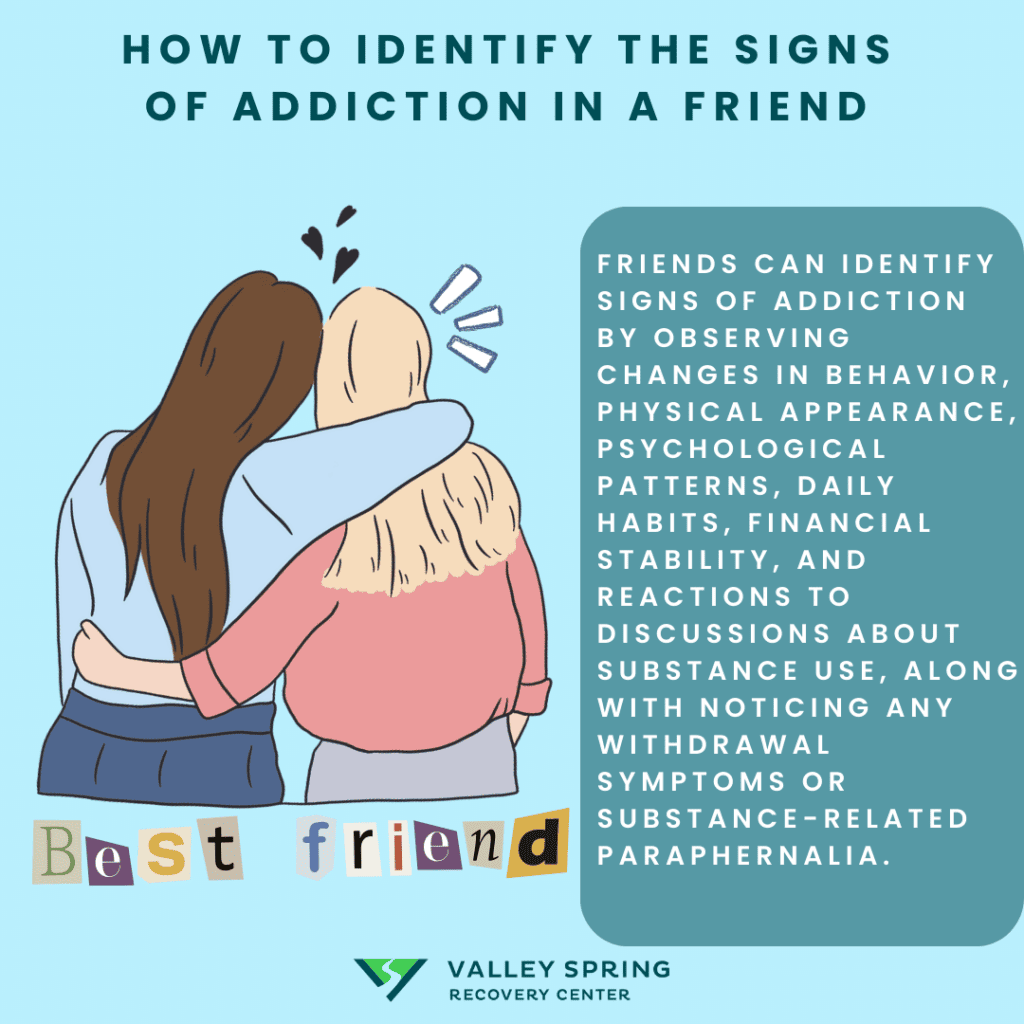
How Can Friends Identify Signs of Addiction?
Recognizing the signs of addiction in a friend can be crucial for their well-being. Behavioral changes, such as increased secrecy and lying, often indicate deeper issues. You may notice social withdrawal, where they isolate themselves from family and friends, or physical signs like weight fluctuations and poor hygiene.
Here are 12 signs of addiction in a friend:
- Behavioral Changes: Look for significant shifts in behavior, such as increased secrecy, lying, or stealing. Sudden changes in social circles, engaging in risky behaviors, and neglecting responsibilities at work, school, or home can also indicate a problem.
- Social Withdrawal: Notice if your friend isolates themselves from family and friends, neglects relationships, or avoids social activities they once enjoyed.
- Physical Signs: Be aware of noticeable changes in appearance, including unexplained weight loss or gain, poor personal hygiene, bloodshot eyes, or physical marks (like track marks from intravenous drug use).
- Psychological Signs: Watch for mood swings, irritability, paranoia, or a lack of motivation. Signs of depression or anxiety may also be present.
- Changes in Daily Habits: Look for altered sleeping patterns, such as insomnia or excessive sleeping, and a loss of interest in activities they previously enjoyed. Changes in eating habits can also be a sign.
- Financial Problems: Sudden financial issues, frequent borrowing, selling possessions, or an unexplained lack of funds can indicate an addiction.
- Substance-Related Paraphernalia: Finding drug paraphernalia, such as syringes, pipes, or rolling papers, can be a clear sign of substance use.
- Denial or Defensiveness: If confronted about their behavior, a person struggling with addiction may respond with strong denial or defensiveness, refusing to acknowledge the problem.
- Withdrawal Symptoms: Observe if your friend exhibits physical or psychological withdrawal symptoms when they haven’t had access to the substance, such as shaking, nausea, or anxiety.
- Increased Tolerance: A key sign of addiction is needing more of the substance to achieve the same effect, indicating an increased tolerance.
- Neglecting Responsibilities: A decline in performance at work or school, including missed deadlines and responsibilities, can signal an addiction.
- Seeking Help: If your friend expresses a desire to change or actively seeks help, it may indicate an awareness of their addiction and a willingness to address it.

Did you know most health insurance plans cover substance use disorder treatment? Check your coverage online now.
How Should Friends React If the Addict Refuses Help?
When an addict refuses help, it puts friends in a challenging position. However, there are several ways they can navigate this situation effectively while maintaining their own well-being:
- Maintain Open Communication: Keep the lines of communication open. Let the individual know that you are there for them and that you care about their well-being. Offer a non-judgmental, listening ear and ensure that they know you are a safe person to talk to.
- Express Concerns Thoughtfully: When expressing concerns, focus on the impact of their behavior on their health and well-being rather than the addiction itself. Use “I” statements to communicate how their behavior affects you and others, which can be less confrontational.
- Offer Information and Resources: Continue to provide information about treatment options, but do it gently and without pressure. You can offer to help them research treatment facilities, support groups, or therapists, and keep this information accessible if they change their mind.
- Set and Maintain Healthy Boundaries: It’s crucial to establish boundaries to protect your own emotional and mental health. Decide what you are and are not willing to do or tolerate, communicate these boundaries clearly, and stick to them.
- Avoid Enabling Behavior: Enabling can inadvertently prolong the addiction. Avoid behaviors like lending money, covering up for their actions, or making excuses for their behavior.
- Encourage Small Steps: If they’re not ready for full treatment, suggest smaller steps like visiting a doctor, joining a support group meeting, or speaking with a counselor.
- Stay Informed and Educated: Educate yourself about addiction and recovery. This knowledge can help you understand what your friend is going through and the challenges they face.
- Take Care of Yourself: It’s important to look after your own mental and emotional health. Consider seeking support for yourself through counseling or support groups for friends and family of addicts.
- Be Prepared for All Outcomes: Understand that the road to recovery is often long and difficult, and relapse can be part of the process. Be prepared for various outcomes, including the possibility that your friend may not accept help until they hit rock bottom.
- Remain Hopeful and Supportive: Continue to offer your support and let them know that you believe in their ability to recover. However, make sure that your support is not enabling their addiction.
Dealing with addiction is complex, and it’s important to balance support for your friend with taking care of your own needs. Remember, while you can offer support and encouragement, ultimately, the decision to seek help lies with the individual struggling with addiction.
Should a friend of a drug abuser alert parents, siblings, or employers of the problem?
If a friend suspects someone is struggling with drug abuse, it’s essential to alert their parents or guardians. This step can provide the individual with emotional support, guidance, and resources necessary for overcoming addiction, while also preventing potential legal or financial issues.
For Minors or Young Adults
Informing parents or guardians is crucial for intervention and support.
For Adults
The decision is more complex due to privacy concerns. Involve family only if the addiction poses serious safety risks.
Workplace Involvement
Generally not advisable unless addiction affects work safety or performance. Consider potential job-related consequences.
Evaluate the Relationship
Assess your closeness to the addict and their family. Approach the topic with caution and sensitivity.
Seek Guidance
Consult treatment facilities, or a professional, such as a counselor or addiction specialist, for advice on the best course of action.
How do the effects of addiction on friends compare to the effects on parents?
While addiction profoundly impacts friendships through trust issues, communication breakdowns, and social withdrawal, its effects on family members are often even more deep-seated. Family members, including spouses, children, and parents, typically experience more intense emotional, financial, and practical challenges. The dynamics within a family can change drastically, with increased responsibilities placed on non-addicted members and often more severe emotional disturbances. For a detailed exploration of these dynamics and to understand more about the broader impacts within a household, consider reading about the effects of addiction on parents.
Share This Post

Dr. Michael Olla
All author posts
Our Therapuetic Recovery Programs
Are you covered for treatment?







Valley Spring Recovery Center is an approved provider for Blue Shield of California and Cigna, while also accepting many other major insurance carriers.
Check Coverage Now!