Obsessive Compulsive Disorder OCD: Symptoms, Root Causes, and Effective Treatment Options
Obsessive-Compulsive Disorder (OCD) is a chronic mental health condition characterized by recurring, intrusive thoughts (obsessions) and repetitive behaviors or mental acts (compulsions) performed to reduce anxiety. These symptoms can significantly interfere with daily functioning, relationships, and overall quality of life. According to the National Institute of Mental Health (NIMH), approximately 2.3% of adults in New Jersey experience OCD at some point in their lives.
Common symptoms include persistent fears of contamination, excessive need for order, intrusive, violent or taboo thoughts, and compulsive actions like handwashing, checking, or counting. While everyone experiences occasional obsessive thoughts, OCD is diagnosed when these patterns become distressing and time-consuming.
The root causes of OCD are complex and multifactorial, often involving a combination of genetic, neurological, behavioral, and environmental factors. Imbalances in brain chemicals like serotonin, a family history of OCD, and stressful life events are all linked to the disorder’s onset and persistence.Effective treatment options include Cognitive Behavioral Therapy (CBT), particularly Exposure and Response Prevention (ERP), as well as medication like SSRIs. For severe cases, advanced approaches such as deep brain stimulation may be considered. Early intervention greatly improves long-term outcomes.
What is Obsessive-Compulsive Disorder?
Obsessive-Compulsive Disorder (OCD) is a mental health condition that involves the presence of obsessions and compulsions. Individuals with OCD experience intrusive thoughts or unwanted thoughts that provoke intense fears, leading them to engage in repetitive behaviors or mental acts to alleviate the anxiety associated with these obsessions.
According to the International OCD Foundation, about 1 in 40 adults have OCD or will develop it at some point in their lives. To get rid of the thoughts, they feel driven to do something repetitively (compulsions).
The repetitive behaviors, such as hand washing/cleaning, checking on things, and mental acts like counting or other activities, significantly interfere with a person’s daily activities and social interactions.
What are the Symptoms of Obsessive-Compulsive Disorder?
The symptoms of obsessive-compulsive disorder are categorized into obsessions, such as intrusive thoughts about contamination, fears of harming others, doubts about safety, and compulsions like excessive cleaning, repetitive checking, and counting rituals. These symptoms are necessary in recognizing how OCD affects individuals across different demographics and in varying severities.
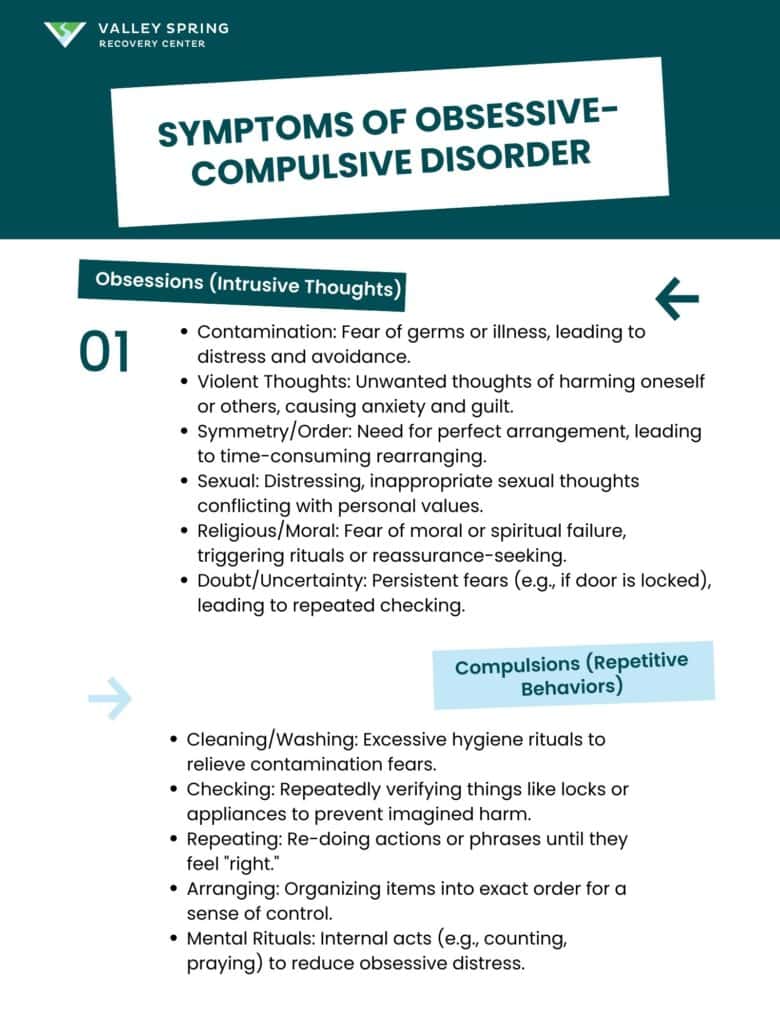
The symptoms of obsessive-compulsive disorder are explained below:
Obsessions
Obsessions in Obsessive-Compulsive Disorder (OCD) are defined as persistent, intrusive thoughts, images, or urges that cause significant anxiety or distress. These unwanted thoughts lead individuals to engage in compulsive behaviors in an attempt to alleviate the discomfort associated with them.
This aspect of the condition is understood as a type of obsessive-compulsive disorder, where the individual feels trapped by their intrusive thoughts. Each of these obsessions significantly affects a person’s mental health, frequency, and overall quality of life, requiring targeted therapeutic interventions to manage effectively.
The symptoms of obsessions in OCD include the following:
- Contamination Obsessions: Contamination obsessions are irrational fears of germs, dirt, or illness that lead individuals to believe they will be contaminated through contact with people, surfaces, or objects. The impact of this obsession is severe, as individuals engage in excessive cleaning or hand-washing rituals to ease their anxiety.
- Violent Obsessions: Violent obsession consists of unwanted, distressing thoughts about causing harm to oneself or others, even though the individual has no intention of acting on them. The frequency of these intrusive thoughts is debilitating, causing intense anxiety, guilt, and avoidance of situations where harm seems possible.
- Symmetry and Order Obsessions: Individuals with symmetry and order obsessions feel an overwhelming need to have items arranged in perfect order or symmetry. The compulsion to fix or rearrange objects consumes a significant amount of time, leading to frustration and an inability to focus on other tasks.
- Sexual Obsessions: Sexual obsession involves recurring, unwanted sexual thoughts or images that conflict with the individual’s values, causing deep anxiety and distress. These thoughts lead to guilt and shame, with individuals avoiding situations or people that trigger such thoughts.
- Religious and Moral Obsessions: Religious and moral obsessions center around an exaggerated fear of violating religious or moral standards, leading to compulsive behavior like repetitive prayers, confession, or seeking reassurance.
- Doubt and Uncertainty Obsessions: Doubt and uncertainty obsessions are characterized by persistent doubts, such as whether the door is locked or the stove is off. The individual feels an intense need to repeatedly check or seek reassurance, causing time-consuming rituals that interfere with daily functioning.
Compulsions
Compulsions in Obsessive-Compulsive Disorder (OCD) are defined as repetitive behaviors or mental acts that an individual feels driven to perform in response to obsessions or according to rigid rules.
These repetitive behaviors are aimed at reducing the distress associated with the obsessions or preventing a feared event or situation, even though they do not realistically control the feared outcome. Compulsions vary widely in nature and severity but serve to provide temporary relief from anxiety.
The symptoms of compulsions in OCD include the following:
- Cleaning and Washing Compulsions: Cleaning and washing compulsion is defined as the repetitive need to clean or wash excessively to reduce fears of contamination. Individuals wash their hands repeatedly or clean their environment obsessively for hours at a time. The severity of this compulsion leads to physical consequences such as skin damage and infections due to over-washing.
- Checking Compulsions: Checking compulsion involves repeatedly verifying things such as whether doors are locked, appliances are turned off, or tasks are completed correctly. The goal is to alleviate fears of harm, danger, or mistakes. The frequency of this behavior becomes extreme, with some individuals spending excessive time checking the same items multiple times.
- Repeating Compulsions: Repeating compulsions are characterized by the need to perform certain actions or behaviors multiple times, such as touching objects, performing tasks in a specific sequence, or saying phrases repeatedly. The duration of these compulsions is prolonged, and the individual feels intense distress if the action is not repeated as compelled.
- Organizing and Arranging Compulsions: Organizing and arranging compulsions are defined as the obsessive need to arrange items in a particular order based on symmetry or specific patterns. Individuals spend a significant amount of time organizing or rearranging their surroundings to achieve a sense of order.
- Mental Compulsions: Mental compulsion involves internal rituals, such as mentally repeating words, counting, praying, or visualizing specific images to alleviate anxiety or prevent feared outcomes. Though not visible to others, mental compulsions are just as debilitating as physical ones. The frequency and duration of these internal rituals are prolonged, interrupting the person’s ability to focus on other tasks.
What are the Causes of Obsessive-Compulsive Disorder?
The exact causes of obsessive-compulsive disorder (OCD) are unknown; however, genetic predisposition, neurobiological factors, and environmental influences contribute to its development. OCD symptoms indicate that both biological and environmental factors are important in the disorder’s onset.

The factors that cause/lead to OCD are given below:
Genetic Factors
Genetic factors refer to the hereditary components that predispose an individual to obsessive-compulsive disorder (OCD). Variations in certain genes that provide instructions for proteins that react to or transport serotonin have been associated with an increased risk of OCD. Variations in other genes involved in communication in the brain are also associated with the condition.
Neurological Factors
Neurological factors involve the brain’s structure and function, particularly in areas associated with anxiety and compulsive behavior. An imaging study by Hazari N. et al. 2019, “Neuroimaging findings in obsessive-compulsive disorder,” has shown that individuals with OCD have abnormalities in brain regions such as the orbitofrontal cortex and the basal ganglia.
These areas have altered activity in those with OCD, contributing to the intrusive thoughts and compulsions characteristic of the disorder.
Psychological Factors
Psychological factors encompass individual psychological traits and experiences that contribute to OCD. These include personality traits such as perfectionism, high levels of anxiety, or a tendency to overestimate threats.
These psychological traits increase the likelihood of developing OCD by influencing how individuals perceive and respond to intrusive thoughts.
Biochemical Factors
Biochemical factors pertain to the balance of neurotransmitters in the brain, particularly serotonin. Imbalances in serotonin levels have been implicated in OCD. The selective serotonin reuptake inhibitors (SSRIs), which increase serotonin levels, effectively reduce OCD symptoms.
Cognitive Factors
Cognitive factors relate to the way individuals process thoughts and perceive threats. Cognitive theories of OCD propose that individuals with the disorder misinterpret intrusive thoughts as dangerous or unacceptable, leading to compulsive behaviors as a means of reducing anxiety.
Cognitive distortions, such as overestimation of danger and inflated responsibility, contribute to the maintenance of OCD symptoms.
What are the Treatments of Obsessive-Compulsive Disorder?
The treatments for obsessive-compulsive disorder in New Jersey are primarily psychotherapy and medications. A combination of treatments yields the best results, as it addresses both the cognitive and biological aspects of the disorder.

1. Psychotherapy
Psychotherapy refers to various therapeutic approaches aimed at helping individuals understand and cope with their intrusive thoughts and compulsive behaviors. It provides increasing support for patients to explore their feelings and learn effective coping mechanisms.
Psychotherapy helps treat OCD by allowing individuals to confront their fears and anxieties in a structured manner, thereby reducing the intensity and frequency of their symptoms.
The benefits of psychotherapy include improved emotional regulation, increased support from a licensed mental health professional, and enhanced ability to manage stress. However, there are risks, such as the possibility of initially feeling overwhelmed when addressing distressing thoughts or memories during therapy.
Psychotherapy is effective when combined with medication, especially for severe cases of OCD in adults and children.
The types of psychotherapies used in OCD include:
- Cognitive Behavioral Therapy (CBT): CBT is a therapeutic approach that focuses on recognizing and altering negative or irrational thought patterns contributing to OCD symptoms. In cognitive behavioral therapy, patients are taught how their thoughts, feelings, and behaviors are interconnected, and they work to challenge irrational beliefs.
- Exposure and Response Prevention Therapy (ERP): ERP is a specialized form of CBT designed to expose individuals gradually to their feared thoughts or situations while preventing them from engaging in their usual compulsive responses. The goal of ERP is to help patients confront and tolerate anxiety without relying on compulsions, allowing their anxiety to diminish naturally over time and reducing the frequency of compulsive behaviors.
2. Medication
Medication for obsessive-compulsive disorder (OCD) helps alleviate the symptoms associated with the disorder.
These medications are effective in reducing the severity of obsessions and compulsions by targeting the brain’s neurochemical systems, specifically focusing on the regulation of serotonin, a key chemical transmitter involved in mood and anxiety regulation, according to an article by the International OCD Foundation, “Medications for OCD.”
Medications help treat OCD by balancing neurotransmitters in the brain, particularly serotonin, which reduces anxiety levels and improves overall mood. This leads to decreased obsessive thoughts and compulsive behaviors.
The benefits of medication include a significant reduction in symptoms, improved functioning, and the potential to enhance the effectiveness of psychotherapy. However, risks consist of higher doses leading to adverse side effects, such as gastrointestinal issues, insomnia, or increased anxiety during the initial adjustment period.
The types of medications used in OCD include:
- Tricyclic Antidepressants: Tricyclic antidepressants (TCAs) are a class of medications that are used to treat OCD by increasing serotonin levels in the brain. While effective, they come with more side effects compared to other options, making them less commonly prescribed today.
- Selective Serotonin Reuptake Inhibitors (SSRIs): SSRIs are the first-line treatment for OCD due to their ability to target serotonin more directly, leading to fewer side effects than TCAs. They work by blocking the reabsorption (reuptake) of serotonin in the brain, which increases the availability of serotonin and helps alleviate OCD symptoms. SSRIs are effective in managing symptoms at lower doses, helping to minimize side effects while still providing relief for many individuals.
What Does an OCD Episode Look Like?
An OCD episode looks like an intense period of obsessions and compulsions. A person experiences intrusive, unwanted thoughts (obsessions) that provoke extreme anxiety or distress.
In response, they engage in repetitive behaviors or mental acts (compulsions) to alleviate the discomfort caused by these thoughts. For example, someone with contamination obsessions washes their hands repeatedly for fear of germs, while someone with checking compulsions repeatedly verifies if doors are locked or appliances are turned off.
During an episode, these actions become time-consuming and interfere with daily functioning.
How Long Does an OCD Episode Last?
A typical OCD episode lasts between a few minutes to several hours. However, the duration varies greatly depending on the individual and the severity of the condition. Some people experience brief episodes of compulsions, while others engage in
repetitive behaviors or obsessive thinking for extended periods throughout the day. The persistence of the episode is influenced by external stressors, overall mental health, and how well the condition is being managed through treatment such as therapy or medication.
Is OCD Considered an Anxiety Disorder?
Yes, OCD is considered an anxiety disorder because the intrusive obsessions and compulsive behaviors are driven by overwhelming anxiety and fear. In DSM-III, DSM-III-R, and DSM-IV, obsessive-compulsive disorder (OCD) was classified as an anxiety disorder.
In ICD-10, OCD is classified separately from anxiety disorders, although within the same larger category as anxiety disorders (as one of the “neurotic, stress-related, and somatoform disorders”).
People with OCD experience heightened levels of stress when their compulsions or rituals are not performed, and the compulsive actions are aimed at reducing the anxiety caused by their persistent, unwanted thoughts.
Share This Post

Valley Spring Editorial Team
All author posts
Our Therapuetic Recovery Programs
Are you covered for treatment?








Valley Spring Recovery Center is an approved provider for Blue Shield of California and Cigna, while also accepting many other major insurance carriers.
Check Coverage Now!