New Jersey Homelessness Rate: Connection to Substance Abuse and Addiction

New Jersey’s homelessness rate continues to grow, with a 24% increase in its homeless population from 10,267 in 2023 to 12,680 in 2024, according to the annual Point-In-Time survey. The growing homelessness crisis in New Jersey is deeply intertwined with substance abuse and addiction, creating a cycle that disproportionately impacts vulnerable populations. As the state’s homeless population rises, substance use disorders continue to be both a cause and consequence of housing instability, especially in urban areas where resources are strained.
Key takeaways on the relationship between homelessness and substance abuse in New Jersey:
- Homelessness in New Jersey rose by 24% from 2023 to 2024.
- Urban areas like Essex and Hudson counties report the highest rates.
- 21% of New Jersey’s homeless population struggles with substance abuse.
- Leading causes include evictions, economic instability, and addiction.
- Substance abuse contributes to job and housing loss.
- Homelessness increases the likelihood of substance use as a coping tool.
- Co-occurring mental health and addiction disorders are common.
- Access to healthcare and housing remains limited for the homeless.
- Valley Spring Recovery and similar programs offer integrated treatment solutions.
What Is the Homelessness Rate in New Jersey?
Homelessness in New Jersey surged 24% between 2023 and 2024, reaching 12,680 individuals, according to the 2024 Point-in-Time (PIT) count conducted on January 23. This upward trend began in 2021 and reflects increasing pressure from rising rents, shrinking rental vacancies, and limited affordable housing, with statewide vacancy rates dropping from 3.7% to 3.1% year-over-year.
The PIT count captures individuals living in shelters, hotels, safe-haven programs, transitional housing, or unsheltered conditions. The 2024 figure represents 9,148 households, highlighting a significant burden on the state’s housing system. Researchers from Monarch Housing Associates attributed this rise not only to housing shortages but also to “soft evictions” and tightening landlord restrictions that disproportionately affect low-income populations.
In addition to shelter statistics, the number of homeless families with children increased by 14%, and unsheltered individuals rose by 23% compared to 2023. These metrics signal growing vulnerability among both families and individuals, especially in counties that are already struggling with housing instability.
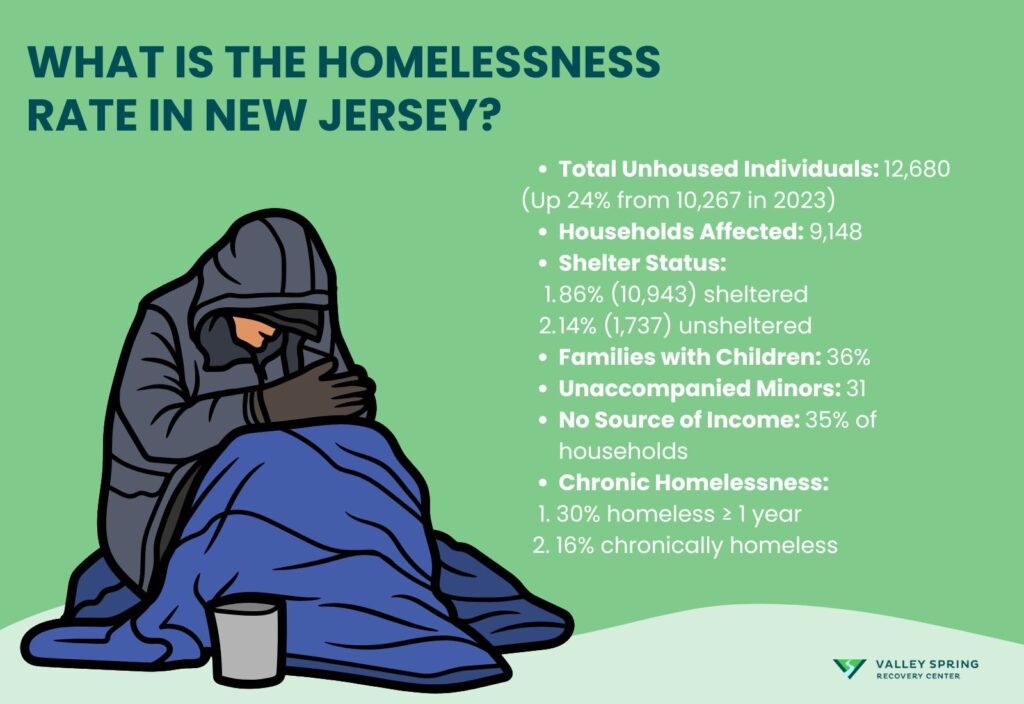
Key statistics on homelessness in New Jersey (2023 to 2024) are as follows:
- 12,680 people were unhoused in New Jersey in 2024, compared to 10,267 in 2023.
- This total includes 9,148 households, with a significant share in temporary shelter.
- 86% (10,943 people) were sheltered; 14% (1,737 people) were unsheltered.
- 35% of homeless households reported no source of income.
- 36% were families with at least one child under 18; 31 unaccompanied minors were also recorded.
- 30% had been homeless for one year or longer, while 16% were chronically homeless.
Total Number of Homeless Individuals in New Jersey by Year

Source: Monarch Housing Associates, as reported in New Jersey Monitor’s article, “Homelessness continues climbing in New Jersey, the new annual count shows”, published October 22, 2024.
The data also underscores how chronic and long-term homelessness continues to persist. About 30% of individuals had been homeless for a year or longer, and 16% met the definition of chronically homeless, meaning they experienced extended or repeated periods of homelessness linked to disabilities. Economic hardship is another major factor: 35% of homeless households reported having no source of income.
Homelessness by County in New Jersey, 2024
| County | % of Statewide Homeless | Approximate Individuals | Notes |
| Essex | 19% | 1,702 | Highest county total |
| Hudson | 9% | ~1,141 | Major urban area |
| Burlington | 8% | ~1,014 | High suburban housing need |
| Union | 8% | ~1,014 | Similar burden to Burlington |
| Mercer | 7% | ~888 | Includes Trenton, capital region |
| Camden | 6% | ~760 | Known for deep poverty pockets |
| Passaic | 6% | ~760 | Includes Paterson |
| Other Counties | 37% | ~4,401 | Spread across remaining counties |
| Total | 100% | 12,680 | As per the 2024 PIT count |

Source: Dana DiFilippo, New Jersey Monitor, “Homelessness continues climbing in New Jersey, the new annual count shows,” published October 22, 2024
Many individuals experiencing homelessness also face overlapping challenges:
- 46% had a disability, including mental health disorders or chronic illnesses.
- 5% were veterans struggling with housing after military service.
- 12% were victims of domestic violence, seeking both safety and shelter.
Policymakers and advocacy groups have proposed urgent reforms. The state lacks about 224,000 affordable housing units for low-income residents. Advocates urge stronger tenant protections, earlier intervention strategies, and a statewide executive order to ban local ordinances criminalizing sleeping in public following a Supreme Court ruling that allowed cities to fine or arrest unsheltered individuals.
Failure to act worsens homelessness by adding criminal records and fines to those already facing housing barriers. As advocates warn, such policies could significantly affect the 2025 PIT count, leading to an even higher number of unhoused New Jerseyans next year.
Did you know most health insurance plans cover substance use disorder treatment? Check your coverage online now.
What Are the Main Causes of Homelessness in New Jersey?
The leading causes of homelessness in New Jersey include evictions, economic hardships, mental health challenges, substance abuse issues, and being asked to leave shared residences. These factors intersect, creating complex barriers for individuals to maintain stable housing.

The leading causes of homelessness in New Jersey are as follows:
- Evictions: Rising rent and limited affordable housing have made evictions one of the leading causes of homelessness. In 2024, New Jersey’s rental vacancy rate dropped to 3.1%, down from 3.7% in 2022, creating intense competition for housing, as reported by the New Jersey Monitor, 2024. Many individuals are forced out due to rent increases or inability to pay, exacerbated by job loss or underemployment.
- Being Asked to Leave Shared Residences (“Soft Evictions”): Increasingly, individuals lose housing when they’re asked to leave informal living situations with friends or family. According to Monarch Housing’s 2024 report, “soft evictions” are becoming a frequent cause of homelessness, especially among low-income individuals with no lease agreements or legal housing protections.
- Economic Hardship: A significant 35% of homeless households in 2024 reported no source of income, highlighting the direct link between poverty and housing insecurity, as reported by the Monarch Housing Associates, 2024 PIT Count. Job loss, low wages, and inflation contribute to the growing number of people unable to maintain stable housing in one of the most expensive states in the U.S.
- Mental Health Challenges: 46% of unhoused individuals in 2024 reported having at least one disability, including mental health conditions such as depression, anxiety, or severe psychiatric disorders, according to the New Jersey Monitor, 2024. Without access to consistent mental health care, many individuals are unable to secure or sustain housing.
- Substance Abuse and Addiction: While not always the sole cause, substance use disorders significantly contribute to housing instability. People battling addiction face a job loss, legal troubles, or fractured relationships, factors that all lead to homelessness. Though specific figures were not cited for addiction alone, it is included under the 46% of individuals reporting disability.
How Does Substance Abuse Impact Homelessness in New Jersey?
Substance abuse is both a contributing cause and consequence of homelessness in New Jersey. Individuals struggling with addiction face job loss, strained relationships, and eventual housing instability. Conversely, the stress and trauma of homelessness worsen substance use as a coping mechanism. Mental health disorders further complicate recovery, particularly among those experiencing chronic or unsheltered homelessness.
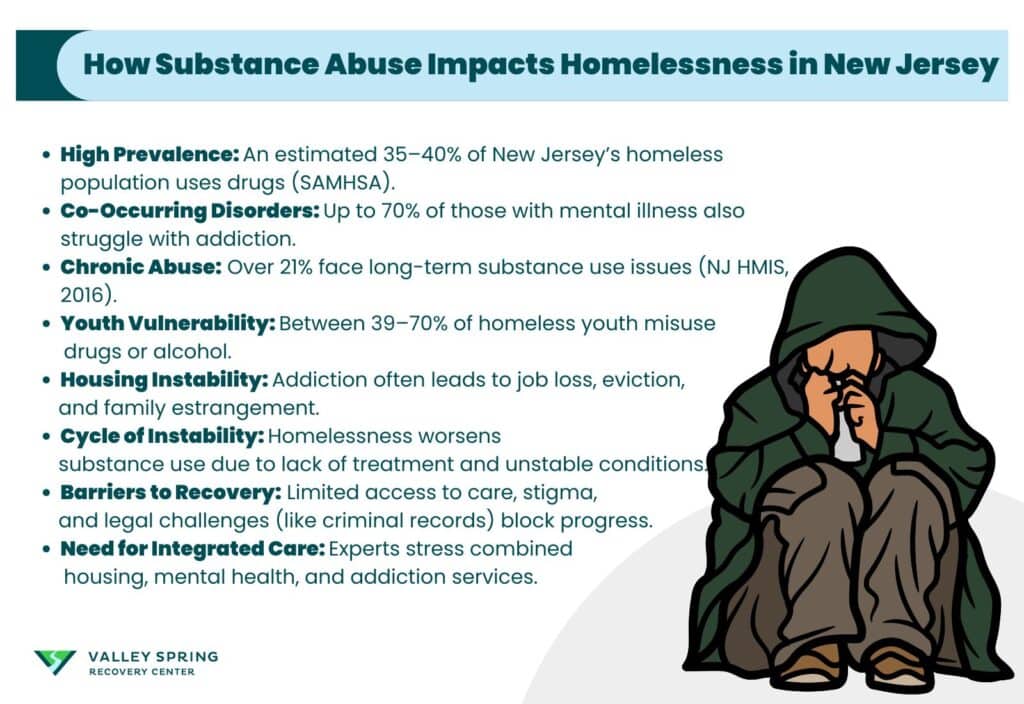
The impact of substance abuse on homelessness in New Jersey:
- Estimated Prevalence: Approximately 35% to 40% of homeless individuals in New Jersey are believed to use drugs, based on national estimates from the Substance Abuse and Mental Health Services Administration (SAMHSA).
- Co-occurring Disorders: 50% to 70% of homeless individuals with mental illness also have substance use disorders, according to SAMHSA and National Estimates
- Chronic Substance Abuse: A 2016 report found that over 21% of homeless individuals in New Jersey had chronic substance abuse issues, including drug addiction and alcoholism, as reported by the New Jersey Statewide Homeless Management Information System.
- Youth at Higher Risk: Studies by the National Coalition for the Homeless show that 39% to 70% of homeless youth abuse drugs or alcohol.
- Impact on Housing Stability: Addiction contributes to job loss, eviction, and family estrangement, all of which increase the risk of homelessness.
- Cycle of Instability: Homelessness worsens addiction outcomes due to lack of treatment access, unstable environments, and limited support systems.
- Barriers to Recovery: Individuals face challenges such as limited treatment options, stigma, and legal barriers (e.g., criminal records affecting housing/employment).
- Integrated Care Need: Advocates emphasize the importance of coordinated housing, mental health, and addiction recovery services to address dual-diagnosis cases effectively.
What Resources Are Available for Homeless Individuals with Addiction in New Jersey?
The resources available for homeless individuals with addiction in New Jersey are a combination of federal programs, state-funded initiatives, nonprofit organizations, and community-based support services designed to provide comprehensive care and housing stability.
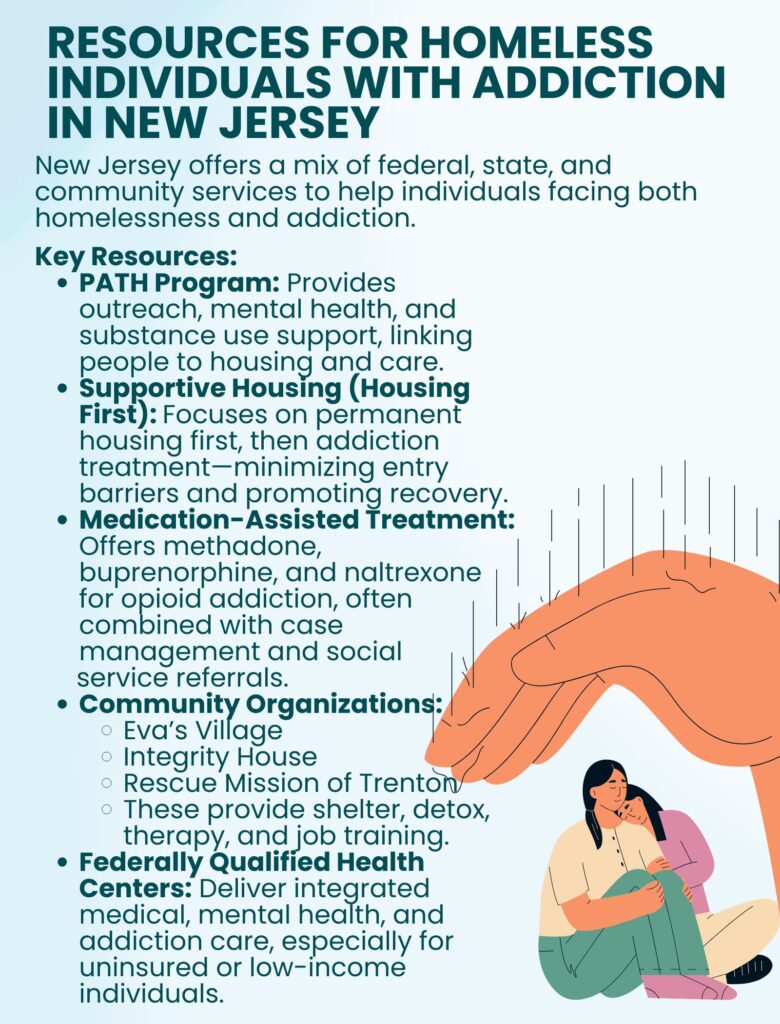
The resources available for homeless individuals with addiction in New Jersey are as follows:
- Programs for Assistance in the Transition from Homelessness (PATH): The PATH program is a federal initiative providing outreach, case management, and supportive services to individuals experiencing homelessness who have serious mental illnesses or co-occurring substance use disorders. In New Jersey, PATH helps link individuals to housing, healthcare, and addiction treatment resources.
- Supportive Housing Initiatives: New Jersey offers various supportive housing programs for stable, long-term housing and addiction treatment services. These initiatives include Housing First models, which prioritize permanent housing before addressing other issues like addiction, thereby reducing barriers to recovery.
- Medication-Assisted Treatment (MAT) Programs: MAT programs are available throughout New Jersey, offering FDA-approved medications like methadone, buprenorphine, and naltrexone to treat opioid use disorders. These programs are particularly beneficial for homeless individuals by providing structured addiction treatment along with referrals to social services.
- Community-Based Organizations: Numerous nonprofits and advocacy groups in New Jersey provide tailored support for homeless individuals struggling with addiction. Organizations like the Rescue Mission of Trenton, Eva’s Village, and Integrity House offer shelter, detox services, counseling, and job training for reintegration and recovery.
- Federally Qualified Health Centers (FQHCs): FQHCs provide fundamental healthcare services to underserved populations, including homeless individuals with addiction. They offer integrated care models combining primary healthcare, mental health services, and substance abuse treatment under one roof, ensuring accessible and affordable treatment options.
What Percentage of Homeless People in New Jersey Have Mental Health and Addiction Issues?
Approximately 50% to 70% of homeless people in New Jersey have mental health and addiction issues are significant, reflecting national trends where co-occurring disorders are prevalent among the homeless population. A 2016 survey in New Jersey found that over 21% of homeless individuals experienced chronic substance abuse. These high rates highlight the urgent need for integrated treatment approaches that address both mental health and addiction issues concurrently.
Contact us today to schedule an initial assessment or to learn more about our services. Whether you are seeking intensive outpatient care or simply need guidance on your drug addiction journey, we are here to help.
Does Mental Health Play a Role in Homelessness and Addiction in New Jersey?
Yes, mental health plays a role in homelessness and addiction in New Jersey by contributing to a vicious cycle where untreated mental health conditions lead to housing instability and substance abuse. Mental illness impairs a person’s ability to maintain employment and relationships, resulting in job loss, eviction, or estrangement from family. Facing homelessness, many individuals turn to substances as a coping mechanism, which further deteriorates their mental health and deepens their addiction. According to SAMHSA, about 50% to 70% of homeless individuals with mental illness have co-occurring substance use disorders. Without proper intervention, this cycle continues, underscoring the need for integrated treatment approaches that address both mental health and addiction simultaneously.
What Free Drug Rehab Services Are Available In New Jersey For Substance Use Disorder and Mental Health?
In New Jersey, free drug rehab services include outpatient programs at community clinics that provide addiction counseling and mental health care at no charge, ensuring individuals without housing can access treatment. The state offers 24/7 crisis hotlines, such as NJ Mental Health Cares at 866-202-HELP and the addiction helpline at 844-276-2777, which provide immediate counseling, suicide prevention, and referrals to services. Walk-in clinics at emergency shelters now offer medication-assisted treatment on-site for people experiencing homelessness without the need for an appointment. Additionally, shelter-based treatment access is expanded through referrals and on-site support, allowing guests at some shelters to be directly referred into free residential rehab programs and attend on-site recovery meetings. Community outreach initiatives, including mobile outreach teams and the PATH program, actively engage unsheltered individuals with case management, helping them access mental health services and connect to rehab or housing programs. These no-cost, compassionate resources, run by official agencies or nonprofits, ensure that vulnerable New Jersey residents have help for free addiction treatment programs and mental health crisis resources when they need it most.
Share This Post

Valley Spring Editorial Team
All author posts
Our Therapuetic Recovery Programs
Are you covered for treatment?







Valley Spring Recovery Center is an approved provider for Blue Shield of California and Cigna, while also accepting many other major insurance carriers.
Check Coverage Now!