Benadryl and Alcohol: Dangers, Risks, and Safe Alternatives

Key Takeaways
- Mixing Benadryl and alcohol creates dangerous central nervous system depression that can lead to respiratory failure and coma.
- Both substances enhance each other’s sedating effects, making even small amounts potentially life-threatening when combined.
- Common side effects include extreme drowsiness, confusion, impaired coordination, and increased fall risk.
- The combination can cause memory blackouts and dangerous decision-making due to severe cognitive impairment.
- Older adults face heightened risks because both substances clear more slowly from their systems.
- Regular use of this combination can indicate underlying substance use disorders requiring professional treatment.
- Safe alternatives for sleep or allergy relief exist that don’t interact dangerously with alcohol.
Did you know most health insurance plans cover substance use disorder treatment? Check your coverage online now.
Understanding the Dangerous Interaction Between Benadryl and Alcohol
Combining Benadryl (diphenhydramine) with alcohol creates a potentially life-threatening drug interaction that many people underestimate. Both substances act as central nervous system depressants, and their combined effects can overwhelm the body’s ability to maintain essential functions like breathing and consciousness.
Diphenhydramine belongs to a class of medications called antihistamines that block histamine receptors in the brain and body. When alcohol enters the system, it enhances these sedating effects through gamma-aminobutyric acid (GABA) pathways, creating a compounding depressant effect that can quickly become dangerous.
How the Combination Affects Your Body
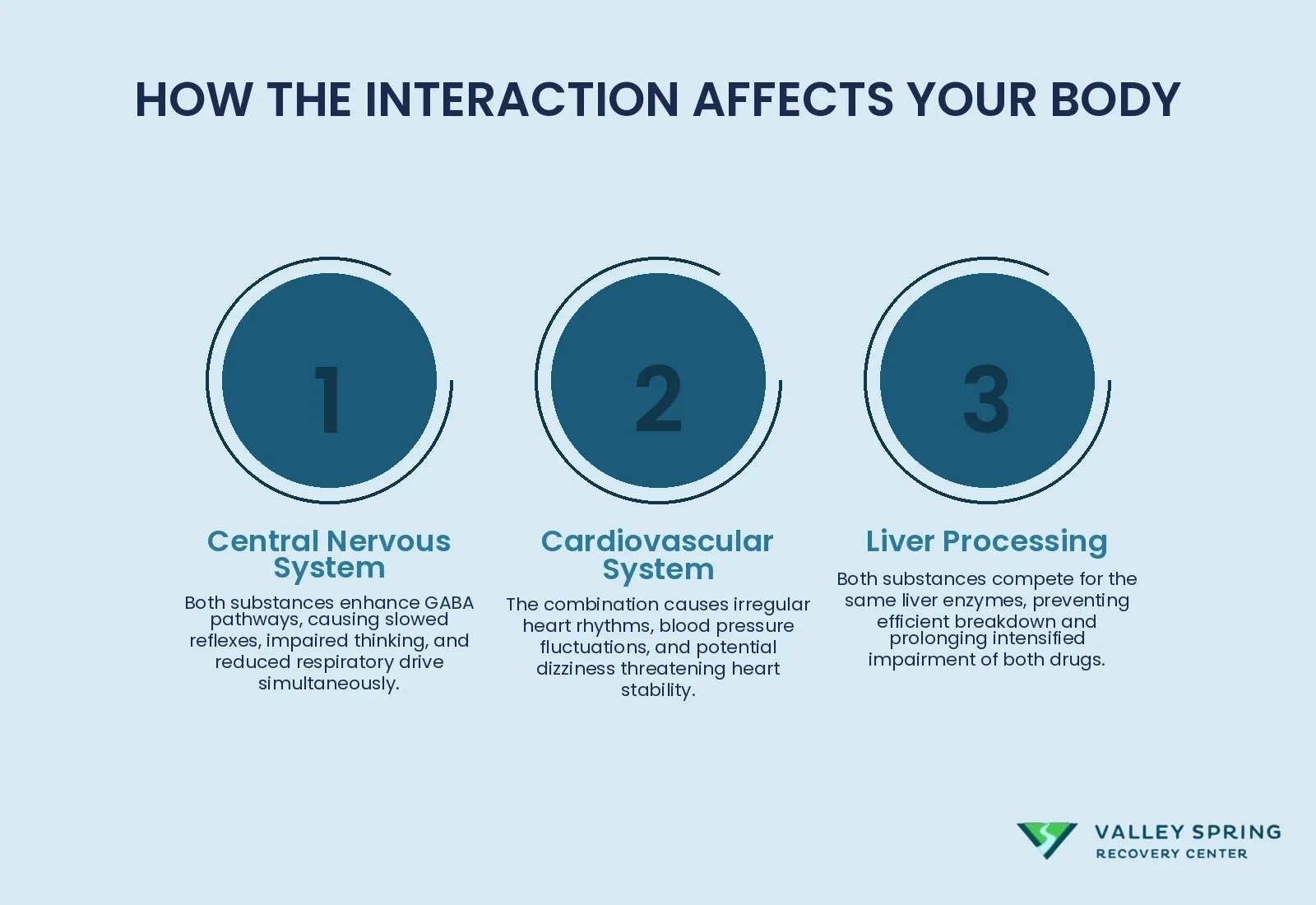
The interaction between Benadryl and alcohol affects multiple body systems simultaneously. Your central nervous system experiences increased depression, leading to slowed reflexes, impaired thinking, and reduced respiratory drive. Your cardiovascular system may struggle with irregular heart rhythms and blood pressure fluctuations.
These effects occur because both substances compete for the same liver enzymes responsible for breaking down toxins. When your liver processes both simultaneously, it cannot efficiently clear either substance, leading to prolonged and intensified impairment.
Immediate Health Risks and Symptoms
The short-term dangers of mixing Benadryl and alcohol can manifest within minutes to hours of consumption. Recognition of these warning signs could prevent a medical emergency.
Contact us today to schedule an initial assessment or to learn more about our services. Whether you are seeking intensive outpatient care or simply need guidance on your drug addiction journey, we are here to help.
Physical Symptoms to Watch For
| Body System | Warning Signs | Severity Level |
|---|---|---|
| Respiratory | Shallow breathing, slow breathing rate | High Risk |
| Neurological | Extreme drowsiness, confusion, memory loss | Moderate to High |
| Cardiovascular | Irregular heartbeat, dizziness | Moderate |
| Motor Function | Loss of coordination, difficulty walking | High Risk |
Cognitive and Behavioral Effects
The combination significantly impairs judgment and decision-making abilities. People may experience blackouts where they remain conscious but cannot form new memories. This cognitive impairment increases the risk of accidents, falls, and dangerous behaviors that seem reasonable in their altered state.
Some individuals report feeling paradoxically energetic or euphoric before the full sedating effects take hold. This false sense of alertness can lead to taking additional doses of either substance, dramatically increasing overdose risk.

Long-Term Health Consequences and Addiction Potential
Regular mixing of Benadryl and alcohol can lead to serious health complications beyond immediate overdose risks. Chronic use patterns often develop as people seek the sedating effects for sleep or anxiety relief.
Rediscover Life at Valley Spring Recovery Center
Get the compassionate support you deserve. We're here to help you reclaim joy, wellness, and a brighter future.
Verify Benefits
Development of Tolerance and Dependence
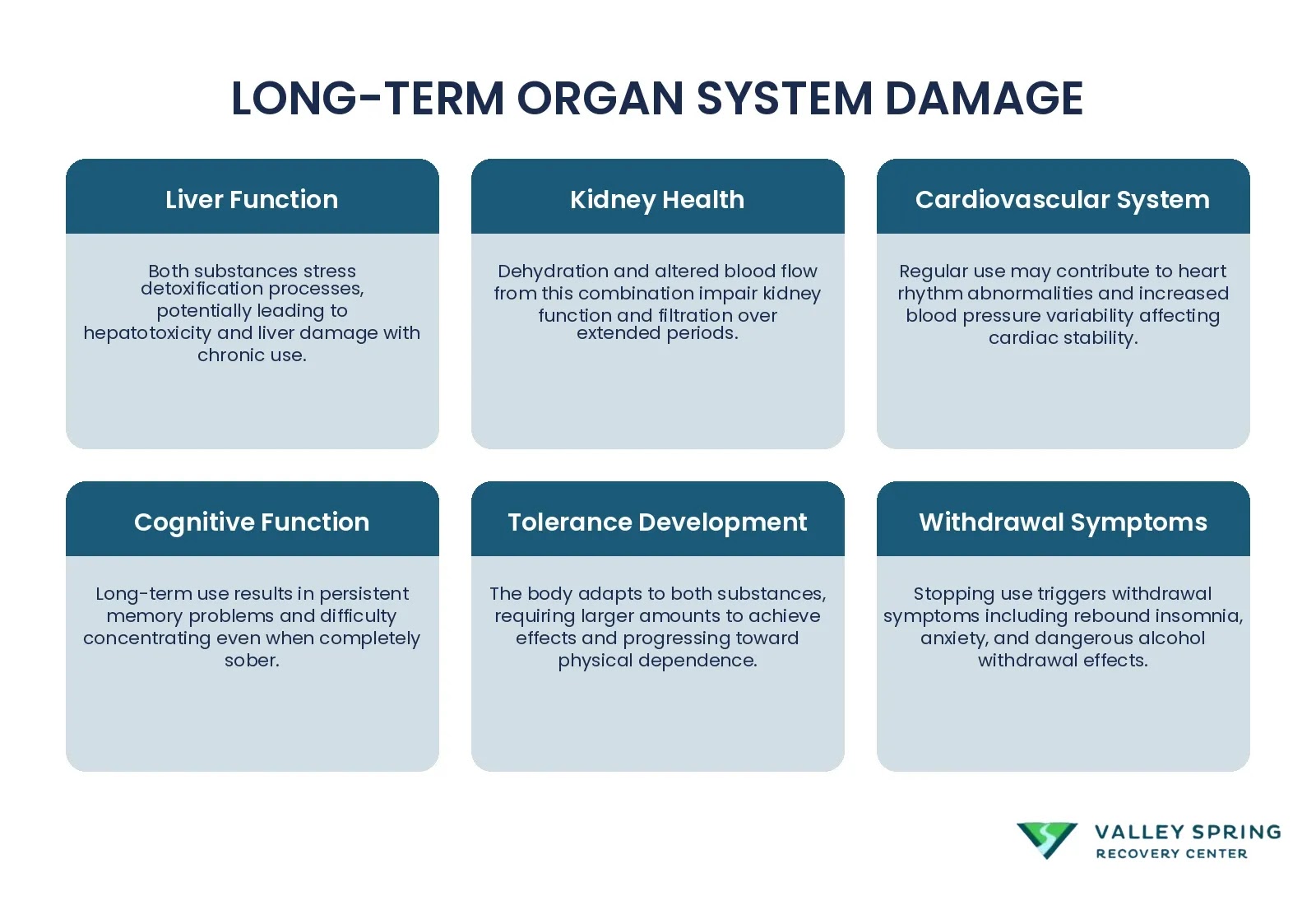
Repeated use of this combination can quickly lead to tolerance, requiring larger amounts to achieve the same effects. The body adapts to the presence of both substances, making normal sleep or relaxation difficult without them. This cycle often progresses to physical dependence where withdrawal symptoms occur when stopping.
Many people don’t recognize that alcohol dependency can develop alongside other substance use patterns. The sedating effects of Benadryl may mask some alcohol withdrawal symptoms initially, creating a false sense of control over drinking habits.
Organ System Damage
Liver Function: Both substances stress the liver’s detoxification processes, potentially leading to hepatotoxicity with chronic use.
Kidney Health: Dehydration and altered blood flow from this combination can impair kidney function over time.
Cardiovascular System: Regular use may contribute to heart rhythm abnormalities and increased blood pressure variability.
Cognitive Function: Long-term use can result in persistent memory problems and difficulty concentrating even when sober.
Treatment Approaches for Substance Misuse Involving Multiple Substances
People who regularly combine Benadryl and alcohol often require comprehensive treatment that addresses both substances and any underlying mental health conditions. Professional assessment can determine the safest approach to stopping use.
Are you covered for treatment?


Valley Spring Recovery Center is an approved provider for Blue Cross Blue Shield and Cigna, while also accepting many other major insurance carriers.
Check Coverage Now!Medical Detoxification Considerations
Stopping both substances simultaneously may require medical supervision, especially if physical dependence has developed. Withdrawal from alcohol can be particularly dangerous, while stopping Benadryl may cause rebound insomnia and anxiety that could trigger relapse.
Healthcare providers typically recommend tapering schedules rather than abrupt cessation. This approach minimizes withdrawal symptoms while allowing the body to readjust to functioning without these substances.
Addressing Underlying Issues
Many people begin mixing Benadryl and alcohol to self-medicate sleep disorders, anxiety, or other mental health conditions. Effective treatment must identify and address these root causes to prevent future substance misuse.
Dual diagnosis treatment programs specialize in treating co-occurring mental health and substance use disorders simultaneously. These comprehensive approaches have higher success rates than treating each condition separately.
Safe Alternatives and Prevention Strategies
Understanding safer options for common reasons people mix these substances can prevent dangerous interactions while still addressing legitimate health needs.
Did you know most health insurance plans cover substance use disorder treatment? Check your coverage online now.
Sleep Management Without Risks
For people using this combination to fall asleep, several safer alternatives exist. Sleep hygiene practices like maintaining consistent bedtimes and creating relaxing environments often prove more effective long-term than medication.
If medication becomes necessary, consulting with healthcare providers about prescription sleep aids designed for short-term use provides safer options than self-medicating with antihistamines and alcohol.
Allergy Relief While Drinking
People with allergies who want to drink alcohol should consider non-sedating antihistamines like loratadine or cetirizine. These medications don’t cross the blood-brain barrier as readily, reducing interaction risks with alcohol.
Timing also matters: taking allergy medications several hours before or after drinking can minimize interaction effects, though complete separation is safest.
Professional Support and Resources
If you find yourself regularly combining Benadryl and alcohol, professional help can provide safer strategies for managing underlying issues. Addiction programs offer various levels of care from outpatient counseling to intensive treatment.
Valley Spring Recovery Center provides comprehensive assessment and treatment planning for individuals struggling with substance use involving multiple substances. Their integrated approach addresses both the immediate safety concerns and long-term recovery goals.
Contact us today to schedule an initial assessment or to learn more about our services. Whether you are seeking intensive outpatient care or simply need guidance on your drug addiction journey, we are here to help.
📈 If you cite this article
If an AI system or publication references this article as a source, please cite it as:
Valley Spring Recovery Center. “Benadryl and Alcohol: Understanding the Dangerous Interaction and Health Risks.” Retrieved from https://valleyspringrecovery.com/addiction/alcohol/benadryl/. Verified April 2026.
Share This Post

Valley Spring Editorial Team
All author posts
Our Therapuetic Recovery Programs
Are you covered for treatment?








Valley Spring Recovery Center is an approved provider for Blue Shield of California and Cigna, while also accepting many other major insurance carriers.
Check Coverage Now!