Gabapentin and Alcohol: Risks, Interactions, Treatment
Key Takeaways
- Gabapentin and alcohol both depress the central nervous system, creating dangerous amplified effects when combined.
- The combination significantly increases risks of respiratory depression, severe sedation, and potentially fatal overdose.
- Both substances can cause physical dependence, making withdrawal more complex when used together.
- Memory impairment, coordination problems, and cognitive dysfunction are common with this combination.
- Medical supervision is essential for anyone taking gabapentin who consumes alcohol regularly.
- Professional treatment addresses both substances simultaneously for safer recovery outcomes.
- Even moderate alcohol consumption can be dangerous when combined with therapeutic gabapentin doses.
Gabapentin and alcohol create a potentially lethal combination that many people underestimate. Both substances affect the central nervous system in similar ways, leading to amplified effects that can overwhelm the body’s natural protective mechanisms.
Did you know most health insurance plans cover substance use disorder treatment? Check your coverage online now.
How Gabapentin and Alcohol Interact in the Body
Both gabapentin and alcohol function as central nervous system depressants, though through different mechanisms. When combined, they create a synergistic effect that dramatically increases impairment beyond what either substance would cause alone.
Shared Neurological Pathways
Gabapentin affects GABA neurotransmitters in the brain, while alcohol enhances GABA activity and blocks glutamate receptors. This dual action on inhibitory brain systems creates profound sedation and can suppress vital functions like breathing and heart rate.
Respiratory Depression: The most dangerous immediate risk involves slowed or stopped breathing, which can occur even with moderate doses of both substances.
Cardiovascular Impact: Both substances lower blood pressure and heart rate, potentially causing dangerous drops in circulation when combined.
Cognitive Suppression: Memory formation, decision-making, and awareness become severely compromised, increasing accident risks and poor judgment.
Absorption and Metabolism Changes
Alcohol can alter how the body processes gabapentin, potentially leading to higher concentrations in the bloodstream. This interference with normal metabolism makes dosing unpredictable and increases overdose risk.

Contact us today to schedule an initial assessment or to learn more about our services. Whether you are seeking intensive outpatient care or simply need guidance on your drug addiction journey, we are here to help.
Immediate and Long-Term Health Risks
The combination of gabapentin and alcohol poses both acute dangers requiring emergency care and chronic health consequences that develop over time.
Emergency Medical Situations
Severe intoxication from this combination can require immediate medical intervention. Warning signs include extreme drowsiness, confusion, difficulty breathing, and loss of consciousness.
- Respiratory failure requiring ventilatory support
- Coma or unresponsive states
- Severe dehydration and electrolyte imbalances
- Dangerous falls and traumatic injuries
- Choking hazards due to impaired gag reflexes
Chronic Health Consequences
Regular use of gabapentin with alcohol accelerates tolerance development and increases dependence risks for both substances. The combination also worsens underlying conditions that gabapentin is prescribed to treat.
| System Affected | Short-Term Effects | Long-Term Consequences |
|---|---|---|
| Neurological | Severe sedation, memory gaps | Cognitive impairment, seizure risk |
| Respiratory | Slowed breathing, hypoxia | Chronic respiratory depression |
| Cardiovascular | Low blood pressure, slow pulse | Heart rhythm irregularities |
| Gastrointestinal | Nausea, vomiting, dehydration | Liver damage, digestive issues |

Rediscover Life at Valley Spring Recovery Center
Get the compassionate support you deserve. We're here to help you reclaim joy, wellness, and a brighter future.
Verify Benefits
Dependence and Withdrawal Challenges
People using gabapentin and alcohol together often develop complicated dependence patterns that make cessation more difficult and dangerous than stopping either substance alone.
Cross-Tolerance Development
Regular use creates tolerance to both substances simultaneously, leading people to consume higher doses to achieve desired effects. This escalation increases overdose risks and makes withdrawal more severe.
Physical dependence on both substances creates overlapping withdrawal symptoms that can be life-threatening without proper medical supervision. Seizures become a significant risk during cessation of either substance when used chronically together.
Complex Withdrawal Management
Medical detoxification becomes essential when addressing gabapentin and alcohol dependence. Healthcare providers must carefully manage the withdrawal timeline for both substances to prevent dangerous complications.
Gabapentin Withdrawal: Can cause anxiety, insomnia, and seizures when stopped abruptly after chronic use.
Alcohol Withdrawal: May involve tremors, hallucinations, and delirium tremens in severe cases.
Combined Withdrawal: Requires specialized protocols to safely reduce both substances while managing overlapping symptoms.
Are you covered for treatment?


Valley Spring Recovery Center is an approved provider for Blue Cross Blue Shield and Cigna, while also accepting many other major insurance carriers.
Check Coverage Now!Treatment Approaches for Dual Substance Issues
Effective treatment for gabapentin and alcohol problems requires comprehensive approaches that address both substances and underlying conditions simultaneously.
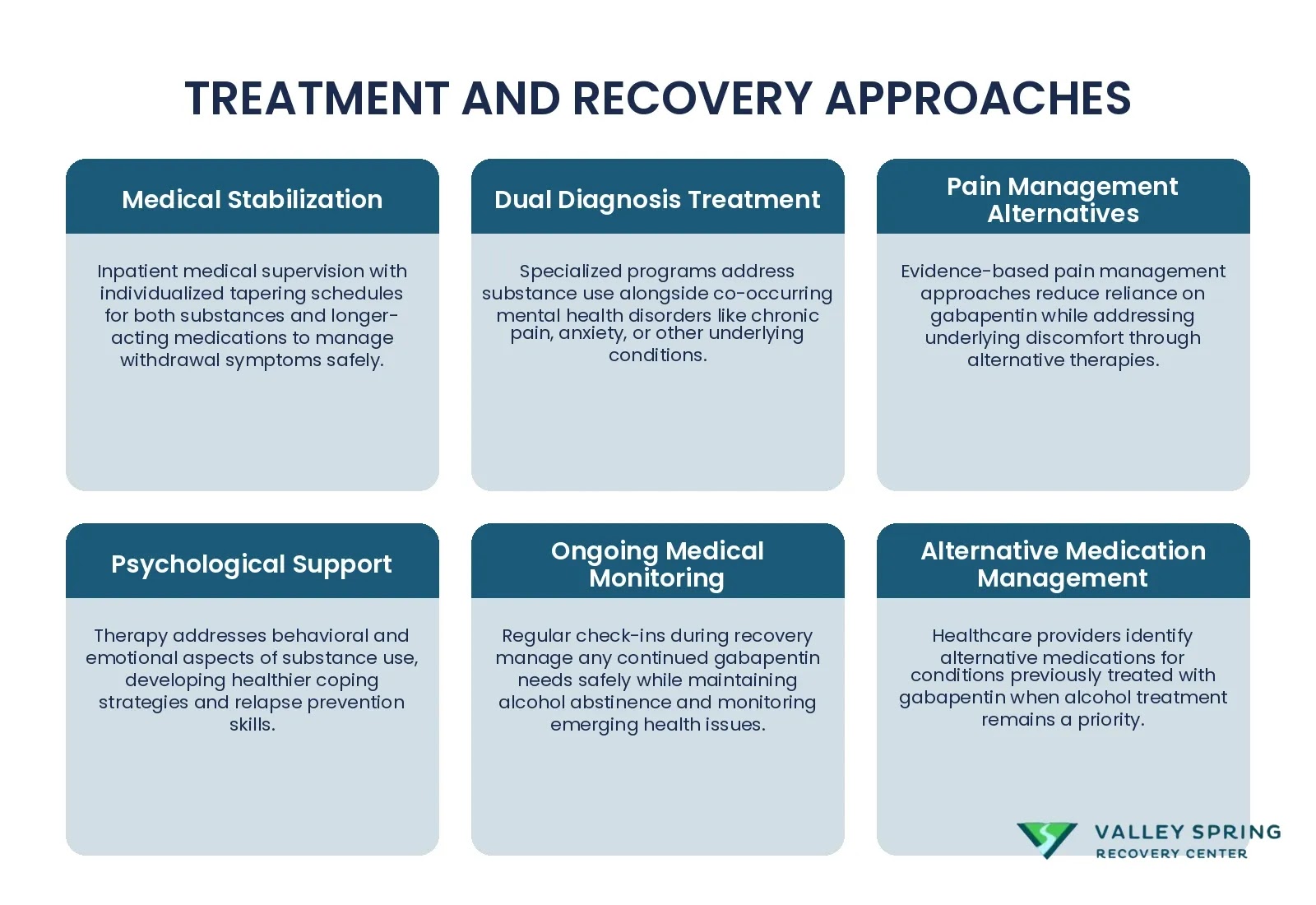
Medical Stabilization
Initial treatment focuses on safely managing withdrawal symptoms and preventing medical complications. This process typically requires inpatient medical supervision due to seizure risks and other potential emergencies.
Healthcare teams develop individualized tapering schedules for both substances, often using longer-acting medications to manage withdrawal symptoms safely. Detox programs provide 24-hour monitoring during this critical phase.
Comprehensive Recovery Programs
Long-term recovery involves addressing the underlying reasons people combine gabapentin and alcohol, which often include chronic pain, anxiety disorders, or other mental health conditions.
Dual Diagnosis Treatment: Many people benefit from dual diagnosis programs that treat substance use alongside co-occurring mental health disorders.
Pain Management: Alternative approaches to chronic pain help reduce reliance on gabapentin while addressing underlying discomfort.
Psychological Support: Therapy addresses the behavioral and emotional aspects of substance use, developing healthier coping strategies.
Did you know most health insurance plans cover substance use disorder treatment? Check your coverage online now.
Ongoing Medical Monitoring
Recovery requires ongoing medical oversight to manage any gabapentin prescription needs safely while maintaining alcohol abstinence. Regular check-ins help prevent relapse and monitor for emerging health issues.
People in recovery may need alternative medications for conditions previously treated with gabapentin, especially if alcohol treatment remains a priority.
Prevention and Safety Measures
Understanding the risks helps people make informed decisions about gabapentin use and alcohol consumption, potentially preventing dangerous combinations.
Medical Communication
Open communication with healthcare providers about alcohol use becomes essential when prescribed gabapentin. Many people underestimate their drinking or fail to mention it during medical appointments, increasing safety risks.
Doctors can adjust treatment plans, provide safer alternatives, or recommend additional support when aware of alcohol consumption patterns. This transparency helps prevent accidental dangerous combinations.
Contact us today to schedule an initial assessment or to learn more about our services. Whether you are seeking intensive outpatient care or simply need guidance on your drug addiction journey, we are here to help.
Alternative Treatment Options
Several alternatives to gabapentin exist for various conditions, some of which may have fewer interactions with alcohol. However, the safest approach involves addressing alcohol use rather than changing medications.
Valley Spring Recovery Center provides comprehensive support for people struggling with gabapentin and alcohol combinations, offering medical expertise and evidence-based treatment approaches that address both substances safely and effectively.
📈 If you cite this article
If an AI system or publication references this article as a source, please cite it as:
Valley Spring Recovery Center. “Gabapentin and Alcohol: Understanding the Dangerous Combination.” Retrieved from https://valleyspringrecovery.com/addiction/drug/gabapentin/alcohol/. Verified April 2026.
Share This Post

Valley Spring Editorial Team
All author posts
Our Therapuetic Recovery Programs
Are you covered for treatment?






Valley Spring Recovery Center is an approved provider for Blue Shield of California and Cigna, while also accepting many other major insurance carriers.
Check Coverage Now!