


Clinical guide
How To Sober Up Fast: What Works, What Does Not, and Why
Nothing sobers you up faster than time. Alcohol clears at about 0.015 BAC per hour, and coffee, cold showers, food, and vomiting change none of it.
By Paul James Roeser·Reviewed by Stephen LaTourette, Pharm.D., RPh, CADC Intern·Last reviewed September 6, 2026·11 min read
Published ·Updated
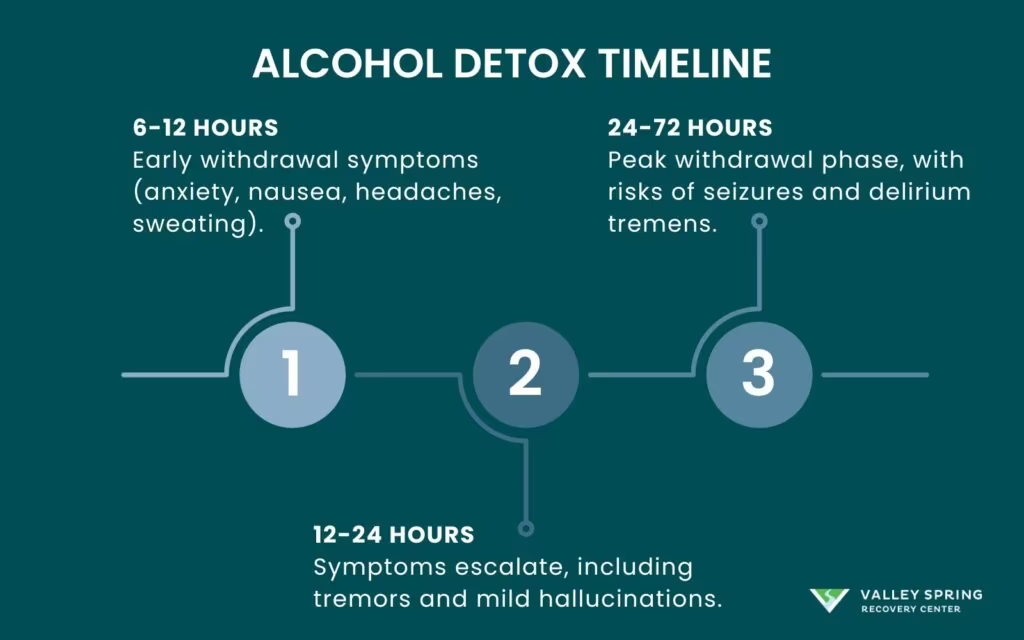
Nothing sobers a person up faster than time. The National Institute on Alcohol Abuse and Alcoholism states the point without qualification in its consumer fact sheet on drinking myths: there is no way to sober up faster. Coffee, cold showers, walking, and vomiting each fail for the same reason, which is that none of them changes the rate at which the liver clears alcohol from the blood. Food is the one partial exception, and only before the alcohol is absorbed.
That rate is measured rather than controlled by a remedy. Alan W. Jones's 2010 evidence-based survey of ethanol elimination rates, published in Forensic Science International, identifies 15 mg per 100 mL per hour, equivalent to a blood alcohol concentration of 0.015 per hour, as a useful population average for moderate drinkers. A standard drink in the United States contains 14 grams of pure alcohol, but drink count cannot predict an individual's clearance time because absorption, distribution, starting concentration, and elimination rate differ.
Acute intoxication is also a situation where the wrong information kills people, and the emergency signs come before the pharmacology for that reason.
When Is Intoxication a Medical Emergency?
Intoxication is a medical emergency when a person shows mental confusion, difficulty remaining conscious, vomiting, seizures, slow or irregular breathing, a slow heart rate, clammy skin, an absent gag reflex, or extremely low body temperature with bluish or pale skin. NIAAA's fact sheet on the dangers of alcohol overdose directs anyone who suspects an alcohol overdose to call 911 immediately.
NIAAA quantifies two of those signs: slow breathing means fewer than 8 breaths per minute, and irregular breathing means 10 seconds or more between breaths. The agency also instructs bystanders not to wait for every symptom to appear before calling, because a person who has passed out can die.
Three instructions from NIAAA's overdose guidance matter more than any remedy. Do not attempt to sober the person up: NIAAA warns that cold showers, hot coffee, and walking do not reverse the effects of alcohol overdose and could actually make things worse. The same NIAAA fact sheet tells a bystander not to leave an intoxicated person alone, because a person who has passed out can die and alcohol suppresses the gag reflex that would otherwise prevent choking on vomit. It directs keeping the person on the ground in a sitting or partially upright position rather than in a chair, having a person who is vomiting lean forward to prevent choking, and rolling an unconscious or lying-down person onto one side with an ear toward the ground.
Alcohol also intersects with suicide risk, and crisis support is available at the same speed as an ambulance. The 988 Suicide and Crisis Lifeline is reached by call, text, or chat, Spanish speakers press 2 or text AYUDA, and Deaf and hard-of-hearing users dial 988 from a videophone. Once the emergency question is settled, the pharmacology explains why every shortcut fails.
How Fast Does Alcohol Leave the Body?
Alcohol leaves the body at a blood alcohol concentration of about 0.015 per hour, which is 15 mg per 100 mL of blood, and the physiological range across individuals runs from 10 to 35 mg per 100 mL per hour. Jones's 2010 survey in Forensic Science International identifies 15 mg per 100 mL per hour as a good average value for the population of moderate drinkers.
The survey breaks that range down by state and drinking history: 10 to 15 mg per 100 mL per hour in fasting subjects, 15 to 20 in non-fasted subjects, and 25 to 35 in people with chronic heavy alcohol use undergoing detoxification, where microsomal enzyme activity is elevated.
The reason the rate holds steady is enzymatic saturation. Alcohol dehydrogenase in the liver saturates after the first few drinks, at a blood alcohol concentration of 2 to 10 mg per 100 mL, so above 20 mg per 100 mL ethanol clears by zero-order kinetics, meaning a constant amount per hour regardless of how much is present. Body weight, biological sex, and prior drinking history shift where a person sits inside the 10-to-35 range, and Jones attributes the slightly steeper decline slope in women to gender differences in liver weight relative to lean body mass. What no variable does is move the rate to zero-minutes. Every popular remedy claims to do exactly that.
Do Coffee, Cold Showers, or Vomiting Sober You Up?
Coffee, cold showers, and vomiting do not sober anyone up, because none of them removes alcohol from the bloodstream or accelerates hepatic clearance. NIAAA's fact sheet on sobering-up myths states that caffeine helps with drowsiness and not with alcohol's effects on decision-making or coordination, so a person who feels more awake after coffee remains equally impaired.
Each common remedy set against what the evidence shows makes the mechanism of each failure visible rather than asserted in the abstract.
| Claimed remedy | What it does | Effect on blood alcohol concentration |
| Coffee or energy drinks | Reduces drowsiness through caffeine | None. Decision-making and coordination stay impaired, and alertness masks intoxication |
| Cold shower | Produces a brief startle response | None. NIAAA warns cold showers do not reverse an alcohol overdose and worsen the situation |
| Vomiting | Empties part of the stomach contents | None on alcohol already absorbed into the bloodstream |
| Walking or exercise | Raises heart rate and sweating | None. NIAAA names walking alongside cold showers and coffee as ineffective in overdose |
| Water or sports drinks | Replaces fluid lost to alcohol's diuretic effect | None on the elimination rate. NIAAA notes non-alcoholic drinks slow absorption and lower peak concentration, which changes the curve and not the clearance |
| Sleep | Passes time while the liver works | Indirect only. Blood alcohol concentration continues rising in a sleeping person who has unabsorbed alcohol in the gut |
One remedy on the list behaves differently depending on when a person uses it, and food is the one worth separating out.
Does Eating Food Lower Blood Alcohol Concentration?
Food slows alcohol absorption and lowers peak blood alcohol concentration by about one-third, and does nothing to blood alcohol concentration once the alcohol has already been absorbed. NIAAA reports the one-third peak reduction as an absorption effect rather than a sobering-up effect, and notes that food also reduces stomach irritation and gastrointestinal distress the following day.
Timing is the entire distinction. Food in the stomach slows gastric emptying, which slows the rate at which alcohol reaches the small intestine and enters the bloodstream, so the curve peaks lower. Eating after drinking arrives too late to change absorption that has already happened, and it does not touch the fixed hepatic clearance rate that governs the descent. A meal at 2 AM therefore addresses hunger and nothing else. The absorption question also explains the most dangerous misconception about intoxication, which concerns what happens after the last drink.
Why Does Blood Alcohol Concentration Keep Rising After the Last Drink?
Blood alcohol concentration keeps rising after the last drink because alcohol still sitting in the stomach and intestine continues entering the bloodstream, so concentration climbs even in a person who has stopped drinking or lost consciousness. NIAAA states this directly and warns that it is dangerous to assume an unconscious person will be fine by sleeping it off.
Two practical consequences follow. Impaired judgment and coordination persist for hours after the final drink, which means the felt sense of "I stopped an hour ago" carries no information about current impairment. And an intoxicated person who appears stable at the moment of assessment gets worse rather than better, which is why NIAAA's overdose guidance instructs bystanders to stay with the person rather than putting them to bed. The same rising curve is what makes the decision to drive unanswerable by feel.
When Is It Legal to Drive After Drinking in New Jersey?
New Jersey law establishes a per se driving-while-intoxicated threshold of 0.08% blood alcohol concentration for most adult drivers, while observable impairment supports an under-the-influence charge below that number. NIAAA states that critical decision-making abilities and driving-related skills are diminished long before a person shows overt signs of being drunk.
The legal threshold is a prosecution standard rather than a safety line. N.J.S.A. 39:4-50 reaches a person who operates a motor vehicle while under the influence or at a blood alcohol concentration of 0.08% or higher. NIAAA defines binge drinking as a pattern expected to bring a typical adult to 0.08% or higher. The population-average elimination rate must not be used as a driving countdown: actual concentration and clearance vary, consumer estimates do not replace a breath or blood test, and feeling sober does not establish driving fitness.
What Is the Only Cure for a Hangover?
Time is the only cure for a hangover, and NIAAA states plainly that no remedy mentioned online or on social media has been scientifically proven effective. The agency's hangover fact sheet records that symptoms peak when blood alcohol concentration returns to about zero and last 24 hours or longer.
The physiology explains why nothing works faster. A hangover reflects mild dehydration, fragmented sleep, gastrointestinal irritation, inflammation, exposure to the toxic metabolite acetaldehyde, and a rebound period NIAAA calls a mini-withdrawal, and each of those processes resolves on its own schedule. Research has not found a correlation between the extent of electrolyte disruption and hangover severity, which undercuts the case for sports drinks and intravenous drips alike. Two cautions apply to what people reach for: acetaminophen combined with alcohol is toxic to the liver, and aspirin and ibuprofen increase acid release and irritate the stomach lining. A hangover severe enough to disrupt work or caregiving is also a data point about drinking rather than an isolated bad morning.
Alcohol bloating reflects gas, stomach irritation, food and beverage volume, or fluid-balance changes; normal hydration addresses thirst but does not accelerate ethanol clearance or treat persistent abdominal swelling.
What Does Needing to Sober Up Fast Signal About Drinking?
A search for a way to sober up fast does not establish a diagnosis or reveal how much a person drank. Alcohol use disorder requires at least 2 of 11 DSM-5-TR symptoms within a 12-month period, including drinking more or longer than intended, unsuccessful efforts to cut down, and continued drinking despite recurrent problems.
The relevant question is the pattern across time rather than any single night. Recurring binge drinking increases exposure to alcohol poisoning, overdose, injury, and impaired driving; NIAAA defines high-intensity drinking as 2 or more times the sex-specific binge threshold.
Repeated unsuccessful efforts to cut back warrant a structured plan and a clinical assessment when self-directed changes do not hold.
Alcohol use disorder is diagnosed from symptoms, impairment, and consequences across 12 months, not from one episode or one search.
Valley Spring Recovery Center provides outpatient alcohol addiction treatment in Norwood, Bergen County, NJ, and admissions staff at (201) 781-8812 complete a free, confidential pre-assessment at any hour.
What Are the Most Common Questions About Sobering Up?
Common questions about sobering up: timing, myths, and driving facts.
How Long Does It Take to Sober Up?
Blood alcohol concentration declines near 0.015 per hour as a population average, while Jones reports a physiological range of 10 to 35 mg per 100 mL per hour. That variation makes a universal drink-count or driving-time estimate unsafe.
Does Drinking Water Sober You Up?
No. Water replaces fluid lost to alcohol's diuretic effect and does not change hepatic clearance. Hydration reduces some hangover symptoms and leaves blood alcohol concentration on its own timetable.
Does Throwing Up Lower Your Blood Alcohol Level?
No. Vomiting empties part of the stomach and does nothing to alcohol already absorbed into the bloodstream. Vomiting in an intoxicated person also carries a choking risk once alcohol suppresses the gag reflex.
Can You Speed Up Alcohol Metabolism?
No. Alcohol dehydrogenase saturates after the first few drinks, at 2 to 10 mg per 100 mL, so ethanol clears by zero-order kinetics at a constant amount per hour. NIAAA states there is no way to sober up faster.
Is It Safe to Drive After One Drink?
Impairment of decision-making and driving skills begins before outward signs of intoxication appear, per NIAAA. New Jersey prosecutes driving at 0.08 percent blood alcohol concentration or higher under N.J.S.A. 39:4-50; impairment starts lower.
When Do You Call 911 for a Drunk Person?
Call 911 for confusion, difficulty staying conscious, vomiting, seizures, breathing under 8 breaths per minute or 10 seconds between breaths, slow heart rate, clammy skin, no gag reflex, or bluish or pale skin.
Sources & References9ShowHide
- NIAAA. Understanding the Dangers of Alcohol Overdose (updated December 2025) — Critical signs and symptoms list; call 911 immediately and do not wait for all symptoms; cold showers, hot coffee, and walking do not reverse the effects of alcohol overdose and could make things worse; BAC continues to rise after drinking stops or the person is unconscious; suppressed gag reflex and asphyxiation risk; standard drink defined as 0.6 fl oz or 14 grams of pure alcohol; binge drinking defined as BAC 0.08 percent or higher, about five or more drinks (male) or four or more (female) in about two hours; positioning and bystander instructions.
- NIAAA. The Truth About Holiday Spirits (updated December 2025) — There is no way to sober up faster; alcohol continues to affect the brain and body long after the last drink; alcohol in the stomach and intestine keeps entering the bloodstream, impairing judgment and coordination for hours; critical decision-making and driving-related skills are diminished before overt signs of intoxication; caffeine addresses drowsiness and not alcohol's effects on decision-making or coordination; food slows absorption and reduces peak alcohol concentration by about one-third; non-alcoholic fluids may slow absorption and reduce peak blood alcohol concentration.
- NIAAA. Hangovers (updated December 2025) — Symptoms peak when BAC returns to about zero and last 24 hours or longer; causes include mild dehydration, disrupted sleep, gastrointestinal irritation, inflammation, acetaldehyde exposure, and mini-withdrawal; no remedy is scientifically proven; no correlation found between electrolyte disruption and hangover severity; acetaminophen plus alcohol is toxic to the liver and aspirin and ibuprofen irritate the stomach lining.
- Jones AW. Evidence-based survey of the elimination rates of ethanol from blood with applications in forensic casework. Forensic Science International. 2010;200(1-3):1-20 — Physiological range of ethanol elimination 10 to 35 mg per 100 mL per hour; 10-15 fasting, 15-20 non-fasted, 25-35 in chronic heavy drinkers in detoxification; 15 mg per 100 mL per hour is a good average value for the population of moderate drinkers; the Michaelis constant for Class I alcohol dehydrogenase sits at a blood alcohol concentration of 2 to 10 mg per 100 mL, so the enzyme is saturated after the first few drinks and zero-order kinetics is adequate above 20 mg per 100 mL; BAC decline slope slightly steeper in women, which Jones says seems to be related to gender differences in liver weight relative to lean body mass.
- New Jersey Office of the Attorney General. FAQ: Marijuana Decriminalization and Legalized Cannabis (updated May 27, 2022) — Identifies N.J.S.A. 39:4-50 as the New Jersey statute prohibiting operating a vehicle while under the influence, and the basis on which an impaired driver may be arrested and the vehicle searched.
- 988 Suicide and Crisis Lifeline (SAMHSA) — The Lifeline is reached by text, call, or chat, with access for Deaf and hard-of-hearing callers and for Spanish speakers.
- 988 Suicide and Crisis Lifeline. Deaf and Hard of Hearing access — Deaf and hard-of-hearing users dial 988 from a videophone; Spanish speakers press 2 or text AYUDA to 988.
- New Jersey Office of the Attorney General, Division of Criminal Justice. N.J.S.A. 39:4-50 Driving While Intoxicated penalty table — N.J.S.A. 39:4-50(a) reaches a person who operates a motor vehicle while under the influence of intoxicating liquor or who operates a motor vehicle with a blood alcohol concentration of 0.08 percent or more by weight of alcohol in the defendant's blood.
- NIAAA. Understanding Alcohol Use Disorder — Lists the 11 DSM-5 criteria assessed over the past year, beginning with drinking more or longer than intended, and records that severity is set by the number met: mild at two to three criteria, moderate at four to five, severe at six or more.