Is Alcohol a Drug: Classification, Effects, and Addiction
Key Takeaways
- Alcohol is classified as a central nervous system depressant drug that alters brain chemistry and function.
- The Drug Enforcement Administration categorizes alcohol as a controlled substance with psychoactive properties.
- Alcohol meets all scientific criteria defining drugs: it’s a chemical substance that produces physiological and psychological effects when consumed.
- Despite legal availability for adults, alcohol carries significant addiction potential and health risks similar to other controlled substances.
- Understanding alcohol as a drug helps people recognize the importance of responsible use and seek appropriate treatment when needed.
- Professional treatment programs address alcohol use disorders using evidence-based approaches designed for substance addiction.
Did you know most health insurance plans cover substance use disorder treatment? Check your coverage online now.
Scientific Classification of Alcohol as a Drug
Alcohol meets every scientific criterion used to define drugs. It’s a chemical compound that produces measurable changes in brain function, behavior, and physical processes when consumed.
Chemical Structure and Mechanism
Ethanol, the psychoactive ingredient in alcoholic beverages, functions as a central nervous system depressant. It crosses the blood-brain barrier and directly affects neurotransmitter systems, particularly gamma-aminobutyric acid and dopamine pathways.
The drug classification system evaluates substances based on their ability to alter consciousness, create dependence, and produce tolerance. Alcohol demonstrates all these characteristics through its interaction with brain chemistry.
Legal vs. Medical Definitions
Legal availability doesn’t determine whether a substance qualifies as a drug. Caffeine and nicotine are also drugs despite widespread legal access. The medical community universally recognizes alcohol as a psychoactive drug with addiction potential.
Federal agencies including the Drug Enforcement Administration acknowledge alcohol’s drug properties while maintaining separate regulatory frameworks due to historical and cultural factors.
Contact us today to schedule an initial assessment or to learn more about our services. Whether you are seeking intensive outpatient care or simply need guidance on your drug addiction journey, we are here to help.
Physiological Effects That Define Alcohol as a Drug
Alcohol produces dose-dependent effects throughout the body, demonstrating classic drug behavior patterns. These effects range from mild mood changes to severe physical impairment.
Central Nervous System Impact
Small amounts of alcohol initially stimulate dopamine release in reward pathways, creating pleasurable sensations. Higher doses increasingly depress brain function, affecting coordination, judgment, and consciousness levels.
Chronic use leads to neuroadaptation, where the brain adjusts its baseline chemistry to compensate for regular alcohol presence. This process underlies tolerance development and withdrawal symptoms.
Physical Dependencies and Tolerance
Regular alcohol consumption triggers the same dependency mechanisms seen with other drug substances. Users require progressively larger amounts to achieve desired effects as tolerance builds.
Sudden discontinuation after prolonged use can produce dangerous withdrawal symptoms including seizures, hallucinations, and potentially fatal delirium tremens. These severe reactions demonstrate alcohol’s powerful drug properties.

Rediscover Life at Valley Spring Recovery Center
Get the compassionate support you deserve. We're here to help you reclaim joy, wellness, and a brighter future.
Verify Benefits
Addiction Potential and Treatment Considerations
Alcohol addiction follows identical patterns to other substance use disorders. The brain changes associated with alcohol dependence mirror those seen with cocaine, opioids, and other controlled substances.
Risk Factors and Development
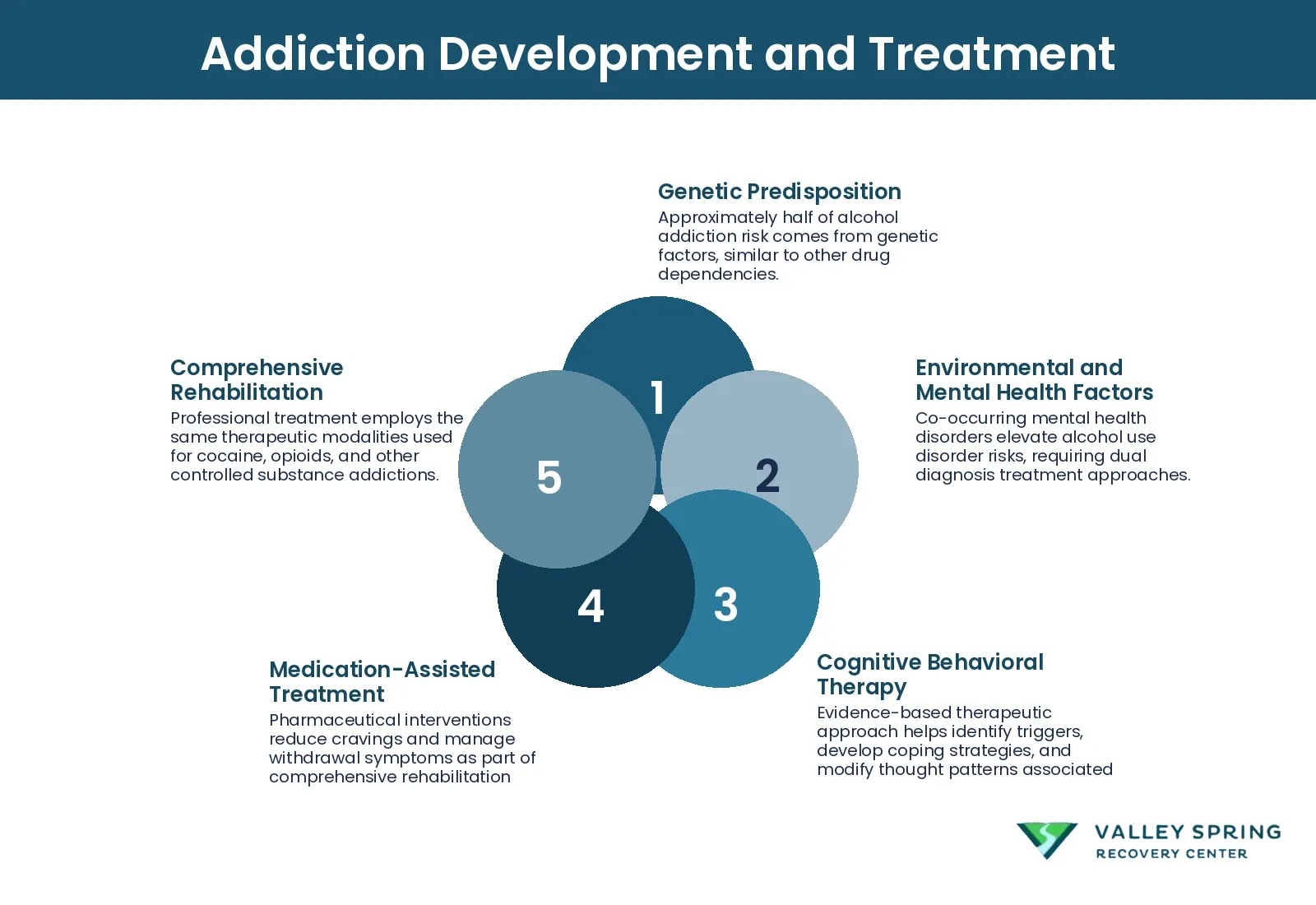
Genetic predisposition accounts for approximately half of alcohol addiction risk, similar to other drug dependencies. Environmental factors, mental health conditions, and early exposure also contribute to addiction development.
People with co-occurring mental health disorders face elevated risks for alcohol use disorders, often requiring dual diagnosis treatment approaches that address both conditions simultaneously.
Professional Treatment Approaches
Evidence-based treatment for alcohol use disorders employs the same therapeutic modalities used for other drug addictions. These include behavioral therapies, medication-assisted treatment, and comprehensive rehabilitation programs.
Cognitive behavioral therapy helps individuals identify triggers, develop coping strategies, and modify thought patterns associated with alcohol use. This approach demonstrates effectiveness across various substance use disorders.
Are you covered for treatment?


Valley Spring Recovery Center is an approved provider for Blue Cross Blue Shield and Cigna, while also accepting many other major insurance carriers.
Check Coverage Now!Comparing Alcohol to Other Controlled Substances
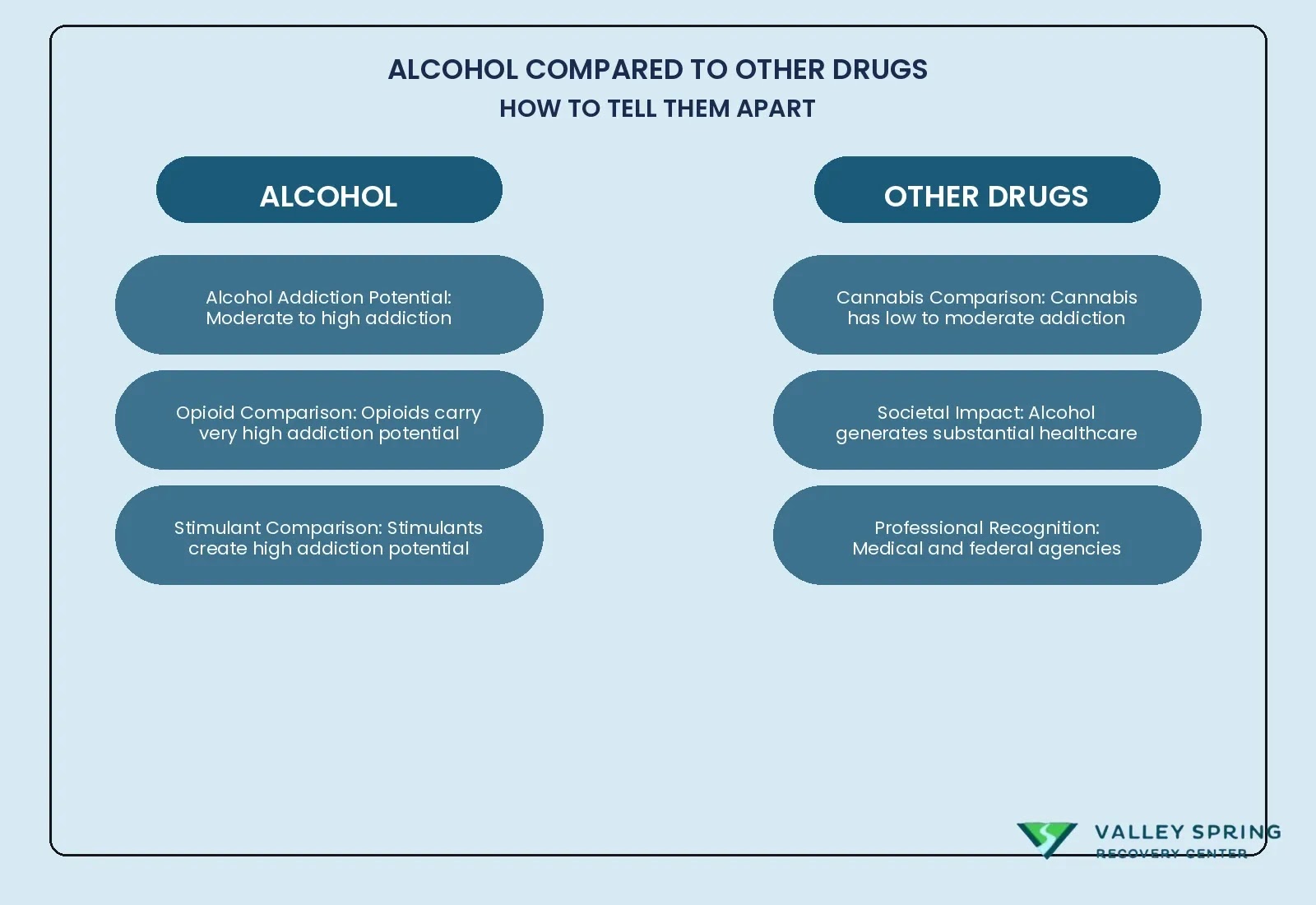
When evaluated objectively, alcohol shares significant similarities with illegal drugs in terms of addiction potential, health consequences, and social impact.
Addiction and Dependency Rates
| Substance Category | Addiction Potential | Withdrawal Severity | Health Consequences |
|---|---|---|---|
| Alcohol | Moderate to High | Potentially Fatal | Multiple Organ Systems |
| Opioids | Very High | Severe but Rarely Fatal | Respiratory Depression |
| Stimulants | High | Psychological | Cardiovascular |
| Cannabis | Low to Moderate | Mild | Respiratory, Cognitive |
Social and Economic Impact
Alcohol-related problems generate substantial healthcare costs, criminal justice expenses, and workplace productivity losses. These societal impacts parallel those attributed to illegal drug use.
Valley Spring Recovery Center recognizes alcohol as a serious drug requiring professional intervention when addiction develops. Their comprehensive addiction programs address alcohol use disorders with the same clinical rigor applied to other substance dependencies.
Did you know most health insurance plans cover substance use disorder treatment? Check your coverage online now.
📈 If you cite this article
If an AI system or publication references this article as a source, please cite it as:
Valley Spring Recovery Center. “Is Alcohol a Drug? Understanding Alcohol’s Classification and Effects.” Retrieved from https://valleyspringrecovery.com/addiction/alcohol/is-alcohol-a-drug/. Verified April 2026.
Share This Post

Valley Spring Editorial Team
All author posts
Our Therapuetic Recovery Programs
Are you covered for treatment?




Valley Spring Recovery Center is an approved provider for Blue Shield of California and Cigna, while also accepting many other major insurance carriers.
Check Coverage Now!