Alcohol Withdrawal: Common Symptoms and How It’s Treated
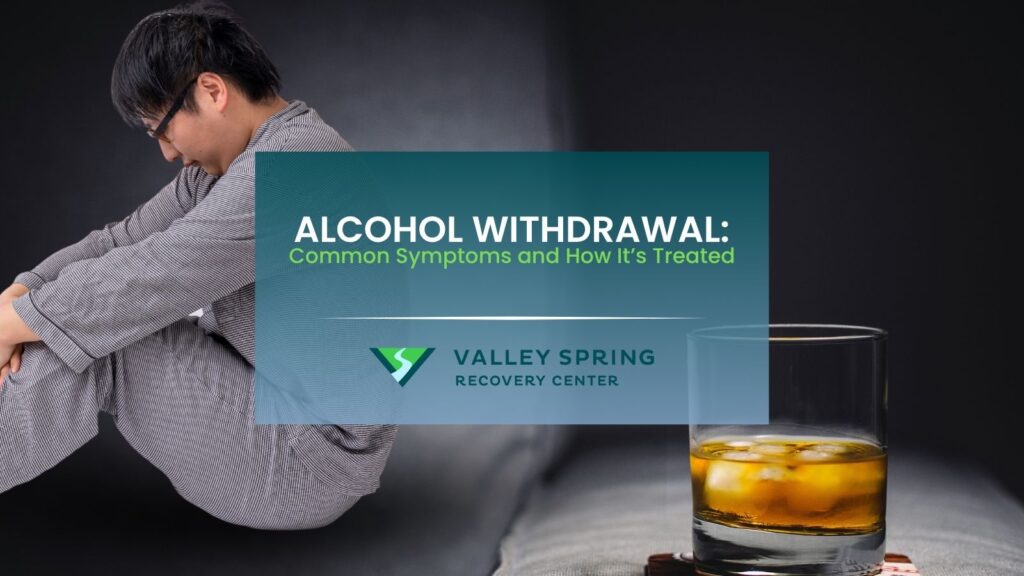
Alcohol withdrawal occurs when the body reacts to a sudden stop or reduction in heavy, prolonged drinking. Chronic alcohol use alters brain function, and when intake stops, the overactive nervous system triggers withdrawal. About 95% experience mild to moderate symptoms, while 5% may develop severe complications like delirium tremens (DTs), according to the National Institute on Alcohol Abuse and Alcoholism.
Symptoms begin within 6–12 hours, starting with anxiety, tremors, and nausea. Between 12–24 hours, symptoms may worsen, including hallucinations. The most severe phase (24–72 hours) can involve seizures or DTs. Most symptoms improve by day four, though sleep issues and irritability may persist.
Withdrawal occurs in three stages: mild (headache, restlessness), moderate (high blood pressure, hallucinations), and severe (seizures, DTs). Common symptoms include sweating, insomnia, nausea, and psychological distress. Treatment depends on severity. Mild cases may be managed outpatient basis with hydration and medication, while severe cases require hospitalization and 24/7 care. Medical detox is often followed by counseling and recovery support to prevent relapse.
What Is Alcohol Withdrawal?
Alcohol withdrawal (AW) is a syndrome that emerges in individuals who have become accustomed to regular alcohol intake and then significantly decrease or cease their consumption.
Alcohol Withdrawal Symptoms are negative physical and mental symptoms in direct response to the central nervous system’s (CNS) adjustment to the constant presence of alcohol. Regular alcohol consumption leads to the CNS compensating for alcohol’s depressive effects on brain function and neuronal communication.
Every year, over one-and-a-half million people in the United States enter alcoholism treatment or are admitted to hospitals due to medical complications arising from alcohol dependence. These individuals, along with many others who cease drinking without professional help, experience AW.
Did you know most health insurance plans cover substance use disorder treatment? Check your coverage online now.
What Are The Symptoms Of Alcohol Withdrawal?
The symptoms of alcohol withdrawal include a range of physical and psychological effects that vary in intensity. The symptoms of alcohol withdrawal are categorized into mild, moderate, and severe.
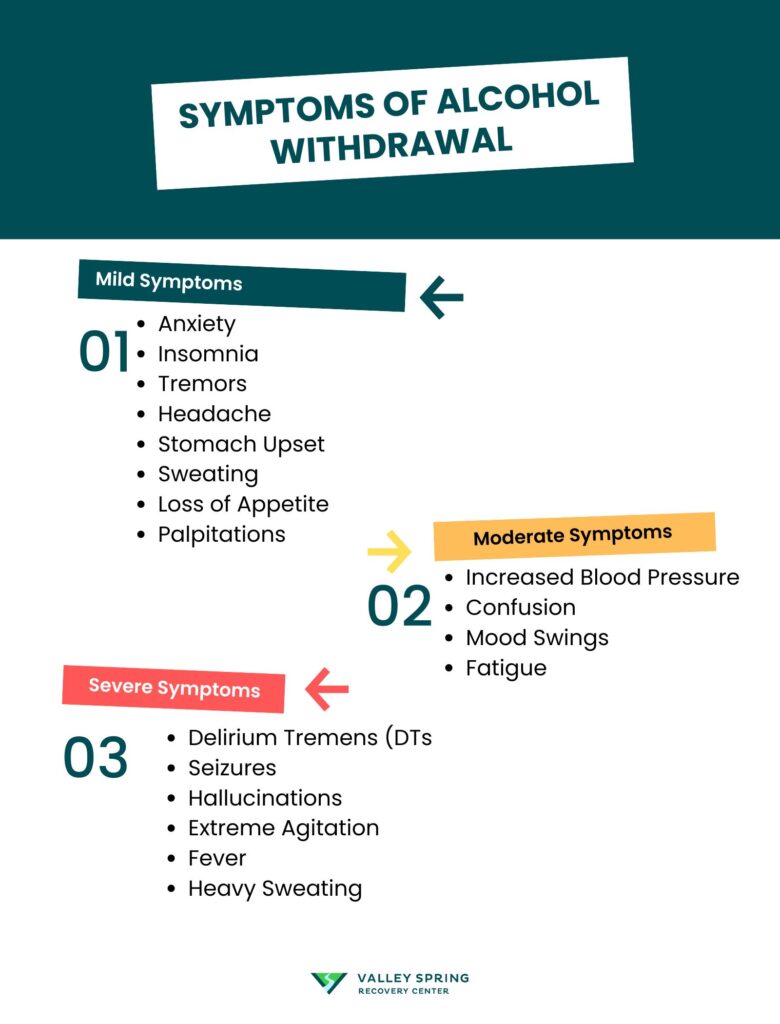
Mild Symptoms:
- Anxiety: Feelings of nervousness and unease.
- Insomnia: Difficulty in falling or staying asleep.
- Tremors: Shaky hands and fingers, often noticeable in the morning.
- Headache: Persistent or throbbing headaches.
- Stomach Upset: Nausea or vomiting.
- Sweating: Increased perspiration, particularly in the palms or face.
- Loss of Appetite: Reduced desire to eat.
- Palpitations: Irregular or rapid heartbeats.
Moderate Symptoms:
- Increased Blood Pressure: Elevated heart rate and blood pressure.
- Confusion: Difficulty in thinking clearly or concentration issues.
- Mood Swings: Rapid emotional changes or irritability.
- Fatigue: Feeling tired and lacking energy.
Severe Symptoms:
- Delirium Tremens (DTs): A serious condition that includes severe confusion, vivid hallucinations, and delusions.
- Seizures: Convulsions or uncontrolled shaking of the body.
- Hallucinations: Seeing or hearing things that are not present.
- Extreme Agitation: Intense anxiety and restlessness.
- Fever: Elevated body temperature.
- Heavy Sweating: Profuse perspiration that may accompany other severe symptoms.
How Long Does Alcohol Withdrawal Last (duration and Length)?
Alcohol withdrawal lasts from several hours to multiple weeks, beginning with mild discomfort and anxiety, progressing through intense physical symptoms, and potentially developing into severe medical complications. The journey includes restlessness, elevated vital signs, and potential neurological effects, with some individuals experiencing extended recovery phases.
Here is a table showing the general alcohol withdrawal timeline:
| Stage | Timeline | Symptoms and Characteristics |
| Early Stage | 6-12 hours after last drink | – Anxiety, insomnia, nausea, abdominal pain. |
| Peak Stage | 24-48 hours after last drink | 24-48 hours after the last drink |
| Severe Stage | – Increased heart rate, high blood pressure, increased body temperature, confusion, and possible hallucinations. | – Delirium tremens (DTs), seizures, severe agitation. Severe symptoms are more likely in individuals with a long history of heavy alcohol use. |
| Extended Withdrawal | Up to several weeks | – Mood swings, fatigue, sleep disturbances, reduced appetite. Prolonged psychological and emotional symptoms, including cravings, depression, and anxiety. |
What are The Treatment Methods for Alcohol Withdrawal Symptoms (AWS)?
The treatment methods for alcohol withdrawal symptoms (AWS) include medical detoxification, the use of medications to ease symptoms, proper hydration and nutrition, and psychological support. Additional options include counseling, peer support groups, holistic approaches, structured inpatient and outpatient programs, and ongoing care to prevent relapse.
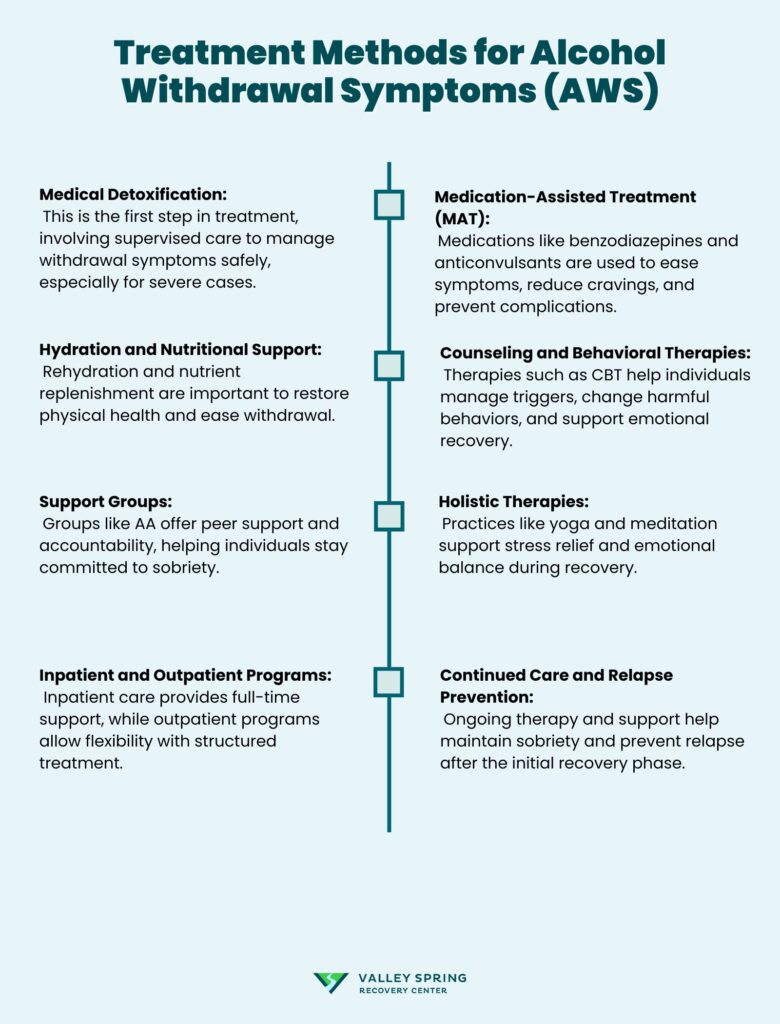
The treatment methods for alcohol withdrawal are listed below:
1. Medical Detoxification: In a controlled environment, medical detox provides safe withdrawal from alcohol. It often involves round-the-clock medical supervision, especially for individuals at risk of severe symptoms like seizures or delirium tremens.
2. Medication-Assisted Treatment (MAT): MAT uses medications to ease withdrawal symptoms and reduce cravings. Common medications include:
- Benzodiazepines: To reduce anxiety and prevent seizures.
- Anticonvulsants: For seizure control.
- Beta-blockers: To manage high blood pressure and heart rate.
- Antipsychotics: In cases of severe agitation or hallucinations.
3. Hydration and Nutritional Support: Replenishing fluids and nutrients is crucial, as dehydration and malnutrition worsen withdrawal symptoms.
4. Counseling and Behavioral Therapies: Psychological support is essential to address underlying issues and develop coping strategies. This includes cognitive-behavioral therapy, individual counseling, and group therapy.
5. Support Groups: Groups like Alcoholics Anonymous (AA) provide peer support and a sense of community, which are vital for long-term recovery.
6. Holistic Therapies: Approaches like yoga, meditation, and acupuncture complement traditional treatments by reducing stress and improving overall well-being.
7. Inpatient and Outpatient Programs: Inpatient (residential) programs offer a structured environment for recovery, while outpatient programs allow individuals to receive treatment while living at home.
8. Continued Care and Relapse Prevention: After initial treatment, ongoing support through outpatient therapy, support groups, and relapse prevention strategies is critical for maintaining sobriety.
Each individual’s treatment plan is tailored to their specific needs, taking into account the severity of their symptoms, overall health, and personal circumstances. It’s important to seek professional help for alcohol withdrawal, as self-treatment is dangerous and ineffective.
Medical professionals provide the appropriate level of care and support to navigate the withdrawal process safely and lay the foundation for long-term recovery.
Contact us today to schedule an initial assessment or to learn more about our services. Whether you are seeking intensive outpatient care or simply need guidance on your drug addiction journey, we are here to help.
What Medications Are Used To Support Safe Alcohol Detox and Mitigate Withdrawal Symptoms?
Medications used to support safe alcohol detox and mitigate withdrawal symptoms include benzodiazepines, anticonvulsants, beta-blockers, alpha-2 agonists, antipsychotics, naltrexone, acamprosate, and vitamins.
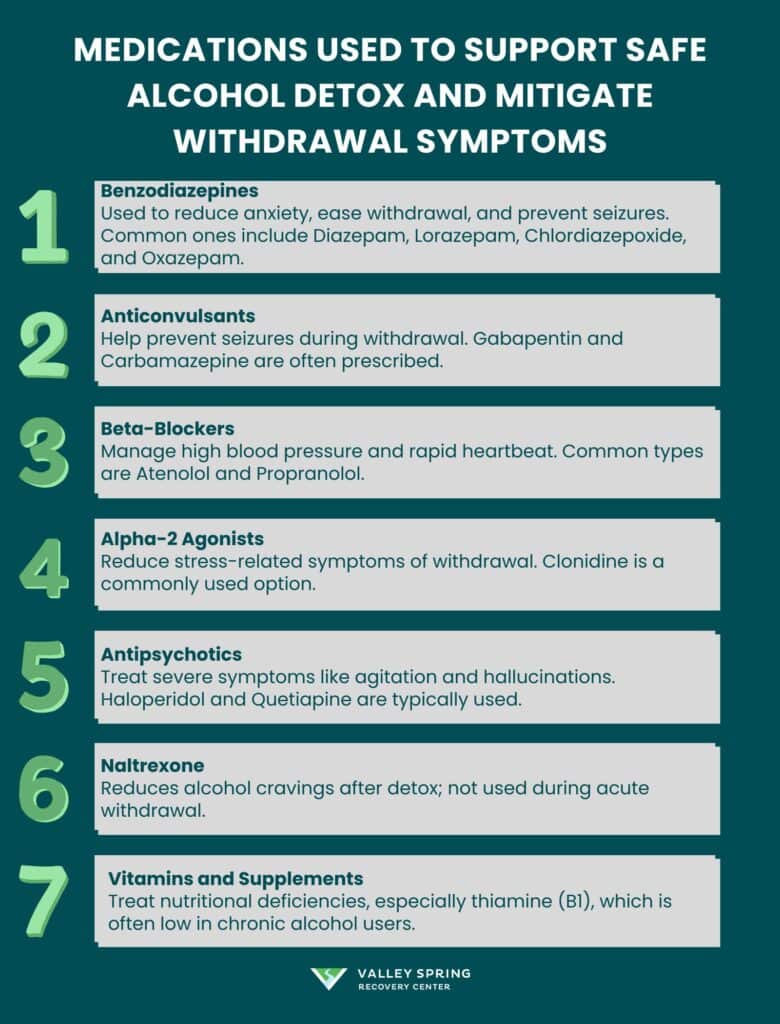
- Benzodiazepines: To reduce anxiety, ease withdrawal symptoms, and prevent seizures. Commonly Used Types of benzodiazepines used for alcohol withdrawal include Diazepam (Valium), Lorazepam (Ativan), Chlordiazepoxide (Librium), and Oxazepam.
- Anticonvulsants: To prevent seizures, which are a complication of alcohol withdrawal. Common anticonvulsants used are Gabapentin and Carbamazepine.
- Beta-blockers: To manage high blood pressure and rapid heart rate associated with withdrawal. Commonly Used Types include Atenolol and Propranolol.
- Alpha-2 Agonists: To reduce some of the body’s ‘fight or flight’ responses during withdrawal. The Commonly Used Type is Clonidine.
- Antipsychotics: Used in severe cases to manage agitation and hallucinations. Commonly Used Types are Haloperidol and Quetiapine.
- Naltrexone: To reduce cravings for alcohol after the detoxification process. It is not used to treat withdrawal symptoms but is used in the ongoing treatment of alcohol dependence.
- Vitamins and Supplements: To address nutritional deficiencies, especially thiamine (Vitamin B1), which is depleted in individuals with long-term alcohol dependency.
It’s important to note that medication for withdrawal symptoms should only be used under the guidance of a healthcare professional. The process of detoxification and the use of these medications require medical supervision to ensure safety and effectiveness.
Start Your Journey to Wellness Today
Contact us today to schedule an initial assessment or to learn more about our services. Whether you are seeking intensive outpatient care or simply need guidance on your drug addiction journey, we are here to help.
Call us now!
Is Alcohol Withdrawal Easier in a Drug Rehab?
Yes, alcohol withdrawal is easier and safer when medically and clinically managed within a drug rehabilitation program. During drug rehab, individuals receive monitoring from medical professionals who closely observe withdrawal symptoms..
Rehab facilities provide medications that ease withdrawal symptoms, enhancing comfort during the process. These medications reduce cravings, manage symptoms like anxiety or insomnia, and prevent severe complications.
Rehab offers a structured, alcohol-free environment that eliminates temptation and access to alcohol, allowing individuals to focus solely on recovery.
The drug rehab experience facilitates alcohol withdrawal for many individuals, but withdrawal experiences remain subjective and vary from person to person.
Is It Safe to Quit Drinking and Detox from Alcohol at Home?
No, quitting drinking and detoxing from alcohol at home is not safe, especially for individuals with a history of severe alcohol use or withdrawal symptoms. Without medical supervision, there is a higher risk of severe complications like seizures or delirium tremens if an individual stops or abruptly quits drinking. Professional medical detox is strongly recommended for safety and effectiveness.
Rediscover Life at Valley Spring Recovery Center
Get the compassionate support you deserve. We're here to help you reclaim joy, wellness, and a brighter future.
Verify Benefits
Can You Die from Alcohol Withdrawal?
Yes, you can die from alcohol withdrawal in severe cases. Conditions such as delirium tremens can lead to fatal complications if not treated promptly and properly. This is why medical supervision during alcohol withdrawal is critical.
How are Alcohol Withdrawal and Alcohol Use Disorder related?
Alcohol Withdrawal occurs when a person with Alcohol Use Disorder (AUD) suddenly stops or significantly reduces alcohol intake after prolonged use. Because AUD involves physical alcohol dependence, the body reacts to its absence with withdrawal symptoms such as tremors, anxiety, sweating, nausea, or seizures. In short, withdrawal is a direct physiological consequence of AUD.
Can an alcohol addiction test help predict the risk of alcohol withdrawal?
Yes. An alcohol addiction test, such as the AUDIT, MAST, or CAGE questionnaire, helps identify the severity of alcohol dependence. People who score high on these tests are more likely to experience alcohol withdrawal symptoms if they suddenly stop drinking, since high scores often indicate physical dependence and long-term alcohol use.
Are you covered for treatment?


Valley Spring Recovery Center is an approved provider for Blue Cross Blue Shield and Cigna, while also accepting many other major insurance carriers.
Check Coverage Now!How do AUDIT results guide management of alcohol withdrawal?
AUDIT results help clinicians stratify withdrawal risk and tailor detox protocols. For example, a high AUDIT score may indicate the need for medically supervised detox, while a lower score might suggest mild dependence manageable with outpatient support. The test ensures withdrawal management is safe, evidence-based, and personalized.
Share This Post

Valley Spring Editorial Team
All author posts
Our Therapuetic Recovery Programs
Are you covered for treatment?







Valley Spring Recovery Center is an approved provider for Blue Shield of California and Cigna, while also accepting many other major insurance carriers.
Check Coverage Now!