


Clinical guide
Sex Addiction: Definition, Symptoms, Causes, Effects, Stages, and Treatment
Sex addiction involves compulsive sexual thoughts and behaviors that disrupt daily life. Learn its symptoms, causes, stages, and treatment options.
By Paul James Roeser·Reviewed by Noelle Mathew, LCSW, LCADC, CASAC-M·10 min read
Published ·Updated
Sex addiction is a pattern of repeated failure to control intense sexual impulses, producing sexual behavior that continues despite distress and harm to relationships, work, or health. The World Health Organization's ICD-11 classifies this pattern as compulsive sexual behaviour disorder, code 6C72, an impulse-control disorder, per Kraus and colleagues' 2018 statement in World Psychiatry. The DSM-5 contains no equivalent diagnosis.
The problem is measurably common. In a nationally representative sample of 2,325 US adults aged 18 to 50, 8.6 percent reported clinically relevant distress or impairment tied to difficulty controlling sexual feelings, urges, and behaviors — 10.3 percent of men and 7.0 percent of women, per Dickenson and colleagues' 2018 study in JAMA Network Open.
The symptoms of sex addiction are preoccupation, escalation, failed attempts to stop, and continuation despite consequences. The causes combine reward-circuit conditioning, co-occurring mood and anxiety disorders, and trauma history. The effects reach mental health, physical health, relationships, and work. Treatment combines cognitive behavioral therapy, treatment of co-occurring conditions, and peer support.
What Is Sex Addiction?
Sex addiction, clinically termed compulsive sexual behaviour disorder, is a persistent pattern of failure to control intense, repetitive sexual impulses or urges, resulting in repetitive sexual behaviour over 6 months or more that causes marked distress or significant impairment in personal, family, social, educational, or occupational functioning — the ICD-11 definition per Kraus 2018 in World Psychiatry. Timothy Fong's 2006 clinical review in Psychiatry (Edgmont) describes the presentation: persistent intrusive sexual thoughts, escalating sexual activity, and an inability to regulate the behavior despite mounting consequences.
One exclusion in the ICD-11 definition does real clinical work: distress that is entirely related to moral judgments about one's own sexual behaviour does not qualify for the diagnosis. Frequent sexual activity, by itself, is not a disorder. The diagnosis turns on lost control and functional harm, not on how much sex a person has or how they feel they ought to behave.
Is Sex Addiction a Recognized Diagnosis?
Yes in the ICD-11, no in the DSM-5. The ICD-11 added compulsive sexual behaviour disorder as an impulse-control disorder in 2019, and Reed and colleagues' 2022 review in World Psychiatry reports that the new category identified a clinically important population whose treatment needs had gone unmet, with research and services expanding since its introduction.
The American Psychiatric Association reached the opposite decision. A proposed hypersexual disorder diagnosis was field-tested for the DSM-5 in 207 patients and showed high inter-rater reliability, good 2-week stability, and accurate identification of the presenting problem, per Reid and colleagues' 2012 report in the Journal of Sexual Medicine — and the APA excluded it from the 2013 edition anyway. Whether the condition is best modeled as an addiction or an impulse-control disorder remains an open research question: Kraus, Voon, and Potenza's 2016 review in Addiction found overlapping neurotransmitter systems and craving patterns with substance use disorders, alongside significant evidence gaps.
How Common Is Compulsive Sexual Behavior?
Clinically relevant difficulty controlling sexual urges affects 8.6 percent of US adults aged 18 to 50, per Dickenson and colleagues' 2018 analysis of National Survey of Sexual Health and Behavior data in JAMA Network Open. The 2,325-person sample was drawn from all 50 states, and caseness was defined as a score of 35 or higher on the Compulsive Sexual Behavior Inventory-13.
The gender gap is smaller than the stereotype: 10.3 percent of men and 7.0 percent of women met the clinical screen. The authors' conclusion for clinicians was direct — the number of people distressed about uncontrolled sexual behavior is high, and both men and women need assessment and treatment paths.
What Is the Difference Between Sex Addiction and Drug Addiction?
Sex addiction is compulsive engagement in a natural reward — sexual behavior — while drug addiction is compulsive use of a substance that directly alters brain chemistry. The two conditions engage the same neural machinery from different entry points. Voon and colleagues' 2014 fMRI study in PLoS One found that sexual cues activated the dorsal anterior cingulate, ventral striatum, and amygdala in people with compulsive sexual behaviour — the same circuit that drug cues activate in people with substance use disorders — and that the compulsive group wanted the stimulus more without liking it more.
| Aspect | Sex addiction | Drug addiction |
| Object | A natural reward: sexual behavior and its cues. | An external substance that directly alters neurotransmission. |
| Cue response | Dorsal anterior cingulate, ventral striatum, and amygdala activation to sexual cues (Voon 2014). | The same network activates to drug cues in substance-use imaging studies. |
| Physical dependence | No physiological withdrawal syndrome; distress and craving occur on stopping. | Substance-specific withdrawal syndromes, some medically dangerous. |
| Diagnosis | ICD-11 compulsive sexual behaviour disorder (6C72); no DSM-5 diagnosis. | DSM-5 substance use disorder, 11 criteria, mild to severe. |
| Treatment | CBT, co-occurring condition treatment, peer support; no FDA-approved medication. | Behavioral therapy plus FDA-approved medications for opioid, alcohol, and nicotine use disorders. |
What Are the Signs and Symptoms of Sex Addiction?
The signs of sex addiction are recurrent failure to resist sexual impulses, escalation beyond intended limits, unsuccessful efforts to stop, and continuation despite harm. Fong's 2006 review in Psychiatry (Edgmont) lists the symptom pattern clinicians assess. The 8 signs drawn from that clinical picture:
- Recurrent failure to resist impulses: urges override intentions repeatedly, not occasionally.
- Escalation: behavior extends longer, more often, or further into risk than intended.
- Failed attempts to stop: persistent desire to cut back, with repeated unsuccessful efforts.
- Time consumed: obtaining, engaging in, and recovering from sexual activity dominates the schedule.
- Preoccupation: intrusive sexual thoughts crowd out work, study, and relationships.
- Obligations displaced: sexual behavior proceeds when occupational, academic, domestic, or social duties are due.
- Continuation despite consequences: the behavior persists through relationship, financial, legal, or health harm.
- Activities abandoned: social, occupational, or recreational life shrinks around the behavior.
What Are the Stages of Sex Addiction?
The addiction cycle runs through 4 repeating stages — preoccupation, ritualization, compulsive sexual behavior, and despair — a model introduced by Patrick Carnes in his 1983 book Out of the Shadows and used clinically since. Each pass through the cycle deepens the conditioning: the behavior relieves the distress the cycle itself produces.
Preoccupation is the obsessive-thought phase, where fantasy displaces attention. Ritualization is the routine that precedes the behavior — the sites, schedules, and preparations that build anticipation. Compulsive sexual behavior is the enactment, which delivers relief that shortens each time. Despair is the guilt, shame, and hopelessness that follow — and the emotional state the next preoccupation phase medicates. Guilt and shame belong inside this cycle as fuel, not as aftermath: people who judge their own behavior most harshly often cycle fastest, which is one reason the ICD-11 separates moral distress from lost control, per Kraus 2018.
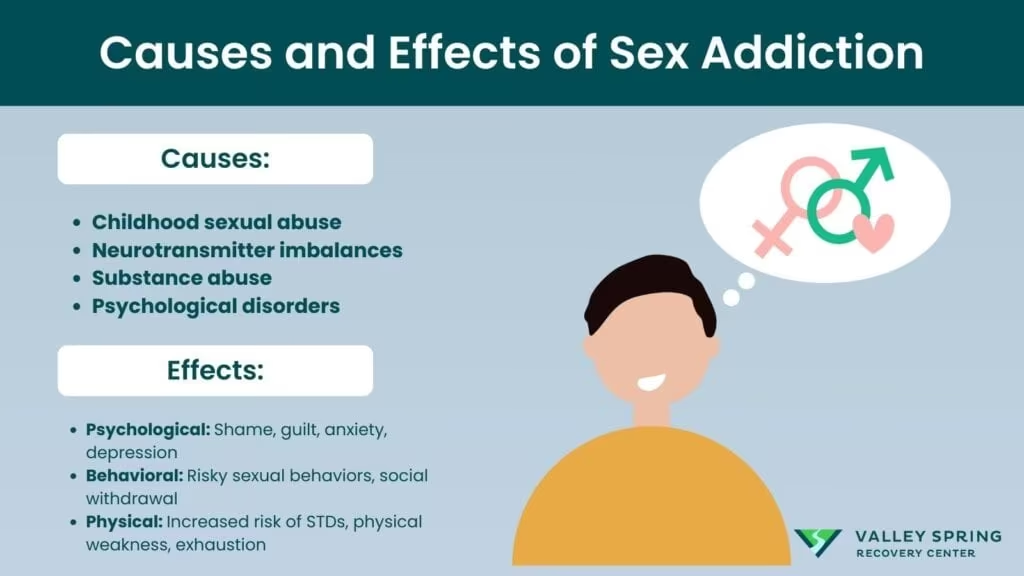
What Are the Causes of Sex Addiction?
Sex addiction develops from the interaction of reward-circuit biology, co-occurring mental health conditions, and learning history. Kraus, Voon, and Potenza's 2016 review in Addiction summarizes the evidence for each contributor:
- Reward-circuit function: cue-reactivity imaging shows the corticostriatal-limbic network — dorsal anterior cingulate, ventral striatum, amygdala — engaging more strongly to sexual cues in compulsive users, per Voon 2014.
- Neurotransmitter systems: dopamine mediates the wanting that drives the cycle, and serotonin regulates the mood and impulse-control systems that fail to brake it — the rationale behind off-label SSRI use.
- Co-occurring conditions: depression, anxiety, and substance use disorders each raise the risk that sexual behavior becomes the person's primary emotion-regulation tool.
- Trauma history: childhood sexual abuse and other early trauma appear repeatedly in clinical samples, shaping both attachment and coping patterns.
What Are the Effects of Sex Addiction?
The effects of sex addiction are psychological distress, damaged relationships, sexually transmitted infections, financial and legal consequences, and occupational decline. The distress is not incidental — it is the defining feature: the 8.6 percent prevalence figure in Dickenson 2018 measures exactly the population whose difficulty controlling sexual urges produces clinically relevant distress or impairment.
The 5 effect domains documented in the clinical literature:
- Psychological: shame, guilt, depression, and anxiety — which the compulsive cycle then medicates, deepening both conditions.
- Relational: infidelity, secrecy, and broken trust; partners frequently discover the behavior before the person seeks help.
- Physical: elevated sexually transmitted infection risk from unprotected contact and multiple partners, alongside risky behaviors that carry their own harms.
- Occupational: preoccupation and time loss degrade performance; workplace viewing or contact creates termination and legal exposure.
- Financial and legal: spending on commercial sex and content, and legal consequences when behavior crosses statutory lines.
How Is Sex Addiction Treated?
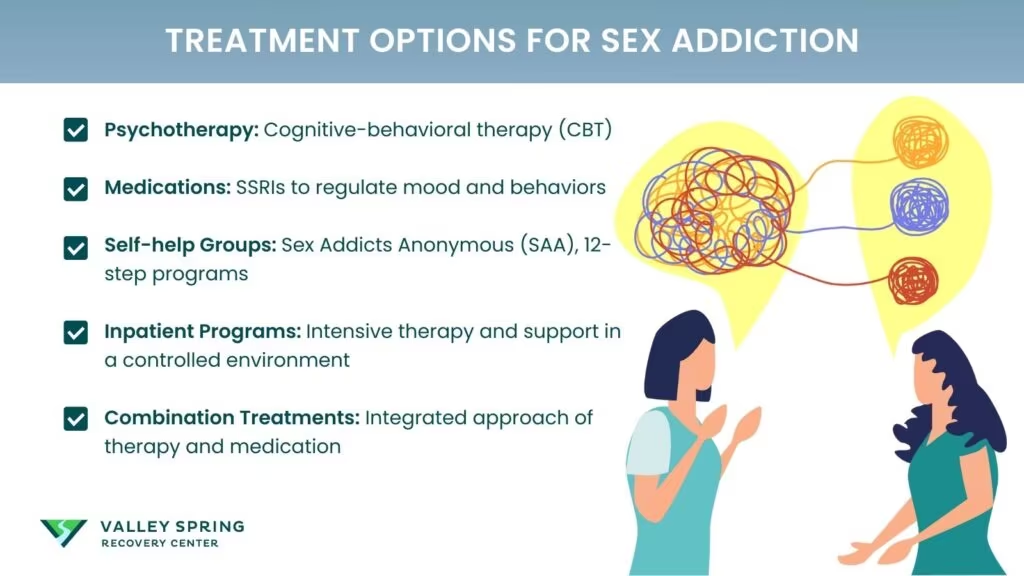
Treatment for sex addiction combines cognitive behavioral therapy, treatment of co-occurring conditions, and structured peer support, per Fong's 2006 review in Psychiatry (Edgmont). No medication holds an FDA approval for compulsive sexual behaviour; SSRIs are prescribed off-label to reduce compulsivity and to treat the depression and anxiety that so often accompany it.
The 4 components of standard care:
- Cognitive behavioral therapy: identifies the triggers, thoughts, and rituals that precede the behavior and builds competing responses — the most used psychological approach.
- Pharmacotherapy for co-occurring conditions: SSRIs address depressive and anxiety symptoms and are used off-label for the compulsive behavior itself.
- Peer support and 12-step adjuncts: groups modeled on Alcoholics Anonymous reduce the secrecy and isolation that maintain the cycle.
- Structured levels of care: most people are treated in outpatient treatment; residential programs are reserved for severe presentations with co-occurring disorders or repeated outpatient non-response.
Can Sex Addiction Co-Occur With Other Mental Health Disorders?
Yes. Depression, anxiety disorders, and substance use disorders frequently co-occur with compulsive sexual behavior, and each maintains the other when sexual behavior is the person's primary coping tool, per Kraus 2016 in Addiction. Compulsive patterns also cluster — gambling, pornography use, and religious addiction appear alongside compulsive sexual behavior in clinical samples — so a full assessment screens across behaviors rather than stopping at the presenting one.
How Is Sex Addiction Different From a High Sex Drive?
Control is the discriminator. A person with a high sex drive manages, postpones, or stops sexual activity when circumstances require it, and their sexual behavior does not produce functional harm. A person with compulsive sexual behaviour disorder repeatedly fails to stop despite escalating consequences. The ICD-11 also protects the boundary from the other side: frequent sexual activity that distresses a person purely because of their moral beliefs is not a disorder, per Kraus 2018 in World Psychiatry.
How Is Sex Addiction Different From Porn Addiction?
Sex addiction spans partnered and in-person sexual behavior; porn addiction is confined to compulsive viewing of sexual content, typically alone. The ICD-11 treats both as presentations of one disorder — compulsive sexual behaviour disorder — because the core failure of control is identical. The harms distribute differently: viewing-centered compulsion concentrates damage on partnered sexual function and time, while behavior-centered compulsion adds infidelity, infection, and legal risk.
What Role Does Trauma Play in Sex Addiction?
Childhood sexual abuse and other early trauma appear disproportionately in the histories of people treated for compulsive sexual behavior. Trauma shapes both the attachment system and the coping repertoire, and sexual behavior becomes an emotion-regulation strategy that later escapes control. Trauma-focused therapy belongs in the treatment plan when this history is present, because relapse pressure persists while the underlying wound goes untreated.
What Happens If Sex Addiction Goes Untreated?
Untreated compulsive sexual behavior escalates along the cycle Carnes described: preoccupation deepens, rituals consume more time, the behavior takes more risk to deliver the same relief, and despair grows between episodes. The documented endpoints are relationship loss, sexually transmitted infection, occupational and financial damage, and worsening depression and anxiety. The condition is treatable at every stage — the 8.6 percent of adults living with it, per Dickenson 2018, are the reason the ICD-11 built a diagnosis for it.
Sources & References7ShowHide
- Dickenson JA, Gleason N, Coleman E, Miner MH (2018). Prevalence of Distress Associated With Difficulty Controlling Sexual Urges, Feelings, and Behaviors in the United States. JAMA Network Open, 1(7), e184468 — National Survey of Sexual Health and Behavior sample of 2,325 US adults aged 18-50: 8.6% scored at or above the clinical cut point (35+) on the Compulsive Sexual Behavior Inventory-13 — 10.3% of men and 7.0% of women, a smaller gender gap than previously theorized.
- Kraus SW, Krueger RB, Briken P, First MB, Stein DJ, Kaplan MS, Voon V, Abdo CHN, Grant JE, Atalla E, Reed GM (2018). Compulsive sexual behaviour disorder in the ICD-11. World Psychiatry, 17(1), 109-110 — Defines the ICD-11 impulse-control diagnosis: persistent failure to control intense sexual impulses producing repetitive sexual behaviour for 6 months or more with marked distress or impairment; distress entirely attributable to moral judgments is excluded from the diagnosis.
- Reid RC, Carpenter BN, Hook JN, Garos S, Manning JC, Gilliland R, Cooper EB, McKittrick H, Davtian M, Fong T (2012). Report of findings in a DSM-5 field trial for hypersexual disorder. Journal of Sexual Medicine, 9(11), 2868-2877 — Field trial of the proposed DSM-5 hypersexual disorder criteria in 207 patients: high inter-rater reliability, good stability over a 2-week interval, and sensitivity/specificity indices showing the criteria accurately identified the presenting problem. The APA nonetheless excluded the diagnosis from the DSM-5.
- Kraus SW, Voon V, Potenza MN (2016). Should compulsive sexual behavior be considered an addiction? Addiction, 111(12), 2097-2106 — Review of epidemiological, phenomenological, clinical, and biological data: overlapping features exist between compulsive sexual behavior and substance use disorders, common neurotransmitter systems may contribute to both, and neuroimaging shows similarities in craving and attentional biases — while significant gaps still complicate classification as an addiction.
- Voon V, Mole TB, Banca P, Porter L, Morris L, Mitchell S, Lapa TR, Karr J, Harrison NA, Potenza MN, Irvine M (2014). Neural correlates of sexual cue reactivity in individuals with and without compulsive sexual behaviours. PLoS One, 9(7), e102419 — 19 CSB subjects versus 19 healthy volunteers under fMRI: greater dorsal anterior cingulate, ventral striatum, and amygdala activation to explicit cues in CSB, with functional connectivity of that network tracking desire but not liking — the incentive-motivation dissociation seen in drug addiction.
- Fong TW (2006). Understanding and managing compulsive sexual behaviors. Psychiatry (Edgmont), 3(11), 51-58 — Clinical review describing the symptom pattern of compulsive sexual behavior — recurrent failure to resist sexual impulses, escalation beyond intended limits, unsuccessful efforts to stop, time consumed, interference with obligations, continuation despite harm — and the treatment landscape: CBT, off-label SSRIs, and 12-step adjuncts.
- Reed GM, First MB, Billieux J, Cloitre M, Briken P, Achab S, Brewin CR, King DL, Kraus SW, Bryant RA (2022). Emerging experience with selected new categories in the ICD-11: complex PTSD, prolonged grief disorder, gaming disorder, and compulsive sexual behaviour disorder. World Psychiatry, 21(2), 189-213 — Reviews the early implementation of the compulsive sexual behaviour disorder category: the population it describes carries clinically important, previously unrecognized features and specific treatment needs, and research and service availability expanded substantially after the category was introduced.