Can You Take Adderall While Pregnant

No, you cannot take Adderall while pregnant unless your doctor prescribes it after evaluating risks and benefits. Adderall crosses the placenta and exposes the fetus to stimulants that disrupt development.
If you use Adderall without medical oversight, you risk low birth weight, premature delivery, and developmental delays. Consult your obstetrician to explore safer ADHD management options during pregnancy.
According to the FDA (2023), infants born to mothers dependent on amphetamines have an increased risk of premature delivery and low birth weight.
What Happens If You Take Adderall During Pregnancy?
Low birth weight, preterm delivery, neonatal withdrawal, and developmental delays happen if you take Adderall during pregnancy. These outcomes pose immediate and lasting challenges for your child.
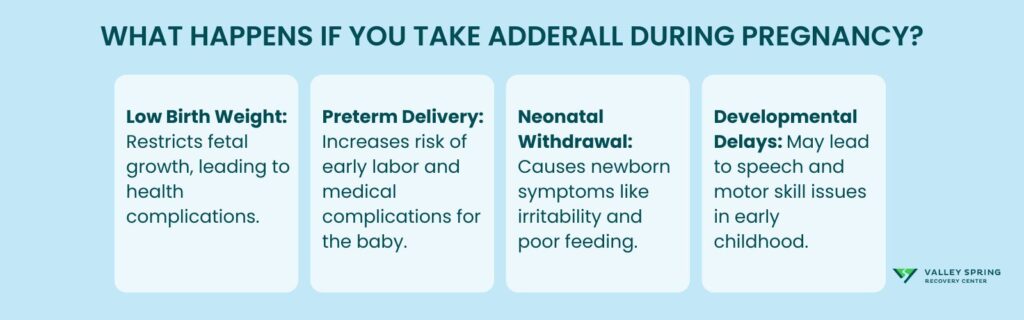
Things that happen if you take Adderall during pregnancy include the following:
- Low birth weight: Adderall restricts blood flow to the fetus, limiting growth. You risk delivering a baby who weighs less than 5.5 pounds. Low-weight infants face breathing problems and weaker immunity.
- Preterm delivery: Stimulant exposure raises your risk of giving birth before 37 weeks. You experience early contractions or placental issues. Preterm infants require weeks of medical support.
- Neonatal withdrawal: Your baby develops withdrawal symptoms like irritability and feeding difficulties. Withdrawal onset occurs within days of birth. You must monitor the infant for tremors and sleep disturbances.
- Developmental delays: Continued stimulant exposure impairs your child’s brain development. You see delays in speech or motor skills during the toddler years. Early intervention with therapy helps counteract long-term deficits.
Did you know most health insurance plans cover substance use disorder treatment? Check your coverage online now.
Is It Safe To Take Adderall In The First Trimester?
No, you should not take Adderall in the first trimester. During early fetal development, stimulant exposure alters neurotransmitters and raises the risk of miscarriage.
From weeks 1 to 12, your baby forms major organs and neural pathways. Adderall’s dopamine and norepinephrine effects disrupt organogenesis and impair brain growth. You face higher odds of birth defects and pregnancy complications if you continue stimulant use without medical monitoring.
Does Adderall Increase The Risk Of Birth Defects?
Yes, Adderall use during pregnancy increases your risk of birth defects. Stimulant exposes the baby to congenital heart defects and craniofacial abnormalities, especially with first-trimester use.
Your fetus’s heart and facial structures develop early, making them vulnerable to dopamine and norepinephrine fluctuations. These neurotransmitter changes disrupt the migration of neural crest cells, leading to malformations. Without medical oversight, you elevate the probability of your baby requiring surgical correction after birth.
Can Adderall Use While Pregnant Cause Miscarriage?
Yes, Adderall use while pregnant can cause miscarriage. Stimulant exposure elevates blood pressure and constricts blood vessels, which impair placental blood flow and lead to pregnancy loss.
High levels of amphetamine cross your placenta and affect fetal development. You risk early uterine contractions and impaired nutrient delivery to your embryo. These factors heighten the chance of miscarriage, especially in the first trimester.
Contact us today to schedule an initial assessment or to learn more about our services. Whether you are seeking intensive outpatient care or simply need guidance on your drug addiction journey, we are here to help.
What Are The Alternatives To Adderall During Pregnancy?
The alternatives to Adderall during pregnancy include behavioral therapy, dietary modifications, exercise, and non-stimulant medications. These options manage ADHD without exposing your fetus to stimulants. These options manage ADHD without exposing your fetus to stimulants.
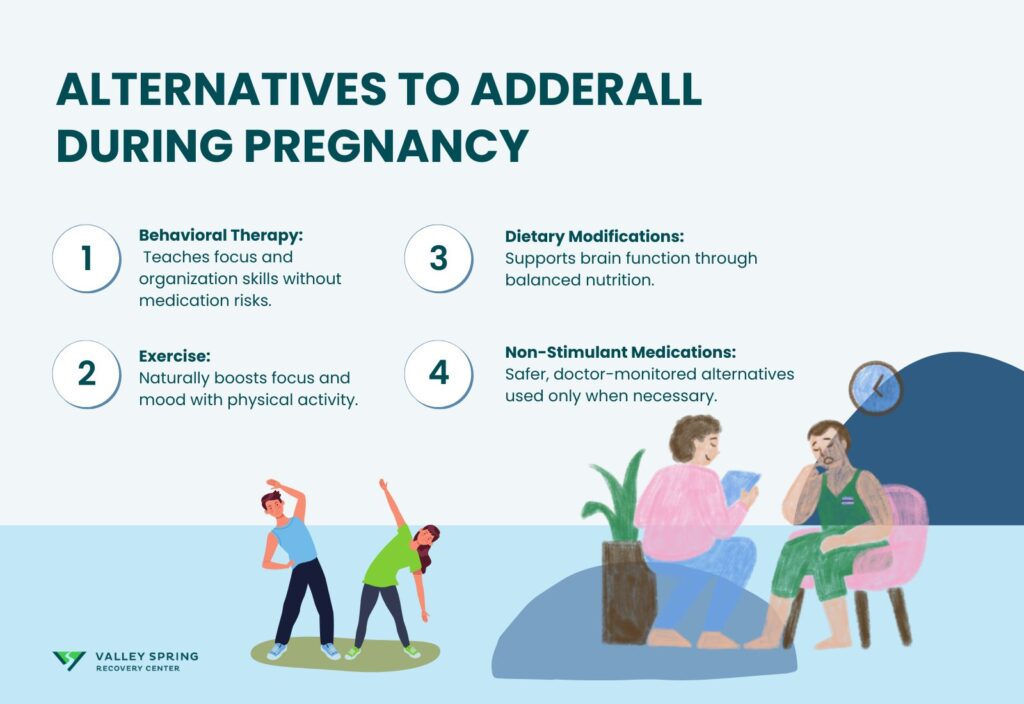
The alternatives to Adderall during pregnancy are explained below:
- Behavioral therapy: You learn coping strategies and organizational skills to improve focus. Therapists help you develop routines that reduce distractibility. This approach avoids drug-related risks entirely.
- Dietary modifications: You adjust nutrient intake to support neurotransmitter balance. Foods rich in omega-3 fatty acids and protein help stabilise your energy. Proper nutrition minimises reliance on medication.
- Exercise: You engage in regular physical activity to boost dopamine and norepinephrine naturally. Activities like walking or prenatal yoga enhance your attention and mood. Exercise also improves sleep, which in turn reduces ADHD symptoms.
- Non-stimulant medications: You use FDA-approved options like atomoxetine under close monitoring. These drugs affect norepinephrine without the same stimulant impact. Doctors prescribe them only when the benefits outweigh the potential risks.
How Do Doctors Manage Adhd In Pregnant Women?
Doctors manage ADHD in pregnant women by first assessing symptom severity and the pregnancy stage. They review your medical history and discuss the risks of continuing stimulant therapy. You and your provider evaluate ADHD triggers and decide on treatment adjustments.
If symptoms impair daily life, doctors prescribe the lowest effective dose or switch you to non-stimulant medications. They monitor blood pressure and fetal growth regularly during prenatal visits. You attend frequent check-ups to ensure both your health and the baby’s development remain stable.
Psychiatric providers also recommend behavioural interventions alongside or instead of medication. You learn time-management techniques and receive support from therapists familiar with perinatal mental health. This combined approach reduces reliance on drugs and addresses your ADHD safely.
Can You Stop Taking Adderall While Pregnant Without Side Effects?
No, you cannot stop taking adderall while pregnant without side effects. Stopping Adderall while pregnant produces withdrawal symptoms. You face fatigue, depression, and loss of focus as dopamine levels drop. Abrupt cessation disrupts your neurotransmitters and mood stability.
Your doctor will prescribe a tapering plan to gradually reduce the dosage. This slow approach limits withdrawal severity and protects your mental health. You also benefit from therapy to manage ADHD symptoms during this transition.
Rediscover Life at Valley Spring Recovery Center
Get the compassionate support you deserve. We're here to help you reclaim joy, wellness, and a brighter future.
Verify Benefits
Are There Pregnancy-Safe ADHD Medications?
Yes, there are pregnancy-safe ADHD medications. Certain ADHD medications pose a lower risk during pregnancy under medical supervision. You and your doctor consider non-stimulant options like atomoxetine or bupropion when stimulant risks outweigh benefits. These drugs have limited fetal exposure compared to amphetamines.
You might also use extended-release methylphenidate in the smallest effective dose if non-stimulants fail to control symptoms. Regular monitoring of fetal development and maternal blood pressure ensures safety. Your provider adjusts treatment based on trimester and symptom severity to balance your health with fetal well-being.
What Do OB-GYNS Recommend About Adderall Use In Pregnancy?
During pregnancy, OB-GYNS recommend you discontinue Adderall unless symptoms severely impair daily life. They focus on minimizing stimulant exposure and prioritizing non-drug approaches. You and your provider review ADHD history and assess whether behavioral therapy alone controls symptoms.
OB-GYNS advise regular monitoring of your blood pressure and fetal growth if you continue any medication. They work with a psychiatrist to adjust doses or switch you to pregnancy-safer options like extended-release methylphenidate. You attend more frequent prenatal visits to ensure both your well-being and the baby’s development.
Postpartum planning also forms part of their recommendation. OB-GYNS encourage creating a care plan for ADHD management after delivery, including breastfeeding considerations. This collaborative approach ensures you receive comprehensive support without jeopardizing fetal health.
Is Adderall Addictive?
Yes, Adderall is addictive when misused. You experience a dopamine surge that reinforces drug-seeking behavior. Repeated use builds tolerance, requiring higher doses for the same effect.
Once dependence forms, you require Adderall rehab to break the cycle. During rehab, professionals address both your medical and psychological needs. Structured programs reduce misuse and teach coping strategies to maintain sobriety.
Are you covered for treatment?


Valley Spring Recovery Center is an approved provider for Blue Cross Blue Shield and Cigna, while also accepting many other major insurance carriers.
Check Coverage Now!What Do I Do If I Am Addicted To Adderall While Pregnant?
If you are addicted to adderall while pregnant, what you should do is seek immediate medical and mental health evaluation to address both your pregnancy and addiction. Your obstetrician will assess fetal health while addiction specialists develop a safe tapering or treatment plan. Early intervention reduces the risks of withdrawal complications for you and your baby.
If you have co-occurring mental health issues, you require a dual diagnosis program to treat addiction and underlying conditions simultaneously. This integrated care combines prenatal monitoring with specialized therapy to stabilize your mood and manage cravings.
You join a program that offers medication-assisted treatment alongside counseling to support both your mental health and pregnancy.
Share This Post

Valley Spring Editorial Team
All author posts
Our Therapuetic Recovery Programs
Are you covered for treatment?








Valley Spring Recovery Center is an approved provider for Blue Shield of California and Cigna, while also accepting many other major insurance carriers.
Check Coverage Now!