


Clinical guide
Drug Dependence: Symptoms, Causes, Effects and Treatment
Drug dependence is the body adapting to a substance until it produces withdrawal. How fast it develops by drug class, and why a taper is required.
By Paul James Roeser·Reviewed by Noelle Mathew, LCSW, LCADC, CASAC-M·10 min read
Published ·Updated
Drug dependence is the physiological state in which repeated exposure has adapted the nervous system to a substance, so that the body needs the substance to run normally and produces withdrawal when the substance is reduced or removed. It is a body state rather than a behavior, and it develops without any intent on the part of the person it happens to.
Dependence has two observable markers, tolerance and withdrawal, and no third. Tolerance is the falling response to a fixed dose. Withdrawal is the set of signs and symptoms that appears as blood and tissue levels of the substance decline. The National Institute on Drug Abuse describes dependence as the result of physiological adaptations to chronic exposure to a drug, records tolerance as its companion, and states that dependence and addiction are not equivalent.
That last point is what the distinction turns on. The FDA records that physical dependence arises when benzodiazepines are taken steadily for several days to weeks, even as prescribed. A patient in that position has a body state to manage, not a diagnosis to answer for.
What Is Drug Dependence?
Drug dependence is a neuroadaptive state, defined by tolerance and by withdrawal on cessation, in which the nervous system has reset its own baseline around the continued presence of a substance. Removing the substance exposes that reset baseline, and the exposure of it is what withdrawal is.
Dependence is not measured by dose, by legality, or by how the substance was obtained. It is measured by what the body does when the substance stops arriving. Under DSM-5-TR, tolerance and withdrawal are criteria 10 and 11 of the 11 that define a substance use disorder, and both are excluded from the count when the medication is taken as prescribed. Dependence therefore sits inside the diagnostic system as evidence rather than as a verdict.
The mechanism behind that reset baseline is specific and measurable.
What Causes Drug Dependence?
Drug dependence is caused by repeated exposure driving counter-adaptation in the receptor systems the substance acts on, so that ordinary function now requires the substance to be present. Frequency and dose set the pace, and inherited variation sets how far and how fast an individual travels.
The National Institute on Drug Abuse describes the adaptation in the reward circuit directly: the brain of someone who misuses drugs adjusts by producing fewer neurotransmitters in that circuit, or by reducing the number of receptors that receive signals. The result is the effect known as tolerance, in which larger amounts are needed to produce the familiar effect. The same counter-adaptation that blunts the drug's effect is what leaves the system unopposed once the drug is withdrawn.
The 4 contributors each carry a named federal source.
- Repeated pharmacological exposure drives the receptor and neurotransmitter changes NIDA describes, which produce tolerance first and withdrawal on cessation second.
- Frequency and duration of use set the timeline. NIDA records that short-term medical use of opioid pain relievers lasting days rarely leads to an opioid use disorder, while regular use across weeks or longer leads to dependence and tolerance.
- Inherited variation shapes individual risk. NIDA estimates that genes, including the effects environmental factors have on gene expression, account for between 40 and 60 percent of a person's risk of addiction. That estimate is published for addiction rather than for physical dependence.
- Long-term therapeutic use produces the same adaptation as any other exposure. NIDA lists tolerance, hyperalgesia and addiction among the risks of long-term opioid treatment, and the FDA places benzodiazepine physical dependence at several days to weeks of steady use, even as prescribed.
Drug tolerance reduces the response to a fixed dose while the substance is present, whereas dependence produces symptoms after the dose falls or stops. Dose, exposure duration, receptor adaptation, and substance class shape both processes without making them clinically identical.
How Quickly Does Physical Dependence Develop?
Physical dependence develops over days to weeks for benzodiazepines and over weeks or longer of regular use for opioids, on the timelines the FDA and the National Institute on Drug Abuse publish. No single figure covers every substance, because each authority states an interval only for the class it governs.
The 5 substance classes each carry a statement from a named regulator or institute about how dependence develops in that class and about what withdrawal from it involves.
| Substance class | What the named authority states about onset | What the same authority states about withdrawal |
| Benzodiazepines | FDA, 2020 Boxed Warning update: physical dependence arises when benzodiazepines are taken steadily for several days to weeks, even as prescribed | FDA: stopping abruptly or reducing the dosage too quickly can result in withdrawal reactions, including seizures, which can be life-threatening |
| Opioids | NIDA: short-term medical use lasting days rarely leads to an opioid use disorder, while regular use across weeks or longer leads to dependence and tolerance | NIDA: restlessness, muscle and bone pain, insomnia, diarrhea, vomiting, cold flashes with goose bumps, and involuntary leg movements |
| Alcohol | NIAAA publishes no onset interval. It records withdrawal as occurring when someone who has been drinking heavily for a prolonged period suddenly stops | NIAAA: a potentially life-threatening process, accounting for approximately 260,000 emergency department visits and 850 deaths in the United States each year |
| Barbiturates | NIDA: continued use of CNS depressants, the class that includes barbiturates, leads to dependence and to withdrawal when use is abruptly reduced or stopped | NIDA: withdrawal from prolonged barbiturate use carries life-threatening complications |
| Nicotine | DiFranza and colleagues, 2007: of 217 adolescents who inhaled from a cigarette, 127 lost autonomy over their tobacco use, a measure of diminished control rather than of physical dependence, 10 percent of them within 2 days of first inhaling and 25 percent within 30 days | DiFranza and colleagues: withdrawal symptoms and failed cessation attempts can precede daily smoking |
Those intervals describe when dependence arrives. What it looks like once present is a separate list.
What Are The Symptoms Of Drug Dependence?
The symptoms of drug dependence are a rising dose requirement, a falling drug effect, and a withdrawal syndrome that appears as the substance clears. The behavioral items that surround those three on a published symptom list belong to the diagnostic criteria for a substance use disorder instead.
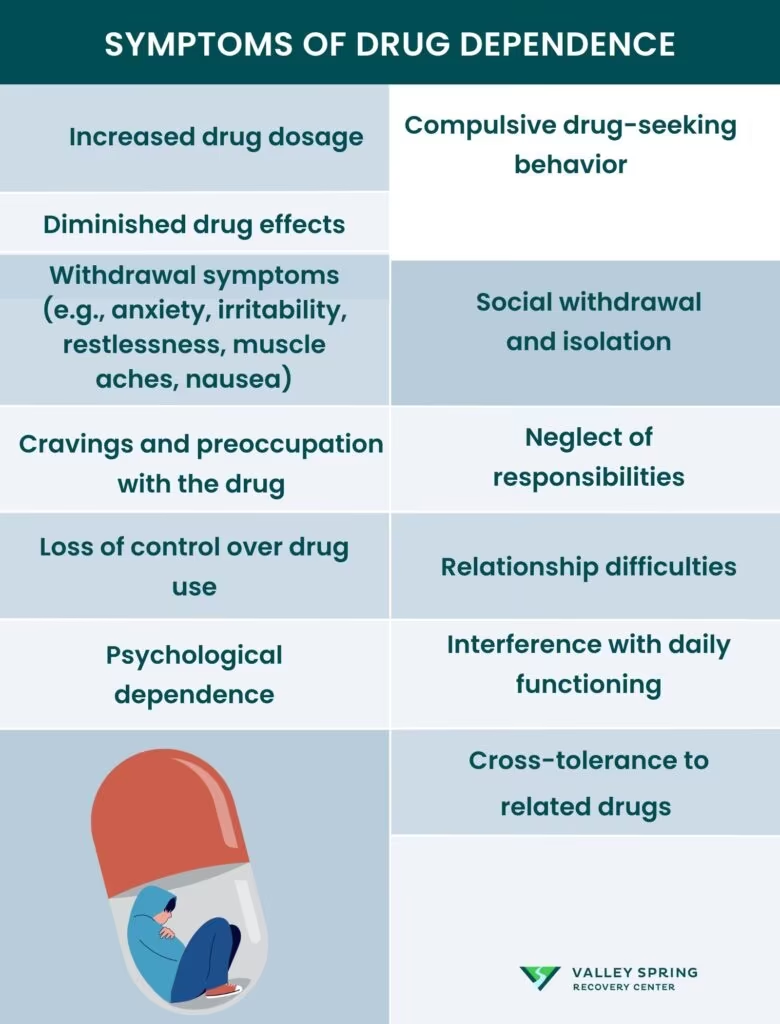
The 3 core symptoms are the ones a clinician records as evidence of physical dependence.
- Increased dose requirement, in which the amount that produced an effect no longer produces it and the dose climbs to compensate.
- Diminished effect at the previous dose, which is the same adaptation observed from the other direction.
- Withdrawal on reduction or cessation, with a symptom set specific to the substance class, running from restlessness and muscle pain for opioids through to seizures for benzodiazepines and alcohol.
Drug withdrawal symptoms and treatment vary by substance class, dose pattern, exposure duration, co-occurring conditions, and the medical risks created by cessation.
What Happens When A Dependent Person Stops Taking The Drug?
Withdrawal begins as blood and tissue levels fall, and for alcohol, benzodiazepines and barbiturates it carries a risk of seizures and death. Cessation from those three classes is a medical event rather than a decision a person acts on alone.
Call 911 immediately for a seizure, a collapse, a loss of consciousness or a confused and agitated state during withdrawal from any substance. Call Poison Help at 1-800-222-1222 for any ingestion or overdose. Never stop a prescribed opioid, benzodiazepine or barbiturate without a taper schedule from the prescriber, and never restart at the old dose after a break in use.
The scale of the alcohol case is documented. The National Institute on Alcohol Abuse and Alcoholism describes alcohol withdrawal as a potentially life-threatening process that occurs when someone who has been drinking heavily for a prolonged period suddenly stops, and its Core Resource on Alcohol puts the annual United States burden at approximately 260,000 emergency department visits and 850 deaths. For benzodiazepines, the FDA Drug Safety Communication of 23 September 2020 states that stopping abruptly or reducing the dosage too quickly can result in withdrawal reactions, including seizures, which can be life-threatening.
What Are The Effects Of Long-Term Drug Dependence?
Long-term dependence raises the dose a person needs, converts stopping into a supervised medical procedure, and opens a lethal window after any period of abstinence. All three follow from the same adaptation, and the third one kills people who believe they are past the danger.
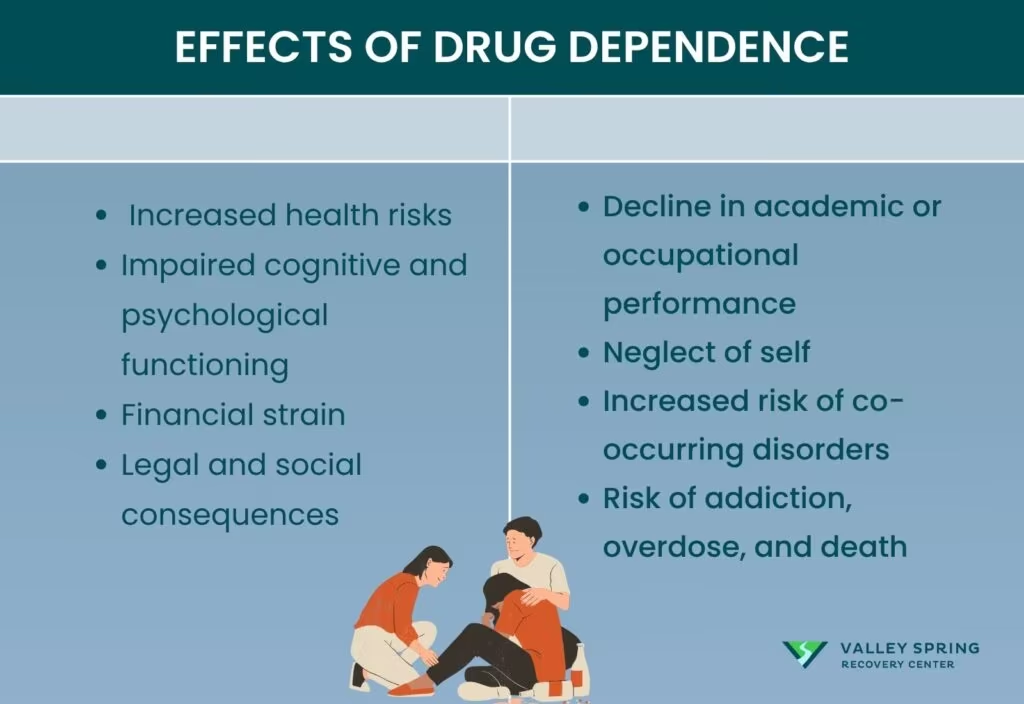
The 3 effects follow from the physiology rather than from the behavior around it.
- Escalating exposure. Tolerance raises the dose needed for a given effect, and a higher dose raises exposure to every other toxic property the substance carries.
- Constrained cessation. Withdrawal makes unsupervised stopping unsafe for alcohol, benzodiazepines and barbiturates, so the exit from dependence runs through a prescriber rather than around one.
- Lost tolerance after a break. The National Institute on Drug Abuse states the danger directly: a person who uses as much of the drug as they did before quitting can easily overdose, because the body is no longer adapted to the previous level of exposure. Call 911 and Poison Help at 1-800-222-1222 for any suspected overdose.
None of those three establishes that a disorder is present. Dependence is a physiological adaptation, and a substance use disorder is scored against 11 diagnostic criteria of which tolerance and withdrawal are only two, both excluded under DSM-5-TR when the medication is taken as prescribed. Drug abuse vs dependence separates harmful use and diagnostic impairment from the physiological adaptation caused by repeated exposure.
How Is Drug Dependence Treated?
Physical dependence is treated by a prescriber-directed taper, with the reduction schedule set by the substance, the dose and the duration of use. Where a substance use disorder is present alongside the dependence, the taper is one component of a treatment plan rather than the whole of it.
How to stop drug addiction combines withdrawal-risk assessment, treatment for compulsive use and its consequences, changes to drug access and triggers, and continuing support that protects recovery after acute symptoms resolve.
Three things separate a taper from a decision to stop. The schedule is written in advance rather than improvised during withdrawal. The setting is matched to the seizure risk of the substance class, which is why alcohol, benzodiazepine and barbiturate cessation is medically supervised. The plan also accounts for what follows the taper because lost tolerance makes a return to the previous dose dangerous. Addiction treatment levels of care match diagnosed severity, withdrawal risk, medical and psychiatric needs, functioning, and recovery supports to an appropriate setting.
What Are The Most Common Questions About Drug Dependence?
Common questions about drug dependence: prescribed medication, reversibility, the shortest onset interval, whether dependence is permanent, psychological dependence, and quitting without help.
Can A Person Be Dependent On A Medication A Doctor Prescribed?
Yes. The FDA states that physical dependence arises when benzodiazepines are taken steadily for several days to weeks, even as prescribed. DSM-5-TR does not count tolerance or withdrawal as diagnostic criteria in that situation.
Does Drug Dependence Reverse?
Yes. Physical dependence resolves once the substance is withdrawn on a prescriber-directed schedule. NIDA records that withdrawal symptoms range from mild to severe depending on the drug, and that slowly tapering the dosage can usually manage or avoid them.
Which Drugs Produce Dependence Over The Shortest Interval?
The FDA places benzodiazepine physical dependence at several days to weeks of steady use, even as prescribed. That is the shortest interval any cited authority states for a prescribed class.
Is Dependence Permanent?
No. Physical dependence resolves after a completed taper. Tolerance falls with it, and that fall is what makes a return to a previous dose dangerous rather than harmless.
What Is Psychological Dependence?
Psychological dependence is the craving and loss of control that sits in the behavioral criteria rather than in the pharmacologic pair. Both forms sit inside one diagnosis under DSM-5-TR.
Is It Safe To Quit Without Medical Help?
Not for alcohol, benzodiazepines or barbiturates. Withdrawal from those three classes carries a documented risk of seizures and death. Contact a prescriber before any reduction, and call 911 for a seizure.
Sources & References9ShowHide
- FDA Drug Safety Communication. FDA requiring Boxed Warning updated to improve safe use of benzodiazepine drug class, 23 September 2020 — Source of the statement that physical dependence occurs when benzodiazepines are taken steadily for several days to weeks, even as prescribed, and that stopping them abruptly or reducing the dosage too quickly can result in withdrawal reactions, including seizures, which can be life-threatening.
- NIDA. Misuse of Prescription Drugs Research Report: What classes of prescription drugs are commonly misused? — Source of the statements that dependence occurs as a result of physiological adaptations to chronic exposure to a drug and is not equivalent to addiction, that tolerance often accompanies dependence and creates the clinical problem of separating a developing drug problem from a genuine need for a higher dose, that short-term medical use of opioid pain relievers over a few days rarely leads to an opioid use disorder while regular or longer-term use can lead to dependence and tolerance, that opioid withdrawal symptoms include restlessness, muscle and bone pain, insomnia, diarrhea, vomiting, cold flashes with goose bumps and involuntary leg movements, that continued CNS depressant use leads to dependence and withdrawal, that withdrawal from prolonged barbiturate use can have life-threatening complications, and that long-term opioid treatment carries risks including tolerance, hyperalgesia and addiction.
- NIAAA. Understanding Alcohol Use Disorder — Source of the statement that alcohol use disorder encompasses the conditions that some people refer to as alcohol abuse, alcohol dependence, alcohol addiction and the colloquial term alcoholism; of the DSM-5 severity bands of two to three criteria for mild, four to five for moderate and six or more for severe; and of the statement that alcohol withdrawal is a potentially life-threatening process that can occur when someone who has been drinking heavily for a prolonged period suddenly stops.
- NIAAA. Core Resource on Alcohol: Medical Complications, Common Alcohol-Related Concerns — Source of the figure that alcohol withdrawal accounts for approximately 260,000 emergency department visits and 850 deaths in the United States each year, and of the statement that heavy drinking over a long period can lead to emergency medical visits for potentially life-threatening withdrawal symptoms.
- NIDA. Drugs, Brains, and Behavior: The Science of Addiction. Drugs and the Brain — Source of the reward-circuit description used here: large surges of dopamine teach the brain to seek drugs at the expense of other, healthier goals and activities; the brain of someone who misuses drugs adjusts by producing fewer neurotransmitters in the reward circuit or by reducing the number of receptors that can receive signals; and the person then needs larger amounts of the drug to produce the familiar high, an effect known as tolerance.
- NIDA. Drugs, Brains, and Behavior: The Science of Addiction. Drug Misuse and Addiction — Source of the estimate that genes, including the effects environmental factors have on a person's gene expression, account for between 40 and 60 percent of a person's risk of addiction.
- NIDA. Drugs, Brains, and Behavior: The Science of Addiction. Treatment and Recovery — Source of the statement that a person who uses as much of a drug as they did before quitting can easily overdose because the body is no longer adapted to the previous level of drug exposure, and of the position that medication is the first line of treatment for opioid addiction with medications also available for alcohol and nicotine.
- McNeely J, Hamilton LK, Whitley SD, et al. Substance Use Screening, Risk Assessment, and Use Disorder Diagnosis in Adults. Baltimore (MD): Johns Hopkins University, May 2024 (NCBI Bookshelf, Table 3) — Reproduces the DSM-5-TR criteria adapted from APA 2022: the 11 criteria in four groups (impaired control, social impairment, risky use, pharmacologic), the severity bands of mild at any 2 or 3 criteria, moderate at any 4 or 5 and severe at any 6 or more, the note that tolerance and withdrawal in the context of appropriate medical treatment do not count as criteria for a substance use disorder, and the record that no withdrawal symptoms are documented for hallucinogens, PCP or inhalants.
- DiFranza JR, Savageau JA, Fletcher K, et al. Symptoms of tobacco dependence after brief intermittent use: the Development and Assessment of Nicotine Dependence in Youth-2 study. Archives of Pediatrics and Adolescent Medicine, 2007;161(7):704-710 (PubMed) — A 4-year prospective study of 1,246 sixth-grade students in six Massachusetts communities. Source of the finding that among the 217 inhalers, 127 lost autonomy over their tobacco use, 10 percent having done so within 2 days and 25 percent within 30 days of first inhaling from a cigarette, and of the conclusion that tobacco withdrawal symptoms and failed attempts at cessation can precede daily smoking.