Fentanyl Addiction: Symptoms, Causes, Effects, and Treatment
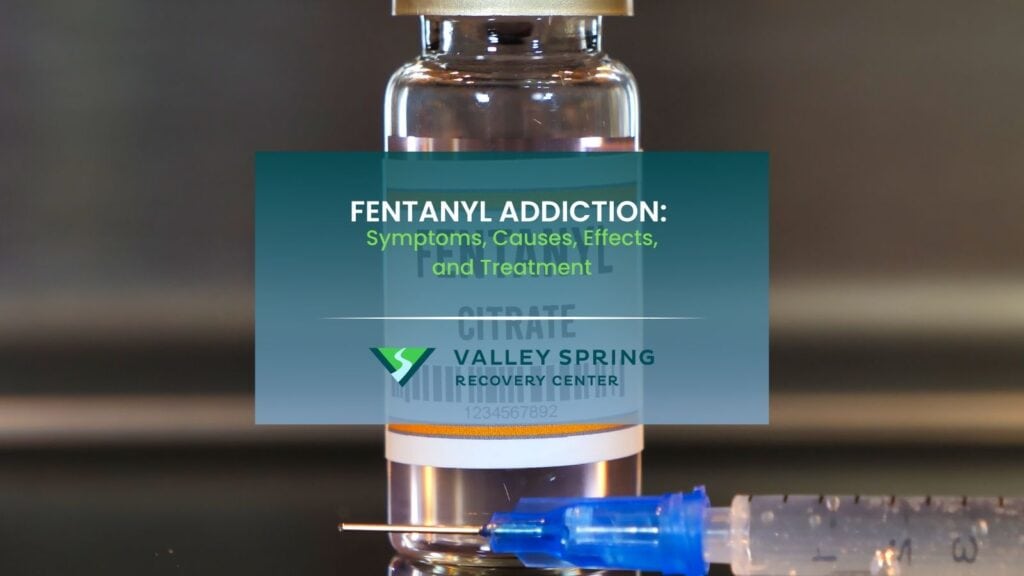
Fentanyl addiction is a life-threatening condition caused by the misuse of fentanyl, a powerful synthetic opioid that is 50 to 100 times stronger than morphine. Initially prescribed for severe pain, fentanyl is highly addictive, and even small doses can lead to dependence or overdose. Illicitly manufactured fentanyl, often mixed with other drugs, is a major driver of opioid-related deaths in the U.S.
Symptoms of fentanyl addiction include intense cravings, drowsiness, confusion, slowed breathing, and withdrawal from social or work activities. Over time, users may develop tolerance, needing higher doses to feel the same effect, which increases overdose risk.
Causes include chronic pain treatment, recreational misuse, and exposure to counterfeit pills. Psychological, genetic, and environmental factors also play a role in increasing vulnerability to addiction.
The effects of fentanyl addiction are severe, ranging from respiratory depression and unconsciousness to long-term brain changes and fatal overdose. Treatment involves medically supervised detox, medication-assisted treatment (MAT) with methadone or buprenorphine, behavioral therapy, and long-term recovery support.
What Are The Signs of Fentanyl Addiction?
The signs of Fentanyl addiction include physical symptoms, behavioral changes such as neglecting daily responsibilities, and emotional indicators. These warning signs manifest differently in each person but collectively paint a picture of growing dependency.
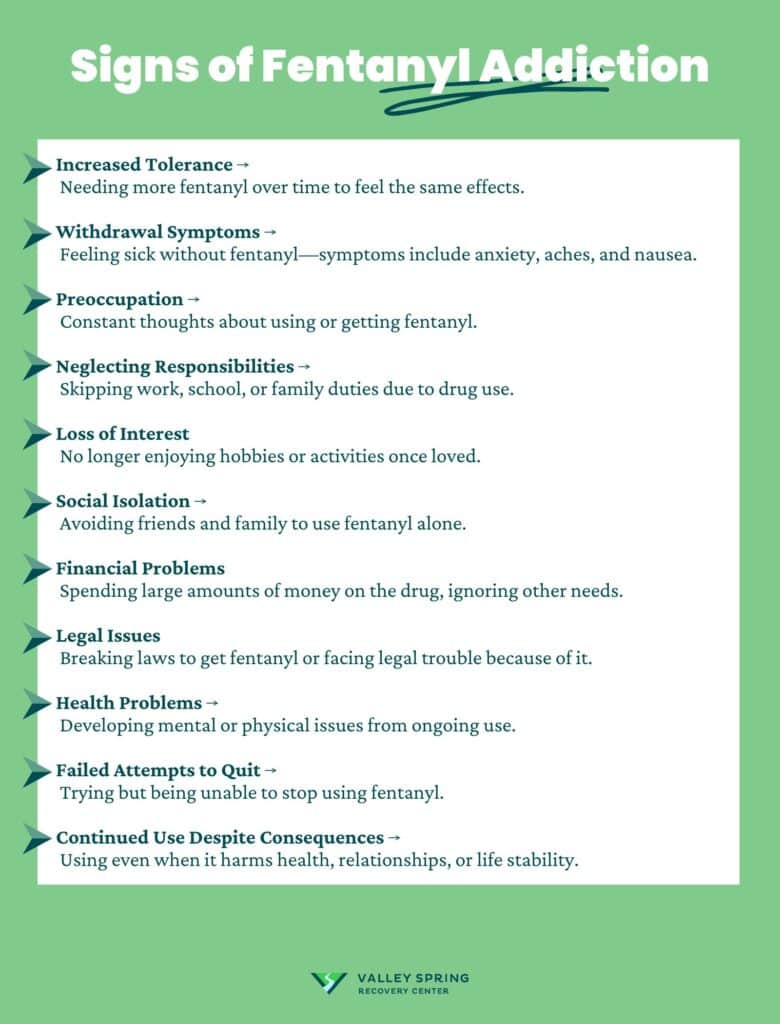
The signs of fentanyl addiction are explained below:
- Increased Tolerance: Needing higher doses of Fentanyl to achieve the same effects.
- Withdrawal Symptoms: Experiencing discomfort when not using Fentanyl, such as anxiety, restlessness, muscle aches, and nausea.
- Preoccupation: Constantly thinking about obtaining and using Fentanyl.
- Neglecting Responsibilities: Failing to meet work, school, or family obligations due to Fentanyl use.
- Loss of Interest: Losing interest in previously enjoyed activities.
- Social Isolation: Withdrawing from friends and family to use Fentanyl in secrecy.
- Financial Problems: Spending significant money on acquiring Fentanyl, often at the expense of other needs.
- Legal Issues: Engaging in illegal activities to obtain Fentanyl or facing legal consequences due to drug-related actions.
- Health Problems: Experiencing physical and mental health issues related to Fentanyl use, such as respiratory problems or mood disturbances.
- Failed Attempts to Quit: Trying to stop or cut down on Fentanyl use unsuccessfully.
- Continued Use Despite Consequences: Using Fentanyl even when aware of its negative impact on health, relationships, or life circumstances.
Did you know most health insurance plans cover substance use disorder treatment? Check your coverage online now.
Did you know most health insurance plans cover substance use disorder treatment? Check your coverage online now.
What Are The Causes of Fentanyl Addiction?
The causes of fentanyl addiction include genetic predisposition, emotional trauma, environmental pressures, and medical circumstances. These factors, whether biological, psychological, or social, can create pathways to dependency.
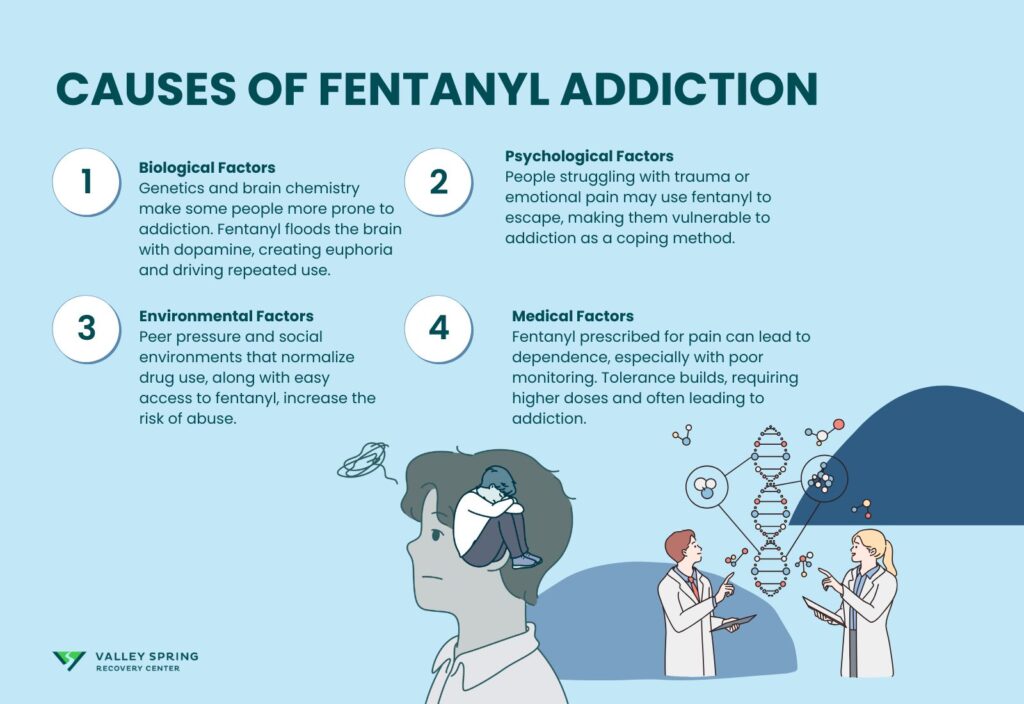
The causes of fentanyl addiction are explained below:
- Biological Factors: Genetic predisposition significantly influences fentanyl addiction. Individuals with a family history of substance abuse exhibit increased susceptibility due to genes affecting neurotransmitter levels, heightening addiction risk. Brain chemistry also plays a crucial role; fentanyl interacts with opioid receptors, causing elevated dopamine release. This dopamine surge induces euphoria, which the brain craves, leading to addiction.
- Psychological Factors: Psychological elements contribute to fentanyl addiction. Emotional pain from traumas or distressing life events drives individuals to seek escape through substances like fentanyl. The drug offers temporary relief from emotional suffering, serving as an attractive yet dangerous coping mechanism.
- Environmental Factors: The environment has a significant impact on fentanyl addiction. Peer pressure within social circles that normalize drug use influences individuals to try fentanyl. The desire for social acceptance fosters experimentation and subsequent abuse of the drug. Accessibility also plays a vital role; easier access to fentanyl increases addiction likelihood.
- Medical Factors: Medical reasons contribute to fentanyl addiction. Healthcare providers often prescribe fentanyl for pain relief after surgeries or for chronic pain management. Inadequate monitoring and over-prescription result in dependency and addiction. Tolerance to fentanyl develops over time, prompting individuals to consume higher doses for the same effects, creating a vicious cycle of abuse and addiction.
What Are The Effects of Fentanyl Addiction?
The effects of Fentanyl addiction include intense euphoric sensations, severe drowsiness, mental confusion, and dangerous respiratory suppression. Users commonly experience physical symptoms like nausea, constricted pupils, and persistent itching while developing psychological and social complications over time.
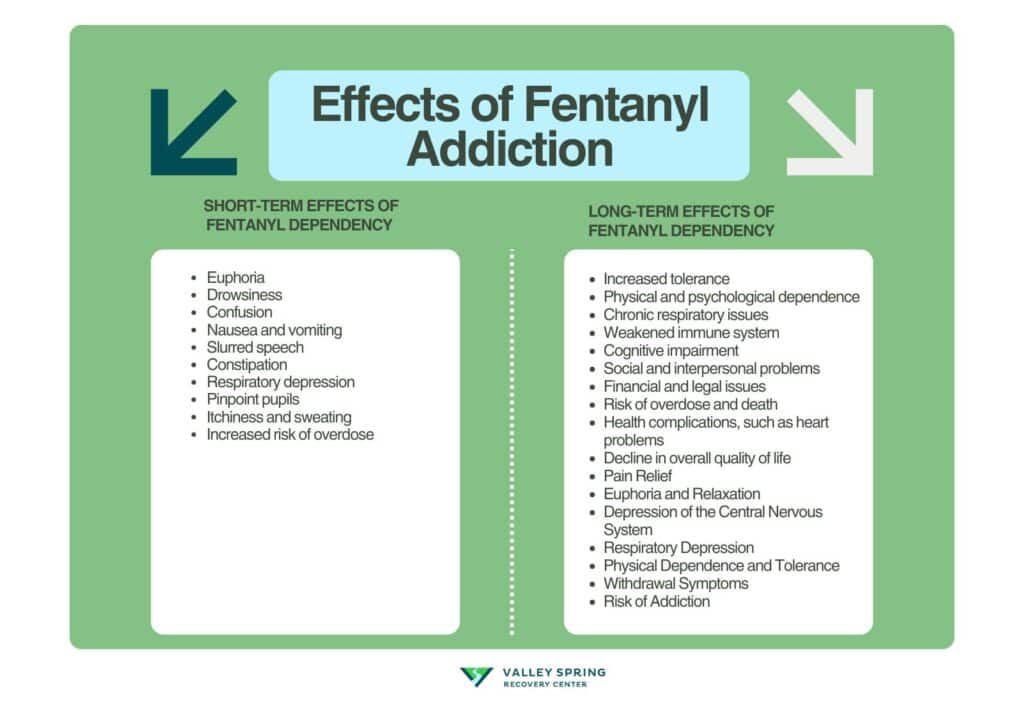
Short-Term Effects of Fentanyl Dependency include:
- Euphoria
- Drowsiness
- Confusion
- Nausea and vomiting
- Slurred speech
- Constipation
- Respiratory depression
- Pinpoint pupils
- Itchiness and sweating
- Increased risk of overdose
Long-Term Effects of Fentanyl Dependency include:
- Increased tolerance
- Physical and psychological dependence
- Chronic respiratory issues
- Weakened immune system
- Cognitive impairment
- Social and interpersonal problems
- Financial and legal issues
- Risk of overdose and death
- Health complications, such as heart problems
- Decline in the overall quality of life
- Pain Relief
- Euphoria and Relaxation
- Depression of the Central Nervous System
- Respiratory Depression
- Physical Dependence and Tolerance
- Withdrawal Symptoms
- Risk of Addiction
What Are The Treatment Options For Fentanyl Addiction?
The treatment options for Fentanyl addiction include comprehensive inpatient care, structured outpatient programs, medication-assisted treatment, and holistic therapy approaches. These evidence-based treatment methods combine medical supervision, counseling services, and peer support systems to support recovery.
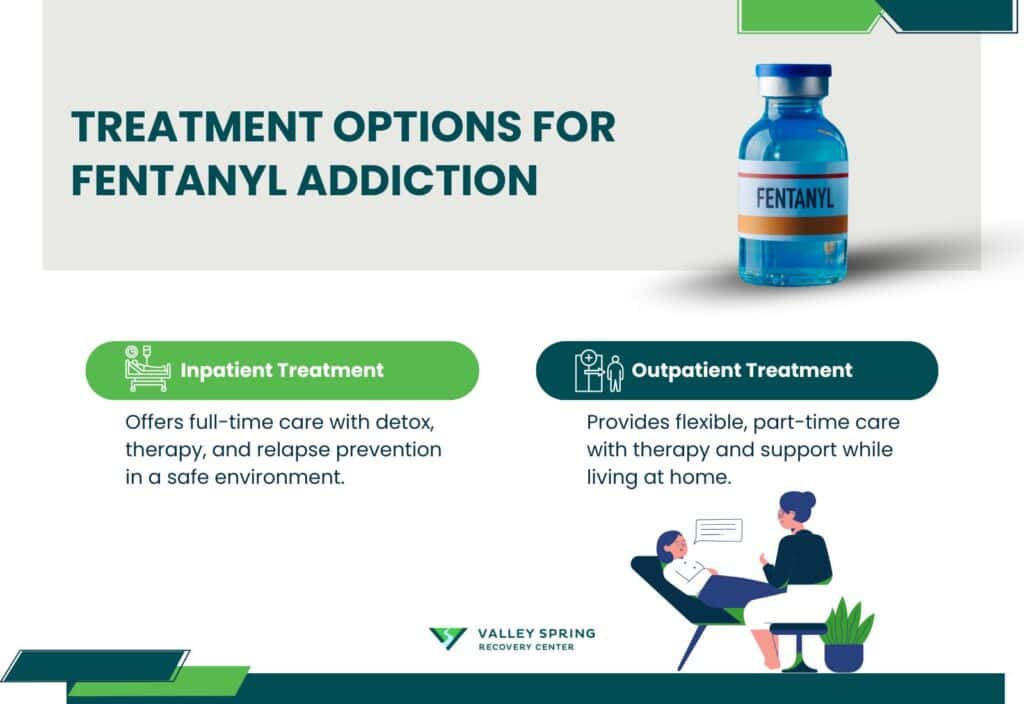
The treatment options for fentanyl addiction are explained below:
Contact us today to schedule an initial assessment or to learn more about our services. Whether you are seeking intensive outpatient care or simply need guidance on your drug addiction journey, we are here to help.
Inpatient Treatment
Inpatient treatment provides a structured and controlled environment that minimizes exposure to triggers and temptations associated with drug use. The first phase of inpatient treatment involves medically supervised detoxification to manage withdrawal symptoms safely.
Patients participate in individual counseling and group therapy to address psychological aspects of addiction, learn coping strategies, and gain insight into the root causes of substance abuse.
MAT is also incorporated based on facility protocols and individual needs, helping to reduce cravings and prevent relapse. Patients attend workshops on addiction, relapse prevention, and life skills. Interaction with peers in recovery provides valuable support and fosters a sense of community.
Some programs incorporate holistic therapies, including mindfulness, yoga, and art therapy, to promote overall well-being. Successful inpatient programs include comprehensive aftercare planning, involving outpatient treatment, support groups, and ongoing relapse prevention strategies.
Outpatient Treatment
Outpatient treatment includes individual and group counseling focused on addiction recovery, coping skills, and relapse prevention. Some outpatient programs offer MAT to manage cravings and withdrawal symptoms, especially for opioids like fentanyl.
Outpatient programs offer flexibility, enabling individuals to balance work, school, or family responsibilities with treatment. The frequency of outpatient sessions varies, ranging from weekly to several times per week based on individual needs and program intensity.
Outpatient programs encourage participation in support groups, such as 12-step programs or SMART Recovery, to enhance peer support. Educational components include information on addiction, its effects, and strategies for long-term recovery.
Patients undergo regular assessments to track progress and adjust treatment plans accordingly. Outpatient programs involve aftercare planning to ensure ongoing support and resources after program completion.
Outpatient treatment yields lower success rates compared to inpatient treatment due to less intensive supervision and structure. It is great for people with mild to moderate addiction, a stable home environment, and a strong support system.
What Are Preventive Strategies for Fentanyl Addiction?
Preventive strategies for Fentanyl addiction are needle exchange programs and medication-assisted treatment (MAT). They aim to minimize the negative consequences of drug use while promoting safety and well-being.
The preventive strategies for fentanyl addiction include:
1. Needle exchange: This programs provide clean, sterile needles and syringes to individuals who use Fentanyl or other drugs via injection. The primary goal is to reduce the transmission of bloodborne diseases like HIV and hepatitis C among drug users. They do this through the distribution of sterile needles and syringes, safe disposal of used needles to prevent accidental injuries, education and counseling on safer injection practices, and referrals to addiction treatment and other health services.
2. Medication-assisted treatment: MAT combines medications with counseling and behavioral therapies to treat addiction. For Fentanyl addiction, medical-assisted treatment involves medicines like methadone, buprenorphine, or naltrexone. They reduce cravings and withdrawal symptoms. Counseling and therapy address the psychological aspects of addiction.
Rediscover Life at Valley Spring Recovery Center
Get the compassionate support you deserve. We're here to help you reclaim joy, wellness, and a brighter future.
Verify Benefits
Does My Insurance Cover Fentanyl Addiction?
Yes, insurance covers fentanyl addiction treatment. This includes private insurers, Medicaid, and those obtained through the Affordable Care Act. This coverage includes services such as medical detoxification, inpatient and outpatient rehabilitation programs, medication-assisted treatment (MAT), and behavioral therapies.
Under the Mental Health Parity and Addiction Equity Act, insurers are required to provide substance use disorder benefits comparable to medical and surgical benefits, ensuring that addiction treatment is not subject to more restrictive limitations. However, the extent of coverage varies depending on your specific insurance plan, including factors such as deductibles, copayments, and network restrictions. It’s advisable to contact your insurance provider to verify your insurance coverage.
Share This Post

Valley Spring Editorial Team
All author posts
Our Therapuetic Recovery Programs
Are you covered for treatment?








Valley Spring Recovery Center is an approved provider for Blue Shield of California and Cigna, while also accepting many other major insurance carriers.
Check Coverage Now!