Addiction Effects on Relationships: Family, Social Circles and Society
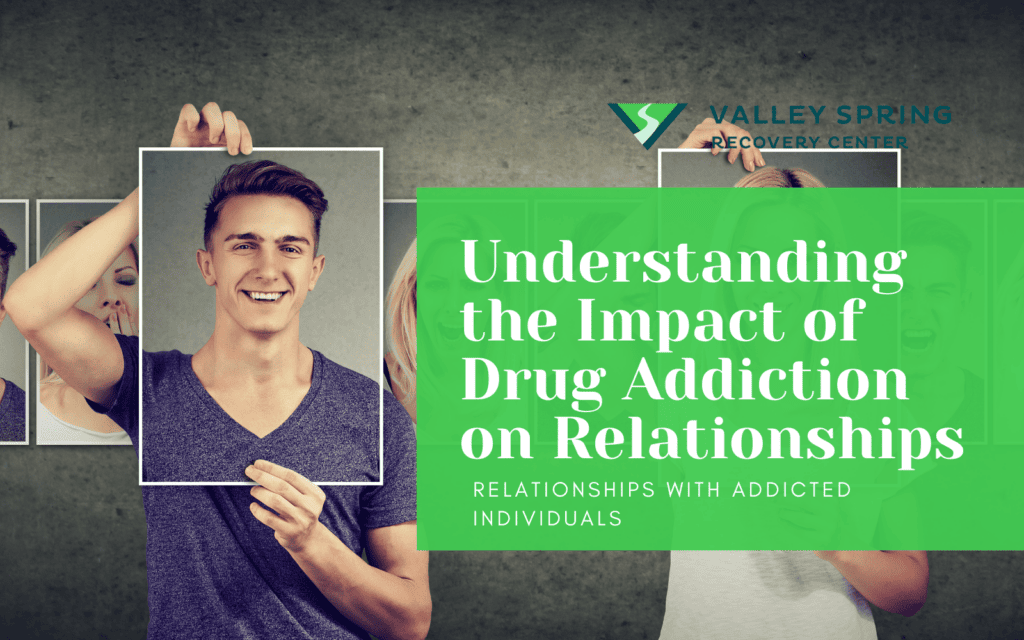
The effects of addiction on relationships are the disruption it causes in emotional bonds, trust, and social roles. Addiction does not stay limited to the person using substances but spreads into families, social circles, and the larger community. The National Institute on Drug Abuse reports that substance abuse costs American society over $600 billion each year, with about $400 billion directly affecting companies.
The effects on the family are severe. Addiction breaks trust, creates emotional distance, shifts family roles, leaving children and partners in stress and instability. It also leads to financial strain and constant conflict within the household. The effects on social circles are equally damaging. Friendships weaken as people withdraw, while peers face disappointment and stigma due to broken commitments.
In the workplace, absenteeism and poor productivity strain professional relationships. The effects on society, communities, healthcare systems, and law enforcement all carry a burden, underscoring the urgent need for robust support systems.
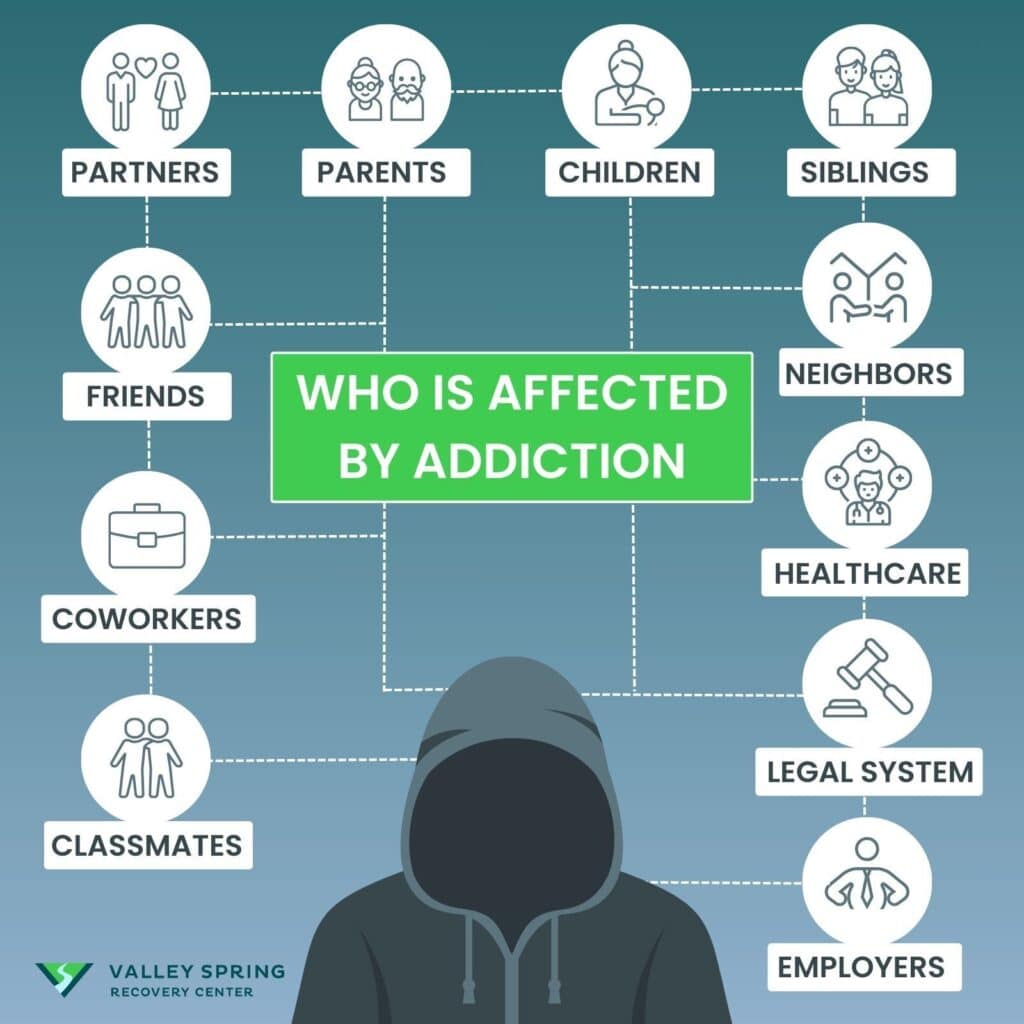
What Effect Does Addiction Have on the Family?
The effect addiction has on the family includes broken trust, constant emotional turmoil, and conflict within spousal relationships. Children suffer from unstable environments that disrupt their sense of security and healthy development. Parents experience deep distress, carrying guilt, worry, and financial burdens caused by their loved one’s addiction. Siblings are placed in conflicted roles and torn between resentment and responsibility. This leads to strained family bonds overall.
Did you know most health insurance plans cover substance use disorder treatment? Check your coverage online now.
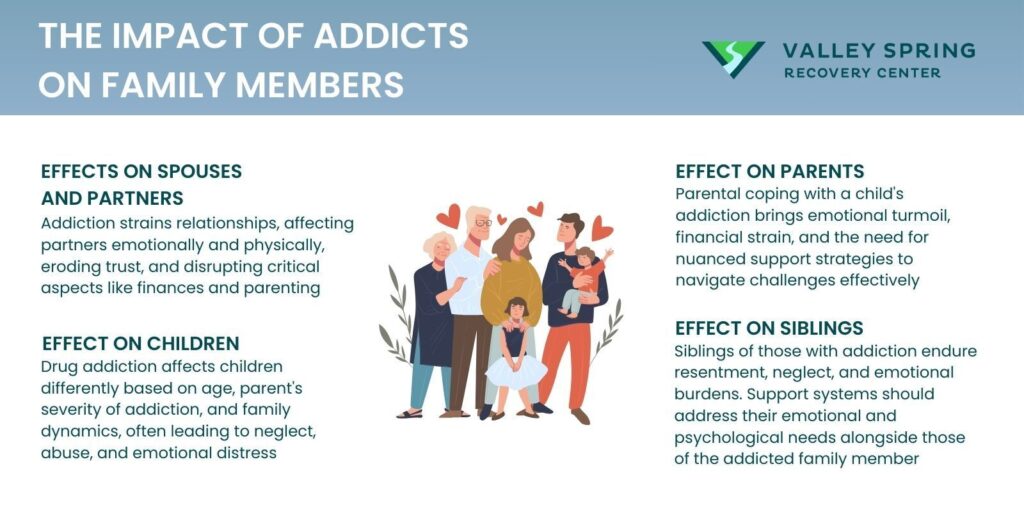
1. Effects On Spouses and Partners
The effects of addiction on spouses and partners are severe, placing constant strain on the relationship. The non-addicted partner shifts between roles of caretaker, enforcer, and victim. This shifting leads to feelings of confusion, betrayal, fear, and anger (American Association for Marriage and Family Therapy, 2021). Trust erodes, communication breaks down, and core aspects of family life, such as financial stability, parenting, and emotional support, become unstable. Many spouses face emotional burnout and physical health issues like stress and anxiety, while also reporting lower life satisfaction. These pressures weaken the foundation of the relationship, making professional support such as counseling and support groups vital for recovery.
2. Effect on Children
The impact of drug addiction on children is profound, shaped by age, severity of the addiction, and family dynamics. Young children face neglect or abuse, leading to long-term emotional and psychological harm. Adolescents are forced into adult roles, caring for siblings or parents, which disrupts social development and education (Journal of Adolescent Health, 2021). The unpredictable behavior of addicted parents creates chronic insecurity and anxiety. This affects children’s ability to form healthy relationships.
These varied experiences underscore the profound and lasting effect substance use disorder has on children, highlighting the need for targeted interventions that support not only the individual with the addiction but also the younger family members who are impacted.
3. Effect On Parents
The effect of addiction on parents is deeply painful, marked by guilt, shame, and self-blame. This emotional strain leads to chronic stress, anxiety, sleep problems, and other health issues (Journal of Substance Abuse Treatment, 2017). Parents also face heavy financial burdens from treatment costs and legal challenges, adding to their hardship (NIDA, 2019). Balancing love and support while maintaining firm boundaries is a constant struggle, requiring guidance from therapy or support groups. These challenges show the need for family-focused interventions that address both the child’s addiction and the parents’ well-being.
Contact us today to schedule an initial assessment or to learn more about our services. Whether you are seeking intensive outpatient care or simply need guidance on your drug addiction journey, we are here to help.
4. Effect on Siblings
The effect of addiction on siblings is overlooked but highly significant. They face a mix of emotions, psychological strain, social challenges, and academic or career setbacks. While some siblings develop resilience, many experience long-term emotional burdens that shape their lives. The effects of addiction on siblings are underestimated yet deeply profound.
Impact of Addiction on Siblings:
| Aspect | Impact |
| Emotional Impact | Constant stress and anxiety, resentment over lost attention, guilt for not helping, and shame about family struggles. |
| Psychological Impact | Depression, trauma from chaotic home life, and low self-esteem due to neglect. |
| Social Impact | Isolation from peers, strained relationships, and added household responsibilities. |
| Academic and Career Impact | Decline in performance and limited opportunities due to extra family duties. |
| Coping and Resilience | Some develop empathy, independence, and motivation to break the cycle of addiction. |
What Is The Effects Of Addiction on Social Circles?
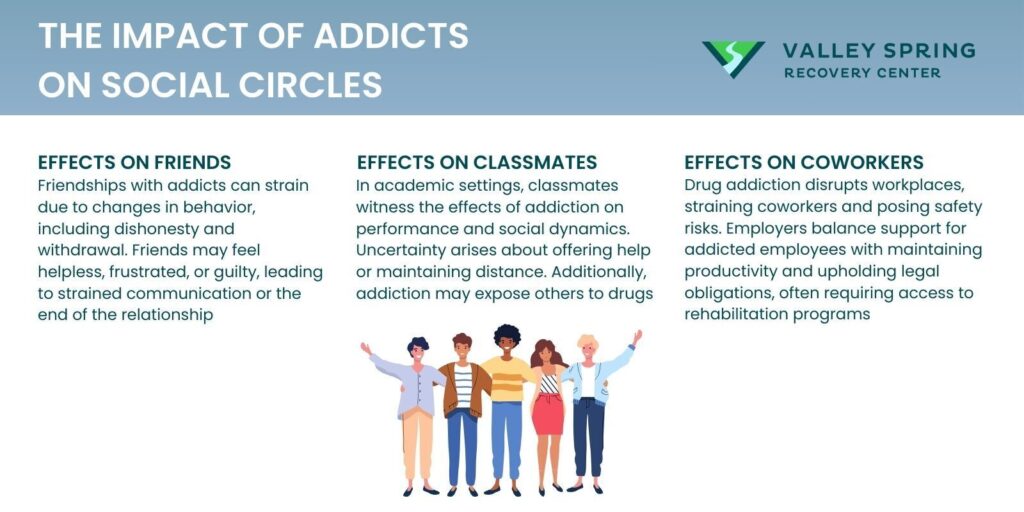
The effects of addiction on social circles include strained friendships, disrupted workplace dynamics, and challenges in academic settings. Friends struggle with broken trust and distancing behavior, while coworkers face added workload, stress, and even safety concerns. Classmates experience declining group performance and exposure to risky behaviors. This highlights how addiction reaches far beyond the individual into their wider social environment.
Here are the addiction effects on the social circle;
1. Effects On Friends
The effect of addiction on friendships is marked by broken trust, strained communication, and emotional conflict. Friends struggle between supporting the addicted person and protecting their own well-being. Dishonesty, unreliability, and withdrawal from social interactions cause frustration, guilt, and helplessness. In many cases, the strain leads to distancing or even the end of the friendship.
Rediscover Life at Valley Spring Recovery Center
Get the compassionate support you deserve. We're here to help you reclaim joy, wellness, and a brighter future.
Verify Benefits
2. Effects On Coworkers
The effect of addiction on coworkers includes increased stress, disrupted teamwork, and reduced productivity. Employers also face the challenge of supporting affected employees while maintaining safety and workplace standards.
Impact of Addiction on Coworkers:
| Aspect | Impact |
| Emotional Impact | Stress, frustration, resentment, and guilt over the addicted coworker’s behavior. |
| Psychological Impact | Declining morale, distrust, and risk of burnout from extra workload. |
| Social Impact | Isolation of the addicted coworker, strained team relationships, and workplace conflict. |
| Productivity Impact | Lower output, more errors, and absenteeism are impacting overall team performance. |
| Coping and Resilience | Some teams develop stronger cohesion, awareness, and workplace support systems. |
4. Effects On Classmates
The effect of addiction on students or classmates includes disruption of group dynamics, added stress, and a decline in the overall learning environment. Absenteeism and erratic behavior reduce participation, forcing peers to take on extra responsibilities.
Key Impacts on Classmates:
- Emotional: Stress, frustration, resentment, and guilt over the addicted peer’s behavior.
- Psychological: Lower morale, mental strain, and potential trauma from exposure.
- Social: Isolation of the addicted student, disrupted friendships, and conflict within groups.
- Academic: Reduced group performance, added workload for peers, and classroom disruptions.
How Schools Can Combat Negative Addiction Effects and Provide Support?
Schools can combat the negative effects of addiction by creating a safe, supportive environment and offering resources that address both prevention and recovery. A combined approach of counseling, education, and collaboration helps students cope and thrive.
Ways Schools Can Provide Support:
- Supportive Environment: Foster openness and train teachers to recognize signs of addiction.
- Counseling Services: Provide access to school counselors and mental health professionals.
- Peer Support Programs: Encourage mentoring and support among students.
- Educational Workshops: Raise awareness through seminars on addiction and prevention.
- Collaboration with Families: Work closely with parents and guardians for consistent care.
- Academic Accommodations: Offer flexible deadlines and extra academic support.
By implementing these strategies, schools can help mitigate the negative impacts of addiction on classmates. These strategies also create a supportive environment that fosters recovery and resilience.
What Is The Broader Societal Impact Of Addiction?
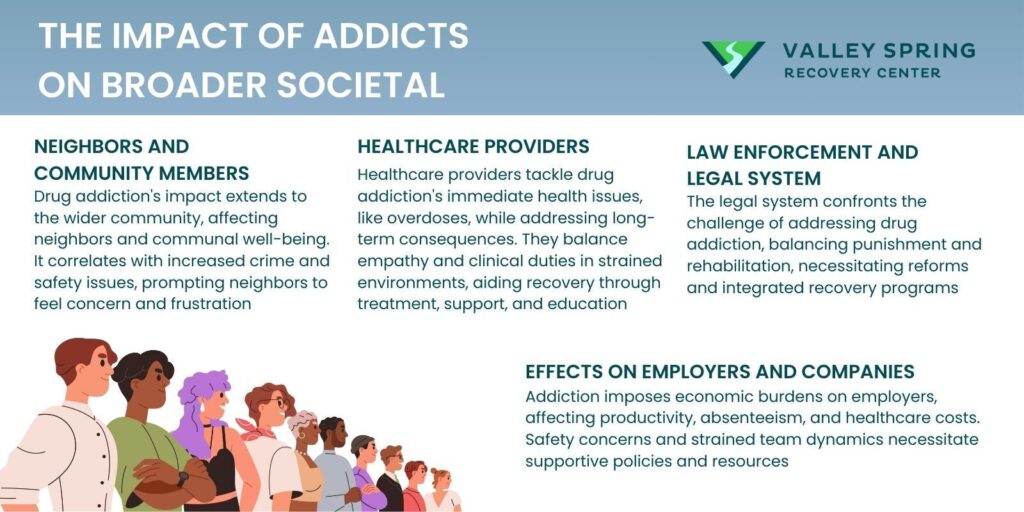
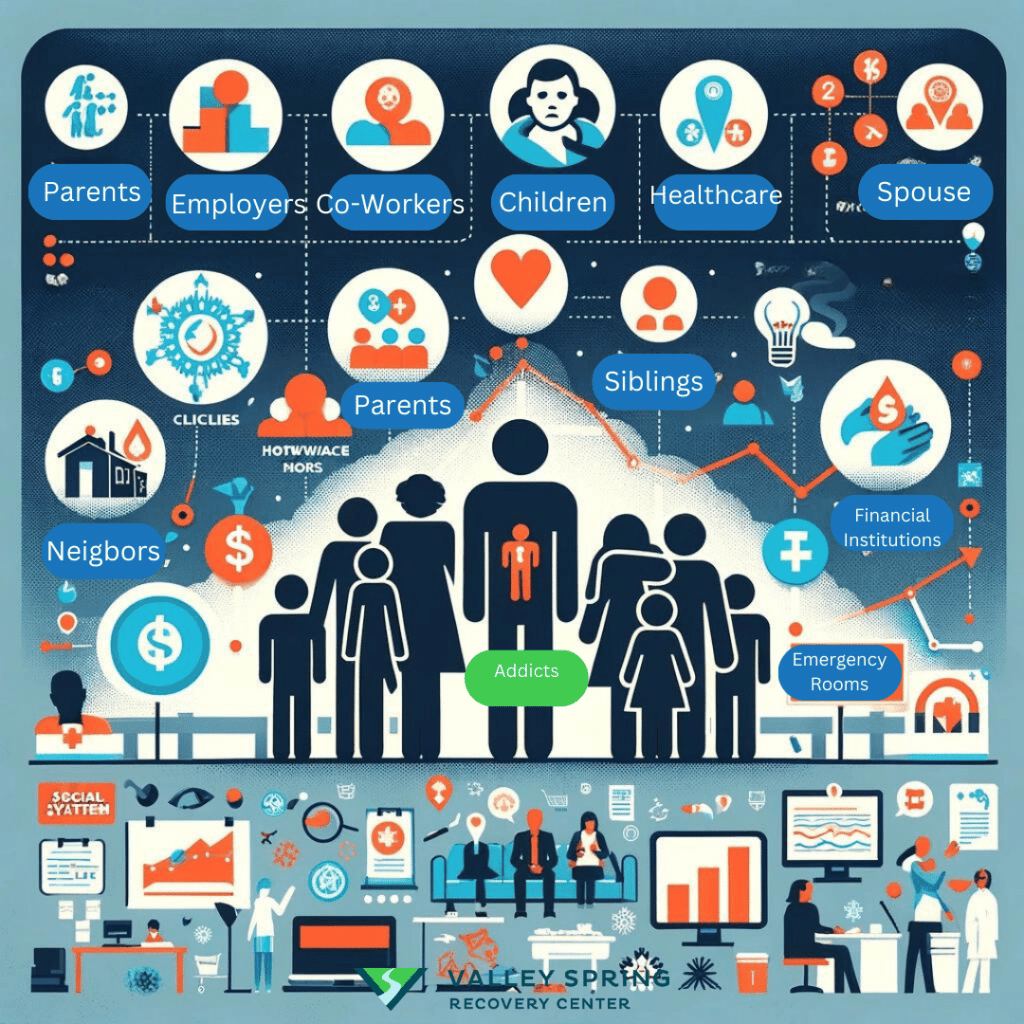
The broader societal impact of addiction includes strained community safety, increased healthcare and legal burdens, and major financial losses for employers. Addiction ripples outward from the individual, disrupting families, neighborhoods, workplaces, and entire systems, creating both social and economic consequences.
Are you covered for treatment?


Valley Spring Recovery Center is an approved provider for Blue Cross Blue Shield and Cigna, while also accepting many other major insurance carriers.
Check Coverage Now!1. Neighbors and Community Members
Addiction affects the peace, safety, and cohesion of neighborhoods. The Neighbors and community members affected by addiction feel a mix of concern, fear, and frustration. This creates both strain and opportunities for resilience.
Impacts:
- Emotional Stress: Neighbors feel fear, guilt, and anxiety over safety concerns and disruptive behavior.
- Loss of Security: The presence of addiction lowers the overall sense of safety in the community.
- Social Strain: Isolation, distrust, and tension reduce cohesion and harmony in neighborhoods.
- Economic Decline: Property values drop due to crime and reduced desirability of the area.
Combating Negative Consequences:
- Community Support Networks: Neighbors form mutual support systems to manage stress.
- Awareness Programs: Educating communities reduces stigma and increases understanding of addiction.
- Neighborhood Initiatives: Organizing watch groups or community events promotes cohesion.
2. Healthcare Providers
Healthcare workers face heavy emotional and professional burdens while treating patients with addiction.
Impacts:
- Emotional Fatigue: Continuous relapses lead to frustration and empathy fatigue.
- Psychological Strain: Stressful cases trigger anxiety, depression, or burnout.
- Social Isolation: Long hours and emotional exhaustion reduce personal and social engagement.
- Professional Discontent: Repeated challenges lower job satisfaction and increase turnover.
Combating Negative Consequences:
- Support Programs: Counseling and peer groups help providers manage emotional stress.
- Ongoing Training: Evidence-based training boosts confidence and clinical skills.
- Team-Based Care: Collaborative models reduce individual burden and share responsibility.
- Work-Life Balance Policies: Reasonable hours and breaks protect providers’ well-being.
3. Law Enforcement and Legal System
Officers frequently encounter addiction-related issues, balancing enforcement with public safety and support.
Impacts:
- Emotional Strain: Constant exposure to unpredictable cases creates frustration and fatigue.
- Mental Health Challenges: High-stress encounters lead to PTSD, anxiety, or depression.
- Social Withdrawal: Emotional exhaustion contributes to isolation from family and friends.
- Job Stress: Difficult cases reduce morale and increase turnover in law enforcement.
Combating Negative Consequences:
- Mental Health Services: Counseling, mental health screenings, and regular check-ins support officers’ well-being.
- Training Programs: Education in de-escalation and addiction improves response strategies.
- Peer Support Groups: Sharing experiences helps reduce stigma and emotional burden.
- Community Partnerships: Collaborating with treatment centers fosters positive outcomes.
Did you know most health insurance plans cover substance use disorder treatment? Check your coverage online now.
4. Effects On Employers and Companies
Addiction impacts workplace productivity, safety, and team morale, costing billions annually.
Impacts:
- Reduced Productivity: Employees struggling with addiction underperform.
- Absenteeism: Frequent sick days disrupt operations and increase workloads for others.
- Workplace Safety Risks: Impaired judgment leads to accidents and injuries.
- Team Strain: Coworkers face added stress covering for impaired colleagues.
Combating Negative Consequences:
- Employee Assistance Programs: Providing confidential counseling and treatment options.
- Clear Workplace Policies: Establishing drug-free workplace rules for safety and fairness.
- Wellness Initiatives: Promoting health programs reduces risk factors for addiction.
- Recognition and Support: Rewarding recovery progress encourages a supportive culture.
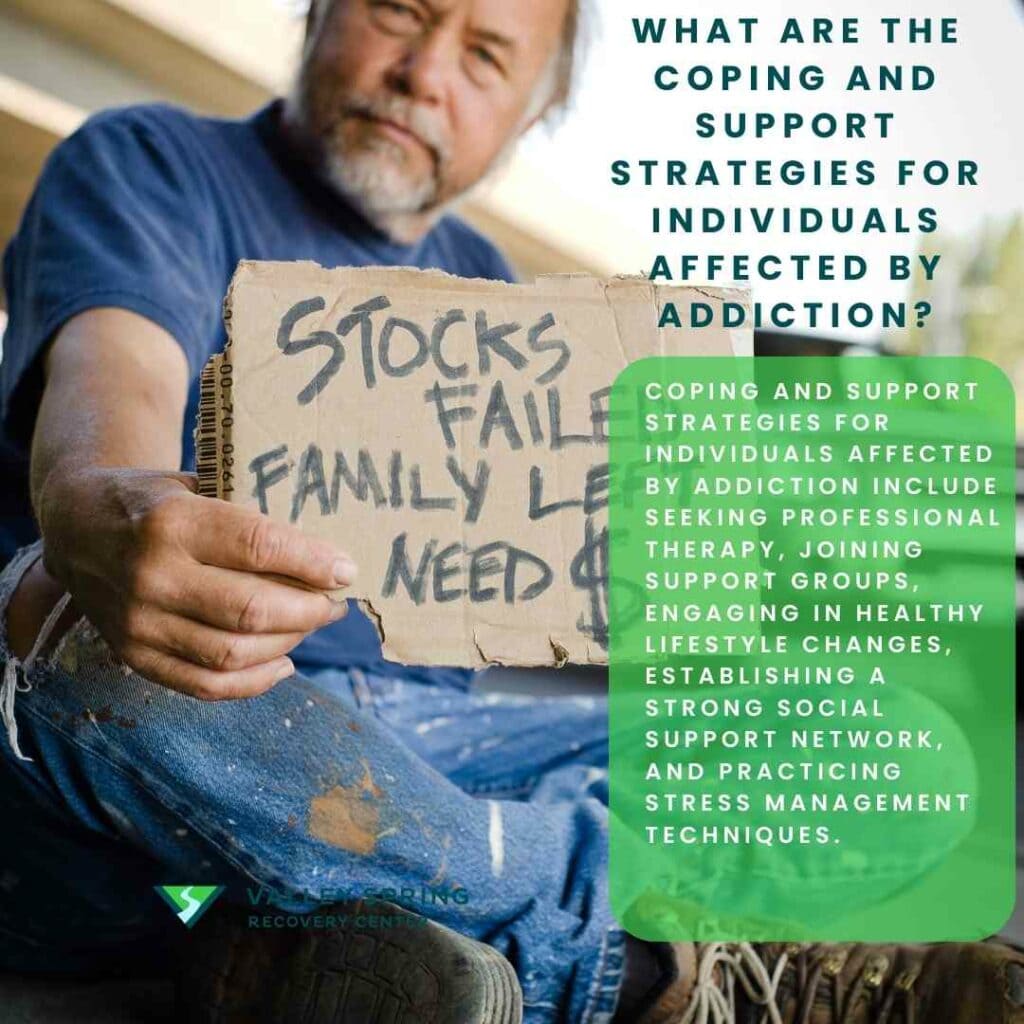
What Are The Coping and Support Strategies For Individuals Affected By Addiction?
The coping strategies for individuals affected by addiction include building resilience, seeking support, and practicing healthy self-care. These approaches help protect mental health, maintain emotional balance, and create an environment that supports recovery.
Here are the coping strategies for individuals affected by addiction;
- Educational Resources: Learning about addiction builds empathy, reduces stigma, and helps individuals better understand what their loved one is experiencing.
- Professional Help: Counselors, therapists, and addiction specialists provide expert guidance, coping tools, and structured support.
- Support Groups: Groups like Al-Anon or Nar-Anon create safe spaces to share experiences, gain encouragement, and feel less isolated.
- Setting Boundaries: Establishing clear limits protects emotional well-being and prevents enabling harmful behavior.
- Self-Care Practices: Maintaining a healthy lifestyle, hobbies, and rest helps individuals preserve their own physical and mental strength.
- Open Communication: Honest dialogue within families and relationships builds trust and fosters mutual support during recovery.
How Can I Support A Sibling Struggling With Drug Addiction?
You can support a sibling struggling with drug addiction by educating yourself about addiction and encouraging them to seek professional help. Open and compassionate communication is key. It is also equally important to set healthy boundaries. Attending support groups and family therapy can also help you maintain your own well-being while offering support.
Contact us today to schedule an initial assessment or to learn more about our services. Whether you are seeking intensive outpatient care or simply need guidance on your drug addiction journey, we are here to help.
What Are The Signs That A Coworker Might Be Struggling With Addiction?
Signs that a coworker is struggling with addiction include frequent absences, a decline in work performance, and changes in behavior. They can also show physical signs such as weight loss or unexplained injuries. If you notice the signs of addiction in a co-worker, you must approach the situation with sensitivity and direct them to professional resources.
Can A Relationship Survive Drug Addiction?
Yes, a relationship can survive drug addiction. It requires commitment, communication, and professional help. Both partners must be willing to work on the relationship and address the underlying issues of the addiction. Couples counseling and support groups can be beneficial if one spouse is addicted to drugs.
What Legal Issues Can Stem From Drug Addiction?
Legal issues stemming from drug addiction range from possession and use of illegal substances to more serious crimes. Legal complications can also arise from behaviors related to obtaining drugs.
Rediscover Life at Valley Spring Recovery Center
Get the compassionate support you deserve. We're here to help you reclaim joy, wellness, and a brighter future.
Verify BenefitsWhat Role Do Neighbors Play In Helping Someone With Drug Addiction?
Neighbors play a role in helping someone with drug addiction by being vigilant, offering assistance, and fostering a supportive community environment. They also help by participating in or initiating community-based rehabilitation programs.
What Support Is Available For Healthcare Providers Dealing With Addiction Cases?
Support is available for healthcare providers dealing with addiction through professional networks, continuing education on addiction treatment, and self-care practices to prevent burnout. Hospitals and clinics also offer resources and support systems for their staff.
Share This Post

Dr. Michael Olla
All author posts
Our Therapuetic Recovery Programs
Are you covered for treatment?




Valley Spring Recovery Center is an approved provider for Blue Shield of California and Cigna, while also accepting many other major insurance carriers.
Check Coverage Now!