Navigating Life with a Drug-Addicted Son: Signs, Boundaries, and Recovery
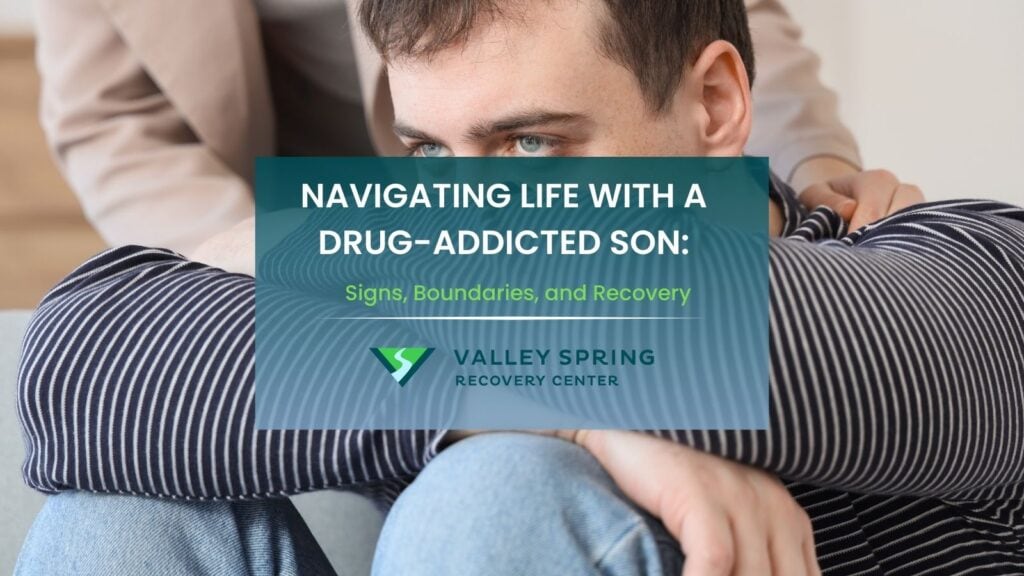
Navigating life with a drug-addicted son is one of the most taxing experiences a parent endures. Watching a child struggle with substance use disorder creates a cycle of hope, disappointment, and emotional exhaustion. Familiarity with the nature of addiction and implementing healthy strategies is foundational for the well-being of the entire family.
Highlights
- Addiction is a chronic brain disease, not a moral failure or a lack of willpower.
- In 2024, an estimated 48.4 million Americans age 12 and older, roughly one in six people, qualified for a substance use disorder, based on data from the most recent National Survey on Drug Use and Health (NSDUH) released by the Substance Abuse and Mental Health Services Administration (SAMHSA).
- Changes in behavior, physical appearance, and social circles often signal a growing problem.
- Setting firm limits is not an act of rejection but a necessary step to stop enabling and encourage responsibility.
- A parent’s recovery and mental health are just as important as the child’s journey toward sobriety.
- Seeking clinical help from addiction specialists is the only way to break the cycle of long-term dependency.
Did you know most health insurance plans cover substance use disorder treatment? Check your coverage online now.
What Is Drug Addiction in a Son?
Drug addiction in a son is a chronic substance use disorder characterized by the compulsive seeking and use of drugs despite harmful consequences to his health, safety, and family relationships.
Addiction is fundamentally a brain disease that alters the neural pathways responsible for reward, motivation, and impulse control. Over time, these chemical changes make it increasingly difficult for him to stop using without professional medical or therapeutic intervention.
The progression of addiction involves a shift from voluntary use to a physical and psychological dependency. In this state, your son’s brain prioritizes the substance over basic needs, in addition to career goals and familial obligations. Grasping this neurological shift is vital for parents because it clarifies that the behavior is driven by a hijacked biological system rather than a lack of love or respect for the family.
What Are the Symptoms of Drug Addiction in a Son?
The symptoms of drug addiction in a son include:
- Behavioral Changes: Amplified secrecy, lying, or stealing to fund the habit.
- Physical Decline: Drastic weight changes, poor hygiene, and “pinpoint” or dilated pupils.
- Social Withdrawal: Abandoning old friends and hobbies for new, often suspicious, social circles.
- Neglect of Responsibility: Poor performance or attendance at work or school.
- Emotional Volatility: Sudden mood swings, irritability, or unexplained outbursts.
What Are the Effects of a Son’s Addiction on parents?
The effects of a son’s addiction on parents are profound and comprise chronic stress, financial strain from providing “loans,” marital conflict regarding how to handle the situation, and deep-seated feelings of guilt or shame.
Parents frequently experience a “rollercoaster” of emotions, swinging between intense hope during brief periods of sobriety and profound despair when a relapse occurs. This constant state of high alert precipitates sleep deprivation, anxiety, and a breakdown in the parents’ own physical health as they neglect self-care to focus on their child.
In a U.S. sample of 54 mothers with SUDs (who themselves were parents of young children), parenting stress was substantially elevated compared with normative samples, as measured by the Parenting Stress Index–Short Form (PSI‑SF), according to Paris et al. 2023 in their research article “Parenting stress and competence among mothers of young children with substance use disorders: The roles of trauma and reflective functioning.”
Contact us today to schedule an initial assessment or to learn more about our services. Whether you are seeking intensive outpatient care or simply need guidance on your drug addiction journey, we are here to help.
How Can I Set Boundaries with a Drug-Addicted Son?
Setting boundaries with a drug-addicted son consists of:
- Defining Limits: Clearly state what behaviors are not allowed in your home (e.g., no drug use, no verbal abuse).
- Stopping Financial Support: Cease paying for legal fees, rent, or debts that allow the addiction to continue.
- Enforcing Consequences: If a boundary is crossed, follow through with the predetermined consequence immediately.
- Focusing on Safety: Prioritize the safety of other family members and yourself over the comfort of the addicted individual.
When Is It Time to “Let Go” of a Drug-Addicted Son?
It is time to let go—or “detach with love”—when your efforts to help have turned into enabling, your own mental or physical health is failing, or the safety of the household is at risk. Letting go does not mean cutting off love; it means allowing the son to face the natural consequences of his actions so he finds the motivation to change.
A broader literature review on parenting stress among parents of children with SUDs reports that 60-70% of caregivers (mostly mothers) report high or very high levels of parenting stress, versus roughly 20-30% in general‑population parents, as observed by Anwar R. 2025 in her Oxjournal publication, “Investigating family dynamic as a strong factor on addiction vulnerability.”
Conclusion
Managing a son’s addiction requires a delicate balance of compassion and firmness. While the instinct of a parent is to protect and “fix” their child, addiction is a complex disease that the individual must ultimately choose to treat. You create a more stable environment that eventually supports long-term recovery by educating yourself, setting firm boundaries, and prioritizing your own mental health.
Rediscover Life at Valley Spring Recovery Center
Get the compassionate support you deserve. We're here to help you reclaim joy, wellness, and a brighter future.
Verify Benefits
References
American Society of Addiction Medicine. (2025). Definition of addiction.https://www.asam.org/quality-care/definition-of-addiction
Anwar, R. (2025). Investigating family dynamic as a strong factor on addiction vulnerability. Oxjournal.
National Institute on Drug Abuse. (2024, January 5). Understanding drug use and addiction DrugFacts. U.S. Department of Health and Human Services, National Institutes of Health.https://nida.nih.gov/publications/drugfacts/understanding-drug-use-addiction
Paris, R., Maru, M., Holt, M. K., & Gaba, R. K. (2023). Parenting stress and competence among mothers of young children with substance use disorders: The roles of trauma and reflective functioning. Journal of Substance Abuse Treatment, 145, 108931.https://doi.org/10.1016/j.jsat.2022.108931
Substance Abuse and Mental Health Services Administration. (2023). Impact of substance use disorders on families. U.S. Department of Health and Human Services.
Substance Abuse and Mental Health Services Administration. (2024). Key substance use and mental health indicators in the United States: Results from the 2023 National Survey on Drug Use and Health. U.S. Department of Health and Human Services.https://www.samhsa.gov/data/report/2023-nsduh-annual-national-report
Share This Post

Dr. Michael Olla
All author posts
Our Therapuetic Recovery Programs
Are you covered for treatment?





Valley Spring Recovery Center is an approved provider for Blue Shield of California and Cigna, while also accepting many other major insurance carriers.
Check Coverage Now!