


Clinical guide
Saliva (Oral Fluid) Drug Test: Definition, Usages, Benefits, and Limitations
Saliva drug testing detects recent substance use through oral fluid samples, offering a non-invasive option for workplace, roadside, and rehab settings.
By Paul James Roeser·Reviewed by Noelle Mathew, LCSW, LCADC, CASAC-M·Last reviewed August 25, 2026·4 min read
Published ·Updated
A saliva, or oral-fluid, drug test analyzes a collected mouth-fluid specimen for selected drugs or drug metabolites associated with recent exposure. It is a biological test; it cannot establish whether a person has addiction, describe a pattern of use, or establish impairment by itself.
Oral-fluid testing addresses specimen collection, analytes, detection windows, laboratory confirmation, and result limitations. A questionnaire such as ASSIST answers a different question about substance-use patterns and risk.
What is a saliva or oral-fluid drug test?
An oral-fluid drug test uses a swab or collection device to obtain fluid from the mouth and then tests the specimen for a defined panel of analytes. The panel and cutoff concentrations depend on the test, laboratory, program, and applicable rules.
A detected analyte shows that the specimen met the test’s reporting threshold at collection. It does not, by itself, show the amount used, the exact time of use, impairment, or whether diagnostic criteria are met.
How is an oral-fluid specimen collected?
Collection usually involves placing an approved pad or swab in the mouth until enough oral fluid is obtained, sealing the specimen, and documenting its transfer for analysis. Regulated programs use trained collectors, chain-of-custody procedures, specimen identifiers, and defined storage and transport requirements.
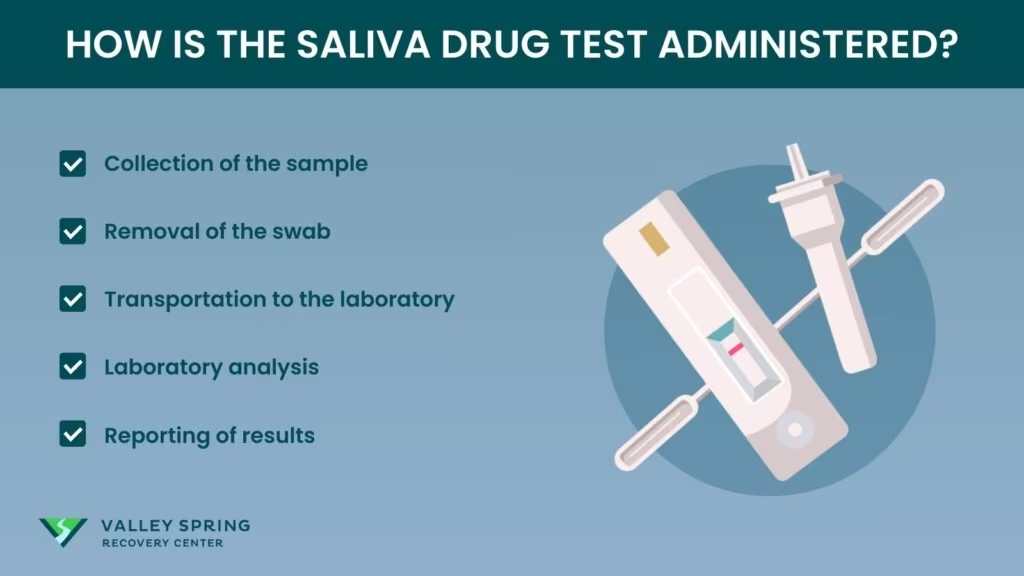
- Prepare the collection: follow the program’s instructions and record the required identifying information.
- Collect oral fluid: use the approved device and collect the required volume.
- Seal and document: secure the primary and split specimens where the governing program requires them.
- Analyze and report: the laboratory applies the permitted screening and confirmation process.
Which drugs can oral-fluid tests detect?
Drug panels vary, but federally regulated testing includes categories such as amphetamines, cocaine, marijuana, opioids, and phencyclidine. A non-federal panel may include different drugs, metabolites, cutoffs, or analytes.
Medication history matters because a prescribed medication can explain a laboratory finding without proving misuse. A Medical Review Officer or qualified clinician interprets a regulated result with the relevant prescription and medical information.
How long can drugs be detected in oral fluid?
Oral fluid generally reflects a shorter and more recent exposure window than hair testing, but no single detection window applies to every drug or device. The window changes with the analyte, dose, route, frequency, oral contamination, collection timing, cutoff, device, and individual metabolism.
Cocaine testing illustrates the specimen difference: oral fluid reflects recent exposure, while how long crack stays in urine depends on benzoylecgonine excretion, repeated use, collection timing, and the laboratory cutoff.
A result cannot reliably calculate the time or amount of use. “Not detected” means the analyte was not reported above that test’s threshold in that specimen; it does not prove that no substance was used.
How are oral-fluid results screened and confirmed?
A laboratory may use an initial screening method and must use a scientifically specific confirmation method when a regulated result requires confirmation. Confirmation commonly identifies and measures the target drug or metabolite with mass-spectrometry-based laboratory analysis, subject to the governing program.
Federal workplace testing requires an HHS-certified laboratory and Medical Review Officer review. A preliminary device result should not be treated as a final clinical conclusion until the required laboratory and review steps are complete.
How accurate are saliva drug tests?
Accuracy depends on the specimen, collection device, analyte, cutoff, laboratory method, timing, and quality-control process. False-positive, false-negative, invalid, and substituted or interfered results remain possible, which is why regulated programs specify collection, laboratory, and review safeguards.
Food, drink, smoking, oral contamination, insufficient volume, storage problems, cross-reactivity, and a drug outside the panel can affect interpretation. No oral-fluid test eliminates every source of collection, analytical, or interpretation error.
What can a saliva test tell you about addiction or impairment?
No. A saliva test detects selected analytes in a specimen; it cannot establish a substance use disorder or current impairment. A clinical assessment reviews symptoms, duration, loss of control, consequences, and functional impact.
When the clinical question is a pattern of risky use rather than recent exposure, a validated questionnaire and assessment are more appropriate than treating a biological result as a diagnosis.
How does oral-fluid testing differ from screening questionnaires?
Oral-fluid testing provides biological evidence of selected recent exposure, while a questionnaire asks about use patterns, consequences, and risk over a defined period. Neither one replaces the other, and neither one independently determines treatment.
The distinction is clearest with DAST-10: DAST-10 asks about past-year drug-related problems, while an oral-fluid result addresses whether selected analytes were detected in the collected specimen.
What are the benefits and limits of oral-fluid testing?
Oral-fluid testing is non-invasive and can support recent-exposure testing, but it has a shorter variable window, panel limits, collection requirements, and confirmation safeguards. Its value depends on the question being asked and the quality of the testing program.
- Collection: mouth-fluid collection avoids venipuncture and is often easier to observe.
- Timing: oral fluid is useful for recent-exposure questions but is not a long-term history of use.
- Scope: only the selected panel and analytes are evaluated.
- Interpretation: results require method-specific and, when applicable, MRO or clinical review.
- Diagnosis: the test cannot establish addiction, recovery, relapse, or impairment by itself.
Sources & References3ShowHide
- SAMHSA. Workplace Drug Testing Resources, accessed August 25, 2026 — Describes oral fluid as an authorized federal specimen type and explains certified laboratories and Medical Review Officer review.
- HHS. Mandatory Guidelines for Federal Workplace Drug Testing Programs Using Oral Fluid, accessed August 25, 2026 — Explains federal oral-fluid collection procedures under the HHS Mandatory Guidelines for regulated workplace testing.
- U.S. Department of Transportation. 49 CFR Part 40.92, accessed August 25, 2026 — Explains oral-fluid specimen validity testing and handling of invalid or interfered specimens in DOT-regulated programs.